Tag: Datacom

  • Hathway ropes in K V Anand as president – digital platforms

    Hathway ropes in K V Anand as president – digital platforms

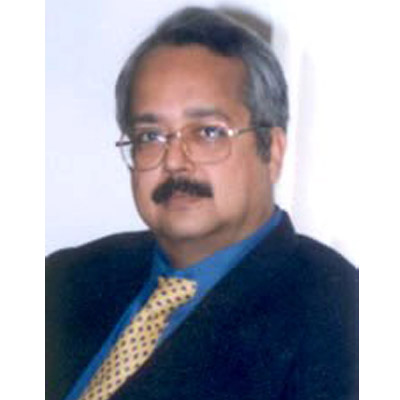
    MUMBAI: Hathway Cable & Datacom Limited has appointed former Tata Sky chief service officer (CSO) K V Anand as president – digital platforms.

    Anand will be part of core senior management team and will work across functions like revenue enhancement, subscriber management, CRM capability and leveraging infrastructure across cable and broadband platforms.

    “We are very excited with the opportunities and challenges that will come our way during our transition from a wholesale business to a retail consumer business. We welcome K V Anand who will be part of the core senior management team at Hathway and will work across functions to develop strategies for Revenue Enhancement, Subscriber management, CRM capability and leveraging our infrastructure across Cable and Broadband platforms to introduce new products, services and enhancing customer experience as we begin our journey to be a customer centric organisation,” says Hathway Cable and Datacom MD and CEO Jagdish Kumar.

    Anand comes with rich and varied experience spanning 18 years in the Media/Pay Television industry where he held senior positions in Star TV across Asia and Middle East regions, a short stint at BSkyB in the UK and a long stint at Tata Sky.

    His expertise straddles strategy, design, execution and delivery across all Customer Facing functions relating to CRM, Products /Services management, Billing & Subscriber management, Consumer marketing, Field Services and IT.

    K V Anand was part of the core start-up team that launched Tata Sky‘s DTH service and held the position of CSO at Tata Sky prior to joining Hathway.

  • DAS Phase II: Indiacast-Hathway- GTPL slugfest on DAS deals

    DAS Phase II: Indiacast-Hathway- GTPL slugfest on DAS deals

    MUMBAI: A war of sorts has broken out between India‘s second largest content aggregator IndiaCast Media Distribution and Hathway Cable and Datacom, the country‘s biggest Multi System Operator (MSO) and its affiliate GTPL, Gujarat‘s largest MSO with footprints in other states too.

    This is happening at a time when the entire broadcast and cable TV industry and government have been grappling with how to deal with the Phase II digitisation (DAS) of India‘s cable TV. And it clearly reveals how much more needs to be done to make the government‘s agenda to professionalise and spruce up India‘s cable TV sector a reality. (MIB wants MSOs-b‘casters to sign DAS agreements within 15 days )

    Now on to the problem between IndiaCasat and GTPL and Hathway. Both Hathway and GTPL have switched off IndiaCast channels in multiple markets across India including Gujarat, Maharashtra, West Bengal, and Madhya Pradesh as the latter is demanding a reduction in carriage fee and growth in subscription fee.

    IndiaCast distributes 35 channels from the TV18, Viacom18, Disney UTV and A+E Networks spanning across Hindi general entertainment, news, kids, youth and regional genre.

    Hathway, on the other hand, has cable operations that straddle across key Indian geographies and offers cable television services across 140 cities and towns.

    However, Hathway and GTPL feel IndiaCast‘s demand is unjustified. Their contention is that the time is not ripe for a carriage fee reduction or an increase in subscription fee payouts as they have hardly started collecting money from the ground.

    IndiaCast though feels that its demand is justified as the analog cable TV networks around the country are being digitised in a phased manner which will lead to broadcasters getting their fair share of subscription revenue due to transparency in subscriber base of LCOs.

    The content aggregator alleges that both Hathway and GTPL want to maintain status quo by doing deals similar to that in the analogue era. According to IndiaCast, the two MSOs also want to revisit phase I deals which were done on cost-per-subscriber basis.

    Hathway Cable and Datacom MD and CEO Jagdish Kumar feels the broadcasters‘s maw is increasing and they are unwilling to support the MSOs in this transition phase.

    “Broadcasters have become too greedy. They are behaving like ostriches. They want a reduction in carriage fee and a growth in subscription revenue. Reduction of carriage fee is not going to happen overnight. As far as growth in subscription revenue goes, the MSOs themselves have not started collecting money from the ground,” thunders Kumar.

    Kumar‘s suggestion to broadcasters is to do “equitable” deals till the situation on the ground stabilises particularly since the MSOs have made large investments in making digitisation a reality.

    “We also have to look at returns on the investments that we have made so far,” adds Kumar.

    The dispute that began end of December has reached the sector regulator‘s door. The Telecom Regulatory Authority of India (Trai) has asked GTPL to respond by 10 April to a complaint filed by IndiaCast alleging abuse of its dominant position in Gujarat.

    Says IndiaCast COO Gaurav Gandhi, “GTPL‘s intention is to use these coercive methods on broadcasters and aggregators to pressurise them to keep DAS deals in line with what was there in the analogue regime – at any cost they don‘t want a reduction in their carriage income. Almost all our deals in DAS Phase I were done on a cost-per-subscriber model. We have written to Trai on the violations done by GTPL & Hathway and the regulator has now asked GTPL to respond by 10 April.”

    In its complaint, IndiaCast has alleged that Hathway and its affiliate GTPL illegally collided to coerce IndiaCast into acceding to their demands including increasing the placement fees, reducing subscription fees and also to re-open DAS Phase I deals already executed.

    Giving his perspective on the dispute, GTPL president Sumit Bose says that the MSO has followed Trai regulations in letter and spirit while dealing with IndiaCast. GTPL, he says, had an agreement with IndiaCast till 31 March 2013.

    He claims that IndiaCast itself did not respond to GTPL‘s offer of working on a new deal for phase II for almost two and a half months. IndiaCast officials did get in touch with GTPL by that time the company‘s management had decided against entering into a new deal with IndiaCast.

    “IndiaCast was never inclined to sit across the table to discuss the deal with us despite our keenness. We waited for more than two and a half months but there was no response from them (IndiaCast). Since we did not get any response, the GTPL management decided to switch off the channels as we had to look at our own business objectives as well,” affirms Bose.

    The MSO then switched off IndiaCast channels in Gujarat citing financial unviability.

    However, IndiaCast‘s Gaurav Gandhi is amused with the idea. On the contrary, he feels that the deal is unviable for IndiaCast as its analogue deal had it paying out more in carriage fees than the subscription fees that accrued to it courtesy GTPL.

    “Both GTPL and Hathway have cited financial unviability and financial constraints as reasons for discontinuation of deals for IndiaCast channels. This is the basis of the notice they sent for their existing deals – and these existing deals are where we were paying them more carriage, then they are paying us for subscription. So how can a deal be financially unviable for the MSO if they are receiving more than they are paying? This clearly demonstrates the strong-arm tactics and the intentions of GTPL and Hathway,” avers Gandhi.

    Bose strongly denies charges of strong arm tactics by IndiaCast. To buttress his point, he says that Gujarat is as competitive a market as any other market in India is, with the presence of several leading MSOs and DTH operators.

    According to Bose, it is quite optimistic on the part of anyone to think that carriage fees will come down so soon despite digitisation. He also asserts that GTPL has managed to retain its carriage fee level in the deals they have done so far to what they were earlier.

    “I don‘t see the carriage fee coming down in the near term. Particularly the market that we are operating in, we expect to cross our own expectations on the carriage front. The deals we have done so far are in line with our expectations,” declares Bose.

    The last word on the dispute has not yet been said.
  • Digitisation: Hathway Cable’s capex need is Rs 4 bn in Q4

    Digitisation: Hathway Cable’s capex need is Rs 4 bn in Q4

    MUMBAI: Hathway Cable & Datacom‘s capital expenditure in the last quarter of this fiscal on account of Phase 2 digitisation will be in the region of Rs 4 billion, a top executive of the company said.

    The multi-system operator (MSO) is anticipating a deployment of 2.6 million set-top boxes (STBs) in the quarter beginning January.

    “The financing will be met by a mix of debt and vendor financing. We will be requiring a debt of Rs 3 billion,” Hathway Cable and Datacom managing director and chief executive officer Jagdish Kumar told Indiantelevision.com.

    With this fresh debt, Hathway Cable & Datacom‘s total debt would touch Rs 8 billion.
    The company has seeded 2.1 million boxes in the first phase of digitisation. “We are looking at touching 2.2 million in the Phase 1 DAS (Digital Addressable System) cities,” Kumar said.

    Kumar feels that there will be no major decline in carriage fees. “In the first phase, we have seen around 10 per cent fall in carriage fees. We do not anticipate any impact on carriage fees as more channels have come under the ambit with the bandwidth expanding due to digitisation,” Kumar said.

    But when will the MSO start offering packages to the subscribers and start billing them in the DAS markets? “We expect the billing to be effective from the first quarter of next fiscal,” said Kumar.

    Hathway is considering broadband upgrade from DOCSIS 2.4 to 3.4. The MSO is doing pilots but no final decision has been taken yet.

  • Ten Sports and Ten Cricket not on Hathway network

    Ten Sports and Ten Cricket not on Hathway network

    MUMBAI: Hathway Cable and Datacom has stopped carrying Taj Television owned and operated channels Ten Sports and Ten Cricket on its cable network after the two parties could not reach an agreement.

    Taj TV, a subsidiary of Zeel, is looking for growth in annual subscription fee from the multi-system operator, sources said. Hathway, however, is resisting the offer contending that the two channels don‘t have the kind of content required for such an increase.

    Hathway had on 16 October issued a public notice saying that the two channels would not be available on its platform three weeks from then.

    "This is to inform consumers/public that after the expiry of three weeks we shall not re-transmit the channels Ten Sports and Ten Cricket distributed by Taj Television (India) Private Limited on account financial unviability of business," the notice read.

    Both Taj and Hathway confirmed that they failed to reach an agreement.

    According to an official from Hathway, the two channels are avalable on an a la carte basis in the package of channels for subscribers under the digital addressable system (DAS).

    The decision will mean that Ten Sports channels will not be available on as many as 33 networks under Hathway spread across across 22 cities in eight states.

    Negotiations are, however, on, sources added.

  • ‘Buyout valuations will now be decided in terms of ARPU rather than carriage growth’ : IMCL MD and CEO Ravi Mansukhani

    ‘Buyout valuations will now be decided in terms of ARPU rather than carriage growth’ : IMCL MD and CEO Ravi Mansukhani

    IndusInd Media and Communications Ltd (IMCL), the media subsidiary company of Hinduja Ventures Ltd, plans to raise $100 million, a major chunk of which will be used to fund acquisitions.


    Operating its cable TV business under the InCablenet brand, IMCL had earlier planned an initial public offering (IPO) but changed its stance as the newly listed cable TV entities, Den Networks and Hathway Cable & Datacom, dropped in market value.


    Even on the acquisition front, IMCL has changed gears. Earlier, the focus was to buy small-sized cable TV networks and expand geographies. Now it targets big-ticket acquisitions, expecting the sector to consolidate as the government chalks out a schedule for digitisation across the country.


    Slow on the broadband path, IMCL is experimenting on new technologies where it will not have to entirely overhaul its network to load on broadband capability.


    In an interview with Indiantelevision.com’s Sibabrata Das, IMCL managing director and chief executive officer Ravi Mansukhani talks about how the acquisition game is going to move from carriage calculations to valuations based on ARPU (average revenue per user) growth as the cable TV sector transitions into the digital era.


    Excerpts:

    Why is IMCL taking so much time in readying its IPO?
    We are in the market to raise $100 million ahead of the IPO and have mandated Deutsche Bank for this. We want to first build a solid valuation base. We believe the value of the top-rung MSOs will get a significant boost once the government fixes up a schedule for digitisation. We want to also expand on our size before we go for a public float.


    We have separately raised Rs 1 billion of debt from General Electric. So funding is being taken care of. We are getting ready to move into top gear.

    Have you finalised on how you are going to raise this amount?
    We are weighing various options. We are looking at mezzanine structures. The final structuring will depend on what fund-raising instrument we select.

    Are we going to expect acquisitions or a drive to greater digitisation?
    We plan to use three-fourth of the amount raised for acquiring cable TV networks. We are looking at small and big-ticket acquisitions. We believe there is going to be consolidation in the industry. For digitisation, we have a separate funding plan to meet the capex requirements.

    Why has there been a change in stance as the earlier focus was to buy small-sized cable TV networks and expand geographies?
    We see an opportunity out there as the other leading MSOs like Hathway Cable & Datacom and Den Networks are not on a buying spree. The valuations have dropped and we are ready to make big-ticket acquisitions ahead of the government‘s digitisation schedule. The acquisition focus now will be not on expanding into new geographies but on consolidating and growing in existing operational cities.

    Will the acquisition game change even as the government lays out a roadmap for digitisation across the country?
    The game will definitely change. A few years back, when the pace was set by new entrants such as Den and Digicable, acquisitions were based on carriage calculations and TRP cities were favoured. Now, as digitisation creeps in, buyout valuations will be decided in terms of ARPU growth. So we have decided to consolidate and expand in areas where we already exist like Maharashtra. There is no point in spreading lean.

    “We are in the market to raise $100 mn ahead of the IPO. We want to first build a solid valuation base. We believe the value of the top-rung MSOs will get a significant boost once the govt fixes up a schedule for digitisation. We want to also expand on our size before we go for a public float”

    Do you see MSOs fighting amongst each other once the digitisation programme is announced?
    MSOs would rather consolidate and expand where they are strong; their focus would be on digitising their existing network. MSOs can‘t create a fight today without being attacked; too much is at stake.

    How will MSOs counter the DTH invasion?
    India will remain primarily a cable country. Yes, in a diversified and fragmented market, DTH will have space. But being the incumbent player, cable TV has a distinct advantage. Besides, it is cheaper priced, bandwidth is no issue and it can be interactive. MSOs will also start launching server-based local channels as in the digital era, space will open up for more channels. There will be need for local news and events. DTH can‘t offer these channels.

    How much of IMCL‘s network is digitised?
    We have over half a million digital set-top boxes (STBs) installed. Out of the 28 cities that we operate in, we provide digital services in 17 cities via 10 digital head-ends.


    If the government‘s digitisation plan is on stream, we will deploy close to two million additional boxes in Phase 1. We are going to fund our digitisation through lease and vendor financing.

    Why is IMCL‘s broadband story yet to emerge?
    Our focus has not been on broadband in the past because the franchisee operators have been providing it. Though we provide broadband in nine cities, our revenues from this segment stood at just Rs 50-60 million in FY‘11.


    We plan to have a strong broadband story once the digital path is properly spelt out. We are currently experimenting on new technologies where we will not have to entirely overhaul our network to load on broadband capability.


    We won‘t have a problem building up broadband revenues once we have pushed the digital STBs in. The script will change after the government announces the sunset date for the digitally notified areas. It is companies like You Telecom who will need to grow their cable TV presence in order to provide broadband.

    Hathway has announced it would launch its HD service in June. When are you getting into this segment?
    Our first priority is to offer digital service. We will then graduate to HD. The market is still not ready for it. HD boxes are on the anvil and we will introduce them into the market in the next few months.

    IMCL‘s total income jumped 23 per cent to Rs 4.03 billion in FY‘11. What growth do you estimate in FY‘12 and what is the outlook on carriage income?
    We expect revenue to grow between 20-25 per cent. This will be higher if we raise capital fast and make big-ticket acquisitions.


    We saw 18-20 per cent growth in carriage income in FY‘11. We expect strong growth from this stream as more and more channels get launched in the fiscal.

  • Trai not for mandated Cas in rest of India

    Trai not for mandated Cas in rest of India

     MUMBAI: The Telecom Regulatory Authority of India (Trai) feels Cas (conditional access system) should roll out voluntarily rather than be mandated in other parts of the country.

    “We may think of mandatory Cas for the larger metros but in other parts of the country it may not be the best way forward. We haven’t, though, made up our mind on this. We have constituted a small group representing all the stakeholders to suggest on how to take voluntary Cas forward. We realise that Cas has gained momentum and wouldn’t like to miss on that opportunity,” said Trai advisor M C Chaube while speaking at a workshop on “Cas and Digital CATV,” organised by Satellite & Cable TV (SCaT) magazine in Mumbai.

    With some cable operators continuing to transmit unencrypted signals in the Cas areas, the broadcast and cable sector regulator intends to come down heavily on them.

    “We are aware that there are still slippages and there are complaints that encryption have not taken place in some areas. We are going to take action against this as it is at the core of Cas,” said Chaube.

    Reacting to a suggestion from the three multi-system operators (Wire & Wireless India Ltd, Hathway Cable & Datacom and Incablenet) that Cas should be opened up to the other areas of Mumbai, Delhi and Kolkata by April, Chaube said the process needed a certain run-up time. “Cas is not just about three MSOs. The smaller MSOs should be given time to prepare for laying out the digital infrastructure. Consolidation is bound to happen as digitalisation requires deep pockets, but as a regulator we shouldn’t have such a time frame in mind that makes it difficult for the smaller MSOs,” he added.

    Trai would relook at such areas like pricing and a la carte issues in the middle of this year. “We are going to revisit at some of these decisions and take a call whether appropriate adjustments are needed. We would be examining such issues as similar pricing for all genres of channels, a la carte offerings and Rs 77 on free-to-air (FTA) channels,” Chaube said.

    The seeding of set-top boxes (STBs) would touch 500000 in a week’s time out of an estimated cable and satellite home of 1.2 million in the Cas belt. “The average penetration would be 40 per cent. Kolkata is seeing slow offtake because regional channels are popular and they are in FTA mode. Our aim is not to see that boxes are sold but to offer consumers choice through Cas,” Chaube clarified. The penetration percentage though will be clearer when figures are available on the number of homes that have more than one TV sets.

    The next stage of progress would be when consumer forms return to the MSOs and they are fed into the subscriber management system (SMS).

    In case of voluntary Cas, the crucial element was for the broadcasters and MSOs to enter into commercial agreements, he added.

    In a panel discussion, WWIL MD Jagjit Kohli pointed out that Trai should come out with some regulatory framework to facilitate voluntary Cas and Headend-In-The-Sky (HITS). “Broadcasters may not support voluntary Cas. So it would be essential for Trai to define some rules as the momentum for digitalisation should not be lost,” he added.

    Hathway Cable & Datacom MD and CEO K Jayaraman pointed out that cable operators in non Cas areas should be ready to adopt digitalisation which has grown much faster in India than what was being initially preicted.

    Incablenet head Ravi Mansukhani said the seeding process has been successful and the next step for MSOs would be to stop free access of pay channels in phases.

  • I&B bans AXN for ‘objectionable’ content

    I&B bans AXN for ‘objectionable’ content

    NEW DELHI: The government has banned, with immediate effect, the telecast of Sony Entertainment’s action chanel AXN for two months for showing “obscene programmes”.

    The information and broadcasting ministry today issued directions for blocking signals of the channel into India up to 15 March.

    Sources told Indiantelevision.com that the ministry had taken objection to the channel repeatedly telecasting such programmes such as World’s Sexiest Commercials that “are against good taste or decency and are likely to adversely affect public morality”.

    The government has been issuing warnings from time to time to various channels to desist from telecasting “obscene programmes” and software not suitable for women and children.

    The Cable Television Networks (Regulation) Act 1995 clearly stipulates that the government has the right to block or take action against channels which violate the broadcasting and advertising codes of the country.

    Multi-system operators (MSOs) like Hathway Cable & Datacom have blacked out AXN. Incablenet is in the process of switching off the channel, a senior executive in the company said.

  • Hathway launches interactive gaming service

    Hathway launches interactive gaming service

    MUMBAI: Hathway Cable & Datacom has launched an interactive gaming service on its digital cable television services.

    Launched on 10 July, the gaming feature would initially be available to all Hathway digital subscribers on a free of cost basis.

    For the gaming technology, Hathway has selected NDS, a global provider for open end-to-end digital pay TV solutions. Once the digital box is activated, the customer needs has to select the gaming icon on the screen and access the available games such as Lilly Lovers, Stubby the Sock Gnome and Sumo Temple. Many more games will be added in the course of the year, according to an official release

  • Hathway expands in north, acquires 51% in a Kanpur cable network

    Hathway expands in north, acquires 51% in a Kanpur cable network

    MUMBAI: Hathway Cable & Datacom is expanding its cable TV network in the northern region through the acquisition route. After buying a controlling stake in two local cable TV networks in Chandigarh and Mohali, the multi-system operator (MSO) is expanding its footprint in Kanpur.

    Hathway has acquired 51 per cent equity in JMD Sherawali Network, a leading cable operator in Kanpur, for an undisclosed amount.
    “By reaching out to Kanpur, it will be an important start for us into the core Uttar Pradesh market. JMD Sherawali Network has a 60 per cent market share in Kanpur. We have bought 51 per cent stake in the network,” said Hathway Cable & Datacom CEO and MD K Jayaraman.
    The MSOs are selectively expanding their cable networks. Last year, rival MSO Siticable bought out Indian Cable Net from the RPG Group to become the dominant MSO in Kolkata. Hathway has swung into action this year with the first acquisition made in February.

    With this acquisition, Hathway will be operating its cable TV services in 14 cities. Hathway’s cable TV is already available in cities across the nation including Mumbai, New Delhi, Chennai, Pune, Nashik, Bangalore, Hyderabad, Ludhiana, Vijaywada, Jalandhar and Mysore. The MSO is currently offering digital cable services in New Delhi, Mumbai, Pune, Bangalore and Hyderabad.

    Besides the analogue business, Hathway is also making efforts to rolout its digital services. The MSO will be launching gaming on its digital cable TV services by April-end. For the gaming technology, Hathway has selected NDS. Though available free, the commercial launch is likely to take about a month.

    “The gaming feature will be available to all our digital customers initially on a free of cost basis from end of April. Many more games will be added in the course of the year,” said Jayaraman.