Tag: Datacom

  • TRAI orders MSOs to deliver RIOs; tariff packages

    TRAI orders MSOs to deliver RIOs; tariff packages

    MUMBAI: The fear of Friday the thirteenth seems to be coming true for registered multi system operators (MSOs) as the Telecom Regulatory Authority of India (TRAI) has come out with two different directions for them today. And it has warned them that it is time for the stakeholders to buck up and act fast.

    The first direction issued today gives 118 registered MSOs just 10 days to submit their interconnection agreements entered with the broadcasters for re-transmission of channels on their cable networks in the Digital Addressable System (DAS) notified areas. Another direction, gives them seven days to submit the details of tariff packages along with the terms and conditions for supply and installation of the set top box (STB) to their subscribers.

    Of the 118 MSOs, a few well-known names that feature in the list are: Siti Cable Network, Seven Star Dot Com, Sagar E Technologies, Ortel Communication, Manthan Broadband, JAK Communications, IMCL, Hathway Cable & Datacom and Den Networks amongst others.

    “Every MSO, according to the Telecom Regulatory Authority of India Act, 1997 (24 of 1997) and regulation 5, 8 & 9 of the Telecommunication (Broadcasting and Cable Services) Interconnection (Digital Addressable Cable Television Systems) Regulation, 2012 (No. 9 of 2012), is required to have such interconnection agreement in DAS areas,” states the TRAI direction regarding interconnect agreement.

    According to regulation 5, it is mandatory for pay channel broadcasters to reduce the terms and conditions of the interconnection agreement into writing and deprive MSOs of their TV channel signals if no interconnect agreement is signed. Also, as per regulation 9, MSOs need to submit their interconnect agreement within the specified period to the authority.

    The TRAI direction had earlier said: “Every existing MSO shall submit to the authority by 31 July, 2012, all interconnect agreements entered into and amendments made therein prior to the date of notification of these regulations.”

    Regulation 8 gives power to the authority to intervene, inter alia, to protect the interest of the consumer and service provider. “The authority may, in order to protect the interest of the consumer or service provider or to promote and ensure orderly growth of the broadcasting and cable sector or for monitoring and ensuring compliance of these regulations, by order or direction, intervene, from time to time,” says the TRAI direction.

    With none of the MSOs so far caring to submit the tariff packages along with terms and conditions for supply and installations of STBs to their subscribers despite being ordered to do so under the Telecommunication (Broadcasting and Cable) Services (fifth) (Digital Addressable Cable TV Systems) Tariff Order, 2013 (No. 1 of 2013) issued on 27 May, the regulator has now cracked the whip on them to follow it and submit the packages within seven days from today. 

     
    It is to be noted that clause 5 of the tariff order states that every MSO has to report to the authority by 15 June 2013, the details of all the tariff packages and other terms and conditions for supply and installation of the STBs. According to this order, “Any change in the tariff package reported under sub-clause (1) and the introduction of a new tariff package for supply and installation of STB shall be reported to the authority at least seven days prior to such change or introduction, as the case may be.”
  • Hathway promotes Milind Karnik

    Hathway promotes Milind Karnik

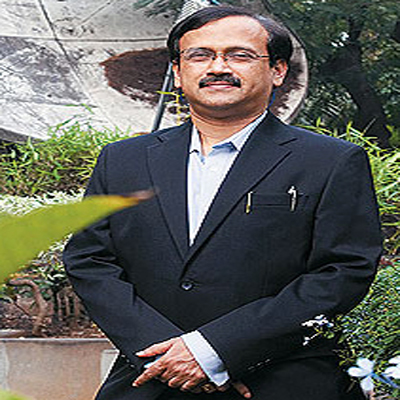
    MUMBAI: For long, Hathway Cable & Datacom old-timer Milind Karnik has been mandated with running the cable TV MSO’s secretarial operations as company secretary. Now he has been given a new role: as the head of commercial – all India and also the western India head. Karnik has been with Hathway since 1998 and he has resigned from his earlier position to take up the post, Hathway informed the BSE on 6 December. Replacing him is Ajay Singh, who has been appointed as company secretary and compliance officer.


    Singh has an experience of 17 years. He has moved to Hathway from Real Networks India. Prior to this, Singh has worked with Drishtee Dot Com, Rangs Technologies and PACL India.


    While Karnik was already handling the commercial business in the western region, in his new role, he will be handling the all India commercial business for Hathway.


    “With digitisation, one needs to get the consumer billing and consumer application form in place for phase I and II respectively. This is a huge task. Also, in my new role, I will be working towards successfully completing phase III and phase IV of digitisation in western India,” informs Karnik, who plans to focus more on DAS phase III and IV now.


    Karnik will work with Hathway subsidiaries including Hathway Bhawani and Hathway Rajesh as well. He will serve on the GTPL Hathway board.


    Karnik will also handle commercial business in hotels which has a different tariff structure. “Hotels are still not digitised and so I will be concentrating on that as well.  We need to explain to the 3-Star and 5-Star properties where room base is 50 and above that digital feed is better than analogue,” he says.


    “In the case of hotels, we also aim to focus on pay per view, which is a niche segment. That apart, I will be dealing with internet bandwidth in the commercial segment,” he concludes.

  • TRAI extends CAF deadline to 15 December

    TRAI extends CAF deadline to 15 December

    MUMBAI: The multi system operators (MSOs) have time till 15 December to submit Consumer Application Forms (CAFs). The Telecom Regulatory Authority of India (TRAI) principal advisor N Parameswaran has shown forbearance and given the MSOs another 15 days to submit 100 per cent CAFs. The earlier deadline to submit CAFs was today, 20 November.


    The extension comes after Parameswaran’s meeting with the national MSOs held today in New Delhi. Though the MSOs had their concerns to address, in the meeting that lasted for one and a half hours, TRAI concentrated on two key issues — one, meeting the deadline for submitting CAFs for phase II by 15 December, and another, implementing gross billing from December for phase I.


    The meeting was attended by Hathway Cable and Datacom, Siti Cable, InCable, DEN Network, Digicable and GTPL.


    “We spoke at length on the issues that each MSO faces in order to comply with the deadline,” says a MSO on request of anonymity. “With LCOs not cooperating with us for submitting duly filled CAFs, and also the ongoing court cases that LCOs have filed to ensure the consumer stays under them, achieving the deadline is difficult,” he says.


    “The regulator will show leniency in states like Hyderabad, Madhya Pradesh and Gujarat that face problems, but in others it will not act as a Santa Claus if the deadline is not met,” says IndusInd Media and Communications Limited MD Ravi Mansukhani.

    According to Mansukhani, the bills are being generated by the MSOs, but the LCOs are not delivering them to the subscribers. “The TRAI has asked us to ensure that the bills should reach the subscribers by December. The regulator has asked us to either convince the LCO to deliver the bills to subscribers or to send them directly to each subscriber,” says Mansukhani.


    About 30 to 90 per cent CAFs have been collected so far. “The regulator has taken an average of this figure, which is around 50 per cent, and has said it is not enough. We have been asked to comply with this final deadline,” he mentions.


    The MSOs spoke at length on improving their relations with LCOs. “We want each party to realise and reap the benefits of digitisation,” states a MSO.


    The MSOs also raised logistic issues they were facing for collecting CAFs. “Unlike phase I which involved the big five players, phase II has several small players involved as well. And this is creating hindrance,” opines Mansukhani.


    The MSOs only have a few days to convince the LCOs to get ahead with both CAFs and billing. “It is a tough task, but we will have to give our best,” concludes Mansukhani.


    Seems like a difficult Christmas for the MSOs if they fail to meet deadlines.

  • Industry speaks on cable monopoly

    Industry speaks on cable monopoly

    MUMBAI: The Telecom Regulatory Authority of India (TRAI) is now looking at ensuring a level playing field for both the multi system operators (MSOs) and the local cable operators (LCOs). The regulator on 26 November came out with a recommendation paper which put a cap of 50 per cent on MSOs stake in any state. The recommendation paper aims at curbing the monopoly of MSOs.

    “Currently there are no restrictions on the area of operation and accumulation of interest in terms of market share in a city, district, state or country by MSOs. It has been observed in some states that a single entity has, over a period of time, acquired ‘control’ of several MSOs and LCOs, virtually monopolising cable TV distribution in that market. Cases of market dominance by MSOs have been reported at various forums. Such monopolies/market dominance in the TV channel distribution market are not in the best interest of consumers and may have serious implications in terms of competition, pricing, quality of service and the efficient growth of the TV channel distribution market,” states the recommendation paper.

    The regulator has now recommended that market dominance should be determined based on market share in terms of the number of active subscribers of MSOs in the relevant market. To evaluate the level of competition or market concentration in a relevant market, the Herfindahl–Hirschman Index (HHI) should be used. The TRAI has also recommended that the threshold value for any individual/ ‘group’ entity contribution to the market, HHI should be not more than 2500.

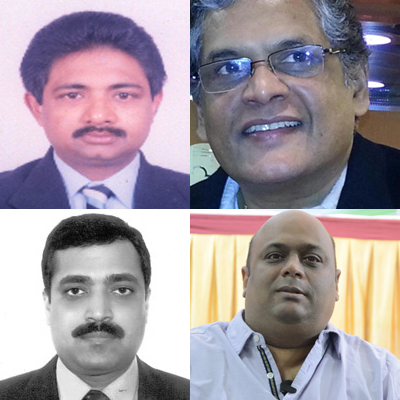
    ABS 7 Star CMD Atul Saraf

    “We welcome the recommendation paper. If one has to see, there is monopoly of one or two players in few states like Punjab, UP etc. I feel 50 per cent is also huge; it should be reduced to 25 per cent to give a level playing field. The recommendation paper if implemented will give quality service to customers,” says ABS 7 Star CMD Atul Saraf.  

    According to Hathway Cable & Datacom MD and CEO Jagdish Kumar G. Pillai, the MSO, by definition, does not have a market share of more than 50 per cent. “We are not impacted by this. And then it is just a recommendation paper. What will be interesting is how the regulator will ascertain the percentage of one’s operation till the country is fully digitised. It is impossible to know one’s percentage share in the analogue phase,” says Pillai.

    He adds, “It will impact some MSOs that are dominant players in few states.”

    Hathway Cable & Datacom MD and CEO Jagdish Kumar G. Pillai

    The recommendation paper states that MSOs that currently have more than 50 per cent stake in any state need not reduce their share, but cannot get into any further mergers and acquisition (M&A). “By this, the regulator has ensured that the MSOs are also not affected,” informs Pillai.

    Through the recommendation paper, TRAI wants to ensure that there is no dominance of any player and that there is a level playing field for the LCOs, MSOs and the broadcaster.  

    The TRAI is laying down the rules for the future. “One never knows about the future in terms of technology and also the methods used by the MSOs to operate. The regulator has to think not for a couple of years, but 10-20 years down the line. The recommendation paper ensures that the LMOs and the MSOs on pan-India basis can co-exist and function rationally,” opines Maharashtra Cable Operators Federation president Arvind Prabhoo.

    Maharashtra Cable Operators Federation president Arvind Prabhoo

    The 50 per cent cap will ensure excellent quality service, healthy competition and also keep costs in check. “The 50 per cent stake is still high, the regulator should keep the cap at 30-40 per cent,” he says. 

    According to Prabhoo, it is a progressive move by TRAI. “The authority is ensuring that there is no monopoly – vertical or horizontal and at the same time, is also ensuring that the LMOs have a choice. The LMOs welcome the move,” he states.

    Ortel Communications president and CEO Bibhu Prasad Rath says, “As I understand, the authority, through this recommendation, is trying to restrict the building up of the market share by any individual /group entity through M&A/control of an entity over many MSOs and LCOs. This does not apply to us because of our differentiated business model being independent and expanding directly through last mile connectivity without going through any M&A or control of other MSO/LCOs.”

    Rath thinks that a 50 per cent market share in a state for any MSO will be fair from a competition perspective. “So we do not see much problem in this. However, we believe that the market share should always be calculated by combining cable TV and DTH together as both aim to serve the same set of customers. The regulator has dismissed this argument which we think is unfair,” exults Rath.

    Ortel Communications president and CEO Bibhu Prasad Rath

    Rath also opines that any such regulation can be implemented smoothly when digitisation is fully put into practice. “In an analogue era, it is not practical to implement this. We hope the MIB will take care of these issues before notifying the same,” he states.

    GTPL COO Shaji Mathews says that the monopoly guidelines have their origins from the analogue era when broadcasters had complained to the TRAI. Says he: “It was an issue which was faced by the broadcasters due to dearth of space on cable networks then; it is being addressed at a time when the country is moving towards digitization.”

    Mathews feel that the recommendation paper doesn’t address two key points — one, when the cable networks join hands to fight against the broadcasters and two, when the broadcaster joins hands with a particular cable network to help them monopolise. “Both these issues which are the root cause to monopoly have not been addressed in the recommendation paper,” says Mathews.

    Mathews also points out that though the recommendation discourages monopoly, it encourages those cable operators who are related to broadcasters to grow their base in areas where they until now had no base. “For the viewer to get good service and for the cable operators to exist and also run a profitable business, there needs to be a transparent and non-discriminatory system. The regulator needs to bring laws for content players,” concludes Mathews.

    TRAI recommendations on monopoly or market dominance in cable TV services

  • MSOs miss 15 November CAF deadline

    MSOs miss 15 November CAF deadline

    MUMBAI: Multi system operators (MSOs) have bought themselves some more time to collect duly filled consumer application forms (CAF) from cable subscribers across 38 cities falling under DAS phase II.


    The earlier deadline for CAF collection was today, that is, 15 November, and consumers failing to comply would have had their transmission cut off, even after possessing set top boxes. However, as learnt from several sources in the industry, MSOs failed to meet the timeline and are now seeking further extension.  


    While a few MSOs including Hathway Cable & Datacom have extended the deadline to 20 November, smaller Kolkata-based MSOs say the procedure will be complete by 23 November.


    It was the Telecom Regulatory Authority of India (TRAI) that had previously extended the original deadline from 20 September to 15 November. When contacted, TRAI principal advisor N Parameswaran said considering it was a national holiday today, “any decision on the final date would be taken only on 18 November.”


    “The MSOs have voluntarily decided to extend the date to 20 November,” informed Maharashtra Cable Operators Federation (MCOF) president Arvind Prabhoo, adding that the regulator had asked the MSOs to send a review of DAS phase I, covering points like billing and CAF, in the interim.


    Kolkata-based Manthan and Siti Cable confirmed that they have achieved 100 per cent CAF collection whereas the Cable Operators Digitalisation Committee of the Association of Cable Operators convener Swapan Chowdhury said a 100 per cent CAF was impossible to achieve in the City of Joy with so many festivities. “We have increased the deadline for duly filled CAF to 23 November,” he said.


    Cable Operators Federation of India president Roop Sharma opined that CAF collection is a difficult task at hand for operators.


    “Considering that the broadcasters have not yet declared the rates for the channels, it is difficult for the consumer to decide which ones they want to subscribe,” she said.
    Clearly, we have not heard of the last of CAFs, phase II – as yet.

  • Hathway Broadband launches Docsis 3.0 Ultra High speed network

    Hathway Broadband launches Docsis 3.0 Ultra High speed network

    MUMBAI: Hathway Cable and Datacom, the largest cable broadband company in India, has launched the Docsis 3.0 ultra High speed network. Docsis 3.0 is a widely deployed technology and is the dominant technology powering leading Broadband markets like USA, Korea and Europe. Docsis 3.0 is capable of delivering speeds upto 1 Gigabit.

    We are the first Company to launch a Docsis 3.0 network in the country,” said Hathway Cable & Datacom MD & CEO Jagdish Kumar. “With our Docsis 3.0 network supplied by Cisco we are ready to deliver Ultra High Speed Broadband upto 50 Mbps to every retail customer in South Mumbai. We see Broadband as a key part of our business portfolio and we will soon be launching the Docsis 3.0 networks in other parts of the country. We are enabling our network for delivering a superior HD video experience on our Cable TV as well as on Broadband.”

    Hathway Broadband business head Kunal Ramteke added, “True High speed retail Broadband delivered on Docsis 3.0 will be a game changer in the market. In today’s video led internet consumption these speeds are absolutely vital for a superior consumer experience. The south Mumbai customers will be able to enjoy YouTube in HD and lightning fast responses in internet gaming. TV is also being consumed across multiple screens. With our new Docsis 3.0 plans starting at Rs 599 you will not break the bank to start enjoying these benefits.”

    Cisco service provider software solutions VP – sales Sue Taylor said, “Cisco is excited to be playing a crucial role in shaping this industry and leading it to a transformative stage with technology. Hathway has been a pioneer in its willingness to adopt technology that benefits its subscribers and we congratulate them on this important milestone.”

    To cater to this demanding high speed segment, Hathway will also be launching a dedicated Service Desk exclusively for the Docsis 3.0 customers. These desks will have fully trained staff to handle any service requirements pertaining to High speed internet access through multiple devices. Hathway is also geared to deliver 99.9 per cent network availability and service issue resolution within 24 hours recognising the criticality of a high speed connection in the connected world of today.

    Hathway Docsis 3.0 plans start from monthly Rs 599 and go upto Rs 1499 for the 50 Mbps plan which offers 50 GB of download data.
    The network is initially being deployed in south Mumbai and has been extensively tested. All existing and new customers of Hathway Broadband in south Mumbai can upgrade to the Docsis 3.0 plans. The customers will be provided a Docsis 3.0 Modem by Hathway which will be capable of supporting the Ultra High Speed Plans.

  • Hathway Broadband launches Docsis 3.0 Ultra High speed network

    Hathway Broadband launches Docsis 3.0 Ultra High speed network

    MUMBAI: Hathway Cable and Datacom, the largest cable broadband company in India, has launched the Docsis 3.0 ultra High speed network. Docsis 3.0 is a widely deployed technology and is the dominant technology powering leading Broadband markets like USA, Korea and Europe. Docsis 3.0 is capable of delivering speeds upto 1 Gigabit.

    We are the first Company to launch a Docsis 3.0 network in the country,” said Hathway Cable & Datacom MD & CEO Jagdish Kumar. “With our Docsis 3.0 network supplied by Cisco we are ready to deliver Ultra High Speed Broadband upto 50 Mbps to every retail customer in South Mumbai. We see Broadband as a key part of our business portfolio and we will soon be launching the Docsis 3.0 networks in other parts of the country. We are enabling our network for delivering a superior HD video experience on our Cable TV as well as on Broadband.”

    Hathway Broadband business head Kunal Ramteke added, “True High speed retail Broadband delivered on Docsis 3.0 will be a game changer in the market. In today’s video led internet consumption these speeds are absolutely vital for a superior consumer experience. The south Mumbai customers will be able to enjoy YouTube in HD and lightning fast responses in internet gaming. TV is also being consumed across multiple screens. With our new Docsis 3.0 plans starting at Rs 599 you will not break the bank to start enjoying these benefits.”

    Cisco service provider software solutions VP – sales Sue Taylor said, “Cisco is excited to be playing a crucial role in shaping this industry and leading it to a transformative stage with technology. Hathway has been a pioneer in its willingness to adopt technology that benefits its subscribers and we congratulate them on this important milestone.”

    To cater to this demanding high speed segment, Hathway will also be launching a dedicated Service Desk exclusively for the Docsis 3.0 customers. These desks will have fully trained staff to handle any service requirements pertaining to High speed internet access through multiple devices. Hathway is also geared to deliver 99.9 per cent network availability and service issue resolution within 24 hours recognising the criticality of a high speed connection in the connected world of today.

    Hathway Docsis 3.0 plans start from monthly Rs 599 and go upto Rs 1499 for the 50 Mbps plan which offers 50 GB of download data.
    The network is initially being deployed in south Mumbai and has been extensively tested. All existing and new customers of Hathway Broadband in south Mumbai can upgrade to the Docsis 3.0 plans. The customers will be provided a Docsis 3.0 Modem by Hathway which will be capable of supporting the Ultra High Speed Plans.

  • TRAI adamant on 23 August deadline in Kolkata, blackout to follow

    TRAI adamant on 23 August deadline in Kolkata, blackout to follow

    KOLKATA: With the Telecom Regulatory Authority of India (TRAI) strictly adhering to the 23 August deadline for collection of the customer application forms (CAFs) to help in the implementation of Digital Addressable Cable TV Systems (DAS), 50 per cent of the 30 lakh cable television consumers of the Kolkata metropolis area, might see their television sets going blank.

    Till 3:00 pm on Friday, CAFs for around 45 per cent of the cable consumers had been completed, a TRAI official told indiantelevisioin.com. “By midnight we expect the details of around 50 per cent consumers,” the official added.

    However top placed industry sources said that a 14 member team from the TRAI office is likely to come to Kolkata on 26 August (Monday), to decide the fate of the customers who have not yet filled the forms with required details. “This simply proves that MSOs will not be asked to disconnect the TV subscribers,” he said.

    It should be noted that the broadcasting regulator had set a deadline of 23 August for cable TV viewers here for filling up the CAFs including choice of channels in the subscriber management system some 40 days ago and failing which services would be stopped, it notified not once but many a times, added the TRAI official. “In fact we had two meetings with MSOs in the last one month,” he further stated.

    “In this weekend the MSOs and operators will work harder and try to feed in as much details as they can,” said people associated with the cable industry.

    Manthan Broadband Services which has more than 6.5 lakh to seven lakh subscribers has managed to collect around 35 per cent of its CAFs. “We will abide by the law. South Kolkata has done well as compared to North and Central Kolkata in terms of form submission,” said Manthan Broadband Services director Sudip Ghosh.

    “However, we expect to receive more such details on coming Saturday and Sunday,” added Ghosh.
    While SitiCable which has set up around 11.5 lakh digital addressable systems here has achived 60 per cent collection of forms and is optimistic of reaching the 70 per cent mark by midnight.

    SitiCable director (Kolkata) Suresh Sethia informed that the MSOs have received a new format from TRAI and the MSOs have been asked to send the details to the regulator on an everyday basis. “Details like number of boxes switched off, number of boxes reactivated and CAFs received,” should be filed everyday said Sethia.

    While a Hathway Cable and Datacom official stated till 3:00 pm, they had received details of more than 57 per cent customers and will be looking at 80 per cent by tonight. “We will act as per the instruction of TRAI,” he said.

    TRAI member R K Arnold who was in Kolkata recently said: “We are not going to extend the deadline beyond 23 August. In this if subscriber details including channel preference is not done, his connection is liable to be disconnected.”

    Kolkata remains to be the last metro where DAS is yet to be implemented.

    Will TRAI ask the MSOs in Kolkata to disconnect the non complying subscribers from 24 August, if the subscriber data is not updated?

    If TRAI wanted the MSOs to switch off the TV connections, it would have informed the players by now but it seems that people will get some breathing space for some hours to complete the mandate, said an analyst.

    Even if the TV screens go blank, it can be connected in two hours to three hours, after the customers send all the details via their cable operators, concluded a MSO.

  • AFs: Mumbai switch offs begin; Kolkata quo vadis?

    AFs: Mumbai switch offs begin; Kolkata quo vadis?

    MUMBAI: With Delhi under control now, the Telecom Regulatory Authority of India (TRAI) is focusing increasingly on the other two metros to ensure that all the consumer application forms (CAFs) come in to the MSOs.

    Following a meeting held on 2 August with MSOs operating in Mumbai and Kolkata, a decision has been taken that the time for carrots is over, now one needs to use the stick to get customers to get moving on their CAFs. And that stick is like Delhi is switching off their cable TV service, if the CAF is not yet in.

    “There will be no further extensions like in the past,” says a senior TRAI official. “In fact, the switch offs have already begun from 3 August. The process for switching off the set top boxes will take at least four to five days because we are talking about a huge number.”

    Hathway Cable & Datacom MD and CEO Jagdish Kumar agrees that his network has started switching off subscribers who are being tardy from 3 August. “But the process will be tedious,” he says. “So far, we have managed to collect 80 per cent of the forms duly filled.”

    Indiantelevision.com spoke to another three MSOs operating in the financial capital and all of them stated that CAF collection was between 70 and 80 per cent. Going by that yardstick, it appears as if cable TV subscribers don’t seem to be too disturbed about the stick, as the numbers mentioned by MSOs to indiantelevision.com even a month ago were in that range. Could they be opting for a DTH connection? We do not know, but a media observer, says that it could be a possibility.

    The TRAI official says that Kolkata should not expect to be treated with kid’s gloves. “When Delhi can meet the deadline why not Kolkata?” he questions. “We are sure that Kolkata will be able to meet the 23 August deadline as it does not have any other option.”

    Well cable TV operators and subscribers in Kolkata, that’s as ominous a warning as you can get!

  • Hathway Cable seeks shareholder nod to enhance borrowing limits

    Hathway Cable seeks shareholder nod to enhance borrowing limits

    MUMBAI: Being one of the first movers in the cable TV industry, the Rajan Raheja group promoted Hathway Cable & Datacom, has been aggressively pushing the agenda of digital addressable systems (DAS) nationally. And its aggressive digitisation drive means it has to have oodles of cash when it needs it.

    And it is taking steps to ensure that its pockets are bulging with cash. The cable giant earlier this week informed the bourses about it seeking an approval from its shareholders in order to raise the borrowing limits.

    Hathway leads the Rs 37,000 crore Indian television industry with a handsome 23.5 per cent market share across 140 cities with over 71 analogue and 20 digital head ends across India.

    In light of its great potential in installing set top boxes in subscriber homes, and also considering the effective implementation of the broadband initiatives, the Hathway directors considered it savvy to extend their current borrowing limit of Rs 1,200 crore to Rs 1,400 crore. Earlier this year (25 February 2013) Hathway‘s board had got its shareholders‘ nod (through postal ballot) to enhance its borrowing limit to Rs 1,200 crore but deeming it insufficient, it has once again asked to increase it by Rs 200 crore.

    As per section 293(1) (d) of the Companies Act, 1956, the power of the board of directors to borrow money(s) in excess of the aggregate of the paid-up capital and free reserves of the company, requires an approval from the shareholders of the company.

    Apart from seeking an approval on an ordinary resolution for increasing the borrowings limits of the company, the BOD also seeks the shareholder‘s affirmation for bestowing the powers upon the BOD to create a charge/hypothecation/mortgage on the movable/immovable properties of the company for securing the borrowings of the company as it may consider fit.

    The deadline for the postal ballot has been dated 22 July 2013, before which the shareholders must return the form attached with the self addressed postage prepaid envelope to the scrutiniser. The alternate medium available is through the e-voting platform provided by the company.