Tag: Data security

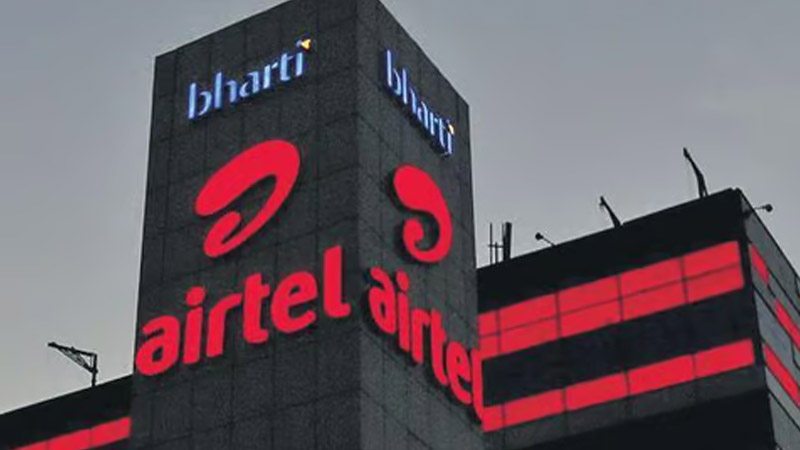
  • Airtel’s AI solution flags eight billion spam calls in 2.5 months

    Airtel’s AI solution flags eight billion spam calls in 2.5 months

    MUMBAI: Remember the days when our phones buzzed incessantly with spam calls, and we wished for a magic wand to make them disappear? It felt like a far-off dream, especially during those pandemic days when AI was making life easier in ways we never imagined. Fast forward to today, and the digital universe is buzzing with AI tools for every conceivable purpose—yet the menace of spam calls persisted, poking its nose into our daily peace.

    But then, Airtel stepped in, promising us relief with its AI-driven spam-blocking innovation. The big question was: would it truly work, or would it just be another tech gimmick? Well, the results are in, and they’re nothing short of astonishing, albeit with a sprinkle of curiosity.

    In just 75 days, Airtel’s AI flagged a jaw-dropping eight billion spam calls and 800 million spam SMS messages. Impressive, right? But as we sift through the details, the big question looms: has Airtel really silenced the spam storm, or are there gaps to fill? Let’s dive into the numbers and see if this is the revolution we’ve been waiting for—or if we’re left wanting more.

    Airtel’s sophisticated AI algorithm has been instrumental in identifying approximately 1 million spammers daily, alerting 252 million unique customers to suspicious activities. This initiative has led to a 12 per cent reduction in the number of customers answering spam calls, marking a significant step toward user security.

    Key insights from Airtel’s spam report

    ●    Spam Sources: Over 35 per cent of spam calls originated from landlines, with Delhi leading as both the top spam call origin and recipient region. For SMS, Gujarat emerged as the top origin, targeting users in Mumbai, Chennai, and Gujarat.

    ●    Demographic Impact: Male customers accounted for 76 per cent of spam calls, with those aged 36–60 receiving 48 per cent of calls. Senior citizens were notably less targeted, at just 8 per cent.

    ●    Device Preferences: Phones priced between Rs 15,000 and Rs 20,000 were the most frequent recipients, comprising 22 per cent of spam calls.

    ●    Peak Hours: Spam activity peaked between noon and 3 PM, with a notable 40 per cent drop in volume on Sundays.

    Airtel’s AI-driven system meticulously analyses diverse parameters to provide real-time detection, ensuring privacy and convenience for its users. This innovation solidifies Airtel’s position as India’s first network to deploy a comprehensive spam-blocking solution, delivering industry-leading security measures.

    “We are committed to safeguarding our customers from the growing menace of spam. Our advanced AI system reflects our dedication to delivering superior experiences while prioritising user privacy,” an Airtel spokesperson said.

    With this initiative, Airtel reaffirms its commitment to enhancing user trust and redefining industry standards. The solution not only curbs intrusive communications but also paves the way for a safer and more secure digital environment.

  • Personal data of 53.3 crore Facebook users leaked online

    Personal data of 53.3 crore Facebook users leaked online

    KOLKATA: Social media giant Facebook has become embroiled in yet another privacy breach controversy, as the personal data of around 53.3 crore users has been allegedly leaked. The breach includes data of 60 lakh users in India as well.

    According to reports, phone numbers, Facebook IDs and bios, full names, birth dates, locations, even email addresses in some cases have been exposed. “A database of that size containing the private information such as phone numbers of a lot of Facebook’s users would certainly lead to bad actors taking advantage of the data to perform social engineering attacks [or] hacking attempts,” said cybercrime intelligence firm Hudson Rock CTO Alon Gal, who spotted the leak on Saturday.

    Facebook claimed in an email statement that this is old data that was previously reported on in 2019 and the issue has already been fixed. However, the company has not taken any steps yet to notify users if their data has been compromised. Even if the data is outdated, it could provide valuable information to cybercriminals. Moreover, a lot of old data may remain relevant given that many of the phone numbers or email ids associated with the account could be the same as earlier.

    In January, a user in a hacking forum advertised an automated bot that sold phone numbers of millions of Facebook users. Now the entire dataset has been posted online for free on low level hacking forums making users more vulnerable to cybercrimes.

    Facebook has been grappling with data security issues for years. In 2018, the platform disabled a feature that allowed users to search for one another via phone number following revelations that the political firm Cambridge Analytica had accessed information on up to 87 million Facebook users without their knowledge or consent.

    In December 2019, a Ukrainian security researcher reported finding a database with the names, phone numbers and unique user IDs of more than 267 million Facebook users — nearly all US-based — on the open internet. It is unclear if the current data dump is related to this database.

  • Facebook’s revenue rises by 28% to $16.9 billion in Q2 earnings

    Facebook’s revenue rises by 28% to $16.9 billion in Q2 earnings

    MUMBAI: Facebook beat analysts’ expectations in the second quarter, posting $16.9 billion in revenue with money from advertising pegged at $16.62 billion. The result came after hours aftee Facebook struck a $5 billion settlement with the Federal Trade Commission following the 2018 Cambridge Analytica scandal. The social media giant recorded a $2 billion charge in the quarter tied to the FTC settlement while it previously set aside $3 billion.

    The social media giant’s earnings per share rose to $1.99 cents in the quarter and monthly active users across its family of services, which includes Instagram and Whatsapp, were 2.41 billion as of 30 June 2019, an 8 per cent increase year-on-year. Moreover, daily active users also saw an increase of 8 per cent reaching 1.59 billion on average for June 2019.

    In addition, the company estimates that more than 2.1 billion people now use Facebook, Instagram, WhatsApp, or Messenger every day on average and more than 2.7 billion people use at least one of the company’s family of services each month.

    “In July 2019, we entered into a settlement and modified consent order to resolve the inquiry of the FTC into our platform and user data practices. Among other matters, our settlement with the FTC requires us to pay a penalty of $5 billion and to significantly enhance our practices and processes for privacy compliance and oversight,” the company highlighted.

    “In particular, we have agreed to implement a comprehensive expansion of our privacy program, including substantial management and board of directors oversight, stringent operational requirements and reporting obligations, and a process to regularly certify our compliance with the privacy program to the FTC. In the second quarter of 2019, we recorded an additional $2 billion accrual in connection with our settlement with the FTC, which is included in accrued expenses and other current liabilities on our condensed consolidated balance sheet,” it added.

    Facebook mentioned that the company was informed by the FTC in June that it had opened an antitrust investigation of its company. It also noted that the online technology industry and the company have received increased regulatory scrutiny in the past quarter. Moreover, the Department of Justice announced in July that it will begin an antitrust review of the market-leading online platform.

  • Twitter refuses to appear before Parliamentary Committee on IT

    Twitter refuses to appear before Parliamentary Committee on IT

    MUMBAI: Amid growing concern about data security, Twitter CEO and senior officials declined to appear before the Parliamentary Committee on Information Technology on 11 February. The global social media giant cited “short notice of the hearing” as reason for the refusal.

    Earlier the Parliamentary Committee headed by Anurag Thakur issued a summon to Twitter via official letter to discuss the issues concerning the use of social media. While 7 February was decided as the date for meeting, it was rescheduled to 11 February to provide more time to Twitter CEO and senior officials.

    "It may be noted that the head of the organisation has to appear before the committee," the letter clearly mentioned according to reports. "He/She may be accompanied by another representative," it further added.

    Twitter's legal, policy, trust and safety global lead Vijaya Gadde sent back a letter stating, "No one who engages publicly for Twitter India makes enforcement decisions with respect to our rules for content or accounts in India."

    The letter also added that deputing a junior employee to represent Twitter at the Indian Parliamentary IT Committee has not gone down well with Indian lawmakers especially since they have no decision making authority.

  • Airtel, Saavn got special access to users’ data even after 2015: Facebook

    Airtel, Saavn got special access to users’ data even after 2015: Facebook

    MUMBAI: Facebook’s data controversy is engulfing numerous companies including many renowned ones in India. India’s largest telecom Bharti Airtel and music streaming app Saavn were among the firms that could have accessed data of Facebook even after 2015. This revelation has come to light based on submissions made by Facebook to the US Congress.

    In the submission, Facebook named Airtel and 51 other companies for having an “integration partnership”. Facebook authorised those companies to access its user data in order to “recreate Facebook-like experiences”. However, Airtel has claimed the deal ended in 2013.

    “Integration partners were not permitted to use data received through Facebook APIs for independent purposes unrelated to the approved integration without user consent,” Facebook said in the reported submission.

    Saavn was also among the companies which could access details of Facebook users’ friends. While the social media platform announced that data access would be blocked from May 2015, Saavn along with some other app developers were given extra time to become compliant with Facebook’s more restrictive platform API (application programming interface) policy.

    “Such access to information about an app user’s friends required not only the consent of the app user, but also required that the friends whose data would be accessed have their own privacy settings set to permit such access by third-party apps,” Facebook said.

    Since the Cambridge Analytica data scandal, Facebook has been facing tough times regarding data security.

    Also Read:

    FB reveals CA harvested data of up to 87 mn people

    Mark Zuckerberg says ‘sorry’ for Facebook’s privacy crisis

  • FB reveals CA harvested data of up to 87 mn people

    FB reveals CA harvested data of up to 87 mn people

    MUMBAI: The Cambridge Analytica (CA) data breach row continues to loom over social media giant Facebook. Revealing a far higher figure of affected users than the estimated 50 million, the company itself confessed that the data of up to 87 million users may have been improperly shared. Admitting in a blog post by the company’s chief technology officer Mike Schroepfer, the company provided its plan to restrict data access on the social media platform.

    When the controversy first broke out regarding British data analysis firm CA, it was reported that CA illegally obtained data of around 50 million Facebook users. Now, the added 37 million proves the earlier reports were just the tip of the iceberg. The 2016 US Presidential election which saw the landslide victory of Donald Trump has been rife with allegations that CA targeted voters on the back of illegal data. Soon after the first few reports, the fiasco became subject of debate all over the world.

    Facebook also shared the number of users likely affected from several countries including India. Indian users constitute 0.6 per cent (562,455) of the total number of affected users and naturally, the US is the highest affected country with 70,632,350 users (81.6 per cent).

    “In total, we believe the Facebook information of up to 87 million people — mostly in the US — may have been improperly shared with Cambridge Analytica,” Facebook officially said. CA, however, had licenced data for “no more than 30m people from GSR” and “did not receive more data than this”.

    The revelation comes at a time when after seven days Facebook CEO Mark Zuckerberg would make his first appearances before US Congress to answer questions about the recent data misuse. On next Wednesday, Zuckerberg will appear before the House Energy and Commerce Committee to testify at a hearing on data privacy. It is certain he will face strong criticism.

    Australia’s privacy commissioner has launched an investigation to determine whether Facebook breached the Australian privacy act after knowing that 300,000 Australians are suspected of their data being breached by Cambridge Analytica.

    From restricting app permissions for information like check-ins, likes, photos, posts or a group content to deleting a tool which allows users to search someone with e-mail id or phone number, the company is putting several efforts to restore users’ faith. “We’ve reviewed this feature to confirm that Facebook does not collect the content of messages — and will delete all logs older than one year,” Facebook said assuring to review the feature which collects call and text history.

    Users are likely to learn from this lesson and be wary about giving away their personal information through public platforms. While data analytics is a necessity for businesses, tech companies also need to put an ethical check to data mining until proper regulations are formed to prevent such mishaps. Besides focusing on the analytic tool, the time has come to strengthen the cybersecurity of the entire ecosystem.

    Also Read :

    Facebook’s move to limit use of third party data brokers angers advertisers 

    Facebook data fiasco gets murkier 

  • Facebook data fiasco gets murkier

    Facebook data fiasco gets murkier

    MUMBAI: Data has been touted as costlier than oil in the new digital era. While it may not be the case, the Cambridge Analytica (CA) data scandal has at least indicated that it is partially true. Raising questions on users’ data security on social media platforms, the controversy has dented Facebook’s credibility enormously. Now, the hullabaloo is not only limited to the US, from where it started but is also becoming a subject of debate in other parts of the world.

    Over the last few days, British data analysis firm CA has been at the centre of attention worldwide because of its alleged leak of more than 50 million Facebook users. The firm illegally obtained data to target US voters during the 2016 presidential election, which witnessed Donald Trump’s landslide victory.

    Russian-American psychology professor at Cambridge University Aleksandr Kogan built an app in June to harvest data for the scandal-hit British firm. Under the guise of academics, Kogan accessed data of users who used the ‘This is Your Digital Life’ app to participate in a survey. Facebook grossly denied terming it a “data breach” because it routinely allows researchers to have access to user data. It does not, however, allow sale or transfer of such information.

    In the wake of the entire controversy, Facebook CEO Mark Zuckerberg has apologised in full-page ads in seven British newspapers and three American dailies on Sunday. “This was a breach of trust and I’m sorry we didn’t do more at the time,” wrote Zuckerberg. “I promise to do better for you.” He has also pledged that the company would restrict third-party apps from acquiring such data.

    This time, though, a mere apology won’t help Facebook to mend its reputation. From Russian interference in the US presidential elections to Brexit, Facebook has been constantly been in the spotlight in failing to protect users from fake news. This CA controversy has wiped out nearly $75 billion of the company’s market capitalisation in one week.

    This single incident acts as an eye-opener for a far more deep-rooted problem at hand. The entire tech industry views user data as a commodity, which can be mined any time without permission. While users give permissions to several apps, allowing the access of personal data, including location or credit scores or anything linked to the device, organisations trade with data by circumventing regulation.

    Companies other than Facebook have also been hit by data breaches, weakening public confidence in them. Facebook’s connection to people’s social and personal lives has brought to light the magnanimity of the issue. It is time to bring such platforms under a regulation to plug the problem of data misuse.

    While both sides of the Atlantic were shaken up, India has also started taking the problem seriously. The country with Facebook’s largest user base of over 241 million is obviously concerned thanks to the whole fiasco. Minister for law and IT Ravi Shankar Prasad on 21 March sent out a warning to Zuckerberg that any kind of “data theft” would not be tolerated and he could even be “summoned”.

    Later, the Ministry of Electronics and Information Technology sought a response from CA on whether it was involved in the misuse of data to profile Indians and influence their voting behaviour.

    The ministry wants to know by 31 March 2018 the methodology used by the firm for possession of data as well as whether it took consent from the users or not. It has also asked for information on entities that have engaged the firm for the data breach.

    Though it is not sure till now whether the Indian election suffered any problem from the entire scam which started in 2015, Ovleno Business Intelligence (OBI), an Indian affiliate of CA’s parent firm Strategic Communications Laboratories (SCL), listed both the BJP and the Congress as its clients. Even the company website says “CA was contracted to undertake an in-depth electorate analysis for the Bihar Assembly Election in 2010.”

    The Congress and the BJP both accused each other of alleged connections with OBI. A report in The Print states that CA CEO Alexandar Nix came down to India and worked with several others from its parent firm SCL to create an electoral database in India and to hunt clients.

    Before the 2019 legislative election, the entire revelation may help regulators to protect constitutional sanity and look into the loopholes. Facebook is now widely used by political parties and politicians. Fake news or any data breach could be dangerous for a large democracy like India. In an interview with CNN,  Zuckerberg himself mentioned the “big election in India”. The data disaster demands regulators to take a call, consumers to be more aware of being used and the whole tech industry to reinvent security to gain the faith of users.

    Also Read:

    Mark Zuckerberg says ‘sorry’ for Facebook’s privacy crisis

    Facebook to ban cryptocurrency ads