Tag: Data Protection

  • Government announces draft bill on personal data protection; proposes penalty of up to Rs 500 cr

    Government announces draft bill on personal data protection; proposes penalty of up to Rs 500 cr

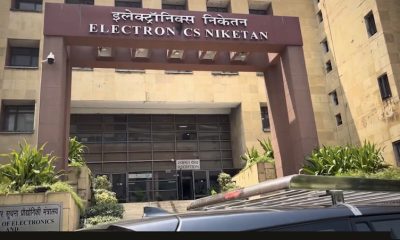
    Mumbai: The ministry of electronics and information technology (MeitY) has formulated a draft bill, titled “The Digital Personal Data Protection Bill 2022.” In a press release published on Friday, the ministry invited feedback from the public on the draft bill. According to the statement, the draft is open for public comment till December 17.

    As expected to be presented in the next session of parliament, the purpose of the draft bill, as stated in the official statement from the ministry, is to provide for the processing of digital personal data in a manner that recognises both the right of individuals to protect their personal data and the need to process personal data for lawful purposes and for matters connected therewith or incidental thereto.

    In addition to this, the ministry has further stated that it has raised the penalty amount to up to Rs 500 crore for violating the provisions proposed under the draft bill. The draft bill, released in 2019, proposed a penalty of Rs 15 crore or four per cent of the global turnover of an entity.

    The proposed bill comes in place of the Data Protection Bill, which was withdrawn by the ministry in August this year. The draft proposes to set up a Data Protection Board of India, which will carry out functions as per the provisions of the bill.

    “The Digital Personal Data Protection Bill”

    The Digital Personal Data Protection Bill frames out the rights and duties of the citizen (Digital Nagrik) on the one hand and the obligations to use collected data lawfully of the data fiduciary on the other.

    In an explanatory document issued by the MeitY, seven principles around the data economy have been listed on which the bill is based:

        The first principle is that organisations must use personal data in a way that is legal, fair to the individuals involved, and transparent to individuals.

        The second principle of purpose limitation is that the personal data is used for the purposes for which it was collected.

        The third principle of data minimisation is that only those items of personal data required for attaining a specific purpose must be collected.

        The fourth principle of accuracy of personal data is that reasonable efforts are made to ensure that the personal data of the individual is accurate and kept up-to-date.

        The fifth principle of storage limitation is that personal data is not stored perpetually by default. The storage should be limited to such a duration as is necessary for the stated purpose for which personal data was collected.

        The sixth principle requires that reasonable safeguards be put in place to prevent the unauthorised collection or processing of personal data. This is intended to prevent personal data breaches.

        The seventh principle is that the person who decides the purpose and means of processing personal data should be accountable for such processing.

        These principles have been used as the basis for personal data protection laws in various jurisdictions. The actual implementation of such laws has allowed the emergence of a more nuanced understanding of personal data protection wherein individual rights, public interest, and ease of doing business, especially for startups, are balanced.

    Financial penalty:

    “If the board determines at the conclusion of an inquiry that non-compliance by a person is significant, it may, after giving the person a reasonable opportunity of being heard, impose such a financial penalty as specified in Schedule 1, not exceeding rupees five hundred crore in each instance,” stated the draft.

    Other obligations included are:

        The draft bill has proposed a graded penalty system for data fiduciaries that will process the personal data of data owners only in accordance with the provisions of the act.

        The same set of penalties will be applicable to the data processor — which will be an entity that processes data on behalf of the data fiduciary.

        The draft has proposed a penalty of up to Rs 250 crore in case the data fiduciary or data processor fails to protect against personal data breaches in its possession or under its control.

        The draft has also proposed a penalty of Rs 200 crore in case the data fiduciary or data processor fails to inform the board and data owner about the data breach.

    Furthermore, in the draft issued by the MeitY, there is a provision to allow entities to transfer the personal data of a citizen outside the country in cases where the processing of personal data is necessary for enforcing any legal right or claim, the performance of any judicial or quasi-judicial function, the investigation or prosecution of any offence, or the data owner is not within the territory of India and has entered into any contract with any person outside the country.

    “The central government may, after an assessment of such factors as it may consider necessary, notify such countries or territories outside India to which a data fiduciary may transfer personal data,” it added.

  • Why did government retract Data Protection Bill

    Why did government retract Data Protection Bill

    Mumbai: Union IT Minister Ashwini Vaishnaw has withdrawn the Data Protection Bill from Lok Sabha on 3 August 2022. The centre will review the policy and come up with a ‘comprehensive legal framework’ for regulating online data privacy. The new regulation on data protection will help the overall internet ecosystem, safeguard against cybercrime, and secure non-personal data.

    The Data Protection Bill was first introduced on 11 December 2019. The bill was referred to the Joint Committee of the Houses for examination on 16 December 2021 & later, the committee presented the report in the Lok Sabha. The joint parliamentary committee raised concerns and provided 93 recommendations that explain why the government cannot invade one’s privacy. The government will introduce the new regulation during the winter session of the parliament this year.

    Why did political parties oppose the bill?

    In 2019, the opposition parties such as Congress and Trinamool Congress vehemently protested against this bill as it violated the fundamental rights of the citizens. The opposition believed that the bill provided power to the government to access the personal data of individuals, and it lacked transparency and was opaque.

    It is imperative to provide adequate protection to people on their privacy rights. Currently, India is the fastest growing data-generation nation in the world with over 700 million Internet users and more than 400 million smartphone users.

    Which data can the government have access to?

    Data is usually generated through four sources such as personal data, bank accounts data, medical records and employment data. Other data is generated from web searches and visits to any web portals. The data helps to understand and identify people’s choices, preferences and histories.

    It is also generated through a cache that comes from social media posts, tweets, phone calls, emails and videos. It is also generated through coordinates from the real-time location. Stacks of data are also collected from one’s spending patterns when an individual purchases online, via modes of payment used, and transactions made through payment gateways.

    It is that personal data many individuals would like to keep private and the government exercising control on accessing it- is a serious matter of concern. There needs to be a mechanism and policy in place to process such data without breaching people’s trust and protecting its safety & security.

  • What you should know before pressing ‘I Agree’ button

    What you should know before pressing ‘I Agree’ button

    NEW DELHI: 'Data is the new oil' is what we have been hearing for a long time now and observing how the marketing industry is relying on this pool of numbers to guess user behaviour, identify target consumers and customer-centric marketing campaigns. One mode of reaching out to prospective customers has been the use of programmatic advertising, using buying and selling of data using artificial intelligence.

    While this gives the marketers and advertisers great power in hand to grow their business, it also raises pertinent questions about the pressing topic of consumer data protection, too.

    In a virtual press meet, organised by Xaxis India, country head Bharat Khatri addressed the issue. While there are options for the consumers to protect their data and limit access they give to the apps and browsers, the lag remains in making them aware about these choices.

    “To give you a quick example, you can use the settings option on your android device to opt-out of ad personalisation, which means stop sharing your advertising ID with any of the apps, or on a music streaming platform like Spotify, you can see and monitor all the data you are sharing with them,” Khatri said.

    He added, “Yes, in a country like India, there is a lot that can be done to make the consumers aware of these options. There needs to be education around this.”

    In a separate telephonic conversation with Indiantelevision.com, IdeateLabs MD Amit Tripathi also stated that data privacy is a big issue as digital grows. “Data is not very safe online. With every “I Agree” button you click, you are sharing lots of personal information with the platform. It makes sense from a business perspective, as to provide you with free services, they will have to get the advertisers’ money coming in.”

    While all these digital platforms, the apps or browsers, give the users the option to opt-out of data sharing, limiting access to personal information, etc., is a cumbersome procedure. People need to be educated about this.

    “I think there is a vast opportunity for entrepreneurs to work in this field and I believe that in future, not so distant, we will have actual training for how to protect your data online, or how to deal with cyber bullying. There are a lot of progressive schools that are already teaching the latter, and I think, in future, it is going to be even more rampant,” Tripathi commented.

    He continued that only drafting policies might not be a solution as in a big country like India, it will take some time to get it implemented. “For example, even for setting a cybercrime cell, you need trained manpower, hackers to compete with hackers, people who understand data; and this force can’t be created overnight. We obviously will need to train people and set up a system.”

  • Is FB-Jio deal just a great Indian e-commerce story?

    Is FB-Jio deal just a great Indian e-commerce story?

    MUMBAI: What has been hogging the limelight lately? The Rs-43,574-crore Facebook-Jio deal. When the entire country continues to be bogged down by the Covid2019 pandemic, when marketing sentiments were at their nether, the deal came as a big surprise, a refreshing break from all the gloom and doom. Indeed, it is worth the tom-tom, for, the world’s largest social media group has just invested in India’s largest telecom operator, Jio, run by the country’s richest man Mukesh Ambani. Irrefutably, it's a multifaceted deal, but more skewed towards e-commerce play. Even though Jio’s parent company Reliance Industries Ltd (RIL) has a hold over the Indian media and entertainment ecosystem, there have been speculations about its impact on the sector but it's going to be a minor one for now.

    Because the two giants have been known to disrupt the ecosystems over and again, it's not easy to predict the direction this new association might take. But the e-commerce ambition is unquestionable and has become more evident with JioMart going live on WhatsApp in some areas of Mumbai. Announcing the deal, Jio said: “Our focus will be India’s 60 million micro, small and medium businesses, 120 million farmers, 30 million small merchants and millions of small and medium enterprises in the informal sector.”

    Will India get its own WeChat?

    SBICap Securities institutional equity research head Rajiv Sharma says WhatsApp Payments is in the process of getting launched and it took five years for Paytm to get all the vendors and merchants signed up. While Jio is doing this kirana commerce, it will be significantly faster for WhatsApp Payments to go to market thanks to the partnership. 

    “For Facebook, it is ‘get set go’ on the WhatsApp Payments and WhatsApp Business and if it can make it work here then not only it will improve the value but also the investment it has made, and it will create a new revenue stream. And that model can be replicated in other countries,” he adds.

    An analyst unwilling to be named says WhatsApp will turn out as WeChat of India as Facebook will use even Instagram and look at expanding the horizon by looking at other sectors like healthcare as well. According to him, Jio is going to create a market along with Facebook through this “thick partnership.” It will empower them to do multiple businesses. 

    “I'd always said India will be eventually a hybrid e-commerce market with neighbourhood kirana stores being an integral part of fulfilment strategy. JioMart and WhatsApp have the potential to significantly build on this model and change the rules of the e-commerce landscape in India. While on one side the ease of WhatsApp will make it convenient for consumers to transact, the reach and prowess of the JioMart engine will provide the necessary boost to WhatsApp to exponentially grow as a business platform. It will be interesting to see how Google Spot and Paytm Mall play out their strategies in this space,” PwC India media, entertainment and sports advisory, partner and leader Raman Kalra says.

    What Jio gets out of it?

    Ambani’s biggest bet for the future will also benefit from the deal. The first and foremost is Jio’s debt coming down as RIL may go soon with the former’s initial public offering (IPO). Moreover, the company had laid out a plan to become net debt-free. The deal also comes at a time when the market is significantly hit by the Covid2019 crisis, making business worse for many tycoons. And not to be forgotten, RIL’s oil business may face a huge headwind in the future, especially with the delay in its deal with Saudi Aramco too.

    Sharma explains that while Jio is focusing a lot on commerce, WhatsApp is a great brand to make it very easy for the kirana guys to relate to, if you have payments linked to your chat. Elara Capital VP – research analyst (media) Karan Taurani says that access to Facebook’s large user base across apps will help Jio’s e-commerce ambition, making it a large entity after Amazon and Flipkart. 

    “Across various platforms (Facebook, WhatsApp, Instagram), FB enjoys significant time wallet share of Indian consumers and with Jio's reach across content and commerce, it creates an attractive value proposition and stickiness for existing consumers as well as the incremental net new consumers. This boost can fuel the digital adoption across multiple untapped segments of society across end consumers and small businesses. With Facebook's focus around groups and communities, the extended reach can provide an exponential boost across healthcare and education segments,” Kalra adds. 

    Will the media and entertainment sector see an immediate impact?

    Although e-commerce is the biggest narrative here, stakeholders and experts across the media and entertainment sector are also evaluating the deal. This is not unpredictable as RIL has built its own media empire by acquiring majority stakes in networks, content production studios, etc. While there is no short-term impact, the combined force can create another wave of disruption in the industry.

    Sharma says that both could share insights around consumers and subscribers, based on data that could allow them to understand consumer behaviour around digital content in a much better way. If Facebook shares some of the consumer insights on Indian users and Jio shares that of all its users, both the parties can have a huge understanding of how the larger part of India is consuming content.

    “From a media and entertainment perspective, the combined force will carry the potential. However, a lot would depend on the content creation and sharing strategies between the two. With extended reach into the hinterland and rural segments, Facebook will have the opportunity to provide extended services around short-form video creation like TikTok and end the monopoly in that segment. I do expect sports streaming to become a strategic focus for the combined force in times to come. All this leading to higher time share on FB platforms could also help them with a few incremental points gain in the digital advertising market share,” Kalra says.

    Data sharing concerns?

    With the massive extraordinary user base, both the parties have access to huge data which has created a concern in the ecosystem. One of the legal experts in the M&E sector says it's important to evaluate the conditions of data sharing, given Facebook’s tainted record, especially in the recent past with regard to data privacy and sharing. Considerably, India is yet to finalise a data protection law. He also adds that the unfair advantage of data sharing may throw more challenges to competitors. However, according to media reports, both the parties emphasised that there would be no data sharing. 

  • Indian M&E saw mix of regulations change the game in 2018

    Indian M&E saw mix of regulations change the game in 2018

    MUMBAI: If TRAI’s tariff regime for the Indian broadcast and cable sectors did not occupy top mind space of the industry in 2018, the year just gone by could also boast of some other major regulatory exploratory moves that could have deep impact on the sector in the near future; especially those relating to data protection, digital communication policy and online content that, according to some critics, is on a freeway with no checks and balances.

    Though many would say that the Indian media sector continues to be a challenging market (a polite euphuism for high level of regulation) offering tantalising opportunities because of sheer numbers on offer, Indian policy-makers have always had to counter such perceptions and, like their peers in many other parts of the globe, have at times found themselves outpaced by technology.

    Increasing protectionism aka economic nationalism around the world, led by the likes of US, the UK and China, resonates very well with Indian politicians and policy-makers too. And, such a trend is led more by regulations.

    Year 2018 has seen an interesting mix of regulations (some are still in the formative stages) for the Indian media and entertainment sector. Here we try to capture some of the annual highlights.

    Telecom Regulatory Authority of India

    Broadcast carriage regulator Telecom Regulatory Authority of India (TRAI)’s new tariff regime that had been embroiled in legal tangles hogged the limelight throughout 2018 with judicial directions clearing some hurdles. The last part relating to the 15 per cent discount cap was also dismissed as withdrawn in the Supreme Court.

    Issued early 2017, tariff regime aims to do away with bundling of TV channels and offering them on a la carte basis to consumers, apart from other directions like caps on discounts to consumers and distributors of content. The regulation’s main aim was to empower further a consumer who has primarily grown up on a diet comprising free meals. I-should-have-access-to-200-TV-channels-and-best-content-but-will-pay-a-nominal-monthly-fee attitude has over the years definitely spoilt the Indian consumer and part of the blame does lie with the industry that has been subsidising costs in a mad race for numbers.

    Now that TRAI wants to break those shackles of the consumer, industry stakeholders also have been pushing back against changes in the status quo. If content aggregators or broadcasters are to be blamed for subsidising costs, distributors, especially LCOs, too should be blamed for refusing to change with time and technology that have now brought them to the precipice where saying no to technological changes and upgradation could only hurl them towards closure. Lack of proper awareness and education of consumer too has created a vote bank of sorts that wants to consume global dishes at Indian rates.

    TRAI could be blamed for many things, but certainly not for lack of transparency. One of the most transparent regulators in the country, not only does it hold wide ranging discussions with stakeholders and industry, but has made some good recommendations too. For example, the regulator’s suggestions on ease of doing broadcast business, a new DTH policy and even use of foreign satellites or Open Sky Policy are not only radical but progressive and industry-friendly.

    However, many such nuggets are not implemented by nodal ministries like the Ministry of Information and Broadcasting, Department of Telecoms and Department of Space.

    In 2019 it is to be seen the stand TRAI takes on issues like proposed changes in audience measurement, OTT platforms (excluding video content) and the fast disappearing boundaries between telecom and traditional media companies as business interests converge.

    Ministry of Information and Broadcasting

    For MIB the year 2018 has been a roller-coaster ride with a former minister making more news than policies it has framed and rolled back. Whether it was a purported crackdown on social media and online journalists or handing out diktats to Indian TV channels to shift to Indian transponders or face the music or planning a social media hub within the ministry to track Indians’ digital footprints, TV-actress-turned-politician Smriti Irani has been in the limelight too often… till a Cabinet reshuffle saw her relinquish her MIB responsibilities to her junior minister Rajyavardhan Rathore in the first quarter of the year.  

    Irani waded into controversies because of her largely perceived unpopular move to create a panel in April 2018 to explore regulations for online media/news portals and online content. It did not help her or the government’s cause as this announcement, though being hinted at for several months, came close on the heels of a widely protested move to cancel accreditation of journalists if found peddling fake news, while the government did not define clearly what constituted fake news.

    Though the order was rescinded at the behest of the PM’s Office, the move had antagonised not just online journalists, but also social media players (many of whom are backed and funded by government’s sympathisers) and video-on- demand portals. That the responsibilities have been now passed on to Ministry of Electronics and Information Technology (Meity) tells how hot a potato it had been — and still continues to be with the latter being able to only partially address some of the issues.

    It would be an understatement to say that the past two years have been a difficult period for the Indian media and entertainment (M&E) sector what with after-effects of demonetisation of high value currency notes late 2016 and a new tax regime of GST rolled out last year. The story remains the same for ease of doing business in the sector as well.

    MIB is still to focus on the recommendations made by TRAI on 'Ease of Doing Business in Broadcasting Sector’ and implement them in letter and spirit. A unilateral decision by the previous leadership of MIB to impose a processing fee of Rs 100,000 per day/channel on temporary live uplinking of events (such as sports) and the same amount for seeking minor amendments (like change in name, logo, etc) is still causing heart burns.

    What was the rationale behind such moves to review processing fees? Allegedly non-revision for several years and that such a move could bring in some revenue for the government. But, should a government use licensing/permission fee as means of revenue maximisation? Probably, no.

    Towards the end of 2018, a proposal to amend the mandatory sports sharing rules to allow all distributing platforms to re-transmit sports programmes on Doordarshan’s terrestrial network where the rights lie with a private sector TV channel is unlikely to please those broadcasters who have invested billions of dollars in getting premium content for the Indian region. Giving up exclusivity would hurt the business, the sports broadcasters have chorused. It is to be seen how the MIB reacts to criticism of such a proposal.

    A revision of the DTH policy too is hanging fire as is an overhaul of the film certification processes as suggested by the Shyam Benegal committee. Interestingly, clearances for new TV channels too slowed down in 2018.

    Ministry of Electronics and Information Technology (Meity)

    For the Indian M&E sector, Meity gained importance in 2018 as proposals to regulate OTT platforms like WhatsApp, Facebook, YouTube, etc fell in its lap as has the proposal to frame content guidelines for the country’s burgeoning digital sector.

    If online video distribution is growing in India, so has the demand for content regulation. Even as Indian policy-makers struggle to understand the business model(s) for digital players, the cry for regulation to suit Indian sensibilities (or lack of it) too has increased. Netflix Indian original Sacred Games is still fighting out a legal case, while informal warnings have gone to other Indian OTT platforms too to tone down edgy programming being streamed.

    Bouncing amongst several government organisations (MIB, TRAI and Meity), the issue of online content regulation was a hotly debated topic in India with a large section of the industry pushing for self-regulation like those prevailing for TV content.

    If not in 2018, some sort of content regulation for online video will definitely come. With general elections round the corner in Q1 of 2019, Meity has preferred to sit over the issue of online content regulations.

    In response to a question asked by Congress Party’s Dr AM Singhvi few days back, the government informed Rajya Sabha or Upper House  that it has no proposal to introduce a legislation to codify web media and news portals or to introduce legislation for mandatory registration of web news portals. So, it’s truce for the time being.

    Department of Space

    Indian Space Research Organisation (ISRO) over the years has done some incredible work, including making the country an important player in the realm of global space industry. But in its zeal it has also ended up with several conflicts of interest — most importantly being a player and a gatekeeper or a regulator too.

    Thus, despite PM Modi’s government claiming it has eased norms for doing business in India, the foreign players in the space sector will always say otherwise. Year 2018 was no change from previous years as DoS and ISRO continued to push for increased reliance on Indian satellites for delivering broadcast and telecoms services while having inadequate capacities to match ballooning domestic demand.

    That satellites can play a critical role in deployment of broadband in remote places in India makes it imperative that a collaborative outlook on Indian and foreign satellites is taken. However, a new space policy, drafted in 2018 and likely to be brought in Parliament sometime in 2019, has left most foreign players and investors with an uneasy feeling as early readings suggest restrictive norms.  

    Department of Telecoms

    One of the biggest telecoms market in the world, India’s total subscriber numbers are a shade over 1191.40 million, while the wireless segment clocked a subs base of 1,169.29 million end of September 2018 as per data collated by TRAI. And, this humungous growth in mobile tele density has been fuelled by cheap feature phones and data packages at throwaway prices, though the internet infrastructure continues to be patchy.

    And, one of the biggest policy decisions of 2018 has been the formulation of the National Digital Communications Policy (NDCP), 2018 that seeks to unlock the transformative power of digital communications networks to achieve the goal of digital empowerment by attracting investments of about $ 100 million over the next few years.

    The NDCP 2018 aims to accomplish the strategic objectives by 2022 of broadband for all, creating four million additional jobs in the digital communications sector, enhancing the contribution of the digital communications sector to 8 per cent of India’s GDP from 6 per cent in 2017 apart from several other aims.

    The NDCP will aim to have more synergies amongst various government organisations, stopping just short of creating an over-arching communications regulatory body for broadcast, telecoms and digital realms.

    In some ways every new beginning comes with a mix of hope and fear, but India’s telecoms, broadcast, cable and digital sectors do have many upsides to look out for in 2019. That is, if policy-makers do uphold their part of the bargain of easing norms for doing businesses even while empowering the consumer and making the country an investor-friendly destination.

  • Justice BN Srikrishna Committee submits data protection report

    Justice BN Srikrishna Committee submits data protection report

    MUMBAI: The much-awaited report on the data protection law was submitted by the Justice BN Srikrishna committee to Union Minister of Electronics and Information Technology Ravi Shankar Prasad on Friday. The committee was constituted on 31 July last year.

    Prasad said government will go through the draft before finalising the legislation and will take stakeholders’ comments along with taking cabinet approval. “It is a monumental law and we would be like to have widest parliamentary consultation… We want Indian data protection law to become a model globally, blending security, privacy, safety and innovation,” he said as per a report by Indian Express.

    Justice Srikrishna mentioned three aspects of the report.  While the citizen’s rights have to be protected and the responsibilities of the states have to be defined, data protection can’t be at the cost of trade and industry. He further added the draft bill has been prepared through an open process where the members of the committee consulted all stakeholders.

    Excerpts from the bill:

    Processing (collection, recording, analysis, disclosure, etc) of personal data should be done only for “clear, specific and lawful” purposes and only necessary data for such processing can be collected. Personal data collected, used, shared, disclosed or otherwise processed by companies incorporated under Indian law will be covered, irrespective of where it is actually processed in India.

    The law will have jurisdiction over the processing of personal data if such data has been used, shared, disclosed, collected or otherwise processed in India. However, in respect of processing by fiduciaries that are not present in India, the law shall apply to those carrying on business in India or other activities such as profiling which could cause privacy harms to data principals in India.

    Data related to these categories have been termed as sensitive personal data-passwords, financial data, health data , official identifiers which would include government issued identity cards; sex life and sexual orientation; biometric and genetic data, transgender status or intersex status, caste or tribe and religious or political beliefs or affiliations.

    Violation of data protection law many cause penalty. The amount would be up to the fixed upper limit or a percentage of the total worldwide turnover of the preceding financial year, whichever is higher.

    The data principal shall have the right to restrict or prevent continuing disclosure of personal data by a data fiduciary related to the data principal where such disclosure— a) has served the purpose for which it was made or is no longer necessary; b) was made on the basis of consent under section 12 and such consent has since been withdrawn; or c) was made contrary to the provisions of this act or any other law made by parliament or any state legislature.

    The central government shall establish for the purposes of this act, the Data Protection Authority of India which shall consist of a chairperson and six whole-time members. It shall be the duty of the authority to protect the interests of data principals, prevent any misuse of personal data, ensure compliance with the provisions of this act, and promote awareness of data protection.

  • TRAI chief defends broadcast tariff order, data protection suggestions

    TRAI chief defends broadcast tariff order, data protection suggestions

    MUMBAI: The much touted and highly anticipated live session of TRAI Chairman RS Sharma on Twitter yesterday didn’t throw up surprises. The moderator relayed more queries on the telecom sector and very few on the broadcast segment and in the few that were answered, the chief regulator defended his organisation’s stand ably.

    One such query relating to the broadcast sector revolved around whether India was a highly regulated market and then sought a status report on TRAI’s latest directives, including those relating to broadcast and cable sector tariff, inter-connect agreement amongst stakeholders and quality of service.

    Denying that India was a highly regulated market — “no case of over-regulation…,” he said — Sharma pointed out that though the present set of regulations, implemented after almost 18 months, had “seen a lot of litigation”, they were “wonderful” and aimed at ensuring “transparency” in the whole eco-system.

    “The customers [of TV services] would benefit,” Sharma emphasised.

    For the uninitiated, TRAI’s tariff guidelines, originally issued in 2016, remained mired in legal tangles till earlier this year when Madras High Court upheld the regulator’s contentions. Subsequently, on 3 July 2018 TRAI issued a statement saying as all judicial compliances were completed, its tariff order came into existence with immediate effect. However, the Supreme Court is set to hear a case filed by original petitioners Star India and Vijay TV against the high court order late August. Some confusion still prevails regarding a cap of 15 per cent on prices of TV channels offered by broadcasters as the Chennai court had frowned down on this stipulation.

    Coming back to the TRAI on Twitter session, asked about indifferent quality of service relating to mobile broadband, Sharma batted for use of satellites to also deliver broadband services. In fact, in its several recommendations, the regulatory body has pushed for an open sky policy signifying usage of Indian and foreign satellites to deliver a host of services, including television and broadband.

    According to the chief regulator, all options of delivering broadband services should be explored, including satellites, cable TV and DTH platforms. Such an approach could also result in bringing down costs, Sharma said in reply to a question on indifferent broadband services in hilly and logistics-challenged areas like the north-eastern part of India.

    Queried on the logic behind issuing recommendations on data vis-à-vis its ownership and privacy ahead of a government-mandated panel appointed to look into these issues, Sharma explained it as a necessity as the ecosystem was changing. Currently, India is consuming more data than the US and China put together, he pointed out, adding, therefore, the issue of data security, privacy and ownership had become extremely important.

    “If data is flowing, new players have emerged [and] they also have to accept the responsibility and… take care of consumer data. Hence, after the consultation process running for about a year, we came up with this recommendation saying similar kind of rules must apply to the telecom, browser, devices…” Sharma clarified. However, the Justice BN Srikrishna committee, asked by the government to look into issues relating to data, has expressed its displeasure on TRAI recommendations ahead of its own conclusions.

    “Justice Srikrishna committee is drafting an…overall data protection law and we have said while there may be general questions relating to data protection, it is important that till that time, apply more or less the same rules of data protection as applicable for telecom service providers,” Sharma defended his organisation’s stand.

    Asked about the Apple controversy that proposed strict actions against the US giant as it was not complying with TRAI request on consumer data, Sharma clarified that it had nothing to do with any particular company and termed the situation as “misconstrued” — “It is totally related to the issue of unsolicited communication,” he added.

    Interestingly, through its various apps, aimed at consumer assistance (like checking the broadband speed being provided by the telecom service provider on mobile handsets of consumers), TRAI itself collects huge amount of data, which critics have said could be exploited if leaked.

    Asked about the data that the regulator mines and ways its protection is ensured, Sharma said that the organisation has “adopted privacy” as a default mechanism, which ensures data protection of consumers.

    The 1978 batch Indian Administrative Service officer Sharma was appointed as TRAI chairman three years ago. His tenure is scheduled to end in August 2018 and the government, according to sources, has received as many as 45 applications for the post that was advertised on the website of Department of Telecoms.

  • MIB Minister tries to allay fears on online surveillance & privacy violations

    MIB Minister tries to allay fears on online surveillance & privacy violations

    NEW DELHI: The Indian government has denied that its proposed Social Media Communications Hub, under the jurisdiction of Ministry of Information and Broadcasting (MIB), will violate a citizen’s privacy through monitoring of social media footprints as the plan was more directed towards propagating the government’s policy initiatives.

    The government has also clarified that there was no proposal under consideration to get installed tracking chips in set-top- boxes through which various TV and broadband services are delivered to a large number of the 190 million-plus TV households in India.

    “The government proposes to set up a Social Media Hub to facilitate information flow regarding its policies and programmes through social media platforms, that is Facebook, Twitter, Instagram, YouTube, etc.,” MIB Minister Rajyavardhan Rathore told the Indian Parliament’s Lower House yesterday while answering queries raised by fellow parliamentarians whether such a monitoring facility is aimed at collecting and analysing data across all major social media platforms that would ultimately be a surveillance tool for the government.

    The Minister also clarified that there was no proposal to “invade an

    individual’s right to privacy, and the right to freedom of speech” through the proposed social media hub.

    In the past two years, MIB has been a facilitator in providing publicity to the flagship schemes of the government on major social media platforms and had organized various online promotional activities in this regard, Rathore explained.

    What Rathore didn’t clarify or add — as he was not asked specifically so — as to why a tender for setting up of the Social Media Communications Hub was floated in the first place and why the document’s objectives were so detailed that it alarmed civil society on its citizen surveillance aspects. The full details of the tender document can be still found online.

    Incidentally, the deadline for a tender floated to locate vendor(s) to set up the proposed social media hub — termed by critics as a surveillance tool to monitor Indian citizens’ activities and thoughts in real time — has been extended several times since April 2018 with the new deadline now being 20 August 2018 before which the Supreme Court is scheduled to hear a case against its setting first week of August.

    The apex court’s initial observations sounded critical as it said if such a monitoring hub came up it could turn India into a “surveillance state”.

    Broadcast Engineering Consultants India Limited (BECIL), an organization under the umbrella of MIB, had floated a tender to supply a software for the project. When the idea was first mooted Smriti Irani was the MIB Minister.

    “A technology platform is needed to collect digital media chatter from all core social media platforms as well as digital platforms such as news, blogs… In a single system providing real-time insights, metrics and other valuable data,” the tender document stated.

    Under the project, media persons would be employed on contractual basis in each district to be the “eyes and ears” of the government and provide real-time updates from the ground — one of the reason for extending the deadline was this condition, missing in the original tender document, got added later.

    According to critics of the project, undertaken under a seemingly harmless name of Social Media Communications Hub, however, it aimed to monitor in real times not only the social media and online activities of Indian citizens, but also seeks to deploy technology to predict behavior and possible future actions of people. This, at a time when India doesn’t have strong data protection laws.

    Amongst the many listed objectives of the media hub is this: “What would be the headlines and breaking news of various channels and newspapers across the globe— could be done with knowledge about their leanings, business deals, investors, their country policies, sentiment of their population, past trends etc. NYT, Economist, Time etc. are good examples, what would be the global public perception due to such headlines and breaking news, how could the public perception be moulded in positive manner for the country, how could nationalistic feelings be inculcated in the masses, how can the perception management of India be improved at the world for a how could the media blitzkrieg of India’s adversaries be predicted and replied/neutralized, how could the social media and internet news/discussions be given a positive slant for India.”

    One of the many critics of this project is the Internet Freedom Foundation (IFF), which has also sent a notice to the MIB to stop the project, failing which the organization would take legal action. Its concerns? “Social Media Communication Hub will also have the ability to broadcast content without any legal authority or guidance through 20 central and 716 district level social media executives. In sum, this is a system of control through surveillance and a capacity to spread propaganda,” the Foundation had said in an online campaign last month.

  • Supreme Court questions MIB’s digital chatter monitoring proposal

    Supreme Court questions MIB’s digital chatter monitoring proposal

    NEW DELHI: The government proposes, Supreme Court disposes. Well, almost. Not fully yet. Though, the apex court has questioned a Ministry of Information and Broadcasting proposal to monitor digital chatter and online footprint, observing today that if done it would be “like creating a surveillance state”.

    The top court said the government wants to tap citizens’ WhatsApp messages and sought its response within two weeks, according to a report filed by Press Trust of India.

    A bench of Chief Justice Dipak Misra and Justices A M Khanwilkar and D Y Chandrachud issued notice to the federal government on a plea by Trinamool Congress (TMC) legislator Mahua Moitra and sought Attorney General K K Venugopal’s assistance in the matter.

    “The government wants to tap citizens’ WhatsApp messages. It will be like creating a surveillance state,” the bench was quoted by PTI as having said earlier in the day.

    The bench then said it was listing the matter on 3 August 2018, before the opening of the tender on 20 August 2018 for the proposed monitoring cell. The attorney-general or any law officer for the government will assist the court in the matter. As reported by Indiantelevision.com earlier, the project’s deadline has already been extended several times.

     The project being undertaken under a seemingly harmless name of Social Media Communications Hub, however, has aims to monitor in real times not only the social media and online activities of Indian citizens, but also seeks to deploy technology to predict behavior and possible future actions of people. This, at a time when India doesn’t have strong data protection laws.

    Amongst the many listed objectives of the media hub is this: “What would be the headlines and breaking news of various channels and newspapers across the globe— could be done with knowledge about their leanings, business deals, investors, their country policies, sentiment of their population, past trends etc. NYT, Economist, Time etc. are good examples, what would be the global public perception due to such headlines and breaking news, how could the public perception be moulded in positive manner for the country, how could nationalistic feelings be inculcated in the masses, how can the perception management of India be improved at the world for a how could the media blitzkrieg of India’s adversaries be predicted and replied/neutralized, how could the social media and internet news/discussions be given a positive slant for India.”

    One of the many critics of this project is the Internet Freedom Foundation (IFF), which has also sent a notice to the MIB to stop the project, failing which the organization would take legal action. Its concerns? “Social Media Communication Hub will also have the ability to broadcast content without any legal authority or guidance through 20 central and 716 district level social media executives. In sum, this is a system of control through surveillance and a capacity to spread propaganda,” the Foundation had said in an online campaign last month.

    Meanwhile returning to the Supreme Court, earlier on 18 June 2018 the court had refused to accord urgent hearing on the TMC member’s plea seeking to stay a central government move to set up a ‘Social Media Communication Hub’ that would collect and analyse digital and social media content.

    The counsel for Moitra had said that the government is trying to monitor social media content of individuals by tracking their social media accounts such as those on Twitter, Facebook and Instagram, and their e-mails.

    Broadcast Engineering Consultants India Limited (BECIL), an organization under the umbrella of MIB had floated a tender to supply a software for the project. When the idea was first mooted Smriti Irani was the MIB Minister.

    “A technology platform is needed to collect digital media chatter from all core social media platforms as well as digital platforms such as news, blogs… In a single system providing real-time insights, metrics and other valuable data,” the tender document elaborated.

    Under the project, media persons would be employed on contractual basis in each district to be the “eyes and ears” of the government and provide real-time updates from the ground — one of the reason for extending the deadline as this condition, missing in the original tender document, got added later.

  • MIB social media monitoring cell tender deadline extended

    MIB social media monitoring cell tender deadline extended

    NEW DELHI: The Big Brother has arrived? Well the Indian government, being accused of proposing to unleash a surveillance of citizens, has gone in for another extension of the deadline seeking vendors for technical and logistics help to set up such a center.

    The new date for submitting proposals for Ministry of Information and Broadcasting (MIB)’s Social Media Communications Hub is now 18 June 2018, which is the third revision of the deadline since tender was floated earlier this year inviting proposals, enumerating wide-ranging deliverables.

    Under criticism from a section of the civil society and online journalists and activists for this proposed over Rs. 400 million surveillance project, both MIB and BECIL (a unit under the ministry) have maintained a stoic silence.

    The project, first reported by Indiantelevision.com in January 2018 and being undertaken under a seemingly harmless name of Social Media Communications Hub, however, has aims to monitor in real times not only the social media and online activities of Indian citizens, but also seeks to deploy technology to predict behavior and possible future actions of people. This, at a time when India doesn’t have strong data protection laws.

    Amongst the many listed objectives of the media hub is this: “What would be the headlines and breaking news of various channels and newspapers across the globe— could be done with knowledge about their leanings, business deals, investors, their country policies, sentiment of their population, past trends etc. NYT, Economist, Time etc. are good examples, what would be the global public perception due to such headlines and breaking news, how could the public perception be moulded in positive manner for the country, how could nationalistic feelings be inculcated in the masses, how can the perception management of India be improved at the world for a how could the media blitzkrieg of India’s adversaries be predicted and replied/neutralized, how could the social media and internet news/discussions be given a positive slant for India.”

    One of the many critics of this project is the Internet Freedom Foundation (IFF), which has sent a notice to the MIB to stop the project, failing which the organization would take legal action. Its concerns? “Social Media Communication Hub will also have the ability to broadcast content without any legal authority or guidance through 20 central and 716 district level social media executives. In sum, this is a system of control through surveillance and a capacity to spread propaganda,” the Foundation said in an online campaign.

    The Foundation’s letter to MIB minister Rajyavardhan Rathore, sent last week, criticizes the government move on the ground that“the wider project to surveil social media is illegal and unconstitutional, being contrary to the right to privacy and freedom of speech and expression”.

    Urging the ministry to withdraw the requests for proposal invited by BECIL, the IFF said, “The RFP document clearly indicates that the proposed Social Media Communication Hub seeks to create a technology architecture that merges mass surveillance with a capacity for disinformation. It is a perilous expense on the exchequer, given that an exorbitant amount of [Rs] 42.4833 crores (approximately Rs. 42 million) is being earmarked for a project that will undermine our fundamental rights.”

    Meanwhile, MIB is also seized of the fate of a committee set up by former minister Smriti Irani to propose regulations for online media. Though Rathore in recent times has spoken of self-regulation of media, in general, he hasn’t yet articulated the government view on the committee, which critics say was beyond the remit of the MIB.

    Indiantelevision.com learns from government sources that the online regulation committee has already held few informal meetings, though non-governmental organisations, seeking to be part of it, were not invited.

    While some media industry organisations were named by the government to be part of this online regulation committee, many others like the internet and mobile association of India, Broadband Forum India and Asian media body CASBAA have, reportedly, sent in formal requests to be made part of this government committee, which, interestingly, doesn’t include a single online venture or body.

    Also Read :

     MIB to collect data on satellite capacity needs, digital chatter