Tag: Data Privacy

  • India’s ad spend set to hit Rs 1.64 trillion in 2025, growing by 7 per cent

    India’s ad spend set to hit Rs 1.64 trillion in 2025, growing by 7 per cent

    MUMBAI: India’s advertising industry isn’t just growing; it’s strutting down the marketing runway like a star-studded campaign launch. The media investment giant under WPP, GroupM has unveiled its latest This Year, Next Year (TYNY) report, forecasting a seven per cent boost in India’s ad market, pumping total spend up to Rs 1,64,137 crore in 2025. That’s a jaw-dropping Rs 10,730 crore more—now that’s what we call an ROI worth bragging about!

    Digital is the undisputed king, now commanding a hefty 60 per cent of ad revenues. As brands compete for attention, they are diving deep into AI-driven marketing, immersive content, and hyper-personalised engagement to stay ahead.

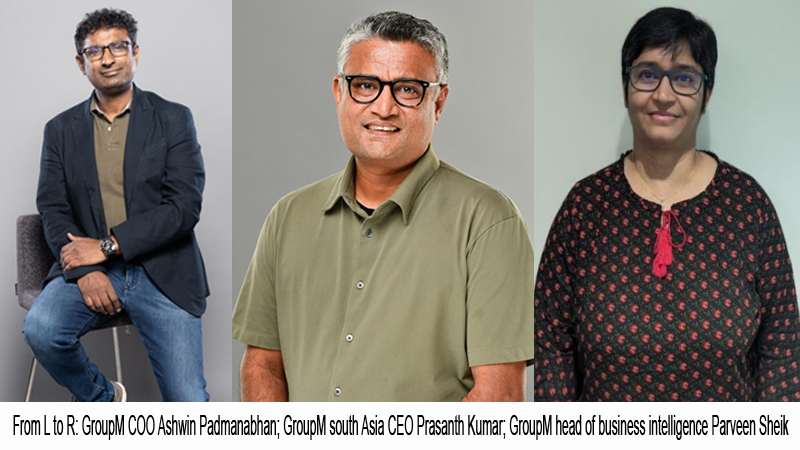
    GroupM south Asia CEO Prasanth Kumar stated, “India is at the forefront of a marketing revolution driven by AI and data privacy. As global ad spend surpasses $1 trillion, India emerges as a top 4 growth market, with digital now accounting for over 60 per cent of ad spend. With a shift to personalised engagement, commerce-driven marketing, and responsible innovation, mixed reality and immersive tech fuel experiential content. While TV remains vital, AI agents are transforming customer interactions, and emerging formats like programmatic CTV and AI-driven retail media are redefining brand-audience connections. All of this positions India for unprecedented innovation and impact in the modern marketing era.”

    TV and digital together are the powerhouses of India’s ad industry, contributing a colossal 86 per cent of total ad spend. Streaming TV is no longer an afterthought either, now making up 12.6 per cent of total TV ad revenue.

    “India’s advertising ecosystem is being reshaped by digital dominance and shifting consumer behaviours,” said GroupM COO Ashwin Padmanabhan. “Key sectors like SMEs, real estate, education, BFSI, and tech/telco—contributing 60 per cent of total advertising—are set to grow at around 10 per cent, further accelerating market expansion. Additionally, rising investments from EVs, fintech, and gaming are fuelling the market’s momentum.”

    Despite economic fluctuations across the globe, India’s GDP is projected to expand by 6.5 per cent in 2025, keeping its advertising sector resilient and strong. GroupM head of business intelligence Parveen Sheik highlighted, “With India’s GDP projected to grow by 6.5 per cent in 2025, its advertising market remains strong, ranking 9th globally. Digital ad spend is now close to Rs 1 lakh crore, driven by AI, commerce, retail media, and hyper-personalisation marketing. As the economy grows, brands must embrace agility, data intelligence, and sustainable strategies to maximise impact in this dynamic landscape.”

    Trends shaping 2025: What’s hot in advertising?

    GroupM’s TYNY report reveals a host of transformative trends set to redefine India’s advertising scene in 2025. Here’s what brands should keep an eye on:

    ●   AI agents take over: Marketing campaigns are being revolutionised with AI-driven customer interactions.

    ●   Immersive experiences explode: Mixed reality, immersive tech, and smartphones are fuelling India’s surge in experiential content.

    ●   Privacy takes centre stage: Data clean rooms are shaping India’s privacy-first marketing landscape.

    ●   Retail media booms: Omnichannel strategies are redefining India’s e-commerce future.

    ●   Quick commerce accelerates: The e-commerce sector is shifting gears with lightning-fast commerce solutions.

    ●   Generative AI rules search: Traditional search and SEO are evolving as AI takes the lead.

    ●   AI influencers rise: Forget traditional celebrities; AI-driven brand storytelling is taking centre stage.

    ●   Chief prompt officers arrive: India’s content marketers are leading a global transformation in AI-driven campaigns.

    ●   CTV goes big: Streaming TV’s rise is ushering in an era of hyper-personalisation and programmatic ads.

    ●   Data privacy & AI converge: New integrated measurement frameworks are addressing fragmentation and privacy concerns.

    With AI shaping every facet of marketing, India’s advertising industry is on an unstoppable trajectory—like a viral ad campaign that refuses to be skipped. Brands that embrace this digital-first, AI-powered landscape will thrive, riding the Rs 1.64 trillion wave of opportunity. Those that don’t? Well, they’ll be the advertising equivalent of a banner ad—ignored, blocked, and eventually forgotten. 

  • Blockchain in telecom: Paving the way for secure, trustworthy data

    Blockchain in telecom: Paving the way for secure, trustworthy data

    Mumbai: Blockchain technology, renowned for its secure and decentralized nature, is making significant inroads into various industries, including telecommunications. The telecom industry, which constantly handles vast amounts of sensitive data, is poised for a transformation with the advent of Dhiway’s CORD blockchain. This cutting-edge solution from the Bangalore-based company promises to enhance trust and security in digital ecosystems, revolutionizing how telecom operators manage and exchange data within their networks.

    Delving deeper, Indiantelevision.com caught up with Dhiway co-founder & vice-president engineering Amar Tumballi.

    Edited Excerpts:

    On the business challenges that are being addressed by adopting blockchain/DLT in the telecom sector

    The telecommunication sector, a complex ecosystem of stakeholders, participants, service providers, and consumers, is at a crucial juncture. Designing applications and services around trustworthy data is a critical challenge. These data streams must be harmonised and have semantic interoperability and continuous assurance, making the adoption of blockchain a significant step forward.

    The adoption of blockchain in the telecommunication sector heralds a new era of possibilities. It paves the way for innovative businesses, such as caller identification services, leveraging reusable digital identifiers for IoT applications and services. The availability of secure, trustworthy data mitigates cybersecurity risks from data breaches and empowers a paradigm shift in application and service designs, including AI models and algorithms.

    Some immediate successes have been managing unsolicited commercial messages (or SPAM), infrastructure, and roaming profiles.

    On the ways in which CIOs and CSOs plan for the adoption of blockchain technology

    C-suite leaders lead initiatives that balance risk and rewards while devising an innovation-focused IT strategy. To effectively adopt blockchain technology, the technology stack must support strong collaboration and interoperability between services and functions. It is also important to adopt industry-leading best practices in infrastructure security and data governance to mitigate the risks associated with cybersecurity incidents. Lastly, shifting investments to a “blockchain-complete” solutions array would help build the momentum and technical capability within the businesses to benefit from the value of decentralised processes and infrastructure.

    On the necessary features and capabilities to evaluate in a blockchain implementation decision-making strategy

    A key driver in evaluating blockchain implementation is a fine-grained understanding of the use case and the business objectives that must be met. An agreement among the project stakeholders and sponsors on this topic can help drive the success of the pilot and production deployments.

    Blockchains enable a foundational digital infrastructure for the business – where the features of immutability and transparency provide the necessary attributes for provenance and authenticity. Organisations looking at digital transformation strategies and adopting blockchain technology must evaluate whether the codebase is available under a suitable open-source license and whether the project on which the enterprise product is based shows a vibrant community of participants. It is also important to ascertain whether some lighthouse deployments can support the choice of such blockchain frameworks. Token-less blockchain frameworks such as CORD allow enterprises to avoid the drama associated with tokens and crypto regulations while putting together a resilient infrastructure that is decentralized, secure, and extensible for many present and emerging use cases.

    On the role that large public cloud vendors play in shaping the adoption of blockchain technology in telcos

    Highly scalable, resilient, and large public clouds have enabled enterprises with the necessary tooling and infrastructure to quickly deploy, manage, and administer nodes that comprise the blockchain ecosystem. Elasticity, security, and high availability, including, in some cases, across cloud vendors, have enabled massively scaled blockchain deployments to service many use cases. In many cases, the availability of securely configured cloud infrastructure for federal/government usage has helped acquire necessary certifications, making these blockchain deployments suitable for government usage. Public cloud infrastructure brings developer-friendly standards-based tools, storage and computing resources, and redundancy, which makes it an attractive option for blockchains like CORD.

    On the regulatory issues that can be addressed through blockchain adoption

    Today’s dynamic digital economy is built around data – production, exchange, processing, and transformation of data drives applications and businesses. Quite naturally, the regulatory approach towards data governance is focused on data rights, consent-based exchange of data, anonymized and aggregation of data, and audit-readiness. Blockchain implementation can address multiple issues around data governance, including the very important one of enabling the logging of consent-based data exchange and abstracting the actual data through reusable digital identifiers.

    While blockchain-based systems enable friction-free transactions across trust boundaries, they also allow a more transparent application of governance mechanisms relevant to the jurisdictional boundaries where the services are available. So, regulatory and governance issues around data privacy, data security, and data access are also addressed in a scalable manner in blockchain infrastructure.

  • Data privacy maze- Five key points for marketing compliance

    Data privacy maze- Five key points for marketing compliance

    Mumbai: While I was thinking about some of the most pressing topics globally, this subject struck a chord as one of the most globally talked and debated, specifically in the domain of marketing & advertising.

    In today’s digital age, where information is currency, data privacy has become a critical concern for consumers and businesses alike. Marketers find themselves at the crossroads of utilizing customer data for personalized experiences and respecting privacy regulations.

    Navigating this complex landscape requires a keen understanding of key issues and proactive strategies to ensure marketing compliance. Here are five crucial points for marketers to consider:

    1. Regulatory Landscape and Compliance Challenges

    The Challenge

    The global regulatory landscape for data privacy is rapidly evolving, with stringent laws such as GDPR in Europe, CCPA in the United States, and various other regional regulations. Navigating these diverse frameworks poses a significant challenge for marketers who operate on a global scale.

    With respect to India, the recent Digital Personal Data Protection Act, 2023 emerges as a historic milestone in digital rights after it was passed by the Lower House of Parliament (the Lok Sabha) and the Upper House of Parliament (the Rajya Sabha) followed by Presidential assent making it a law of the land. With privacy at its core, this landmark legislation would empower individuals, redefine business practices, and usher in a new era of responsible data handling. The Act regulates the governance of personal data collected by organisations, and aims at protecting the individual’s privacy by empowering them with rights over the manner in which their data is processed.

    Probable Solution

    Marketers need to invest time and resources in understanding the specific requirements of each region they operate in. Establishing a robust compliance framework that aligns with the strictest regulations ensures a universal standard. Regularly update privacy policies and ensure that marketing teams are well-versed in the nuances of compliance in different jurisdictions. With respect to India, I find the below key highlights bearing a powerful torch in the right direction.

       Data processing agreements mandatory before outsourcing activities to third parties

       Periodic Data Protection Impact Assessments made mandatory for Significant Data Fiduciary

       Lawful basis of processing consolidated to consent and certain legitimate uses

       Data localisation rules relaxed allowing transfers across jurisdictions unless specifically notified

    2. Consent Management and Transparency

    The Challenge

    Obtaining explicit and informed consent from users for collecting and using their data is a fundamental requirement. However, ensuring transparency and providing users with a clear understanding of how their data will be used can be challenging.

    Probable Solution

    Implement a transparent and user-friendly consent management system. Clearly communicate the purposes of data collection and usage through easily accessible privacy policies. Use plain language to articulate the terms of consent and offer users granular control over their preferences. Regularly review and update consent mechanisms to stay in line with evolving regulations and consumer expectations.

    3. Data Security and Breach Preparedness

    The Challenge

    Data breaches are a constant threat, and the repercussions can be severe, damaging both consumer trust and a brand’s reputation. Marketers must ensure that the data they collect is stored securely and take proactive measures to prevent unauthorized access.

    Probable Solution

    Invest in robust data security measures, including encryption, access controls, and regular security audits. Implement a comprehensive incident response plan to mitigate the impact of a potential breach. Transparently communicate with users in the event of a breach, detailing the steps taken to address the issue and protect their data.

    4. Adapting to Emerging Technologies

    The Challenge

    As marketing technologies evolve, the methods of data collection and processing become more sophisticated. Staying compliant with existing regulations while adopting innovative technologies, such as AI and machine learning, can be a delicate balancing act.

    Probable Solution

    Prioritize data protection by design when implementing new technologies. Conduct thorough impact assessments to identify and address potential privacy risks associated with emerging tools. Keep abreast of industry guidelines and collaborate with legal and compliance teams to ensure that innovative marketing strategies align with existing regulations.

    5. Cross-Border Data Transfers

    The Challenge

    In a globalized world, companies often transfer customer data across borders for various reasons, including processing and storage. However, doing so without violating data protection laws presents a complex challenge.

    Probable Solution

    Leverage legal mechanisms such as Standard Contractual Clauses (SCCs) or Binding Corporate Rules (BCRs) to legitimize cross-border data transfers. Assess the data protection laws of both the source and destination countries and ensure that the chosen mechanism complies with these regulations. Regularly review and update data transfer mechanisms to align with any changes in legislation.

    In conclusion, achieving data privacy and marketing compliance requires a proactive and adaptable approach. By understanding and addressing these key points, marketers can not only navigate the complexities of the current regulatory landscape but also build trust with consumers, fostering long-term relationships in an era where data privacy is paramount.

    The author of this article is Shisham Digital CMO Ankoor Dasguupta.

  • Facebook to block new political ads a week before US presidential election

    Facebook to block new political ads a week before US presidential election

    KOLKATA: Amid large criticism against misinformation and allegation of meddling in elections, Facebook has decided to block all new political advertising on its platform the week before the US general election in November. 

    However, advertisers will be able to continue running ads they started running before the final week and adjust the targeting for those ads, but those ads will already be published transparently in Ads Library so anyone, including fact-checkers and journalists, can scrutinize them. 

    Facebook will also remove posts with claims that people will get Covid2019 if they take part in voting. It will attach a link to authoritative information about the virus to posts that might use to discourage voting, and it is also not going to allow this kind of content in ads. Notably, other social media platforms such as Twitter and Pinterest, have already banned political ads on the services. 

    “Given the unique circumstances of this election, it's especially important that people have accurate information about the many ways to vote safely, and that Covid2019 isn't used to scare people into not exercising their right to vote,” Facebook CEO Mark Zuckerberg said.

    For more than two years now, Facebook has been under constant pressure from authorities across many countries on antitrust and piracy issues. The data fiasco really got murkier when the cambridge analytica scandal came out for influencing 2016 US Presidential election. However, it had been alleged for the same outside US as well including Brexit. 

  • Madison Group CEO Vikram Sakhuja on TRAI tariff order, Ekam & media landscape

    Madison Group CEO Vikram Sakhuja on TRAI tariff order, Ekam & media landscape

    In a highly VUCA media world, over I’m going to attempt to answer the question of what’s in store for media in the near future. Today 11000 TV and radio advertisers, over two lakh print advertisers, 1500 OOH advertisers and 300 large – 2 lakh long tail online advertisers think long and hard about how to spend their marketing budgets.

    On one hand, it costs 30-40 crore to do a significant national launch, advertising on IPL can exceed a 100cr for some advertisers. A YouTube masthead or a TOI jacket costs excess of a crore, a 10-day OOH plan in Mumbai can cost over a crore. Yet an average advertiser spends under five crore a year on TV, two crore on OOH and lakhs on other mediums. At the top, there are only 12 advertisers with spends more than 500 cr. At a brand level, an equal number (12) spend more than 100 crore.

    For all of them, budget management boils down to making trade-offs between mediums and media objectives. By mediums I mean TV, print, radio, OOH, digital, cinema, and media objectives: reach, frequency, SOV, weeks on air, advertising size and “impact vs regular” inventory.

    How media shapes in the future will depend on how advertisers, agencies and media owners use different mediums across these fundamental media objectives.

    Reach: When it comes to reach we have close to 200 mn TV homes but only a handful of advertisers – large FMCG, political parties and telecom that reach both urban and rural. Even within urban most aggressive plans reach about 70% of TV homes once/month and about 45% three times.

    Byron Sharp amongst other media pundits says that reach is most important, yet at an India level we are reaching less than half. Question to ask is whether that 60% reach overall urban better or 95% reach among a particular market.

    Frequency: At a campaign level, TV typically operates at a 3-5 frequency, online at 7-8, print at 1 or 2. Yet paradoxically as consumers we often see the same ad perhaps three times in an hour while watching a movie or a game. Question to ask here is do we truly understand the concept of media frequency?

    SOV: Most advertisers track SOV/SOM closely as they find that competitive spends have a bearing on their business. Best way to get a client to spend is to tell them that their competitor is spending. Fact is media salience does drive brand choice but do we need to do it over a campaign or a financial year.

    ACD: TV copy length is coming under a microscope even as print sizes are increasing. Digital has expanded the ad range from 6” to long-form video. Rather than approach copy length by the medium question is one of optimizing the effectiveness and efficiency of creative length (typically using analytics).

    Impact vs. regular: Impact unquestionably helps cut clutter and build awareness. Used well it builds equity. However, it comes at a premium. New advertisers hoping to make a quick mark in the Indian market opt for an impact heavy strategy, while legacy marketers approach impact more judiciously. Question to my mind is do brands have an impact strategy?

    WOA: Often the variable that is traded off most. It is felt that it is better to have a campaign that is noticed over an always-on one. Indeed, we have only a few brands who are always-on on TV, display, social, search, performance; but most TV and all print, OOH, radio, cinema activity is typically sporadic and behind specific marketing initiatives. Why is WOA not given more importance?

    Current thinking has carved the pie across TV – 38%, print – 32%, digital – 19% (search 6%, display/video 7% and social 6%) OOH – 5.5% and radio – 3.5%.

    How will this media scenario change in the near future? If the future follows the past we will see the following:

    TV will be the base medium for building awareness and consideration. More TV channels will continue to launch, rate/10” will not increase and may even fall. Fragmentation will lead to an increase in CPRP. CPRPs within a genre will be competitive. Reach will be precious. Overall it will cost more to reach less. There will be the occasional super Premium Impact program that becomes a “tribal moment”.

    The power of others seeing the same thing as you, in the same room and across India at the same moment, cannot be overstated. If I see a Dominos RCB spot during IPL, and I discuss it with a friend who I can safely assume has seen it, a certain legitimacy is created that is called Cultural Imprinting.

    Digital Video will grow on the back of OTT, YouTube, Jio, MX Player, ShareIt and other video consumption and sharing platforms. Digital video has two roles: on advertising, the TV vs. digital video debate will net out at one complementing/supplementing, rather than replacing the other. On content, video will have an amazing run limited only by a brand’s ability to embrace content assets.

    Social will grow on the back of great psychographic targeting and delivery of outcomes and again grow proportionate to brand’s ability to create content based assets.

    Search will grow but more modestly as CPC’s go up and the ROI on search reduces

    Print will have a bumpy ride. It will remain a medium for a call to action and announcement of new news unless it reinvents itself. Categories will put it more under the scrutiny of effectiveness than any other medium. Comparisons will inevitably be with digital. Newspapers will struggle to balance yield with outlays.

    Digital display will grow but less than video. Here the contextual, performance oriented, rich media, tech-enhanced nature will lead to banners winning the battle versus print. Voice will emerge as a display medium

    Radio and cinema will grow as outlays remain modest and local marketing importance grows. OOH will gain from traffic count measurement that is now available at least in Madison and also grows. Put this way, if nothing changes, one could see similar trends in the next t years as we have seen in PMAR 2018. In 2021 we could well see digital being the second most dominant medium.

    But I think an alternative more exciting scenario is possible. This, however, is predicated on the occurrence of three disruptor events and two changes in how advertisers market their brands.

    · Disruptor events are TRAI channel pricing, digital data measurement, and data privacy

    · Marketing changes are true integrated marketing and increased localisation

    Disruptor events

    TRAI channel tariff order

    When TRAI channel tariff order is enforced, channel availability per home will reduce from approx. 350 Channels to 100+50. So, today most GEC channels have 90%+ distribution and about 35% weekly reach. After TRAI these channels could land up having 30% distribution and 30% reach.

    Reality is that an average home watches 16 channels. It is just that with so many more available there is surfing and some snacking and reach extension. Once these extraneous channels go out we will see individual channel reach reduce, ATS go up, and overall fragmentation will reduce. More channels will also go FTA, but carriage fees will also increase. There will be moreexperimentation with consumers opting in and out of channels on a monthly basis.

    Today there is a high degree of substitution possible between channels. In a post TRAI world, we will need a combination of channels to build reach and no two channels will be completely substitutable. Life will also be more dynamic. Using past four week data to predict the next four weeks will become challenging. It is a good time for a media planner to make a difference.

    Digital measurement

    The most accountable medium does not have a measurement currency. We don’t have a currency on digital AdEx, no currency that tells us about viewability and viewership/listenership. Sure, we are fed data by publishers, and we also have our own tags that we track, but there is no industry currency. Ekam was supposed to be one and huge amounts were spent to keep the infrastructure going, but for completely manmade reasons this has not emerged. If it comes we will get a currency on digital viewership and an official read on integrated reach between at least TV and digital video.

    This can redefine the 27000 cr video+ (23500+3500) industry.

    I believe TV and OTT have the common lean back consumer habit to viewing which will lead to a lot of crossover advertising between the two platforms. I also think the OTT content ecosystem will allow advertisers the deal structuring that we used to do with private producers in the DD era.

    This will also allow a narrowcast of a broadcast medium. We can choose markets and genders or ages and cut some wastage.

    Data Privacy

    As a consumer who owns my data will have a profound bearing on how the digital marketing evolves.This is not a current issue in India but is a simmering one in more developed digital economies.

    The detractors say that global digital media giants have the power and ability to manipulate our behaviour as well as profile us if they control our data. The supporters say having consumer data has led to contextual marketing, psychographic marketing and programmatic marketing that has made messaging to consumers more relevant. Indeed, these are powerful tools for any marketer that goes a long way in improving targeting and explaining how media works.

    As a marketer it would be a shame to lose this tool. But with great power comes great responsibility. It is obvious that data needs to be anonymised. That is a given. The crux of the issue lies in internalising the difference between targeting and profiling. It is ok to target me, but please don’t profile me. The difference is subtle but significant. If we cross the line, there is a danger of the entire digital media juggernaut crashing.

    Two marketing practices will impact the way we spend

    Act truly integrated

    We have talked integrated marketing plans for decades but we still act in silos. Sometimes an idea binds the media together, but is this integrated?

    There is a term called consumer journey or path to purchase that tracks a consumer from the time the trigger for the category happens to when purchase and post purchase happens. In this journey the potential media touchpoints are when the consumer is engaged in the activity of listening, viewing, reading, searching, shopping, socialising, learning or gaming. What brands can do with media at these touch points is the opportunity to get consumers to see us, think about us, experience us, buy us and share their views about us.

    Today over 90% of a brand’s marketing budget is involved in getting ads to be seen. As they move to other aspects of the marketing funnel, how the money is spent will change dramatically.

    Biggest catalyst to that will be CPT (or CPM). Today we evaluate a TV plan in CPRP, print in rate/sqcm, radio in rate/10”, OOH in rate/site, digital in CPT or CPO, etc. This needs to move to an apple to apple CPT. Over this we can add outcomes and measure CPO.

    Increased localisation

    We need to factor India’s heterogeneity much more into our marketing plans than we do currently. We approach plans as urban vs rural, 8 metro vs rest of India urban, HSM, 4 southern states, Maharashtra and West Bengal, and on socio economic basis through an increasingly NCCS AB skewed classification. Way forward is for brands to fine tune their battlegrounds. From spray and pray to seek and prey. We have several examples over the years like Ghadi, Santoor, Thums Up, etc that have built dominant regional positions.

    So, what’s in store for media in the near future is essentially harder working outcome based marketing. Brand budget growth follows an arithmetic progression while demands from marketing forces increase at a geometric progression. The following six forces will shape the advertising spend market.

    1. Expansion of marketing funnel: We used to make trade-offs between Mediums and Media Objectives (R/F/SOV/WOA/ACD/Impact). This was largely about getting consumers to see an Ad. Now we will additionally make trade-offs between getting them to see, explore, experience, buy and share across the journey. If that happens TV will lose relatively and all others will gain.

    2.Integrated Reach will continue to be critical: More media touchpoints will be required to get reach. Marketers will seek it in an integrated manner. Campaigns will maximize reach and optimize frequency across media. CPT will become the common currency that equates the cost of an impression across media.

    3. Greater Localisation: it will become increasingly impractical and inefficient to market to one India. Additionally, the trade-offs between markets will become sharper than our current P1, P2 classification. Greater digitisation and channel selection will lead to more localisation. TV will be used as a local medium more than it ever has. Digital, OOH, radio, the cinema will work in combination better than they work in a silo. Print will need to redefine its value to a local marketer and will find a huge role.

    4. Integrated Reach:, CPT, and greater localisation will lead to more intelligent media selling. All Mediums will have a role. From selling Media like onions and potatoes, there will be a need to find brand building solutions. In the near though not immediate future, media in India will get truly integrated as smart devices get connected in what we know as IOT.

    5.Data and technology will revolutionise targeting: We will increasingly target geographically, psychographically, contextually and behaviourally. We will increasingly retarget sequentially with customised messaging. Any medium with digital backbone leverage this capability.

    6.We will decode how media works: Increasingly through a combination of marketing analytics and real-time attribution, we will understand what sequence of Media drives consumer behaviour for each category

    (The author is Madison Group CEO Vikram Sakhuja. The views expressed here are his own and Indiantelevision.com may not subscribe to them)