Tag: data

  • Kofluence report decodes India’s booming influence economy

    Kofluence report decodes India’s booming influence economy

    MUMBAI: India’s influencer economy is hitting its stride—and going hyperlocal. Ad-tech platform Kofluence has dropped the 2025 edition of its flagship report Decoding Influence, unravelling how data, AI, and regional creators are reshaping digital advertising in the world’s fastest-growing content market.

    Based on insights from over 1,000 creators, marketers and industry leaders, the report paints a picture of a maturing ecosystem where brands are treating influencer partnerships not as vanity plays but as performance levers.

    “India’s influence economy has not only seen growth but also a decentralisation of influence. There is a dynamic shift with creators in Tier 2 and Tier 3 cities, often creating content in regional and vernacular languages, who are building strongly engaged communities through hyperlocal narratives,” observes Kofluence CEO & co-founder  Sreeram Reddy Vanga. “Amidst a trillion-dollar influencer advertising opportunity in India, we’re seeing brands approach influencer partnerships with far more intention and as a strategic marketing lever, driven by data, sustained by technology, and measured against business outcomes.”

    Key takeaways from Decoding Influence 2025:

    * Instagram leads the pack: With an estimated 1.8–2.3 million Indian creators, Instagram remains the top monetisation playground. Reels dominate revenue—charging anywhere from Rs 500–5,000 for creators under 10,000 followers, and crossing Rs 2 lakh for celebrity posts.

    * Big money flows: India’s influencer market is pegged at Rs 3,000–3,500 crore and climbing. E-commerce leads with 23 per cent of total influencer spends, followed by FMCG at 19 per cent. Over 25 per cent of brands ramp up influencer budgets during launches.

    * Small is powerful: Micro-influencers (10k–100k followers) are gaining traction. Some 52 per cent of marketers say they’re best suited for regional outreach. Diwali remains the hottest season, with brands kicking off campaign plans 2–4 weeks ahead.

    * AI and automation take hold: A full 61 per cent of brands are deploying tech platforms to manage influencer ops, with 18 per cent fully integrated. Generative AI is already used by 29 per cent of marketers—mostly to generate content ideas and assets.

    “With India crossing 900 million internet users, the creator economy is poised for continued expansion, fueled by government initiatives as well as significant technological advancements. Looking ahead, I believe we are moving towards the phase of integrated influence in which advertising mediums will increasingly converge together,” saYS co-founder Kofluence Ritesh Ujjwal.  “Decoding Influence 2025 is built on strong platform intelligence and first-party data, and will give marketers strategic insights on a rapidly evolving industry that is being transformed by AI, cookie deprecation and shifting creator-brand relationships. We hope you will find this report useful as you plan your next steps.”

    The Decoding Influence 2025 report leans heavily on first-party data and platform intelligence, offering an in-depth look at an industry evolving rapidly under the pressure of AI disruption, cookie phase-outs, and changing brand-creator dynamics.

  • DoubleVerify unveils GenAI protection to shield brands from low-quality AI content

    DoubleVerify unveils GenAI protection to shield brands from low-quality AI content

    MUMBAI: The leading software platform for digital media measurement, data, and analytics DoubleVerify (DV) announced the launch of its generative artificial intelligence (GenAI) website avoidance and detection solution. This innovative offering helps advertisers navigate the risks posed by low-quality, AI-generated content and protect their brand reputation online.

    According to DV’s  2024 Global Insights Trends Report, 54 per cent of marketers believe that generative artificial intelligence negatively impacts media quality. DV has identified numerous long-tail websites that leverage GenAI tools to churn out low-quality content, often rife with errors, editorial inconsistencies and plagiarism. With DV’s GenAI solution, clients can seamlessly enable post-bid monitoring within their brand suitability profile and employ DV authentic brand suitability across leading DSPs for pre-bid avoidance.

    “Advertisers are focused on maximising campaign performance while ensuring that their ads appear within suitable environments that align with their brand,” said DoubleVerify CEO Mark Zagorski. “By expanding DV’s brand suitability solutions to identify low-quality, AI-generated content, we’re empowering advertisers to stay ahead in a rapidly evolving ecosystem.”

    DV uses a nuanced approach to classify websites within its GenAI websites category. The company evaluates sites and subdomains predominantly exhibiting AI-generated, low-quality content with minimal human oversight. Poor quality signals include repetitive cookie-cutter formats, chatbot-generated text within articles, placeholder content, and other markers that may concern advertisers.

    Powered by proprietary detection technology that combines AI-driven analysis with human expertise, DV’s GenAI solution ensures precision in identifying and categorising low-quality content. Importantly, websites that use generative AI responsibly and maintain reasonable quality standards are not categorised, allowing advertisers to balance quality reach with suitability.

    DV’s category-based implementation streamlines activation and ensures dynamic updates, eliminating the manual effort of maintaining inclusion and exclusion lists. This approach enables advertisers to stay ahead of the ever-growing landscape of low-quality, AI-generated content.

    In addition, aligning pre-bid controls with post-bid measurement offers advertisers a comprehensive media authentication strategy. Pre-bid protection evaluates content before impressions are transacted to support the delivery of ads to appropriate environments. Post-bid measurement analyzes content after impressions are purchased, offering advertisers insights into suitable ad delivery. This dual approach helps brands optimize future campaigns and media investment decisions.

    Currently, DV’s GenAI classification applies to English-language content with plans to launch across other languages in the future. 

  • Our AI growth engine gives brands the ability to scale their marketing with full confidence: Amitek Sinha

    Our AI growth engine gives brands the ability to scale their marketing with full confidence: Amitek Sinha

    Mumbai: We live in a digital era where everything is driven by data and analytics. With increasing competition, becoming visible to the intended customers has become very crucial for brands vying for the audience’s attention. In such a scenario, several digital marketing agencies are emerging on the scene. But the ones doing a commendable job at helping brands scale up their size and presence are far and few.

    Incepted in the year 2013, Etml is headquartered in Saket, New Delhi. Its founder & CEO, Raghav Kansal, was in his third year of college when he started his first venture, Edulution Technologies, with a couple of friends intended to be an online portal solely catering to engineering students and aspirants. It was started in 2010 and was operated till mid-2013. The ride wasn’t very smooth for the team and the business was not picking steam despite the website getting a decent traction. Raghav still wasn’t disheartened and decided to give entrepreneurship another go. The good thing that came out of his maiden venture was that in the process of promoting his business online, Raghav took up an active interest in the digital marketing space.

    Indiantelevision.com’s Rohin Ramesh caught up with Etml co-founder & COO Amitek Sinha where he discussed how data when coupled with a hyper growth attitude can radically transform the way companies acquire and grow with high value customers.

    Edited excerpts

    On some key factors that contributed to your success since the company’s inception in 2013

    Our success at ETML, since we started in 2013, comes down to one simple truth: it’s in our DNA. The core of everything we do revolves around People, Process, and Data. Data, especially, is what drives us—it’s the backbone of our approach and the reason we’ve been able to build data models and testing frameworks that deliver exceptional advertising ROI for our clients.

    The journey always starts with a solid data strategy and monitoring framework because, as we like to say, “what you can’t measure, you can’t improve.” It’s about digging deep into insights, studying customer behavior, and setting the right KPIs. Once we’ve laid that foundation, we focus on strategizing the best mix of audiences, channels, funnels, experiments, creatives, and messaging. And then comes the part where we bring it all to life with seamless execution—because without great execution, even the best plans fall flat.

    But it’s not just about data. It’s also the people behind the scenes—our team includes brilliant minds from IITs and top-tier engineering schools. Their expertise enables us to identify gaps, design smart experiments, and prescribe solutions that help businesses grow. Our process is rooted in a deep understanding of what works, and our track record shows it—whether it’s boosting revenue, improving ROI, or scaling brands across verticals.

    The businesses we work with have seen impressive results, from double- to triple-digit growth, and that’s what drives us to keep innovating. It’s a combination of building the right strategy, understanding the needs of the business, and executing flawlessly that has helped us become one of the fastest-growing digital agencies today.

    On technologies helping your clients achieve sustainable growth

    At ETML, we’ve built our success on innovation, and Adbytzz 2.0 is a perfect example of that. It’s our proprietary tool that brings together more than a decade of digital marketing experience, powered by both AI and human intelligence. Adbytzz 2.0 connects a brand’s data across all key marketing channels—campaigns, creatives, CRM systems, and more—into one central system. This allows us to deeply analyze and optimize every step of the customer journey, from the first click to the final purchase.

    What really sets Adbytzz 2.0 apart is its ability to continually fine-tune everything—audiences, platforms, creatives, you name it. This constant optimization has helped our clients achieve real results, like a 20% boost in revenue for a financial conglomerate and a 1.6x increase in leads for India’s top real estate group.

    Our AI growth engine gives brands the ability to predict and scale their marketing with full confidence. It’s not just about generating more traffic; it’s about growing smarter, optimizing budgets, and ensuring long-term success. In short, Adbytzz 2.0 allows us to take all the moving parts of digital marketing, streamline them, and deliver sustainable growth that our clients can rely on.

    On partnerships helping you stay ahead in the competitive digital landscape

    Being a Google Partner and Facebook Marketing Partner really helps us stay ahead of the game in the competitive digital landscape. These partnerships give us early access to new features, tools, and beta programs, which means we get to try out the latest innovations before they’re available to everyone else. This lets us offer our clients fresh strategies and cutting-edge solutions that keep them ahead of the curve.

    What’s also great is the direct support we receive from both Google and Facebook. When we’re tackling complex strategies or need quick solutions, having dedicated experts on hand is a huge advantage. It ensures that we’re always optimizing our campaigns to the fullest.

    Plus, these partnerships mean our team is constantly getting top-notch training, so we’re always up to date with the latest platform changes and best practices. All of this helps us deliver more effective, data-driven strategies that keep our clients ahead of their competition and drive real results.

    On the future of Etml

    We are targeting a very specific spot in the realm of digital marketing and we intend to grow in this niche. All our actions are planned and executed to progress one step at a time  towards our goal.

    Looking ahead, the next big step for Etml is international domination. We’ve already established a strong presence with offices in Dubai and Singapore, and we’re working with clients across the USA, Middle East, and beyond. But now, we’re aiming to really make our mark on a global scale. Our goal is to deepen our footprint in these regions, taking the success we’ve built and amplifying it across new markets. It’s not just about expanding geographically; it’s about bringing our unique blend of data-driven strategy, innovation, and flawless execution to a much bigger audience.

    As for the future of digital marketing, AI is definitely going to play a massive role, and we’re already preparing for that shift. But it’s not just about relying on AI. The key will be how we, as marketers, manipulate AI to work in our favor. We believe that while AI can do incredible things, it’s going to take sharp minds—our people—to harness it effectively. This is where we’re focusing our efforts, blending the power of AI with human intelligence to ensure it’s beneficial for our clients.

    At the same time, we know that data privacy and personalisation are two sides of the same coin. Consumers want more personalized experiences, but they also demand stronger privacy controls. Navigating this balance is going to be critical, and we’re already laying the groundwork by building systems and strategies that respect both. So, as we look to the future, we’re preparing to not just adapt but to lead the charge in this evolving landscape, ensuring that we stay at the forefront of innovation while continuing to deliver exceptional results for our clients.

  • Zee hires Shiva Chinnasamy as chief technology & product officer

    Zee hires Shiva Chinnasamy as chief technology & product officer

    Mumbai: Zee Entertainment has appointed Shiva Chinnasamy as its chief technology and product officer.

    In this new role, Shiva will be based at the company’s Technology & Innovation
    Centre (TIC) in Bengaluru, and will report into  Amit Goenka who holds the position of president – digital business, international linear business, enterprise technology and broadcast
    operations & engineering.

    Shiva will be responsible for the efforts being undertaken at the TIC across data, artificial intelligence (AI) & machine learning (ML) to enhance the consumer experience across platforms and further support Zee’s growth plans across its core business segments.

    “As the company moves forward in line with its strategic objectives to drive robust growth, certain action-oriented steps are being  implemented to enhance the capabilities of the businesses,” said Goenka. “Technology plays a crucial role in enhancing the overall customer journey across all our platforms, and our Technology and Innovation Centre is steadily working towards gaining a deeper understanding of our vast audience base in order to deliver successful business outcomes. Shiva’s invaluable industry expertise and experience in scaling businesses with a deep understanding of technology will be instrumental in building the necessary capabilities for the company in its next phase of growth. I look forward to working closely with Shiva and the team at TIC to complement Zee’s long-term growth trajectory”

    “I am honoured to join the journey of Zee at a pivotal intersection between content and technology, as the company aims to fortify its capabilities in the realm of content distribution and monetisation,” disclosed Chinnasamy. “I am excited to get started and work with the teams to build innovative solutions for our businesses and unlock deeper consumer insights that help accelerate innovation driven growth opportunities for Zee.”

    “The OTT and media segments are ripe for tech led disruption. And I couldn’t think of a more exciting place to be at now than at Zee, which has a track record of innovation in Indian media space.  And I think Zee TIC has one of the coolest offices in Bengaluru. And we are cooking some of the coolest apps out there,” he later posted on LinkedIn.

    Chinnasamy has over 20 years of work experience across technology, data science and analytics to provide large scale, long-term solutions in close collaboration with stakeholders and business partners. His expertise spans across ad tech, eCommerce, omni channel retail, B2C fintech, B2B SaaS, platform engineering and mobile engineering.

    He has been instrumental in building multiple impactful products in lead roles through innovative ideas and tight execution. Previously, he was associated with Rippling as the India Site Lead, responsible for building a high performance, data driven collaborative culture. During his career, Shiva has also been associated with global companies including Google, Tesco, Target, Amazon and Verizon Labs amongst others.

  • ZEE’s MD & CEO streamlines the company’s technology and data vertical

    ZEE’s MD & CEO streamlines the company’s technology and data vertical

    Mumbai: ZEE Entertainment Enterprises Ltd (ZEE), has announced the strategic changes in the technology and data vertical, implemented by its MD & CEO, Punit Goenka, under the guidance of the company’s board. The MD & CEO has accepted the resignation of Nitin Mittal.

    Amrit Thomas, responsible for data science, Kishore Krishnamurthy, responsible for engineering, Bhushan Kolleri, responsible for product and Vishal Somani, responsible for enterprise and content technology; on an interim basis, will report into president – digital businesses & platforms Amit Goenka.

    Under the guidance of the board and in line with the strategic approach undertaken by the MD & CEO, significant steps are being implemented to build a new lateral structure that lays a sharper emphasis on accountability and results.

    The steps taken by the MD & CEO are aimed towards achieving a cost-effective structure, optimising the resources, and maintaining a sharp focus on quality, enabling continued success for the long-term growth of the company.

  • Performics India elevates Gautam Surath as its chief operating officer

    Performics India elevates Gautam Surath as its chief operating officer

    Mumbai: Performics India, part of Publicis Groupe India has announced the elevation of Gautam Surath as its Chief Operating Officer (COO), effective from January 1, 2024. In his new position, Surath will provide strategic direction and oversight to all domestic large client portfolio, spanning across BFSI, CPG, Telco, Travel& Hospitality, Gaming and New-Age Startup industry verticals. In addition, he will integrate Performics’s rich expertise on digital media, e-commerce and SEO with new-age beyond media capabilities such as MarTech, Data, AI and Performance creatives to help our clients maximise value from their digital investments. In this new role, Surath will report to Lalatendu Das, Performics India CEO.

    Surath has been with Publicis Groupe for over 20 years, working across, China, Southeast Asia and India. Surath has demonstrated an impressive track record in serving clients across media, ecommerce, data, analytics and technology. Prior to the current role, Surath led BFSI and CPG verticals for Performics India as its Managing Partner.

    Performics is a leading provider of digital, performance marketing, e-commerce, digital creative and MarTech solutions in India. Performics India has been on a strong growth trajectory, clocking double digit revenue CAGR consistently over last 4 years. Further, 2023 has been a seminal year for Performics with multiple award wins at reputed platforms such as DRUM, Effies, MMA Smarties and Emvies. Performics India’s decision to appoint Surath as COO is a strategic move aligned to the company’s overarching vision of being the ‘pre-eminent full-stack digital marketing Agency in India.’ His proficiency in cross-disciplinary functions, along with his proven leadership capabilities, positions him as a key enabler in realising Performics India’s aforesaid vision.

    Das said, “I am extremely pleased to have Gautam as our Chief Operating Officer at Performics India. Gautam brings rich digital experience at the intersection of digital Branding, eCommerce and Performance media. Our clients are looking for full-stack digital solutions, including rich media, SEO, digital creatives, data and AI, to drive specific outcomes.

    Leveraging his holistic understanding on media, data, analytics and eCommerce, Gautam will provide consultative support to our clients in their growth journey. Further, as Chief Operating Officer, Gautam is poised to contribute significantly to Performics India’s continued success and growth trajectory. On behalf of the entire team at Performics India, I congratulate Gautam on this well-deserved promotion and look forward to our continued collaboration.”

    Speaking about the new opportunity, Surath said “These are exciting times at Performics India. We are now well into our journey of creating expertise within our key industry verticals CPG, BFSI/Fintech, OTT and Telecom. We continue to strive to grow our clients market share through a blend of strategic, technological, and product-oriented solutions. In a world where consumers engage with more and more platforms, our 1800 performance marketing experts, who undergo continuous certification on these platforms bring a distinctive advantage to our clients. I look forward to being part of Performics India’s growth journey and the opportunity to shape it.”

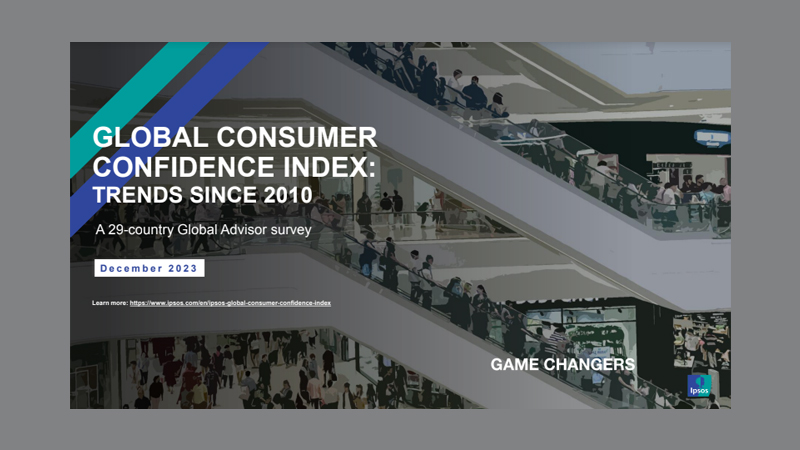
  • Consumer sentiment improves for urban Indians in December 2023: Refinitiv-Ipsos PCSI monthly India report

    Consumer sentiment improves for urban Indians in December 2023: Refinitiv-Ipsos PCSI monthly India report

    Mumbai: Consumer sentiment shows recovery and uptick of 1.2 per cent points for urban Indians in December 2023, according to the Refinitiv-Ipsos Primary Consumer Sentiment Index (PCSI).

    The monthly PCSI result, which is driven by the aggregation of four weighted sub-Indices, displays a mixed response across the four sub-indices. The PCSI Current Personal Financial Conditions (“Current Conditions”) Sub-Index is up 3.2 per cent points; the PCSI Investment Climate (“Investment”) Sub-Index improves and is up 3.0 per cent points. On the contrary, PCSI Economic Expectations (“Expectations”) Sub-Index is down 0.1 percentage points and the PCSI Employment Confidence (“Jobs”) Sub- Index has dipped 1.9 percentage points.

    Ipsos India CEO Amit Adarkar said, “We see a slight recovery and upturn in consumer sentiment in December, after November’s downturn. The RBI has left the Repo Rate unchanged in its recent Monetary Policy, which means no hike in interest rates on home loans, vehicle loans, borrowings etc., which should have brought some cheer to consumers. Improvement in sentiment is seen more around the 2 sub-indices of current financial conditions and investments, which shows consumers do not need to observe frugality in their spending and savings. Sentiment around jobs and the economy continues to be pessimistic as the two wars in Israel and Ukraine and a significant slowdown in the global economy continue to impact most global markets, especially now that we are seeing job cuts by major global companies.”

    Consumer Sentiment in 29 Countries

    Among the 29 countries, India (64.3) holds the highest National Index score this month. Indonesia (63.9) and Mexico (60.0) are the only other countries with a National Index score of 60 or higher.

    Six other countries show a National Index above the 50-point mark: Thailand (58.1), Singapore (57.5), Brazil (56.5), the Netherlands (52.2), Poland (51.5), and the U.S. (51.1). For Poland, this month’s score is the country’s highest since November 2019.  

    In contrast, five countries now show a National Index below the 40-point mark: Chile (39.9), South Korea (39.1), Japan (37.5), Hungary (36.6), and Türkiye (35.5).

    https://lh7-us.googleusercontent.com/5xO87cdvNbhHl9HDHtm4WFTDVB7B6v_Xy2UT_51B8636SIBhhu2wUu4B2j0cgI7pC2bBJq-d1jDinzJjVsxZkRRNNPEQn8jii-aJj0ab2Tr2cmIJryEnhr6YWu3wmjx9l7iApwhGcLY561HR1u-gRg

    These findings are based on data from a monthly 29-country survey conducted by Ipsos on its Global Advisor online survey platform and, in India, on its IndiaBus platform. They are first reported each month by LSEG as the Primary Consumer Sentiment Index (PCSI).

    The results are based on interviews with over 21,200 adults aged 18+ in India, 18-74 in Canada, Israel, Malaysia, South Africa, Türkiye, and the United States, 20-74 in Thailand, 21-74 in Indonesia and Singapore, and 16-74 in all other countries.

    The monthly sample consists of 1,000+ individuals each in Australia, Brazil, Canada, France, Germany, Great Britain, Italy, Japan, Spain, and the U.S., and 500+ individuals in each of Argentina, Belgium, Chile, Colombia, Hungary, Indonesia, Israel, Malaysia, Mexico, the Netherlands, Peru, Poland, Singapore, South Africa, South Korea, Sweden, Thailand, and Türkiye. The sample in India consists of approximately 2,200 individuals of whom 1,800 were interviewed face-to-face and 400 were interviewed online.

    Samples in Argentina, Australia, Belgium, Canada, France, Germany, Great Britain, Hungary, Italy, Japan, the Netherlands, Poland, South Korea, Spain, Sweden, and the U.S. can be considered representative of their general adult populations under the age of 75. Samples in Brazil, Chile, Colombia, Indonesia, Israel, Malaysia, Mexico, Peru, Singapore, South Africa, Thailand, and Türkiye are more urban, more educated, and/or more affluent than the general population. The survey results for these countries should be viewed as reflecting the views of the more “connected” segment of their populations. India’s sample represents a large subset of its urban population — social economic classes A/B/C in metros and tier 1-3 town classes across all four zones.  

    The data is weighted so that the composition of the sample in each country best reflects the demographic profile of the adult population according to the most recent census data. The global indices and averages reported here reflect the average result for all the countries and markets in which the survey was conducted. They have not been adjusted to the population size of each country or market and are not intended to suggest “total” results.

    Sample surveys and polls may be subject to other sources of error, including, but not limited to coverage error and measurement error. The precision of Ipsos online surveys is calculated using a Bayesian credibility interval with a survey of N=1,000 being accurate to +/- 3.5 per cent points and a survey of N=500 being accurate to +/- 5.0 percentage points. For more information on credibility intervals, visit this page.

    The LSEG/ Ipsos Primary Consumer Sentiment Index (PCSI), ongoing since 2010, is a monthly survey of consumer attitudes on the current and future state of their local economy, personal financial situation, savings, and confidence to make major investments. The PCSI metrics reported each month for each of the countries surveyed consist of a “Primary Index” based on all 10 questions below and of several “sub-indices” each based on a subset of these 10 questions.

    The concerned publication of these findings abides by local rules and regulations. 

  • Wondrlab’s remarkable 2023 journey paves the way for a bold 2024 expansion

    Wondrlab’s remarkable 2023 journey paves the way for a bold 2024 expansion

    Mumbai: As we reflect on the transformative year of 2023, marked by technological leaps, environmental endeavours, and global shifts, the stage is set for the unpredictable landscape of 2024. From the evolution of artificial intelligence to the urgent focus on climate action, our journey unfolds against a backdrop of innovation and challenges. Join us as we explore the highlights of the past and anticipate the dynamics that will shape our world in the coming year. Welcome to a brief overview of the year that was and the forecast for 2024.

    Here is the year-end quote below on behalf of Wondrlab’s managing partner & co-founder Rakesh Hinduja

    This was the third year of Wondrlab and the game is three times. We continue to strengthen our cultural foundation with a focus on people, product & profit – In that order. The Wondrlab family this year is over 400 people diverse and motivated to achieve newer benchmarks. Our product continues to be strategically effective, creatively engaging and full-funnel in the rollout, bar none. With the first 2 P’s being strong, Profit is always healthy. This year we also added a new P, three times office place to our Mumbai HQ, an open layout for fun, positivity and a wonderful vibe for people and products to thrive.  

    We continue to embrace digital transformation, we leveraged technology and data to deliver cutting-edge solutions, solidifying our differentiated offering in the industry. This was the first time we entered Cannes which resulted in a shortlist. A pivotal part of our strategic vision for 2023 was expanding our footprint beyond borders. The recent acquisition of Cymetrix marked a significant milestone. This not only strengthened our capabilities but also positioned us for exponential growth in the global market.  

    We want to solve not just do one thing well, we want to do whatever it takes for brands to win in today’s complex marketing world and do it all well.  

    As I reflect on the year, I am filled with optimism about our trajectory in 2024. Our plan includes further exploration of new markets and industry verticals. Strengthening client relationships remains a top priority, with an unwavering commitment to understanding evolving needs and delivering tailor-made solutions. To create genuine products that help businesses. As well as wins at the biggest awards stage.  

    Our platform-first and technology-centric approach continues to be at the forefront. The potential of augmented reality and virtual reality excites us, and we are poised to seamlessly integrate these into our offerings. We are moving rapidly towards our goal of becoming a world-class network based in India, with more strategic acquisitions on the horizon. As we expand our reach, capabilities, our resilient team dedication to strategic vision, it positions us not just to navigate challenges but to thrive in the ever-evolving business landscape.

  • Diwali delight: Festive trends and social media illumination with Sprinklr Insights

    Diwali delight: Festive trends and social media illumination with Sprinklr Insights

    Mumbai: Much more than just an annual tradition, the celebration of the biggest festival in India – Deepawali or Diwali – holds a cherished place in the hearts of many. Signaling the onset of a lively season brimming with countless cultural connections and celebrations, enchanting lights, and vibrant rangolis, this exuberant festival echoed joy throughout the country this weekend – making it one of the most talked-about occasions of the year online.

    As this festive fervor captivates the minds of brands and consumers nationwide, we have compiled a snapshot of the trends and data surrounding the excitement that illuminated social media platforms in the anticipation and celebration of the vibrant Festival of Lights.

    This data has been compiled using the social listening capabilities of Sprinklr Insights, aggregating mentions from India across selected news outlets, and social media platforms like Twitter and Reddit. Sprinklr Insights allows businesses and organizations to monitor, track, and analyze social media conversations and mentions related to their brands, products, or topics of interest.

    Most Popular Regions

    Diwali

    Of the more than 1.8M mentions Diwali received online in India over the last few weeks, a majority came from the metro regions across the country. The festival of lights glimmered most brightly across the capital city Delhi followed closely by Mumbai, with over 17.2K and 11.3K online & social media mentions respectively. Other metro cities such as Chennai, Hyderabad, and Bengaluru welcomed the festival wholeheartedly, with 7.2K, 5.3K, and 4.9K mentions respectively. Among Tier 2 cities, the celebrations remained jubilant with mentions averaging at slightly over 2K in Jaipur (2.78K), Kolkata (2.69K), and Lucknow (2.27K).

    Most popular conversations

    Diwali

    Amidst the myriad of festive conversations that lit up social media, those surrounding Culture and Festivities took center stage,  comprising the majority of conversations around Diwali at 87.3 per cent. Of the remaining conversations, those around Offers and Discounts stood out, making up for a majority of conversations at 9.4 per cent.

    Most popular brand conversations

    Diwali

    Capturing the celebratory pulse of Indian consumers, several noteworthy brands brightened the festivities further by actively engaging in the Diwali conversation. Overall, leading the way for festivities were Consumer Tech brands, clocking in a remarkable 22.62K plus mentions. In line with this trend, consumer tech giant WhatsApp emerged as the frontrunner in amplifying the festive spirit accumulating over 22,241 mentions.

    Diwali

    Following suit, e-commerce and quick commerce brands secured 7.7K plus and 6.4K plus mentions respectively. Brands under these categories  – including Amazon (5.6K), Flipkart (1.7K), Vivo (1.5K), and Swiggy (1.4K), – trailed behind WhatsApp as they amplified the festive spirit further with topical offers and themed interactions.


  • DoubleVerify releases report – ‘Four Fundamental Shifts in Advertising and Media’

    DoubleVerify releases report – ‘Four Fundamental Shifts in Advertising and Media’

    Mumbai:  DoubleVerify (DV), a leading software platform for digital media measurement, data, and analytics, has released its report for the year 2022, “Four Fundamental Shifts in Advertising and Media.”

    Two years after DV’s original report, this expanded edition analyses insights from over 16,600 global consumers in 18 countries. At a time of significant macroeconomic change, these findings reveal the dynamic relationships between consumers, digital content, and advertising—arming stakeholders with the insights they need to make well-informed strategic decisions.

    The report marks some significant takeaways. Firstly, the economic downturn continues to ‘stay at home’ content consumption—particularly on CTV and social media—with most (55 per cent) consumers now spending more time consuming content daily than they did pre-pandemic.

    Secondly, attention fuels media efficacy—two thirds (66 per cent) of respondents claimed an ad that captures their interest in the first five seconds will make them more likely to pay attention.

    Thirdly, online shopping surges and is bolstered by a contextual approach—54 per cent of respondents report buying more items online now than pre-pandemic, while 67 per cent are more likely to pay attention to an ad if it’s relevant to the content they’re viewing—such as reviews or gift ideas.

    Fourthly, trust and shared values foster loyalty, but consumers are quick to judge. Consumers are concerned about the spread of mis- and dis-information, and it shows—61 per cent are even less likely to purchase/use a brand again if they see it advertised alongside mis-/dis-information.

    “This study highlights that consumer consumption habits are evolving in response to macro social and economic trends—from intensifying concerns about inflammatory or polarising content to a continued shift in the platforms and channels consumers are turning to for content consumption,” said DoubleVerify CEO Mark Zagorski.

    He continued, “Brands must react to these changing habits to ensure they reach the right audiences as efficiently as possible and maximise their digital investments. As our research shows, with digital content consumption rising, there’s a clear opportunity to garner consumer attention and power campaign performance. To unlock this opportunity, brands must evolve their ad strategies—meeting their audiences where they consume content and focusing on contextually relevant, attention-grabbing ad placements that also safeguard their brand reputations.”

    “In these hyper-evolving times, these insights are significant for brands wanting to boost their digital ROI. This is especially important in India, where the market is highly competitive and dynamic. As demonstrated in the findings, digital content consumption and post-pandemic online shopping are higher in India than in any other region. This presents a huge opportunity for marketers who need digital media strategies that can effectively reach relevant audiences while ensuring that they don’t inadvertently advertise/promote misinformation and disinformation,” said DoubleVerify head of sales India Nachiket Deole.

    He added, “This is the era of new-age consumers, who are more aware, conscious, and empowered than ever. Thus, we are working with clients to help them develop the best strategies to protect their brand reputations while achieving scale, and deliver on the desired outcomes of influencing the customers to convert to a purchase.”

    Consumer appetite for content continues to soar—led by CTV, streaming, and social

    Globally, most consumers (55 per cent) are spending more time each day consuming content now than they did pre-pandemic. This is as high as 78 per cent in India, the highest of all regions surveyed. Inflation is a key driver, with almost half (45 per cent) of respondents globally noting the reason they’re spending more time consuming digital content is because they are staying at home due to the rising cost of living.

    CTV (connected TV) and streaming services have clear momentum, with 55 per cent of respondents having subscribed to additional services in the past 12 months. The increase in sign-ups is strongest in India, where 74 per cent have subscribed to additional services in the last twelve months. Meanwhile, globally, 27 per cent expect to spend more time on social media in the year ahead—peaking at 41 per cent among 18-24 year-olds.

    With costs under consumer scrutiny and digital content consumption rising, ad-supported content represents a growing opportunity for advertisers, with 59 per cent open to ad-supported video streaming apps if they cut prices.

    Brands must address attention fragmentation—or risk losing consumers

    Survey respondents reported that they believe they see between one and 50 ads per day—estimates suggest the true average figure is at least 4,000.

    Where an ad appears determines its impact, according to consumers. YouTube dominates as the number one proprietary platform for securing the attention of respondents in 15 out of 18 countries surveyed—followed by Facebook (39 per cent) and Instagram (28 per cent). Newer platforms continue to attract consumer attention and engagement. TikTok is rapidly expanding, and 43 percent of 18- to 24-year-olds say they intend to spend more time on the app in the coming year.

    Timing is essential, with two thirds (66 per cent) stating that they are more likely to pay attention if an ad captures their interest in the first five seconds.

    Shopping’s digital maturity presents a new opportunity for brands to make an impact

    Online shopping continues to grow, as most consumers—54 per cent, report buying more items online now than they did before the pandemic. Meanwhile, consumers in emerging markets are more likely than the general population to say they are shopping online more now than they were before the pandemic, with Indians leading the pack at 74 per cent.

    Pre-purchase habits are also evolving, with over half (53 per cent) highlighting that they use digital content to inform planned purchases more often than they did before the pandemic—in India, this is a notable 75 per cent. With two thirds (67 per cent) of consumers saying they are more likely to pay attention to an ad if it’s relevant to the content they’re looking at—like reviews or gift ideas. This reinforces the importance of contextually relevant ad placements.

    Brand values are key as consumers reward action against inflammatory content, mis- and dis-information

    Likely exacerbated by polarised news and opinions, the majority of survey respondents (68 per cent) are concerned that levels of mis/disinformation are increasing—and brands must be conscious of ad adjacency. In fact, 61 per cent would be less likely to purchase/use the brand again if they saw it advertised next to content that they determined to be mis-/dis-information. In India, this is 63 per cent.

    The majority of survey respondents (82 per cent) state they have been exposed at some point to mis-/dis- information on social media.

    Brand action on mis-/dis-information will be rewarded with trust from consumers. The majority (69 per cent) value brands that actively fight against mis-/dis-information and the same number (69 per cent) state that companies that are genuine and authentic appeal to them.