Tag: DAS

  • Trai seeks views on carriage & placement fees and carriage of minimum channels

    Trai seeks views on carriage & placement fees and carriage of minimum channels

    MUMBAI: The Telecom Regulatory Authority of India (Trai) has issued a consultation paper seeking comments from all stakeholders on placement and carriage fees and also over the requirements of minimum channel carrying capacity to be set up by MSOs.

    These three provisions in the Interconnection Regulations have been set aside by the Telecom Disputes Settlement & Appellate Tribunal (Tdsat) on petitions by MSOs.

    The consultation paper issued on Thursday also attempts to make amendments to the Tariff Order applicable for addressable systems – both MSOs and direct-to-home (DTH) services, through the consultation process. Trai has sought responses from stakeholders on its plan to link the prices of channel bouquets and individual (or a-la-carte) channels, to make it mandatory for provision of both free-to-air and pay channels on a-la-carte basis and to restrict offer of channels requiring special type of STBs only on a-la-carte basis or as part of separate bouquets that consists of only those category of channels that require a particular type of specialised STB.

    Trai has called for submission of views and reasons thereof by all the stakeholders by 11 January.

    Responses Sought on following issues related to amendments to the Interconnection Regulations:

    Whether the following proviso should be introduced in the clause 3(2): "provided that the provisions of this sub-regulation shall not apply in the case of a multi-system operator, which seeks signals of a particular TV channel from a broadcaster, while at the same time demanding carriage fee for carrying that channel on its distribution platform."

    Clause 3(2) has safeguards with regard to charging of carriage fee: (1) Carriage fee to be transparently declared in the RIO of the MSO, (2) The carriage fee is to be uniformly charged (3) The carriage fee not to be revised upwardly for a minimum period of 2 years, and (4) The details of the carriage fee are to be filed with the Authority and the Authority has a right to intervene in cases it deems fit.

    Trai said if any of the stakeholder is against this provisions, it should state the reasons thereof.

    (a) Whether there is a need to specify certain minimum channel carrying capacity for the MSOs in the interconnection regulations for DAS.

    (b) If yes, what should be the different categories (example cities/town/rural area) of areas and the minimum channel carrying capacity for each area.

    Whether there is a need for regulating the placement fee in all the Digital Addressable Systems. If so, how it should be regulated. The stakeholders have been asked to submit their comments with justifications.

    Responses sought on following Issues related to amendments to the Tariff Order applicable for Addressable Systems:

    Trai has suggested (a) a ceiling on the a-la-carte rates of pay channels forming part of bouquet(s) which shall not exceed three times the ascribed value of the pay channel in the bouquet and (b) that the a-la-carte rates of pay channels forming part of bouquet(s) shall not exceed two times the a-la carte rate of the channel offered by the broadcaster at wholesale rates for addressable systems.

    The stakeholders have been asked to offer their comments on the above conditions to prevent perverse a-la-carte pricing of the pay channels being offered as part of the bouquet(s). The stakeholders can also submit any other formulation that can achieve the same objective, along with its justification.

    To deletion of the word "Pay" to make it mandatory to offer both free-to-air and pay channels on a-la-carte basis. Trai calls it: "Freedom to choose the channel(s) on a-la-carte and/or bouquet(s)."

    Whether the channels that require special type of STB be offered only on a-la-carte basis or as part of separate bouquets that consists of only those channels that require a particular type of specialised STB.

  • ‘Digitisation will throw open acquisition opportunities’ : IndusInd Media and Communications chief executive officer Nagesh Chhabria

    ‘Digitisation will throw open acquisition opportunities’ : IndusInd Media and Communications chief executive officer Nagesh Chhabria

    T he Hindujas have started the first round of cable TV digitisation in the three metro cities of Mumbai, Delhi and Kolkata. The second phase will open up 15 more cities where IndusInd Media and Communications Ltd (IMCL), the cable TV company they own, operates. Aggression is being planned to take on 14 more cities through acquisitions, joint ventures or direct entries.


    The ambitious target set is deployment of four million digital set-top boxes (STBs) on top of the 1.5 million IMCL is expecting to achieve in the first phase of digitisation. The company is also planning to own one million last mile connections in two years, up from its current base of 300,000.


    IMCL, which operates its cable TV business under the Incablenet brand, will need Rs 6 billion in the new phase that will see 38 cities go digital by 31 March 2013. The company is in talks with private equity investors to raise $75 million.


    “There is a huge appetite now to invest in cable TV companies. The first phase of digitisation has been successfully implemented in the three metro cities of Mumbai, Delhi and Kolkata. There is also no uncertainty now about India’s digitisation programme across the country. We should see equity deals happening in the sector,” says IndusInd Media and Communications chief executive officer Nagesh Chhabria.


    Chhabria believes the cable TV ARPUs (average revenue per user) would rise to Rs 500 by 2015, while carriage income would see a 10-15 per cent drop in DAS (digital addressable systems) markets.


    “In the first phase, we are looking at a 15 per cent increase and believe our ARPU would settle at Rs 225. If the ARPU is lower than this, the local cable operator will not survive,” he says.


    In an interview with Indiantelevision.com’s Sibabrata Das, Chhabria talks about the changing cable TV environment and the multi-system operator’s (MSO) expansion plans.


    Excerpts:

    Q. Is IMCL in talks with private equity investors to raise capital for funding its cable TV digitisation programme?
    We are looking at raising $75 million and have mandated Ernst & Young for this purpose. There is a huge appetite now to invest in cable TV companies. The first phase of digitisation has been successfully implemented in the three metro cities of Mumbai, Delhi and Kolkata. There is also no uncertainty now about India’s digitisation programme across the country. We should see equity deals happening in the sector.


    Q. Will $75 million meet IMCL’s total funding requirement for the second phase?
    We will need Rs 6 billion as we expect to deploy four million set-top boxes (STBs). We have existing lines of credit from banks for $15 million. We can further raise $10 million of new debt. So along with equity financing, we should be comfortably placed. Of course, there is concern about the weakening of the rupee, which will mean STBs becoming costlier. But we are asking our STB manufacturer to offer us a better rate so that it offsets any rise in dollar value.


    Q. Hasn’t IMCL lined up vendor financing so that the pressure on funding upfront eases?
    We have not gone in for that option. The Cisco set-top boxes are 15-20 per cent more expensive than ours. Our model works out cheaper for us.


    Q. Isn’t your estimate of the STB requirement too high as IMCL operates in only 15 out of the 38 cities that fall under digitisation in the second phase?
    It is easier now to get into new cities because there is less entry cost. You don’t have to pay broadcasters for an assumed number of subscribers as digitisation would reflect your actual subscriber base. Capital expenditure, of course, is going to be higher but there is an assured revenue model.


    We plan to enter into 15 more cities and anticipate a requirement of two million STBs from the new operations. For our existing operational cities, we would need two million STBs.

    ‘Even in the second phase, DTH will hardly be able to make an impact. Since most of the cities that fall in this round of digitisation are carriage markets, the national MSOs have a presence in them. Already 10 per cent of this market is digitised by the MSOs‘
    Q. Will you take the acquisition route for entering into these markets?
    Digitisation will throw open acquisition opportunities. There are many operators who will find it difficult to fund for the STBS. So they will either want somebody to invest in their cable networks or completely sell out. We are in talks with many independent operators. We can also enter on our own through fibre or available bandwidth.
     

    Q. How are valuations getting decided?
    We look at the profits made in the last fiscal and offer four times that value. The other option is to look at future profits (sans STB investment) made from the first six months of digital operations and then fix a value. But this has few takers as nobody wants to take the risk.


    Q. Are you not looking at last mile acquisitions that will give IMCL direct ownership of the consumer homes without having to share a portion of the subscription revenue with the local cable operator?
    We have an aggressive plan to own last mile. Our target is to own one million primary points in two years, up from our current base of 300,000. The acquisition of primary points, however, is much costlier and the price could be in the region of ten times the subscription fee. In Mumbai, this could go up to 20 times. But with digitisation necessitating billing systems, the primary points will be up for grabs.


    Q. Has DTH been able to eat into IMCL’s subscriber base in the first phase?
    We have hardly felt the impact. Even in the second phase, DTH will not be able to win over cable TV consumers in a big way. Since most of the cities that fall in this round of digitisation are carriage markets, the national MSOs have a presence in them. Already 10 per cent of this market is digitised by the MSOs. DTH will stand a better chance in tier III and IV towns. Acquisition of primary points in these smaller places will be a good strategy for MSOs to follow.


    Q. How many STBs has IMCL deployed across three cities in the first phase?
    We have already seeded 1.3 million boxes and our target is to touch 1.5 million. In Mumbai we will do 850,000 million and 0.5 million in Delhi. The progress in Kolkata is slow but it will also pick up.


    ‘We are looking at raising $75 mn and have mandated E&Y. There is a huge appetite now to invest in cable TV companies. The first phase of digitisation has been successfully implemented in the three metro cities of Mumbai, Delhi and Kolkata. There is also no uncertainty now about India’s digitisation programme across the country. We should see equity deals happening in the sector‘
     

    Q. Is the conversion into second TV homes significant?
    The demand for second TV sets is higher in Delhi than in Mumbai. But at a combined level we are talking of a 25-30 per cent conversion rate. We are working out a pricing for second and third TV sets as we have to match the DTH offers. But we are yet to ink deals with broadcasters on this.


    Q. What is the kind of content deals that you have stitched with broadcasters?
    We have done cost-per-subscriber deals. This works out better in the long term and is a more transparent system. We get to know our cost per box and it is easier to work out negotiations later. Our content cost would work out to 33 per cent of our subscription revenue.


    We wanted to do three-year deals with broadcasters but they were not ready for it. Most of our content deals are on a yearly basis.


    Q. What is the revenue share you are giving to local cable operators?
    The value chain will take away 33 per cent of our subscription revenue. We also have operational costs and an investment on the STBs, but we also earn carriage or placement revenue. We are seeing a 10-15 per cent drop in our carriage deals for DAS (digital addressable system).


    Q. Will ARPUs go up?
    In the first phase, we are looking at a 15 per cent increase and believe our ARPU would settle at Rs 225. If the ARPU is lower than this, the local cable operator will not survive.


    ARPUs for MSOs should at least be Rs 300 for them not to be dependent on carriage income. MSOs with ARPUs below Rs 300 will have to be carriage dependent.


    Our forecast is that cable TV ARPUs would rise to Rs 500 by 2015. What will lift up ARPUs is HD and regional packages. Premium packages will also get sold.


    Q. So are we talking of financially healthy MSOs in digitised India?
    A lot on how the market shapes up will be decided over the next six months. We will know the actual seeding of boxes in consumer homes once the subscription collections happen.


    Q. Will IMCL rely only on video services or there is a serious plan to pump up broadband investments?
    We will be investing Rs 1 billion on broadband infrastructure in the next fiscal. We are also going to prepare for IPTV and OTT (over-the-top) services.


    Q. What about launching local cable channels?
    Yes, this is very much a part of the plan. Since there will be no constraints on bandwidth in the digital era, we are planning to put together 10-12 local channels, including local news. We are also looking at ad-free channels.
  • Chennai cable ops to file fresh petition challenging Govt‘s notification on DAS

    Chennai cable ops to file fresh petition challenging Govt‘s notification on DAS

    MUMBAI: The Chennai Metro Cable Operators Association (CMCOA) is all set to file a fresh petition challenging the notification of digitisation issued by the Ministry of Information and Broadcasting (MIB) in April this year.

    CMCOA General Secretary M R Srinivasan told Indiantelevision.com that the two member bench of Justice Elipe Dharma Rao and Aruna Jagadeesan told the cable operators to file a fresh petition against the government notification of the Cable Television Networks Rules, 2012.

    "We will file a new petition challenging the government‘s notification order," Srinivasan said.

    The CMCOA had filed a petition seeking postponement of cable digitisation in Chennai by at least three months till 31 January citing shortage of set-top boxes (STB). The deadline for the first phase of digitisation in the four metro cities was 31 October.

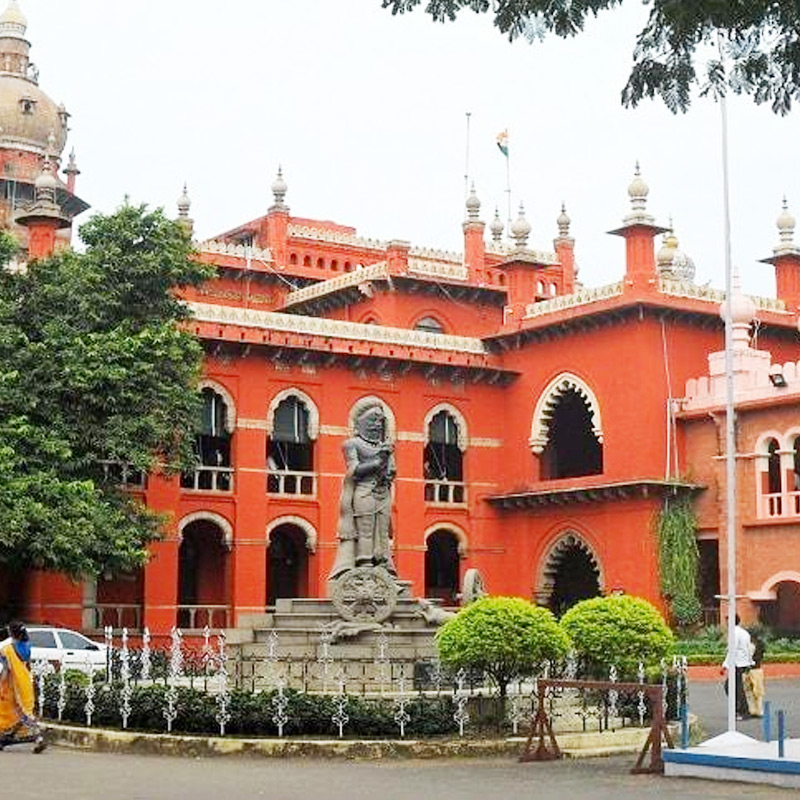
    The Madras High Court had on 31 October stayed the digitisation in Chennai till 5 November. The Court again extended the deadline till 9 November following which it was again put off till 19 November.

    The Court had on Tuesday adjourned the hearing of CMCOA‘s petition to Wednesday due to recusal of Justice P.P.S. Janarthanaraja from the case. The judge recused himself from the case citing possible conflict of interest since his son works for Sun TV, whose lawyer is representing one of the respondents in the case.

    Justice Janarthanaraja, along with Justice Paul Vasanthakumar, was expected to hear the petition. This will now be heard by the new bench comprising Justice Dharma Rao and Jagadeesan.

    CMCOA‘s Srinivasan said that the local cable operators (LCOs) in Chennai are a confused lot since state-run Arasu Cable, the dominant MSO in the state, is yet to receive a DAS (digital addressable system) licence for Chennai.

    The cable operators like in other parts of Tamil Nadu can‘t align with any other MSO other than Arasu. He also reasoned that the LCOs will not buy STBs from any other MSO fearing that if Arasu gets the licence then all their investments would go waste.

    "LCOs in Chennai have no choice but to go with Arasu. The I&B ministry should take a decision whether or not it wants to give a licence to Arasu. This will at least bring some clarity," he lamented.

    As many as 11 MSOs have got DAS licence to operate in Chennai.

    In the event of Arasu failing to get a DAS licence, the LCOs would take a call independently on their MSO partner, Srinivasan said. But for that the government needs to take a decision immediately, he added.

    As Indiantelevision.com had reported, the MIB is having second thoughts on granting licences to Arasu fearing that similar demands might come from other state governments.

    Add to that the latest diktat by MIB to the broadcast sector regulator Trai to bring rules in place to keep a check on monopolies in the cable TV distribution space at a local, state and regional level.

  • No relaxation on digitisation in Delhi, Mumbai & Kolkata

    No relaxation on digitisation in Delhi, Mumbai & Kolkata

    NEW DELHI: The Government has ruled out any possibility of allowing multi-system operators (MSOs) and local cable operators (LCOs) in Delhi, Mumbai and Kolkata more time to completely switch over to digital delivery of television channels, as has been offered in Chennai.

    During the hearing of a case in the Madras High Court, the ministry had said it was willing to extend the digitisation deadline to 31 December for Chennai if all the MSOs or LCOs signed affidavits assuring that they would go digital within the extended deadline.
    Information and Broadcasting (I&B) Ministry sources said the extension in deadline offered for Chennai was not applicable to Mumbai, Delhi or Kolkata since the situation in the southern metro was very different.

    The sources said while the ministry had signed agreements for digital addressable system with 11 MSOs in Chennai, the largest MSO – the state government-owned Arasu –had only analogue delivery system and needed more time to convert to DAS.

    The sources also said I&B Minister Manish Tewari had categorically ruled out any extension of the date in any of the phases, of which the first phase covering the four metros became effective on 1 November. The second phase of digitisation covering 38 cities takes effect on 31 March and all the cable TV delivery systems across the rest of the country are scheduled to go digital by December 2014.

    The ministry sources admitted that there would be some differences in the figures given by it on implementation of digitisation or installation of digital set top boxes (STBs) with the actual figures on the ground, but it does not pose any problem as the consumers of these four cities were keen to go digital.