Tag: DAS

  • 2014: Industry hopes high

    2014: Industry hopes high

    MUMBAI: A year of risks and several speed breakers has come to an end and the horizons of the New Year are already showing a silver lining. Every member of the media and entertainment industry in the country is expecting magical spells to be cast in 2014. Let’s look at what to anticipate from the next 12 months.


    Starting with the Ministry of Information and Broadcasting (MIB) the eagerly awaited forecast is that phase I and II of Digital Addressable System (DAS) are completed without any obstructions or delays. And phases III and IV flow smooth like silk so that India can boast of a digitised environment by the next New Year (2015).


    Broadcasters are expected to follow content norms as well as invest more in creating better content. With general elections coming up, channels are set to heat up their mercury levels to prove who is the best in the genre. Prasar Bharati is getting Rs 3,500 crore funding from the MIB which should enable modernisation of the pubcaster with high quality production and better quality shows as well as yield more revenues and profit.


    The Telecom Regulatory Authority of India (TRAI) has had a tough time this year dealing with the multi-system operators (MSOs), local cable operators (LCOs), direct-to-home (DTH) players, aggregators and broadcasters. With the year seeing too many conflicts between all the players of the industry, TRAI will surely want that all the stakeholders to find solutions. The regulator will also hope for smooth role out of DAS phase III and IV and gross billing to begin for phase I and II.   


    The regulator that recently came out with a consultation paper to curb monopoly of MSOs will be looking at curtailing excessive power clout and monopolies in every sector of television – cable TV, content aggregation and broadcasting.


    Moreover, TRAI will hope that all that it started in 2013 sees light in 2014. One such initiative is the acceptance of the ad cap regulation by all broadcasters. It would also hope that the quality of service for TV viewers is consistently kept in mind by broadcasters. Last, but not the least, it would also want that the new regulations for DTH licences are passed.


     Broadcasters are the happiest of the lot as they see better revenues flowing in the next year as digitisation pans out across India. Channels will be embroiled in acquiring or producing new innovative shows that will give them an edge over their competitors. Generating better TVTs either through new shows or hit movies that will help them dislodge the leader. Broadcasters are seeing much potential in the soon to be launched new rating system Broadcast Audience Research Council (BARC) which is expected to show their performances in true light.


    However, nothing is as eagerly awaited as the fate of the ad cap that is currently hanging mid air with the Delhi High Court. Even as some broadcasters are more than happy with the 12 minute advertising air time limit, most of them feel it is a hindrance to their functioning and will hamper their revenues if put to effect before digitisation is complete. At the same time they are also looking forward to strike better deals with their advertisers as well as better syndication for their programmes in the international market providing them a global exposure.


    As digitisation sets in, distribution should also be easier and transparent. Even as channels will engage with domestic DTH and cable TV platforms for better carriage and revenue share deals, they will look forward to reaching out to more audiences through international platforms.


    Bottomlines will be managed better as broadcasters will control their costs by trimming their staff, scaling up their programming, enhancing distribution and controlled marketing. With several TV channel licenses being stuck with the MIB, new channels are waiting to see the light of the day in 2014.


    The cable TV sector which has undergone immense change in 2013, will surely expect great returns in the coming year. One thing which they will be hoping for is internet on cable TV to spread thereby generating VAS revenues.  Their long wish list will also include reduction in import duties on STBs, preferably subsidies from the government for promoting digitisation, higher ARPUs from consumers, better synchronisation with other MSOs, fair entertainment and service tax – preferably service tax holidays, fair charges for usage of public utilities for distribution, higher carriage fees from broadcasters, lower content costs from broadcasters and aggregators and longer licensing norms from I&B. The year also witnessed a few announcements by the MSOs for acquiring content for their cable channels. These MSOs will hope that the venture is successful and helps them reap benefits with better revenue flow.


    On the DTH front, operators have high hopes that the tag of having the lowest ARPUs in the world will fade away as higher ARPUs will flow in. The dream is that content costs will be lowered which will help them generate better revenue as well as invest in getting innovative technologies for the future of TV and mobile.


    Digitisation for DTH players means high net addition of subscribers and lower churn in 2014 as some subscribers will shift from cable TV to the DTH platform. Leading players want to offer better packages to their subscribers with more availability of channel which can only come with more capacity bandwidth that is in the hands of the Indian Space Research Organisation (ISRO).


    At the production front, 2013 wasn’t really big on experiments; at least as far as TV shows are concerned. Only a few like the adaptation of the international format – 24, the reality show Connected Hum Tum and Comedy Nights with Kapil made some difference in programming. As we usher in to the New Year, we obviously expect more newness in the shows produced. But for that, the production houses need to get respite from the issues that keep bothering them.


    One of the major issues that cripple the production houses is the restrictions by broadcasters on the budget per episode. And then, it is for sure that the production houses in the New Year would wish for a better budget approval from the broadcasters. Another issue is the ever-rising demands of the crew unions, including the technicians and other crew members. The crew members have not just been fighting for a raise in their salary but have demanded many other privileges that have kept the production houses on their toes. Because of this, some production houses prefer working outstation than in Mumbai in order to cut down on costs.


    The year 2013 witnessed a really interesting case — there was a huge hoopla when an actor portraying the popular character, Gutthi (from Comedy Nights with Kapil on Colors) decided to pull out of the show over few differences with the production house and the channel. While the actor said the right to the character belonged to him, the production house thought otherwise. By the end of the year, nobody got a clear picture about who really owned the character. However, we hope the New Year doesn’t just bring clarity to this particular case but the industry also works in order bring a system in place about the entire intellectual property rights (IPR).


    The wish list for the New Year would never end. But some of the other desires that the production houses perish include better following of discipline by the actors on the set, better creative people with improved ideas that grabs the eyeballs, less interference from broadcasters in the production process and of course, many more new and intriguing shows that not only brings more viewers but good business that would improve the functioning of entire industry.


    The expectations are high but they aren’t too farfetched. With time, discussions and a little bit of a push we can see much of it becoming a reality.

  • MSOs request WB UD minister to waive off amusement tax arrears

    MSOs request WB UD minister to waive off amusement tax arrears

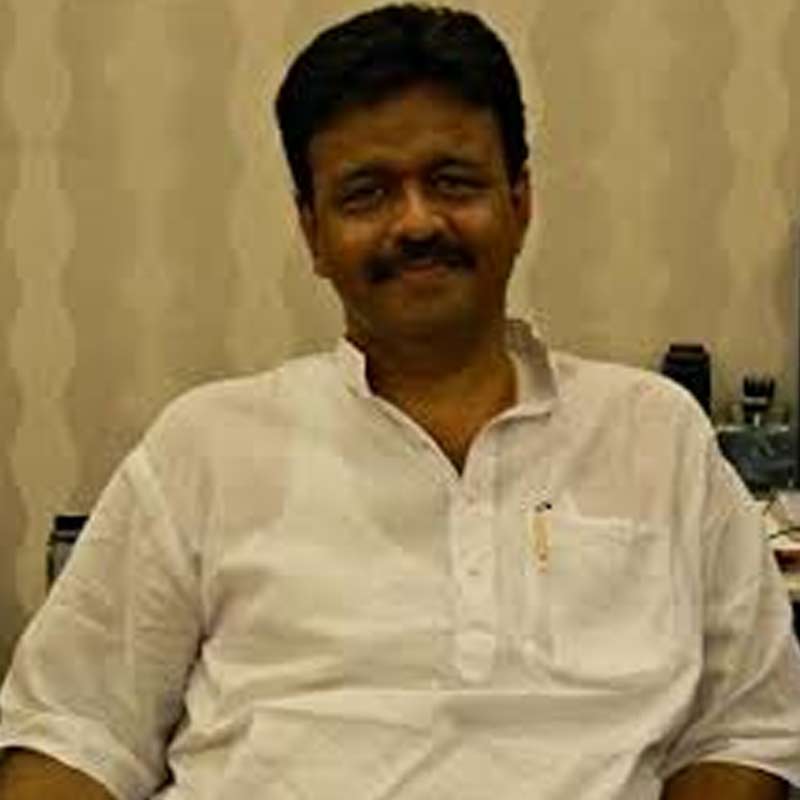
    KOLKATA: The multi-system operators (MSOs) in Kolkata have requested the West Bengal Urban Development minister Firhad Hakim to waive off amusement tax arrears, thanks to the cable television digitisation which has revealed their business details to the government authorities.

    Cable TV sources said that the state government which is slated to get around Rs two to three crore every month as amusement tax from the MSO gets only Rs 15 – 20 lakh from the MSOs in the Kolkata Municipal Area (KMA) area now.

    “Seeing the present situation, it can be assumed that the state government has lost between Rs eight to 10 crore in the form of amusement tax in last three months,” said a cable TV analyst.

     After the DAS implementation, apart from the increased monthly subscription fee, the consumers are supposed to shell out Rs 10 more as amusement tax charged by the state government.

    Firhad Hakim after taking a note to the appeal made by the MSOs has asked the MSOs to write a letter to the government and accordingly the state would look into the matter.

  • MSO InCableNet gets Rs 300 crore cash infusion

    MSO InCableNet gets Rs 300 crore cash infusion

    MUMBAI: The folks at the Hinduja group-owned cable TV MSO InCableNet and InDigital must be a happy bunch. The reason:  Grant Investrade Limited (GIL), a wholly owned subsidiary of Hinduja Ventures, has decided to invest Rs 300 crore in the cable distribution business managed by InCableNet and InDigital in India.

    The capital infusion, according to a press note released by the company, is happening to take advantage of opportunities government mandated digitisation of cable TV.

    “Phase I and phase II of the Digital Addressable System (DAS) have already been completed and several consolidation opportunities are coming up. The capital will be used to expand the digital base of IMCL and to improve customer services,” said the release.

    Hinduja Ventures director Ashok Mansukhani when contacted said, “The purpose of promoter infusion through GIL is to help IMCL stabilise phase I and II which has completed set top box installations. It is up to IMCL management to also grow in new geographies for phase III and IV which are due to be digitalised by 31 December, 2014 either organically or inorganically.”

    The investment has come in at a time when there is a lot of buzz on whether the MSO is in the running to acquire or partner the Kolkata-based MSO Manthan Broadband. Unwilling to confirm or deny anything Mansukhani said, “There are of course plans to expand our geographical presence. Kolkata is an interesting city to venture into, but nothing as of now has materialised.”

    He further added, “We already have 22 joint ventures and would obviously like to expand. These things keep happening in the cable TV business.”

    The infusion of cash couldn’t have been more timely. Industry observers have been watching closely waiting for the MSO to get active.

  • Hathway-MCOF show way forward on digitisation

    Hathway-MCOF show way forward on digitisation

    MUMBAI: The government-mandated DAS has been in limbo for a few months now. Even as set top boxes have rolled out in phase I and phase II towns, the issue of Consumer Application Forms (CAFs), despite claims by all, has yet to be resolved completely with the collections of these falling short of the mark. Then multisystem operators (MSOs) and last mile operators (LMOs) have been having a faceoff with the latter claiming ownership of their subscribers, while the MSOs have been insisting that they are pouring in investments hence they have the right to the cable TV viewer.

    But now a ray of hope seems to be emerging from behind the dark clouds with at least a couple of MSO working on what could be a model which could provide a solution to the vexatious problem of who owns the cable TV consumer: the MSO or the LMO? And in the process it would most likely give a real impetus to the realisation of the financial benefits of digitisation, and encourage its acceptance and spread nationally.

    Indiantelevision.com gives you an exclusive peep at what is being planned by one of the MSOs – the Viren Raheja-led Hathway Cable & Datacom – with the Arivnd Prabhoo-led Maharashtra Cable Operators’ Federation (MCOF).

    The two met on 5 December and agreedin principle that the MSO will share its subscriber management system (SMS) with its last mile operators – albeit in a limited capacity. Hathway, through this initiative, has taken a step forward in allowing the LMOs to bill the end consumers.

    “It is a great and welcoming move by Hathway,” says MCOF president Arvind PrabhooThe meeting between the duo was a result of the letter sent by MCOF to all MSOs, as a move to ensure smooth rollout of digitisation. It should be noted that MCOF had written to all MSOs after the Telecom Regulatory Authority of India (TRAI) gave MSOs the final deadline for starting gross billing by 15 December and submitting CAFs by 31 December.

    Calls to Hathway officials did not get a response. But sources close to India’s most evolved cable TV MSO admitted to indiantelevision.com that “yes, we have given the LMOs the right to bill and become the owners of their consumers. They are our trade partners and we want their rights to be maintained. And yes we want them to conduct their business using our SMS.”

    Hathway, apparently, has suggested two options to take things forward.

    The first is for smaller LMOs who who have a few 100 subscribers. The MSO says it could handle the billing for them. The LMO will function as the collection agent, earning a commission in the process for the subscribers who are part of his network. Hathway will be responsible for taxes in this case – including entertainment tax and service tax, wherever applicable.

    The second option is for larger LMOs with subscribers running into thousands and tens of thousands. These LMOs will be permitted to log online into the Hathway SMS with a unique ID and password and manage their subscribers, and even generate bills for them. If they choose this option, then they will be responsible for all the taxes and paperwork.

    Says the source close to Hathway.: “This system not only maintains the rights of the LMO over their consumers, but also makes the operation simpler for us. If we have to bill, activate, deactivate or change plans for all subscribers, we will have to set up those many call centres and infrastructure. It is easier for the customer as well, since for them the LMO is the touch point.”

    Hathway has been holding road shows all over Maharashtra to educate LMOs about its process and explaining to them that each of them can activate or deactivate boxes assigned only to them. Sessions have been held in Mumbai, Pune, Pimpri, Aurangabad, among other cities.

    However, there are still a couple of issues which have to be clarified and agreed upon between MCOF and Hathway. The first is in the area of revenue shares between the MSO and the LMOs. While Hathway has proposed a graded 60:40 to 57:43 split between MSO and LMOs, the latter would like it to be higher – say in the region of 45 per cent- in favour of the cable operators.

    The second issue that needs finalisation is: in whose name should the bill be raised – the LMO or Hathway?

    MCOF and Hathway are expected to meet this week to resolve these and any other issues that could crop up as well.

    “Hathway is the only MSO that has taken a step forward and has shown interest in resolving issues. Other MSOs have yet not approached us for any meeting,” says Prabhoo.
    Prabhoo need not worry. The floodgates may open sooner than he expects.

  • Close Kolkata LCOs appeal to MIB for 10 year license

    Close Kolkata LCOs appeal to MIB for 10 year license

    KOLKATA: Since the time the process of cable TV digitisation started, if any faction has been really troubled, it’s the local cable operators (LCOs). To make their future secure, they have raised their voice time and again.

    In an attempt to form a united front and take up the common issues troubling them, around 8,000 Kolkata LCOs, who claim that mandatory digitisation has adversely affected their livelihood, are requesting the Parliamentary Standing Committee of Information Technology for 10-year license from the Ministry of Information and Broadcasting (MIB).

    One of the reasons that worry the LCOs the most is that they are registered with the post office and get only a year’s license at a time.

    “But the Multi System Operators (MSOs) get a 10-year license from the MIB,” says Cable & Broadband Operators Welfare Association (CBOWA) general secretary Swapan Chowdhury, who thinks that the present condition of licensing is unfair and is making LCOs uncertain about their future.

    “We have requested the authority to recommend the licensing provisions made in the ‘Recommendations on Restructuring of Cable TV Services’ dated 25 July, 2008 to be implemented for LCOs and MSOs,” he adds.

    The body has also appealed to Member of Parliament and Member of Parliamentary Standing Committee of IT, Tapas Paul to review the arbitrary rule and act of Digital Addressable System (DAS) in order to protect the cable operator’s fundamental rights of livelihood.

    Chowdhury thinks that the current revenue sharing model between the MSOs and LCOs is not viable for the cable operators and in due course of time it may even compel the LCOs to quit the business. In the current scenario, as defined by the regulator, the ratio of revenue sharing between MSOs and LCOs is 55:45 for free-to-air (FTA) channels and 65:35 for the pay channels. “The business model should be reconsidered to protect the livelihood of lakhs of people,” says Chowdhury and adds that CBOWA believes that the model is discriminatory and thus they have put in a request for that as well.

    Another thing that is bothering the LCOs is that the MSOs are not executing the terms in the agreement even though DAS has been implemented since February this year. CBOWA has also put in a request about this so that these issues can be addressed in the winter session.

    A cable TV analyst, Namit Dave thinks that the digitisation process is a massive exercise and requires all stakeholders – broadcasters, MSO and LCOs to work in collaboration. “It would be difficult to execute the herculean task if any of these parties don’t cooperate,” he concludes.

  • TDSAT-Ad cap: 2nd amicus curiae done, channels turn now

    TDSAT-Ad cap: 2nd amicus curiae done, channels turn now

    MUMBAI: The second amicus curiae Aman Ahluwalia continued his arguments today in the TDSAT-ad cap hearing. After giving the legal perspective yesterday, today he focused on the commercial implications of the ad cap regulation.

    Ahluwalia said that the Telecom Regulatory Authority of India (TRAI) has the power to implement licensing under section 11 (1) (a) of the TRAI Act as well as enforcing it on broadcasters through section 7 (11) of the Cable TV Networks (CTN) Act. There is no need for it to choose the CTN act. The TRAI’s procedure may have been faulty but the bench should not strike down the ad cap regulation on account of this.

    The bench wondered that when a licence is issued, the terms and conditions need to be read properly, and if the ad cap regulation issued by TRAI adds anything to section 7 (11) of the CTN act, then should it be accepted. The agreement between the licensor and licensee is only for section 7 (11) and if points like clock hour and reporting to TRAI come into the picture, it is in excess of the section.

    The bench said that one cannot change, modulate or supplement the terms of the licence. If TRAI had implemented it under sections 11 and 12 of the TRAI Act that address the issue of licensing and advertisements then such problems wouldn’t have come up.

    The amicus curiae read out the final draft report of the convergence bill which gives the definition of ‘broadcasting services,’ as it doesn’t have an exact one. He said that content, distribution and technical components all come under the TRAI act and content and distribution together mean carriage. By reading out reports such as the Nariman report, he chose to interpret broadcasting services to include content.

    Ahluwalia then proceeded to the commercial aspects. He told the bench that after reading the code in the UK, he saw that the ad cap may work for GECs while the news channels that have less viewership will be most affected by it. The only way revenue can be raised is either by digitisation when subscription revenue will go up, or by raising advertising rates. However, if subscription rates are jacked up, viewers may not pay, and resort to cord cutting, resulting in lower viewership, and comitantly lower ad revenues as they depend entirely on viewership.

    To support his statement, he also produced financial reports of Zee TV and the Sun Network which showed that their ad revenues were high as compared to news channels. Sponsored shows could be a way out for news channels to generated additional revenues but this could turn out to be dangerous as news could become coloured. And thus he suggested that genres should be dealt with differently.

    According to him, English news channels will be the most affected because advertisers will start turning the screws on them as viewership will quite likely drop off the cliff. The scenario could improve when DAS is implemented completely all over the country as by then subscription and ad revenues each will contribute equally to a company’s top line.

    Reading from an Ofcom (independent regulator and competition authority for the UK communications industries) report, he emphasized that TRAI’s ad cap regulation needs to be more precise in terms of the number of ads per half an hour, duration of the promos etc. Till DAS isn’t complete, it should not be implemented as, under Article 19 of the Constitution, broadcasters have the right to disseminate information and viewers have the right to receive plurality of information giving them the power to choose.

    If the regulation comes into effect now, many smaller news channels may shut down and the existing ones will generate less revenue and hence news could end up being coloured as only a limited number will be left to provide news.

    After Ahluwalia concluded, the News Broadcasters Association (NBA) counsel presented the rejoinder. He argued that TRAI’s analysis of the ad cap violations was incorrect.

    His second argument was that TRAI has the power to implement the terms and conditions between the licencee and licensor under section 4 A of the Telegraph Act that talks about teleport licences. It cannot implement it on the basis of the uplinking and downlinking policies.

    Teleport licences do not mention the CTN act at all and when TRAI is enforcing it on the basis of licensing then its line of reasoning needs to be read in the context of teleport licensing.

    The NBA counsel stated that TRAI cannot act against broadcasters under the uplinking/downlinking policy since it falls under the ambit of the Ministry of Information and Broadcasting.

    During its arguments, TRAI mentioned that broadcasters had suppressed documents related to licensing. The NBA counsel clarified that the data was about OB vans and teleports, which was available in the public domain.

    He added that, according to Ofcom, UK channels were allowed ad commercials of 9-12 minutes averaging and not per clock hour. Also, if TRAI were to enforce the ad cap, it should be under the teleport licence under section 4 A of the Telegraph Act.

    The NBA will continue its rejoinder tomorrow as well.

  • LCOs, independent MSOs unhappy with digitisation

    LCOs, independent MSOs unhappy with digitisation

    MUMBAI: Back in 2012, when India kicked-off the process of digitisation, local cable operators (LCOs) were an unhappy lot; approaching state high courts for respite from what they perceived as a threat to their business.


    Today, one would imagine cable ops to be happy, considering the first two phases of DAS are almost complete and India is on the threshold of the final phases (III and IV) of the big switch (analogue to digital feed).


    However, the truth is: cable ops are not happy with the Telecom Regulatory Authority of India (TRAI) ruling on consumer application forms (CAF) and billing, which according to LCOs, makes multi system operators (MSOs) owners of consumers. In this connection, a group of LCOs and independent MSOs met the Parliamentary Committee on Information and Technology in New Delhi and put forth their views.


    ABS 7 Star CMD Atul Saraf told the committee: “The ownership of the consumers should be with the LCOs and not with the MSOs. The TRAI and the Information and Broadcasting Ministry (I&B Ministry) should amend the DAS rules keeping in mind the interest of all stake holders.”
    Almost 90 per cent of the STBs are imported from China, we propose that 70 per cent of the STBs should be Indian, says Atul Saraf


    Saraf pointed out that though there were 60,000 LCOs and 8,000 MSOs across the country, the task force formed for the process did not include a single LCO or MSO. “A new task force should be formed with all stake holders and not a couple of MSOs and broadcasters who are in vertical monopoly,” he remarked.


    Drawing attention to the low quality of the Chinese set top boxes (STBs) being used, he said cable ops who had already spent close to USD 4 billion in the first two phases would be forced to spend another USD 4-5 billion in the last two phases of DAS. “Currently, most of the STBs being seeded are Chinese. The boxes which are of low quality may have to be replaced in the next couple of years, which means more cost for the operators,” Saraf said, cautioning against implementing phases III and IV before the completion of the first two phases.


    “There should be a Broadcast Act to monitor broadcasters. Also, only after both the consumers and cable operators reap the benefits of DAS phase I and II, phase III and IV should be implemented,” he said.

    Increasing import duty on STBs will discourage the MSOs from importing STBs from China, points Arvind Prabhoo


    On behalf of the cable op community, Saraf demanded: “We want the committee to question the government as to why these loopholes were not looked at before importing such STBs,” pointing toward the growing need for indigenous box manufacturing. “Currently, almost 90 per cent of the STBs are imported from China; we propose that 70 per cent of the STBs should be Indian,” said he.


    He proposed that while the current import duty on STBs is 10 per cent, it should be raised to 50 per cent. “Wasn’t digitisation meant to uplift Indian STB manufacturers and also create more jobs for them? What I fail to understand is how the TRAI and I&B Ministry did not see these loopholes before implementing digitisation,” Saraf questioned.


    Seconding Saraf on the hike in import duty as well as indigenous manufacture of STBs was Maharashtra Cable Operators Federation president Arvind Prabhoo. “Of course, importance should be given to the national STB manufacturers. If the import duty is increased, it will surely discourage the MSOs from importing STBs from China and also encourage Indian manufacturers. That digitisation should have helped generate revenue and employment for Indians, are issues the government should have thought about,” he said.
    We plan to go and meet the members of parliament once the winter session commences,says Pramod Pandya


    He opined that the government had been misled at some point. “I think that a certain section of the industry presented a wrong picture to the government. But, I am sure they will work on it now.”


    Gujarat Cable Operators Association president Pramod Pandya wanted to know if any consumer survey had been conducted before implementing digitisation. “I do not understand the need to force the implementation of DAS, if the country doesn’t have infrastructure to support it,” he thundered, pointing out that cable ops are hopeful the Broadcast Bill will be proposed during the winter session of the Parliament. “We plan to go and meet the members of parliament once the winter session commences,” he rounded off.

  • LCOs give their views to parliamentary committee on IT

    LCOs give their views to parliamentary committee on IT

    MUMBAI: If one thought that the local cable operators (LCOs) would give up without a good fight for their rights, one was surely mistaken. When around 10 LCOs from across states met the Parliamentary Committee on Information and Technology today in New Delhi, they ensured that their voices were heard on digital addressable systems (DAS). The meeting that went on for two and half hours was attended by 20 members of parliament.


    While each LCO was heard by the committee, it was ABS 7 Star CMD Atul Saraf who said that the LCOs were not against digitisation, but against mandated digitisation. “Digitisation should be voluntary,” he said in the meeting.


    The LCOs represented the trials and tribulations of the cable TV consumer to the committee. “We spoke on consumer interest and what they had gained with digitisation,” informed Cable Operators Federation of India president Roop Sharma. The operators opined that the consumer should be able to choose his set top box (STB).


    Apart from Saraf and Sharma, the others who were a part of the committee included: Pramod Pandya, Swapan Chowdhary, Jeevan Khanna, Ajeet Singh, Sudhish Kumar, GS Oberoi, Gaurav Gupta, Chandradeep Bhatia and Paramjit Singh.


    “The consumer should be able to buy portable STBs which gives him access to internet, video-on-demand and other facilities. Why should every consumer be burdened with the same quality of STB. There should be a provision that if someone wants to buy an expensive STB they should be able to do so,” said Sharma.


    The operators also suggested that since it is the consumer who pays for the STB, they should be allowed to own it. “Also consumer should have the option to change STBs and his service provider. Currently if Hathway seeds a STB in a consumer’s house, they cannot switch to another MSO,” said Sharma to the committee.


    The LCOs also raised concern over their own existence. Many in the meeting felt that the LCOs have been left at the mercy of the MSOs. They also said that the process of billing and the power to switch off STBs should be with the LCOs and not MSOs.


    The operators put a point stating that TRAI should first successfully complete digitisation of phase I and II and then start the work in phase III and IV.


    On the issue of entertainment tax, the LCO representatives opined that there should be uniformity in taxation throughout. “Also we told them that entertainment tax should be collected per household and not per TV set,” informed Sharma.


    The MPs asked the LCOs for solutions to the issues with digitisation, to which the LCOs suggested that the long pending Broadcasting Bill and the DTH Act needs to be brought in to regulate and control the  the broadcasters and DTH players respectively.


    Also a point on implementation of vertical monopoly and cross media holding on immediate basis, before going ahead with further digitisation was made.
    The committee will also be meeting Information and Broadcasting Minister Manish Tewari in a couple of days, after which they will come out with a recommendation which will be submitted to the I&B Ministry.

  • Kolkata MSOs to blackout TV tonight

    Kolkata MSOs to blackout TV tonight

    KOLKATA: Looks like cable TV consumers in Howrah will have to sacrifice on their favourite shows with few multiple system operators (MSOs) deciding to switch off signals if they do not receive duly filled customer application forms (CAFs) till end of the day today. The decision comes in view of the deadline set by the Telecom Regulatory Authority of India (TRAI) for submission of CAFs by 15 November.


    Around 40 per cent cable TV viewers in the city are subscribed to SitiCable. The MSO has not requested the regulator for any extension for CAF submission. SitiCable Kolkata director Suresh Sethia says, “We have already collected 90 per cent of CAFS. We expect the rest to be submitted today, if not, we will switch off signals from tonight.”


    Resonating the same is Manthan, which has installed 20-25 per cent STBs of the total five lakh STBs installed in the region.  “While a few have submitted CAFs, others will send it soon,” informs Manthan director Sudip Ghosh.


    The announcement is a shocker for many, as confusion over the city being a part of DAS phase II still remains. It is learnt that MSOs like KCBPL-GTPL among others are running analogue signals in DAS II areas.


    Industry insiders blame lack of an organisation for irregularities. “There is no such designated organisation that can regulate the system here,” says a source.


    The cause of ineffectiveness could also be because a few local cable operators (LCOs) have assured customers that they do not fall under DAS phase II and thus customers have not invested in the set top boxes (STBs).


    Talking about the prevailing confusion over DAS in Howrah, Sethia says, “Though most areas were covered during phase I, TRAI has to define whether the border of Howrah falls under phase II or not? There needs to be a clarification.”


    The city faces another issue. If Cable Operators Sangram Committee general secretary Apurba Bhattacharya is to be believed, subscribers who have submitted the duly filled CAFs are yet to see the change on their TV screens. “Even after filling the CAF and opting for preferred bouquet of channels, nothing has changed for viewers in Howrah,” he informs.


    Bhattacharya however believes that the MSOs will not switch off signals. “I foresee an extension in the cutoff date,” he says.


    Earlier a few LCOs had blamed festivities for slow down of work. “Since festivities are over now, both customers and LCOs should take the initiative and submit their details to MSOs,” opine city-based analysts.

  • Q2-2014 Den Networks reports 35 per cent higher y-o-y cable revenues

    Q2-2014 Den Networks reports 35 per cent higher y-o-y cable revenues

    BENGALURU: Indian cable TV distribution company Den Networks Limited (Den Networks) continues to rake in the moolah with 32.4 per cent higher total revenue of Rs 271.88 crore for Q2-2014 as compared to the Rs 205.26 crore for Q2-2013 and almost flat (1.8 per cent higher) as compared to the Rs 268.69 crore for Q1-2014. The company reported a 35 per cent y-o-y jump in cable revenue for Q2-2014 at Rs 258.93 crore as compared to the Rs 192.51 crore in the corresponding quarter of last year (Q2-2013).


    Note:  
    Den Network claims that on account of a reporting policy change, w.e.f. Q2-2014, all revenue figures exclude ‘Other Income’ which is reported separately after EBITDA, and that past period figures have also been adjusted to this effect to make it comparable. Variance/s has/have been observed between the company’s investor updates of Q1-2014 and Q2-2014 and the statements filed by the company with the stock exchanges. The differences, if any between the financial analysis for Q1-2014 and Q2-2014 must be attributed to the varied accounting methodology/communications by the company. The current analysis is being done based on the updates for Q2-2014 received.


    The company reported a 35 per cent y-o-y jump in cable revenue for Q2-2014 at Rs 258.93 crore as compared to the Rs 192.51 crore in the corresponding quarter of last year (Q2-2013) on the back of strong growth in subscription revenues and higher placement revenues despite lower activation revenues in the current quarter.


    Q-o-q, the company’s investor update for Q2-2014 says that its cable business revenue was almost the same as the Rs 256.41 crore for Q1-2014, a figure that is Rs 6.44 crore (about 2.45 per cent) lower than the Rs 262.85 crore the company had reported in its Q1-2014 investor update (ref Note above).


    The company says that it has deployed about four lakh set top boxes (STBs) during Q2-2014 and claims a digital subscriber base of around five million in DAS phase I and II cities and about eight million analogue subscribers in DAS phase III and IV markets.


    Further, Den Networks believes that the next big opportunity after full digitisation of cable TV is offering high speed broadband services to its subscribers. The company announced plans to launch its broadband service offering by late Q4, FY 2013-14 (February 2014).


    Let us look at the other Q2-2014 figures announced by Den Networks


    The company has reported breakup of its cable revenue as Rs 99.11 crore as subscription revenue, Rs 119.90 crore as placement revenue and Rs 29.43 crore as digital activation revenue.


    Den Network’s consolidated EBITDA for Q2 -2014 was Rs 87.70 crore vs. Rs 38.73 crore in Q2-2013, a 126 per cent leap y-o-y, and eight per cent higher than the Rs 80.94 crore for Q1-2014.


    Correspondingly, its cable business EDITDA for Q2-2014 at Rs 85.05 crore was 134 per cent higher than the Rs 36.36 crore for Q2-2013 and seven per cent higher than the Rs 79.39 crore for Q1-2014.


    Consolidated PAT at Rs 11.18 crore for Q2-2014 was up by about 10 per cent higher as compared to the PAT of Rs 10.15 crore for Q1-2014. The company says that its cable business PAT stood at Rs 9.64 crore for Q2-2014.


    Consolidated expense at Rs 224.13 crore for Q2-2014 was 21.54 per cent higher than the Rs 184.66 crore for Q2-2013, and 2.3 per cent lower than the Rs 229.69 crore for Q1-2014. Den Network paid 18.4 per cent more towards content cost at Rs 90.54 crore for Q2-2014 as compared to the Rs 76.5 crore in Q2-2013 and the 6.5 per cent higher than the Rs 85.01 crore in Q1-2014.


    Depreciation and amortisation cost at Rs 37.04 crore for Q2-2013 was more than double (2.14 times) the Rs 17.29 crore for Q2-2013 and 11.47 per cent higher than the Rs 33.23 crore for Q1-2014. Den Networks has reported a foreign exchange loss of Rs 5.96 crore in its cable business for 2-2014.
    Den Networks claims that there is a significant demand for its digital cable services in its existing Phase III and IV markets. The pace of seeding is expected to pick up in the next few months. It also says that it is witnessing a lot of interest from smaller players (MSOs and LCOs) from Phases III and IV areas looking to align themselves with it and is receiving several such requests on a regular basis.