Tag: DAS

  • JAINHITS conducts first ever LCO meet in Chennai

    JAINHITS conducts first ever LCO meet in Chennai

    MUMBAI: JAINHITS, India’s first and only HITS based Direct to Network (DTN) service, attracted a large number of local cable operators (LCOs) at its first ever state business meet in Chennai.


    While the dispute with the central government regarding DAS license to the state-owned ARASU network is not showing any signs of early resolution, the cable operators showed interest in the JAINHITS platform and expressed their resolve to digitise their networks because they did not want to miss the advantages of the digital revolution and also because their clients want the legal and transparent framework for running their promising business.


    At the meet, senior members of JAINHITS briefed cable operators about JAINHITS’ services and offerings. They further briefed on JAINHITS cost effective solutions to LCOs for running fully DAS compliant digital cable TV services. During the interactive meet the LCO’s were interested to know more on the entire spectrum of consumer products and services that will be provided by JAINHITS such as high speed, cloud and hybrid broadband TV (HBB TV).


    The key concern of the LCOs was the ownership of the control room and they were happy to learn that they can set up their own control room at nominal costs while maintaining QOS (Quality of Service Standards) as prescribed by TRAI.


    Queries and concerns of LCOs regarding technology, services, channel packages, DAS regulations etc were addressed by JAINHITS team. LCOs were provided with a brief overview on the digitisation scenario of the country vis-?-vis digitization in Tamil Nadu. They were also educated on how JAINHITS technology helps them to achieve digitization and addressability in one go. JAINHITS team also gave the demo of their MPEG – 4 high quality signals to prove the superiority of their service.


     Addressing the meet, JAINHITS chairman Dr JK Jain stated that JAINHITS is supporting the struggle of small and independent local cable operators who are under the threat of big money lords. He also said that the monopoly over the content as well as on the distribution channels is not a desirable practice. JAINHITS supports a decentralized model of electronic media ownership and therefore is forging partnerships with small Cable Operators. He further added that his company believes in transparent business dealings. Conducting such joint meetings with Cable Operators aims at promoting the understanding and business acumen of the stakeholders.The greatest beneficiary of JAINHITS in the State of Tamil Nadu is going to be the State Government because the system will stop the theft of Government revenues and shall improve the tax collections and compliance by a large number of TV viewers.


    Enthusiastic team of young entrepreneurs and cable operators who have constituted ABCN Network organised the event. JAINHITS has already appointed ABCN the non exclusive regional service partners.


    ABCN chairman Marimuthu said, “One of JAINHITS key propositions is that it allows cable operators to retain business control and simultaneously enhance their growth with a very-low capital solution for digitization.”  Mr. Nazir Ali, CEO of the ABCN told the Cable Operators at the meet that as the DAS deadline is getting closer (30th September and 31st December 2014), it is imperative that cable operators of the state of Tamil Nadu join hands with India’s first and only HITS player.


    The company also used the platform to introduce some exclusive discounts and offers and some exclusive head end deals to those who commit large subscriber base.


     JAINHITS offers high quality cost effective solutions to LCOs for running fully DAS compliant Digital Cable TV services to its subscriber. It also offers high speed broadband service, multi-screen, and many more value added services along with consumer products such as cloud broadband, hybrid broadband TV (HBB TV) etc. Currently JAINHITS offers 250+ channels including all major pay TV and soon full HD and multi-screen service shall be avaiable to consumers.


    Currently, JAINHITS is offering dual audio feed to seven channels namely Disney, Cartoon Network, Pogo,Discovery, History TV18, Animal Planet and Nickelodeon. JAINHITS has partnered with the world’s leading technology company ARRIS (former Motorola Home) and Intelsat – the largest Satellite Company in the world. The key proposition of the JAINHITS platform is conversion of LCO as MSO with very minimum cost and providing all end to end solutions for Digital cable and Broadband services. With this, JAINHITS is all set to install over 3000 Mini Downlink Headend’s across India by the end of 2014, the 32 districts of Tamil Nadu will play a significant role.

  • Arasu should be given DAS licence, Jayalalithaa tells Modi

    Arasu should be given DAS licence, Jayalalithaa tells Modi

    NEW DELHI: Tamil Nadu Chief Minister J Jayalalithaa has once again raised the issue of granting a digital addressable system licence to Arasu Cable TV Corporation, which is owned by the state government.


    While the demand was raised before Prime Minister Narendra Modi when she called on him yesterday, it is expected that this matter would be referred to Information and Broadcasting Minister Prakash Javadekar for consideration.


    However, the Telecom Regulatory Authority of India (TRAI) has in two different consultation papers in 2008 and December 2012 given its opinion against state-owned multi-system operators or broadcasters getting licences.


    Ministry sources told indiantelevision.com that licences have not been issued to any state-owned organisation for running cable TV networks as TRAI had recommended that neither state-owned, local bodies nor religious organisations should be permitted to own TV channels.


    Earlier this year, then I&B Minister Manish Tewari had told Parliament that Arasu Cable TV Corporation had applied on 26 November 2007 for grant of MSO registration in CAS notified area of Chennai and had been granted provisional permission on 2 April 2008, subject to the report of TRAI on the issue of whether to allow state governments/PSUs and other entities to enter into broadcasting activities.


    Thus, Arasu had been given permission on the ground that it would automatically lapse if the Ministry decides against allowing state governments/PSUs and other entities into broadcasting activities, including MSO/Cable operations.


    In April last year, the Madras High Court had been informed by TRAI that Central and  State government ministries, departments, companies and undertakings should not be allowed to enter into the business of broadcasting or distribution of television channels. 


    Justice S. Rajeswaran was hearing writ petitions filed by the Tamil Nadu Arasu Cable TV Corporation seeking Digital Addressable System (DAS) licence to it for Chennai Metro and for the other parts of the State.

  • Jainhits strengthens its presence in Andhra Pradesh

    Jainhits strengthens its presence in Andhra Pradesh

    MUMBAI: The Headend In The Sky (HITS) platform Jainhits has announced the company’s strategy to spruce up its presence in Andhra Pradesh. The HITS operator has signed up with four big distribution partners in the state. The announcement was made on the sidelines of the three day industry event – Third Cable Net Expo Vision 2014.


    Jainhits national sales head Jeet Narayan Singh said, “Andhra Pradesh is a big market, with a presence of 12000 big and small cable operators. Our proposition of converting even the smallest LCO into an independent MSO is not only unique but virtually the only tangible solution which can fulfill the pan India digitisation goal of December 2014 set by government of India. In a short span of time, Jainhits has signed partnerships with over 200 cable operators spread across the country.”


    Further talking about the company’s profitable proposition, Jainhits head Rakesh Gupta added, “In our endeavor to enable 60,000 small and medium cable operators to become MSOs and go digital independently, we are offering an integrated end- to- end single window plug & play solution. Jainhits offerings are fully regulated and DAS compliant with a wider choice of channels that is cost effective and is the fastest way to offer digital cable services in any part of India. In addition, our broadband offering gives additional edge to Jainhits partners and helps them increase revenues by increasing ARPUs.”


    Currently, the HITS platform offers 250 plus channels including all major pay TV channels and will soon provide full HD and multi-screen offerings to consumers. Jainhits is all set to install over 2000 Mini Downlink Headends across 672 districts in India by end of 2014.

  • I&B in talks with ISRO to resolve transponder issue: Bimal Julka

    I&B in talks with ISRO to resolve transponder issue: Bimal Julka

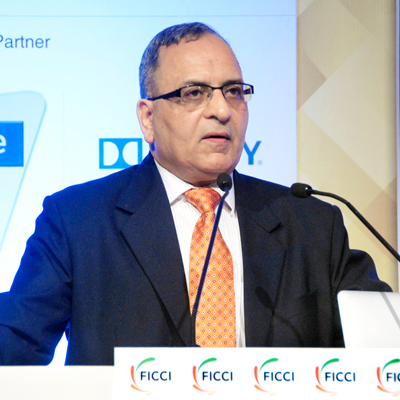
    MUMBAI: Day one of FICCI FRAMES 2014, the 15th chapter of the annual convention, witnessed a couple of significant announcements by Information & Broadcasting Secretary Bimal Julka.


    “DTH operators have complained that the limited transponder capacity has led them to completely depend on the Ku band. We are engaged in discussions with ISRO (Indian Space Research Organization) and the Department of Space to ensure this problem is resolved at the earliest,” said Julka in an assurance that the I&B Ministry was seriously looking at DTH operators’ demand for more transponders.


    With taxes levied on DTH platforms currently including an average of 10 per cent of entertainment tax, licence fees, additional customs duty on set top boxes (STBs), service tax and spectrum charges, Julka touched upon DTH players’ demand for rationalizing taxes so as to help them boost investment in infrastructure development and customers’ activation. “We are in talks with the Ministry of Finance and a consultation on this is on its way. We should be able to resolve the issue soon,” he said.


    On the subject of applications for launching new channels pending with the Ministry, Julka said, “An inter-ministerial committee has been set up under the I&B Ministry to look at granting permissions. There are around 800-odd channels currently, while 245 applications are pending for grant of permission. On one side, we get complaints that there are not enough revenues for broadcasters, while on the other side, we are flooded with applications for grant of permission for channels.” He said that in times to come, there would be a large number of mergers and acquisitions among broadcasters. The I&B Ministry is also in talks with the Ministries of Home Affairs, Corporate Affairs and External Affairs to ensure a more smooth process for granting permissions. “At least now, the Ministry of Home Affairs has granted permission and security clearance for channels-to-be for a period of 10 years,” he said.


    During his speech, Julka highlighted the strong partnership the Ministry shares with various stakeholders. “We have come out with policies that bring in a paradigm shift in the Media and Entertainment (M&E) industry. We are at the cusp of a major change with digitization, and this will help India put its best foot forward. The change has to be supported by liberal progressive policies that will encourage investment and ensure sustainable business models, promote entrepreneurship and create innovations,” he said. India has 77 million cable TV homes, of which 29 per cent are serviced by DTH operators while Doordarshan’s Free Dish reaches out to nearly 9 million homes. There are roughly 396 non-news channels and 60,000 cable TV operators, 6000 multi system operators (MSOs) and approximately 360 broadcasters; he informed, pointing out that the first two phases of cable TV digitization had been completed in about 42 cities with over 30 million STBs installed. “This was a mammoth task which has been undertaken with the coordination of all stakeholders,” Julka said. “About 110 million STBs are required to be installed in phases III and IV of DAS. Unless these phases are completed, we will not be able to fully harness the fruits of digitization. This is an excellent industry for employment generation.” Lavishing praise on digitization, he said, “It will change the way television is consumed. It will put India in the league of advanced countries.”


    On entertainment tax, he informed that preliminary data from state governments reveals a two to three-fold increase in collection of entertainment tax. “The data from news broadcasters shows approximately 30 per cent reduction in carriage fees in phase I cities and data from MSOs shows increase in subscription fees of about 35 per cent to broadcasters,” he said. Stressing on the need to fill in consumer application forms (CAFs), he said, “This is an ongoing exercise. I hope that the MSOs and LCOs are engaged in this exercise and will soon finish it.”


    While digitization would bring in transparency which in turn would bring in foreign direct investment (FDI) in broadcasting, Julka didn’t shy away from acknowledging the challenges. “Filling of CAFs, choice of a la carte channels, computerized billing to consumers, and the revenue sharing module between MSOs, LCOs and broadcasters is taking some time, but I am sure it will be resolved soon,” he assured, adding that the government would step in at any time it deems fit. On the ongoing issue of credible ratings, he said, “We are glad that the BARC has been set up. I will request BARC to speed up its process so that we can generate ratings without any delay.”

    Julka stressed the importance of digitization. “We need to see complete digitization throughout the country. Also, there are issues of registration of MSOs, monopoly restriction on MSOs and LCOs, and content monitoring. While vertical monopoly and cross media holding is a big issue, it is also engaging the MIB. We will consult the stakeholders before taking a decision on this,” he said on a concluding note.

  • Hathway Q3 operating income up 52%

    Hathway Q3 operating income up 52%

    BENGALURU: Indian Multi Systems Operator (MSO) Hathway Cable & Datacom Limited (Hathway) reported a jump of 52.1 per cent in operating income to Rs 234.78 crore  in Q3-2014 from Rs 154.40 crore  in Q3-2013 and up 6.7 per cent from Rs 220.28 crore  in Q2-2013.


    The company’s operating income for 9M-2014 was 62.5 per cent higher at Rs 687.71 crore  compared with Rs 423.14 crore  in 9M-2013. For FY 2013, the company reported operating income of Rs 654.32 crore.


    Hathway’s y-o-y EBIDTA for Q3-2014 at Rs 39.13 crore  was up 6.3 per cent as compared to the Rs 36.82 crore  in Q3-2013, but (2.5) per cent lower than the Rs 40.15 crore  in Q2-2014. YTD, Hathway’s 9M-Q2014 EBIDTA was 79.9 per cent more at Rs 156.4 crore  as compared to the Rs 86.93 crore  in 9M-2013. For FY 2013, Hathway’s EBIDTA was Rs 178 crore.


    Let us look at the other figures reported by Hathway for Q3-2014


    The company’s income breakup for the quarter is: Cable Income:-Rs  191.1 crore ; Placement Income-Rs  73.6 crore :  Activation Income- Rs 2.5 crore : Broadband Income-Rs 36.6 crore. 


    Hathway reported a net loss of Rs (36.86) crore  which was almost five times (4.97 times) the loss of Rs 7.42 crore  in Q3-2013, but 17.1 per cent less than the loss of Rs 44.45 crore  in the immediate trailing quarter. Hathway’s 9M-2014 net loss at Rs 75.99 crore  was triple the loss of Rs 25.25 crore  in 9M-2014. For FY 2013, Hathway reported a profit of Rs 3.20 crore. 


    Total Expense including depreciation and amortization for Q3-2014 at Rs 254.03 cores was 72.1 per cent more than the Rs 147.57 crore  in the corresponding quarter of last year and 8.9 per cent more than the Rs 233.19 crore  in Q2-2014. During 9M-2014, Hathway’s Total Expense was higher by 62.6 per cent at Rs 685.32 crore  as compared to the Rs 421.62 crore  in 9M-2013. For FY 2013, Hathway reported Total expense at Rs 608.5 crore. 


    Hathway paid almost double (1.95 times) towards Pay channel cost in Q3-2014 at Rs 82.73 crore  as compared to the Rs 42.96 crore  in Q3-2013 and 22.6 per cent more than the Rs 68.30 crore  in Q2-2014. In 9M-2014, Hathway paid Rs 210.47 crore  towards this head, which was 74 per cent more than the Rs 120.91 crore  in 9M-2013. For FY 2013, the company paid Rs 170.41 crore  towards this cost. 


    The company’s finance cost for Q3-2014 at Rs 22.41 crore  was almost double (up 1.96 times) the Rs 11.43 crore  I Q3-2013, but (5.5) per cent lower than the Rs 23.71 crore  in Q2-2014. In 9M-2014, Hathway’s finance cost more than double (up 2.11 times) to Rs.67.81 crore  as compared to the Rs.32.07 crore  in 9M-2013. For FY 2013, Hathway paid Rs.46.14 crore  towards finance cost. 


    By the end of December 2013, Hathway claims that it along with its JV partners had deployed 77 lakh boxes. During the quarter the company says that it has laid emphasis on collecting CRF’s from Phase II cities and on focusing for monetization of DAS areas. With this focus on collections it says that it has witnessed continued traction in the pace of subscription collections into January 2014.It says further that gross additions to its Broadband subscriber base was around 27,000 for the quarter.


    Click here for release


    Click here for financials

  • “IndusInd to soon start pre-paid cable TV services”:  Tony D’silva

    “IndusInd to soon start pre-paid cable TV services”: Tony D’silva

    Almost a-year-and-a-half ago Hinduja Ventures Limited (HVL) brought Tony D’silva – a man with more than four decades of experience across sectors such as media, FMCG and pharma – on board as the president of the company to spearhead its Headend in the Sky (HITS) business.


    Now, D’Silva has been given responsibility as MD & group CEO of IndusInd Media &  Communications Ltd (IMCL)  with long time  MD &  CEO of HVL’s flagship cable company Ravi Mansukhani stepping down earlier this week. As he takes on a bigger role, he is looking at betterment of the company with introduction of newer services. He sounds quite optimistic while suggesting prepaid model for billing and doesn’t hesitate in saying that he wants to give the local cable operators (LCOs), the rightful ownership of their subscribers.


    In an exclusive interview with Indiantelevision.com’s Seema Singh, D’Silva talks about his plans for InCable and HITS.


    Excerpts:


    What does becoming the MD and CEO of IMCL and CEO of Hinduja Group-media mean to you? How is this development going to change Hinduja Group’s media businesses and your life professionally? What are your immediate challenges?


    I have mixed feelings because the challenges are very steep. The future is exciting but there are grey areas to be covered before we achieve the state of growth with digitisation and monetisation. While I am looking forward to the challenges, I am wary of the fact that many hurdles need to be crossed. Bringing along processes is difficult and ultimately to monetise this business, the only way is to go prepaid.


    The industry must refocus itself to become customer friendly and start customer care services. Everybody in the digitised world is looking at increased revenues. The only way to make more money is by starting packaging, bundling and including small packages with regional and sports channels. The customers need to be segmented. Those who can afford to pay more can take higher priced packages, while those who can’t can opt for the basic pack. Unfortunately, there is a mental block in the mind of the consumers towards cable TV. They are not ready to shell out much for cable TV experience, but there is no such block to pay for broadband or triple play or video on demand (VOD).


    That’s where the entire industry should move. They should look at offering more value added services (VAS) and TV Everywhere services. This is what needs to be monetised. My focus will be on bringing the infrastructure to meet these requirements, putting procedures and making the whole business transparent so that every stakeholder in the value chain gets a share of the revenue.


    As the Group CEO – media and MD & CEO of IMCL, you will be responsible for restructuring the entire media business and value creation, how are you planning to do that? 


    We have two-three different businesses. My role is to monetise all these businesses so that the value of the group’s media businesses can grow. While phase I and II of digitisation was all about packaging, bundling etc, phase III and IV is all about HITS. I am very clear that ultimately it is the local cable operator who should own the network. Even in the HITS business, Grant Investrade Ltd (GIL) will be the white label which will be a pure technology service provider, with VOD and VAS.


    My aim is also to push the broadband segment which is lagging so far. We have a vast infrastructure for broadband which hasn’t been utilised. It is one area we will start developing now. We are not using that broadband, we are renting it out and they are monetising it. Now, we will restructure that segment as well.


    I will look at restricting the business to area specific responsibility. Our focus will be on customer care, which involves interface with customers through call centres and backend support. We will also focus on the LCO: MSO relationship as cable operators are another crucial part of our business model. The third is the broadband and new services.


    I would also want to make all our centres, profit centres.


    As far as HITS is concerned, it is a separate business with a different team and focus.


    Recently, Grant Investrade Ltd announced an investment of Rs 300 crore in the cable distribution business. How do you plan to utilise that investment? Will your approach for the growth of the company be different from your predecessor? How will you ensure HITS turns out to be profitable?


    The previous management did a great job. There is no other way than HITS to deal with phase III and IV. With HITS, the average cost of delivering data that comes to be Rs 18 per customer through optical fibre will go down to Rs 8.


    The HD box is the future and we will give HD boxes in the price of SD boxes. The operator in the HITS business is competing with DTH. The LCOs have the money but they face difficulty in buying bulk boxes. Thus, we are giving them the option of cash and carry. The operator has the option of buying boxes as per his need.


    My profit is by profit of numbers. As my subscribers increase, my cost will come down. Initially, I may incur losses but then it’s a volume game for me. If we are serious about digitisation, the government should have first cleared our HITS project. We are saying the LCOs can own the consumers and can do the packaging. We will help them seed boxes. It is different than JAINHITS. We have three to four different boxes and they get an option to choose.


    How much has been invested in HITS? Is more investment needed? When do you see the licence being cleared by the Information and Broadcasting Ministry?


    We have been waiting since 14 months to get the licence. We have already spent close to $10 million in the technology which is handled by Castle Media and people. Another $100 million will be invested in HITS project. This investment will happen once we get the licence.


    We are suffering because of the wait. When we started the project, the dollar rate was close to Rs 43, now it is Rs 63. Who will take the responsibility to pay for the escalation?


    There is a turf war going on between the LMOs and MSOs? Are you looking at resolving these issues?


    We are losing the focus in this fight, which is the customer. Industry is beginning to realise that just having subscriber numbers is not enough. We may not be the largest MSO in the country, neither am I aiming for that. My mission is to make InCable the most respected MSO in India. And that’s what the business model should be.


    By when will the VAS and VOD services come in to effect? Will HITS benefit IMCL? Do you think the customer in phase III and phase IV will readily pay for these services?


    A lot of this is application and we have a full fledged plan. Hopefully, when we launch HITS we will launch it with these services. These services will also be provided on InCable. IMCL will be HITS’ customer. The values and charges will be the same for IMCL as for other LCOs.


    The content requirement differs in phase III and phase IV and so HITS becomes an important platform. We will provide different packages based on the requirement. In fact we are encouraging LMOs and MSOs to strike their own deal with broadcasters.


    The customers in phase III and IV has money as well. We are targeting 20-25 per cent of the phase III and IV market through HITS. And that market is available.


    Phase III and IV need 90 million STBs. How many of these will be seeded by IMCL? Is DTH a competition for phase I and phase II? Will you set up new headends for phase III and IV?


    We will not seed STBs if our licence is not cleared.


    It is true that in phase I and II cities, the MSOs have to up their antennas and come up with VAS services. 70 per cent of the boxes are SD boxes when the market world over is moving to HD. Are we expected to replace all the boxes later? That will be an expensive proposition. Most part of DTH and mobile is pre paid, so we should move towards that. This will promote transparency. We should be launching prepaid in couple of months. HITS will be a complete prepaid model.


    No new headends will be set up in phase III and IV.


    In how much time can we expect changes at IMCL?


    I have given myself two months to at least start changing the process, procedures and start customer friendly actions by upscaling our call centres like those of DTH players.


    By when will the ARPUs for MSOs go up? What would the increase be? Do you see it rising to Rs 500 in the next one year?


    The customer will pay if you give him the services he wants. He has no restriction on the amount of money he pays for his mobile phone services. So there is no restriction on the money he pays. But don’t expect the ARPUs to go up if you do not upscale your services.


    With gross billing, will there be more transparency in the system? Are you ready to share the carriage fee with LCOs?


    I have serious concerns with gross billing. Who is responsible for service tax and entertainment tax? I do not have a problem if it is a prepaid model. The authorities have to realise that relevant issues need to be addressed before gross billing begins.

    As of today, the carriage fee has supported the business model for the MSOs. We get the money from there. If the model changes, we will be happy to share the carriage fee.


    Can we expect the launch of local cable TV channels from your end? Any numbers you are looking at?


    We already have local cable TV channels. But now, as per regulation, these channels need to be encrypted. In InCable, we are revamping the system and encrypting the local channels. We have a separate company that deals with these channels.

    In HITS, the local cable TV channels will be handled by the LCOs.


    How do you plan to strengthen your broadband service? Any expansion plans in newer regions? Is there a plan to launch Docsis 3.0 broadband? What will differentiate you?


    Broadband is one of the key to monetising. We have broadband, but not well utilised. We will use DOCSIS 3.0 and promote it now. We need to focus on the requirements.
     

  • Hinduja Ventures media & communications segment q-o-q loss down for Q3-2014

    Hinduja Ventures media & communications segment q-o-q loss down for Q3-2014

    BENGALURU: IndusInd Media & Communications Ltd. (IMCL), a subsidiary of Hinduja Ventures Ltd. (HVL) and one of India’s largest integrated media companies contributed a lower loss to HVL’s balance sheet  during Q3-2014 as compared to the immediate trailing quarter.


     HVL reported almost half the loss (55.6 per cent) at Rs (-1.45) crore from its media and communication segment during Q3-2014, as compared to the Rs (-2.60) crore during Q2-2014. During the corresponding quarter of last year, HVL’s media and communications segment had reported a profit before tax of Rs0.41 crore. 


    However, this segment reported loss of Rs (-8.45) crore during the nine month period ended December 31, 2014 (YTD) as compared to a profit of Rs 1.67 crore during the corresponding period of last fiscal. During FY 2013, HVL’s media and communication segment had reported a profit of Rs 0.59 crore. 


    Let us look at the other figures vis-?-vis media and communications reported by HVL during Q3-2014


    HVL reported a 9.24 per cent increase in standalone total income of Rs 28.59 crore during Q3-2014 as compared to the Rs 26.18 crore during Q2-2014, but almost flat (1.07 per cent more) as compared to the Rs 28.31 crore during Q3-2013. YTD for the current fiscal, HVL reported a 9.8 per cent growth to Rs 81.39 crore as compared to the Rs 74.09 crore during the nine month period ended 31 December 2012. 


    During the quarter, HVL’s investment and Treasury segment was single largest contributor to revenue with revenue of Rs 28.58 crore, with Real estate and ‘Others’ contributing Rs 0.04 crore and Rs 0.0139 crore to revenue respectively. Contribution by HVL’s media and communication segment to revenue was NIL. Media and communication segment had contributed Rs 1.09 crore during Q2-2014 and Rs 1.46 crore during Q3-2013 to HVL’s total income.


    HVL reported PAT of Rs 23.54 crore during Q3-2014 as compared to the Rs 19.68 crore during Q2-2014 and Rs 23.83 crore during Q3-2013. 


    Capital Employed (segment assets minus segment liabilities) by HVL’s media and communication segment during Q3-2014 was more than triple (3.05 times) at Rs 295.79 crore as compared to the Rs 96.75 crore during Q3-2013, and  fraction (-0.18 per cent) lower than the Rs 295.31 crore during the immediate trailing quarter. 


    With an estimated 8.5 million subscribers across 36 major cities, HVL through IMCL offers over 350 channels in the digital mode. It claims to have a backbone of over 10,000 kms of hybrid fiber optic network through which it also offers broadband services with its national ISP license. IMCL has gone ahead with the first II Phases of the digital revolution being ushered in by Governments mandated policy of digitising the Cable Networks.  


    The Digital Addressable System (DAS) was introduced by Government on 1 November 2012 in phases and offers a unique opportunity to IMCL to make all its Subscribers addressable and monetize its subscription revenues manifold. HVL says that IMCL has planned new services for the digital cable foray, apart from the Broadband services like HD Services, Hybrid STBs for Cable and Internet, Value added services for Digital Cable.

  • First Indian Digital TV Honours celebrates digitisation’s leading practices

    First Indian Digital TV Honours celebrates digitisation’s leading practices

    NEW DELHI: It was a day when the stalwarts of the Indian cable, broadcast and direct to home television industry converged to witness the best or leading practices of the industry being recognised at indiantelevision.com’s first ever Indian Digital TV Honors (IDTH).  The event, held at the Lalit  Hotel in Delhi late last eveing saw 15 professional/initiatives/organisations getting a citation for evolving best practices during phase I and phase II of digitisation over the past 18-24 months, ever since digital addressable system (DAS) was mandated by the government.


    An advisory panel comprising 13 professionals from broadcast, cable TV, consulting and technology , along with the editorial team of indiantelevision.com, helped finalise the honoraries after a tough round of discussion for over a month on the merits and demerits of those being sought to be honoured for their great work and innovations.


    The  event was attended by close to 200 professionals from the cable, DTH and broadcast industry and the regulatory body.


    The evening was anchored by Indian Television Dot Com Founder, CEO and editor-in-chief Anil Wanvari along with TV actor Prerna Wanvari  who hosted the two hour long proceedings.


    The First Indian Digital TV Honours, which were powered by leading Indian MSO DEN Networks began with Tata Sky being honoured for its obsessive focus on consumer service and product quality. The direct to home operator (DTH) has for long being spoken of excelling in the area of customer services, and this honour  only further supported that perception.


    India’s oldest DTH operator Dish TV  was honoured for its dervish like focus on its financial health and for protecting and creating shareholder value. The citation was received by CEO RC Venkateish, who shared the fact that he has to answer to public and other shareholders regularly, making  it imperative for the company to be bottom line focused. 


    “We have been generating free cash flow for quite sometime, and probably are the only Indian DTH company to do so,” said  Venkateish. “Things could be better if we could rationalise content costs which are still way too high.”


    Videocon d2h was recognised for its technological innovations and for the use of indigenous set top boxes which the group’s sister organisation manufactures indiegenously


    Additionally MSO Hathway Cable & Datacom was honoured for its pioneering push into broadband internet services, way before anyone else in the business. “With over 400,000 users we have gained a lot of experience which will only further help us as we move forward. Consumers are demanding a lot more bandwidth as they are guzzling a lot more online content,”  said  Hathway CFO G. Subramaniam. “We will be the best company providing  the broadband internet service in the future.”


    Tata Sky was also recognised for its its Value Added Services (VAS)  which it says is helping lure subscribers to them.


    DEN Networks, which had in 2013 attracted an investment of $160 million from Goldman Sachs at a time when every other MSO was being turned away, was honoured for becoming a beacon for the cable TV sector in the area of raising capital. Elated with the honour, DEN Network CFO Rajesh Kaushal said, “This is a very cash guzzling business and so there is a lot of investment and infrastructure that is needed. We have enough capital with us to see us through Phase I, II  and III  of DAS.”


    The Indian Broadcasting Foundation (IBF) was recognised for its marketing and promotional campaign to encourage the smooth spread of digitisation.  Almost every channel aired the commercial several times a day to push the message and educate consumers about digitisation and set top boxes. The same was recognised by the Indian Digital TV Honours advisory committee.


    “We wanted to incite consumers through the ad campaign. We had aired the promos for at least eight times a day on 150 channels,” said IBF secretary Shailesh Shah while receiving the honour.  Leading broadcaster Star India was also recognised  for its strategy to invest big money in sports. Sports TV worldwide is a big driver of pay TV and Star India’s early initiative to invest big money is only going to see a similar play being played out here.  And this in turn will likely encourage the process of digitsation.


    SitiCable Network was honoured for fostering Local Cable Operator (LCO) partnerships and being the first ones to give carriage fee revenue share to the LCOs. “We believe that LCOs are an integral part of the cable TV ecosystem and that is the reason we have given them the access to our subscriber management system and also are sharing the carriage fee revenue with them,” informed SitiCable COO Anil Malhotra.


    It was in 2013 that Doordarshan owned DTH service DD Direct Plus was rechristened as Freedish. The DTH player which introduced several innovations for its consumers in the year was recognised for catering to the needs of Indian consumers through Freedish. “Freedish is the most profitable venture of Prasar Bharti. Broadcasters are changing their business model for us, which is welcome change,” said Doordarshan additional director general Ranjan Thakur while receiving the honour.


    Two industry leaders have put their shoulder to the wheel and have played a major role in promoting digitsation over the past 18-24 months and have themselves invested heavily in it: Hathway Cable’s Raheja family led by Viren Raheja and DEN Networks’ founder Sameer Manchanda. “If you have patience, scale and execution one can excel in this field which holds a lot of scope. Cable will grow exactly how mobile grew in India, but you will have to wait minimum for five years to see results,” opined Manchanda. “You have to have the passion to see your belief in cable TV come true.”


    The evening also saw Seven Star Digital Network being honoured for effectively managing digitisation as an independent operator. Honours were also given to Ministry of Information and Broadcasting and Telecom Regulatory Authority of India for their push in making India a digitised nation. Most of industry has begun hearing of the Maharashtra Cable Operators Federation (MCOF), which represents the interests of the last mile owner.  In time, if it does manage to facilitate a feasible formula on revenues and shares with MSOs, then it stands a strong chance to be honoured  in next year’s Indian Digital TV Honours.


    More power to the industry’s elbow!  

  • TRAI awaits call from Madras High Court for Arasu hearing

    TRAI awaits call from Madras High Court for Arasu hearing

    MUMBAI: More than four weeks have passed since the Madras High Court gave the interim order restraining the Telecom Regulatory Authority of India (TRAI) from taking any coercive steps against the Tamil Nadu state government-owned MSO Arasu Cable TV Corp for giving analogue signals in Chennai.


    However, there has been no follow up by the Madras HC on what it intends to do following the stay. 


    Anticipating a date soon, TRAI lawyers are already up on their toes and are compiling their response so that it can be submitted to the court. “We are still waiting for a date of the hearing. We haven’t heard anything from the court,” says a senior TRAI official.


    The case filed against two parties – the Ministry of Information and Broadcasting (MIB) and the TRAI will hopefully be  heard soon where the respondents from both the parties will get a chance to present their individual viewpoints. 


    The entire issue cropped up because Arasu has not been granted a digital addressable system (DAS) licence to run its business in the state even after continuous efforts to secure it. The MSO is still giving out analogue signals, thus keeping Chennai as the only city from Phase I to not go the whole hog on digitisation. 


    In its order which it passed late December 2013, the court states that the Inter-ministerial Committee (IMC) formed to decide the fate of Arasu has to move quickly on it. The order also mentions that Arasu abided by the rules and applied for a licence even after the Cable TV Networks (Regulation) Act, 1995 was amended in 2012.


    “It is not known to this Court as to why the first respondent (MIB) has not taken any decision so far on the application of the petitioner,” states the order. 


    The TRAI view on this is quite clear. Says a senior official at the regulator: “The decision on granting the licence lies with the MIB. In our recommendation we said that state governments should not be given the licence. The IMC is working on it but we haven’t yet got any response from them.” 


    The HC also states that since Arasu had followed the rules for applying for a licence, the MIB is not justified in keeping the matter pending and not arriving at a conclusion. It has also directed the Ministry to come out with a decision at the earliest.


    If MIB follows the TRAI’s cue and bars Arasu from securing a licence, the regulator  can take action against the MSO, according to the official. “If the MIB disqualifies Arasu from getting a licence, it cannot operate and if they do, they will be in violation of the law,” he says.


    As of now, nothing can be done against Arasu due to the interim order given by the Madras HC. But which direction this case moves is extremely crucial as the country is soon entering phase III and IV of digitisation. And it will decide whether the city of Chennai remains an analogue island in a sea of digitised India. 

  • TRAI gives final deadlines for filling subscriber details in DAS Phase II cities

    TRAI gives final deadlines for filling subscriber details in DAS Phase II cities

    MUMBAI: The Telecom Regulatory Authority of India (TRAI) may have once again extended the rope for stakeholders of digitisation but with a warning that they would get no further extension. In a recently issued notice, fresh and “final” deadlines have been given out for entering the subscriber details in the subscriber management system (SMS) in DAS phase II cities.


    The regulator has already given two extensions of the deadlines earlier for collecting customer application forms (CAF) and entry of these details in the SMS. However, this comes as a warning from the regulator. It says that 23 cities (Rajkot, Surat, Vadodara, Faridabad, Mysore, Aurangabad, Nasik, Pimpri-Chinchwad, Pune, Sholapur, Amritsar, Ludhiana, Jaipur, Jodhpur, Agra, Allahabad, Ghaziabad, Kanpur, Lucknow, Meerut, Varanasi, Chandigarh and Howrah) have completed 90 per cent of the task and the MSOs in these cities have been ordered to cut off signals from 27 January to subscribers who haven’t given their CAFs.


    7 February is the last date for Bhopal, Indore and Jabalpur in Madhya Pradesh; while Vishakhapatnam and Srinagar have time till 28 February. However, state of Tamil Nadu and Hyderabad city have not been given any date due to litigation processes that are pending regarding DAS.


    Eight other cities (Patna, Ahmedabad, Ranchi, Bengaluru, Kalyan-Dombivali, Nagpur, Navi Mumbai and Thane) have been given 31 January as the last date. Subscribers have been requested to cooperate with the process and submit their CAFs, failing which MSOs will have to cut off signals to their TVs or will be in breach of law.


    MSOs will have to provide bills with exact breakup of charges and subscribers will have to insist for a bill and receipt or see blackout on their screens.


    Click here to read the full notice