Tag: DAS

  • TRAI blames MSOs and LCOs for delay in DAS implementation

    TRAI blames MSOs and LCOs for delay in DAS implementation

    MUMBAI: The Telecom Regulatory Authority of India (TRAI) has come up with certain amendments to the Standards of Quality of Service (digital addressable cable TV systems) (amendment) regulation 2012 (12 of 2012). The regulation has laid down norms for billing of subscribers in digital addressable system (DAS) areas.


    It says that even after coming up with the QoS regulation, it kept receiving several complaints from subscribers about not getting proper bill and receipt. Subsequently, the regulator issued a direction in December 2013 directing MSOs to offer prepaid and postpaid payment options, generate bills and issue receipts.


    It also made a team consisting of representatives from TRAI and the Broadcast Engineers Consultant India Limited (BECIL) to inspect the head-end and subscriber management system (SMS) of MSOs in Delhi. During the inspection it noticed non-compliance by cable operators. Some cable ops are not offering prepaid option of payment while those who did offer, didn’t give an option of electronic payment.


    It again issued a direction on 27 May 2014 to ensure bill delivery either by hand, post or e-mail, within 45 days of the direction to provide online payment option in its SMS, electronic acknowledgement to subscribers on payment. MSOs and LCOs are still delaying implementation of the same.


    Since no details are being inserted in the SMS, it is hampering the transparency of financial transactions between MSOs and LCOs thereby affecting smooth implementation of DAS.


    TRAI states that ‘in the absence of proper billing and accounting of receipts, there is a distinct possibility of loss of revenue accruable to government’.


    Due to all these reasons, the regulator feels that financial disincentives should be levied on non-compliant MSOs and LCOS, similar to how it happens in the telecom field where this action has yielded result.


    For non-compliance of issuing bills, a disincentive of not exceeding Rs 20 per subscriber will be levied on the MSO and/or its linked cable operator and for the second time, penalty would be Rs 50. For non-compliance of regulations, Rs 100 will be penalised on each MSO for each contravention. If the MSO and LCO have entered into an agreement, both of them will be penalised for faults while in the case of no deal being signed, only the MSO is liable to pay.


    The regulator says that the MSO may offer multiple denomination schemes for recharging, with an expectation that monthly recharge schemes would be one of the options.


    Another amendment that has been suggested is to ensure that bills have service tax registration number and entertainment tax registration number of either the MSO or the linked cable operator.


    However, before imposing penalties, TRAI will give opportunities to the concerned MSO or LCO to represent its case.


    The amendment, when approved, will come into effect 30 days from the date of publication and will be called Standards of Quality of Service  (digital addressable cable TV systems) (amendment) Regulations 2014.


    Stakeholders can provide comments before 8 September.


    Click here for the press release
     

    Click here for the amendment

  • TRAI seeks views on penalties for non-compliant MSOs and LCOs in DAS areas

    TRAI seeks views on penalties for non-compliant MSOs and LCOs in DAS areas

    MUMBAI: Days after the news of new deadlines being set for phase III and IV of digital addressable system (DAS) was known, the Telecom Regulatory Authority of India (TRAI) has decided to straighten up the multi system operators (MSO) and local cable operators (LCOs) who are turning up their noses regarding billing in the first two phases.


    TRAI has come out with a notice inviting stakeholders to give their inputs regarding penalties to be imposed on non-compliant MSOs and LCOs. It says that it has received several complaints from DAS subscribers that they weren’t getting either the bill or the receipt of payment for their TV subscription services.


    Therefore, in order to protect the interest of consumers, ensure transparent business practices and promote efficiency, it is proposing to amend the regulation to incorporate provisions of levying financial disincentives on such MSOs and LCOs. TRAI is also seeking to amend the Standards of Quality and Service (digital addressable cable TV systems) Regulations 2012 (12 of  2012) dated 14 May 2012.


    The regulation lays down quality of service norms to be adhered to by the service providers, providing cable TV services through DAS.


    TRAI seeks comments from stakeholders on the draft regulation by 8 September to sksinghal@trai.gov.in.

  • 112 MSOs get 10 year licence under DAS for specified areas

    112 MSOs get 10 year licence under DAS for specified areas

    NEW DELHI: A total of 112 multi system operators (MSOs) all over the country have been granted permanent registration for 10 years to operate the digital addressable system (DAS).


    The MSOs had been given provisional permission earlier. The latest list is as on 22 August.


    Those who have got permission include IndusInd Media and Communications, Hathway, Manthan Broadband, Den Network, Home Cable, Digicable Network, Delhi Distribution Company and Asianet Satellite Communications.


    According to a list issued in late July, 16 MSOs had been refused permission. It also said that Kolkata based Digicable Communications had been denied permission after the break-up of the joint venture with Digicable Networks of Mumbai, which has received permission for Greater Mumbai, National Capital Territory of Delhi and Greater Kolkata.


    MSO sources, however, said that the approved list was in addition to the 140 whose names had been approved in March last year.


    The Ministry website mib.nic.in has listed the areas and the date from which the MSOs have been given permission.

  • I&B Ministry issues new deadlines for DAS phase III and IV

    I&B Ministry issues new deadlines for DAS phase III and IV

    NEW DELHI: It is official now. The new dates for digitisation of cable television in the entire country have been announced. While indiantelevision.com was the first to write about the extension in the date given for digitisation of phase III and IV, Information and Broadcasting Ministry officials have said that while phase III has been postponed to December 2015, phase IV can be completed by December 2016. The move has been taken to allow great indigenisation of production of Set Top Boxes (STB) to meet the demands of digital addressable system (DAS).


    Earlier, the government had set 31 December 2014 as the date by which the cable sector across the country would be completely digitised.


    In the first two phases of digitisation, which included cable TV households in the four metros and other major cities, most of the STBs that were installed had been imported from other countries.


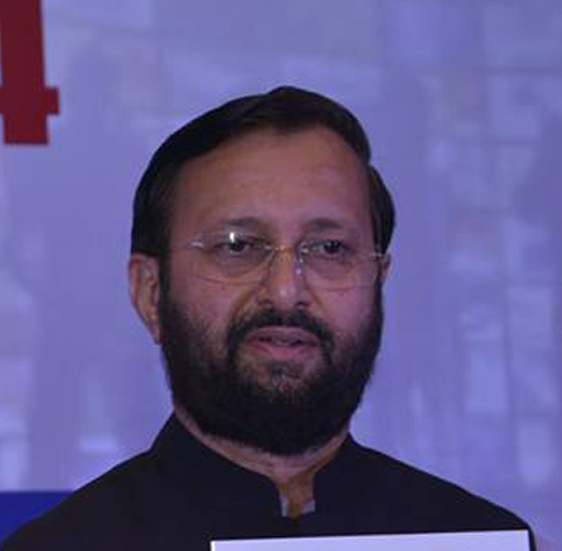
    After he took over as Information and Broadcasting Minister, one of the major areas of focus of Prakash Javadekar has been indigenisation of the digitisation drive and Ministry sources said the new dates are in keeping with inputs supplied to the Minister in this connection.


    The Ministry has made efforts to get STBs declared as Telecommunication Network Equipment which will enable domestic manufacturers to get exempted from certain taxes, an official said.


    Nearly 110 million STBs are required to be installed in cable TV households in the remaining two phases of digitisation and the extended deadline will ensure that the domestic manufacturers prepare themselves and meet this demand, officials said. 

  • DAS deadline extended to December 2015

    DAS deadline extended to December 2015

    NEW DELHI: The deadline for the digitisation of cable television systems in the entire country has been put off to December 2015.


    While Phase I of digital addressable system (DAS) came into effect in March last year and Phase II later in the year, the entire process was supposed to be completed by December this year.


    Information & Broadcasting Ministry secretary Bimal Julka speaking exclusively to  indiantelevision.com said that the government had decided to delay the digitisation deadline by a full year in order to give all those involved enough opportunity to overcome all the unseen hurdles that had come up after the UPA government mandated  DAS and the various analogue sunset dates.


    He said that the previous UPA  government had failed to complete all the required work with regard to regulations, licences, permissions etc and so the current NDA government’s  I&B Minister Prakash Javadekar – after consulting all the stakeholders – has decided to put off the final date by one year.


    Julka was confident that digitisation would be completed  well before the end of 2015, but said the new last date had been set keeping in mind the various issues that need resolution.


    Earlier, the Ministry had said Phase III covering all urban areas (Municipal Corporations/Municipalities) would be digitised by 30 September 2014 and Phase IV covering the rest of India would be digitised by 31 December 2014.


    The DAS process had led to several problems including court cases in various parts of the country. In the first phase for the four metros, Chennai could not be covered because of a stay by the Madras High Court. The second phase covered 38 cities with populations of more than one million. However, reports say that analogue systems are still working not only in the metros but also in these cities.


    Furthermore, cable operators feel that the set top boxes being imported are of inferior quality with very few facilities for servicing. The MSOs went to the Telecom Disputes Settlement & Appellate Tribunal (TDSAT) challenging the ratio of profit sharing between the various stakeholders. And TDSAT has been flooded with litigation involving broadcasters, MSOs, LCOs and DTH operators over the past year and a half – coinciding with the government’s thrusting digitisation down the throats of those involved in India’s relatively unorganised cable TV ecosystem. 


    Julka said that all these issues had been taken into consideration before taking the decision to put off DAS by a year.

  • Commercial TV subscriber tariffs: Broadcasters, Star take battle to courts

    Commercial TV subscriber tariffs: Broadcasters, Star take battle to courts

    MUMBAI: It’s the battle of the bill – the commercial cable TV bill, that is. The Telecom Regulatory Authority of India (TRAI) on 16 July 2014 issued an amendment to its earlier 2004 broadcasting and cable TV tariff order. The amendment brought in new customer categories such as commercial establishments and commercial subscribers. And it also stated that as far as cable TV rates are concerned, there shouldn’t be any differentiation on an ordinary and commercial subscriber and charges for both should be on a per TV set basis.


    That amendment has not gone down well with the Indian broadcast community as they have been lobbying for differential rates for commercial subscribers for a long time and the global practice is that commercial establishment and subscribers pay more than common subscribers.


    Its representative body, the Indian Broadcasting Federation (IBF) decided to challenge the tariff order for non-digital addressable areas (DAS) in the Telecom Disputes Settlement Appellate Tribunal (TDSAT). And industry leader Star India decided to file a writ petition against the TRAI challenging the order for both non DAS and DAS and other addressable systems in the Delhi High Court.


    Coincidentally both the cases came up for hearing on the same day. While the HC declined to give a stay order on the 16 July 2014 tariff order amendment, it has served notices to both the TRAI and the Federation of Hotels and Restaurants Association of India (FHRAI).


    The matter has been posted for a full-fledged hearing on 26 September. Till then, the order is maintainable. Meanwhile, the TDSAT has said that it will wait till the HC decides on the case to take any further action.


    What Star India has challenged in the HC is that the 16 July 2014 amendment order denies broadcasters the right to directly deal with the hotels. Star India has also appealed that it will have to unnecessarily depend on distribution platform operators DPOs to strike content deals as for commercial establishments, which might be treated as ordinary subscribers unless they specifically charge customers for cable TV subscribers. The broadcaster can only give a differentiated rate to those hotels that categorically mention TV as one of the services, thereby being deeming it fit to be called a commercial subscriber.


    The TRAI and FHRAI have been asked to respond to notices by the next hearing.


    Click here for the High Court order

  • TDSAT to hear Hathway and Taj TV on their ‘aggressive’ dispute later this month

    TDSAT to hear Hathway and Taj TV on their ‘aggressive’ dispute later this month

    NEW DELHI: The Telecom Disputes Settlement and Appellate Tribunal (TDSAT) today fixed for final disposal on 25 August the ‘deep-rooted’ dispute between Hathway and Taj TV in public interest, noting that this would require interpretation of certain clauses of some of the statutory regulations.


    TDSAT chairman Aftab Alam and member Kuldip Singh said: ‘Unfortunately, the dispute between the two sides is playing out in a highly aggressive way and one may add in a rather unpleasant manner. It seems to be affecting a large number of people in viewing their favourite TV channels. The disputants themselves are approaching the Tribunal on a weekly basis complaining against the actions of each other and seeking some interim directions of the Tribunal consuming a lot of time on arguments on miscellaneous applications.”


    The Tribunal noted that both sides have assured the Tribunal that they would avoid issuing the offensive advertisements against each other.


    In the order today, the Tribunal directed Taj TV to file their respective replies in petitions nos 319(C) of 2014 and 47(C) of 2014 by 20 August 2014. In case Hathway wishes to file any rejoinder, it should serve a copy of the rejoinder on the other side by 23 August subject to which it may file the rejoinder on 25 August.


    The Tribunal noted that the dispute has arisen at a stage when the earlier fixed fee agreement between the parties has come to end and they were unable to come to agreed terms for a fresh agreement and under the circumstances the MSO has no option but to take the broadcasters’ channels on their RIO terms.


    Earlier this month, TDSAT had directed Taj Television to restore with immediate effect the signals of Zee TV channels to Hathway Cable and Datacom pending the final hearing a petition by the latter. The broadcaster had switched off signals to the MSO stating that the two hadn’t reached a solution to their problems.


    It had also directed Hathway, as an interim measure to make payment of the monthly subscription fees from 1 April 2014 (in case of in case of Kolkata and Digital Addressable System – II areas) and from 1 May 2014 (in case of Delhi and Mumbai) up to 31 July at the of Rs.21.60 cost per subscriber basis.


    Zee channels were earlier being distributed to Hathway by Media Pro but the latter was not in a position to renew the agreements. In view of the Regulations issued by the Telecom Regulatory Authority of India around the same time the earlier agreements came to end.


    Thus, the Zee group of channels came to be handled by Taj Television. But when discussions between Hathway and Taj Television for Zee TV channels failed to yield any results, Taj TV on 26 June sent the RIO based agreement executed from its side. There was delay on the part of Hathway in executing the RIO based agreement and in the meanwhile Taj Television issued the disconnection notice under regulation 6.1 on 8 July 2014 and the public notice under regulation 6.5 on 11 July 2014. However, Hathway later counter-signed the RIO based agreement and sent it back to Taj Television which refused to accept a cheque sent by Hathway. This led to the petition by Hathway. 

  • 106 MSOs registered says Javadekar; Arasu application under review

    106 MSOs registered says Javadekar; Arasu application under review

    MUMBAI: The government is doing well in the area of registering multi system operators (MSOs), especially in those areas where digitization has been implemented. This was stated by information & broadcasting minister Prakash Javadekar in a written reply in th Rajya  Sabha. He revealed that 106  MSOs have  have been granted permanent registrations by his ministry to enable them to operate in digital addressable system (DAS) zones.


    He added that the I&B ministry had received a letter from the Tamil Nadu chief minister J Jayalalithaa to also register the government run MSO the Tamil Nadu Arasu Cable TV Corp  Ltd to allow it to operate in the DAS notified areas of the southern state.


    He disclosed that his ministry was examining Arasu’s application in the light of the TRAI’s recommendations regarding the entry of government entities in the broadcasting and distribution activities.


    The TRAI has been consistent in its stand that state government entities should not be allowed to enter the business of broadcasting and distribution of TV channels. It had made these recommendations in its paper on Issues related to entry of certain entities into Broadcasting and Distribution Activities in December 2012, and reiterated them in its consultation paper on monopoly/market dominance in cable TV in June 2013.

  • Kolkata LMOs to join hands with smaller MSOs

    Kolkata LMOs to join hands with smaller MSOs

    KOLKATA: Cable TV industry in Kolkata is up for some change. The last mile owners (LMOs) who have for long been complaining about losing their consumers to the multi system operators (MSOs) because of digitisation, are now looking for different ways of retaining their customers. While it had started with setting up of cooperatives, the LMOs are now joining hands with the smaller MSOs, who are also DAS licence holders.


    As part of this arrangement, a group of LMOs will sign a Memorandum of Understanding (MoU) with the MSO. While the group will have access to the headend, SMS and other backend services of the MSO, it will be free to create its own packages and also bill the consumers. This will also help the LMO to own its customers.


    “We have already prepared an agreement with a DAS licence holder who will levy a minimum price against every set top box (STB) that we take from him. Joining of other LMOs is in progress,” said an enthusiastic LMO on condition of anonymity.


    According to market sources, some of the MSOs that may get into such an arrangement are Sristi Cable TV Network, Kailash Cable Network, Meghbela Cable & Broadband Services and Barasat Cable TV Network. The smaller MSOs are looking at increasing their topline and bottomline and strengthening their presence in the region by partnering with the LMO group.


    “LMOs will partner with DAS licence holders either by forming a cooperative or working independently with him using his network,” informs a cable TV industry source.


    Meetings in this regard had started a year ago between the two parties operating in the KM area which currently has close to 33 lakh digitised cable TV homes. The LMOs will not be swapping the STBs in the current digitised homes, but will try and capture the new homes which have not yet been digitised.  


    The partnership will give the LMO the power to bill its subscribers, create packages based on consumers’ choice, and get a share of carriage fees as well as ownership of STBs.


    Cable Operators Sangram Committee general secretary Apurba Bhattacharya while confirming the development said, “It is good that LMOs are looking for new business models to earn their living. The operators are happy to get into this space. We will run the business ourselves.”


    LMOs in Kolkata are moving to this arrangement, since setting up of a headend not only takes time, but is expensive as well. “Setting up the headend requires a lot of permissions and an investment of some crores, so it is better to get into partnership with existing DAS licence holders than to set up our own headend,” says a LMO.


    A last mile owner who is in talks with one of the smaller MSOs concludes, “During the analogue regime, the revenue share between the MSO and LMO was 20:80 but after digitisation, this has come down to 65:35. The business model is not at all lucrative anymore.”

  • Arasu Cable to run subscriber awareness campaigns

    Arasu Cable to run subscriber awareness campaigns

    MUMBAI: The state owned multi system operator (MSO) from Tamil Nadu (TN), Arasu Cable, is looking at running awareness campaign for its subscribers. The campaign will urge them to demand printed receipts from their local cable operators (LCOs).


    The MSO is doing this in order to ensure that no one is charged more than the monthly fee of Rs 70. The campaign will begin with a poster campaign from Kancheepuram and will be displayed at government buildings, ration shops, government hospitals and schools, regional transport offices and civic body offices.


    Subscribers can lodge complaints over the phone on 044 28221233 if the LCO doesn’t provide a receipt or demands for more money. There are more than 65 lakh Arasu cable subscribers in TN. Printing books have already been handed to LCOs for the same.


    Arasu has been awaiting its DAS licence from the ministry for quite some time now. The MSO owned by the Chief Minister J Jayalalithaa’s AIADMK has been writing several letters to the central government to allow its licence go to go through so that it could switch over from analogue to digital.