Tag: DAS

  • DAS task force to meet on 8 October amidst protests

    DAS task force to meet on 8 October amidst protests

    NEW DELHI: Almost a month after its constitution, the task force set up for the implementation of digitisation in the country and particularly overseeing the execution of the last two phases of Digital Addressable System (DAS) is expected to meet on 8 October at 10:30 in Delhi.


    However, local cable operators who have already expressed their protest at not being given a voice in the Task Force have not been invited to the meeting.


    Talking about the meeting, Information and Broadcasting Ministry secretary Bimal Julka told indiantelevision.com that all the stakeholders named in the task force order of 12 September had been nominated and are expected to be at the meeting. Although an official of the Information and Broadcasting Ministry denied this.


    LCOs who form the backbone of the cable television system in the country said no organisation of LCOs had been included in the task force or invited in the meeting.


    Meanwhile, ASSOCHAM Media and Entertainment Committee co-chairman Sujatha Dev informed the industry body that she is unaware of how a representative of ASSOCHAM was nominated to the task force.  


    National Cable & Telecommunication Association president Vikki Choudhry has in a letter to the I&B Minister Prakash Javadekar alleged that “In spite of all your endeavours taken to clean up the mess that had been created on account of DAS by the previous UPA government, few officials still attached to the MIB are bent on misleading and misguiding you on this much controversial DAS issue.”


    He has also pointed out that certain categories had not been invited to the task force meeting despite them being directly involved in implementation of DAS which included five Independent MSOs one each from North, South, East, West and North East region, five registered LCO associations one each from North, South, East, West and North East regions, a representative of the Association of Regional Television Broadcasters of India/ Regional News Broadcasters Association, five prominent consumers organisations, one each from North, South, East, West and North East regions, a representative of ASSOCHAM and a representative of Telecom Equipment Manufacturers Association of India (TEMA).


    Choudhry added that while there had been mention of these in the order of 12 September constituting the task force, no persons had been nominated for these categories.


    Additionally, he also revealed that there was no representation / invitation sent to Conditional Access System Vendors (an integral part of the entire DAS) and Subscriber Management System (SMS) that controls the entire DAS ecosystem after integration with the CAS.


    According to the 12 September order, the new task force was to be headed by I&B additional secretary as chairperson, with Telecom Regulatory Authority of India (TRAI) principal advisor for broadcast and cable satellite, I&B Ministry joint secretary broadcasting, representatives from the MSO Alliance, five independent MSOs one each from north, south, east, west and north east regions, five registered LCO associations one each from north, south, east, west and north east regions, representatives from the Indian Broadcasting Foundation, News Broadcasters Association, Association of Regional Television Broadcasters of India, DTH Association, FICCI, CII, ASSOCHAM, CEAMA, Department of Telecommunications, Department of Electronics and Information Technology, DG: Doordarshan, DG: All India Radio, BECIL, BIS, five prominent consumer organisations one each from north, south, east, west and north east regions and 33 state level nodal officers one each from the states/union territories governments.

    The task force was to act as an interface between the government and the industry in matters related to implementation of DAS in the cable TV sector and monitor the execution of DAS. It also will have to analyse the roadblocks that may come in the way of digitisation and suggest measures.


    While NBA and IBF will be participating in the meeting, representatives of cable operators associations from different states are protesting against the exclusion of LCOs and MSOs from the meeting. 



  • IDOS 2014: How can the pay TV industry be made better?

    IDOS 2014: How can the pay TV industry be made better?

    GOA: India Digital Operators’ Summit 2014 kicked off at The Leela in Goa on 25 September. Opening the conference, Indiantelevision.com CEO and editor in chief Anil Wanvari and Media Partners Asia (MPA) executive director Vivek Couto gave a brief on the state of the TV nation and transition to the broadband digital economy.


    Wanvari highlights how the state of the industry was a few years ago and what it has become now after the advent of conditional access system (CAS) and digital addressable system (DAS). Content makers aka broadcasters have been demanding more revenue from the pay TV industry. While the capex and opex for them has been high, the return continues to be low. The MSOs and DTH operators have been investing to expand their headends and build subscriber base respectively. “While it is a good business now, the real question is if each one of us is willing to make it a great business?” he asks.


    In order to strengthen the business, Wanvari recommends a few suggestions that could help grow the industry. The first thing is to look at digitisation and pay TV with a changed mindset that it will be beneficial to all. The government could look at setting up a digitisation transition fund that will help educate, train, seed capital and reward people who follow the rules and ensure strict penalties for those who don’t.


    Subscriber management system (SMS) should be set up with correct details and billing of the services provided to customers. The government could also look at laying down minimum standard rules for set top boxes (STBs) to ensure quality control. His final suggestion is to leave pricing to the market rather than initiate 10 to 15 per cent price rise every now and then.


    Providing a glimpse into MPA’s study on the pay TV industry in India, Couto says that out of the 262 million households in the country only 162 million houses have a TV. In this, 27 million is taken up by the free to air service providers such as Doordarshan and Freedish while the rest comes under cable and satellite.


    Couto highlights that over Rs 32000 crore has been invested in digitisation since 2005 with a bulk of the investment coming from the DTH operators followed by the MSOs and LCOs since 2011. Out of this, over Rs 11000 crore in the last 24 to 30 months has been invested by MSOs and LCOs. “India offers scale but limited monetisation,” he says. What digitisation will do primarily is increase transparency, addressability, tax collection and employment. Over 120 million STBs are needed over 10 years and nearly 47 per cent share of the total market will come through broadband.


    The tiff between the three stakeholders continues with the LCOs fighting for revenue share, MSOs facing crash crunch and broadcasters worried about increasing carriage fees which the MPA report stated as having increased by nearly 14 per cent in Q1 FY2015.


    In terms of scale, India struggles as the country with the lowest average revenue per user (ARPU) but it has one of the best channel services. Couto says that it is time for the industry to move to retail pricing than stick to wholesale tariff because the competition will keep the prices low. The need of the hour is for MSOs and broadcasters to come together and design packages, incentivise upselling, indentify opportunities for sub segmenting and create new genres. The key to which lies in raising prices to consumers.

  • Several Chennai-based MSOs get clearance for DAS

    Several Chennai-based MSOs get clearance for DAS

    NEW DELHI: A total of 119 Multi System Operators (MSOs), all over the country, have been granted permanent registration for 10 years to operate the digital addressable system (DAS).


    The MSOs had been given provisional permission earlier.


    Interestingly, many MSOs from Chennai have got permission except for Arasu as the latest recommendation of Telecom Regulatory Authority of India (TRAI) states that state-owned bodies should not be permitted, and also because of the denial of permission to Kal Cables and its subsidiary Sumangali.


    The nine MSOs, which have got permission as per the latest list released on 22 September, are Koduri Satyanarayana, Sri Sai TV Services of Khammam District of Telengana; Abhilash Communications of Adilabad for notified areas of phase  II and phase  III cities in PAN India; JPR Channel of Mumbai for Mumbai (phase I) and phase II areas in Maharashtra and Gujarat; Operator Digital Tamil Nadu for all the cities, towns and villages of phase II,III and IV in Tamil Nadu; VK Digital Network of Chennai for cities/towns/areas occurring against phase I, phase II, phase III, phase-IV; Saga Network Entertainment of Chennai for Tamil Nadu; Talachaer TV Home Cable Network of Talacher in Odisha for Angul District and Dhenkanal District, Odisha ; Voice and Vision Club of Singrauli in Madhya Pradesh for phase III and IV of Madhya Pradesh and Sonebhadra Districts of Uttar Pradesh; and Den Network Satellite of Mumbai for Maharashtra. 


    Digicable Network of Mumbai and Kal Cables of Chennai, which had received provisional licence’s, have been refused permission as it has failed to get the clearance of the Home Ministry.


    According to a list issued in late July, 16 MSOs had been refused permission. It also said that Kolkata based Digicable Communications had been denied permission after the break-up of the joint venture with Digicable Networks of Mumbai, which has received permission for Greater Mumbai, National Capital Territory of Delhi and Greater Kolkata.


    MSO sources, however, said that the approved list was in addition to the 140 whose names had been approved in March last year.

  • Phase III of digitisation likely to begin from April 2015: Javadekar

    Phase III of digitisation likely to begin from April 2015: Javadekar

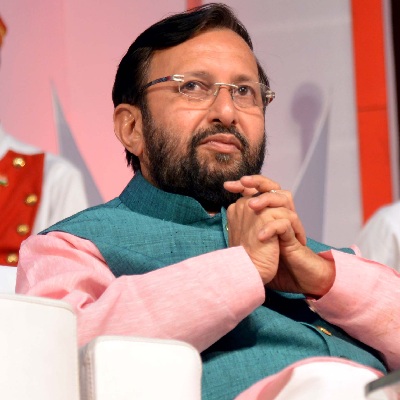
    NEW DELHI: Just two days after the Information and Broadcasting (I&B) Minister Prakash Javadekar officially announced the extension of deadlines for phase III and phase IV of digitisation, he has now announced that the phase III of digitisation is likely to begin from April 2015 and will end the same year in December. “And phase IV will commence as soon as the phase III is completed,” Javadekar said.


    The I&B Minister made the announcement at the ongoing CII Big Summit 2014. “There is some confusion with regards to the extension of digitisation dates.  Tentatively, it will start from 1 April 2015, the final decision on this will be taken soon,” he added.


    The Ministry will also form a committee consisting of all the stakeholders. “So unlike what people feel, we are not delaying digitisation. Our commitment is having a ‘Digital India’. Even a household in a remote village has the right to experience digital viewing,” he informed.


    He also asked the direct to home (DTH) and multi system operators (MSOs) to advertise to the consumers how they are selling expensive set top boxes at cheaper rates. “If the customers understand that they are benefitting with digitisation, they will be supportive of the action,” said Javadekar adding that digitisation is on track.


    Elaborating on the theme of the summit: ‘Monetising strategies: The tryst for a $100 billion Indian M&E industry’, he said, “Aiming low is a crime. So an industry which in 2014 is already a $50 billion industry, cannot say that by 2020, it will become a $100 billion industry. This is not correct. We must aim high. This industry has immense potential to grow.”


    Javadekar in order to boost the fraternity said that no one had thought in 1992 when cable TV started that so many crore of households will be connected to cable, but it happened. No one had also thought that people would pay anywhere between Rs 200 to Rs 500 for entertainment, but people are paying. “Entertainment has become a necessity today and so people are ready to spend. So $100 billion is achievable and so we need to aim high,” he said.


  • Govt. reconstitutes task force for DAS phases III and IV

    Govt. reconstitutes task force for DAS phases III and IV

    MUMBAI: Days after Information and Broadcasting (I&B) Minister Prakash Javadekar announced that digitisation in the country will progress as per the new deadlines; the government has come up with a reconstituted task force for implementation of digital addressable system (DAS) in phases III and IV.


    The new task force will constitute I&B additional secretary chairperson, Telecom Regulatory Authority of India (TRAI) principal advisor for broadcast and cable satellite, I&B Ministry joint secretary broadcasting, representative from the MSO Alliance, five independent MSOs one each from north, south, east, west and north east regions, five registered LCO associations one each from north, south, east, west and north east regions, representatives from the Indian Broadcasting Foundation, News Broadcasters Association, Association of Regional Television Broadcasters of India, DTH Association, FICCI, CII, ASSOCHAM, CEAMA, Department of Telecommunications, Department of Electronics and Information Technology, DG: Doordarshan, DG: All India Radio, BECIL, BIS, five prominent consumer organisations one each from north, south, east, west and north east regions and 33 state level nodal officers one each from the states/union territories governments.


    The task force would act as an interface between the government and the industry in matters related to implementation of DAS in the cable TV sector and monitor the implementation of DAS. It also will have to analyse the roadblocks that may come in the way of digitisation and suggest measures.

  • Local STB manufacturers confident of meeting target of DAS phase III and IV

    Local STB manufacturers confident of meeting target of DAS phase III and IV

    NEW DELHI: The Information and Broadcasting (I&B) Ministry has been assured by manufacturers of domestic set top boxes (STBs) that they will be able to meet the demand of 11 crore STBs needed for the final two phases of cable television digitisation.


    This assurance was given to I&B Ministry secretary Bimal Julka over the weekend with manufacturers to check the status of indigenous manufacturing of STBs.


    I&B Minister Prakash Javadekar had recently told that it was unfortunate that good quality STBs were being exported overseas and poor quality STBs from overseas were being installed.


    Earlier, he had said that the Ministry will take steps to solve problems of local manufacturers including those relating to taxation.


    The manufacturers appreciated the efforts of the government for resolving their long pending demand of C-form. They said that they have sufficient installed capacity to meet the full demands of STBs locally and said the government’s initiative would help give employment to about 50,000 people and would attract an investment of about Rs 500 crore. It would generate local support facility for repair of STBs and would also help in smooth implementation of digitisation initiative in the country. 

    The Finance Ministry had on 13 August extended the facility of Form ‘C’ under section 8(3) (b) of Central Sales Tax (CST) Act 1956 to STBs thus fulfilling the major demand of the domestic STB manufacturers who would charge CST @ 2 per cent against VAT of 12-14 per cent being paid earlier. 

    The phase III of digitisation to be completed by December 2015 would cover all other urban areas (municipal corporations/ municipalities) which were not covered in first two phases. Phase IV to be completed by December 2016 would cover the rest of India.


    The meeting was attended by the members of the consumer electronics and appliances manufacturers association (CEAMA) and representatives from STB manufacturers such as My Box Technologies, Dixon Technology, Videocon, Jabil, One-Eight Technologies, Skyworth Digital, Spectra Innovations, Indieon, Logic Eastern and Simmtronics.

  • Digicable Network among MSOs denied permanent licence, three new MSOs get licence this month

    Digicable Network among MSOs denied permanent licence, three new MSOs get licence this month

    NEW DELHI: While 115 multisystem operators (MSOs) have been granted permanent licence as on 3 September, Digicable Network and Kal Cables are among the prominent MSOs whose licences have been cancelled following refusal of security clearance by the Home Ministry.


    However, the Madras High Court has quashed the cancellation of provisional licence of Kal Cables on the ground that the Information and Broadcasting Ministry had not issued any show-cause notice, before cancelling the permit. The court also said that the MSO should be given another chance to respond. The Kalanidhi Maran owned Kal Cables had opposed the 20 August order, saying that it is just a MSO and not a channel. And if the I&B Ministry had issued a notice, it would have cleared the doubts.


    The MSO was given a permanent licence to operate in Chennai in June 2012, while a provisional licence was given to operate in DAS notified areas in phase II cities in March 2013.  


    The licence of Digicable Network India was cancelled on 3 September because of denial of security clearance by the Home Ministry. The MSO had applied on 11 May 2012 for DAS notified area of NCT of Delhi, Municipal Council of Greater Mumbai and Kolkata in phase-I and on 28 January and 6 March last year for 38 cities of phase II.


    Siddhi Digital Services of Sholapur was also not given a licence and its ‘case closed as Company is no longer interested in registration.’  


    The application of Silverline Entertainment of Allahabad for operation in DAS notified areas of Agra, Allahabad, Ghaziabad, Kanpur, Lucknow, Meerut and Varanasi was also cancelled early this month following denial of security clearance by the Home Ministry.


    Earlier, MSOs Godfather Communication of Punjab and Intermedia Cable Communication had also got stay orders issued by the Punjab High Court and Delhi High Court respectively on cancellation of their licences.


    The MSOs which got permanent licences early this month were Koduri Satyanarayana, Sri Sai Star TV Services for the Khammam district of Telengana; Abhilash Communications of Adilabad for notified areas of phase – II and phase – III cities pan India and JPR channel of Mumbai for Mumbai (phase – I) and phase – II areas in the state of Maharashtra and Gujarat. 

  • Arasu Cable to now foray into broadband service with Railtel

    Arasu Cable to now foray into broadband service with Railtel

    MUMBAI: Tamil Nadu Chief Minister J Jayalalithaa owned Arasu Cable may be struggling with getting the licence to operate in the digital addressable system (DAS) areas, but it is now gearing up to launch its broadband service in collaboration with Railtel Corporation of India.


    With this, the Chennai based multi system operator (MSO) will give its customers affordable broadband services, through cable TV connection.


    It was in August, when during the Assembly session, Jayalalithaa declared that Arasu Cable, which currently provides cable TV connections at Rs 70 per month to its close to 70 lakh customers, will foray into broadband.


    The service, according to Tamil Nadu Information department secretary T K Ramachandran will start in a couple of months.


    The interested cable operators are currently being trained about the new service. The government plans to complete the training in every district by the end of the month.


    The pilot project was conducted in Vellore with around 1,000 subscribers being given access to the service. The tariffs have not yet been fixed, but the schemes are in place. 

  • Hathway being asked to pay more by broadcasters as against other MSOs: Kathpalia

    Hathway being asked to pay more by broadcasters as against other MSOs: Kathpalia

    NEW DELHI: Even as it said that an agreement under the Reference Interconnect Order (RIO) should be for both ala carte and bouquets, Hathway today questioned why multisystem operators like Den and Siticable were being given greater discounts by Taj TV for distribution of their channels.


    Hathway counsel Arun Kathpalia said that the DAS Regulations of 2012 also provided for negotiations that were non-discriminatory, transparent and on reasonable terms and did not merely insist on an RIO.   


    In the ongoing hearing before the Tribunal in the cases linked to Taj TV signals for Turner and Zee TV, Kathpalia said the Regulation says that the broadcaster or distributor ‘may’ seek inter-connection but also provides for mutual agreement within 60 days of request.


    In any case, RIO is not confined to ala carte or bouquets but refers only to commercial terms, whereas Taj TV was offering Hathway RIO only on ala carte. He said under the RIO regime, both ala carte and bouquets can be offered and these have to be mentioned.


    He also said that the Regulations are clear that RIO can come into play only when there is no first agreement, while the issue here was about renewal.  


    He regretted that despite being the largest MSO, it was being offered the smallest discounts by Taj TV and the broadcasters. While Den and Siticable were being charged Rs 30.50 per subscriber, Hathway was being charged Rs 35.


    He alleged that at one stage, Star had wanted the sports channel to be on RIO but the general entertainment channels to be on negotiable terms. “There should be a level playing field,” he said. There was no consistency of relevant factors, he claimed.


    Hathway had wanted that the starting point for negotiations should be the old agreement, whereas Taj TV insisted that the old agreement was only a promotional offer but this was not true, Kathpalia said.


    At one stage, he said that every carrier including DTH was at a loss with the exception of Den.

  • MIB warns MSOs against disconnection signals to LCOs

    MIB warns MSOs against disconnection signals to LCOs

    MUMBAI: The Government today warned multi-system operators against disconnecting signals of local cable operators without due notice specifying reasons and said any violation of this would viewed seriously and action against erring MSOs.


    The directive comes even as more than twenty cases are pending before the Telecom Disputes Settlement and Appellate Tribunal (TDSAT) relating to disconnection of signals by distributors to MSOs or MSOs to LCOs.


    The Information and Broadcasting Ministry said Chapter V of Standards of Quality of Service (Digital Addressable Cable Systems) Regulations 2012 issued by Telecom Regulatory Authority of India (TRAI) is clear that ‘no multi system operator (MSO) shall disconnect the signals of a TV channel of a linked local cable operator, without giving three weeks’ notice to such local cable operator, clearly specifying the reasons for the proposed disconnection.’


    The Regulation further says notice of disconnection of signals of TV channels is also required to be published in two leading local newspapers of the State in which the service provider is providing the services, out of which one notice shall be published in the newspaper in the local language of the area.


    The Ministry said it had been brought to its notice that some MSOs are disconnecting signals to cable subscribers without giving any notice in violation of the Regulation.


    The Ministry said this is also in violation of the undertaking given by MSOs in form 2 of their application which states: ‘We shall ensure that my/our cable television network shall be run in accordance with the provisions of the Cable Television Network (Regulations) Act 1995 and the rules made thereunder, regulations, orders, guidelines or the directions issued by the Central Government or the Authority from time to time.’