Tag: DAS

  • Q2-2105: Siti Cable reports higher income, higher subscription revenue, lower loss

    Q2-2105: Siti Cable reports higher income, higher subscription revenue, lower loss

    BENGALURU: Essel group’s Subhash Chandra led Siti Cable Network Limited (Siti Cable) reported a 4.9 per cent rise in Total Income from Operations (TIO) to Rs 212.25 crore in Q2-2015 from Rs 209.02 crore in Q1-2015 and 47.5 per cent more than the Rs 160.31 crore in Q2-2014. For HY-2015, TIO was 42.4 per cent more at Rs 428.27 crore than the Rs 300.76 crore in HY-2014.


    Siti Cable reported a 102.3 per cent y-o-y growth in subscription revenue to Rs 121.4 crore from Rs 60 crore and a 14.9 per cent q-o-q growth from Rs 105.7 crore in Q1-2015.


    Loss for Q2-2015 reduced to Rs 22.87 crore from Rs 31.67 crore in Q1-2015 and from 26.46 crore in Q2-2014. HY-2015 loss was also slightly lower at Rs 54.54 crore as compared to the Rs 55.23 crore in HY-2014.


    Note: 100,00,000 = 100 lakhs = 10 million = 1 crore


    EBIDTA for Q2-2015 improved 26.2 per cent to Rs 45.8 crore (20.9 per cent of TIO) from Rs 36.3 crore (17.4 per cent of TIO) in Q1-2015 and also improved by 38.8 per cent from Rs 33 crore (20.6 per cent of TIO) in Q2-2014.


    Let us look at the other numbers reported by Siti Cable for Q2-2015


    Total expenditure (TE) for Q2-2015 at Rs 208.89 crore (95.3 per cent of TIO) was 2.5 per cent more than the Rs 203.76 crore (97.5 per cent of TIO) and 33.2 per cent more than the Rs 165.25 crore (100.04 per cent of TIO) in Q2-2014. HY-2015 TE at Rs 412.64 crore (96.4 per cent of TIO) was 40 per cent more than the Rs 294.77 crore (98 per cent of TIO) in HY-2014.


    Siti Cable’s carriage sharing pay channel and related costs (pay channel cost) in Q2-2015 at Rs 117.23 crore (53.5 per cent of TIO) was 6.6 per cent lower than the Rs 125.55 crore (60.1 per cent of TIO) in Q1-2015 and 81.6 per cent more than the Rs 64.56 crore (40.3 per cent of TIO) in Q2-2014. For HY-2015, pay channel cost at Rs 242.77 crore (56.7 per cent of TIO) was almost double (1.91 times) the Rs 127.26 crore (42.3 per cent of TIO) in HY-2014.


    Finance cost in Q2-2015 at Rs 29.58 crore (13.5 per cent of TIO) was 2.6 per cent lower than the Rs 30.37 crore (14.5 per cent of TIO) in Q1-2015 and 3.1 per cent lower than the Rs 30.52 crore (19 per cent of TIO) in Q2-2014. For HY-2015, finance cost at Rs 59.95 crore (14 per cent of TIO) was 5.8 per cent more than the Rs 56.66 crore (18.8 per cent of TIO) in HY-2014.


    Other expense in Q2-2015 at Rs 47.77 crore (21.8 per cent of TIO) was 21.8 per cent more than the Rs 38.05 crore (18.2 per cent of TIO) and 14.6 per cent lower than the Rs 55.93 crore (34.9 per cent of TIO) in Q2-2014. Other expense for HY-2015 at Rs 85.83 crore (20 per cent of TIO) was 10.4 per cent lower than the Rs 95.84 crore (31.9 per cent of TIO) in HY-2014.


    Siti Cable chairman Subhash Chandra said, “Growth in the collection of subscription revenue is the reflective of our continued emphasis on providing quality services to our consumers. We remain focused on supporting business growth by optimising our operations and continue to deepen our engagements with customers by introducing value added services.”


    Siti Cable executive chairman and CEO V D Wadhwa said, “Siti Cable maintained its growth trajectory in the second quarter too. We continue to focus on stabilising operations in DAS phase I and II markets and established industry best practices. The results for the quarter are reflective of these efforts. The subscriber revenue during the quarter has shown robust growth of 102 per cent”.

    Wadhwa added, “We have been working to digitize our phase 3 and 4 markets and we will keep the momentum ‘ON’ through voluntary digitization and focusing more on the monetization of existing business. We see extension in deadline as the opportunity for us to enter newer markets. In addition, we have rolled out broadband service on DOCIS 3.0 in Delhi/NCR and plan to further offer this service in more cities where we are already present. HD services with 30 plus channels have also been rolled out in all geographies.”
     

    Click here for full financial report

    Click here for full financial report

  • So who does DAS benefit and what does RIO have to do with it?

    So who does DAS benefit and what does RIO have to do with it?

    When the BJP government was last in power with Ms Swaraj at the helm of the MIB, the digitisation process was first mooted in its original form of CAS. The populist notion was to bring down cable prices with the false concept of pay for what you want, so pay less. But little did the government realise that the customer’s cable bill was so significantly subsidised because of ‘under declaration’ that the ‘spoilt’ consumer in the cheapest cable market in the world would either have to reduce his current offering by half or more or if he wanted the same channel line up, would actually have to pay twice as much!

    At that time, the broadcasters were resentful as reduced reach was imminent in an advertising driven market and for DPOs it was definitely not favourable as they would need to reduce the number of analogue channels to piggyback digital cable on some of the frequencies which was otherwise used for analogue channels. (This was because both digital and analogue had to be offered on the same network). And this reduction of analogue channels impacted their carriage potential and hence revenues.

    So who won? None of the key stake holders- broadcaster, DPO or consumer.

    So who does DAS in its new avatar benefit?

    Certainly not the consumer from his cable bill point which was the original populist premise. Sure, the DPOs and broadcasters, once the dust settles down. With the transparency of set top boxes and doing away with ‘under declaration’, the MSO can now collect from the ground higher revenues and hence a bigger chunk eventually to the broadcaster. (Cable revenues were significantly lower than DTH revenues even though cable homes far exceeded DTH homes.) Who else benefits? The government, for sure, by way of higher taxes.

    And the losers of course in the value chain would be no doubt the consumer now shelling out higher ARPUs. And of course the LCO who till now reigned king keeping the bigger chunk of collections.
    So what’s wrong with DAS?

    Fundamentally, the current consumer pricing structure, the RIO rates and the business model. If DAS was to benefit the consumer why is there no B to C model, why are there no retail prices with direct offers from broadcasters to consumers with pipeline commissions to DPOs. Why are RIO rates unrealistic? Why are DPOs free to do retail pricing? The problem is RIO is a regulatory created framework and broadcasters have maxed out after years of price freeze not knowing what to expect.  

    If DAS has to succeed then this whole pricing scenario has to be re-looked. How can the broadcaster market his product if the DPO controls retail pricing? Or given the RIO pricing (which will now be used as a basis for negotiation) will the broadcaster really allow the DPO to play the role of a wholesaler and buy in bulk and retail at attractive customer offerings significantly lower than RIO.

    When regulation hinders market dynamics, it creates more absurdities. Any consumer product needs an MRP. Packages or stand alone. RIO is definitely not helping this process. It’s best the two beneficiaries – the DPOs and the broadcasters finally come together, see eye to eye and work out what is the magical pricing so that packaging and pricing is offered by both and directly to the consumer. If the DPO truly acts as a wholesaler he can surely better any packages the broadcaster directly offers unless of course the broadcaster/channel can go it alone which no doubt will be the true test of content and certainly a success yardstick to measure addressability.

    So can the government bury RIO and keep the consumer in mind!  TV entertainment is mass and needs to be looked at (retailed) as a service similar to that of consumer products! Let’s have an MRP, let’s also have a distributor pricing better than MRP. There is scope for both models to co-exist- DPOs mixing it up and offering multi-broadcaster packages and broadcasters also retailing with negotiated discounts to DPOs for pipeline usage and payment gateway.

    A 100 million plus pay TV homes is a very robust subscription market!

    Lastly, with the BJP now back surely we hope they will complete what they chaotically started. With the honourable I&B Minister Arun Jaitley and MoS Rajyavardhan Singh Rathore now at the helm it certainly looks like MIB is priority and our industry will definitely be both in competent hands and in their cross hairs!


    (These are purely personal views of consultant Sanjev Hiremath and indiantelevision.com does not necessarily subscribe to these views.)

  • DAS expected to remain priority with new I&B Ministers

    DAS expected to remain priority with new I&B Ministers

    NEW DELHI: Manufacturers of Digital Addressable System set top boxes today assured the Information and Broadcasting Ministry that they had the adequate quantity of boxes needed and it was now up to local cable operators to place orders for them.


    This assurance was given at a meeting chaired by I& B Secretary Bimal Julka at the initiative of the Ministry.


    Ministry sources told indiantelevision.com that the manufacturers generally thanked the government for its proactive role in the matter of DAS.


    The Ministry was assured that the manufacturers will be able to meet the demand of 110 million boxes needed for the final two phases of cable television digitisation.


    The manufacturers appreciated the efforts of the government for resolving their long pending demand of C-form. They said they have sufficient installed capacity to meet the full demands of STBs locally and said the measures taken by the government would help the indigenous manufacturing industry to give employment to about 50,000 people and would attract an investment of about Rs 500 crore. It would generate local support facility for repair of STBs and would also help in smooth implementation of digitization initiative in the country.


    The Finance Ministry had on 13 August extended the facility of Form ‘C’ under section 8(3) (b) of Central Sales Tax Act 1956 to Set Top Boxes thus fulfilling the major demand of the domestic STB manufacturers. Domestic STB manufacturers would charge CST @ 2 per cent against VAT of 12-14 per cent being paid earlier.


    Meanwhile, both I&B Minister Arun Jaitley and Minister of State Col. Rajyavardhan Singh Rathore have in their meetings with senior officials said that DAS has to be given the uppermost priority.


    It is learnt that the meeting of the Consultative Committee of members of Parliament of the I&B Ministry slated for tomorrow will also take up the issue of DAS of cable television networks.


    The Phase-III of digitization oe completed by December 2015 would cover all other urban areas (Municipal Corporations/ Municipalities) which were not covered in first two phases. Phase-IV to be completed by December 2016 would cover the rest of India.

  • 131 MSOs get ten year licences under DAS for specified areas

    131 MSOs get ten year licences under DAS for specified areas

    NEW DELHI: A total of 131 multi-system operators (MSO) all over the country have been granted permanent registration for ten years to operate the digital addressable system (DAS).


    The MSOs had been given provisional permission earlier. The latest list is as on 7 November.


    The MSOs who have received permission after the last list released as on 21 August include Skynet Digital Services for the state of Uttar Pradesh except the cities of Agra, Ghaziabad, Kanpur, Lucknow, Meerut and Varanasi; Crystal Transmission for Chennai Metropolitan area, Sanghvi Digital Network for Bokaro district in Jharkhand; Vortex Digital Network for Delhi; Yerraguntla Cable Network for Kadapa District Andhra Pradesh under Phase III and IV; and Royal Services Diginet Vision for Hamirpur District, Mandi District and Kangra District of Himachal Pradesh.


    Others include Silverline Entertainment the state of Uttar Pradesh except Agra, Ghaziabad, Kanpur, Lucknow, Meerut and Varanasi; Hathway New Concept Cable and Datacom for Delhi; ACN Digital for the state of Madhya Pradesh, Rajasthan and Maharashtra under under Phase III and IV; Koduri Satyanarayana, Sri Sai Star for Khammam District of Telengana; Abhilash Communications for  Notified Areas of Phase  II and Phase  III cities pan India; JPR Channel Mumbai (Phase I) and Phase II areas in Maharashtra and Gujarat; Operator Digital Tamil Nadu for all the cities, towns and villages of Phase II,III and  IV in Tamil Nadu; V K Digital Network for Cities/Towns/Areas occurring against Phase I, Phase II, Phase III, Phase IV; Saga Entertainment Network In Tamil Nadu; Talacher TV Home Cable Network for  Angul District and Dhenkanal District, Odissa; Voice and Vision Club for Phase III and  IV of Madhya Pradesh and Sonebhadra Districts of Uttar Pradesh; Den Satellite Network in Maharashtra; and Venkata Sai Media for district of Srikakulam, Vijayanagaram, Visakhapatanam, East Godavari, West Godavari, Krishna, Guntur, Prakasam and Nellore in the state of Andhra Pradesh and in the district of Greater Hyderabad, Rangareddy, Medak, Nizamabad, Mehaboob Nagar, Warangal, Sangareddy and Khammam in the state of Telangana.


    The list of MSOs who have been refused permission has gone up from 16 to 22.


    MSO sources, however, said that the approved list was in addition to the 140 whose names had been approved earlier in March last year.


    The Ministry website mib.nic.in has listed the areas and the date from which the MSOs have been given permission.

  • TS Panesar quits Star India as EVP Distribution

    TS Panesar quits Star India as EVP Distribution

    MUMBAI: Star India’s EVP for distribution TS Panesar has decided to move on to the company sources told indiantelevision.com.

    He is currently serving his notice period and will move out of the company at the end of the month.

    Panesar had been entrusted with the responsibility of handling distribution for national DTH and digital addressable systems (DAS) earlier this year when the JV between Star and Zee- MediaPro was broken.

    He was earlier ESPN Software India VP for affiliate sales.

    Industry sources hinted that Panesar could be moving to Discovery Networks.


  • I&B sets deadline for MSOs interested in DAS phase III

    I&B sets deadline for MSOs interested in DAS phase III

    NEW DELHI: All multi-system operators interested in distributing digital cable television services through the local cable operators in areas covered under phase III have been asked to apply by 21 December, this year.


    Phase III Digital Addressable System comes into effect from 31 December 2015, according to the revised deadlines.


     This phase will cover all remaining Municipal Corporations and Municipalities.


     The application in Form 6 (in triplicate) duly filled in and complete in all respects along with enclosures/documents and processing fee etc., has to be submitted to the Information and Broadcasting Ministry.


     It must contain details of the company/firm, directors/key executives and shareholding pattern etc in the prescribed Proforma.


     Application can also be submitted in person during Open House Meeting held on every Tuesday between 11 AM to 12 noon after sending request by email at das.mib@qmail.com or sobpandl@omail.com .


     The application form (Form 6) and Proforma for details of company etc can be downloaded from Ministry’s official websites: www.mib.nic.in or www. digitalindiamib.com.


     Applications received after 31 December 2014 will not be accepted/entertained for phase lll areas till cutoff date of phase lll is over. Incomplete applications will not be accepted.


     Queries in this regard can be addressed to das.mib@omail.com or contact Section Officer (DAS) on telephone no. 011-23381478.

  • TDSAT gives a nod to Star’s 10 Nov deadline to MSOs for signing RIO deals

    TDSAT gives a nod to Star’s 10 Nov deadline to MSOs for signing RIO deals

    MUMBAI: In the Hathway Cable & Datacom versus Star India case, the Telecom Disputes Settlement and Appellate Tribunal (TDSAT) has asked all the multi system operators (MSOs) in the DAS I and II areas to sign the Reference Interconnect Offer (RIO) by 10 November 2014.


    Failing to comply with the deadline, Star India will disconnect its services from MSOs who do not sign the RIO deal. 


    Hathway, which was directed to implement the RIO by the Tribunal had filed a case stating that other MSOs were not following the RIO deal. Subsequently, TDSAT had asked MSOs Den Networks and Siti Cable to implead into the case. The case then came up for hearing on 30 October and has been disposed off without the need for any impleading. 

  • LCO forums appeal to Minister Javedekar for their inclusion in new task force

    LCO forums appeal to Minister Javedekar for their inclusion in new task force

    KOLKATA: The local cable operators (LCOs) have once again appealed to the Minister for Information & Broadcasting Prakash Javedekar that the last mile owners (LMOs) associations/federations from all the four corners of the country must be a part of the new task force.


    The task force was set up for the implementation of digitisation in the country and particularly to oversee the execution of the last two phases of digital addressable system (DAS).


    It should be noted that on 8 October, when all the stakeholders met, the LCOs expressed their view of not being given a voice in the task force.


    “We have requested our president Arvind Prabhoo to communicate to the Minister and to ensure that MCOF be a part of the new task force and that LMO associations/federations from north, south, east and west of India must be part of the new task force,” said Maharashtra Cable Operators Foundation (MCOF) core committee member Bobby Shah.


    He added, “The Minister himself has noticed and mentioned that more than two to four LMO association/federation must be in the task force.”


    Reiterating the new government’s plan to transform the country into Digital India with the ideology ‘saabke sath saabke liye’, Kolkata-based Cable & Broadband Operators’ Welfare Association’s secretary Swapan Chowdhury said the forum has sought government’s intervention to the system, which would work in a transparent manner with a scope of protecting the livelihood of millions of people of our country.


     “We appreciate government’s endeavors to re-look and re-construct the digital addressable cable TV system and accordingly take up time to reconstruct the task force,” the LCOs said.


  • Centre asks States to ensure Right of Way to cable ops for implementing DAS

    Centre asks States to ensure Right of Way to cable ops for implementing DAS

    NEW DELHI: In a move that will give a sigh of relief to cable operators all over the country, the Centre has written to state governments to give ‘right of way’ to cable operators who want to lay cables or erect posts to complete the work of digital addressable system (DAS).

    In a letter, the Information and Broadcasting Ministry said that Section 48 of the Cable television Networks (Regulation) Act 1995 is clear in this regard.

    The letter notes that Phase I and II of DAS have been successfully completed and efforts are on to implement the next two phases which have been modified to 31 March 2015 for all other urban areas (Municipal Corporations/Municipalities) and rest of India by 31 December 2015.

    Additional secretary Jitendra Shankar Mathur has in his letter asked the chief secretaries in all states to issue instructions to field officers to extend the facility of ‘right of way’ to the cable operators.

    He has also suggested that copy of his letter may be appended to the instructions to be sent to field officers, and said he was prepared to answer any queries in this regard.

    Sec 48 of the Cable Television Networks (Regulation) Amendment Act 2011 regarding Right of Way (RoW)


    (1) Subject to the provisions of this Act, any cable operator entitled for providing cable seNices may from time to time lay and establish cables and erect posts under, over, along, across, in or upon any  immovable  property  vested  in or  under  the  control  or  management  of a public authority.

    (2) Any public authority under whose control or management any immovable property is vested may, on receipt of a request from a cable operator,  permit the cable operator  to do all or any of the following acts, namely:-

    a)   to place and maintain underground cables or posts; and

    b)   to enter on the property, from time to time, in order to place, examine, repair, after or remove such cables or posts.

    (3)   The facility of right of way under this section for laying underground cables, and erecting posts, shall be available to all cable operators subject to the obligation of reinstatement or restoration of the property or payment of reinstatement or restoration charges in respect thereof at the option of the public authority.

    (4) When the public authority, in public interest considers it necessary and expedient that the underground cable or post placed by any cable operator under the provisions of this section, should be removed or shifted or its position altered, it may require the cable operator to remove it or shift it or alter its position, as the case may be, at its own cost in the time frame indicated by public authority.

    (5)  The  Central  Government  may  lay  down  appropriate  guidelines  to enable  the  State Governments to put in place an appropriate mechanism for speedy clearance of requests from cable operators for laying cables or erecting posts on any property vested in, or under the control or management of, any public authority and for settlement of disputes, including refusal of permission by the public authority.

    (6) Any permission granted by a public authority under this section may be given subject to such reasonable conditions as that  public  authority thinks fit to impose as to the payment of any expenses, or time or mode of execution of any work, or as to any other matter connected with or related to any work undertaken by the cable operator in exercise of those rights.

    (7)  Nothing in this section shall confer any right upon any cable operator other than that of user for the purpose only of laying underground cable or erecting posts or maintaining them.


  • Govt will provide all facilities to local STB manufacturers for DAS: Javadekar

    Govt will provide all facilities to local STB manufacturers for DAS: Javadekar

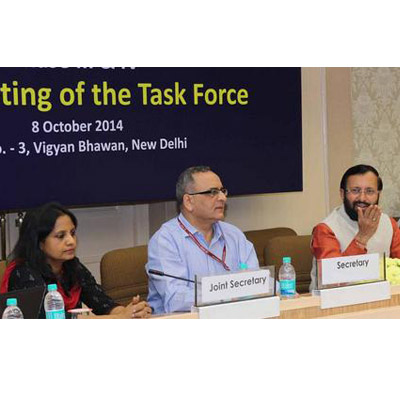
    NEW DELHI: Information and Broadcasting Minister Prakash Javadekar today clarified that the new dates for Phase III and IV for digital addressable system were the outer limits but all attempts would be made to achieve the target well before that.


    Reiterating that the main aim of the new deadlines was to encourage DAS with use of India-made set top boxes, he told the first meeting of the DAS task force for the final two phases here today that the Government has facilitated C form issue for indigenous manufacturers.


    At the outset, he said the entire digitisation programme was an integral part of Prime Minister Narendra Modi’s Digital India plan.


    He also pointed out that he represented the viewer and consumer, who had no voice unlike the other stakeholders who were present at the meeting.


    Javadekar said the cable TV digitisation process aimed at providing the consumer with greater choices and affordable and qualitative options. The overall objective was to be sensitive to the needs and choice of the consumer. The choice of the consumer was paramount in defining the inputs, strategies and roadmap for the remaining phases of the digitisation process.


    He called upon the manufacturers to innovate and explore new technologies for addressing the different consumer tastes and needs.


    The Minister added that in the next phase of digitisation, the price mechanism offered to the consumer would be a key determinant of the process, particularly as DAS was being extended to rural areas. As a consequence, it was mandatory for all stakeholders to sensitise the consumers on the benefits of the process in view of the rural outreach of the programme. 

    Regarding the indigenisation of STBs, the Minister said that the concerns of the industry had been taken up with the Finance and Communications and IT Ministries and STBs were declared as part of ‘telecommunication network’.


    The Minister said the task force ought to identify timelines for implementation so as to ensure the timely completion of Phase III and Phase IV. All issues concerning the key stakeholders needed to be debated at length so as to ensure the mainstreaming of the process with the existing policy. The need of portability of set top boxes so as to provide the option of interoperability to the consumers was an issue that could be looked into by the concerned stakeholders.


    Every meeting of the task force was critical as it identified critical inputs so as to ensure the effective implementation of the timelines and processes. Every viewer should be able to get the best viewing experience over the next two years, he added.


    He also wanted portability for STBs on the lines of portability for mobile phones and said the government and the task force will study this issue.


    Earlier speaking on the occasion, I and B secretary Bimal Julka said the task force provided an important platform to debate and overview issues related to the digitisation implementation. It also provided an opportunity to understand the concern of stakeholders.


    The experience of such meetings during the first and second phase of implementation of the programme had been extremely useful in streamlining the roadmap for effective implementation. He said the consumer is the judge of what he gets to see and content rules. He said a lot of complaints had been received from stakeholders during the implementation of the first two phases but he hoped to get more suggestions as well.


    The meeting saw various stakeholders raise issues concerning them. Taxation was raised by STB manufacturers and auditing was requested by consumer groups. The broadcaster suggested that the deadline should be reduced to 2015 for both phases. No TRAI member attended the meeting.


    Javadekar also assured that there will be sub committees that will monitor the process of digitisation.