Tag: DAS

  • Q2-2016: Indian DTH players replicate improved performance of previous quarters

    Q2-2016: Indian DTH players replicate improved performance of previous quarters

    Over the past two quarters, the DTH segment of the television carriage industry has posted improved performances as has been mentioned by Indiantelevision.com for Q4-2015 and Q1-2016.

    The industry seems to have reached an inflection point in Q4-2015, with three players that have a combined market share of about 62 per cent posting improved results. The biggest player among them in terms of revenue as well as number of subscribers, Dish TV with about 27 per cent market share even reported a consolidated profit after tax (PAT) of Rs 34.94 crore in Q4-2015, a figure that helped wipe out the losses reported by the company for the previous three quarters. Dish TV reported consolidated PAT of of Rs 3.14 crore for FY-2015.

    As a matter of fact, even Airtel DTH services reported a positive EBIT of Rs 8.1 crore for Q4-2015, as compared to a negative EBIT of Rs 36 crore in Q3-2015 and a negative EBIT of Rs 67.6 crore in Q2-2015. The three players have now reported improved performances for the quarter ended 30 September, 2015 (Q2-2016, current quarter).

    Note: (1)100,00,000 = 100 lakh = 10 million = 1 crore.

    (2) This paper covers only three of the seven DTH service providers in India (as had the previous two papers) since the other four– Reliance Digital TV, Sun Direct (about 97 lakh subscribers as on 31 March, 2015), Tata Sky and DD Free Dish are not listed directly on the bourses and their financial numbers are not available, unless the principals of these companies/segments chose to reveal them. The three players – Airtel DTH, Dish TV and Videocon d2h have already been covered in our earlier reports mentioned above.

    (3) Some of the three players mention their financial as well as subscription numbers in millions in their financial reports/investor presentations and other documents that they make available publically. The financial numbers have been converted to Rs crore to an approximation of a single decimal place, though percentages have been mentioned to the second decimal place approximation.

    (4) There could be some ambiguity about the market share of the three players. If one were to go by the latest numbers released by the Telecom Regulatory Authority of India (TRAI) in November 2015 for June 2015. TRAI’s indicator report says that the number of registered DTH subscribers as on 30 June, 2015 was 787.4 lakh. The combined subscription numbers of the three players as on the same day as reported by them individually was 343.12 lakh and hence the market share of these players works out to 45.58 per cent. However, TRAI’s report also says that the number of active DTH subscribers as on 30 June, 2015 was 397.4 lakh. Based on the second TRAI number, the combined total subscribe market share of the three players in this paper works out to 86.34 per cent. The figures of 27 percent and 62 per cent have been taken from Dish TV’s estimates.

    (5) Videocon d2h EBIDTA numbers are adjusted – Q4-2015 Adjusted EBIDTA is before accounting for one off securities issue expenses of Rs 10.543 crore and Employee Share based Compensations cost of Rs. 2.974 crore towards provision of ESOP plan of 2014; Q1-2016 and Q2-2016 Adjusted EBITDA is before accounting for Employee Share based Compensations cost of Rs. 2.944 crore towards provision of ESOP plan of 2014

    Please refer to the graphs below. Panel A, B and C and D show the Q2-2015, Q1-2016 and Q2-2016 combined performances of the three DTH operators in this report and then in alphabetical order- Airtel DTH, Dish TV and Videocon d2h respectively. Panel E shows the ARPU value trends and Panel F shows the Monthly Subscriber Churn of the three players over 6 consecutive quarters starting Q1-2015 until Q2-2016.

    Please refer to Panel A in the graphs below. The combined revenues of the three players in the current quarter grew 16.20 per cent year on year (YoY) to Rs 2149.32 crore as compared to Rs 1849.60 crore and grew 3.12 per cent quarter on quarter (QoQ) as compared to Rs 2084.28 crore. EBIDTA increased 47.96 per cent YoY in Q2-2016 to Rs 680.30 crore (31.65 per cent margin) as compared to Rs 459.8 crore (24.86 per cent margin) and grew 1.90 per cent QoQ as compared to Rs 667.6 crore (31.65 per cent margin). Hence, EBIDTA margin declined slightly in the current quarter as compared to the immediate trailing quarter. Reported Combined Subscription numbers in Q2-2016 grew 12.77 per cent YoY to 351.16 lakh as compared to 311.4 lakh and increased 2.34 per cent QoQ as compared to 343.12 lakh.

    All the three DTH operators reported growth in revenue and subscription numbers, both YoY and QoQ. Dish TV and Videocon d2h reported growth in YoY and QoQ EBIDTA, while Airtel DTH reported a YoY increase, but a QoQ drop in EBIDTA and EBIT for Q2-2016. In terms of subscription numbers as well as revenue, Dish TV is the biggest player among the three. While Videocon d2h has a slight edge in terms of subscription numbers over Airtel DTH, the latter has a slight edge over Videocon d2h in terms of revenue.

    The average revenue per customer (ARPU) in the case of Airtel DTH increased QoQ to Rs 224 from Rs 222, it was flat in the case of Videocon d2h at Rs 205 and declined to Rs 171 in Q2-2016 from Rs 173 in the immediate trailing quarter in the case of Dish TV.

    During the six consecutive quarter period starting Q1-2015 until the current quarter, ARPUs of all the three DTH players show linear increasing trends. Monthly Subscriber Churn also seems to be increasing in case of all the three players as is obvious from the linear broken trend lines in Panel F. As a matter of fact the Monthly Subscriber Churn reported by all the three players in the current quarter – Q2-2016 was the highest during a period spread over six consecutive quarters.

    At the cost of repeating some of what has been mentioned above, let us see how these players have performed in Q2-2016.

    Airtel DTH

    Airtel DTH is a small segment of Indian telecom major Bharti Airtel Limited and its revenues constitute around four per cent of its parent company’s revenues and its EBIDTA is contributes just three per cent to overall EBIDTA. Capex investment however is in the seven per cent region of Bharti Airtel’s overall capex investments.

    Please refer to Panel B in the graphs above. Airtel’s DTH segment reported 12.85 per cent YoY growth in its revenue for the current quarter at Rs 706.8 crore as compared to the Rs 623.6 crore in Q2-2015. QoQ, the segment’s revenue grew 3.21 per cent as compared to Rs 684.8 crore.

    EBIDTA increased 53.24 per cent YoY to Rs 234.3 crore (33.15 per cent margin) as compared to the Rs 152.9 crore (24.41 per cent margin), but was 2.70 basis points lower than the Rs 240.8 crore (35.16 per cent margin).

    Airtel DTH segment reported a positive EBIT of Rs 17 crore (2.41 per cent margin) in the current quarter as compared to a negative EBIT of Rs 67.7 crore in the corresponding year ago quarter. EBIT in the current quarter, however was less than half (declined by 59.04 per cent) as compared to the Rs 41.5 crore (6.06 per cent margin) in the immediate trailing quarter.

    The company reported a 10.86 per cent YoY growth in its subscriber base to 105.76 lakh in Q2-2016 as compared to the 95.40 lakh in the corresponding year ago quarter and a 1.58 per cent QoQ growth from 104.12 lakh in the immediate trailing quarter. Monthly subscriber churn however increased to 1.3 per cent in the current quarter as compared to 1.1 per cent in Q2-2015 and 0.8 per cent in Q1-2016.

    The company reported a slight increase in Average Revenue per User (ARPU) in Q2-2016 in terms of Indian rupees, but a flat ARPU in terms of the US dollar at $3.5, which means that ARPU in dollar terms declined due to the rise in the price of the dollar in Indian Rupees. ARPU in Q2-2016 increased to Rs 224 as compared to the Rs 220 in Q2-2015 and the Rs 222 in Q1-2016.

    Monthly Subscriber churn in Q2-2016 at 1.3 per cent was higher than the 1.10 per cent in the corresponding year ago quarter and the 0.80 per cent in the immediate trailing quarter.

    Airtel MD and CEO India & South Asia Gopal Vittal said, “Airtel’s revenue growth in India has accelerated to 13.3 per cent in Q2 on an underlying basis, the highest in the last 12 quarters. Our smaller businesses – home broadband, DTH and our business segment all continue to perform strongly.”

    Dish TV

    This is the third consecutive quarter that Dish TV has reported growth across important financial and operational parameters including operating revenues (Total Income from operations or TIO), PAT and subscription numbers. During the previous fiscal and its last quarter (year and quarter ended 31 March, 2015, Q4-2015), the Subhash Chandra led Essel group’s Dish TV Limited turned the corner with a consolidated PAT of Rs 3.14 crore and Rs 34.94 crore (margin 4.8 per cent) respectively. The company followed this up with even better numbers in the previous quarter (Q1-2015). Dish TV was probably the first among listed DTH companies in the country in FY-2015 and Q4-2015 to report a profit after tax as opposed to the operating profits reported by a segment of the other Goliaths for whom DTH services is just another small segment or group company.

    Please refer to Panel C in the graphs above. For the current quarter ended 30 September, 2015 (Q2-2015), Dish TV has reported Operating revenue of Rs 752.42 crore, hence registering a 15.77 per cent YoY growth as compared to Q2-2015’s number of Rs 649.90 crore and a 2.14 per cent QoQ growth as compared to Rs 736.68 crore.

    The company reported PAT of Rs 86.96 crore (11.56 per cent margin) for the current quarter as compared to a loss of Rs 14.2 crore in the corresponding year ago quarter and a whopping 60.41 per cent growth in profit as compared to the Rs 54.21 crore (7.36 per cent margin) in the previous quarter.

    EBITDA in the current quarter increased 57.50 per cent YoY to Rs 255 crore (33.89 per cent margin) as compared to Rs 161.9 crore (24.91 per cent margin) and increased 7.69 per cent QoQ as compared to Rs 236.8 crore (32.14 per cent margin).

    The company’s subscriber numbers in Q2-2016 increased by 3.38 lakh to touch a subscriber base of 137 lakh as compared to the 133 lakh subscribers reported at the end of the previous quarter (Q1-2016). Monthly Subscriber Churn increased to 0.8 per cent after remaining flat for the previous five consecutive quarters at 0.7 per cent.

    Dish TV reported a YoY growth in Average Revenue per User to Rs 171 as compared to the Rs 166, but a QoQ decline from Rs 173 in the previous quarter.

    Dish TV chairman Subhash Chandra said, “Dish TV further reinforced its leadership position during the quarter. The company, while being at the forefront of the DTH industry in India, reached out to television viewers with innovative products that promise to enhance their television viewing experience. Dish TV’s improving financial strength coupled with its passion to be ahead of the curve, should be an advantage to further enhance its presence in the vast and still untapped analogue and free-to-air television markets in the country.”

    Videocon d2h

    Videocon d2h reported sales growth in both subscription revenue and revenue from operations for the current quarter. Subscription revenue increased 24.63 per cent YoY to Rs 629 crore as compared to Rs 504.7 crore, and increased 4.67 per cent QoQ as compared to Rs 599.61 crore.

    Please refer to Panel D in the graph above. Total revenue increased 20.35 per cent YoY to Rs 690.1 crore as compared to Rs 573.40 crore and increased 4.12 per cent QoQ as compared to Rs 662.83 crore.

    The company reported lower loss in Q2-2016 at Rs 24.6 crore as compared to a loss of Rs 61.4 crore in Q2-2015, but was slightly higher than the loss of Rs 24.4 crore in the immediate trailing quarter.

    Adjusted EBIDTA in the current quarter increased 31.72 per cent YoY to Rs 191 crore (27.68 per cent margin) as compared to Rs 145 crore (25.29 per cent margin) and was almost flat (increased 0.53 per cent) as compared to Rs 190 crore (28.67 per cent margin).

    The company notched up higher net subscribers at 108.4 lakh in Q2-2016 as compared to 94.6 lakh in Q2-2015 and 106.4 lakh in the immediate trailing quarter. Monthly Subscriber Churn in the current quarter at 1.19 per cent was higher than 0.85 per cent in Q2-2015 and 0.46 per cent in the immediate trailing quarter.

    The company reported higher ARPU at Rs 205 in Q2-2016 as compared to Rs 190 in Q2-2015 but was flat when compared to Rs 205 in the immediate trailing quarter.

    Videocon d2h executive chairman Saurabh Dhoot said, “I am happy to share that we have achieved EBITDA growth of 30.3 per cent in the first half of the current fiscal as against our guidance of 25 to 30 per cent growth. We are on track to deliver even stronger growth in the second half of this year, in line with the guidance shared earlier. During the quarter, we focused on enhancing our channel offering and added 14 Standard Definition and four High Definition channels. We have recently launched two proprietary services, namely d2h Hollywood HD and Darshan. With more than 500 lakh eye balls we also continue to gain traction on advertising revenue with marque advertisers coming on our platform.”

    Speaking on the near term subscriber growth outlook, Videocon d2h CEO Anil Khera said, “We estimate around 500 lakh television homes come under Phase III digitization, of which 240 to 250 lakh television homes are already on the digital platform. Thus, the target market under Phase III digitization is the remaining 250 to 260 lakh television homes that are currently on analog cable.”

    End Points

    Implementation of Phases III and IV of DAS presented a potential of about 700 to 750 lakh existing television households plus another 200 to 250 lakh new television households for the carriage industry as per industry estimates. How well each of the players in the ecosystem takes advantage of this  potential remains to be seen. The DTH players in the country are adding to their net subscription numbers, going by the combined 7.64 lakh net subscriber additions that the three players in this paper have reported for Q2-2016 as compared to the immediate trailing quarter. Reported capex investments to the extent of Rs 250 crore in the current quarter and Rs 211 crore in the previous quarter by Airtel DTH and Rs 246 crore in Q2-2016 and Rs 153 crore in Q1-2016 by Videocon d2h indicate that the DTH players are intent on gaining a large portion of this opportunity.

    An Icra Research Services paper of September 2015 on TV Distribution says that DTH players remain well positioned for tapping growth opportunities in Phase III and Phase IV markets due to inherent technology advantage and easier access to cable dark areas. Moreover, incremental investments towards the establishment of infrastructure in the rural markets and relatively high operating costs render it commercially unviable for national MSOs to enter such markets.

    The rural markets continue to remain cost sensitive; hence, MSOs and DTH players are also looking at introducing plain vanilla set top boxes (STBs) specifically for these markets to encourage subscribers to migrate. In this direction, Dish TV launched a lower priced STB under the brand name of Zing, the base pack of which is typically 20 per cent lower than a regular Dish TV STB. Amongst other measures, distributors are also evaluating channel packages with focus on regional content. The media consumption in Phase III and Phase IV markets are driven by regional content and hence such packages are expected to help distributors further expand their subscriber universe in these markets says the Icra report.

    HD channels is another opportunity that DTH players have sensed. Sensing a strong business opportunity Videocon d2h has started augmenting a new strategy early this year. With the number of HD channels set to increase in the coming years, Videocon d2h, which also manufactures STBs, will be phasing out its Standard Definition (SD) STBs over the next year or so. Videocon d2h is looking at 50 to 60 per cent acquisitions in the HD STB space.

    In early May 2015, while speaking at the Asia Pacific Video Operators Summit (APOS) held in Bali, Videocon d2h’s Khera had said, “The cost of difference between SD and HD set top boxes for us is only one and half dollar. In terms of gross adds, the market has been consistently growing and we have seen a growth of eighty to ninety lakh new additions in a year. Net additions has been a challenge, and the industry has been able to get net addition of fifty to sixty lakh. As far as the rotation churn is concerned how one retains customers and provides additional services, is a big challenge.”

    This brings forth another challenge-bandwidth allocation with a limited satellite bandwidth available. Projecting that there would be at least a hundred HD channels over the next one and a half year, Khera had then said, “All the Hindi and English general entertainment channels and movie channels will have a HD and SD feed.” That was six months ago.

    The cut-off date for DAS Phase III – 31 December, 2015 is less than a month away and for DAS IV – 31 December, 2016 just a little more than a year away. Initially the next 13 months followed by a year or two is the period required by the industry to gain some sort of maturity and have a semblance of stability. The next two to four years are going to be real chaotic and exciting times for the carriage industry. For now, the existing analogue consumers and the new television households, are the real low hanging fruits that can be plucked with relative ease. Post digitisation the game will be different, probably with a different set of unwritten rules (and most probably written rules on the path to market maturity).
  • MIB yet to clear 260 applications for new satellite TV channels

    MIB yet to clear 260 applications for new satellite TV channels

    NEW DELHI: Even as India has a total of 830 private satellite television channels, as many as 260 applications are pending with the Ministry of Information and Broadcasting (MIB) for grant of permission to operate TV channels.


    As grant of permission is a continuous process, only cumulative data is maintained, Minister of State for Information and Broadcasting Col Rajyavardan Singh Rathore told the Parliament today.


    While 37 channels including 11 news channels were permitted in 2012, the number of clearances came down to only seven in 2013 including four news channels. In 2014, a total of 45 channels were cleared including 14 news channels, while 42 channels were cleared until November-end this year, which included only three news channels.


    Of the 830 channels, 398 channels are news and current affairs channels, the Minister said, adding that religious and sports channels are included in the non-news and current affairs category.


    The Minister said that the MIB ensures regular monitoring of all the applications, regular follow up with concerned Ministries and Departments for obtaining clearances, and processing of applications according to the Citizens’ Charter. 

  • TDSAT appoints advocate commissioner to examine subscription claims of Chirala MSO

    TDSAT appoints advocate commissioner to examine subscription claims of Chirala MSO

    NEW DELHI: An Advocate Commissioner has been appointed by the Telecom Disputes Settlement and Appellate Tribunal (TDSAT) to carry out a sample survey of the SLRs of Chirala Cable Network, which is seeking signals of Taj TV, Eenadu TV, Maa TV and Sun Distribution Services.


    The Tribunal said Advocate Commissioner Tushar Singh would go on a date duly intimated to all concerned to Chirala town and its rural areas where the multi system operator (MSO) claims it has subscribers. All the parties may nominate their representative to accompany the Advocate Commissioner in course of the survey. 


    Singh will go to all panchayat areas named in the SLR submitted by the petitioner. In each area he will visit at least 10 houses named in the SLR and 10 houses outside the SLR to verify whether any one of them are the petitioner’s subscribers or they are taking their signals from some other MSO/LCO. 


    Listing the matter for 4 January, the Advocate Commissioner was asked to submit a report within three weeks and he will be paid, apart from actual expenses, an honorarium of Rs 30,000 per day.


    The order came on a petition by the MSO wanting the signals of the four respondents against whom it has filed these four petitions. The petitioner is operating in Chirala town and adjoining rural areas. The controversy between the parties is mainly in regard to the petitioner’s SLR in rural areas, adjoining Chirala town.


    The Tribunal noted that Chirala town falls under Phase III of the DAS regime and the rural areas adjoining it come under Phase IV. In Chirala town, the petitioner is getting Sun’s signals through A.C.T Digital. 


    During the proceedings, the petitioner filed two or three SLRs, which on verification by Sun are said to have been found incorrect. According to Sun, the petitioner does not have any subscriber in the rural areas around Chirala town and it is making an attempt to penetrate the rural areas on the basis of incorrect SLRs “which would make it very difficult for the broadcasters to raise their invoices.”


    The Tribunal also noted that the petitioner had once again filed a fat affidavit giving its latest SLRs according to which it has 3219 subscribers of which 1138 are in Chirala town and the rest in the rural areas.


    The ascertainment that the correct SLRs that should form the basis for determining the licence fee payable by the petitioner to the broadcasters is an issue of facts, which may be determined on the basis of evidences led by the parties.

  • MSO clearances finally cross 550 with less than six weeks left for completing Phase III of DAS

    MSO clearances finally cross 550 with less than six weeks left for completing Phase III of DAS

    New Delhi: The number of multi system operators has raced to 553 by 24 November from around 470 early this month, as the government races to prepare to meet the deadline of completing the third phase of digital addressable system.


    Of these, 230 have got ten-year licences with three provisional licencees getting permanent licences, and a total of 323 (against 246 early this month) getting provisional licences. One temporary licencee was also given permanent licence till 2024 after its area of operation was changed.


    Information and Broadcasting Ministry sources said it had still not received any formal communication of the Home Ministry’s decision to do away with security clearances for MSOs, while some had been given provisional licences pending certain formalities relating to shareholders and so on.


    According to the list put on the I and B Ministry’s website today, Kal Cables of Chennai and Digi Cable Network Pvt Ltd of Mumbai remain on the cancellation list. Scod 18 Networking Pvt Ltd of Mumbai has also been refused security clearance while SR Cable TV Pvt Ltd of Bangalore has shut down its business.


    Two MSOs which had earlier been granted permanent licences were permitted to change their areas of operation.


    The new entrants in the permanent licence list include Waltair Entertainment Pvt. Ltd for Phase II in Vishakapatnam; Den Manoranjan Satellite Pvt. Ltd of Pune for Maharashtra; and Seemanchal Digital Network of Purnea for Bihar.  

  • TRAI calls for expediting interconnection

    TRAI calls for expediting interconnection

    MUMBAI: The implementation of Digital Addressable Cable TV Systems (DAS) in India is in progress in a phased manner. The entire structuring is planned in 4 phases.  In Phase-III, the    sunset  dates   for   analog   TV   transmission in   urban   areas   is 31 December, 2015.  


    The  MSOs (Multi System  Operators), who   have  been  granted registration  for  providing   cable  TV  services through  DAS,  are required to enter  into interconnection agreements with pay TV broadcasters for  re-transmission of  pay  TV  channels to  the  subscribers.


    According to the official report for implementation of DAS, the Authority has notified a comprehensive regulatory framework encompassing interconnection, quality of service, consumer complaint redressal regulation and tariff orders.


    The Regulatory framework for DAS  provides that every broadcaster shall  provide  the  signals of TV  channels to a  MSO, in accordance with  its  reference  interconnect offer  or as  may  be mutually agreed,  within  60 days from  the date of receipt  of the request and in case the request for providing signals of TV Channels is not agreed  to, the reasons  for such  refusal to provide signals  shall  be  conveyed to the  person  making  a request  within  60  days  from  the  date  of request.


    As the cutoff date for Phase-III areas is fast approaching, the registered MSOs are advised to make a written request to the broadcasters of pay channels for provisioning of the signals of TV channels as per their business requirement, so that they get signals of pay TV channels well before the cutoff date.


    The MSOs  who  have  approached  pay TV  broadcasters  for providing  signals  of TV channels  in accordance  with the provisions  of the interconnection  regulations  but have not been able to enter into interconnection  agreement even after passage of 60 days from the date of making request and also not received valid reasons for not entering into interconnection agreement from the broadcaster may write to TRAI by 28 November, 2015 through e-mail at das@trai.gov.in  for initiating action in such cases as per TRAI Act.

  • Neo Sports’ Mautik Tolia opens up on the Impact of DAS

    Neo Sports’ Mautik Tolia opens up on the Impact of DAS

    DAS (digital addressable system) is here to stay. Despite the shortcomings, the hiccups in the implementation of the first two phases, the government has announced that it will not extend the deadlines of December 31, 2015 for phase III areas and December 31, 2016 for phase IV, when the entire country is expected to be digitised. After complete switchover, cable TV services will be available only through set top boxes in India.

     
    We, at the Indiantelevision.com are starting a new section – ‘The Impact of DAS’ through which thought leaders, experts from the television ecosystem will share their thoughts, ideas, and say their piece on the subject. We are beginning with the impact of DAS on the sports broadcasting ecosystem. 

     
    Our expert for the section is Neo Sports EVP programming Mautik Tolia.


    Excerpts:


    How big an impact has phase I and II digitization made when it comes to subscription revenue?


    Digitization has been a big step forward not just in terms of revenue but in providing secular access to viewers to more sports events, apart from just cricket. As India moves more and more to a multi-sport fan universe, digitization will continue to play in important role in increasing the popularity of all sports. Combined with the increasing market share of DTH platforms, which in turn enhances the reach of sports networks without whimsical interruptions (which were a constant feature in the analog domain) we at neo sports see other sports climbing to a 40 per cent share of revenue universe in 3 years time.


    From sports broadcaster’s point of view are you happy with the two phases of digitization?


    Doubtless there have been roll out issues and delays in implementation but on balance digitization has been a positive. It will be some time before more sophistication is achieved in packages and tiers, which will steadily take us to a CPS billing norm. Transparency in billing remains a challenge but we believe that too will be resolved in the next 2-3 years.


    Is the sports broadcasting industry in a subscription positive scenario? Or we are still ad dependent?


    From a 90:10 ad: subscription ratio 10 years back, the sports broadcast industry has probably moved to a 70:30 maybe even 65:35 ratio. This may even be 60:40 or 55:45 in the case of some networks. Due to significant ad spend on cricket, especially IPL this ratio will inch its way to maybe 50:50 in 3 years for the industry as a whole.


    Are sports like Football, Badminton which are hugely popular but have very little room for advertisement profitable assets for broadcasters?


    Aside of Cricket, the dominant sports are football, tennis, golf, hockey, badminton and motor sport. Except for Football and Badmnton, others have adequate ad break potential. At Neo Sports we believe that it is more a question of focus, ability and experience when it comes to monetizing sports other than cricket.


    With phase III and IV scheduled do you see a substantial inclination in subscription revenue?


    We see further momentum in subscription revenues, reach and secular access for all sports in phase 3 and 4.


    How can a non cricket sport or a sport with least ad room turn profitable for broadcasters in India?


    The profitability conundrum is more a function of irrational acquisition prices and lack of focus on monetizing all sports. We have seen at least one sports broadcaster recently pay over the top for rights that were being jettisoned by another and for which there may well have been no other takers. Ill informed and panic buying has resulted in lack of profitability for some. At Neo Sports we believe that intense discipline is required both with acquisitions as well as in monetizing assets. Wise spending may not make a sports broadcaster no 1 but there are plenty of sports rights constantly available, the universe of sports fans is rapidly expanding, advertisers are increasingly willing to spend on sports other than cricket and affiliate platforms understand that tens of millions of viewers are tuning into other sports – hence there is room for multiple sports networks and increasing opportunity for revenue and viewership expansion.

  • Impact of DAS on Sports Ecosystem: Rajesh Sethi

    Impact of DAS on Sports Ecosystem: Rajesh Sethi

    DAS  (digital addressable system) is here to stay. Despite the shortcomings, the hiccups in the implementation of the first two phases, the government has announced that it will not extend the deadlines of December 31, 2015 for phase III areas and December 31, 2016 for phase IV, when the entire country is expected to be digitised. After complete switchover, cable TV services will be available only through set top boxes in India.
     
    We, at the Indiantelevision.com are starting a new section – ‘The Impact of DAS’ through which thought leaders, experts from the television ecosystem will share their thoughts, ideas, and say their piece on the subject. We are beginning with the impact of DAS on the sports broadcasting ecosystem. 
     
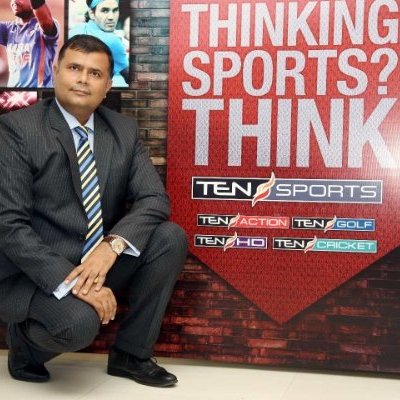
    Our expert for the section is Ten Sports Network CEO Rajesh Sethi.


    Excerpts: 


    How big an impact has phase I and II digitization made when it comes to subscription revenue?


    Phase I and phase II digitization has made a positive impact as far as the subscription revenue is concerned for the industry and given the trend we expect increase in the revenue once phase III and IV is completed. Ten Sports has also experienced the upside of subscription revenue which can be seen from our increased ARPU.  The addressability has improved but a lot still needs to be done. We believe that as the digitalization matures & packaging is implemented on ground by the operators, we will be able to achieve complete benefits of digitalization.
     

    From sports broadcaster’s point of view are you happy with the two phases of digitization?
     
    Although the implementation of two phases of digitization had been slow as compared to expectations, the completion of the two phases has facilitated increased subscription revenues and more accountability in the industry. From a sports broadcaster’s perspective, it will provide Ten Sports an opportunity to introduce new products based on the type and preference of consumers and provide enhancements like multi camera action, on demand services etc. We as asports broadcaster are keen to enhance the consumer experience and are interested in working with operators to fully reap the benefits of digitalization.


    Is the sports broadcasting industry in a subscription positive scenario? Or we are still ad dependent?


    The sports broadcasting industry in India is still evolving and ad revenue contributes significant part of revenues and will continue to remain the same in foreseeable future for main streamsports content. However, as digitization is still not complete, there is a high potential of increased subscription revenue and lesser dependency on ad revenues. We expect the niche sports offering to move towards subscription driven revenue model. As a sports broadcaster, we believe that the industry is moving in the right direction and once phase III and IV is complete there will be a possibility for this industry to be in a subscription positive scenario.


    Are sports like Football, Badminton which are hugely popular but has very little room for advertisement profitable assets for broadcaster?


    There has been increased interest from consumers for non-cricket sports in India in the last few years. Football and Badminton have gained traction in an industry which is preliminary dominated by cricket. It’s a step forward in right direction and we have seen advertisement revenue picking up for non-cricket content, the most recent example being Kabaddi. With regards to football and badminton being a profitable asset for a broadcaster, profitability is a function of revenue potential and content cost. Though the revenue potential and content cost presently is limited, it is expected to rapidly grow for these products. This makes it a good opportunity for a broadcaster to obtain future profitability on these content.
     
    With phase III and IV scheduled do you see a substantial inclination in subscription revenue?


    Phase III and IV is all about getting to remote areas of India. It provides an opportunity for thesports broadcasters to bring local content which connects & relates to the audiences residing in these towns. We see positive growth in subscription revenue as the number of HH’s in these towns provide a growth opportunity from the existing very low ARPU levels.


    How can a non cricket sport or a sport with least ad room turn profitable for broadcasters?


    The subscription revenue and ad revenue are the two key revenue source for a sports broadcaster. However, profitability for a content not only depends on revenue but also on the cost. The sportswhich has least room for ad revenues would depend on increased subscription revenue which we expect to increase once phase III and IV digitization is completed. At Ten Sports, as part of innovation drive, our team analyzes the potential of content across various genres which might not be currently popular in India and then builds it up for the consumers. We see increased traction for non-cricket content in recent years which translates into higher revenue potential and eventually a profitable content.


  • Impact of DAS on Sports Ecosystem

    Impact of DAS on Sports Ecosystem

    DAS  (digital addressable system) is here to stay. Despite the shortcomings, the hiccups in the implementation of the first two phases, the government has announced that it will not extend the deadlines of December 31, 2015 for phase III areas and December 31, 2016 for phase IV, when the entire country is expected to be digitised. After complete switchover, cable TV services will be available only through set top boxes in India.


    We, at the Indiantelevision.com are starting a new section – ‘The Impact of DAS’ through which thought leaders, experts from the television ecosystem will share their thoughts, ideas, and say their piece on the subject. We are beginning with the impact of DAS on the sports broadcasting ecosystem. 


    Our first expert for the section is Sony Six and Sony Kix Business Head Prasana Krishnan. Sony Six and Sony Kix are a part of the Sony Pictures Network (earlier known as Multi Screen Media Network.) 


    Excerpts:


    How big an impact has phase I and II digitisation made when it comes to subscription revenues?


    Digitisation is a very significant and essential step for unlocking the true subscription potential.  It is designed to benefit all stakeholders including content owners, broadcasters, distributors and consumers as it brings addressability and transparency into the system.  We are still in early stages of this and full addressability is still some time away but the overall impact on subscription revenues has been very positive. 


    From a sports broadcaster’s point of view are you happy with the two phases of digitisation?


    The first two phases of digitisation have primarily focused toward catering to the change in the 4 metro’s and households in cities with over 1 million in population.  The experience and progress has been quite positive as the consumer in India is today getting unprecedented access to sports content.  The analog regime had some capacity limitations which often meant prioritisation of sports and ignoring niche interests.  Digitisation has been a key factor behind the growth of non-cricket sports viewership in the country as it has enabled access to such content on a consistent basis.  While the overall progress in these markets is very positive, the full potential is still to be unlocked and a lot still remains to be done in terms of full addressability, channel packages, etc.   


    Is the sports broadcasting industry in a subscription positive scenario? Or we are still ad dependent?


    Globally, sports broadcasting is primarily driven by subscription and in some cases, it can be even as high as 90 per cent of total revenues.  In India, dependence on ad spends is still very high and I think it will continue to be so in the foreseeable future.  But the share of subscription revenues has seen a good increase in recent years with the advent of DTH sector and digitisation and will hopefully continue to grow. 


    Are sports like Football, Badminton which are hugely popular but attract limited advertising profitable assets for a sports broadcaster?


    With spur in economic developments and maturing viewership preferences, sports viewership in the country has moved from a single sport to a multi-sport consumption. Compelling alternate sports have now taken a step ahead, and we are seeing their popularity permeate down amongst the Indian audiences leading to increased overall demand for alternate sports.  While certain sports like cricket are extremely advertiser friendly due to their format, others like football, badminton, etc have higher limitations in terms of advertising.  But these sports can be profitable especially with the advent of digitisation and the improving subscription market.


    With phase III and IV scheduled do you see a substantial upward growth in subscription revenues?


     Digitisation is clearly beneficial for sports broadcasting and some of the benefits are already visible from the first two phases.  Phase III and phase IV will help in continuing this growth and would be clearly positive for the industry.


    How can a non-cricket sport or a sport with limited ad room turn profitable for broadcasters?


    We are currently in a very exciting decade for sports consumption with viewership patterns and preferences showing a particular change over the previous years.  Non-cricket sports have been at the forefront of growth in the country and fans are increasingly connecting with these sports.  Eventually, profitability is clearly a factor dependent on viewer acceptance besides costs.  It is not possible to have a generic answer that applies for all non-cricket sports as it would be a case specific.  If a particular sport has found strong viewer acceptance, profitability will definitely follow irrespective of advertising inventory constraints.

  • Hinduja Group’s HITS to be available on Thaicom 7

    Hinduja Group’s HITS to be available on Thaicom 7

    MUMBAI: Thaicom, one of Asia’s leading satellite operators, announced that its Thaicom 7 satellite is fully booked following an order from Grant Investrade Ltd (GIL).
     

    GIL. a subsidiary of Hinduja Ventures Ltd, confirmed the order for the C-band transponders on the satellite, which it will use to provide digital cable TV services through its Headend-In-The-Sky (HITS) system.
     

    The HITS service, branded Nxt Digital, will help the distribution fraternity smoothly transition to digital and allow customers to choose channels through a satellite multiplex across India.
     

    “It is one of India’s national missions to roll out Digital Addressable Systems (DAS) of broadcasting all over the country and we believe ‘Nxt Digital’ is a significant step towards this goal,” said GIL, MD Tony D’Silva. “Thaicom is a trusted and experienced satellite provider which has played a vital role in this initiative and the substantial number of satellite transponders we have at the time of launch will continue to grow as we expand our portfolio.”


    “We are proud to be able to contribute to India’s broadcast and media development and thank our Indian partners for their trust in us. This latest deal is particularly exciting for Thaicom as it marks an important milestone for us, not only in regards to Thaicom 7 now being 100 percent booked, but also in bringing our platform for content distribution to India which sets us in good stead for the launch of Thaicom 8,” said Thaicom CEO Paiboon Panuwattanawong.


    Castle Media has been appointed as the technology program manager for Nxt Digital. It has been tasked with the design-to-delivery of the HITS service including setting up a state-of-the-art next generation broadcast facility and a robust back-end facility for SMS, CRM, Billing, CAS and other mission critical components and services.
     

    “Thaicom 7 being a recently launched satellite exhibits strong parameters to facilitate a high-quality digital HITS service in India. We’ll continue to work closely with Thaicom to upscale our transponder requirements as our business grows over the next few years, on the back of a strong push by the government to make India a digital nation,” Castle Media ED Vynsley Fernandes added in parting.


  • DAS Phase III drives STB demand in Q3 2015; India accounts for 97% shipments

    DAS Phase III drives STB demand in Q3 2015; India accounts for 97% shipments

    MUMBAI: The set-top-box (STB) market in the SAARC region has registered record growth in third quarter of 2015, as rapid digitisation in the Phase III cities of Digital Addressable Systems (DAS) in India is driving the demand for STBs. 

    With pay-TV industry in all major SAARC countries moving toward digitisation – mandatory or voluntary – STBs of all kind from SD to HDTV and hybrid boxes are witnessing steady and robust growth.

    According to new research report from Dataxis, “The STB Market in SAARC countries (Bangladesh, Nepal, India, Pakistan and Sri Lanka)-Q32015,” STB shipments to SAARC countries have witnessed 73 per cent quarter-on-quarter growth during the Q3 2015. In the quarter under consideration, 7.34 million STBs were shipped in the SAARC region with an estimated value of $176 million. 

    India leads the STB shipments for the period, accounting for about 97 per cent of the total shipments to the SAARC region in the September ended quarter of 2015, according to Dataxis. 

    Skyworth tops the STB shipments to SAARC in the Q3 2015. The company reportedly has plans to locally manufacture STBs for the Indian market. 

    Local manufacturing in India, which accounted for just five per cent of total STBs sold during the first and second phase of seeding, is showing steady growth in the third phase. Dataxis estimates that the sale of made-in-India STBs will witness growth up to 15 per cent in the fourth phase of digitisation.

    “Local STB manufacturing in India has increased almost fourfold in the third quarter of 2015, and this is in line with our expectations. As the deadline for the third phase digitisation nears, there is high demand for STBs from the MSOs and most of the independent and small size operators are coming forward to partner with indigenous brands,” said Dataxis media analyst Sreeja VN.

    The Indian government was also proactive during the period by promoting the make in India campaign in the sector. The decisions by three major DTH players namely Airtel Digital TV, Dish DTH and Videocon D2H to opt for indigenous brands have also boosted the Indian STB industry.

    Another notable trend, according to the Dataxis Research, is the increase in demand for High-Definition (HD) and Ultra HD STBs in the region. Dataxis’s analysis of STB shipment for the Q2 2015 and Q3 2015, depicts steady growth in the volume of HD STBs shipped to India. The rise in the number of HD and UHD STBs has also contributed to a rise in the average selling price of STBs to the country. 

    The key STB vendors for the quarter are Technicolor, Skyworth, Changhong, Huawei and Coship (international vendors), and Mybox, One-eIGHT technologies, Trend Electronics, Ridsys, and Willet Communications (domestic vendors).