Tag: DAS

  • DishTV rolls out new subscription pack for DAS Phase III markets

    DishTV rolls out new subscription pack for DAS Phase III markets

    MUMBAI: In an attempt to capture a chunk of analogue cable users in Phase III areas of Digital Addressable System (DAS), direct to home (DTH) company, DishTV is gearing up for an aggressive plan. 


    The company has launched a new subscription package called Dish99 and has also launched a campaign, which is catered to the specific needs of the phase III audience.


    The new subscription package gives users the freedom to choose and make their own monthly pack. Dish99 will give consumers access to 125 channels and services in digital quality and also top it up with a choice of custom-made 17 entertainment add-on packs ranging from Rs 25 – 75 and five regional add-ons for Rs 10 each. 


    Speaking on the same, a DishTV spokesperson said, “TV viewing is ubiquitous and the most affordable means of entertainment in the country. It has always been our endeavour to provide unparalleled and most innovative services to our customers for a unique TV viewing experience. Now, with the deadline of phase III of TV digitisation coming to a close, we aim to capitalise the huge captive user base, which would be switching from analogue cable to digital platform. Dish99 offers the ‘power to create their own pack’ and ensure seamless services with uninterrupted entertainment at cost effective rates to every household in India.”  

     
    To augment the digitisation drive in Phase III, DishTV has introduced a 360 degree multi-media campaign spanning TV, outdoor, radio, digital and online that leverages the power of popular TV celebrities. “This DAS campaign features DishTV’s relatable faces to strike a chord amongst the audience and create awareness about TV digitisation among every household to shift from analog to digital platform,” the spokesperson added.

  • Tamil Nadu cable TV industry incurs Rs 25 crore loss due to floods

    Tamil Nadu cable TV industry incurs Rs 25 crore loss due to floods

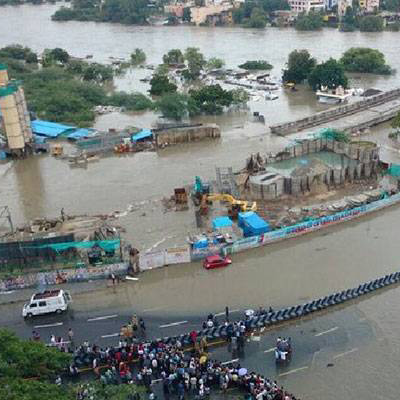
    MUMBAI: ’Twas Mother Nature’s fury at full throttle when the state of Tamil Nadu was flooded by the heaviest rainfall it has been privy to in the last century. Many lives were lost even as over three lakh people became homeless.


    While the southern state is slowly inching back to normalcy from the unprecedented rains and floods, which engulfed whatever came in its way, the natural disaster had a massive impact on the media and entertainment industry as well. The entire cable TV ecosystem was brutally affected by the calamity. It may be recalled that for the last couple of weeks, the Broadcast Audience Research Council (BARC) India hasn’t received television ratings data from the region too.


    In the light of this disaster, a senior cable federation member from Chennai estimates the overall loss suffered by the cable industry to be close to Rs 25 crore. “We have done an on-ground survey and after a thorough analysis, we came to the estimate. Local cable operators (LCOs) will have to bear the majority of the loss as most of the fibre amplifier devices, which were damaged belong to them,” he adds.


    While industry body ASSOCHAM estimated the overall financial loss from the torrential rains and floods in Tamil Nadu to be in excess of Rs 15,000 crore, the Rs 25 crore loss to the cable industry may even be a conservative one. The on-ground reality indeed paints a grim picture.


    “Thousands of fibre amplifiers got affected. The LCOs are trying their level best to restore services but the damage is so massive that it will take at least a week or 10 days more to get things back on track,” added a senior official from the cable fraternity.


    A fibre amplifier, which is located in the operating room of cable operators, costs around Rs 3500 and a large number of them were totally destroyed as they immersed in the flood water. Fortunately, no instance of head-end damaged could be traced.


    An independent multi system operator (MSO), who was also affected by the natural calamity, said, “The head-ends are generally placed at a good height and hence they got saved. But my transmitter is totally damaged. The flood has damaged cable operations brutally, and to restore services it will take me more than 15 days at least.”


    “The transmitter costs Rs 50,000 and I have to invest in a new one,” he adds.


    The other equipment that was damaged in the flood and needs serious investment is Erbium Doped Fiber Amplifier (EDFA), which is an optical repeater device used to boost the intensity of optical signals being carried through a fiber optic communications system. “I need to invest Rs 1.5 lakh in my EDFA and there are many other such operators who will have to change their EDFA,” said an LCO.


    While some equipments may be under warranty, it is unlikely that the warranty applies in the case of natural disasters. A looming question is also that of insurance. All said and done, many LCOs and MSOs affected severely by the flood will have to bend over backwards in order to get their system back on.

  • MIB to hold open house with broadcasters on 21 December for DAS

    MIB to hold open house with broadcasters on 21 December for DAS

    NEW DELHI: The Ministry of Information and Broadcasting has slotted an Open House meeting with all broadcasters on 21 December in connection with the implementation of Digital Addressable System (DAS).


    The meeting will be held at 11 am in the office of MIB director (broadcasting) Neeti Sarkar.


    Any broadcaster wanting to attend has been asked to confirm their presence and query by the evening of 18 December.


    It is learnt that the Telecom Regulatory Authority of India (TRAI) is separately meeting the multi system operators (MSOs) earlier in the same connection.


    The action is heating up on all fronts as the 31 December, 2015 deadline for implementation of DAS Phase III draws closer.

  • AIR/DD engineers to inspect MSO set-ups for DAS; b’casters asked to stop signals to unlicensed MSOs

    AIR/DD engineers to inspect MSO set-ups for DAS; b’casters asked to stop signals to unlicensed MSOs

    NEW DELHI: Broadcasters have been asked to ensure that signals should not be made available to those multi-system operators (MSOs), who have not received registration from the Ministry of Information and Broadcasting (MIB) and who do not provide digital encrypted signals in Digital Addressable System (DAS) Phase III areas from the cut off date of 31 December.


    This was conveyed at a meeting convened by the MIB with over 120 MSOs, which was held prior to a meeting of the Task Force over the weekend for the third phase of DAS.


    The Ministry has deployed engineers from All India Radio and Doordarshan to inspect the technical set ups of MSOs.


    The status of digitisation and stock & supply position of set top boxes (STBs) was also reviewed and all stakeholders were requested to ensure that seeding of STBs is completed in Phase III areas by 31 December so that consumers do not face any difficulty due to stoppage of analogue signals.


    In the 12th Task Force meeting held over the weekend presided over by its chairman and Ministry Special Secretary J S Mathur and Joint Secretary (Broadcasting) R Jaya, broadcasters were advised to increase the frequency of publicity on cable TV digitisation and to ensure that it is carried by all the approved TV channels. 


    While a public awareness campaign is being carried by all stakeholders; the meeting was told that the multilingual Toll Free Helpline and 12 Regional Units are operational.


    The government has updated the list of urban areas to be covered in Phase III for 24 States & Union Territories after comments from State/UT Governments.


    In response to the concerns raised by some of the stakeholders about delay in signing of interconnection agreements between Broadcasters and some MSOs, it was decided that these MSOs may furnish the details of pending cases to the Telecom Regulatory Authority of India (TRAI) by the middle of this month for holding immediate meeting with Broadcasters.


    As was earlier reported by Indiantelevision.com, TRAI will hold a meeting with stakeholders on 18 December to iron out any problems in this regard.


    In the meeting with MSOs, it was emphasised that MSOs must carry public awareness campaign on cable TV digitisation on their local channels and by distribution of leaflets, holding meetings and putting kiosks etc.


    A demo of the MIS system, which has been deployed to collect seeding data of STBs online from all operators, was also made.


    MSOs who have not started feeding the seeding data in MIS were advised to start immediately and update it regularly.


    It was informed that multilingual Toll Free Telephone Number 1-800-180-4343 to answer queries of stakeholders, including consumers, for seamless transition to digitisation is already operational and they were advised to publicise it.


    As was reported earlier, all stakeholders were told categorically that there would be no extension of the deadline for Phase III and analogue signals should be switched off from 1 January, 2016 in all urban areas of the country. The final phase covering the rest of India will be completed by 31 December, 2016.


    TRAI had earlier asked all stakeholders to apprise it by 28 October of any problems arising out of finalising agreements amongst various stakeholders.

  • Modified list of DAS areas in Goa, Meghalaya, Sikkim sees 61 changes

    Modified list of DAS areas in Goa, Meghalaya, Sikkim sees 61 changes

    NEW DELHI: In an updated list issued today, the Information and Broadcasting Ministry has made deletions and changes in the areas to be brought under Phase III of Digital Addressable System (DAS) in Goa, Meghalaya and Sikkim by the end of the month.


    These include a total of 6q changed including 57 areas deleted from the list of Goa, two deleted in Sikkim, and two changed in Meghalaya.


    The Government had first notified the list of areas under Phase III on 30 April and later modified the lists for 16 States/UTs and another eight States/UTs on 16 October and 2 November respectively.


    The changes made in Goa, Meghalaya and Sikkim are based on comments/data received from the State/UT Governments.


  • TRAI to meet stakeholders to discuss DAS issues on 18 December

    TRAI to meet stakeholders to discuss DAS issues on 18 December

    NEW DELHI: The Telecom Regulatory Authority of India (TRAI) has called a meeting of stakeholders – primarily broadcasters and multi system operators (MSOs) – on 18 December to sort out any problems relating to agreements in order to ensure a smooth transition to Phase III of Digital Addressable System (DAS) by 31 December, 2015.
     
    This information was given to the 12th DAS Task Force meeting presided over by its chairman and Information and Broadcasting Ministry special secretary J S Mathur this week. Joint Secretary (Broadcasting) R Jaya was also present.
     
    Broadcasters and MSOs were told categorically that there would be no extension of the deadline for Phase III and analogue signals should be switched off from 1 January, 2016 in all urban areas of the country. The final phase covering the rest of India will be completed by 31 December, 2016.
     
    TRAI had earlier asked all stakeholders to apprise it of any problems arising out of finalising agreements amongst various stakeholders.
     
    While Jaya referred to public awareness campaigns carried out by the Ministry, the broadcasters presented a report about the publicity campaigns that they have been carrying on both television and radio.
     
    TRAI also informed the Ministry about the meetings held with stakeholders since the last Task Force meeting on 22 September.
  • MIB reminds broadcasters & MSOs of DAS Phase III signal transmission laws

    MIB reminds broadcasters & MSOs of DAS Phase III signal transmission laws

    NEW DELHI: After the Telecom Regulatory Authority of India (TRAI) firmly ruled out any extension of Phase III of digital addressable systems (DAS), the Information and Broadcasting Ministry today told broadcasters that “it is obligatory to stop TV signals to multi system operators (MSOs) and local cable operators (LCOs) who are not registered with the Ministry for operation in DAS notified areas.”


    In a letter sent to all broadcasters and MSOs, Ministry joint secretary (broadcasting) R Jaya said, “All the broadcasters are requested to ensure to stop TV signals to those MSOs who are not registered with this Ministry for operation in DAS notified areas under Phase Ill and/or those who are not transmitting digitally encrypted TV signals in phase Ill areas after the cut-off date of 31 December, 2015.”


    The letter aimed at drawing the attention of all broadcasters is drawn to certain rules, regulations and guidelines related to transmission of television signals in connection with approaching cut-off date for Phase Ill of cable digitisation in the country.


    The letter said under Section 4A of the Cable Television Network (Regulation) Act 1995, it is obligatory for every cable operator to transmit or re-transmit programmes of any channel in an encrypted form through a digital addressable system with effect from the date as may be specified in the notification.


    Under para 5.6 of the Policy Guidelines for downlinking of Television Channels, the company will provide satellite TV channel signal reception decoders only to MSOs/cable operators registered under the Act or to a direct-to-home operator registered under the DTH guidelines issued by the Government or to an Internet Protocol Television Service (IPTV) provider duly permitted under their existing Telecom license or authorised by the Telecommunications Department or to Headend In The Sky (HITS) operator duly permitted under the policy guidelines for HITS operators issued by I&B Ministry to provide such service.


    Furthermore, the letter said under sub-regulation 3(2) (Chapter II- Interconnection) of Interconnect (Digital Addressable System) Regulations 2012, every broadcaster will provide signals of its TV channels to MSOs registered under rule 11 of the Cable Television Networks Rules 1994, making request for the same.

  • Govt. earmarks Rs 13 crore for DAS Phase III & IV completion

    Govt. earmarks Rs 13 crore for DAS Phase III & IV completion

    NEW DELHI: The government has earmarked a sum of Rs 13.02 crore for completion of Phase III and IV of Digital Addressable System (DAS) for cable television.


    Minister of State for Information and Broadcasting Rajyavardhan Rathore informed the Parliament that the scheme ‘Mission Digitization’ had been drawn up and a sum of Rs 1 crore out of the total Plan allocation had been earmarked for the MIS Software.


    A multi-lingual and multi-desk toll free call centre was established under the Mission Digitisation Project to address peoples’ queries regarding ongoing cable TV digitization in the country.


    Answering a question about committees set up by the Ministry for overseeing DAS, he said a Task Force had been set up to steer the digitization of cable TV network in the country in the remaining Phase III & IV. All the stakeholders, State level nodal officers of all States/UTs, Departments of Electronics and Information and Technology, Telecommunications and others including one consumer forum from each region have been made members of the body.


    Referring to other committees relating to television, the Minister said an Inter-Ministerial Committee (IMC) had been constituted to take cognisance suo moto or to look into specific complaints regarding content on private TV channels on any platform including direct to home (DTH) & FM Radio with regard to violation of the Programme and Advertising Code as defined in Rule 6 & 7 of the Cable Television Network Rules, 1994 for TV channels & applicable Content Code for Radio. 


    Members include the I&B, Home Affairs, Law & Justice, Women & Child Development, Health & Family Welfare, Extemal Affairs, Defence, Consumer Affairs, and Food and Public Distribution Ministries apart from a representative of the Advertising Standards Council of India (ASCI).


    On a question about use of modern technology, Rathore said his Ministry and the Media Units under the administrative control of the Ministry have been consistently making efforts to use the state-of-art technology to increase their efficiency.


    In a bid to modernise the Press Information Bureau (PIB), officers are being equipped with laptops and smart phones to enable them to effectively use Information Technology to disseminate information.


    Rathore added that mobile applications like WhatsApp have been utilised by the Department of Field Publicity during ‘Beti Bachao Beti Padao’ campaign in Rajasthan during March 2015 and other Special Outreach Programmes. 


    The Minister added that MIB and most of the Media Units under its control had presence on various social media platforms like Twitter, Facebook, Blog, Google+, YouTube and Instagram. These platforms were being used to disseminate information due to easy accessibility and their wider reach.


    The Ministry’s Twitter account had 425,000 followers, its Facebook account has more than 1.1 million likes, YouTube has 4,049,641 views, the blog page has 1.9 million page views and Instagram has 1040 followers.


    The PIB website is being revamped and new technologies such as live streaming, smart phones, hi-speed broadband etc. are being used for this purpose.


    Video conferencing facilities are also being installed to carry out the live streaming of press conferences by important news makers.

  • TRAI‘s Draft of interconnect agreement out; seeks counter-comments by Jan 7

    TRAI‘s Draft of interconnect agreement out; seeks counter-comments by Jan 7

    New Delhi: With an aim of reducing disputes and because the regulations for pacts between multisystem operators and local cable operators can only be entered into on the basis of interconnect agreements, the Telecom Regulatory Authority of India (TRAI )today issued a draft Model and Standard Interconnection Agreement for offering cable TV services through Digital Addressable Systems (DAS) .


    Stakeholders have been asked to give their comments and counter-comments on the draft latest by 31 December and 7 January respectively.


    The interconnection regulation further provides that the interconnection agreement between the MSO and its linked LCO shall have the details of various activities rendered by LCO and MSOs, and the revenue settlement between the parties for these services. The regulatory framework applicable for DAS also provides that the revenue share between LCO and MSO shall be as determined by mutual agreement. In case the MSO and the LCO fail to arrive at mutual agreement, TRAI has mandated the subscription revenue share between the MSO and the LCO as a fall back arrangement.


    The model is the outcome of interactions with MSOs and LCOs in the various parts of the country between January and October this year, with the objective of enhancing awareness about the regulatory framework among stakeholders and to assess the compliance of the regulatory framework.


    During these interactions, the stakeholders raised the issue that the terms and conditions of the agreement offered by the MSO were one sided and do not provide a level playing field to the LCOs. Often the obligation of both the parties for meeting the quality of service norms prescribed in the QoS regulation was not clearly defined in the interconnection agreement and due to which, in the event of dispute between the MSO and the LCO, the quality of service was adversely affected.


    The existing regulation and tariff orders applicable for DAS may also require suitable amendments to incorporate necessary provisions relating to Model and Standard Interconnection Agreements between the MSO and the LCO, TRAI said in a consultation paper.


    The Model and Standard Interconnection Agreements contains mandatory provisions to ensure the compliance of the regulatory framework available for DAS. The proposed draft consists of a Model Interconnection Agreement (MIA) and Standard Interconnection agreements (SIA) in a single document, namely draft model and standard interconnection agreements.


    The draft contains necessary terms and conditions, to ensure the compliance of the regulatory framework available for DAS, and to provide a level playing field to the MSOs and the LCOs. The draft agreement also lists roles and responsibilities as well as rights and obligations of each party separately.


    While notifying the regulatory framework in 2012, TRAI did not formulate SIA and left it to market forces as there could be various relationship models between the MSOs and the LCOs. It was envisaged that this would provide enough flexibility to the stakeholders while transitioning from analogue un-addressable systems to digital addressable systems.


    .


    In cases where the revenue settlement was mutually agreed between the MSO and the LCO, the MIA part of the draft agreement would be applicable. In other cases where the revenue settlement could not be agreed mutually between the MSO and the LCO; and it wasdecided to continue relationship based on the fall back subscription revenue share arrangement as prescribed in the tariff order, the SIA part of the draft agreement would be applicable. 


    Apart from clauses 10 to 12 of the proposed draft agreement, which relate to roles and responsibilities of the MSOs and the LCOs, billing, and revenue settlement, other clauses would remain same in the final Model and Standard Interconnection Agreement.


    In clause 10 of the proposed draft agreement, some of the roles have been clubbed together to assign common responsibility of these roles either to the MSO or to the LCO. Splitting of these roles may cause inconsistencies and gaps in delivery of satisfactory services to the consumers. However at consultation stage, the stakeholders can provide their valuable comments on re-grouping of roles, if felt necessary, with justifications.


    In case of the SIA, the responsibilities for various roles shall be fixed as per column 4 of the clause 10 of this draft agreement after considering the comments of the stakeholders. Similarly the billing and revenue settlement responsibilities shall also be fixed as per clause 11 and 12 respectively of this draft agreement after considering the comments of the stakeholders. Accordingly, all the terms and conditions of SIA which include the revenue share settlement conditions also, shall be standardised after prescription of SIA. No additions, deletions, and or alteration would be permitted thereafter in SIA terms and conditions.


    In the case of the MIA, the responsibilities for various roles to be finalised in clause 10 of this draft agreement, can be mutually agreed by the parties and recorded in writing in the column 3 of clause 10 of this draft agreement. In this case, column 4 of the clause 10 of this draft agreement would not be applicable. Similarly the billing and revenue settlement responsibilities shall also be agreed mutually as per clause 11 and 12 of this draft agreement respectively and recorded in writing in the agreement. No deletions, and/or alteration would be permitted thereafter in MIA terms and conditions. However, the parties, through mutual agreement, may add certain additional terms and conditions subject to such terms and conditions do not dilute, override, and or alter the existing terms and conditions. In case of any conflict between the existing terms and conditions of the prescribed MIA, and new terms and conditions added through mutual agreement by the parties; the existing terms and conditions of the prescribed MIA shall prevail.


  • TRAI urges urban consumers to get STBs by end of month; rules out extension of Phase III

    TRAI urges urban consumers to get STBs by end of month; rules out extension of Phase III

    New Delhi,: Firmly ruling out any possibility of further extension of the deadline for digitization of cable television, the Telecom Regulatory Authority of India today categorically said that cable TV services in urban areas in the country will be digital from January 1, 2016.


    In a press release Trai also advised consumers of urban areas who are still receiving cable TV services without Set Top Boxes to avail and install these before the cut-off date in order to receive uninterrupted TV.


    Trai said it had been taking steps for creating awareness amongst consumers and stakeholders by holding workshops and consumer outreach programmes about the implementation of DAS. Trai held a meeting with major stakeholders of the broadcasting and cable TV sector on December 1 with major stakeholders in the sector. Trai had earlier asked all stakeholders to inform it by 28 November for pending interconnect agreements or if they were facing any problems.


    The broadcasters, direct-to-home operators and multi-system operators were asked to carry out exhaustive consumer awareness programmes about digitization of cable TV services so that the remaining customers in the urban areas are able to install STBs before the cut-off date of December 31. 


    Broadcasters of TV channels were asked to send advance intimation by December 7 to the cable operators about non availability of TV channels for retransmission in analogue mode to the consumers from January 1, 2016.


    Trai noted that the progress of seeding STBs in DAS Phase-III notified areas is ‘satisfactory and a good number of customers are getting the benefits of digitization’.


    Trai said that while Phase -I had covered the four Metros of Delhi, Mumbai, Kolkata and Chennai by October 31, 2012; Phase II covered cities with a population more than one million (38 cities) by March 31, 2013.


    Phase -III is aimed at covering all Other Urban areas (Municipal Corporation/ Municipalities) except cities /towns/areas specified for corresponding Phase-I and Phase-II by December 31, 2015. The final phase will cover the rest of India by 31 December 2016.


    The list of urban areas covered under Phase III of digitization is available on the website of the Ministry of Information & Broadcasting (www.mib.nic.in).


    At the outset, TRAI said cable TV is one of the most popular medium of mass entertainment and education and there are presently more than 100 million cable TV subscribers.