Tag: DAS

  • Open House Discussion by TRAI on Quality of Service in DAS

    Open House Discussion by TRAI on Quality of Service in DAS

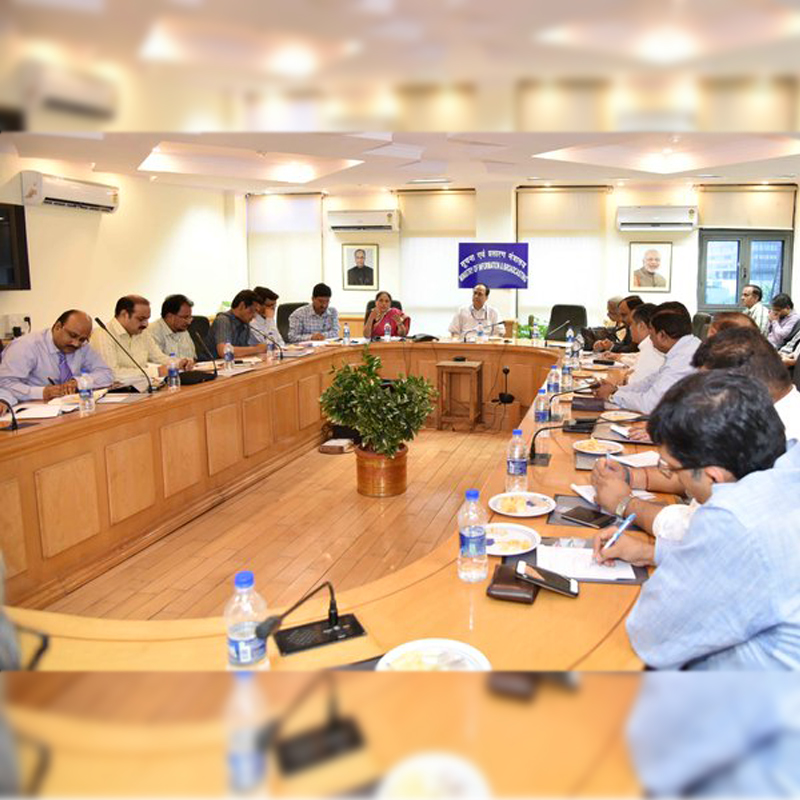
    NEW DELHI: With consumers and service providers still to get a full experience of digital addressable systems and the various rules relating to it, an Open House Discussion has been organized by the the Telecom Regulatory Authority of India late this week on Quality of Services in Digital Addressable Systems and Consumer Protection.

    Earlier in mid-June, Trai had extended its last date for receiving comments on its Consultation Paper of 18 May 2016 on the issue on the subject to 1 July with counter-comments by 8 July 2016.

    The Discussion is in Delhi on the afternoon of 28 July at the India International Centre.

    As the country moves towards the final phase of digital addressable systems, TRAI wanted to know if there should be a uniform regulatory framework for quality of service and consumer protection across all digital addressable platforms.

    TRAI had also sought opinion of stakeholders on the standards and essential technical parameters for ensuring good quality of service for Digital Cable TV, Direct-to-home (DTH), head-end in the sky (HITS) and Internet Protocol Television (IPTV).

    In over fifty questions posed to stakeholders, it wanted to know the broad contours for Quality of Service Regulatory Framework for digital addressable systems.

    The regulator had asked if timelines relating to various activities to get new connection should be left to the Distribution Platform Operators (DPOs) to be transparently declared to the subscribers. What should be the time limits for various activities including consumer application form and installation and activation of service for new connections, it wanted to know.

    Referring to a query often asked by stakeholders, the regulator wanted to know if the minimum essential information to be included in the CAF should be mandated through regulations to maintain basic uniformity. Should the use of e-CAF be facilitated, encouraged or mandated, it had asked.


  • Open House Discussion by TRAI on Quality of Service in DAS

    Open House Discussion by TRAI on Quality of Service in DAS

    NEW DELHI: With consumers and service providers still to get a full experience of digital addressable systems and the various rules relating to it, an Open House Discussion has been organized by the the Telecom Regulatory Authority of India late this week on Quality of Services in Digital Addressable Systems and Consumer Protection.

    Earlier in mid-June, Trai had extended its last date for receiving comments on its Consultation Paper of 18 May 2016 on the issue on the subject to 1 July with counter-comments by 8 July 2016.

    The Discussion is in Delhi on the afternoon of 28 July at the India International Centre.

    As the country moves towards the final phase of digital addressable systems, TRAI wanted to know if there should be a uniform regulatory framework for quality of service and consumer protection across all digital addressable platforms.

    TRAI had also sought opinion of stakeholders on the standards and essential technical parameters for ensuring good quality of service for Digital Cable TV, Direct-to-home (DTH), head-end in the sky (HITS) and Internet Protocol Television (IPTV).

    In over fifty questions posed to stakeholders, it wanted to know the broad contours for Quality of Service Regulatory Framework for digital addressable systems.

    The regulator had asked if timelines relating to various activities to get new connection should be left to the Distribution Platform Operators (DPOs) to be transparently declared to the subscribers. What should be the time limits for various activities including consumer application form and installation and activation of service for new connections, it wanted to know.

    Referring to a query often asked by stakeholders, the regulator wanted to know if the minimum essential information to be included in the CAF should be mandated through regulations to maintain basic uniformity. Should the use of e-CAF be facilitated, encouraged or mandated, it had asked.
  • Unlicensed Pune cable TV operators get warning from entertainment department

    Unlicensed Pune cable TV operators get warning from entertainment department

    Mumbai: Pune city authorities are cracking the whip on errant cable TV operators. According to reports, the Maharashtra state entertainment department has warned cable operators to renew their annual licences with the post office within the next month. Failing this, they would be penalized and face severe action.

    The metro has about 1,000 cable TV operators serving about 500,000 subscribers. About 40 per cent of these have not renewed their licences despite being told by the authorities to do so. One of the reasons they have been delaying this, says observers, is their reluctance to pay entertainment tax.

    The additional district collector met up with the cable TV operators in Pune and its surrounding areas, following which local officers decided to get tough with them.

    Pune falls in the DAS area and cable TV operators have been mandated by government order to deliver cable TV signals to subscribers through a set top box, which would allow them to decide which channels they would like to watch. For this they would have to maintain, CAF forms as well as a list of channels that subscribers are signing up for.

  • Unlicensed Pune cable TV operators get warning from entertainment department

    Unlicensed Pune cable TV operators get warning from entertainment department

    Mumbai: Pune city authorities are cracking the whip on errant cable TV operators. According to reports, the Maharashtra state entertainment department has warned cable operators to renew their annual licences with the post office within the next month. Failing this, they would be penalized and face severe action.

    The metro has about 1,000 cable TV operators serving about 500,000 subscribers. About 40 per cent of these have not renewed their licences despite being told by the authorities to do so. One of the reasons they have been delaying this, says observers, is their reluctance to pay entertainment tax.

    The additional district collector met up with the cable TV operators in Pune and its surrounding areas, following which local officers decided to get tough with them.

    Pune falls in the DAS area and cable TV operators have been mandated by government order to deliver cable TV signals to subscribers through a set top box, which would allow them to decide which channels they would like to watch. For this they would have to maintain, CAF forms as well as a list of channels that subscribers are signing up for.

  • DAS Phase III cases caught up in a logjam courtesy Delhi High Court

    DAS Phase III cases caught up in a logjam courtesy Delhi High Court

    NEW DELHI: With the Delhi High Court yet to decide on the date of hearing all cases seeking extension of Phase III of digital addressable system passed on to it by the Supreme Court, two more cases – before the Telecom Disputes Settlement and Appellate Tribunal – have been put off again.

    Petitions by the Rohtak Cable Operator Association, Haryana, and Rewari Cable Operators Association against Siti Cable Networks have been put off to 11 August by member B B Srivastava.

    In the previous hearing on 6 May 2016, the cases had been put off in view of their pendency before the Punjab and Haryana High Court.

    However, the Tribunal said that in view of the directive by the Punjab and Haryana High Court that SitiCable will not interfere with the operators continuing to transmit in analogue, the previous order of 6 May 2016 of the Tribunal will continue.

    In its order on 11 July 2016, the Tribunal noted the statement by counsel for the cable operator organizations that the matter was now being transferred to the Delhi High Court after the order of the Supreme Court but “is yet to be listed.”

    But the Tribunal said the LCOs will continue to pay the monthly subscription fee as per the previous agreement and on thebasis of invoices raised by the respondent in order to receive signals.

    The registry of the Supreme Court has sent to all the concerned High Courts the directive of the apex court of 1 April for transfer of all cases seeking extension to digital addressable system for cable television to Delhi High Court with a view to avoid conflicting decisions.’

    A copy of the order was also sent to the Delhi High Court and it was now up to that Court to fix a date, Supreme Court officials said.

    The officials said that the attempt would be to first receive from the various High Courts the papers relating to the petitions, which almost all had pleaded shortage of set top boxes for seeking extension or stay of DAS which became effective 1 January 2016.

    The apex court had accepted the plea of the Central Government that ‘it would be just and proper for this Court to withdraw allthose cases pending in different High Courts and transfer the same to the Delhi High Court.’

    Ironically, the Information and Broadcasting Ministry had on 12 January 2016 written to its counsel in Punjab and Hryana High Court that it had understood the Hyderabad order to mean a pan India stay while asking him to defend the case.

    But later, the Ministry sources admitted to indiantelevision.com that there was a misreading of the Bombay High Court directive. The Court had merely refereed to the Kusum Ingots & Alloys Ltd vs the Union of India 2004 case to say that if one High Court gives a stay, another High Court can act in similar fashion if the facts are similar – in this case, shortage of STBs. Thus, they agree that the High Court stay was only confined to Maharashtra and not pan-India.

    Earlier, the Indian Broadcasting Foundation had withdrawn its petition after the Supreme Court said that the order of the Bombay High Court did not imply any pan-India stay.

    The last DAS Task Force meeting on 30 May 2016 was informed that a total of 42 court cases have been filed for extension in the deadline of Phase lll in various courts in the country with the two-month extension by the Telangana & Andhra Pradesh High Courts. Other Courts followed suit in the ground that this order was extendable to other areas. This led to the Centre moving the Supreme Court which passed an order of transfer of all cases for extension filed in various courts and any new cases on similar prayer to the Delhi High Court for adjudication.

    The meeting was also told 17 cases had been transferred by various courts to the Delhi High Court out of which the High Court had dismissed three cases and another three cases were being heard that same day.

  • DAS Phase III cases caught up in a logjam courtesy Delhi High Court

    DAS Phase III cases caught up in a logjam courtesy Delhi High Court

    NEW DELHI: With the Delhi High Court yet to decide on the date of hearing all cases seeking extension of Phase III of digital addressable system passed on to it by the Supreme Court, two more cases – before the Telecom Disputes Settlement and Appellate Tribunal – have been put off again.

    Petitions by the Rohtak Cable Operator Association, Haryana, and Rewari Cable Operators Association against Siti Cable Networks have been put off to 11 August by member B B Srivastava.

    In the previous hearing on 6 May 2016, the cases had been put off in view of their pendency before the Punjab and Haryana High Court.

    However, the Tribunal said that in view of the directive by the Punjab and Haryana High Court that SitiCable will not interfere with the operators continuing to transmit in analogue, the previous order of 6 May 2016 of the Tribunal will continue.

    In its order on 11 July 2016, the Tribunal noted the statement by counsel for the cable operator organizations that the matter was now being transferred to the Delhi High Court after the order of the Supreme Court but “is yet to be listed.”

    But the Tribunal said the LCOs will continue to pay the monthly subscription fee as per the previous agreement and on thebasis of invoices raised by the respondent in order to receive signals.

    The registry of the Supreme Court has sent to all the concerned High Courts the directive of the apex court of 1 April for transfer of all cases seeking extension to digital addressable system for cable television to Delhi High Court with a view to avoid conflicting decisions.’

    A copy of the order was also sent to the Delhi High Court and it was now up to that Court to fix a date, Supreme Court officials said.

    The officials said that the attempt would be to first receive from the various High Courts the papers relating to the petitions, which almost all had pleaded shortage of set top boxes for seeking extension or stay of DAS which became effective 1 January 2016.

    The apex court had accepted the plea of the Central Government that ‘it would be just and proper for this Court to withdraw allthose cases pending in different High Courts and transfer the same to the Delhi High Court.’

    Ironically, the Information and Broadcasting Ministry had on 12 January 2016 written to its counsel in Punjab and Hryana High Court that it had understood the Hyderabad order to mean a pan India stay while asking him to defend the case.

    But later, the Ministry sources admitted to indiantelevision.com that there was a misreading of the Bombay High Court directive. The Court had merely refereed to the Kusum Ingots & Alloys Ltd vs the Union of India 2004 case to say that if one High Court gives a stay, another High Court can act in similar fashion if the facts are similar – in this case, shortage of STBs. Thus, they agree that the High Court stay was only confined to Maharashtra and not pan-India.

    Earlier, the Indian Broadcasting Foundation had withdrawn its petition after the Supreme Court said that the order of the Bombay High Court did not imply any pan-India stay.

    The last DAS Task Force meeting on 30 May 2016 was informed that a total of 42 court cases have been filed for extension in the deadline of Phase lll in various courts in the country with the two-month extension by the Telangana & Andhra Pradesh High Courts. Other Courts followed suit in the ground that this order was extendable to other areas. This led to the Centre moving the Supreme Court which passed an order of transfer of all cases for extension filed in various courts and any new cases on similar prayer to the Delhi High Court for adjudication.

    The meeting was also told 17 cases had been transferred by various courts to the Delhi High Court out of which the High Court had dismissed three cases and another three cases were being heard that same day.

  • TDSAT directs Star India to reconnect signals to Ortel on receipt of half of due amount

    TDSAT directs Star India to reconnect signals to Ortel on receipt of half of due amount

    NEW DELHI: Star India was directed by the Telecom Disputes Settlement and Appellate Tribunal to reconnect the signals to Ortel Communications within 24 hours as Ortel counsel gave cheques for Rs 3,34,93,967 to Star India counsel Rajsekhar Rao.

    The petition had been filed against disconnection of signals by Star with effect from 2 July 2016 in view of various notices issued under relevant regulations for both DAS and non-DAS areas.

    In his order, member B B Srivastava on 11 July 2016 said Ortel was desirous to have the interconnect agreement renewed but on RIO terms of Star.

    The cheques submitted were for 50% of the outstanding amount till June 2016 (Rs 6,77,71,172). The balance amount of Rs.342,77,205 as well as the installment agreed to be paid by 31 July 2016, will be paid by 25 July 2016 and 31 July 2016 respectively. The petitioner would a lso adhere to the payment schedule as agreed to earlier.

    The petitioner’s desire to have a fresh agreement on RIO basis for DAS areas would be on the basis of RIO and for non-DAS areas, the two sides will negotiate and sign an appropriate interconnect agreement as per TRAI Regulations within two weeks.

    In the meanwhile, the terms and conditions of the old agreement would continue to govern the relationship between the petitioner and the respondent and the petitioner will abide by the payment schedule and other terms of the previous agreement.

    Ortel meanwhile denied any charges of piracy for which FIRs had been lodged.

    Earlier, the petitioner had come before the Tribunal against these notices and when the matter was taken up on 27 May 2016, the petitioner submitted that the parties had arrived at an agreement and therefore, it withdrew the petition.

    The mutual agreement arrived at between the parties had been documented in the form of emails dated 26 May 2016 and a communication to the petitioner on 17 June 2016.

    However, the matter came up again in view of the amount of Rs 6,77,71,172 of which half was paid by chequest which the Bank refused to accept as there was “stop payment” instructions by the petitioner to the bank in view of the disconnection.

    (Updated on 20 July 2016 6:25 pm)

  • TDSAT directs Star India to reconnect signals to Ortel on receipt of half of due amount

    TDSAT directs Star India to reconnect signals to Ortel on receipt of half of due amount

    NEW DELHI: Star India was directed by the Telecom Disputes Settlement and Appellate Tribunal to reconnect the signals to Ortel Communications within 24 hours as Ortel counsel gave cheques for Rs 3,34,93,967 to Star India counsel Rajsekhar Rao.

    The petition had been filed against disconnection of signals by Star with effect from 2 July 2016 in view of various notices issued under relevant regulations for both DAS and non-DAS areas.

    In his order, member B B Srivastava on 11 July 2016 said Ortel was desirous to have the interconnect agreement renewed but on RIO terms of Star.

    The cheques submitted were for 50% of the outstanding amount till June 2016 (Rs 6,77,71,172). The balance amount of Rs.342,77,205 as well as the installment agreed to be paid by 31 July 2016, will be paid by 25 July 2016 and 31 July 2016 respectively. The petitioner would a lso adhere to the payment schedule as agreed to earlier.

    The petitioner’s desire to have a fresh agreement on RIO basis for DAS areas would be on the basis of RIO and for non-DAS areas, the two sides will negotiate and sign an appropriate interconnect agreement as per TRAI Regulations within two weeks.

    In the meanwhile, the terms and conditions of the old agreement would continue to govern the relationship between the petitioner and the respondent and the petitioner will abide by the payment schedule and other terms of the previous agreement.

    Ortel meanwhile denied any charges of piracy for which FIRs had been lodged.

    Earlier, the petitioner had come before the Tribunal against these notices and when the matter was taken up on 27 May 2016, the petitioner submitted that the parties had arrived at an agreement and therefore, it withdrew the petition.

    The mutual agreement arrived at between the parties had been documented in the form of emails dated 26 May 2016 and a communication to the petitioner on 17 June 2016.

    However, the matter came up again in view of the amount of Rs 6,77,71,172 of which half was paid by chequest which the Bank refused to accept as there was “stop payment” instructions by the petitioner to the bank in view of the disconnection.

    (Updated on 20 July 2016 6:25 pm)

  • Open House on Interconnect agreements aims at expediting framework

    Open House on Interconnect agreements aims at expediting framework

    NEW DELHI: Picking up momentum even as the deadline for the final phase of digital addressable system is less than six month away, an Open House discussion is being held on the Telecom Regulatory Authority of India’s consultation paper on Interconnection framework for Broadcasting TV Services distributed through DAS.

    This meeting, being held in Delhi on 13 July, comes just over a month after an earlier meeting on Register of Interconnection Agreements dated26May, which had thrown up diverse opinions and led to extension of the date for receiving comments of stakeholders to 10 June on its Consultation Paper.

    In the paper issued on 4 May on Interconnection framework for Broadcasting TV Services, TRAI noted that the exceptional growth of the number of TV channels combined with the inherent limitations of analogue cable TV systems had posed several challenges, mainly due to capacity constraints and non-addressable nature of the network. The evolution of technology paved way for bringing about digitization with addressability in the cable TV sector. For implementation of digital addressable systems in the cable TV sector, the Central Government notified the Cable Television Networks (Amendment) Rules 2012 on 28 April 2012. Immediately after the notification of the Cable TV Rules 2012, the Authority notified the Telecommunication (Broadcasting and Cable Services) Interconnection (Digital Addressable Cable Television Systems) Regulations 2012 on 30th April 2012.

    These regulations are specifically applicable for DAS whereas the Interconnection Regulations 2004 were applicable for non-addressable cable TV systems and also for other addressable systems such as DTH, HITS and IPTV. The basic features of the Interconnection Regulations 2012 are similar to the basic features of the Interconnection Regulations 2004.

    With implementations of DAS, there has been a marked increase in the number of subscribers receiving TV channels through addressable platforms. The number of subscribers being served by the DTH services has also gone up significantly. HITS platforms are also expected to make fast penetration in making available digital broadcasting TV services in the country. Now majority of the subscribers in India are receiving TV signals through digital addressable systems.

    TRAI said the interconnection regulations ought to evolve to keep pace with new developments in the sector, while sustaining the fundamental underlying principles of non-discrimination and level playing field. The commercial parameters for revenue share between service providers primarily depend upon the number of subscribers subscribing to channels/ bouquets. The numbers of subscribers in each type of addressable platform are verifiable. To ensure non-discrimination and level playing field amongst the distributors using different digital addressable systems such as DTH, IPTV, HITS, and DAS, it would be in the fitness of things that all these service providers are regulated using the common regulatory framework.

    Therefore, the consultation paper was aimed at providing a regulatory framework for interconnection that ensures a level playing field to all types of DAS systems. The consultation paper also discussed issues that the Authority noticed and plausible ways of dealing with those issues in respect of digital addressable systems. The review of the existing regulatory framework is being done with the objective of fostering competition, increase trust amongst service providers, ease of doing business, reduce disputes, improve transparency and efficiency, promote sustainable, orderly growth and effective choice to consumers.

  • Open House on Interconnect agreements aims at expediting framework

    Open House on Interconnect agreements aims at expediting framework

    NEW DELHI: Picking up momentum even as the deadline for the final phase of digital addressable system is less than six month away, an Open House discussion is being held on the Telecom Regulatory Authority of India’s consultation paper on Interconnection framework for Broadcasting TV Services distributed through DAS.

    This meeting, being held in Delhi on 13 July, comes just over a month after an earlier meeting on Register of Interconnection Agreements dated26May, which had thrown up diverse opinions and led to extension of the date for receiving comments of stakeholders to 10 June on its Consultation Paper.

    In the paper issued on 4 May on Interconnection framework for Broadcasting TV Services, TRAI noted that the exceptional growth of the number of TV channels combined with the inherent limitations of analogue cable TV systems had posed several challenges, mainly due to capacity constraints and non-addressable nature of the network. The evolution of technology paved way for bringing about digitization with addressability in the cable TV sector. For implementation of digital addressable systems in the cable TV sector, the Central Government notified the Cable Television Networks (Amendment) Rules 2012 on 28 April 2012. Immediately after the notification of the Cable TV Rules 2012, the Authority notified the Telecommunication (Broadcasting and Cable Services) Interconnection (Digital Addressable Cable Television Systems) Regulations 2012 on 30th April 2012.

    These regulations are specifically applicable for DAS whereas the Interconnection Regulations 2004 were applicable for non-addressable cable TV systems and also for other addressable systems such as DTH, HITS and IPTV. The basic features of the Interconnection Regulations 2012 are similar to the basic features of the Interconnection Regulations 2004.

    With implementations of DAS, there has been a marked increase in the number of subscribers receiving TV channels through addressable platforms. The number of subscribers being served by the DTH services has also gone up significantly. HITS platforms are also expected to make fast penetration in making available digital broadcasting TV services in the country. Now majority of the subscribers in India are receiving TV signals through digital addressable systems.

    TRAI said the interconnection regulations ought to evolve to keep pace with new developments in the sector, while sustaining the fundamental underlying principles of non-discrimination and level playing field. The commercial parameters for revenue share between service providers primarily depend upon the number of subscribers subscribing to channels/ bouquets. The numbers of subscribers in each type of addressable platform are verifiable. To ensure non-discrimination and level playing field amongst the distributors using different digital addressable systems such as DTH, IPTV, HITS, and DAS, it would be in the fitness of things that all these service providers are regulated using the common regulatory framework.

    Therefore, the consultation paper was aimed at providing a regulatory framework for interconnection that ensures a level playing field to all types of DAS systems. The consultation paper also discussed issues that the Authority noticed and plausible ways of dealing with those issues in respect of digital addressable systems. The review of the existing regulatory framework is being done with the objective of fostering competition, increase trust amongst service providers, ease of doing business, reduce disputes, improve transparency and efficiency, promote sustainable, orderly growth and effective choice to consumers.