Tag: DAS Phase III

  • Karnataka LCOs approach High Court to seek stay of DAS Phase III

    Karnataka LCOs approach High Court to seek stay of DAS Phase III

    NEW DELHI: Having a ripple effect of sorts after Telangana, Andhra Pradesh, Sikkim, Maharashtra, Odhisa and Guwahati, now it looks like Karnataka is all set to follow suit to get a court extension on the Digital Addressable System (DAS) Phase III deadline.


    On 8 January, the Karnataka High Court is all set to hear a petition filed by the Karnataka Cable TV Operators Association for a stay on implementation of Phase III in view of the low seeding of set top boxes (STBs), problems with interconnect agreements and other issues.


    As was reported earlier by Indiantelevision.com, the High Courts have already given extensions for various periods in the states of Andhra Pradesh, Assam, Maharashtra, Orissa, Sikkim, and Telangana, apart from Tamil Nadu where prolonged legal cases have been pending since Phase I.


    Meanwhile, senior officials in the Information and Broadcasting Ministry today met legal experts to consider options before it to counter these orders even as sources in the Ministry told this website that the orders given so far will be implemented until a counter action is found.


    One of the option before the Government is to ask the Supreme Court to bar any challenge to Phase III in various High Courts as this is a policy issue and the apex court had itself ruled earlier that it would not interfere in matters of policy. The second option is to oppose each case in the respective High Court, which is being done.


    While insisting that there will be no extension of the switch off of analogue signals beyond 31 December, 2015, the Ministry is also making a more realistic assessment of the seeding of STBs.


    Meanwhile, the Telecom Regulatory Authority of India (TRAI) is awaiting counter suggestions before it comes out with a model interconnect agreement by mid-January.

  • Guwahati gets 60 days extension in DAS Phase III

    Guwahati gets 60 days extension in DAS Phase III

    MUMBAI: The tussle between the judiciary and the Ministry of Information and Broadcasting (MIB) for the Digital Addressable System (DAS) Phase III deadline continues even as the official deadline of 31 December, 2015 has passed by.

    After Telangana, Andhra Pradesh, Sikkim, Maharashtra and Odhisa, now Kamrup District under which comes Guwahati has received an extension of 60 days to implement DAS.

    The office of District Magistrate, Kamrup Metropolitan District: Guwahati after perusing the letter submitted by Greater Guwahati Cable TV Operators Association general secretary Shwarupananda Bharali, in the interest of general public and the cable TV viewers, has extended the transmission of the analogue signals for a period of 60 days.   

    A cable operator on condition of anonymity informs Indiantelevision.com that Kamrup has over three lakh Phase III subscribers and the seeding process is very slow. He further adds, “The set top box (STB) manufacturers are not taking orders now. They are asking us to wait for at least three to four days more. After they receive the order, they will take at least 20 more days to deliver. Hence we welcome the honourable DC’s decision and hope that brings some respite.”   

    The analogue signals are restored now in the vicinity but were totally blacked out on 1 – 2 January, 2016. “There were many cases of public outrage, physical harassment but thankfully no report of loss of life or property were received,” added another cable operator.

  • Odhisa HC recognises Ortel’s representation on DAS Phase III; urges MIB to give it two months

    Odhisa HC recognises Ortel’s representation on DAS Phase III; urges MIB to give it two months

    MUMBAI: Is another state joining the ranks of those who have asked for – and have been given – time to be able to implement digitisation in Digital Addressable System (DAS) Phase III areas? If initial indications are to be believed, the answer is yes. According to our sources, the Odhisa High Court has directed the Ministry of Information and Broadcasting (MIB) to act on the representation given by Last Mile Owner (LMO) Ortel Communications.  
     

    The LMO had presented various teething issues relating to digitisation, which were leading to delays in meeting the deadline date in Phase III areas, to the MIB. But the ministry, apparently ignored Ortel’s representations. Following which the company approached the Odhisa High Court. 


    “We are totally in favor of digitisation and are always ready to support it in every possible way. Our petition is not against DAS; our concern is the unavailability of various important aspects, which is proving to be a handicap for us,” asserts a senior company official.


    Shortage of set top boxes (STBs) was the main concern in the submitted representation, which also had consumer resistance and capital crisis in it, among others. 

    “The court recognised the STB drought and has directed the MIB to address the issue in two months’ time. Meanwhile, the court has also directed that no action should to be taken against Ortel before the representation is addressed,” a source present in the court tells Indiantelevision.com.


    “This direction of the court is for Ortel communications and its operations, and not an overall Odhisa statement,” clarified the source in the court.
     

    But given the strong hold Ortel has over Odhisa as the main provider of cable TV there, it probably means an extension of the digitisation deadline in the state, say industry sources. 
     

    Also read: DAS Phase III stayed in 5 states including Maharashtra

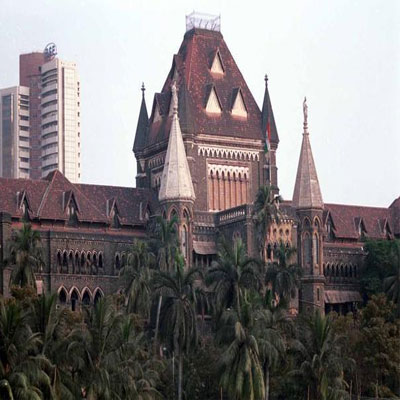
  • DAS Phase III stayed in 5 states including Maharashtra as Bombay HC issues restraining order

    DAS Phase III stayed in 5 states including Maharashtra as Bombay HC issues restraining order

    NEW DELHI: Maharashtra has become the fifth state to join the group of states, which have obtained a High Court restraint on the implementation of digital addressable system (DAS) Phase III.


    The Bombay High Court cited a Supreme Court judgment and noted that a stay granted by a high court on a central notification in one state would be applicable in other states as well.


    The Hyderabad High Court and the Sikkim High Court have already granted stay on implementation of DAS Phase III primarily on the ground of shortage of set top boxes (STBs). In addition, the implementation of DAS in Tamil Nadu remains stayed after a bunch of petitions were admitted from Phase I onwards by the Madras High Court.


    The Hyderabad stay is for eight weeks in both Andhra Pradesh and Telangana, and the Sikkim stay is till 28 March, which is the next date of hearing. 


    Justice R D Dhanuka of the Bombay High Court said the Court will hear the matter on 1 February and gave the Government time to file its reply.


    Citing shortage of seeding of STBs as well as problems in interconnect agreements (ICA), petitioner Nashik Zilla Cable Operator Association (NZCOA) presented copies of the stay orders by other High Courts. Other petitioners were City Cable Operator Association of Nashik and Sai Big Star Welfare Association of Jogeshwari, Mumbai.


    Legal experts told Indiantelevision.com that while the Bombay High Court could use the precedent of other courts and direct a stay, this would only apply to areas under its jurisdiction and not pan-India. 


    Earlier on 23 December, 2015 a bench of the same Court had refused to extend the deadline and held that interim agreements could be entered into until the Telecom Regulatory Authority of India (TRAI) comes out with a model ICA. 


    TRAI has already issued a Consultation Paper on the subject and hopes to finalise a model ICA by mid-January, TRAI sources told this website.


    The extension of DAS does not augur well for the Information and Broadcasting Ministry, which may see a catapulting of such cases as reports pour of just over 50 per cent of seeding of STBs. 


    In most cases, the Courts turned down a plea by TRAI to be impleaded though it was permitted to file applications for this purpose. 


    The directive by the Hyderabad High Court was notable in that Justice Vilas V Afzalpurkar went against an order given by a division bench of which he was a member in the same court relating to Phase III on 20 August, 2013.


    As reported earlier, the Maharashtra Cable Operators Federation had also expressed difficulties in the 13th Task Force meeting held on the eve of the switch-off and had in fact said that seeding pan-India was less than 50 per cent even as the government claimed 76 per cent seeding and said the percentage achievement was 86.25 if Tamil Nadu that has some legal and other issues is excluded. The meeting was told there were only 405 zero seeding areas till the last report.


    The first phase of digitisation covered four metro, Mumbai, New Delhi, Kolkata and Chennai. In the second phase 38 cities were covered with population more than one million. About 630 districts and 7709 urban areas will be covered in DAS Phase III aimed at all urban areas while the fourth phase by 31 December, 2016, this year will cover the rest of the country.

  • DAS Phase III implementation extended by 2 months in AP, Telangana; Indore petition dismissed

    DAS Phase III implementation extended by 2 months in AP, Telangana; Indore petition dismissed

    NEW DELHI: Multi system operators (MSOs) in both Telangana and Andhra Pradesh got a reprieve of eight weeks from implementing the Digital Addressable System (DAS) in Phase III towns and cities following stay orders issued by the Hyderabad High Court.

    While the Federation of Telangana MSOs got the relief yesterday (30 December), the MSO Welfare Association of Andhra Pradesh received the orders today (31 December).

    Issuing notice to the Information and Broadcasting Ministry, the judge also turned down an oral plea by the Telecom Regulatory Authority of India (TRAI) for being impleaded in the case. He said the regulator was free to file an application in this regard.

    Initially, Justice Vilas V Afzalpurkar recalled an order granted by a bench of which he was a part on 20 August, 2013 with regard to DAS Phase II and noted that all the issues being raised by counsel C Ramachandra Raju – who represented both parties – had been raised at that time and should have been dealt with by now.

    However, counsel Raju said statutory powers always come with corresponding responsibilities. He said the government was meant to give facilities to help people and not create more problems by enforcing a deadline without ensuring adequate seeding of set top boxes (STBs). Furthermore, he said the 2013 case was filed as a Public Interest Litigation (PIL) by an outside party whereas these petitions have been filed by the major stakeholders – the MSOs. In any case, Raju pointed out that no point of law had been decided in the 2013 case and so that case could not be taken as a precedent.

    He said that even the Chief Secretary of Andhra Pradesh had written to the Centre to say that it was not possible to meet the deadline as STBs were inadequate.

    The judge also heard Assistant Solicitor General B Narayana Reddy on behalf of the government before directing it to file a counter affidavit within eight weeks.

    The Central Government had issued its directive about Phase III on 11 September, 2014.

    MSO Kishna Mohan, who is adviser to the Federation of Telangana MSOs, told Indiantelevision.com that under Phase III, 168 towns with 2.6 million collections were to be covered in Telangana and 178 towns with 3.5 million collections in Andhra Pradesh.

    The 13th Task Force meeting held yesterday was apprised of these cases and of the case in Indore was to be heard today, but assured all stakeholders that the Government will follow the directives of the Courts but will not extend the date beyond today unless directed by any Court to do so.

    Meanwhile, it is learnt that a similar petition by Indore-based MSO Om Systems in the Madhya Pradesh High Court seeking a stay on digitisation in Phase III areas of Madhya Pradesh has been dismissed.

    Earlier, the Bombay High Court had declined to stay the deadline but said that interim stop gap agreements could be signed while asking the TRAI to come out with a model interconnect agreement at the earliest.

  • Broadcasters asked to step up publicity, even as Govt rules out extension of DAS Phase III

    Broadcasters asked to step up publicity, even as Govt rules out extension of DAS Phase III

    NEW DELHI: Reiterating that there was no question of an extension of the 31 December deadline for switching off analogue signals, the Task Force of the Information and Broadcasting Ministry today urged broadcasters to step up their publicity in preparation for the final phase in December 2016.

    The stakeholders were told that reports indicated that over 80 per cent of seeding of set top boxes (STBs) in all remaining urban areas that are to be covered in the current phase.

    Broadcasters were also encouraged to come up with newer formats of their appeals to viewers on channels that would catch the attention of the target viewers.

    The Task Force chaired by Special Secretary J S Mathur with the presence of Joint Secretary (Broadcasting) R Jaya was told that there was nothing in law to bar litigants from going to court and it was for the judiciary to deal with these issues.

    At the same time, the government will make all efforts to defend itself in various courts.

    Although the Bombay High Court and some other High Courts have already refused to extend the deadline, the Andhra Pradesh High Court has issued a stay till the next date and the Government said would be replied to. Similarly, a case relating to operators in Indore was coming up for hearing tomorrow (31 December).

    Some participants who did not wish to be named told Indiantelevision.com that a bleak picture was sought to be presented by some participants including the Maharashtra Cable Operators Federation (MCOF) but the Ministry officials answered these queries.

    Similarly, the Ministry turned down the demand by some states for extension of date.

    A clarification was also given to the effect that while MSOs may use a single control room for transmitting DAS signals under Phase III and analogue under Phase IV, they would need IRDs from broadcasters for these signals.

    The Task Force, which expects to release its minutes in a day or two, is also working out the figures of STBs available with direct-to-home (DTH) players that can be used. Clarifications were given with regard to queries by some stakeholders about STBs.

  • Final Task Force meet for DAS Phase III; Govt & TRAI deny any chaos

    Final Task Force meet for DAS Phase III; Govt & TRAI deny any chaos

    NEW DELHI / MUMBAI: The last sunset of 2015 on 31 December will not only end this calendar year but will also mark the sundown on the era of analog signals in Phase III areas of Digital Addressable System (DAS) in India.


    Millions of television households are set to be digitised taking the country one step closer to the ‘Digital India’ vision. The government is adamant that analogue signals will be cut off from 1 January, 2016 for areas covered under the DAS Phase III. In the light of the deadline being merely two days away now, a final Task Force meeting has been convened for tomorrow (30 December, 2015) to take stock of the situation.


    A senior executive in cable fraternity feels that the cut-off of signals can lead to a massive law and order situation on ground and the government should be held responsible for any mishap that takes place. He says, “It’s just a day left and still they don’t know what will happen after that. The analog signals will be cut off; it’s a fair call but what if consumers go and vandalise the cable operator? He will have to undergo serious financial damage. Moreover, that can even trigger a riot. We are dealing with vulnerable areas and the government needs to understand that.”


    Another senior level executive at a national multi system operator (MSO) opines, “Imagine a scenario when 5000 people are watching New Year special programming on various channels and in the midst of it, the signals are cut off! Does digitisation mean harassing the consumer? What have the authorities done to ensure a smooth transition? When a huge road is made, government gives exemption right. We pay toll and then later the amount is taken care of. Why could they not do something similar with cable if they really wanted the digitisation process to be smooth? I fail to understand why we had to do it in phases. We could have done it state-wise too. Overall, I think there is no option but to wait and watch.”


    A source from the Information and Broadcasting Ministry, who did not wish to be named told Indiantelevision.com that both the Telecom Regulatory Authority of India (TRAI) and some High Courts had already said that interconnect agreements (ICA) have to be in place.


    The source further added that enough time had been given to the stakeholders and TRAI had held several meetings with different segments of the stakeholders to iron out differences wherever they existed.


    Reacting to the judgement of the Bombay High Court that stop-gap agreements should be permitted till TRAI issues a format of the kind of ICAs that should be signed, sources said that both the Ministry and TRAI were already working on a formal format for the ICA. The Ministry source said that it would accept the directive of the Bombay High Court since it worked in favour of digitisation.


    Speaking to this website, a TRAI spokesperson said that the regulator had already floated a Consultation Paper for a model ICA for which the last date for comments is 31 December, 2015 and for counter-comments is 7 January, 2016. In view of the urgency, he expected TRAI to come out with its model ICA within a week of receiving all comments.


    When asked about the shortage of set top boxes (STBs) in many areas, the Ministry source said that the actual position would become clear after the Task Force meeting.


    However, reports so far indicate that there was no shortage of STBs though there had been some areas, which could not receive them in time.


    The TRAI official added that MSOs had assured the regulator that there was no shortage of STBs. While there were reports stating that some local cable operators had not received STBs, the spokesperson said that STBs were now available in the open market and any viewer could obtain these readily.


    Denying reports of any chaos in the event of the switch-off of the analogue signals, the Ministry source said that viewers all over the country had been made aware of the deadline through intensive ad campaigns run on television and social media and therefore problems would be minimal with regard to the deadline.


    The TRAI source added that with other options like HITS and DTH including Freedish available, the regulator did not foresee any chaos. In fact, several mobile apps were already offering TV channels live.


    The source conceded that many viewers had taken the open route of subscribing to a private dish operator but said this was obvious in any competitive economy.
  • No delay in DAS Phase III deadline, stop gap agreements allowed till TRAI draws up formal format

    No delay in DAS Phase III deadline, stop gap agreements allowed till TRAI draws up formal format

    NEW DELHI: The Bombay High Court has directed that local cable operators (LCOs) should be allowed to execute draft model standard interconnection agreement as a stop gap arrangement in view of the approaching deadline of Phase III of Digital Addressable System (DAS).

     In an order by Justice V. M. Kanade and Justice Revati Mohite Dere, which came shortly after another judgment by the Court declining to stay the DAS Phase III deadline, it was said that the Registration Authorities will give full cooperation for registration of the agreements. The Court clarified that the parties should execute an agreement but registration of the same may not be done immediately.

     The Court directed the Telecom Regulatory Authority of India (TRAI) to finalise the draft in accordance with the request made by the LCOs and multi system operators (MSOs) by the next date, 4 January “so that in future a standard format of the agreement can be executed between MSOs and LCOs throughout the country.”

     In the petition filed by the Maharashtra Cable Operators Federation (MCOF) against the TRAI and some MSOs, the judges said the agreements to be executed between the parties will be subject to further negotiation, which is going on between the parties and subject to further orders and directions given by the Court in respect of some of the clauses mentioned in the said agreement.

     The Court kept open all other contentions of the petitioner MCOF and the respondents.

     Reiterating that it was not necessary to postpone the deadline of 31 December, the Court said the MSOs will “forthwith supply the Set Top Boxes (STBs) to the local cable operators upon the payment of the costs of the STBs and licence fees as per the agreement.”

     It said MSOs and LCOs will ensure that all the customers will get the STBs in time and “if necessary, they will work overtime – day and night – for supplying these Set Top Boxes before 31 December 2015.”

     The application filed by India Broadcasting Foundation (IBF) to intervene was allowed. MCOF was asked to add IBF as Party Respondents and also supply the copy of the petition and other necessary documents.

     While Mumbai and some other cities of the state have been covered in the first two phases, several cities have been listed for the third phase.

  • DishTV rolls out new subscription pack for DAS Phase III markets

    DishTV rolls out new subscription pack for DAS Phase III markets

    MUMBAI: In an attempt to capture a chunk of analogue cable users in Phase III areas of Digital Addressable System (DAS), direct to home (DTH) company, DishTV is gearing up for an aggressive plan. 


    The company has launched a new subscription package called Dish99 and has also launched a campaign, which is catered to the specific needs of the phase III audience.


    The new subscription package gives users the freedom to choose and make their own monthly pack. Dish99 will give consumers access to 125 channels and services in digital quality and also top it up with a choice of custom-made 17 entertainment add-on packs ranging from Rs 25 – 75 and five regional add-ons for Rs 10 each. 


    Speaking on the same, a DishTV spokesperson said, “TV viewing is ubiquitous and the most affordable means of entertainment in the country. It has always been our endeavour to provide unparalleled and most innovative services to our customers for a unique TV viewing experience. Now, with the deadline of phase III of TV digitisation coming to a close, we aim to capitalise the huge captive user base, which would be switching from analogue cable to digital platform. Dish99 offers the ‘power to create their own pack’ and ensure seamless services with uninterrupted entertainment at cost effective rates to every household in India.”  

     
    To augment the digitisation drive in Phase III, DishTV has introduced a 360 degree multi-media campaign spanning TV, outdoor, radio, digital and online that leverages the power of popular TV celebrities. “This DAS campaign features DishTV’s relatable faces to strike a chord amongst the audience and create awareness about TV digitisation among every household to shift from analog to digital platform,” the spokesperson added.

  • TRAI to meet stakeholders to discuss DAS issues on 18 December

    TRAI to meet stakeholders to discuss DAS issues on 18 December

    NEW DELHI: The Telecom Regulatory Authority of India (TRAI) has called a meeting of stakeholders – primarily broadcasters and multi system operators (MSOs) – on 18 December to sort out any problems relating to agreements in order to ensure a smooth transition to Phase III of Digital Addressable System (DAS) by 31 December, 2015.
     
    This information was given to the 12th DAS Task Force meeting presided over by its chairman and Information and Broadcasting Ministry special secretary J S Mathur this week. Joint Secretary (Broadcasting) R Jaya was also present.
     
    Broadcasters and MSOs were told categorically that there would be no extension of the deadline for Phase III and analogue signals should be switched off from 1 January, 2016 in all urban areas of the country. The final phase covering the rest of India will be completed by 31 December, 2016.
     
    TRAI had earlier asked all stakeholders to apprise it of any problems arising out of finalising agreements amongst various stakeholders.
     
    While Jaya referred to public awareness campaigns carried out by the Ministry, the broadcasters presented a report about the publicity campaigns that they have been carrying on both television and radio.
     
    TRAI also informed the Ministry about the meetings held with stakeholders since the last Task Force meeting on 22 September.