Tag: DAS Phase III

  • SC dismisses as withdrawn IBF petition challenging Bombay HC’s DAS III stay order

    SC dismisses as withdrawn IBF petition challenging Bombay HC’s DAS III stay order

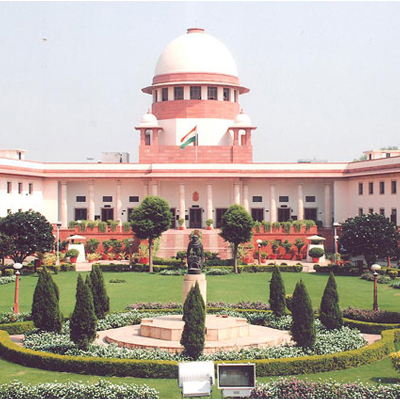
    NEW DELHI: The Supreme Court dismissed as withdrawn, the petition by the Indian Broadcasting Foundation (IBF) challenging the Bombay High Court order on the Digital Addressable System (DAS) Phase III implementation.

    The two-judge bench of the court headed by Justice Jagdish Singh Khehar said that a reading of the Bombay High Court’s order did not necessitate any action by the Supreme Court. The court asked the petitioners the grounds on which the High Court order were being challenged.

    Justice Khehar observed that a reading of Bombay High Court doesn’t imply any pan India’s stay. 

    Senior advocate Dr. Abhishek Manu Singhvi pointed out that other High Courts have also given stay orders in this matter.

    Thereupon, Justice Khehar said in that case IBF should have impugned the other orders and not merely to the Bombay High Court.

    Thereafter, Dr Singhvi withdrew the petition in light of observations made by the judge. It is learnt that a similar petition by the I&B ministry will be up for hearing on 24 February.

    Indiantelevision.com learns that several caveats have been filed by stakeholders who have approached various High Court in the country and got a stay of implementation of DAS Phase III.

  • SC dismisses as withdrawn IBF petition challenging Bombay HC’s DAS III stay order

    SC dismisses as withdrawn IBF petition challenging Bombay HC’s DAS III stay order

    NEW DELHI: The Supreme Court dismissed as withdrawn, the petition by the Indian Broadcasting Foundation (IBF) challenging the Bombay High Court order on the Digital Addressable System (DAS) Phase III implementation.

    The two-judge bench of the court headed by Justice Jagdish Singh Khehar said that a reading of the Bombay High Court’s order did not necessitate any action by the Supreme Court. The court asked the petitioners the grounds on which the High Court order were being challenged.

    Justice Khehar observed that a reading of Bombay High Court doesn’t imply any pan India’s stay. 

    Senior advocate Dr. Abhishek Manu Singhvi pointed out that other High Courts have also given stay orders in this matter.

    Thereupon, Justice Khehar said in that case IBF should have impugned the other orders and not merely to the Bombay High Court.

    Thereafter, Dr Singhvi withdrew the petition in light of observations made by the judge. It is learnt that a similar petition by the I&B ministry will be up for hearing on 24 February.

    Indiantelevision.com learns that several caveats have been filed by stakeholders who have approached various High Court in the country and got a stay of implementation of DAS Phase III.

  • Allahabad HC accepts Govt’s view to not press on DAS Phase III

    Allahabad HC accepts Govt’s view to not press on DAS Phase III

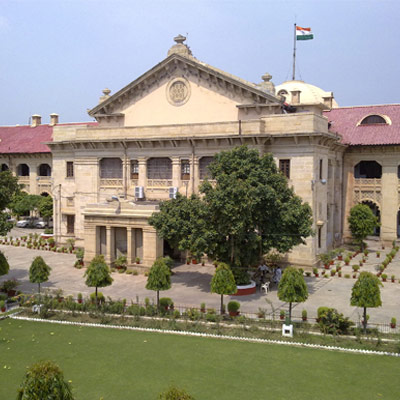
    NEW DELHI: Taking note of the Government position that “it will not press for requirement of having a set top box as of now,” the Allahabad High Court has put off to 28 January, a petition by the Allahabad Cable TV Operators Welfare Society seeking extension of the deadline of implementation of Phase III of digital addressable system (DAS).


    Justice Dilip Gupta and Justice Mukhtar Ahmad in their order said they did not feel the need of any interim order at this stage.


    The Court took note of the letter from an under secretary in the Information and Broadcasting Ministry citing that according to legal opinion, the extension order issued by the Bombay High Court was valid for the entire country.


    The letter was written to Assistant Solicitor General Chetan Mittal with regard to a similar case in the Punjab and Haryana High Court, which was then dismissed as infructuous.  


    Counsel Vivek Singla had told the Punjab and Haryana High Court that “the Ministry of Information and Broadcasting, Government of India has decided not to press the requirement of having a STB as for now till the decision of the cases, which are pending before various other Honourable High Courts.”


    The Ministry had also sent to Mittal a detailed note on the issue, apart from orders by the Hyderabad and Bombay High Courts.


    The Bombay High Court had relied on the Supreme Court order in the Kusum Ingots and Allous Ltd case where the apex Court had said that a High Court could give an order similar to that given by other High Courts if the circumstances were similar.


    The matter has already been stayed by other High Courts including Sikkim, Odisha, Chhattisgarh for the entire state, and for individual local cable operators in Karnataka and Kerala on the common plea that there was acute shortage in seeding of STBs.


    However, Ministry secretary Sunil Arora had told Indiantelevision.com earlier that the Centre would be moving the Supreme Court in this matter. Ministry sources said that the petition in the apex Court was likely to be an appeal against one High Court with an application that all other matters may also be heard simultaneously.

  • Allahabad HC accepts Govt’s view to not press on DAS Phase III

    Allahabad HC accepts Govt’s view to not press on DAS Phase III

    NEW DELHI: Taking note of the Government position that “it will not press for requirement of having a set top box as of now,” the Allahabad High Court has put off to 28 January, a petition by the Allahabad Cable TV Operators Welfare Society seeking extension of the deadline of implementation of Phase III of digital addressable system (DAS).


    Justice Dilip Gupta and Justice Mukhtar Ahmad in their order said they did not feel the need of any interim order at this stage.


    The Court took note of the letter from an under secretary in the Information and Broadcasting Ministry citing that according to legal opinion, the extension order issued by the Bombay High Court was valid for the entire country.


    The letter was written to Assistant Solicitor General Chetan Mittal with regard to a similar case in the Punjab and Haryana High Court, which was then dismissed as infructuous.  


    Counsel Vivek Singla had told the Punjab and Haryana High Court that “the Ministry of Information and Broadcasting, Government of India has decided not to press the requirement of having a STB as for now till the decision of the cases, which are pending before various other Honourable High Courts.”


    The Ministry had also sent to Mittal a detailed note on the issue, apart from orders by the Hyderabad and Bombay High Courts.


    The Bombay High Court had relied on the Supreme Court order in the Kusum Ingots and Allous Ltd case where the apex Court had said that a High Court could give an order similar to that given by other High Courts if the circumstances were similar.


    The matter has already been stayed by other High Courts including Sikkim, Odisha, Chhattisgarh for the entire state, and for individual local cable operators in Karnataka and Kerala on the common plea that there was acute shortage in seeding of STBs.


    However, Ministry secretary Sunil Arora had told Indiantelevision.com earlier that the Centre would be moving the Supreme Court in this matter. Ministry sources said that the petition in the apex Court was likely to be an appeal against one High Court with an application that all other matters may also be heard simultaneously.

  • MIB to not press for DAS Phase III execution till High Courts rule on pending cases

    MIB to not press for DAS Phase III execution till High Courts rule on pending cases

    NEW DELHI: Faced by various High Courts extending the deadline of implementation of Phase III of Digital Addressable System (DAS), the Information and Broadcasting Ministry has told the Punjab and Haryana High Court that “it will not press for requirement of having a set top box (STB) as of now.”


    In view of this, Justice Rakesh Kumar Jain dismissed as infructuous a petition by cable operator Parbobh Rattan seeking extension the ground that there was shortage of STBs.


    Counsel Vivek Singla told the Court that “the Ministry of Information and Broadcasting, Government of India has decided not to press the requirement of having a STB as for now till the decision of the cases, which are pending before various other Honourable High Courts.”


    Earlier, Assistant Solicitor General Chetan Mittal was informed through a letter by an under secretary, Anil Kumar, that legal opinion was clear that the interpretation of the Bombay High Court was clear that the earlier orders of the Hyderabad High Court relating to Andhra Pradesh and Telangana applied to the entire country.


    This was stated in the letter asking Mittal to defend the petition before the Punjab and Haryana High Court and telling him that there was very little time for filing a counter-affidavit on the issue.


    The Ministry also sent Mittal a detailed note on the issue, apart from orders by the Hyderabad and Bombay High Courts.


    The Bombay High Court had relied on the Supreme Court order in the Kusum Ingots and Allous Ltd case where the apex Court had said that a High Court could give an order similar to that given by other High Courts if the circumstances were similar.


    In this case, all the cases relate to shortage in seeding of STBs.


    However, Ministry Secretary Sunil Arora had told Indiantelevision.com earlier that the Centre would be moving the Supreme Court shortly. Ministry sources said that the petition in the apex Court was likely to be an appeal against one High Court with an application that all other matters may also be heard simultaneously.


    The matter has already been stayed by other High Courts including Sikkim, Odisha, Chhattisgarh for the entire state, and for individual local cable operators in Karnataka and Kerala.

  • I&B Ministry awaits Law Ministry’s opinion on DAS Phase III stay orders

    I&B Ministry awaits Law Ministry’s opinion on DAS Phase III stay orders

    NEW DELHI: Even as High Courts across different Indian states continue to issue extension of the Digital Addressable System (DAS) Phase III deadline beyond 31 December, 2015, the Information and Broadcasting Ministry is still waiting for the Law Ministry to respond to the file on the issue.


    However, as was first reported by Indiantelevision.com, I&B Secretary Sunil Arora had confirmed that the Ministry will move the Supreme Court and file an application for clubbing the various orders in different High Courts, which ordered an extension of the deadline.


    That said, it was not immediately clear whether this would be a fresh appeal, or would be in the form of an appeal against one of the High Court orders with an additional request that since other matters are similar, they could also be heard at the same time.


    This decision came as a disappointment to many multi system operators (MSOs) in other states who said that they would find it very difficult to come to Delhi to fight the case or pay the high fee charges by Supreme Court advocates for this purpose.


    Several rounds of discussions have been held internally as well as with officials of the Law Ministry and legal experts over the past few days before coming to this decision, to thwart the snowballing effect of the orders that commenced from Hyderabad and found a boost in the arguments in the Bombay High Court based on the Kusum Ingots case of 2004, which encouraged MSOs and local cable operators (LCOs) in other states.


    While the Kerala and Karnataka High Courts are to hear petitions early next week, the implementation remains stayed for varying periods in the states of Andhra Pradesh, Assam, Chhattisgarh, Maharashtra, Orissa, Sikkim, and Telangana, apart from Tamil Nadu where prolonged legal cases have been pending since Phase I.


    Adding to its woes, I&B Minister Arun Jaitley has received a letter from the Andhra Pradesh Chief Minister N Chandrababu Naidu seeking a six-month extension for the 800+ MSOs and 9000+ LCOs across 13 districts serving 1.3 million households in the state. 


    Reacting to this, an official of the I&B Ministry said that these High Courts orders would have no effect on the Government decision to stick to its date of 31 December, 2015 and it had asked broadcasters and MSOs to switch off analogue signals in all areas covered under Phase III, which was aimed at the remaining urban areas except where certain states sought exemption.


    The official also said that the Courts were generally following the logic given before the Bombay High Court whereby the Supreme Court had said in the Kusum Ingots case that if one High Court gives an order, others can give similar orders if the circumstances are similar. In this case, the petitioners had sought to say in all the cases that there was a shortage of set top boxes (STBs), which belied the figures received by the Government, the official added.


    There was also general consensus in the Ministry that this was the right course as the apex court had on an earlier occasion relating to the Cable Television Networks (Regulation) Act 1995 and orders issued thereunder that High Courts have to be cautious when giving orders on matters relating to policy.  


    While the Ministry would prepare to file its counters in all the High Courts, the Ministry official also said it was working on how plans to thwart the implementation of Phase III could be prevented – if necessary through legislative processes.


    The Government feels that the cases would in fact work against the last mile operator (LMO) and benefit the direct to home (DTH) and Headend In the Sky (HITS) players.


    Sources said that they had evidence to show seeding of STBs to the extent of 76 per cent as revealed in the 13th Task Force meeting on 30 December. 


    Broadcasters and channel distributors feel any extension would only lead to delays in all fields of digitisation including a further delay in not just the Phase III and Phase IV (slated for December 2016) but also pockets of Phase I and Phase II, which have still not implemented digital addressable systems.


    At the same time, stakeholders agree that there is a shortage of STBs and just one or two players are making local boxes despite the ‘Make in India’ campaign, and the government had to be make some relaxations in the budget in this regard.
  • Andhra Pradesh CM writes to Arun Jaitley seeking 6-month extension on DAS Phase III

    Andhra Pradesh CM writes to Arun Jaitley seeking 6-month extension on DAS Phase III

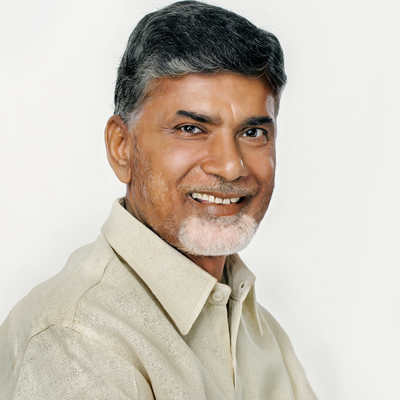
    MUMBAI: With an aim to address the concerns of 800+ multi system operators (MSOs) and 9000+ local cable operators (LCOs) across 13 districts serving 1.3 million households in Andhra Pradesh, the state’s chief minister N. Chandrababu Naidu has written to the Information and Broadcasting minster Arun Jaitley seeking a six-month extension to the Digital Addressable System (DAS) Phase III deadline, which expired on 31 December, 2015.


    The signed letter, a copy of which is with Indiantelevision.com, says, “Only a few MSOs have got Digital License, mainly due to to non-affordability of digital headends and lack of technical know-how. As a part of AP Fiber Grid AP Government envisages to support there MSOs/LCOs by setting up a multi-tenanted digital cable headend that can be utilised as, ‘Infrastructure as a Service & Platform as a service’ facilitating the operations to apply for digital MSO license and sustain their areas of operation. This will help a large number of operators/employees who are surviving on this industry directly and indirectly.”


    The letter further adds, “In view of the initiative and the special situation in Andhra Pradesh, the commissioning of AP Fiber Grid is required to enable MSOs/LCOs to utilise this network infrastructure ad to partner with this project. As this model is going to be uniform among all operators interested in associating with Fiber Grid, the cable operators may not be willing/able to invest for STBs in advance to meet the present deadline. Hence, it is requested to consider extending the phase III Digitisation target date by six months beyond 31 December, 2015.


    Highlighting the status of the AP Fiber Grid Project, Naidu further informed that: 


    .   AP Government has initiated Fiber Grid project to digitise the households in Andhra Pradhesh through both aerial and underground optical fiber cable network.


    .   Work is in progress to lay 24 core ADSS optical fiber cable for a length of around 22000 kms over electrical poles. It is planned to complete this work by June 2016 under phase 1 of Fiber Grid.  2449 PoPs (Points of Presence) will be set up at identified electrical substantiations to house the electronics.


    .   Laying of underground Fiber for a length of around 60000 Kms will be taken up under Phase II in association with government of India.


    .   Dedicated Network Operations Center (NOC) equipped with all digital Headends providing Video (TV Channels, Data (Internet) and Voice (telephone) services also be commissioned by June 2016 facilitating all service providers to utilise the fiber grid with the model of infrastructure as a service & Platform as a Service.


    .   It is planned to enrol the LCOs as Last Mile Operators (LMOs) to provide services to households connecting to Fiber Grid PoPs (points of presence) through their existing network.


    .   The MSOs can be enrolled as ‘multi service providers,’ offering Internet and TV services by connecting to NOC of Fiber Grid and delivering through last mile operators. 


    At the time of filing this story, the AP CM’s office was yet to receive a reply to the letter from Jaitley.

  • DAS Phase III: Chhattisgarh gets two-month extension by Court

    DAS Phase III: Chhattisgarh gets two-month extension by Court

    MUMBAI: Chhattisgarh has become the newest addition to the list of stayed states allowed extension by the judiciary for the Phase III deadline of Digital Addressable System (DAS).


    The Chhattisgarh High Court, hearing the petition filed by Gentle Entertainment Private Limited, announced a two-month extension to complete the seeding process. The court ordered stakeholders to complete the proceedings in two months and ordered that during the process cable connections should not be discontinued.


    “The court’s main concern was shortage of set top boxes and the discomfort of common people. And that is why the honourable court decided to allow the extension,” a source present in the court tells Indiantelevision.com.


    The petition filed by Gentle Entertainment said, “Due to the shortage of STBs in the global market, and high demand here in India it is becoming impossible to have the adequate supply. To meet the necessary demand it will take at least two months more and hence we request the esteemed court to allow an extension of two months.” 


    “The question that one should ask now is, when the deadline was announced a year back why the process started so late. Are we trying to say that twelve months was not enough and we need fourteen? This leaves a bad impression on those who followed the deadline. Will the government compensate those who followed the deadline and executed things on time?” asked a senior executive from the cable fraternity.   


    As was reported earlier by this website, at present, the implementation remains stayed for varying periods in the states of Andhra Pradesh, Assam, Maharashtra, Orissa, Sikkim, and Telangana, apart from Tamil Nadu where prolonged legal cases have been pending since Phase I. The original deadline for DAS Phase III deadline was that of 31 December, 2015.


    Moreover, the Information and Broadcasting Ministry is now planning to move the Supreme Court to club the various orders in different High Courts, which ordered extension of DAS Phase III.

  • DTH to benefit, Reliance Jio to intensify competition in DAS Phase III: Edelweiss

    DTH to benefit, Reliance Jio to intensify competition in DAS Phase III: Edelweiss

    NEW DELHI: Broadcasters are obviously clear winners, but the direct to home (DTH) platforms may ultimately become the greatest beneficiaries of Phase III of digital addressable system (DAS) by garnering incremental market share of more than 50 per cent.

     
    According to Edelweiss Securities Ltd, broadcasters will be one of the safest and most attractive plays on the digitisation theme, irrespective of higher subscriber additions by DTH or MSOs. “We expect a one-year lag for subscription revenue to flow (starting FY18) from the newly digitised subscribers,” Edelweiss said in its analysis of DAS Phase III.   

     
    “In our view, analogue signals will gradually switch off and substantial roll out of Phase III digitisation will take at least three to four quarters driven by mass media ads and proactive steps by DTH players, national MSOs & the regulator,” the firm said.


    However, this view is contrary to the Chrome Data Analytics’ claim of 70 per cent digitisation in Phase III. 

     
    With six states (Assam, Telangana, Andhra Pradesh, Maharashtra and Odisha and Tamil Nadu) stalling Phase III digitisation by eight weeks or more with High Court orders, Edelweiss says, “Uncertainty persists; we expect many more states to follow suit.” In Tamil Nadu, the stand-off between Arasu and the Information & Broadcasting Ministry will delay digitisation, as was the case with Chennai earlier. 

     
    Moreover, Edelweiss believes Reliance Jio’s entry in cable TV will intensify competition in the space. “Overall, we expect Zee, Sun TV, TV18 and Dish TV to be bigger beneficiaries of Phase III digitisation over the long term.”   

     
    In Phase I and II cities, MSOs were able to retain around 75 per cent of incremental market share, while DTH players managed to garner only 25 per cent.

     
    However in Phase III markets, Edelweiss says regional MSOs will have to incur substantial capex to make the cable infrastructure digital ready. “We believe DTH players will enjoy natural advantage over regional MSOs in Phase III markets.”

    Further, voluntary digitisation by national MSOs in Phase III markets, learnings from Phase I & II digitisation and parts of Phase III areas being contiguous with Phase I & II markets put national MSOs in better position than regional MSOs. 

     
    With the rollout of Reliance Jio, Edelweiss expects “competition to intensify in cable TV business. Cashing in on its strong balance sheet, RJio will fuel further competition in cable TV (free STBs, bundled services) in Phase I and II markets. We expect RJio’s entry to change the industry dynamics led by introduction of packaging and prepaid billing.”

  • DAS Phase III: MIB’s big dilemma

    DAS Phase III: MIB’s big dilemma

    MUMBAI: The past fortnight has seen High Court directives in five different states make a mockery of the 31 December, 2015 deadline set by the government for the Phase III roll out of digital addressable system (DAS).


    The courts have urged the Ministry of Information and Broadcasting (MIB) to not act against multi system operators (MSOs) and cable operators who have not been able to place set top boxes (STBs) in homes for two months. In essence, the DAS sunset date has been extended in Andhra Pradesh, Telangana, Sikkim, Maharashtra, Odhisa, Tamil Nadu and now Guwahati.


    The Bombay High Court specifically cited a Supreme Court judgment and noted that a stay granted by a high court on a central notification in one state would be applicable in other states as well. That was the case of Kusum Ingots vs the Union of India, in 2004. (http://indiankanoon.org/doc/1876565/)


    The question on everyone’s mind is: would other petitioners in other states under the DAS Phase III ambit also approach their respective High Courts for relief? Hence, did it make sense for broadcast networks to continue with digitally encrypted signals, which they had resorted to once the clock struck midnight of the new year?


    Most of them including Viacom18, Star India, Zee and Sony thought it did not. Hence, they have all switched on their analog signals a day or so after switching them off.


    Now that has put the MIB in a bit of a quandary. The team lead by MIB secretary Sunil Arora – and including special secretary JS Mathur, and joint secretary RS Jaya apart from other members – have been driving DAS III digitisation and were quite clear that no extension should be given. 


    Sources indicate that one line of action being considered by the MIB is to approach the Supreme Court for relief against the restraint orders granted by the various courts. Experts such as Supreme Court advocate KV Dhananjay have argued against the stance taken in the Kusum Ingots case by the courts. (http://www.legallyindia.com/Blogs/some-hc-judges-are-becoming-terribly-ignorant-of-our-constitution)


    Whether the MIB will go ahead and approach the Supreme Court or not is a moot point, but the industry is putting its might behind it. Most of the industry associations like the Indian Broadcasting Foundation, the DTH Operators Association and the MSO Alliance have all reportedly urged the ministry to move the apex court.


    Industry believes that the extension is unlikely to serve any purpose, as cable operators knew of the phased rollout of DAS as much as for the past three to four years and hence they could have prepared for it. Complaining about a shortage of STBs or interconnect agreements or capital post the sunset date is simply facile, professionals state. 


    “The analog switch off is mandatory,” says an industry observer. “Digitally encrypted signals need to be the only mode of television delivery via satellite in India in Phase III areas. Private DTH operators and the government owned FreeDish can deliver television wherever there are signal dark areas courtesy cable TV’s unpreparedness. The government needs to approach the courts to ensure that DAS Phase III proceeds as soon as possible.”


    We will have to wait and watch if it does.