Tag: DAS

  • MIB simplifies process of registration for India’s cable TV operators

    MIB simplifies process of registration for India’s cable TV operators

    UMBAI:  India’s ministry of Information and broadcasting has issued an advisory on 17 January outlining significant changes to the registration process for local cable operators (LCOs) and multi-system operators (MSOs) under the Cable Television Networks (Regulation) Act, 1995.

    The advisory highlights that, as per Section 3 of the Act, operating a cable television network without registration is prohibited. Applicants are now required to register or renew their registration online through the newly established Broadcast Seva Portal. This modernised approach addresses long-standing concerns regarding the cumbersome manual registration processes previously employed.

    Pursuant to the above, the central government has now introduced key amendments to the Rule vide Notification S. 0. No. 65(E) dated 17  January2025. Further, in exercise of powers conferred under clause (h) of Section 2 of the CTN Act, 1995, a notification vide S.O. No.315(E) dated 17  January , 2025 notifying the section Officer and additional  joint secretary to be the registering authorities for LCOs and MSOs respectively, has been issued.

    Key amendments outlined in the advisory include:

    Online Registration: LCO registration will be facilitated online via the Broadcast Seva Portal.
    Validity Extension: The registration will now be valid for five years, increased from one year.
    Processing Fee:  The registration fee has been set at Rs 5,000.
    National Registration Number: Registered LCOs will receive a unique National Registration Number valid throughout India.

    The new registering authority for LCOs will be designated section officers handling digital addressable systems (DAS) in the ministry. Additionally, applicants will need to verify their identity online using PAN, Aadhaar, and other required documents, with Aadhaar sharing being voluntary.

    Current LCOs are urged to apply for their registration renewal at least 90 days before expiration. Those with applications pending at local head post offices must withdraw and reapply through the Broadcast Seva Portal.

    The Ministry encourages all interested parties to take immediate action and offers support via a dedicated helpline (011-23381707) and toll-free number (18002127307), which are also available on the portal.

    These changes aim to streamline the registration process and enhance the operational framework for cable television networks in India.

    The advisory can be downloaded from this link b clicking on the word advisory
    The notification of the process of registration can be downloaded by clicking on the word notification
    The notification empowering the section officer for LCOs and the additional joint secretary in the case of MSOs can downloaded by clicking on the word notification.

  • TRAI invites proposals for empanelment of auditors to carry DAS audit

    TRAI invites proposals for empanelment of auditors to carry DAS audit

    MUMBAI: The Telecom Regulatory Authority of India (TRAI) has invited proposals from audit firms for empanelment in the panel of Auditors to carry out the audit of digital addressable systems.

    The audit agency shall meet the following eligibility conditions for empanelment in the panel of Auditors: 

    1.  It shall be a company registered under the Companies Act 2013, OR an LLP under the Limited Liability Partnership Act, 2008 or a registered Partnership Firm under the Partnership Act, 1932, OR a proprietorship firm registered with ICAI as an audit firm;

    2.  It shall have a minimum average annual turnover of Rs 50 lakh in the immediate two preceding financial years for national level empanelment or for more than one regional level empanelment or Rs 25 lakh in the immediate two preceding financial years for empanelment in only one regional area;

    3.  It shall have experience, either on its own or through any of its partner/employee of (i) at least one year in the audit of Digital Addressable System (DAS) [Subscriber Management System (SMS)/ Conditional Access System (CAS)] (technical and/or subscription) of distributors; or (ii) at least one year in the audit of billing and metering and/or payment and prepaid charging system involving the use of software tools and/or banking IT system; 

    4.  It shall have at least three full-time professionals from among Chartered Accountant (CA)/ Company Secretary (CS)/Cost Accountant (CoA)/ Graduate Engineer, and at least one of the three professionals should be a Chartered Accountant (CA)/ Company Secretary (CS)/Cost Accountant (CoA). Such professionals should be full time partners or employees working with the Audit Agency since at-least six months prior to the date of application; 

    5.  The company/ LLP/ firm or any of its professional shall not have been disqualified or blacklisted by any department of State Government/Central Government or any Bank or Financial Institution or any statutory body or any professional body. Further, the Company/ LLP/ firm or any of its professional should not have been held guilty of criminal misconduct at any point of time

    6.  The applicant should be well-versed with the broadcasting and distribution industry and shall be proficient in understanding the network head-end setup, customer and system lifecycle knowledge and integration of customer details in SMS and CAS 

    7.  The applicant should be independent of broadcasting service providers and should not have any direct or indirect involvement or interest in the design, construction, operation or maintenance of software such as CAS/SMS/Middleware/Electronic Programme Guide (EPG) or hardware/electronic devices used in digital addressable systems of a service provider. Further, neither any director/ partner/ key managerial personnel of the applicant firm nor its any audit personnel should have held in last one year or should be currently holding the similar position in the company which is involved in the business of broadcasting and distribution activities. 

    The empanelment process shall be continuous and henceforth may be carried out on monthly basis i.e. a proposal may be submitted by last working day of a month for the next round of empanelment. An applicant shall apply only once till TRAI informs it about acceptance/rejection of its proposal. TRAI shall inform all the applicants whether they have been empanelled or their application has been rejected. An applicant once rejected shall not be eligible to re-apply for 12 months from the date of intimation of such rejection.

  • TRAI issues consultation paper on technical specs for CAS, SMS compliance

    TRAI issues consultation paper on technical specs for CAS, SMS compliance

    MUMBAI: The Telecom Regulatory Authority of India (TRAI) has released a consultation paper seeking comments on standardising CAS and SMS systems for broadcast and cable TV.  

    Pursuant to the full digitisation of the cable sector in India, which concluded by 31 June 2017, the focus should now be on CAS and SMS as TRAI says they “form the core systems to deliver the broadcasting services to consumers as per their individual choices, by enabling encryption to ensure content security.”

    The technical requirements for CAS and SMS are generic and allow for different type of CAS and SMS systems to exist in the ecosystem. “While some of the CASs deployed are using advance embedded security, others are based on non-standard solutions making it vulnerable to hacking, thereby putting content security at risk,” says the TRAI notification.

    Additionally, most CAS companies don’t have their own SMS, middleware and user interface, increasing the dependency on third-party solutions. DPOs also lack the technical expertise to have an in-house mechanism.

    “The authority received complaints from various broadcasters on a regular basis regarding the piracy and distribution of pirated signals. As per analysis much of such piracy occurs due to deployment of CAS/ SMS that do not fully comply with security protocols as per extant standards. Stakeholders raised this issue as one of the major concerns during the annual chief executive officers' interaction with the authority held on 14 January 2020,” says TRAI.

    With these issues in mind, TRAI felt that “these concerns reflect a need for compliance with minimum technical specifications before a CAS/SMS systems is installed in the network. With this background, TRAI brings out this consultation paper on suo-moto basis. The paper endeavours to deliberate upon the issues arising out of deployment of sub-standard CAS and SMS systems, underlying ill-effects and possible remedial measures.”

    Comments to the consultation paper are requested by 20 May 2020 and counter-comments by 3 June 2020.

  • Comment: Is there light at the end of the tunnel for broadcasters?

    Comment: Is there light at the end of the tunnel for broadcasters?

    The period between August 2017 and September 2018 will be remembered by the Indian broadcasting sector for more reasons than one. Interestingly, the main protagonists seem to be common – Star India and the Supreme Court of India – and this combination has worked well to lay down a roadmap for the sector. Only time will tell whether it is for the good or bad!

    Before we go further, let’s fact check the status of the Indian broadcasting sector.  According to Ministry of Information & Broadcasting that as on 31 October 2018 there are 866 permitted TV channels in India.

    As per FICCI-EY Report, “Re-Imagining India’s M&E Sector” the broadcasting industry “grew from Rs 594 billion to Rs 660 billion in 2017, a growth of 11.2 per cent”. This includes the advertising revenue of Rs 267 billion comprising 40 per cent of revenues and the distribution revenue of Rs 393 billion comprising 60 per cent of total revenues. The broadcasting sector generates millions of jobs directly and indirectly, contributes to economic growth with a rate almost twice the GDP and provides an immeasurable ancillary contribution by serving a platform for the growth of several other industries.

    This proves that television in India – even in the age of digital media explosion – remains a mass medium and plethora of stakeholders from content creators, broadcasters, teleport operators, satellite operators, advertisers, distributors and a larger television audience viewing audience are involved in one way or other.

    Is it time to nationalise sports?

    Let’s now examine some of the stunning reverses suffered by the broadcasters before the judiciary in this period.

    First amongst them is the judgement delivered by the Supreme Court in 2017 in the Sports Broadcasting Signals (Mandatory Sharing with Prasar Bharati) Act, 2007 which involved Star India and Prasar Bharati.

    In a long-drawn battle of more than ten years, the Supreme Court finally confirmed the Delhi High Court’s finding when it adjudicated that the original intent of the act was to achieve twin purposes of making available a live feed of a sporting event of national importance to economically weaker section of the society and consequently, the same should be made available on a free or no cost basis. 

    The Supreme Court whilst allowing the sporting events of national events to be shared mandatorily with Prasar Bharati ruled that the public broadcaster cannot utilise it on a notified channel which has to be compulsorily carried by private distribution platforms. Although the ruling of the Supreme Court was not followed by letter and spirit by Prasar Bharati, it put the onus on sports broadcasters to take legal action against erring private commercial platforms carried “live” sports feeds. Rather than encrypt Doordarshan’s feed, the Ministry ordered the distribution platform operators to run a ticker stating that “the match/game can be viewed in free-to-air mode on DD Sports Channel, on DD Free Dish and DD’s terrestrial network”. 

    Whilst the Supreme Court put away any confusion on the Sports Act and a private commercial sporting event like IPL anyway ought not to be considered as sporting events of national importance, Smriti Irani who was piloting the I&B Ministry in April 2018 had other ideas.

    During her time in Shastri Bhawan it seemed Star India was wrong when it fiercely bid to acquire long-term exclusive media rights for the Indian Premier League along with BCCI international and domestic matches for an approximate value of Rs 16,350 crore and Rs 6,150 crore respectively.

    2017 was the first year for Star India after it acquired rights for the IPL and the Ministry inexplicably made them sweat out before granting temporary live uplinking permission for live broadcast of the IPL matches on their channels till the very last moment. This was nothing else but to arm-twist Star India to share all the live matches of Indian Premier League with Doordarshan for free, even though IPL, which is a privately-owned club cricket league and can no way be considered as a sporting event of national importance.  In the end, Star India had no other option but to give something to the power that be and they gave in to share with Prasar Bharati the inaugural, the playoffs held on weekends and the last four matches of IPL, with a deferred live feed of at least 60 minutes. No surprise, Smriti Irani claimed victory for bringing IPL for the first time ever on Doordarshan.

    Not getting the “live” feed of IPL matches and unable to make legislative moves to amend the judgement of the Supreme Court as she did not find support amongst her ministerial colleagues the Irani-led Ministry issued a notice mandating all sports channels broadcasting live sports of “national importance” to display a ticker stating the same match was also available on DD’s free-to-air platform squirming sports broadcasters. Not only are the rights holders required to give live sports content free to DD as per the Sports Act, but they are also required to run a marketing campaign for Doordarshan to drive audiences away from themselves to go somewhere else to watch it!

    Now, if the broadcasters believed that the Supreme Court’s decision on the Sports Act in August 2017 had finally settled the issue, unfortunately, it was not to be. On 24 October the Ministry released a notice seeking feedback/comments on draft Sports Broadcasting Signals (Mandatory) sharing with Prasar Bharati (Amendment) Bill, 2018.  The ministry wants to amend Section 3(1) of the Sports Act to ensure mandatory sharing of the signals of such sporting events with “other networks, where it is mandatory to show the Doordarshan channels as per the Cable Television Networks (Regulation) Act, 1995”. 

    Here's a suggestion : rather than doing it in a piecemeal manner in forcing sports broadcasters to share more sporting events why doesn’t the government nationalise at one go so there is clarity on sports broadcasting?  This will also make Doordarshan the only sports broadcaster in the country and thus can ring-fence them from competition from private sports broadcasters!

    Changing landscape?

    However, the biggest one of all is the Supreme Court judgement on 30 October dismissing the plea of Star India challenging the jurisdiction of TRAI in regulating the broadcasting sector through Tariff Orders.

    The Supreme Court judgement has far-reaching consequences for the broadcast industry since it settled the long pending debate of who is the regulator of the Indian broadcasting sector.  Star India had challenged TRAI’s jurisdiction to frame the tariff order arguing that the exploitation of intellectual property (IP) rights are covered under Copyright Act.  The Supreme Court whilst refusing to entertain Star India’s challenge by 2:1 majority held that (1) the Copyright Act had nothing to do with the inter se relationship between the broadcaster and the distributor in the activity of broadcast and (2) it also does not deal with the price of a channel that an end consumer pays to the broadcaster.

    Whilst the Supreme Court empowered the end-consumer through its order but the implementation is not going to be smooth.  Although TRAI proposed to bring DTH, cable TV, HITS, IPTV operators under unified quality of service framework way back in 2015, poor implementation at the ground level means, the cable operators have still not put in place any consumer redressal mechanisms nor will they issue any bill or invoice.  Worse still, many distribution platform operators (DPOs) have not even fulfilled technical requirements under the DAS mandate or installed subscriber management systems to inform the authorities how many subscribers they service in their areas of operation even though the new tariff order is going to become effective from 1 January 2019.

    According to industry experts, although the new Tariff Order is expected to benefit the consumer as he can now pick and choose his channels rather than being saddled with hundreds of them but the cost of monthly cable bill may go up.  In other words, a new concept of ‘pay less for less, pay more for more’ is going to be a reality for Indian broadcast consumers.

    The moot question is after the Supreme Court empowering the consumer vis-à-vis broadcasters, has TRAI empowered the consumer vis-à-vis DPOs?  The quality of service (QoS) by the DPOs has always been a bone of contention because of its implementation on the ground by the licensor, MIB or its authorised officers at the district level or by the regulator, TRAI.

    Even after the implementation of the Digital Addressable System (DAS), the analogue transmission is still transmitted in many parts of the country and the cable operators have not yet fulfilled the technical requirements to meet the DAS mandates.  Even today in many parts of the country kutcha bill is the norm and no sign of any kind of customer care.  When it is brought to the notice of the policymakers they don’t want to see the reality.

    Although TRAI notified the Telecommunication (Broadcasting and Cable) Services Standards of Quality of Service and Consumer Protection (Addressable Systems) Regulations, 2017 the experience so far shows it will be a tall order to implement on the ground on issues such as establishment of customer care centre, website, consumer care channel and publication of manual of practice, etc.

    As a result, there will never be an end to the disputes amongst stakeholders which is the bane of the Indian broadcasting sector and where is the possibility of changing landscape?

  • DTH’s year of consolidation

    DTH’s year of consolidation

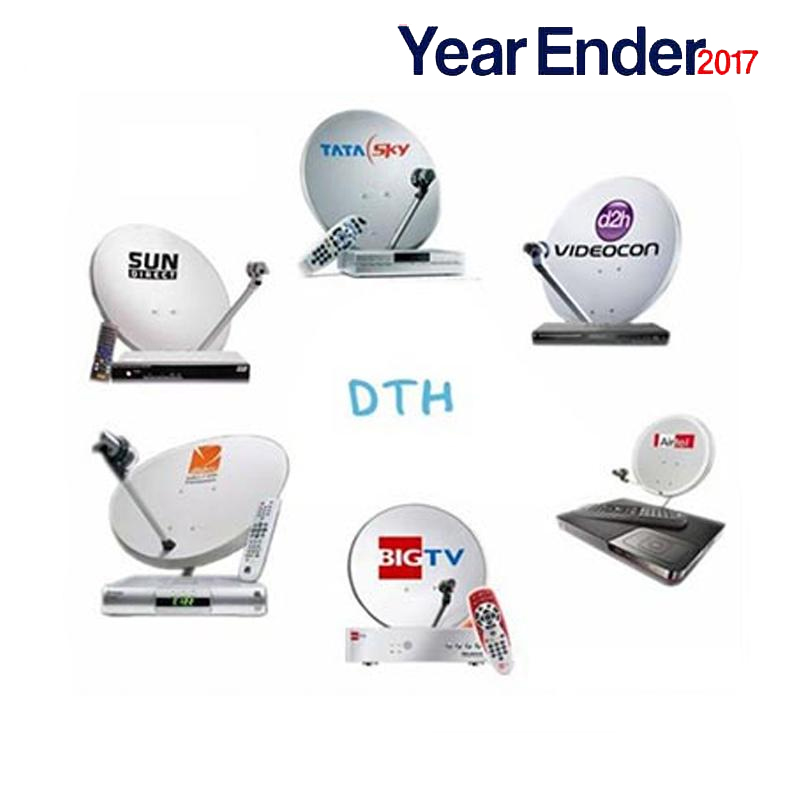
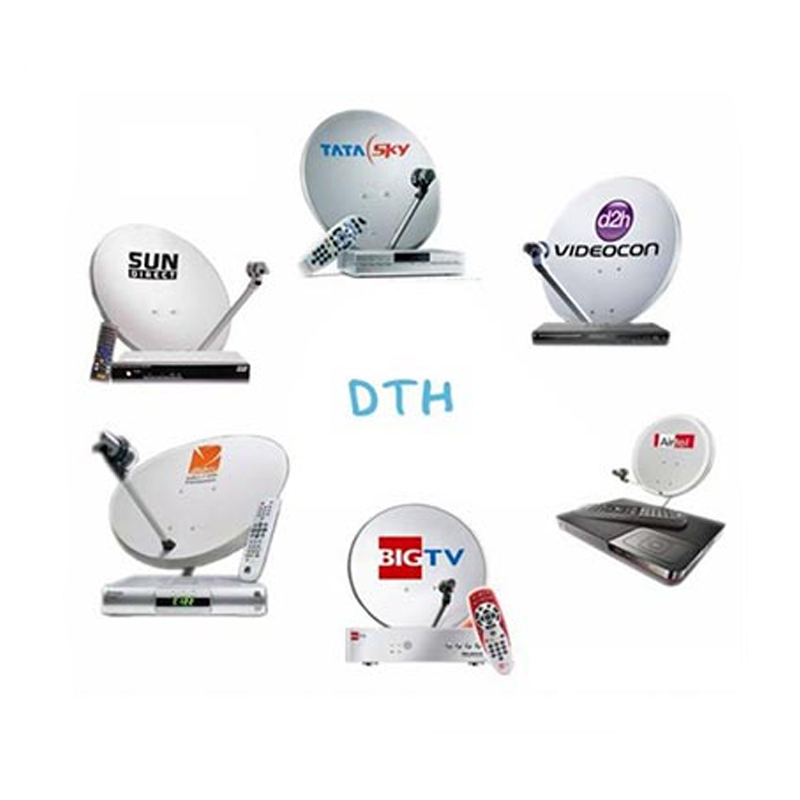
    MUMBAI: It would be safe to say that this was the year of the big DTH challenge. India’s cable TV multi system operators (MSOs) could not go into many phase IV areas and DTH stepped in wherever analogue broadcast signals were switched off following the crossing of the digital addressable system (DAS) deadline. Whether it was Tata Sky, FreeDish, Videocon d2h, Airtel Digital TV, Sun Direct or Dish TV, they all played a part.

    The going, however, was not as smooth as it could have been. High capex and opex and low ARPUs continued to dog the video distribution vertical making it an extremely low or no-margin business. While in the early days customer acquisition was the driver for most distribution platform operators, currently their eye has been on cost-efficiencies. This was evident from the ongoing overtures three of the players were making to others. Dish TV and Videocon d2h were already going through the throes of merging, the Anil Ambani-owned Reliance Big DTH was shopping around having conversations with almost every player, and there were talks of Airtel and Tata Sky possibly getting into bed with each other.

    The first nearly came to pass in 2017 with the two companies getting clearances from all quarters—government, courts and company law board—but getting stuck over the year end because of a technical difficulty. Reliance Big TV was sold to an IT and electronics company Veecon that sells security scanners and tablets–the wealth of its promoters is rumoured to be from selling religious lockets. Veecon said it would renew the Big TV licence by giving the requisite bank guarantees and ensure TV continuity for its approximately 1.2 million customers and jobs for nearly 500 people. It also announced that it would take Reliance Big DTH free to air (FTA) and announced a partnership with Sri Adhikari Brothers to launch a clutch of channels that would prove to be drivers of the platform. How Veecon will pay off Big TV’s payments to broadcasters was not clear at the time of writing and will decide whether the platform will ever take off.

    However, its announcement came at a time when the government had shut the door for private broadcasters and DD FreeDish, which had shown gee whiz growth rates, had come up as a powerful DTH player. New Ministry of Information and Broadcasting (MIB) minister Smriti Irani refused to make channel renewals for which several broadcasters took it to the Telecom Disputes Settlement Appellate Tribunal (TDSAT). An interim order gave the channels, whose licence was soon to expire, relief that they could continue by paying similar prices till Prasar Bharat came up with an alternative proposal and a convincing explanation to throw out private TV channels off DD Free Dish. It is expected that Prasar Bharati will formulate its new policy akin to the FM radio auction wherein 50 per cent of revenue is shared, apart from the bid amount, in e-auctions. Talk internally is that none of this would happen and DD Free Dish is most likely going to be used solely to relay government channels.

    Media reports also said sometime in the second half of the year that there could be more synergies between the Tatas and News Corp-promoted Tata Sky and Airtel Digital TV with possible merger talks taking place. That hasn’t happened as of now but the Airtel group did end up buying out certain telecoms asset of the Tatas.

    Also, private equity firm Warburg Pincus announced its decision to own 20 per cent stake in Airtel Digital TV for $350 million, leaving 80 per cent with Airtel’s promoters. That valued the Mittal-owned DTH service at a whopping $1.7 billion, which was mouthwatering news for the DTH pioneers. By September, Airtel claimed ownership to 14 million subscribers with revenue of $550 million.

    The year was significant for the fact that the DTH operators led by Tata Sky and Airtel Digital decided they had to take a tour of the court. The Harit Nagpal-led operator challenged the Telecom Regulatory Authority of India’s (TRAI) order on tariff and the reference interconnect regulations. The order stated that all stakeholders must abide by rates fixed by broadcasters. Joining Tata Sky in court was Airtel.

    Dish TV, the oldest DTH player in the country, appointed Anil Dua as its new CEO even as the company’s integration with Videocon d2h was on the anvil. Dish TV’s CMD Jawahar Goel raised an alarm over Star India’s monopoly in cricket events that, after its acquisition of the rights for the Indian Premier League (IPL), would force DTH players to include Star Sports channels and result in the broadcaster pricing the sports channels exorbitantly. No government reaction was forthcoming on this issue. Dish TV also took Star channel Life Ok to the TDSAT claiming that it could not rebrand itself as an FTA from a pay channel without sufficient intimation. Life Ok is today Star Bharat and a leading channel in BARC viewership ratings, riding on the expanded viewership courtesy Doordarshan’s FTA KU-band platform called DD FreeDish.

    For the quarter ended 31 March 2017, not only did subscriber additions dip drastically, but were also the lowest for a quarter in the financial year 2016-17. Airtel, Dish TV and Videocon saw total addition of just 8.33 per cent to 41.13 million for the concerned financial year. By 30 September 2017, there were just 2.47 million additions to the DTH industry as per TRAI, which was way below the 3.37 million it gained in the same six months in 2016. Moreover, active subscribers added in the July-September quarter were just 0.78 million, half of the figure from the corresponding quarter a year ago. Dish TV, Airtel DTH and Videocon d2h make up 63-65 per cent of the total active subscribers while Tata Sky holds about 21 per cent and Sun Direct 11 per cent. DD Free Dish is estimated to have 22 million subscribers and is expected to touch 40 million in two to three years.

    The second half of the year saw the introduction of the goods and services tax (GST) that gave a breather to those consuming cable and DTH services. Whereas customers once paid anything between 10-30 per cent as entertainment tax as well as a 15 per cent service tax, it was now fixed at 18 per cent. The Punjab government also announced that it would be adding a new entertainment tax to cable and DTH connections with the latter having to bear Rs 5 a month.

    Sun Direct is a major DTH player in the south holding about 40 per cent of the area. It also makes up 97 per cent of its total subscribers. Sun Direct took up an HEVC media solution from Harmonic to increase its HD channel number to 80.

    Profit after tax (PAT) for Videocon stood at Rs 168 million for the quarter ended 30 September 2017, which was just Rs 12 million for the previous quarter and Rs 148 million for the corresponding quarter a year ago. Dish TV, however, was in the red with net loss of Rs 178.7 million for the quarter as against PAT of Rs 689.6 million for the same quarter a year ago. During the quarter ended 30 September 2017, Airtel reported PAT of Rs 12,990 million down from Rs 27,350 million from a year ago.

    Videocon d2h and Airtel showed good average revenue per user (ARPU) numbers in 2017. The former raked in Rs 212 for the quarter ended 30 September 2017 from 13.25 million subscribers (a 0.21 million increase from the previous quarter). The ARPU for the previous quarter was Rs 198 while a year ago quarter was Rs 209. Dish TV’s ARPU for the same quarter was Rs 149, a rupee higher than the trailing quarter. It had a total of 15.1 million subscribers. ARPU for Airtel Digital TV stood at Rs 233 in the respective quarter, up from Rs 228 in the previous quarter and Rs 232 in the year ago quarter. Tata Sky does not release its financial numbers but analysts pinpoint its ARPU to be close to Rs 300.

    Dish TV introduced numerous value-added services (VAS) to encourage more viewers such as the Dance Active and Disney Active series, cardless STBs, 32 educational channels under Swayam Prabha. Early on in the year, it cut the rate of its base pack to Rs 33 a month to counter the free services by DD Free Dish. It even went to the extent of allowing people to curate their own packs by picking individual channels. Dish TV added 23 channels, which included nine HD ones.

    Tata Sky came up with a Make My HD pack for as low as Rs 30 per month and a regional HD Access pack at Rs 50 per month for users subscribed to regional SD channels. The channel targeted the south market with a South special pack at Rs 290. Dish TV campaigned for HD in all homes by removing the access fee on it and advertising a cost as low as Rs 169 per month (excluding taxes). Countering DD Free Dish, the oldest DTH player also introduced an FTA pack with a price translating to Rs 32 a month.

    On the technology front, Airtel’s hybrid STB was officially the first to launch in the market, bringing to consumers the best of both worlds–satellite channels and content available on the internet. The STB also came preloaded with Netflix and YouTube allowing even a regular TV to turn ‘smart’ courtesy an inbuilt wi-fi feature and Google voice search. Dish TV launched its new card-less security feature with Verimatrix as well as an artificial intelligence-enabled chatbot called ADI.

    For the coming year, the industry will likely see the outcome and growth of the first merger between Dish TV and Videocon and the synergies they bring to the industry. FreeDish is expected to be a big player in the remote parts of the country, especially with FTA broadcasters dancing to their tune. DTH operators have to still work hard to increase ARPU and maintain profitability.


  • Parliamentary panel raps MIB on knuckles for DAS implementation

    Parliamentary panel raps MIB on knuckles for DAS implementation

    MUMBAI: The Parliament’s Standing Committee on Information Technology and Communications (SCIT) has sent out a stern message to the stakeholders of India’s broadcast and cable industry, including the Ministry of Information and Broadcasting (MIB): get your acts together.

    BJP MP Anurag Thakur-chaired all-party parliamentary panel has been especially critical of MIB’s handling of country’s digitisation of TV services or digital addressable system (DAS). It pointed out that MIB could not “absolve” itself of “responsibility” of DAS implementation as it was the administrative ministry for media matters.

    It has exhorted the ministry to put in place a monitoring mechanism at the federal level at the earliest to coordinate with the authorised officers for tracking violations by operators and to also hold periodic meetings with the stakeholders concerned to ensure that the mandated cable TV digitisation process is enforced.

    Putting the onus on the ministry to persuade MSOs to complete seeding of consumer data in the cable TV operators’ management information systems at the earliest, the parliamentary panel has directed the government to ensure proper agreements are signed between stakeholders (broadcasters, MSOs and LCOs). MIB has also been directed to update the panel on the progress made by MIB and to take extreme step of even cancellation of MSO licence in case of non-compliance.

     Interestingly, the committee told the nodal ministry to take a final decision within a definite time period in the case of Tamil Nadu government-controlled MSO Arasu Cable in keeping with TRAI norms for MSOs seeking to provide digital service.

     Arasu has been seeking temporary extension of its licence saying it has been unable to fully seed its subscribers with STBs that were taking long to import. In separate recommendations made earlier — not yet accepted by the government — TRAI had suggested barring federal or state governments or its organisations from segments of broadcast and TV services’ distribution.

     The committee said that it expects MIB to address effectively issues raised in the complaints filed by some MSOs and LCOs in Tamil Nadu (mostly against Arasu) and that the ministry should revert within three months reporting the progress made.

    The committee, while suggesting infrastructure sharing for distribution platforms, urged the government to provide necessary resources or financial incentives to distribution platforms like MSOs who were aiming to provide services in rural areas. Its rationale: developing infrastructure individually may be a costly proposition for cable TV operators.

     Alive to number of litigations in the broadcast and cable sectors, the committee exhorted MIB and the government to explore having a dialogue with courts on the need to close early cases relating to TRAI’s new guidelines on tariff, QoS and inter-connect, which were issued in 2016 but challenged in Chennai and Delhi high courts by Star TV-Vijay TV combine and Tata Sky and Airtel Digital. Both the cases are still pending final verdicts from the courts.

    The committee has recommended that an option of pay-per-use, as made available by DTH operators to subscribers, be explored for cable TV too as it could give the consumer more flexible options.

    Finally, the committee has directed the MIB to do a formal cable TV digitisation impact assessment study including all its aspects to get a clear picture on how far DAS has actually been able to achieve its intended objectives.

    Also read:

    Arasu can’t operate outside Tamil Nadu despite DAS compliance

    MIB report: 50% digital STBs seeded during DAS’ first three phases

    Arasu digital STB costs Rs 200, govt alerts subs


  • TRAI considers independent auditors for DAS audits

    TRAI considers independent auditors for DAS audits

    MUMBAI: In a bid to improve transparency, the Telecom Regulatory Authority of India (TRAI) is mulling the virtue of having on board independent auditors for the technical and subscription audit of the digital addressable system (DAS) of distribution platform operators (DPOs).

    In a consultation paper titled ‘Empanelment of Auditors for Digital Addressable Systems,’ the regulator is seeking views of stakeholders on various audit-empanelment related issues, such as scope of audit, eligibility criteria and experience, length of empanelment, audit fee and payment terms, time period for completion of audit work, de-empanelment, and reporting requirements of auditors. The consultation process will enable the TRAI to prepare a comprehensive document to seek proposals from auditors in line with the industry requirement and formulate guidelines to auditors.

    Written comments on the paper have been invited from the stakeholders by 22 January 2018 and counter-comments by 7 February 2018. The TRAI clarified that the empanelment of the auditors and other related activities would be done only after the ongoing matter pending before the Madras and Delhi high courts was decided.

    The interconnection regulations that form a part of the regulatory framework for DAS have provisions relating to technical audit and subscription audit, wherein it has been provided that the authority may empanel auditors for this purpose. Distributors such as multi-system operators (MSO), direct-to-home (DTH) operators, headend in the sky (HITS) and IPTV operators are required to install digital headends, including Subscriber Management System (SMS) and Conditional Access System (CAS) for distributing signals of TV channels through digital addressable systems. To have a level playing field amongst all the distributors, the authority has prescribed minimum technical specifications for addressable systems.

    Also read:

    TRAI seeks better accessibility for persons with disabilities

    Trai paper seeks to streamline uplinking, downlinking norms

    Trai paper seeks to streamline uplinking, downlinking norms

  • MSOs move Madras HC seeking relief on inter-connect pacts

    MSOs move Madras HC seeking relief on inter-connect pacts

    MUMBAI: The All India Digital Cable Federation (AIDCF) had filed a petition in the Madras High Court few days back pleading a directive to broadcasters to maintain a status quo on renegotiating agreements between TV channels and MSOs till a final judicial call was taken on TRAI’s new tariff regime announced in 2016.

    The tariff order, along with guidelines on quality of services, was stayed by the Supreme Court pending a final directive from the Madras High Court.

    Pleading that renegotiating inter-connect agreements on expiry at this point of time could lead to losses to the MSOs and subscribers, in general, the apex body of digital MSOs in India has sought judicial relief.

    Telecoms and broadcast regulator TRAI, Star India and its affiliate Vijay TV have been made respondents in the case that, according to industry sources, has not yet been listed for an initial hearing at Tamil Nadu’s top court.

    Madras HC, which was hearing a case pertaining to TRAI’s validity to have jurisdiction over matters relating to copyrights, is yet to announce its final verdict. The petition was filed by Star India and Vijay TV in late 2016, which effectively put a stop to the implementation of a new tariff regime announced by TRAI in October 2016 for the broadcast sector and distribution platforms.

    Apart from the tariff order, originally issued on 10 October 2016, the regulator had also issued the DAS interconnect regulations and the standards of quality of service and consumer protection regulations. These guidelines, after being debated and allowed by Chennai and Delhi courts initially were finally stayed by the Supreme Court earlier this year till Madras High Court disposed off the Star India-Vijay TV case questioning TRAI’s jurisdiction over certain matters relating to copyrights and freedom to carry on business.

    ALSO READ:

    http://www.indiantelevision.com/regulators/high-court/orders-reserved-by-madras-hc-on-trai-jurisdiction-case-170731

    http://www.indiantelevision.com/regulators/trai/star-vijay-tv-amend-plea-trai-asked-by-madras-hc-to-file-response-170317

    http://www.indiantelevision.com/regulators/trai/trai-qos-implementation-stayed-by-delhi-hc-awaiting-madras-hc-verdict-170830

    http://www.indiantelevision.com/regulators/trai/star-trai-case-hearing-in-madras-high-court-starts-170627

  • Arasu can’t operate outside Tamil Nadu despite DAS compliance

    Arasu can’t operate outside Tamil Nadu despite DAS compliance

    NEW DELHI: Tamil Nadu government-owned multi system operator (MSO) Arasu TV Corp has been told by the Ministry of Information and Broadcasting (MIB) that it cannot operate outside of Tamil Nadu despite having a provisional MSO licence.

    The MSO was granted the provisional licence in April this year and was given several extensions to prove that it had become fully digital addressable system (DAS) compliant. Arasu claimed to have gone entirely digital by 1 September 2017.

    Godfather Communication is another MSO that can only operate in Punjab, Haryana, Jammu & Kashmir, Rajasthan, Chandigarh and Himachal Pradesh. Godfather’s registration is dependent on a court verdict in which it had challenged the MIB’s cancellation of its provisional registration for in Amritsar.

    There are just 1471 MSOs even after seven months of DAS in the country. Apart from Arasu and Godfather, the remaining 1469 provisional licence holders have been permitted to operate anywhere in the country, according to the list of MSOs as on 31 October 2017 placed on the MIB website.

    Early this year, the government had said all provisional MSOs will be deemed as having regular licences. They were also free to operate in any part of the country.

    The MIB had earlier this year told indiantelevision.com that it had been made clear to Arasu that the provisional licence was subject to the centre taking a final decision on the recommendation of the Telecom Regulatory Authority of India (TRAI) that no government-owned body should be permitted in the field of running or distributing television channels. TRAI had in 2008, 2012 and 2014 held that state governments and political parties should not be permitted to own TV channels or distribution channels.

    Also read :

    Post-DAS, tardy MSO registrations in six months, 14 new additions

    Including Arasu, total number of MSOs goes up to 1376, to ensure DAS implementation

    37 new MSOs in 45 days takes total to 1421, seven among 59 cases sub-judice

    Godfather, Kal, Digi Cable & Intermedia licence cancellation stayed, 50 ‘pan-India’ MSOs’ op area changed

  • Arasu digital STB costs Rs 200, govt alerts subs

    Arasu digital STB costs Rs 200, govt alerts subs

    MUMBAI: Government authorities in Tamil Nadu are announcing the basic rate of installing a new STB following complaints by subscribers of the state-owned Arasu Cable TV Corporation that cable operators are charging them around four times the cost. Tirupur operators are reportedly threatening to disconnect the cable services if subscribers do not pay up.

    Tirupur district collector KS Palanisamy stated in a press release that the government had fixed Rs 200 as charges for installing set-top boxes (STBs), which the cable operators were entitled to receive. “If this is violated, those affected should register complaints at toll free number 1800 425 2911,” the Times of India reported.

    A number of subscribers are complaining that cable operators were charging them as much as Rs 700 for installing the free STBs issued by Arasu Cable (TACTV).

    Authorities had declared that the boxes will be installed from 1 September when DAS (digital broadcasting system) was launched. Cable operators however are reportedly threatening the subscribers that if they did not pay by the first week of October, they would disconnect the service.

    A political activist alleged that the cable operators had been providing around half of cable connections without maintaining records. Some cable operators reportedly asked subscribers to buy STBs sold by a private company run by the cable federation, and not the ones issued by Arasu Cable. Such STBs cost around Rs 1,500-Rs 1,700 through which, operators have claimed, more channels could be accessed as compared to Arasu Cable.