Tag: Darshana Bhalla

  • Mad science meets cinema as Madlab Alpha experiments with bold storytelling

    Mad science meets cinema as Madlab Alpha experiments with bold storytelling

    MUMBAI: If a hindi masala movie is the formula, Madlab Alpha wants to break it. In a move that could redefine the future of Indian storytelling, Bodhitree Multimedia, Madlab Films, and Universe of Ideas have joined creative forces to launch Madlab Alpha Private Limited, a first-of-its-kind content studio that promises to rip up the rulebook and write a new one, genre by genre.

    Touted as India’s first high-concept content lab, Madlab Alpha isn’t here to play safe. It’s here to play mad in the best possible way. With a pipeline full of cerebral thrillers, speculative dramas, dystopian epics, and even interactive narratives, the studio is aiming at audiences that are over masala and hungry for mind-benders.

    At the heart of the initiative is a bold attempt to merge art and algorithm using AI-assisted production workflows and immersive tech to create content that’s not just visually striking but narratively disruptive. Think less assembly line, more alchemy.

    But it’s not just about flashy tools. Madlab Alpha wants to be a creative ecosystem nurturing emerging voices, offering mentorship, and cultivating a diverse slate that’s as rooted in local nuance as it is ready for global resonance.

    Backing the venture is Bodhitree Multimedia, known for The Gone Game and Class, and Universe of Ideas, born out of D’Artist Talent Ventures. Together with Madlab Films, the trio brings a cocktail of IP experience, genre muscle, and next-gen storytelling ambition.

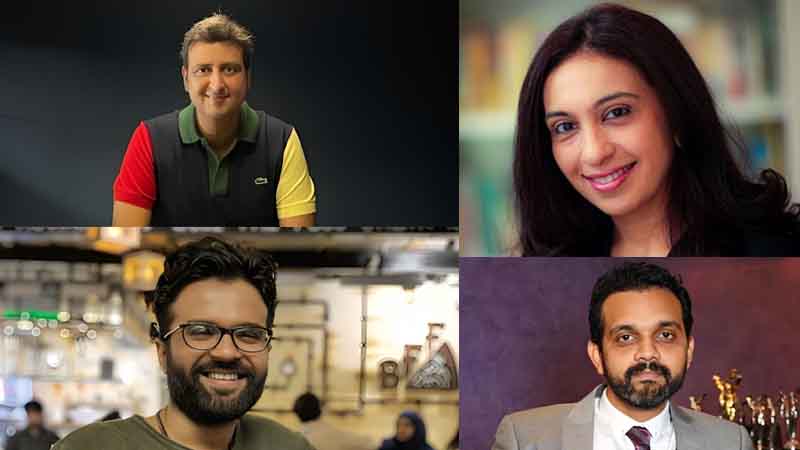
    Madlab Films producers Gaurav Shukla and Abhijeet Khuman added,“With the rise of OTT platforms and global content, audience taste, especially in India, has evolved rapidly. This shift is impacting conventional commercial cinema, as we’re seeing more viewers gravitate towards fresh, bold narratives. It’s high time we acknowledge this change and create stories that speak to this new sensibility. With Madlab Alpha Private Limited, we aim to tell the kind of stories others shy away from merging craft with technology to deliver content that truly resonates. Together, we’re committed to delivering bold, original, and scalable content that speaks to a new generation of viewers.”

    D’Artist Talent Ventures and Universe of Ideas founder & CEO Darshana Bhalla added, “At its core, Madlab Alpha Private Limited is about empowering new voices and building a collaborative creator ecosystem. We believe in nurturing and mentoring emerging talent, offering them mentorship, resources, and a platform that values originality, craft, voice, and diverse perspectives on the global stage, fostering a space where originality thrives.”

    Talking about the partnership Bodhitree Multimedia Ltd MD Mautik Tolia added, “Madlab Alpha Private Limited represents a bold leap into the future of storytelling. This partnership marks a pivotal evolution in our content strategy, reflecting our commitment to shaping the progress and success of the industry. Together with Gaurav, Darshana, and Abhijeet, we are investing in the future of storytelling one that is bold, disruptive, and unapologetically narrative-first. We’re building more than a studio, that’s agile, and one that is built to scale across formats and geographies.”

    With legacy productions already under their belt and a bold slate of future-forward content in the works, Madlab Alpha Private Limited is angling to be India’s cultural petri dish, a place where stories mutate, mutate again, and maybe, just maybe, evolve into something the world hasn’t seen before.

    So, if Indian entertainment has long been a well-trodden path, Madlab Alpha is here to carve a few new roads wild, winding, and wonderfully unpredictable.

  • DTV introduces D’Artist Plus, transforming collaborations between celebrities and brands

    DTV introduces D’Artist Plus, transforming collaborations between celebrities and brands

    Mumbai: D’Artist Talent Ventures (DTV)  presented D’artist Plus, a pioneering service revolutionising celebrity-brand associations tailored for start-up brands, through a groundbreaking structured deals approach.

    With over 15 years of experience in celebrity-brand collaborations across diverse sectors and geographies, DTV boasts a network with an extensive portfolio of top Indian and international celebrities. Evolving with the times, DTV also actively engages with curated digital-first celebrities to extract substantial and meaningful benefits for brands.

    Leveraging profound expertise and robust  business relationships, DTV aims to empower the start-up universe through a scientifically refined strategy, termed “Enhanced Endorsements.” This strategic initiative transcends conventional practices, promising unparalleled economic advantages for both celebrities and brands, fueled by overall brand growth.

    “In introducing D’Artist Plus, we aim to foster enduring, value-driven relationships between influential personalities and dynamic consumer brands. Our goal is not merely endorsements but forging deeper partnerships,” expressed Darshana Bhalla, CEO and founder of DTV.

    Incorporating the principles of Structured Deals,’ D’Artist Plus will harness the demographic and influential power of celebrities and personalities with high consumer affinity and credibility to contribute impactful and dynamic solutions to consumer brands. Thus,  leveraging a celebrity’s efforts and involvement to create transformative value for start-ups, while creating substantial upside for their efforts.

    “D’Artist Plus addresses specific marketing challenges faced by start-ups, offering opportunities to surpass measurable expenditures and access high-impact marketing propositions. By integrating high-profile celebrities from entertainment, sports, and digital realms, we envision symbiotic associations fostering mutual benefit and growth..,” Darshana added.

    Additionally, D’Artist Plus introduces a comprehensive marketing advisory services program, ensuring the optimization and maximization of potential in unique brand-celebrity associations across different growth stages and various domains.

    “This service is administered by a highly adept and scholarly team operating in the backend, distinguished by their profound expertise and advanced capabilities” Darshana concludes

    Our prior successes with promising start-ups, coupled with collaborations underscore our ability to deliver substantially enhanced value in this mutually beneficial partnership. The formal launch of D’Artist Plus,  marks a significant milestone, bringing together the start-up brands at various developmental stages and also aligning with Atmanirbhar principles.  

    This initiative not only benefits from the homegrown and global celebrity’s influence on Indian businesses,  but also contributes to the growth and promotion of indigenous brands, skills, and initiatives, resonating strongly with companies valuing self-reliance and talent keen to support Indian Brands.

    Being a celebrity sourcing agency, our all-encompassing, solution-oriented, non-conflicting, service proposition distinguishes us as an agency dedicated to curating tailored solutions, aligning seamlessly with the distinctive needs of the brands we serve, hence elevating their marketing strategy in entirety. 

  • Do-iT Talent Ventures signs badminton star Saina Nehwal

    Do-iT Talent Ventures signs badminton star Saina Nehwal

    MUMBAI:  Do-iT Talent Venture, the firm owned by Darshana Bhalla and Radha Kapoor Khanna, reinforces its sport portfolio with the 4th most famous global woman athlete Saina Nehwal.

    Do-iT Venture has signed badminton player Saina Nehwal for the long term purpose for all her commercial and player endeavours which also includes sponsorships, endorsements, publishing, appearances, digital rights amongst others.

    Nehwal is one of India’s top badminton players and earlier she was the flag bearer of the Indian badminton contingent for the longest time. Bronze in 2012 Olympics and Commonwealth gold in 2010 and 2018 are some of the highlights of her illustrious career. She is the only Indian woman to be ranked number one in the world. In 2016 she was awarded India’s third highest civilian award, Padma Bhushan.

    Do-iT Talent Ventures (India) CEO and Founder Darshana Bhalla said, “Right at the advent of Do-iT Talent Ventures, we expressed that we believe in talent across various arenas and having Saina Nehwal as one of our lead talent illustrates our passion and enthusiasm towards Sports. Saina is a renowned champion and her dedication and commitment resonates ours, hence collectively we look forward to do some exemplary work. We believe in optimising our talent’s potential by putting together a robust strategy followed by an intently structured micro action plan”.

    Nehwal added, “As an individual, I have always attempted to work with experts. I am sure that Do-iT Talent Ventures’ proficiency in understanding my sport and its potential influence will be highly impactful for me and my career. They hold high repute and have aligned work ethics with me. The team has immense experience in managing top talent across fields and I am excited about this association.”

    In a short span of three months Do-iT Talent Ventures has signed a number of celebrities across entertainment and sports like Farhan Akhtar, John Abraham, Lara Dutta, Kajal Aggarwal, Neeraj Pandey Samir Kochhar and Vicky Ratnani in Culinary. In sports, they have Virender Sehwag, Mahesh Bhupathi, Geeta Phogat, Ashwini Ponnappa, Robin Singh, Viren Rasquinha and Aparna Popat.

  • Do IT talent venture has big plans for the unorganised sector

    Do IT talent venture has big plans for the unorganised sector

    MUMBAI: Two of India’s creative mentors, in a unique collaboration, have launched an integrated multi-disciplinary talent management firm called Do IT Talent Ventures. Darshana Bhalla and Radha Kapoor Khanna’s new talent venture firm aims at broadening the horizon of talent management and development across genres.

    Darshana Bhalla, who was the former CEO of Mates – the entertainment unit of Madison Communication and Radha Kapoor Khanna, the founder and executive director of Do IT Creations – a flagship holding company of The Three Sisters: Institutional Office (TTS:IO) focused on establishing new age creative businesses, formed in Do IT Talent Ventures in April 2018.

    In a span of three months, the brand has already signed a number of personalities across films, TV and sports namely Farhan Akhtar, John Abraham, Lara Dutta, Kajal Aggarwal, Neeraj Pandey Samir Kochhar in entertainment and Vicky Ratnani in culinary. While in sports, the brand has tied up with Virender Sehwag, Mahesh Bhupathi, Geeta Phogat, Ashwini Ponnappa, Robin Singh, Viren Rasquinha and Aparna Popat. 

    With a staff of trained professionals, mentors and promoters, the team possesses a cumulative experience of over 500 deals in the celebrity management business.

    Darshana Bhalla says that the company’s primary vision is collective progress, focussing on talent from various genres of the creative industries and enabling constant optimisation of their time and resources.

    Radha Kapoor mentions that under the holding company Do IT Creations, with a presence in entertainment, sports, media, retail amidst other consumer focused businesses, the group saw an opportunity to establish a presence in the talent ecosystem wherein they had the unique advantage of unlocking synergies by leveraging their portfolio of new age creative ventures.

    Do IT wants to aim at having all creative people under their umbrella including culinary, technicians, artists, writers, TV actors, Bollywood celebrities, musicians, directors and sports mentors. 

    The talent venture will not look at only having celebrity talent. Radha Kapoor says, “Tomorrow we could also have writers, artists and designers. We are looking at it from a 360 degree approach wherein we can start catching these talents at a much younger age. the idea is on how do we find the right talent and create solutions for them.”

    She figured that the DNA of their institution was to invest in entrepreneurs. And while the talent business in India has been primitively handled in sectors, Do IT is aiming at becoming an aggressive venture unlike the rest of them. They believe in having collective success and collaborations where there will be talent across creative industry.

    The two describe it as a challenging business, but are excited about make their mark. “It is challenging to make them understand that it’s not about managing their existing work but also about optimising their talent.”

    For now, the company’s client list only includes popular celebrities and other personalities. “We are not after having quantitative list of clients but want every client that we have on board is well thought of and ask ourselves, ‘if we can add value to them?’ We won’t take anybody on board if we are not sure and we don’t want to mess with anyone’s career,” they say collectively. 

    Doing business with celebrities and influencers isn’t all fun and games. Bhalla says, “The process is just business while the starting process and the outcome is always glamorous. But it is a lot of hard work as managing people has its own issues. There are some cultural disparities and functional disparities but you just deal with it.”

  • DoIT Ventures launches India’s first integrated talent management firm

    DoIT Ventures launches India’s first integrated talent management firm

    MUMBAI: Two of India’s creative mentors, in a unique collaboration today launched the country’s first integrated multi-disciplinary talent management firm – ‘Do IT Talent Ventures’. Darshana Bhalla and Radha Kapoor Khanna introduced the country to their new visionary talent venture firm that aims at broadening the horizon of talent management and development across genres. This new venture will work towards building skills across content platforms to further enhance the landscape of the country’s creative industries in the years to come.

    Formed in April 2018, Do IT Talent Ventures will be led by Darshana Bhalla, former CEO of Mates – the entertainment unit of Madison Communication and Radha Kapoor Khanna, Founder & Executive Director Do IT Creations – a flagship holding company of The Three Sisters: Institutional Office (TTS:IO) focused on establishing new age creative businesses. TTS:IO through Do IT Creations has incubated ventures across education, media, entertainment, sports and retail. Do IT Talent Ventures – Subsidiary of Do IT Creations, is established as an integrated talent management firm which manages and promotes some of the country’s high profile personalities in film, TV, sports and the culinary space before diversifying into various other creative verticals such as music and arts. With diverse interests in every aspect of the entertainment value chain – from talent management and consulting to creating and owning of IPs, Do IT Talent Ventures has sectorial experts with a proven record of accomplishment and experience to manage monetise and market multiple forms of properties.

    In the span of three months, the brand has already signed a number of personalities across Films, TV and Sports namely Farhan Akhtar, John Abraham, Lara Dutta, Kajal Aggarwal, Neeraj Pandey Samir Kochhar in Entertainment and Vicky Ratnani in Culinary. While in sports, the brand has signed up with Virender Sehwag, Mahesh Bhupathi, Geeta Phogat, Ashwini Ponnappa, Robin Singh, Viren Rasquinha and Aparna Popat. With a staff of trained professionals, mentors and promoters, the team posesses a cumulative experience of over 500 deals in the celebrity business.

    Speaking on the occasion Do IT Talent Ventures (India) Private Limited, CEO & Founder, Ms. Darshana Bhalla said, “Our primary vision at Do IT Talent Ventures is collective progress. We will focus on talent from various genres of the creative industries and enable constant optimization of their talents time and resources. We believe in a focused institutional approach. With this collaboration, we will render services beyond the current scope available in the market place. In the coming years, we look forward to broadening our horizon by expanding our reach to other verticals and invest our efforts to bring maximized value to our clients.”

    Speaking at the launch announcement, Do IT Creations – Founder & Executive Director, Ms. Radha Kapoor Khanna said, ‘Our vision at Do IT is to be an integral part of the creative industry based on our philosophy of DICE – Design, Innovation, Creativity and Entrepreneurship. An integrated and holistic talent management enterprise like Do IT Talent Ventures, having an ethos of long term value creation, can emerge as a market leader in this space, whilst metamorphosing the landscape of this industry with diversified revenue streams. Under the holding company Do IT Creations, with a presence in entertainment, sports, media, retail amidst other consumer focused businesses, there was a natural fit for the group to establish a presence in the talent ecosystem wherein we have the unique advantage of unlocking synergies by leveraging our portfolio of new age creative ventures’.

  • Expert-speak on implications of penalising celebs in misleading ads

    Expert-speak on implications of penalising celebs in misleading ads

    MUMBAI: In India, a general tendency is to shoot the messenger instead of going to the root of a problem and then finding a solution. A Parliamentary panel proposal — it’s still that only — to penalise celebrity endorsers for misleading advertisements could be one such instance, though industry experts differ on the merit of such a move.

    One thing the Indian advertising world has learnt from the Maggi fiasco in India is when a brand’s authenticity is questioned; fingers are quick to point at celebrities endorsing it instead of going into finer details. Some adverse government lab findings hit  Nestle, owners of Maggi brand of noodles and soups, so hard that it’s still recovering from the brand and revenue battering it took over few months earlier this year.

    While celeb endorsers of Maggi, including people like film stars Madhuri Dixit, Amitabh Bachchan and Preity Zinta, only felt the wrath of social media, if the Parliamentary panel suggestions are enacted into a law, going forward, celebrities may face legal action against them for featuring in misleading advertisements.

    In a recent meeting to discuss the Consumer Protection Bill 2015, a Parliamentary Standing Committee on Consumer Affairs mooted that a celebrity may be fined upwards of Rs 1 crore (Rs 10 million) as an exemplary penalty. A jail time up to five years was also brought up in a prior meeting but was later reconsidered.

    Though not yet a law, but it is easy to gauge the general direction the conversation on celebrity endorsement is headed in India, which, along with Japan, has in recent times shown an increased use of celebrities to push products and services.
    As things stand today, the obvious questions are: (i) should celebrity endorsers alone be held responsible for saving consumers from false advertisements and claims and not the company owning the product and the ad agency designing the creatives and (ii) what are the implications on the advertising  business in India if the Bill actually becomes a law?

    Indiantelevision.com reached out to stakeholders in the industry for their take on the issue and to understand how such a proposal would affect them.

    Celebrities are not godmen or god-women

    A Euromonitor study in 2014 on `Celebrity Power and Its Influence on Global Consumer Behaviour’ stated: “As long as the celebrity is authentic, he or she can help to lend credibility to a brand and influence the way it is perceived as many consumers believe that if a product is good enough for a star, it is good enough for them.”

    In spite of acknowledging the fact that celebrities are strong influencers, Advertising Club of India President Raj Nayak finds it silly to penalise celebrities over misleading advertisements.

    “It is unfair to put the onus on celebs unless they are endorsing brands like beedi (hand rolled tobacco leaves), cigarettes , alcohol, gutka (chewing tobacco), fairness cream or any such product that is injurious to health or has a negative  impact on society.  Even in such a case there should be an advisory cautioning them from endorsing such products,” Nayak opined, adding the onus of a misleading ad, however, must rest with the company that is advertising and selling the product.

    According to Nayak, the industry in India already has a self-regulatory body, Advertising Standards Council of India (ASCI),  and consumers have the option of complaining or raising an issue regarding an ad, but it’s “absolutely silly to penalise celebrities.”

    Though it has been seen that the global trend of using celebrities to push products does have a roller-coaster ride, Vizeum India MD Shripad Kulkarni does not totally agree that celebrities alone can change and shape opinions.

    “Holding the celebrity responsible is akin to shooting the messenger. A celebrity is an individual without any public authority. Assuming that a misleading ad is the sole responsibility of the celebrity, can somebody please explain to me how an individual can ever figure out if the claim in an ad on any product category is true or not?” Kulkarni asked, explaining that a celebrity who can check the veracity or authenticity of all the products or services (being endorsed by him or her),  ranging from a financial instrument rating, vest comfort or oils helping maintain long hair, etc, “might as well get into the most lucrative business in India — become a godman” or god-woman as the case may be.

    Echoing sentiments similar to Kulkarni was RK Swamy Hansa BBDO Chairman Srinivasan K Swamy. “Celebrities don’t have the means to clarify each and every claim made by a brand. They may have sort of a check, but that doesn’t make it a foolproof one. I think a brand communication is ultimately an advertiser’s responsibility,” he averred.

    Vague term or definition

    The 2014 Eurominitor study at another place stated that the level of celebrity influence is “difficult to gauge” but it is estimated that while as many as one in four advertisements feature celebrities in the US, the percentage is much lower in Europe. In Germany, for example, the rate is around 16 per cent. The  celebrity culture is widespread in Asia and though the  phenomenon is newer in China and India, it has gained momentum in a relatively short space of time.
    So, who is this celebrity that the government plans to penalise? An actor? A cricketer?  Someone plain famous? A Bharat Ratna, which is India’s highest civilian award? A scion of  an erstwhile royal family? A politician or a Member of Parliament (yes, in India even such people widely endorse products and services) ? A professional  model? Or the common man who oscillates between fame and  oblivion?

    The Advertising Agencies Association of India (AAAI) chairman Nakul Chopra expresses serious concerns over the ambiguity of the word ‘celebrity’, especially with regards to a would-be law.

    “You can’t enact a law with the term ‘celebrity’ in it without defining what it means precisely. Basically, any model lending his or her face, voice or image to a product can be charged with these penalties. Tomorrow, someone lending his or her face to a cause or a brand, may be not a known personality, will also be liable under this law. I don’t think you can apply one rule to all,” Chopra said.

    For Chopra, it’s not fair that an endorser of a product or a service, celebrity or not, is made liable for the product that they endorse because it is a “difficult liability to administer.”

    More caution need of the hour?

    There’s an age old saying that more things change, more they remain the same. And, this proposal, experts feel, is a case highlighting the adage.

    Madison Communications Mates CEO Darshana Bhalla, who deals with talent management and facilitates top notch endorsement deals, felt these proposals were just cosmetic changes wherein except for a more judicious verification process everything else will remain the same.

    “Advertising is a  like a wheel and every cog in the wheel is responsible for its movement, be it the celebrity, the brand, the media, the creative agencies or agencies like us. Therefore, I believe, we shouldn’t take away responsibilities from each other or over impose them either,” Bhalla said.  

    Pointing out that there is nothing wrong in doing the due diligences when it comes to celebrity endorsements, whosoever is the stakeholder, Bhalla did feel that if the proposal was actually enacted into a law, it would bring more caution in the processes, which is only fair.

    According to him, “Anyway most of the A-listers have been very cautious about what they endorse. Ultimately consumerism is not going to get affected by this, will it? When it comes to us talent management agencies, we get our celebrities to endorse brands that are cognizant of the guidelines of proper brand communication.”

    In line with the same thoughts Swamy added, “This Bill, if it comes in effect, will simply add a few more layers of self-regulation. I don’t think the advertising or endorsement market will feel any major impact from it.”

    Factoring in fines in contracts

    Several advertising gurus predicted that if the fine or penalty became an actuality, a fine-inclusive contract will become the norm in the endorsement world.

    “Celebrities are basically echoing a brand communication for a product or a service. If the fines (and other penalties) come into being, they will be simply included into a contract as a clause. From the beginning itself the celebrities will not face the burden of paying the fines because no celebrity will sign a contract that will expose him or her to a possible financial damage,” SK Swamy Hansa BBDO’s Srinivasan Swamy pointed out.

    Interestingly, Swamy also opined that if the law required to hauling up of celebrities on monetary grounds, they will have” no qualms to stand by brands”. Chopra too felt that a fine will lead to celebrities seeking indemnity from the advertisers for the liability placed on them.

    More teeth to ASCI

    Whether or not a law to penalize celebrity endorsers for misleading adverts becomes a reality, what is clearly emerging is that the industry would need more of self-regulation and for that to be more effective, ASCI’s role as a body gains importance.

    In its report on the Consumer Protection Bill, which was introduced in Parliament last year in August, the Parliamentary Standing Committee on Consumer Affairs said the penalties could be in the form of compelling the misleading advertiser to either issue corrective advertisement (an expensive proposition in itself), apart from proposing other stringent measures.

    This could be done by adding clauses to the Consumer Protection Bill to ensure that the advertising code being followed by ASCI got added legal teeth. Punitive measures need to be incorporated in the Advertising Code to cater to consumer interests, the panel opined. This was based on a suggestion by the Consumer Education and Research Centre of Ahmedabad.

    During the study of the Bill, the parliamentary committee had met several stakeholders as well as officials of government organizations and execs  from advertising companies.

    Welcoming suggestions by the Committee, ASCI secretary told the panel members , “ASCI had the chance to present our work from the last few years before the committee and the current self-regulatory system was backed by other industry stakeholders as well. We are very happy that the committee has recommended more teeth to ASCI, though we have yet to see how it is worded in the final legal document.”

    (With inputs from BB Nagpal in New Delhi)


  • Expert-speak on implications of penalising celebs in misleading ads

    Expert-speak on implications of penalising celebs in misleading ads

    MUMBAI: In India, a general tendency is to shoot the messenger instead of going to the root of a problem and then finding a solution. A Parliamentary panel proposal — it’s still that only — to penalise celebrity endorsers for misleading advertisements could be one such instance, though industry experts differ on the merit of such a move.

    One thing the Indian advertising world has learnt from the Maggi fiasco in India is when a brand’s authenticity is questioned; fingers are quick to point at celebrities endorsing it instead of going into finer details. Some adverse government lab findings hit  Nestle, owners of Maggi brand of noodles and soups, so hard that it’s still recovering from the brand and revenue battering it took over few months earlier this year.

    While celeb endorsers of Maggi, including people like film stars Madhuri Dixit, Amitabh Bachchan and Preity Zinta, only felt the wrath of social media, if the Parliamentary panel suggestions are enacted into a law, going forward, celebrities may face legal action against them for featuring in misleading advertisements.

    In a recent meeting to discuss the Consumer Protection Bill 2015, a Parliamentary Standing Committee on Consumer Affairs mooted that a celebrity may be fined upwards of Rs 1 crore (Rs 10 million) as an exemplary penalty. A jail time up to five years was also brought up in a prior meeting but was later reconsidered.

    Though not yet a law, but it is easy to gauge the general direction the conversation on celebrity endorsement is headed in India, which, along with Japan, has in recent times shown an increased use of celebrities to push products and services.
    As things stand today, the obvious questions are: (i) should celebrity endorsers alone be held responsible for saving consumers from false advertisements and claims and not the company owning the product and the ad agency designing the creatives and (ii) what are the implications on the advertising  business in India if the Bill actually becomes a law?

    Indiantelevision.com reached out to stakeholders in the industry for their take on the issue and to understand how such a proposal would affect them.

    Celebrities are not godmen or god-women

    A Euromonitor study in 2014 on `Celebrity Power and Its Influence on Global Consumer Behaviour’ stated: “As long as the celebrity is authentic, he or she can help to lend credibility to a brand and influence the way it is perceived as many consumers believe that if a product is good enough for a star, it is good enough for them.”

    In spite of acknowledging the fact that celebrities are strong influencers, Advertising Club of India President Raj Nayak finds it silly to penalise celebrities over misleading advertisements.

    “It is unfair to put the onus on celebs unless they are endorsing brands like beedi (hand rolled tobacco leaves), cigarettes , alcohol, gutka (chewing tobacco), fairness cream or any such product that is injurious to health or has a negative  impact on society.  Even in such a case there should be an advisory cautioning them from endorsing such products,” Nayak opined, adding the onus of a misleading ad, however, must rest with the company that is advertising and selling the product.

    According to Nayak, the industry in India already has a self-regulatory body, Advertising Standards Council of India (ASCI),  and consumers have the option of complaining or raising an issue regarding an ad, but it’s “absolutely silly to penalise celebrities.”

    Though it has been seen that the global trend of using celebrities to push products does have a roller-coaster ride, Vizeum India MD Shripad Kulkarni does not totally agree that celebrities alone can change and shape opinions.

    “Holding the celebrity responsible is akin to shooting the messenger. A celebrity is an individual without any public authority. Assuming that a misleading ad is the sole responsibility of the celebrity, can somebody please explain to me how an individual can ever figure out if the claim in an ad on any product category is true or not?” Kulkarni asked, explaining that a celebrity who can check the veracity or authenticity of all the products or services (being endorsed by him or her),  ranging from a financial instrument rating, vest comfort or oils helping maintain long hair, etc, “might as well get into the most lucrative business in India — become a godman” or god-woman as the case may be.

    Echoing sentiments similar to Kulkarni was RK Swamy Hansa BBDO Chairman Srinivasan K Swamy. “Celebrities don’t have the means to clarify each and every claim made by a brand. They may have sort of a check, but that doesn’t make it a foolproof one. I think a brand communication is ultimately an advertiser’s responsibility,” he averred.

    Vague term or definition

    The 2014 Eurominitor study at another place stated that the level of celebrity influence is “difficult to gauge” but it is estimated that while as many as one in four advertisements feature celebrities in the US, the percentage is much lower in Europe. In Germany, for example, the rate is around 16 per cent. The  celebrity culture is widespread in Asia and though the  phenomenon is newer in China and India, it has gained momentum in a relatively short space of time.
    So, who is this celebrity that the government plans to penalise? An actor? A cricketer?  Someone plain famous? A Bharat Ratna, which is India’s highest civilian award? A scion of  an erstwhile royal family? A politician or a Member of Parliament (yes, in India even such people widely endorse products and services) ? A professional  model? Or the common man who oscillates between fame and  oblivion?

    The Advertising Agencies Association of India (AAAI) chairman Nakul Chopra expresses serious concerns over the ambiguity of the word ‘celebrity’, especially with regards to a would-be law.

    “You can’t enact a law with the term ‘celebrity’ in it without defining what it means precisely. Basically, any model lending his or her face, voice or image to a product can be charged with these penalties. Tomorrow, someone lending his or her face to a cause or a brand, may be not a known personality, will also be liable under this law. I don’t think you can apply one rule to all,” Chopra said.

    For Chopra, it’s not fair that an endorser of a product or a service, celebrity or not, is made liable for the product that they endorse because it is a “difficult liability to administer.”

    More caution need of the hour?

    There’s an age old saying that more things change, more they remain the same. And, this proposal, experts feel, is a case highlighting the adage.

    Madison Communications Mates CEO Darshana Bhalla, who deals with talent management and facilitates top notch endorsement deals, felt these proposals were just cosmetic changes wherein except for a more judicious verification process everything else will remain the same.

    “Advertising is a  like a wheel and every cog in the wheel is responsible for its movement, be it the celebrity, the brand, the media, the creative agencies or agencies like us. Therefore, I believe, we shouldn’t take away responsibilities from each other or over impose them either,” Bhalla said.  

    Pointing out that there is nothing wrong in doing the due diligences when it comes to celebrity endorsements, whosoever is the stakeholder, Bhalla did feel that if the proposal was actually enacted into a law, it would bring more caution in the processes, which is only fair.

    According to him, “Anyway most of the A-listers have been very cautious about what they endorse. Ultimately consumerism is not going to get affected by this, will it? When it comes to us talent management agencies, we get our celebrities to endorse brands that are cognizant of the guidelines of proper brand communication.”

    In line with the same thoughts Swamy added, “This Bill, if it comes in effect, will simply add a few more layers of self-regulation. I don’t think the advertising or endorsement market will feel any major impact from it.”

    Factoring in fines in contracts

    Several advertising gurus predicted that if the fine or penalty became an actuality, a fine-inclusive contract will become the norm in the endorsement world.

    “Celebrities are basically echoing a brand communication for a product or a service. If the fines (and other penalties) come into being, they will be simply included into a contract as a clause. From the beginning itself the celebrities will not face the burden of paying the fines because no celebrity will sign a contract that will expose him or her to a possible financial damage,” SK Swamy Hansa BBDO’s Srinivasan Swamy pointed out.

    Interestingly, Swamy also opined that if the law required to hauling up of celebrities on monetary grounds, they will have” no qualms to stand by brands”. Chopra too felt that a fine will lead to celebrities seeking indemnity from the advertisers for the liability placed on them.

    More teeth to ASCI

    Whether or not a law to penalize celebrity endorsers for misleading adverts becomes a reality, what is clearly emerging is that the industry would need more of self-regulation and for that to be more effective, ASCI’s role as a body gains importance.

    In its report on the Consumer Protection Bill, which was introduced in Parliament last year in August, the Parliamentary Standing Committee on Consumer Affairs said the penalties could be in the form of compelling the misleading advertiser to either issue corrective advertisement (an expensive proposition in itself), apart from proposing other stringent measures.

    This could be done by adding clauses to the Consumer Protection Bill to ensure that the advertising code being followed by ASCI got added legal teeth. Punitive measures need to be incorporated in the Advertising Code to cater to consumer interests, the panel opined. This was based on a suggestion by the Consumer Education and Research Centre of Ahmedabad.

    During the study of the Bill, the parliamentary committee had met several stakeholders as well as officials of government organizations and execs  from advertising companies.

    Welcoming suggestions by the Committee, ASCI secretary told the panel members , “ASCI had the chance to present our work from the last few years before the committee and the current self-regulatory system was backed by other industry stakeholders as well. We are very happy that the committee has recommended more teeth to ASCI, though we have yet to see how it is worded in the final legal document.”

    (With inputs from BB Nagpal in New Delhi)