Tag: Danish Khan

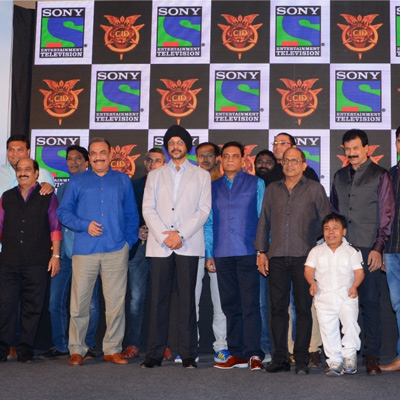
  • Sony brings CID Veerta Awards back after 3 year hiatus; to revamp ‘CID’

    Sony brings CID Veerta Awards back after 3 year hiatus; to revamp ‘CID’

    MUMBAI: Sony Entertainment Television’s much coveted CID Veerta Awards will make a comeback after a hiatus of three years.


    Airing on 14 August, 2016 the award ceremony will continue with its tradition and inspire audiences.


    One of the longest running shows on Sony Entertainment Television, CID has completed its 18 years on Indian television and the channel is also looking at revamping the show.


    Starting 19 December, CID will continue to entertain fans every Saturday – Sunday at 10 pm. To celebrate the milestone of completing 18 years, the show and CID cops will amaze audience with a refreshing new avatar while the cops continue to solve intriguing murder mysteries.


    Multi Screen Media (MSM) CEO NP Singh said, “To be on-air for 18 years is an unparalled feat for any Indian programme on television. CID continues to rule hearts and its characters have found a place in the everyday life and rhythm of its viewership. Over the years, CID has not only kept pace with changing consumer preferences and sentiments but also sustained their interest. As it enters its 19th year of successful sustenance, CID will bring new surprises to you and temper your intellect with more mysteries to resolve. Just like the 18 years gone by, the viewers of CID will be able to watch CID for another 18 years, if not more.”


    CID Veerta Awards are to salute those men, women and children who have put others before them; helping them in difficult situations, sometimes even putting their own lives at risk in order to do so. 


    Sony Entertainment Television EVP and business head Danish Khan said, “CID is one of the most important franchises of Sony Entertainment Television. The reason it has been successful for over 18 years is because it has changed itself with times, yet remained consistent in its appeal and storytelling. 2016 will see CID in an avatar, which will delight its existing set of viewers and attract newer set of viewers. Sony Entertainment Television is committed to take CID to newer heights in 2016.”


    CID is the longest running and one of the most loved shows on Indian television. This very special long run would not have been possible without the support of Sony Entertainment Television. As CID enters its 19th year, we are thrilled to present the new look, which I am sure viewers will enjoy. This new phase will only enable us to further connect with our audience with a fresh approach,” said Fireworks Productions producer BP Singh.

  • Ashish Golwalkar to join Sony as Head of Non Fiction

    Ashish Golwalkar to join Sony as Head of Non Fiction

    MUMBAI: Ashish Golwalkar who recently resigned from the post of Senior VP – Programming Star Plus is set to join rival broadcaster Sony as head of non-fiction.


    A source close to the development said, “It was one of the last holes that needed to be filled and Ashish is the best fit. He is likely to join from December 1.”


    Before Star he was associated with Zee Entertainment Enterprise Limited for over 11 and half years. The last post that he had in Zee was as Head of Non-fiction Programming.


    The company had earlier appointed Danish Khan as EVP & business head for Sony Entertainment Television.


    Additionally, as a part of Khan’s core team, the company roped in Anup Vishwanathan as SVP and head marketing, Anshuman Sinha has come on board as SVP and senior creative director, whereas Ritesh Modi as VP and creative director. The trio alongside Khan will be working with a battery of seasoned professionals at MSM. 

  • MSM strengthens Sony team with four top-level hires

    MSM strengthens Sony team with four top-level hires

    MUMBAI: In an attempt to strengthen its team and galvanise renewed energy into its flagship channel Sony Entertainment Television (SET), Multi Screen Media (MSM) has made four top level appointments.


    The company has appointed Danish Khan as EVP & business head for Sony Entertainment Television. He steps into the shoes of erstwhile business head Nachiket Pantvaidya. Khan was previously programming head at Star Plus.


    Additionally, as a part of Khan’s core team, the company has made three new appointments. Anup Vishwanathan has been named as SVP and head marketing, Anshuman Sinha has come on board as SVP and senior creative director, whereas Ritesh Modi has been appointed as VP and creative director. The trio alongside Khan will be working with a battery of seasoned professionals at MSM. 


    As the man at the helm for SET, Khan will be driving the overall business of the channel including its objectives of channel growth, viewership and developing innovative revenue opportunities. Khan has earlier spent ten years in MSM in various marketing roles.


    In his new role, Vishwanathan will be working closely with Khan to amplify and support efforts towards the growth of SET and to substantiate the brand equity for the channel, primarily with its viewership base. 


    During the course of his work across various advertising agencies such as Leo Burnett, Mudra Communications and McCann Erickson, Vishwanathan has earlier serviced the SET portfolio from the agency side, for six years. He moves from Times Network where he was marketing head of the English Movie cluster.


    On the other hand, Sinha comes to MSM with 17 years of work experience. His forte lies in synergising consumer sentiment with progressive content. Sinha will join forces with Modi in charting a new creative course for SET. Modi, who has 18 years of working life behind him, specialises in non-fiction reality show formats and has a deep understanding of regional markets.


    MSM chief executive officer NP Singh said, “Given rising industry competitiveness coupled with a steady surge of growing audience expectations, innovation has become the key to success and growth. It is imperative that consumer insights dictate a channel’s look and feel as well as programming.”


    “The new team is not only seasoned and versatile but also willing to go the extra mile to ensure that consumer choice becomes the key to new offerings from SET – the flagship channel of MSM. This new team is committed to writing the next chapter of our growth story and they have my full support,” he added.

  • Sony SVP Gaurav Seth quits; to launch digital venture

    Sony SVP Gaurav Seth quits; to launch digital venture

    MUMBAI: There’s a shake-up happening at Sony Entertainment Television (SET). Close on the heels of Star Plus programming head Danish Khan being appointed as the business head for the channel, comes the news that SET senior vice president and marketing head Gaurav Seth has put in his papers after a six year stint at the company.


    A source tells Indiantelevision.com that Seth put in his papers in May and is currently serving his three months’ notice period.


    According to information available with this website, Seth is planning to start-up his own venture in the digital space. With the world going digital and new frontiers opening in the space every day, it comes as no surprise that Seth has chosen to dabble in this futuristic medium. 


    He started his career with ESPN-Star Sports as marketing manager in 1997. After six years in the organisation, he moved to Altavista Inc as country head in 2003, where he was responsible for brand development, website traffic growth and advertising revenue.


    In 2004, he moved to join Zee Telefilms (now Zee Entertainment Enterprises Ltd) as vice-president, marketing. At Zee, he took care of the group’s sports brands and business.


    Seth then moved on to join Subhash Chandra-led Essel Group new venture Indian Cricket League, India as vice-president in 2007, where he headed the marketing and communications role.


    Merely a couple of months after that, he moved on to join Vyas Giannetti Creative Sports as business head in 2008. At the end of 2008, he joined SET India as senior vice-president, marketing for Sony Max.


    At the time of filing this story, Seth was unavailable for comment.

  • Zindagi appoints Star Plus’ Bharti Sharma as programming head

    Zindagi appoints Star Plus’ Bharti Sharma as programming head

    MUMBAI: It was in June 2014, when Zee Entertainment Enterprises Limited (Zeel) launched a channel nationally, christened Zindagi, for progressive mindset and people who do not have a language barrier. With the best of content from across the border, the network had appointed a separate team for the channel.


    The first change in the team happened with the exit of the network’s marketing head for national channels Akash Chawla quitting and moving to Essel Vision Productions as business head. The team is further set for a change.


    Now it is learnt from a highly placed source that Vanita Jain, who wears the hat of the programming head, has already resigned from the post and relinquished her position last week. The channel has roped in former Star Plus associate creative producer Bharti Sharma in place of Jain.


    Sources tell Indiantelevision.com that Sharma has already joined Zindagi on 9 February, 2015 and will report to the channel’s business head Priyanka Datta.


    Sharma was part of the programming fiction team at Star and used to report to Star Plus’ fiction programming head Danish Khan. She was involved creatively in projects like Mahabharat. Her last day at Star was on 6 February, 2015.

  • Diya aur Baati hum: Two years on, the flame continues to burn bright

    Diya aur Baati hum: Two years on, the flame continues to burn bright

    MUMBAI: An educated girl with big aspirations is married off to an illiterate boy from an orthodox family is not something out-of-the box. We all have heard, read or seen such stories year after year. But what is it about Star’s primetime show – Diya aur Baati hum – that has caught everyone’s fancy?
     

    Prompt comes the reply from Star’s programming head (fiction) Danish Khan that there are various aspects which have led to the success of the show that completes two years on 29 August. “The most important thing about the show is that even though it is set in a small town, it has broken the stereotype that one cannot pursue his/her dreams after marriage.”


    Khan goes on to give the credit to the strong and evolving story and the actors for integrating well with all the elements, “The writers and producers have been able to keep the horse running for us. The story is so simple yet day-after-day it has been able to connect with its audience. Even the actors have portrayed the characters so well. They are reliving their lives as those characters.”


    Agreeing with Khan, Shashi Sumeet Productions (which is producing the show) founder director Sumeet Mittal adds, “As an inspirational story of a halwai (sweet shop owner) wanting to make sure his wife becomes an IPS officer, it was amazing how the audience accepted our show. Furthermore, the extremely relatable characters have helped give this show a sense of realism to which our audiences can connect.”


    And the numbers are proof enough of that. The drama series, which is based in Pushkar (Rajasthan), has been a consistent No 1 for nearly a year and a half for Star Plus. Its launch ratings of 1.9 TVRs (the metric used nowdays is TVTs) were not oo impressive. But it grew on its audience which took a fancy to it as reflected in the ratings climb to 6.7 TVR (week 34 of last year). A year later in 2013 in week 33, Diya aur Baati has reported TVTs of 11,166 TVT, which is way higher than any other primetime show on the competition. Rival Zee TV’s Pavitra Rishta which airs at the same time slot has a relatively leaner TVT of 4,959 TVTs for the same week, while ratings of shows on other channels don’t even merit a mention.


    Industry sources say that adverising commercial air time on Diya aur Baati comes at a high sticker price thanks to its continuing stellar performance and connect with its loyal viewers. “The premium attached to the show is almost 30-40 per cent more than the second ranking show, as per ratings,” says a source.


    Any other channel worth its salt would love to replicate the prime time series success. What is that makes Diya aur Baati tick? It’s all about staying true to your roots and understanding why you are making a show and for whom, feels Mittal.  “Having an audience connect doesn’t just mean making a show with good television ratings, but also creating a beautiful amalgamation of what we want and what the audience wants,” he elaborates.


    Star Plus vice president (marketing) Nikhil Madhok avers that effective marketing during the show’s high points and brand integrations are something that have worked well for it. “When Suraj went for the ‘Top Chef Competition,’ we got the entire nation to give their best wishes to him. If you look at the recent activation, we got Shahrukh Khan to the show in the ‘Master Quiz’ episode. We do such activities regularly to connect to people,” states Madhok.


    The producer of the show doesn’t think retaining stickiness is a cakewalk . “Today, people are spoilt for choice and one has to maintain the connect with audiences for them to keep coming back every day,” says Mittal.


    Fiction show audiences on GECs expect high drama. Some of the tools programming and creative folks in channels have been using to keep viewers hooked are generation leaps and unexpected twists and turns in the story plot. “The idea is to the audience guessing and looped-in otherwise there is always another show where they can find drama. Also, it helps the show to stay fresh, all the time,” says a media observer.


    To keep freshness going after 500-plus episodes isn’t a difficult task if the entire team is driven to make each episode work, believes Mittal. “We have to treat every episode as a whole and give it equal importance. Each department, from writing to direction to actors, to camera persons each and every member of the crew has to work with the same amount of passion and that’s what will translate into a beautiful episode on screen. I strongly believe that in a daily soap, where your interface with the audience happens every single day, the philosophy that small parts make a whole applies aptly here. We have to see that imagination and execution go hand in hand.”


    Lodestar UM’s general manager Hema Malik agrees but adds that it is impossible for a show to keep reigning forever; unless of course the team is able to continually come up with interesting and entertaining elements. “Overall, if a show has been getting good ratings, it means it has a strong storyline and characters which one can relate to. And if at a certain stage the storyline becomes boring or predictable, people will take even less time to get off it than they took to get hooked on to it. It is here that one needs to take up the challenge and bounce back.”


    Malik goes on to say that the show portrays the channel’s philosophy Rishta Wahi Soch Nayi perfectly. “Star’s values are very much in the storyline of the show. Hence, it’s a perfect match.”

  • Indigo Consulting wins KBC’s digital duties

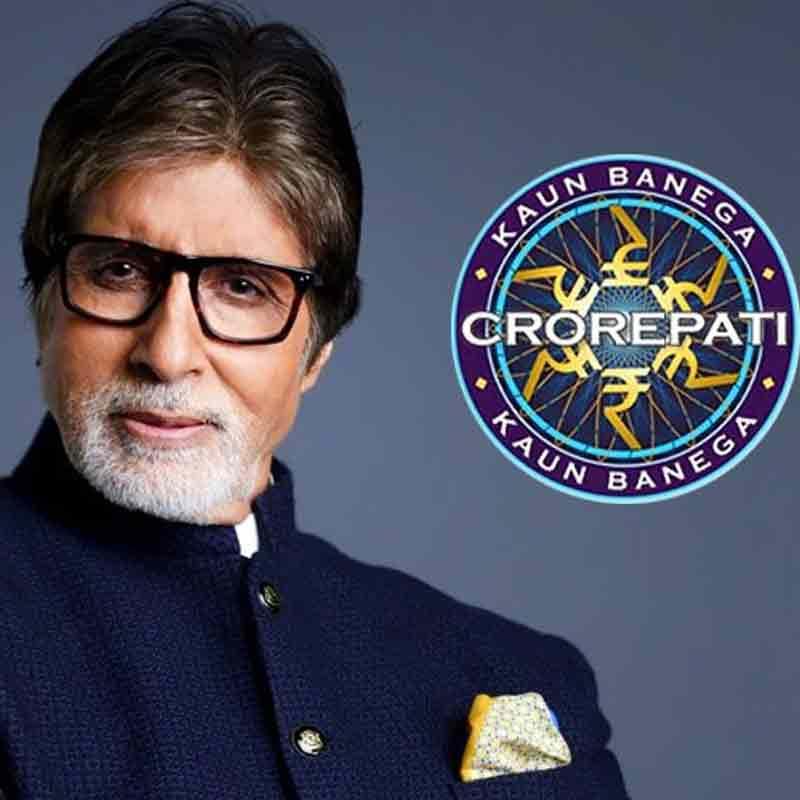
    MUMBAI: Leo Burnett‘s Indigo Consulting has been roped in by Sony Entertainment Television to launch the digital media campaign for its game show Kaun Banega Crorepati. Work on the show has already begun.

    The objective of the project will be to create a brand impact.

    Sony Entertainment Television senior vice president – marketing Danish Khan said, “KBC has been a household name for a long time now. But we wanted to up the ante for the sixth season of the show. Indigo Consulting has done some fabulous work in the digital space. The freshness they bring to each project is exactly what we needed to keep pace with the evolving market terrain.”

    Indigo Consulting director – digital strategy and business development Sunil Kher said, “This year‘s KBC campaign celebrates the power of knowledge. We are happy to extend this concept online for Sony and help them achieve maximum impact.”

  • Sony targets Rs 2 bn from KBC

    Sony targets Rs 2 bn from KBC

    MUMBAI: It’s hoping to hit the jackpot itself. Sony Entertainment Television (SET) is looking at more than doubling its advertising revenues from its flagship reality game show, Kaun Banega Crorepati (KBC), even as it is lengthening the telecast time of each episode and its seasonal run.


    The Hindi general entertainment television channel is expecting to reap an ad revenue of Rs 1.80 to Rs 2 billion from the fifth edition (second on Sony) of the show, according to market estimates.


    This time the show will run for 14 weeks in 1 and a half hour long episodes. In the previous edition, KBC ran for seven weeks in one-hour episodes.


    “Sony is looking at more than doubling its ad revenues as the inventory has gone up. Besides, the channel‘s ratings have improved as well,” said a media analyst.


    The channel is spending an estimated Rs 800-100 million on marketing the game show, which will be hosted by Bollywood actor Amitabh Bachchan. Last time SET spent Rs 110 million on marketing the show.


    “We had to spend more on marketing the show last time because we had to stress on the fact that KBC was shifting from Star TV to Sony. Also, Bachchan was returning to the show after a gap of six years,” said SET senior vice president and marketing head Danish Khan, while declining to comment on the actual spends this year.


    Placing the show at 8.30 pm every Monday-Friday, Sony is using the flagship show as a gateway to its primetime programming. The channel plans to launch a fiction show at 8 pm in mid-September.


    “We have two fiction shows which are doing well at late primetime. This is a good time band to attract audiences from smaller towns and metros. KBC is going deeper this time,” stated Khan.


    KBC was aired at 9 pm in the previous edition.


    Sony is expanding the role of KBC from just a game show to a “show that reflects the transformation of lives in India”.


    “Our entire marketing premise is built on this. Our five set of TVCs will reflect this message,” Khan commented.


    The themes chosen for the television commercials aim to highlight the country‘s identity: inflation, corruption, old age, relationships and hedonistic.


    The show‘s positioning has been amplified from “Koi bhi sawaal chota nai hota” to ‘Koi bhi insaan chota nahin hota‘.


    “This year‘s thought of ‘Koi Bhi Insaan Chota nahin Hota‘ is rooted in a popular belief of the society that ‘everybody inherently has the capability to achieve something extra-ordinary‘. Hence, all stories stem from the big idea – ‘do not underestimate anybody‘. KBC is not just a game show but it leads to information. It is rooted to India‘s culture that knowledge is power”, averred Khan.


    With a broader positioning, Sony has changed its promotional plans as well with television staying as the frontier medium. “Television and cinema will convey the message of the changing India. Print, radio and outdoor will act as reminders for appointment viewing,” Khan said.


    Conceptualised by Leo Burnett and produced by Chrome Pictures, the campaign has five TVCs, each with a distinct story and character. It reiterates the power that lies with the average middle-class man.


    “The hot seat is a great leveler. It transforms lives. The whole auditioning process is done in such a way that every contestant has a story to tell. Each of the 52 episodes will tell a story of the common Indian,” asserted Khan.


    The reliance on TV has also extended the spots‘ duration to 60-seconds.


    “Since the previous year was a very successful one for KBC, we are hoping that this one does even better. We have received fabulous response from our digital promotions as well. Our main objective was to create the most memorable campaign,” Khan concluded.

  • ‘Success of a TV channel is to find homogeneity in a heterogeneous market condition’ : Sony Entertainment Television VP marketing Danish Khan

    ‘Success of a TV channel is to find homogeneity in a heterogeneous market condition’ : Sony Entertainment Television VP marketing Danish Khan

    2009 was an eventful year for Sony Entertainment Television (SET). Languishing behind the top three Hindi general entertainment channels (GECs) and even newcomer NDTV Imagine, the channel relaunched with a bunch of differentiated shows. Some worked, some didn‘t, and the programming overhaul failed to lift the ratings to any position of strength.


    Sony then discovered the value of its old horses in C.I.D and Aahat. The channel zoomed to a GRP (gross ratings point) of 180 and the road ahead looked promising with the launch of YRF shows. But the leading film producing house evoked a tepid response among audiences for its TV shows, leaving Sony in hunt for new properties that would aid it to move up the ratings ladder.


    Marketing several new properties and the relaunched channel has been a challenging task under these circumstances.


    In an interview with Indiantelevision.com‘s Anuradha Ramamirtham, Sony Entertainment Television VP marketing Danish Khan talks about the strategies that Sony adopted during this period as it searched for width and depth of reach across markets.


    Excerpts:
     
     
    How tough was it to market Sony Entertainment Television in a year when a bruising battle was fought at the top among the three leading Hindi general entertainment channels?

    The GECs were in a growth mode last year and the leadership battle became intense. Marketing, thus, became much more strategic and key to a channel‘s fortune. Sony was clearly on the growth path and we were able to build the brand with high impact campaigns for our bigger properties like Indian Idol 4, Dus Ka Dum, Bhaskar Bharti, Aahat -the all new series and Iss Jungle Se Mujhe Bachao. We also rejuvenated the brand CID. All these shows were successfully marketed in challenging times and conditions.


    What exactly were you looking at marketing when the channel went for an overall overhaul?

    SET has existed as a brand for long and our aim was to refresh the look and feel of the channel. The relaunch wasn‘t just of getting a bunch of new shows to appear on the channel; it was also about refreshing the channel‘s identity. While we retained the logo, we went for a new packaging and brand identity. On the programming front, we retained some of our old properties like CID, Boogie Woogie and Comedy Circus and introduced some new fiction shows including Bhaskar Bharti and Ladies Special. This helped us in improving the channel‘s ratings by over 150 per cent over a nine-month period.
     
     
    Did your marketing spend expand during this makeover period of the channel?

    The channel‘s marketing budget stayed almost flat. We were fortunate in that for the first half of the year, the media cost was stagnant due to recession. We also changed our media buying mix a bit by increasing our exposure to low-cost mediums like digital and experiential marketing. We could have a similar impact at lesser cost. The marketing was much more rigorous and we did all to stretch the value of every rupee that we spent.
     
     
    With the Tam panel expanding and new markets opening up, will you have to tweak the marketing plan for the channel?

    With the TAM panel expanding, it‘s going to be a challenge not only for us but for all marketers in the channel space. Thankfully, we have a strong distribution network. In 2003, when Tam was moving to smaller cities and towns, Sony was the fastest to reach to new markets and develop a strong brand affinity. With the new markets opening up, it will be a good opportunity for us.
     
     
    How different is it to market in smaller towns as compared to tier I cities?

    The tier I cities and metros are mature markets and are organised in nature. In these markets, there are multiple media options available to reach to the consumer like availability of FM stations and organised outdoor media. Consumers in these markets are early adopters to new trends and there are huge amounts of touch points available to reach out to them. Hence, these markets are easier to monitor.


    These markets are, however, cluttered. The challenge here is not restricted to reaching to the consumers but also creating a high impact as they are bombarded today with hundreds of messages. In addition to availability of multiple media options, the markets have also become expensive. So, the challenge is both being impactful and cost effective.


    The smaller markets are not organised. There is lesser number of touch points and everyone wants to reach there. Experiential marketing works wonder in small towns if it is sprinkled with mass media applications. Consumers here are fresh to meeting celebrities and such activities are hugely accepted and help in creating the right buzz.


    ‘For the first half of the year, the media cost was stagnant due to recession. We also changed our media buying mix a bit by increasing our exposure to low-cost mediums like digital and experiential marketing‘


    What was the most cost effective medium for marketing during recessionary times?

    Recession or no recession, television is the most cost effective medium for marketers. Thankfully, we have a very robust network with five performing channels; these form the base for all our marketing plans. Outside television, we use different mediums. In 2009, Internet and mobile (digital medium) were used more judiciously to reach to the youth who are tech savvy. Also, experiential marketing (BTL activities) was pushed hard last year and they yielded good results.


    With advertisers spreading their focus into smaller markets, how will GECs and particularly Sony benefit from this?

    Like television, most categories and brands today have a pan India presence. TV is increasingly becoming relevant across categories as its spreads out both geographically and demographically. Like any other marketer, Sony is also keen on small towns. Besides, the channel enjoys a robust distribution platform across India.


    How do you address such a heterogeneous market?

    The success of a television channel is to find homogeneity in a heterogeneous market condition. In India, the markets which we cater to are extremely heterogeneous in nature. A Punjab market, for example, will think and behave differently than a Maharashtra market which, in turn, will be different from Uttar Pradesh. But there are certain universal themes that work across markets. The content and communication has to be based on this. Media behaviour and mediums can differ. As far as the message is concerned, it should always be built around something that works universally. That applies to successful shows as well; they have messages that are universal. 

     
    YRF is a strong movie brand. What marketing steps did you take to extend it into a television brand?

    It was challenging to work on the YRF shows. These are early days yet and the five weekend shows have started attracting a definite set of loyal audiences. We are doing a lot of on-air promotions and experiential marketing to build the popularity for these shows.