Tag: Dance India Dance

  • &TV acquires ‘So You Think You Can Dance’ rights; Endemol to produce

    &TV acquires ‘So You Think You Can Dance’ rights; Endemol to produce

    MUMBAI: Even as Indian television has seen dance reality shows galore like Dance India DanceNach Baliye and Jhalak Dikhhla Jaa amongst others on Hindi general entertainment channels (GECs), another new dance reality show format is all set to hit screens in the near future. 


    Zee Entertainment Enterprises’ Hindi GEC &TV has acquired the rights of the global dance reality format show So You Think You Can Dance (SYTYCD) from Dick Clark Productions.


    Endemol Shine India will produce the India edition of the reality show for the channel.


    Dancers from across the country – amateur or professional – can participate in the show. &TV has already started the online registration process. However, the channel has not yet made any official comment on the air date and time.


    SYTYCD India will also see the country’s best choreographers as jury members on the show.


    The original show was created by American Idol producers Simon Fuller and Nigel Lythgoe is produced by Core Media Group’s 19 Entertainment and Dick Clark Productions.


    In the US, SYTYCD was recently renewed by Fox for a 13th season, which is slated to go on air on 30 May.

  • &TV acquires ‘So You Think You Can Dance’ rights; Endemol to produce

    &TV acquires ‘So You Think You Can Dance’ rights; Endemol to produce

    MUMBAI: Even as Indian television has seen dance reality shows galore like Dance India DanceNach Baliye and Jhalak Dikhhla Jaa amongst others on Hindi general entertainment channels (GECs), another new dance reality show format is all set to hit screens in the near future. 


    Zee Entertainment Enterprises’ Hindi GEC &TV has acquired the rights of the global dance reality format show So You Think You Can Dance (SYTYCD) from Dick Clark Productions.


    Endemol Shine India will produce the India edition of the reality show for the channel.


    Dancers from across the country – amateur or professional – can participate in the show. &TV has already started the online registration process. However, the channel has not yet made any official comment on the air date and time.


    SYTYCD India will also see the country’s best choreographers as jury members on the show.


    The original show was created by American Idol producers Simon Fuller and Nigel Lythgoe is produced by Core Media Group’s 19 Entertainment and Dick Clark Productions.


    In the US, SYTYCD was recently renewed by Fox for a 13th season, which is slated to go on air on 30 May.

  • Aishwarya Rai, Irrfan Khan on a reality show for the first time ever

    Aishwarya Rai, Irrfan Khan on a reality show for the first time ever

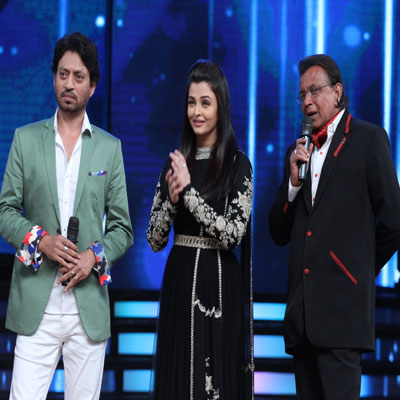
    MUMBAI: For the very first time in the history of television, superstars Aishwarya Rai Bachchan and Irrfan Khan will be seen on a reality show! The actors will be gracing the stage of India’s biggest dance reality show – Dance India Dance Season 5 as guest judges on a special episodethis Sunday, 30th August at 9PM on Zee TV. 


    Ash and Irrfan were on the show to promote their upcoming thriller Jazbaa and the contestants and masters did not leave any stone unturned to floor the stars with their dancing prowess and fun spirit. While master Mudassar came prepared with some sher-o-shayari and showered Ash with compliments, the contestants decided to display their biggest strength, their dancing ability to woo the special guests. 


    Pankaj and Ashish from Punit Ke Panthers performed a contemporary act depicting deceit in friendship. The two swiftly and gracefully moved to the song ‘Kaminey’ and brought out with conviction the love between two best friends, seamlessly flowing into emotions of  being cheated on by one. Ashish and Pankaj who are known for their flawless contemporary performances, created magic with this act and moved Aishwarya to tears. Even before the dancers could get up and take a bow after the final pose, a teary-eyed Ash gave them a standing ovation. She shared how this soulful performance touched her and she could see the honesty and dedication of the contestants. Ash even congratulated Master Punit for the tremendous execution of a simple concept. The other act which left the mega stars Irrfan and Ash completely spellbound was the aerial act by contestants Anuradha and Kaushik from Mudassar Ki Mandli on the popular track ‘Ranjha Ranjha’.  Gaiti ke Gangsters weren’t far behind and the two pillars from the team, Sahil and Nirmal dedicated their act to the beauty queen.  They paid her tribute by depicting her journey from a super model to a superstar and performed to some of her most iconic songs, recreating her signature moves. They ended their act by showering flowers on Ash and this clearly had the gorgeous actor blushing a beet root red.


    But the show wasn’t complete without the masters exhibiting their dancing skills! The three came up on stage and requested Ash to shake a leg with them to her popular dance number ‘Kajra re’. Ecstatic on seeing their dream girl dance LIVE in front of them, the contestants jumped at this opportunity and joined her on stage. 


    Both Ash and Irrfan were seen having a ball and did not shy away from showering praises on the talented contestants for the exceptional acts they put up! 

  • Zee TV readies stage for DID season 5

    Zee TV readies stage for DID season 5

    MUMBAI: The passion, frenzy, camaraderie, rehearsals, victories, disappointments, and above all the spectacular talent is back as the biggest battle for the coveted title will soon begin.


    Hindi general entertainment channel (GEC) Zee TV is back with its flagship dance reality show – Dance India Dance (DID) season5, starting 27 June.  Produced by Essel Vision Productions, the programme will air every Saturday-Sunday at 9 pm.


    Re-designing the format this season, DID will present itself in the form of the ‘Biggest Battleground of Dance’, where each participant will scale new horizons of perfection, poise, presence and grace and challenge the others to #BeatThat.


    To groom and hone the talent is an all-new trio of masters who bring with them the renewed vigour of youth, an undying passion for dance and many years of training as dancers and choreographers.


    The panel includes DID season 4 judge and choreographer Mudassar Khan, Gaiti Siddiqui, who has been a coach and creative guide for countless DID stars over the years and DID season 2 finalist Punit Pathak.


    The trio will each mentor a group of contestants and polish their skills through rigorous training, workshops and choreography that push their limits. While actor Mithun Chakravarty will guide and motivate contestants as the Grandmaster, Jay Bhanushali returns as the host.


    Essel Vision Productions business head Akash Chawla believes that it was high time for the channel to re-design and break the predictability of the format. “There have been four seasons of DID so far. Not just that, we had sub-franchises like DID Super Moms, Lil Masters, not forgetting the other dance reality shows which came up after DID. From an audience point of view, we thought this was the right time to break the predictability of the format, thus surprising audiences with something which they might not even expect from the show,” he adds.


    Zee TV business head Pradeep Hejmadi says that he wanted to get the GenNext as masters for better connect with participants and audience. “With the young masters, you can actually create that kind of language and chemistry,” he reasons.


    The 15 week season will see weekly eliminations basis the judge’s scorecards till it gets its top 10, after which the junta will decide  who amongst their favourite contestants will be the winner.


    Chawla further explains that it is just not an overnight job but takes six-eight months of hard work before the show goes on-floor. A nationwide hunt to scout for India’s most talented dancers began earlier this year across 17 cities including Mumbai, Delhi, Indore, Ranchi, Guwahati, Raipur, Siliguri, Chandigarh, Dehradun, Bhubaneshwar, Jaipur, Patna, Lucknow, Kolkata, Bengaluru, Nagpur and Vadodara.  Contestants underwent layers of screening and finally the most deserving candidates were hand-picked.


    Moreover, apart from physical auditions, talent was picked from other mediums as well like digital, dancing schools, talent scouting agencies etc. The channel has canned the auditions round and is on its way of shortlisting its top 16 contestants.


    “When we go to small towns, participants come and tell us that while they have the option to opt for the numerous dance reality shows on other channels, they wait only for DID. At times it is very difficult to disqualify contestants. The talent this time will speak for itself,” opines Chawla.


    According to Chawla, it is not just about the hard work but also those hard calls, right from changing the format to getting new masters which makes or breaks a show. “These are not simple calls because you have already tasted success. People already know Geeta, Remo and Terence as masters of DID, so the first shot with new masters while is scary, it is also exciting. For people working behind the camera, the success of the season will be determined by how the new masters are accepted,” he adds.


    The show has envisioned three core elements i.e level of dancing, level of training and the new format. Chawla opines that the format of the non-fiction indigenous talent hunt shows which the Indian market produces is not handled in the best manner.


    “If you look at the International formats or those formats which are acquired for Indian audiences, the core of the show is to keep alive the entertainment and surprise quotient. And therefore with this one, we not only have tried to change the format but have put a lot of rigor and hard work with the available international learnings that we have had across the years to build a format which we believe will get on to the international platform.”


    This season, the channel plans to give talents an opportunity to perform at the global platform post the show. Chawla points out that one of the key selection criteria this season was to see if contestants have the courage to compete with international performers. “Even if the talent is raw and ready to learn, we believe in giving them a chance. The masters are there to polish the talent in contestants,” he says. 


    DID has always been a property that has not just fetched good numbers for the Zeel flagship channel, but also attracted good ad revenue. According to sources, the property is expected to earn Rs 90-95 crore this season.

  • Zeel licenses home-grown format ‘DID’ to Thailand’s broadcaster

    Zeel licenses home-grown format ‘DID’ to Thailand’s broadcaster

    MUMBAI: Zee Entertainment Enterprises Ltd (Zeel) has created a broadcast history by finalizing a syndication deal with JKN Global Media Limited Thailand for its home-grown format, Dance India Dance (DID). 


    It is a known fact that prime-time content in India has been laced with popular international formats, which are regularly imported and licensed by Indian TV channels from international broadcasters, production houses or format owners. 


    While Indian content being aired or repurposed on TV channels across the world is quite common, this particular syndication deal is a landmark achievement since it’s the very first time that a format created in India has been licensed internationally. The Indian content industry’s contribution to ‘Make in India’, literally.


    Zeel MD and CEO Punit Goenka said, “At Zee, we have always believed in developing in-house formats. It was our belief in the concept of Dance India Dance that led to its growth from the regional to the international platform. Through this partnership with JKN Global Media Limited, DID will not only reach out to the South-Asian diaspora but the local, mainstream audiences in Thailand as well.”


    “Going forward, we hope to license not just Dance India Dance but our other home-grown formats to the international markets,” Goenka added.


    Commenting on the partnership, JKN Global Media Thailand MD Andrew Suteestarpon said, “I’m very pleased to develop the well-known format show called Dance India Dance into the local version. With the collaboration of Zee, I strongly believe in the professional team and the corporate experience that can lead JKN Channel into achieving a high success rating with Dance Thailand Dance.”


    Zeel global head syndication Sunita Uchil added, “We are very proud that our home-grown format Dance India Dance will now reach 22 million homes in Thailand through JKN Channel. Over the years, there has been an increasing demand for Indian content and we have endeavored to meet this demand by offering a wide array of entertainment content through customized services like dubbing and subtitling in foreign languages under the Zee Bollyworld umbrella. This deal embraces our global positioning of ‘Vasudhaiva Kutumbakam – The World is My Family’ and reinforces Zee Bollyworld’s leadership as the ‘one-stop shop for Indian entertainment content the world over.’”

  • Saurabh and Vivek launch dance championship ‘Born 2 Dance’

    Saurabh and Vivek launch dance championship ‘Born 2 Dance’

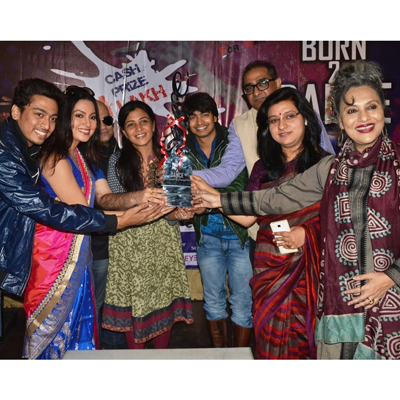
    KOLKATA: East India’s biggest dance championship –‘BORN 2 DANCE – One Chance one Dance’ is a championship, where people from a few districts of Bengal like Medinipur, Durgapur, Barrackpore, Sreerampore and Siliguri and few nearby states like Orissa, Jharkhand, Bihar and  Assam can participate, inclusive of Kolkata and Howrah.

    It is the brain child of Saurabh and Vivek, Fame – DID Finalists2011, who have been a part of many reality shows and won many of them too. The event will cater to the age group between three to 30 years and will have special solo rounds for moms and dads too along with doubles and groups as categories too. The winner of the entire event would be awarded with a cash prize of Rs one lakh. The auditions at Kolkata will be held on 22, 23 and 24 December. All the finalists of the event would be given a three day grooming workshop by the duo.

    The finale event will be held on 7 January 2015 at Science City Auditorium, Kolkata and will be judged by Salman Yusuf Khan, (Dance India Dance Winner, Jhalak Dikhla Ja Winner, Khatron Ke Khiladi, Debut Movie – ABCD).

    On this occasion, the duo commented, “Since we have been a part of many reality shows, we understand the difficulty of being a part of the same. So, we decided to launch Born 2 Dance, where people from all over East India could participate in a Dance Competition and get a chance to be groomed and trained by us to become capable of being a part of reality shows too. Kolkata has witnessed many dance competitions but one that brings together people from all nearby states too will happen now”

    Market Concepts owner, Chetna Karnani, said, “The sole objective of this event is to bring out the talents of deserving dance aspirants, by providing them with a platform through a state level competition and hence it will help pull a participation of over 7000 people.”


  • “We don’t want to be the first but be the best”: Pradeep Hejmadi

    “We don’t want to be the first but be the best”: Pradeep Hejmadi

    With multi-dimensional understanding of the media business, he has spearheaded and successfully launched innovative and first-in-class profit-bearing initiatives in the Indian media marketplace.


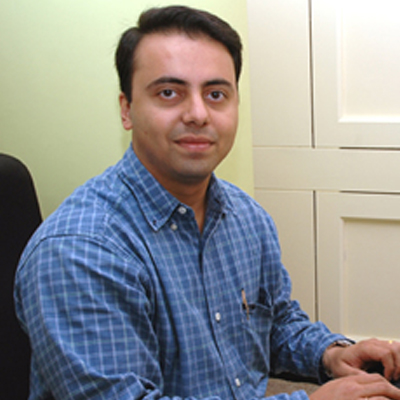
    Having more than 18 years of well-rounded experience in the Indian media industry spanning media sales, media planning and buying, consumer research, business planning and product development, former TAM Media Research senior vice-president and  now Zee TV business head Pradeep Hejmadi,  is in the happy space.


    Hejmadi has filled up the position which was vacant since 2010 and believes he has a long way to go. With the channel’s fiction offerings doing pretty well as per TAM TV ratings, according to Hejmadi it is time for the channel to strengthen its weekend band with new shows and target younger profile.


    In a conversation with indiantelevision.com’s Disha Shah, Hejmadi talks about the challenges that he had to face when he came on-board, the channel’s biggest upcoming property – ‘Aryan’ and how it will live up to the channel’s expectations. 


    Excerpts:


    It’s been five months since you took charge as the business head of Zee TV.  How has the experience been so far?


    It was like getting onto a running horse or a speeding vehicle. For me, it was more about gathering the right amount of momentum to get on-board and steer it in the right direction. The initial challenge was to get a sense of the pace like what track are we on and what track we need to be in and what is the destination and fix those things. Then it was just to get on-board and work with the team to add to the spirit and the momentum.


    Have you brought any changes in terms of content and marketing?


    Nothing at all… (laughs).. Honestly talent has been there. It has all the ingredients. Zee has had a legacy of being a pioneer in creating new formats and being acknowledged by viewers as a powerful brand in the fiction space.


    There were just a few small things that needed to be aligned. Firstly, it was getting our priorities in order which we did as a team. It was about sitting down and saying “What are the things that we are doing right now and what are the serious things that we need to take on the front and which are the things that we need to start on a development front.” So it was really about setting our priorities right and then getting a process and a way of functioning to harness the best that was already there.


    So we have a very good creative team; an effective marketing team and a powerful PR and digital team working here. We just had to bring all these pieces together and get them to fire in proper synchronization.


    And obviously, every time you hit a bump on the road, there can be a bit of alignment requirements as well. This is the other piece that is required but it is no rocket science. Life is no different, irrespective of what work you do because principles are the same. I came here to help several millions of consumers. At TAM, I had a responsibility in delivering in a particular manner and here I have the responsibility of delivering in a slightly different manner.


    Which band works wonders for the channel? Weekday or weekend programming?


    The beauty about facts is that you don’t have to think about them, you need to note them down. When I joined Zee, Jodha Akbar was on top and that was one show which was standing for us on top. Most of the other shows delivered medium range ratings and on the non-fiction end we had Dance India Dance (DID) which was winding up.


    It was in an interesting phase that I came on-board. We prioritised and looked at what are the things that are really going to give us reflection points in our shows and the teams took the backend to it. They put the energy back into it. There was a need for some alignment, because so much happens at the same time. One has to understand that the buzzing lights on the road are not the street markers. Those are pass inkers. So if you start thinking that they are the ones you have follow then you lose your direction.


    So we needed to separate the cat eyes on the road from the blinking headlights of the other vehicles to remain in the race and that is what we did as a team. We made that difference between those blinking cat eyes versus the shinning lights of some vehicles. With that focus, by god’s grace and the opportunity that audience provides you to get your act together, we are where we are and intend to be.


    ‘DID’ has delivered good ratings during weekends, do you think ‘Aryan’ will live up to the expectations?


    Sometimes media business is like a circus. There will be both clowns and animals and so when you a buy a ticket, you just don’t buy it for the clown. The same thing happens when you sit in front of the television screens. It must have a mix of multiple things.


    So we should not compare a horse stick with a clown act.  In the same way, there is no comparison between DID and Aryan. What we are trying to do with Aryan and other shows like Neeli Chatri Wale and the 9 pm non-fiction band is to create variety so that the whole family can sit together and watch. Not for even a moment, are we wanting Aryan to compete with a DID. They both are very different.


    DID is a platform to identify and give to the industry a fresh pole of choreographers. These are the guys who have raw talent in them but are not actors. Aryan on the other hand is meant to appeal to a family, be inclusive of the family but bring in the audience through a slightly younger profile because that is the kind of profile that starts watching television on a weekend. It is a story that will inspire people to believe in themselves. Our intent is to create a nice family blog where you go back to general entertainment days where you can actually sit with your family and watch television.


    We don’t want passing of remotes to happen. That’s our intent of weekend programming. Weekend is an environment we are going to create for families to sit and watch television together.


    In the future as well, we will create different kinds of properties to give audiences a variety to enjoy. Weekend programming is by sheer nature very varied; while some do celebrity-based dance shows, we do non-celebrity based shows.


    As for Aryan, it took us almost eight months to be where we are now and the challenge continues as it is a trilogy. Maharakshak is the brand and Aryan is the first of its trilogy followed by two other superheroes.


    Will we see a return of Sa Re Ga Ma Pa? And is the channel working on new formats?


    Yes. Sa Re Ga Ma Pa will soon hit the television screens. Work is on. Once we reach the stage where we are confident of the talent and the format we will announce it officially. As of now, we are working on multiple projects and those will go on air first.


    Talking about new formats, one should not forget that every format demands newness. DID and Sa Re Ga Ma Pa are power brands for us, so we don’t have to go looking for something new. We need to make sure that we do justice to the standard that it has lived up to.


    I think sometimes audiences are comfortable in what they are familiar with but they would like to see something better and if we are able to provide that with little alterations then that too becomes new for them.


    Is an increase in number of hours of original programming in fiction on agenda?


    Yes, but gradually. The audience has limited time so we have to make sure that we become their preferred choice.


    We are clear that we will create new properties and put out more hours but we have to make sure that every hour is worth its value in gold for the audience because every time we put a new show we are expecting the audience to shift its time. We are not in a mad rush to just keep on expanding slots because we are answerable to millions of viewers who come to us every week.


    Once we are at that point where we feel that it is time to go on to the next one, we will. We are in no hurry to score on somebody else’s score sheet. Our focus areas are very clear in terms of what we want to do. We don’t want to be the first but be the best.


    Zee being the pioneer, are you planning to revive the afternoon slot anytime soon?


    Given the way the industry is balanced between a hybrid revenue model of advertising and subscription, it is not that if I go to open an afternoon slot and get audience’s affection, it will translate into subscription revenues for me. It has to be advertising revenue and then over a period of time subscription revenue will start coming in. And advertisers somewhere think a 2 rating point in the afternoon is worth less than a 2 rating point in traditional primetime. So as long as that mindset is there, it does not work for me from an economic model point of view.


    For makers to make a show and put it in the afternoon costs as much as to make a show what advertisers love to call, prime time. If I can deliver 6 per cent reach and 2.5 rating in afternoon, as a content provider I don’t see what is wrong in it. But somewhere the yield on that has always been a matter of concern and therefore over a period of time, if you see that what Zee pioneered and others followed, has now died because economically the model crashed.


    With digitisation dates being postponed, how do you see it impacting the channel?


    Digitisation is a far bigger phenomenon than a short-term milestone. We have to learn to do well no matter how the environment changes. I don’t see how it will impact the channel in the immediate run. However, it will help us on the distribution level to ensure better revenues and possibly reduce the carriage costs etc. But at the same time, we should not forget that audiences need that time to be able to cough up money, last miles to go and put up the boxes and it needs to be done in a more organised and systematic manner.


    From Zee’s perspective, whatever be the environment, playing out of a set-top box or an analogue cable or DTH service provider, we need to be as relevant and as important for the audience to come and watch us. Those are just means of getting there. We would like digitisation to happen sooner, but also done in a systematic manner so that it makes sense for the whole value chain.

  • Sa Re Ga Ma Pa to make a comeback as DID takes a sojourn

    Sa Re Ga Ma Pa to make a comeback as DID takes a sojourn

    MUMBAI: Are you an avid Dance India Dance fan? Well, then get ready to wait as the most rated non-fiction property of Zee TV will come back with a new season after a good one year.

    The show which has caught on to the audience’s heart with jaw dropping performances for more than seven years, has decided to take a break and come back next year with an all new, refreshing and exciting new season.

    Confirms the maker himself, Essel Vision Productions producer Nitin Keni, “With back-to-back launches, there is too much of DID happening.”  From introducing the Indian audiences to dance forms like locking and popping, hip hop moves to ‘slo-mo’ style, to making dance popular among all age-groups, DID has done it all. And through the DID sub-franchisees (DID LiL Masters, DID Super Moms and DID Doubles), the channel has ensured that all the age groups have been explored to the optimum.


    “Whether it’s Cinestars ki Khoj or otherwise, DID needs to be given rest,” adds Keni. Replacing the dance reality programme is Zee’s talent hunt show – Cinestars ki Khoj. Come 28 June and the channel is all set to revive its popular format every weekend at 9 pm. The mega auditions is slated to start from 20 June at RK Studios.

    “Zee TV has always stood for celebrating the talent of India’s common man. In 1995, the channel created the Mecca of singing talent in the country with Sa Re Ga Ma Pa and introduced the entertainment fraternity to some of its leading singers. The year 2009 saw a landmark in the history of Indian television when we launched Dance India Dance, giving hope to a million dance enthusiasts across the country. The show not only emerged as one of reality television’s biggest successes but opened up several new career avenues in dance for its participants,” says Zee TV programming head Namit Sharma.

    So while the currently running DID will be replaced by Cine Stars ki Khoj, post that the channel and the makers (Essel Vision) are planning to get back Sa Re Ga Ma Pa on-board. 

    Reveals Keni, “We are thinking of Sa Re Ga Ma Pa again, although it has not done really well in the past few seasons, considering people no longer are classically oriented, but we are thinking about it now.”


    A media planner believes that though it is a good decision to take a break from Dance India Dance, but considering the show’s popularity, the viewers might take some time to digest. “Undoubtedly, it has been a wonderful journey for the channel with DID. The show not only helped them in getting good numbers but also a large number of advertiser’s, season after season. Getting Sa Re Ga Ma Pa on-board is a good move, but the challenge for the channel is to make it competitive, bigger and better than the previous seasons.”

  • Why do we need sub-franchises of popular shows?

    Why do we need sub-franchises of popular shows?

    MUMBAI: Over the years, television has spawned a slew of successful non-fiction franchises which in turn have given birth to a riot of sub-franchises that are equally popular if not more.

    In our quest to find out why sub-franchises have mushroomed when there are enough and more franchises to provide entertainment and whether franchises are mightier than their off-spring, Indiantelevision.com spoke to a cross-section of industry to get to the bottom of the matter.

    Zee TV

    In 1995, Zee TV created a home-grown music-based non-fiction format titled Sa Re Ga Ma Pa that went on to capture a country’s imagination.

    What started back then under the aegis of Gajendra Singh, went on for 16 seasons till 2004 when the brand name was changed to Sa Re Ga Ma Pa Challenge and audience interaction was incorporated through a voting system. It was in 2011 that the channel infused kids’ participation to revisit the show as Sa Re Ga Ma Pa L’il Champs.

    Recalling the journey of the show, it was post 2001 that it became a brand, giving talented, albeit anonymous singers a platform and giving Bollywood much of its current talent including Shreya Ghoshal, Kunal Ganjawala and even Sonu Nigam, who was relatively unknown back then.

    In 2009, Zee created another big non-fiction property, this time in the dancing space, called Dance India Dance (DID). Till date, DID has seen four successful seasons while also giving birth to four sub-brands: DID Super Moms, DID Tashan, DID Doubles and DID Li’l Masters.

    What made Zee launch sub-franchises in the first place? “The key for any broadcaster today is to create for viewers an umbrella brand and then do a lot of exciting things under that,” says Zee TV programming head Namit Sharma. “It was a chance that Zee took and it worked. The audience at Zee is always hungry to watch new and fresh talent. Each of these shows has its own type of audience. There is a core DID audience and additionally, a different audience for each of the sub-franchises.”

    Sharma believes only successful shows make for franchises and franchises work on three things: firstly, how successful the original brand is; secondly, how innovative the creative team is; and thirdly, how receptive the audience is. Speaking of the many seasons of DID, he says the beauty of it is that with every season, the look, feel and talent can be sharpened.

    Explaining the need for sub-brands, he says, “It is fuelled by two things – one is the desire to keep doing well to want more viewership. So you know, if you are doing a DID sub-brand, it might get you more audience than a fresh show. Two – the audience enjoys it, so why not? Three – every sub-brand is actually like a new show under a mother brand. So these are all different shows. They are under one umbrella.”

    Sharma feels Zee is lucky to have two strong franchises that allow the channel to attract very good talent and showcase it in the best possible fashion.

    “There was a desire to fulfill in the singing space with Sa Re… and in the dancing space, DID took over and fulfilled that desire for talent to have a platform and the audience to watch that platform. So DID completed that wish. One of the challenges I have as a new person is to create more such franchises in different spaces,” he says.

    While Nitin Keni of Essel Vision Productions that produces DID feels that offering the same product to viewers back-to-back might erode brand value. “One is not happy about doing it back-to-back, but if audiences are seeing it as a different show altogether, then there we win. But if audiences start feeling a sense of fatigue and see that we are doing the same thing, then it loses value. So far from the ratings, it does not feel so, but yes, as a producer, we should not be repetitive,” he says. Besides, a whole lot of work goes in with every season.

    “Conceptually, every time some new twist is given to the show, we use it as a USP. There are creative people who work on it. Also in terms of finding talent, one has to scout around and find talent across the nation, which is another big task,” he adds.

    Star Plus

    In 2010, Star Plus produced MasterChef India, Colosceum Media’s cooking reality show.

    Star Plus senior vice president – programming (non-fiction) Ashish Golwalkar, who, during his earlier stint with Zee, created sub-franchises like Sa Re Ga… L’il Champs and DID L’il Masters, opines that creating a sub-brand helps a channel to leverage the popularity of the parent brand without killing it unlike adding an indiscriminate number of seasons. “Sub-franchises play a major role if you want to use the strength of the brand without overkill. For viewers also, it is easier. They are watching a bit of the same without over killing the particular kind of content,” he says. “When you go out into the market, if it is a successful sub-brand, advertisers who have earlier had a good experience with us and the brand, will be more than happy to associate with the brand again.”

    Golwalkar gives the example of MasterChef India, where Amul was the title sponsor of both the mother brand and the sub-brand, MasterChef Junior.

    So what distinguishes the sub-brand from the parent brand? “We have to understand the elements wanted in common with the original brand and those that will be brought new to the sub-brand. But there has to be a limit to it. Sometimes, channels just get carried away by doing five versions of the same brand,” says Golwalkar.

    Sony Entertainment Television

    Sony has three non-fiction franchises: Boogie Woogie, Indian Idol and Comedy Circus.

    The channel launched Boogie Woogie in 1995 with Naved Jaffrey, Javed Jaffrey and Ravi Behl. During the time it aired, the show was very well received and provided a platform for unknown talent. Only recently, Sony telecast Boogie Woogie kids’ championship, four years after the last Boogie Woogie was telecast.

    Speaking of the franchise model in general, Fremantle Media India managing director Anupama Mandloi, says: “The franchise model has worked globally and it is that success which encourages other territories including India to invest in the proven blueprint. It is like bringing in any other branded product into the country. There is a surround sound already built around the ‘product’, which enables an effective pre-sell.”

    What about the sub-franchise? “The franchise has been built very effectively over the past 10 years in India. Most television viewers would be familiar with this property today and with the need to innovate and build the brand. A sub-franchise like Idol junior opened a new gateway of contestants, music and content. In fact, we have gone as far as creating another franchise called the Idol Academy, which provides a platform for learning and building music talent,” explains Mandloi.

    The original brand, Indian Idol, launched in 2004, was a channel driver, with its opening episode garnering a TVR of 5.4. This raised expectations from the brand and it became imperative to innovate and introduce visible changes that would keep interest and loyalty alive.

    Idol has made several changes over the years, be it in terms of positioning, scheduling, changing the way the show is consumed, its approach to music, ranging from purist singing to performance and entertainment, different modes of auditioning and creating diverse touch points with the brand and the channel on-ground and various creative innovations in the journey of finding that one ‘Indian Idol’,” reveals Mandloi.

    Season after season, there was a lesson to be learnt by every content creator. “Some of those innovations were received well and some were completely dismissed by the viewer. At the end of the day, the viewer decides and with every show that you put out there for consumption, there is a lesson to be learnt by every content creator,” says she.

    After dancing and singing, it was the turn of comedy and the channel launched non-fiction property Comedy Circus in 2007. Not only did Comedy Circus see 18 successful seasons, the brand gave rise to tons of sub-brands including Comedy Circus -Kaante Ki Takkar, Comedy Circus – Chinchpokli To China, Comedy Circus 3 Ka Tadka, Comedy Circus – Maha Sangram, Jubilee Comedy Circus, Comedy Circus Ke Taansen, Comedy Circus Ke Ajoobe and Comedy Circus Ke Mahabali, among others.

    MediaSpeak

    Big Synergy director Anita Kaul Basu who has given new dimension to Indian television by producing Kaun Banega Crorepati (KBC) on Sony believes one needs to keep re-inventing to bring in the fresh perspective to the show. KBC never had a sub-franchise when it started in the Hindi space, but it brought a lot of changes within the format with each season. Whether it is in terms of format or creative, with every season it has enthralled the audiences with its content.

    Basu explains: “For long running shows like KBC, which is a knowledge-based show, you need to bring in variations so that people don’t get bored of watching the same thing which has happened 10-12 years back. Every time you bring in a new creative, while the main show remains the same in terms of structure, but these are creatives that need to come in to bring in a certain amount of dynamics into the show. In KBC, we have introduced small changes, since it started in 2000, yet its core remains the same, because its format is incredible.”

    According to media professionals, mother brands have worked better than sub-brands; some working wonders for the channel and others not. “Frankly, I don’t think any of the franchise models have worked. Indian Idol Junior didn’t do that well for the channel. Comedy Circus was variation, but more of, it was about making themes out of the show and as a viewer; it looked like a regular show. It wasn’t a separate franchise to that extent in its pure format. Dance India Dance is the only one which has done variations, but it is always the pure form that gets the maximum ratings. From a ratings perspective, I don’t think these shows have stood out like a typical franchise,” says Helios Media managing director Divya Radhakrishnan.

    According to Radhakrishnan, a sub-franchise is just a placeholder so that the channel does not have to do the same thing over and over again. The channels have to keep the interest going for any show as a product. “You cannot run it like a daily soap for years and years. The channel has to keep the brand alive and for that, they have to always keep innovating. Then it makes sense for the channels to make a sub-franchise. The main property within that umbrella will always be an original show.”

    Investment

    Advertisers in India spend around Rs 20,000 crore on TV ads and almost a third of this money goes to Hindi GECs. Reality shows can never go wrong, reveals a TV executive on the condition of anonymity. Moreover, the channels also sell spots; a 10-second one could cost anything between Rs 3.5 lakh and Rs 5 lakh and the production cost of an hour ranges anywhere between Rs 80 lakh to Rs one crore.

  • Zee to bring bachchagiri with DID L’il Masters

    Zee to bring bachchagiri with DID L’il Masters

    MUMBAI: Dancing isn’t just about mean moves; it’s also about attitude. This is the reason why Zee TV is all set to bring back DID (Dance India Dance) L’il Masters, now in its third season, to replace the ongoing DID season four.


    Starting 1 March, children aged five to 12 years will mesmerise audiences with their awe-inspiring performances every weekend at 9 pm. This time round, the show positioning is: ‘from dadagiri to bachchagiri’.


    Zeel content head (Hindi GECs) Ajay Bhalwankar, who recently resigned from his post, explains: “Though the world is heavily borrowed from dadagiribachchagiri in no way gives any leeway to over-smartness or cockiness. Kids aren’t show-offs but they do have a ‘don’t mess with me’ attitude when it comes to dance. They aren’t afraid of a little competition and stage fear means nothing to them.”


    Says Nitin Keni of Essel Vision Productions, producer of the show: “These are genuinely gifted children and little powerhouses of talent who astonished us with their unimaginable talent. Along with entertainment, Zee and Essel Vision have always endeavored to become the most coveted platform for aspiring youth and women in the country and with the third season of DID L’il masters, we only hope to strengthen that conviction of ours.”


    Season three will follow a similar format with 16 contestants divided into four teams led by skippers including Sanam Johar, Raghav (Crockroaz) and Swarali Karulkar (DID 4 contender) with the fourth name still under consideration. Masters Geeta Kapoor, Ahmad Khan and Mudassar Khan will judge the performances while veteran actor Mithun Chakraborty (Mithun Da) will once again lend his characteristic wit to the platform. Hosting the show would be popular television actor Jay Bhanushali.


    So what’s the talking point of this season? “We, as a channel, don’t have to do anything new. Of course, we have plans to think about new dance forms, acts and visuals but what is really new is a fresher mind, fresher and more original talent. Kids are typically very informal; they have a mind of their own and when they perform, they completely rock the stage,” says Bhalwankar before adding, “I couldn’t have imagined some of the steps they ended up doing during the auditions.”


    He lavishes praise on the talent possessed by these kids. “They can change the format and mould it; they can mould their performance… We have to give them a format which allows them freedom. Bachchagiri is a format for us, and the entire control has been given to the kids,” he says.


    According to Zeel new programming head Namit Sharma, who assumed responsibility only yesterday, season three is a lot about evolution. “Lil masters is a very unique show. It is fun, engaging, heartwarming and at the same time, inspirational, because you are watching these kids doing all the fantastic moves. This year, we are keen on seeing the kids grow and evolve rather than just contestants in a reality show,” he says.


    Already, dancing fever has gripped the nation with auditions being held in 15 cities including Mumbai, Delhi, Kolkata, Vadodara, Jaipur, Raipur, Indore, Bhubaneswar, Guwahati, Dehradun, Chandigarh, Ranchi, Patna, Jammu and Lucknow. The number of participants has risen 25 per cent from last year’s one lakh contestants. After more than four months of auditioning, 100 children have been selected, of which, 16 finalists will be selected in mega auditions being held this week.


    Speaking of her experience, Kapoor said: “Judging kids was a tough call. We had to be easy with them. However, each and every child is a winner for us. We don’t treat them as contestants but as normal kids.”


    While Khan felt their main job was to console the kids who’d been rejected in the auditions phase.  “Somewhere down the line, they are conditioned to the fact that they are here to get popularity. They don’t come with a positive mind that they will get selected,” he said.  


    On their part, the skippers said they enjoyed choreographing the ‘patakas’


    Johar, a contestant of DID season three, said: “It’s very interesting to choreograph kids. After becoming a skipper, you can’t show or teach them moves which are repetitive; we have to do something new. Instead of getting scared, we have to be prepared to do something innovative.” Raghav, who is famous for his slo-mo style said: “It is all in nature. You get to learn a lot from your surroundings. We don’t have to teach anything to the kids creatively. Get them on stage, and they will burn the dance floor. They are very smart. Plus, they come prepared.”


    Industry sources say the channel is looking at anything between Rs 180 and Rs 190 crore from DID L’il Masters season three with anything between Rs 1,20,000 and Rs 1,80,000 for every 10 seconds.


    Marketing and promotion


    A 360-degree marketing plan is on the anvil comprising outdoor, print, television and radio to sustain audience interest in the property. As part of on-ground, children will form special ‘Dhating Naach Tolis’ and visit various housing societies in Mumbai and Delhi to play Holi with the residents as a mark of the festival.


    Vignettes have been created for television where kids will sometimes be seen talking about a show before it starts and encouraging the audience to see it. On the digital side, there are plans to create a hashtag #DIDLM for greater engagement with the viewers.


    No doubt the show will face tough competition from the ongoing India’s Got Talent on Colors and the upcoming Mad in India on Star Plus. While Mad in India is a 75,000 per 10 sec slot, IGT is 1.25 lakh. But with the last season having opened at 5.8 TVR, Bhalwankar remains unfazed. “When kids come to the show, they have a ball. I don’t think we will need masala to get ratings or eyeballs. Other people can worry,” he laughs.