Tag: Dance India Dance Li

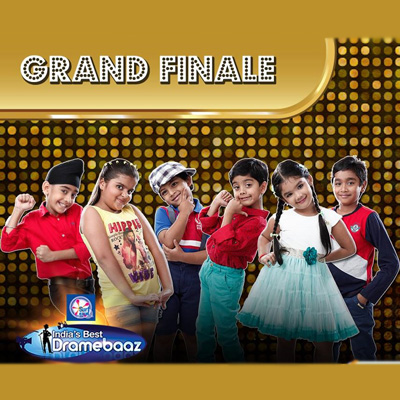
  • Zee TV’s India’s Best Dramebaaz bids adieu; Kapil Sharma hosts the grand finale

    Zee TV’s India’s Best Dramebaaz bids adieu; Kapil Sharma hosts the grand finale

    MUMBAI: Comedian Kapil Sharma brought to close season two of India’s Best Drameebaz (IBD) on Sunday, March 6 by hosting its grand finale. Produced by Frames Productions, season two completed its 26 episode journey. On 12 December 2015 Zee TV had once again brought back the second season of this home grown laughter dose which had children in the age group of 5 to13 years. . 

    Zee Enterprises Entertainment Ltd (ZEEL)’s flagship channel Zee TV has always provided platforms that have contributed talented performers to the entertainment industry. Being a pioneer in making its own home grown reality shows, Zee has always given some of the best entertaining reality shows. After producing a series of talent reality shows like Sa Re Ga Ma Pa, Dance India Dance, Dance India Dance Li’l champs, India’s Best Cinestar Ki Khoj, the channel had launched India’s Best Dramebaaz (IBD) in 2013.  

    Zee TV roped in a number of brands for the season 2 of IBD. These included Surf Excel as the title sponsor and Patanjali Atta Noodles as co-powered by sponsor. Besides, the channel also had other brands including Britannia Tiger Crunch, Yamaha Fascino, Epson, Vistaprint.in and Dabur Chawanprash as associate sponsors. 

    A source informed indiantelevision.com that the production cost for the show was Rs 70-80 lakh per episode, and the ad rate for a 10 second slot was Rs 1.5 lakh.

    Zee marketed IDB season 2 aggressively. The campaign posed a distinctive challenge because it had kids at the forefront and hence would have been perceived as a kids show and would not appeal to the other audiences.

    To specifically counter the unique challenge that IBD faced, a unique strategy was devised. All communication on IBD was contextual via customized communication for TGs and specific markets which was carried across all media vehicles including TV, radio and cinema.

    Special promos resonating with various genres of TV audiences were created and run across different mediums including cinema, music, news and kids channels. Clutter-breaking and entertaining radio spots were specifically created for each market highlighting issues. A special print innovation was carried across key publications.

    On the digital front, various innovations were a part of this campaign. Zee TV tied up with Facebook and conducted a Facebook bus activity wherein fun content was generated with the judges and participants and populated across social media.

    As the show approached the finale week, Zee TV tied up with Twitter to provide a unique social media experience to its fans. The Twitter Challenger App was a unique initiative that brought forth the fun side of its participants through various challenges. The judges, anchors and the top 6 finalists created pictures and videos that were funny, topical and fresh. The same were populated across social media during the finale week.

    The efforts put in by Zee TV to market the show seem to have paid off handsomely. In week 6 of Broadcast Audience Research Council (BARC), IBD emerged as the number one non-fiction show in Hindi GEC space with 8148 TVTs while in week 7 the show continued to be the number one non-fiction show with 7057 Impressions’ 000. In week 8 IBD remained at the top with an increase in viewership from 7057 to 7382 Impressions ‘000. 

    Frames Production’s Ranjit Thakur said, “India’s Best Dramebaaz has really won the heart of Indian audiences. The kids were fabulous and fantastic, also all the three judges Sonali Bendre, Vivek Oberoi and Sajid Khan, we all are like a big family now. Also working with Zee after a couple of years was amazing. I am happy that we have delivered this beautiful show.”

     

  • Zee TV’s India’s Best Dramebaaz bids adieu; Kapil Sharma hosts the grand finale

    Zee TV’s India’s Best Dramebaaz bids adieu; Kapil Sharma hosts the grand finale

    MUMBAI: Comedian Kapil Sharma brought to close season two of India’s Best Drameebaz (IBD) on Sunday, March 6 by hosting its grand finale. Produced by Frames Productions, season two completed its 26 episode journey. On 12 December 2015 Zee TV had once again brought back the second season of this home grown laughter dose which had children in the age group of 5 to13 years. . 

    Zee Enterprises Entertainment Ltd (ZEEL)’s flagship channel Zee TV has always provided platforms that have contributed talented performers to the entertainment industry. Being a pioneer in making its own home grown reality shows, Zee has always given some of the best entertaining reality shows. After producing a series of talent reality shows like Sa Re Ga Ma Pa, Dance India Dance, Dance India Dance Li’l champs, India’s Best Cinestar Ki Khoj, the channel had launched India’s Best Dramebaaz (IBD) in 2013.  

    Zee TV roped in a number of brands for the season 2 of IBD. These included Surf Excel as the title sponsor and Patanjali Atta Noodles as co-powered by sponsor. Besides, the channel also had other brands including Britannia Tiger Crunch, Yamaha Fascino, Epson, Vistaprint.in and Dabur Chawanprash as associate sponsors. 

    A source informed indiantelevision.com that the production cost for the show was Rs 70-80 lakh per episode, and the ad rate for a 10 second slot was Rs 1.5 lakh.

    Zee marketed IDB season 2 aggressively. The campaign posed a distinctive challenge because it had kids at the forefront and hence would have been perceived as a kids show and would not appeal to the other audiences.

    To specifically counter the unique challenge that IBD faced, a unique strategy was devised. All communication on IBD was contextual via customized communication for TGs and specific markets which was carried across all media vehicles including TV, radio and cinema.

    Special promos resonating with various genres of TV audiences were created and run across different mediums including cinema, music, news and kids channels. Clutter-breaking and entertaining radio spots were specifically created for each market highlighting issues. A special print innovation was carried across key publications.

    On the digital front, various innovations were a part of this campaign. Zee TV tied up with Facebook and conducted a Facebook bus activity wherein fun content was generated with the judges and participants and populated across social media.

    As the show approached the finale week, Zee TV tied up with Twitter to provide a unique social media experience to its fans. The Twitter Challenger App was a unique initiative that brought forth the fun side of its participants through various challenges. The judges, anchors and the top 6 finalists created pictures and videos that were funny, topical and fresh. The same were populated across social media during the finale week.

    The efforts put in by Zee TV to market the show seem to have paid off handsomely. In week 6 of Broadcast Audience Research Council (BARC), IBD emerged as the number one non-fiction show in Hindi GEC space with 8148 TVTs while in week 7 the show continued to be the number one non-fiction show with 7057 Impressions’ 000. In week 8 IBD remained at the top with an increase in viewership from 7057 to 7382 Impressions ‘000. 

    Frames Production’s Ranjit Thakur said, “India’s Best Dramebaaz has really won the heart of Indian audiences. The kids were fabulous and fantastic, also all the three judges Sonali Bendre, Vivek Oberoi and Sajid Khan, we all are like a big family now. Also working with Zee after a couple of years was amazing. I am happy that we have delivered this beautiful show.”


  • The TV Formats business is doing very well, thank you!

    The TV Formats business is doing very well, thank you!

    MUMBAI: The production volume generated by the TV format business globally was in excess of 9 billion euros as estimated by a FRAPA study in 2009.  Estimates are that this could have crossed euros 10 billion by now.


    Indiantelevision.com calculations place the size for the business in India at around Rs 950 crore nationally, for shows which are produced from international, indigenous formats and even format TV show imports.


    Dance India Dance,  one of the most popular original Indian formats in recent times, and has now branched out and in its four season run, spawning three spin-offs’ viz., Dance India Dance: Super MomsDance India Dance: Li’l Masters and Dance India Dance DoublesCadbury Bournvita Quiz Contest remains India’s oldest original format to be still in production, since its inception back in 1972; and still remains India’s longest running quiz contest. India has adapted quite a few international reality formats, namely, Who Wants to Be a Millionaire, MasterchefBig BrotherBritain’s Got Talent, American Idol, Dancing with the Stars and Road Rules, along with adaptations of scripted formats such as 24 and The Killing currently in production.


    Earlier this month, UK research firm Madigan Cluff released its annual state of the union update and report on the business titled TV Formats in Europe 2014. It states that despite the global prolonged advertising recession and the fact that several major titles have peaked, the TV formats market in Europe is showing remarkable resilience. The value created by the top 100 formats was $2,931 million in 2013 for 84 European channels across the 16 territories and 21 distributors, according to the TV Formats in Europe report. The value created by formats for UK broadcasters was $600 million in 2013, down from $677 million in 2012. The number of hours broadcast reached 28,386 in 2013. France’s TF1 ($332 million) was the leader with Italy’s Rai 1 at No 2 and the UK’s BBC1 at third spot. Russia’s 1TV entered the top 10 in 2013 —by more than doubling its formats revenues in the year.


    The UK, followed by France is the TV formats leader in Europe. France recorded $599 million in 2013, up from $547 million in 2012. The UK, France, Germany and Italy accounted for 72 per cent of Europe’s total value created in 2013.


    The total number of hours broadcast in Europe for the 100 formats was 28,386 in 2013 with the UK coming up as the leader again, despite its 2013 total was estimated at 3,935 being considerably lower than in 2012, which was estimated at 4,623. Romania took third place, having added 645 hours to its total in 2013.