Tag: Dalveer Singh

  • Great opportunities for BFSI, hygiene brands in rural India: Report

    Great opportunities for BFSI, hygiene brands in rural India: Report

    NEW DELHI: Consumers in rural India are increasingly concerned about health, safety, and future well-being, especially of the chief earners in their families, shifting their focus to better financial planning, revealed the recent Rural Covid Barometer Report, released by Kantar in partnership with GroupM’s experiential marketing unit- Dialogue Factory. The report stated that the rural Indian is balancing the budget by cutting on “indulgence” categories like cold drinks, ready to eat snacks like chips etc and diverting the savings towards hygiene products. They are also looking to buy health and insurance products, opening up a large market for the BFSI segment.

    The report aims to provide a unique, fact-based perspective on consumer sentiments, their consumption choices and the behavioural changes brought about by the pandemic. This survey was conducted in 17 Indian states and deep dives into the lives of rural consumers and their adaptations post-Covid2019, providing valuable inputs for any brand’s rural strategy.

    With one in three rural adults being impacted by Covid2019, the rural economy is likely to take a hit, stated the report. However, with fewer job losses and consequent reduction in the incomes of the affluent households, the overall impact on rural consumption pattern is likely to be muted in the future. This presents an opportunity for businesses to sharply target their products towards the upper end of the rural consumer spectrum.

    However, brands will have to focus on their distribution and last-mile connectivity, since product availability in the local village stores will significantly impact brand choices of the rural shopper.

    It also highlighted that like their urban counterparts, rural Indians are increasingly relying on digital services for their day to day activities. With the pandemic accelerating digital adoption, there is a huge potential for businesses and brands to leverage mobile as a medium to reach rural consumers.

    Dialogue Factory head of experiential marketing – APAC Dalveer Singh said, “Rural India has always had a higher degree of resilience which makes it more confident for a rapid recovery than the urban areas during these unprecedented times. This report, which is one of the biggest assessment of the impact of the pandemic on rural areas, speaks volumes on the new, defining values that are shaping rural India – resilience, planning for future, protection from falling sick and growing reliance on digital.”

    Kantar senior executive director – insights division – Puneet Avasthi added, “For businesses, we would recommend a regional prioritisation. We believe that western India is likely to bounce back earliest. On the other hand, indications seem to suggest that rural South might take longer to recover as the impact of Covid2019 on employment has been more severe, which in turn has depressed the economic outlook of consumers there. We see this as an opportunity for brands to deploy their resources across zones in a graded and phased manner.”

    The report also assessed the impact of reverse migration. The study suggests that nearly 53 million migrant workers in India have returned to their villages. 80 per cent of migrants who have returned due to Covid2019 come from five states.

    Avasthi noted, “With one out of three rural migrants not planning to go back to urban India, we are likely to see a huge shift in rural consumption choices. This will also affect the availability of labour in urban India”

    The report also highlights a deep sense of optimism regarding India’s economic future; stemming from healthy growth in the agricultural sector and near-universal reach of targeted government programs (75 per cent of all consumers claimed to have received at least one of the major government schemes for rural India; 66 per cent claimed to have received free rations under PM Garib Kalyan Yojana).
  • MEC appoints Sidhraj Shah as Head of Brand Activation

    MEC appoints Sidhraj Shah as Head of Brand Activation

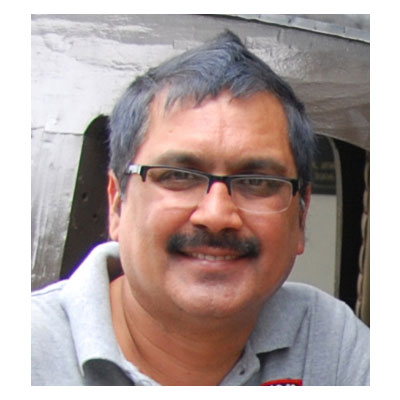
    MUMBAI: MEC, a leading media agency and part of WPP, (www.mecglobal.com), today announced the appointment of Mr. Sidhraj Shah as Head of Brand Activation. His mandate is to deliver innovative consumer experiences and to expand MEC’s brand engagement and implementation services. Shah’s last assignment was at Wizcraft as Deputy General Manager. An MBA from Bombay University, he will report to T Gangadhar, Managing Director, MEC and to Dalveer Singh, Head Experiential Marketing, APAC, GroupM’s experiential marketing unit.

    Speaking about the appointment, T. Gangadhar said, “We are pleased to have Sidhraj on-board. His proven track record of helming award-winning campaigns will be a definite asset to MEC and to our clients. Integrated marketing communications (IMC) is at the core of MEC and I am confident Sidhraj’s experience will further improve the quality of our product.”

    With prior stints at O&M, SSC&B Lintas and Bates 141, Shah has conceived and executed ground-breaking campaigns for clients such as McDonald’s, Standard Chartered, Virgin Mobile, Siemens, MTV and MiD-Day. He has successfully executed activation programs that have become case studies within the industry – such as India’s 1st Pogo Flash Mob activation for McDonald’s, the RFID Tech innovation for Siemens Data Tracking at Elecrama (2012) to India’s largest 3D art-style façade for MCHI Exhibition (2013).

    On his appointment, Sidhraj Shah said, “I am very excited with this opportunity to be working with MEC. My aim will be to continue to deliver noteworthy and unique propositions for our clients and consumers alike.”

    Dalveer Singh added, “We set our sight at the highest level when looking for a new leader at MEC and I am pleased to say we have achieved our objective. We wanted a very high caliber person with a proven track record combined with fresh thinking and have the drive to do the unusual. I am personally very excited and welcome him to the family”

  • GroupMs Dialogue Factory Initiates a Dialogue with Safe Water Network at World Water Week in Stockholm

    GroupMs Dialogue Factory Initiates a Dialogue with Safe Water Network at World Water Week in Stockholm

    MUMBAI: Dialogue Factory, GroupM’s experiential marketing arm, was a participant in the recently concluded World Water Week in Stockholm. Dialogue Factory shared the lessons and opportunities for using experiential marketing to increase the number of low-income consumers purchasing safe water. Dialogue Factory has been working on the brand mandate of US-based NGO Safe Water Network to build a communication model that helped create awareness and market safe drinking water in Andhra Pradesh, India.

    Safe Water Network works in the field of providing safe drinking water to low-income consumers in India and Ghana. Co-founded in 2006 by actor and philanthropist Paul Newman, along with prominent civic and business leaders, it brings together diverse capabilities form the public and private sectors.


    “The challenge was to create a self-sustainable model for the rural audience that would not just ensure trials but also adoption addressing all the key stakeholders,” says Dalveer Singh – Head – Experiential Marketing Asia Pacific, Dialogue Factory.

    Modus Operandi

    · Safe Water Network faced a challenge in generating enough revenue from water sales to cover the costs of operating a safe water plant in rural India. As the model followed the principle of affordability and inclusion to serve the bottom of pyramid communities. Without that revenue to pay for operator’s salaries, power, consumables, etc., the plant would fail soon after it launched.

    · The solution lay in accelerating household demand for safe water by convincing more people to purchase water through a consumer activation program.

    · The agency started with understanding the key stakeholders through a field survey in Warangal district of Andhra Pradesh and picked up a key insight that ‘The water that’s visibly clean is good enough, my forefathers have been surviving on this and so will I’.

    · Insight – although the district was bearing the ill effects of high fluoride in the ground water (which causes fluorosis, a very painful and debilitating skeletal disorder) a minority of them related it to the water they drank.

    · This was the insight basis on which Dialogue Factory built the complete behavior change program of ‘Ijal Swathya Abhiyan’.

    “Lack of awareness and knowledge made it difficult to start a conversation with the community; the need was to have a communication package that was convincing”, says Ravi Sewak, Country Manager Safe Water Network.

    The first step in creating a brand traction was to build a brand identity for iJal, the strategy team worked on the platform of water that leads to health (after Research by IMRB indicated that communities understood health messaging better than prosperity messages) and positioned the brand as ‘iJal Swasthya Kal’ .As part of the brand identity completely new brand logo, branding and local communication material was developed.

    The next step was to get the local community on board, but to do so it was important to engage with the key opinion leaders so for the first time in the rural context computer tablets as a tool of communication were used with customized message in local language for the stakeholders.

    “The tablet platform is cost effective and also brought standardization and ease of replication for scale to what has historically been a challenging communication” says Ravi Sewak, Country Manager Safe Water Network.

    “A water health card that measured the water quality of each household not only shocked communities but also created conversations around it. One of the key pillars to the success of this program was the use of marketing principles in a social sector campaign that led to adoption” adds Dalveer Singh, – Head – Experiential Marketing Asia Pacific, Dialogue Factory.

    The result of this innovative work was a 50% increase in the amount of water sold. This means that not only are more people getting healthy, but that water plant that provides the water will be functioning for a long time.