Tag: Daily Soaps

  • Kolkata TV show producers resume shooting with innovative mechanisms

    Kolkata TV show producers resume shooting with innovative mechanisms

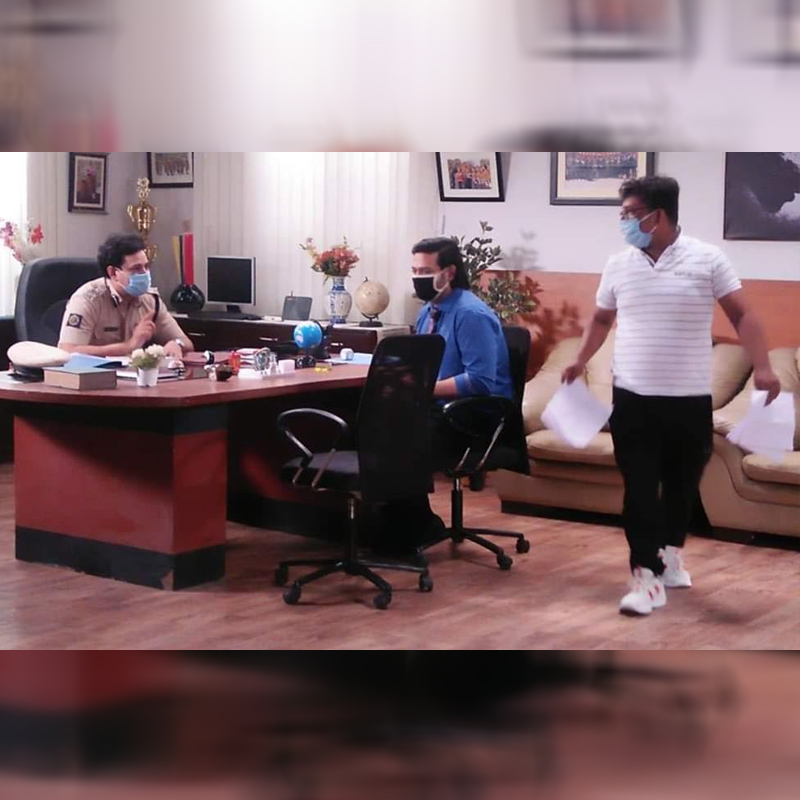
    KOLKATA: Despite having witnessed one of the worst ever cyclones in the recent past, Kolkata resumed TV productions in early June. After months of lockdown causing a financial stress to numerous people, a part of the Tollywood returned to the sets. A number of guidelines now have to be followed while shooting but it has given hope to production house representatives as well as others related to the TV industry that they can work in safe ways.

    SVF vice president- television Arabinda Dasgupta says that there wasn’t much difficulty in resuming and even productivity had not gone down. He adds that rigorous sanitisation, regular temperature screenings, protocols of social distancing are being followed diligently. Currently, SVF‘s TV division has five dailies on different channels. 

    While the mandate is 35 people inside the shooting zone as per the mandate, Dasgupta says that they are voluntarily limiting it to 25 people. Moreover, storylines are twisted to avoid physical proximity. It even carried out workshops with directors, DOPs to adhere to social distancing norms while shooting. However, in the case of unavoidable intimate scenes, the plan is to use mannequins. All shoots outside studios are deliberately being avoided to keep out crowding.

    Despite all the extra measures, Dasgupta says that churning out new episodes is not taking more time than usual as it has “a fantastic SOP.”

    Susanta Das, who owns a production house Tent Cinema and runs Boyhood Production jointly with Nispal Singh Rane, reflects the same tone. Das, who has serials on all three major broadcasters, says that the stricter norms is not delaying day-to-day affairs but rather making it easier for them to finish on time as now they have to wrap up by 8 pm. He adds that the shooting needed to resume given the large number of people associated with it. 

    Das reassures that they are using sanitisers, checking the temperature with thermal guns and not allowing anyone to go out of the floor unnecessarily and even forbidding crowding at sets to ensure safety. 

    However, he shares that the new normal is very unusual as shooting needs many people to work closely together on the floor but they are adhering to new kinds of storytelling to ensure social distancing. They, too, will use mannequins going forward if scripts demand intimacy.

    Sudeshna Roy, an actor and producer, says that as the shooting for film and digital original content is yet to resume, they are currently working on post-production. She shares that film shooting is not organised like TV serials and cannot be limited to studios. Hence, it needs robust planning which is being currently worked on. 

    The West Bengal government issued a notification on 30 May allowing shootings from 1 June with a maximum of 35 people. But due to several complexities, it took some time to finally resume the shootings. There was a stand-off between producers and artists forum regarding insurance which got solved later. 

  • TV editors go on strike; channels fear repeat telecast

    TV editors go on strike; channels fear repeat telecast

    MUMBAI: Daily soaps sagas on Indian television are currently at the mercy of their editors as The Association of Film and TV Editors called for an indefinite strike on 4 November.

    The strike was fuelled when the memorandum of understanding (MoU) addressing the workers’ demand for higher wages and better working conditions, failed to be signed before the promised date of 14 October.

    For now, signing of contract between the forerunners, Federation of Western India Cine Employees (FWICE) and producers’ association has been delayed and there seems to be no surety of their demands being fulfilled, as per the association.

    In a situation like this, one can’t help but wonder about the fate of the numerous shows on television, and how production houses are dealing with the strike, while keeping the show running.

    Sol Productions founder and producer Fazila Allana is of the opinion that the strike is uncalled for as producers were in talks with the federation to come to an understanding, and had no qualms with a properly reviewed memorandum. “It is a very random and ad hoc decision by one federation.” Allana tells Indiantelevision.com.

    “The discussion with the federation is still under progress and it is almost at a closure. A little patience is what was needed. There are 22 crafts involved. Why should one craft decide for the other 21, not listen to their federation and go on a strike putting the entire industry in jeopardy?” she voices.

    As a matter of fact, this strike is further slowing down the signing of the MoU, as per Allana, who also produces the reality show The Stage for Colors Infinity.

    Among the several television shows that have been hit by this crisis, it’s the daily soaps that are most affected.

    “All our shows are affected by this strike as all our main editors, who work on them aren’t in. As of now we are managing with whatever resources we can pull in but it’s concerning if the situation carries on,” she laments.

    From Sol Productions’ perspective, Thapki on Colors is the most affected show; while Beyond Dreams CEO Yash Patnayak informs that their Sadda Hak on Channel V is also taking a hit.

    While some long running shows haven’t yet come to a standstill thanks to their episode bank, the newly launched shows are fearing repeat telecast if the strike from Monday continues.

    It may be recalled that many channels launched new shows in the month of October as the festive season dawned on the Indian turf.

    Voicing his fears, the programming head of a general entertainment channel (GEC), on condition of anonymity says, “If we fail to meet the demands of the association and the strike doesn’t get called off, there is a risk of repeat telecasts. The possibility of that is in cases where shows don’t have a bank, and the newly launched shows will be the worst hit. Everyone is working so that the repeats don’t happen, and thankfully it’s the weekend now, so we might be able to avoid it.”

    As per Indiantelevision.com’s analysis, close to Rs 1 billion ad spends are at stake on GEC channels if the strike continues and channels have to resort to airing repeats for a week during this festive season.

    The looming question here is as to what the alternate routes will be, which producers may have to adopt if the situation prolongs. Allana points out that by going on strike and preventing other editors from going to work, The Association of Film and TV Editors have violated several court orders. Therefore, many producers may take a legal way out of the situation, if it prevails.

    “What they are doing is absolutely illegal. One has the right go on strike but they can’t coerce or threaten others from not coming to work. We have already sent out a letter to them, explaining the illegality of their flash strike without any notice. So if push comes to shove, we will have to take legal action, although that is not desirable for both parties involved,” says Allana.

    Indian Film and TV Producers Council producer and co-chairman JD Majethia adds, “We have written a letter to them stating that no talks can happen under threat. Talks will resume when the work is in progress. We were in talks with their mother body and if there were issues it should not have come to us.”

    The council has further requested the two parties to meet and discuss and come to a general consensus so that the strike may be called off, he further informs.

    While certain producers may take the legal way out, jaded by constant strikes and issues, many are thinking of a more drastic and permanent solution to the issue.

    A well known producer on condition of anonymity informs that it has been getting more and more difficult for producers day after day. “Every other day something or the other is happening. I am afraid that the industry will collapse in Mumbai. Eventually, producers and broadcasters will reach their patience limit. Currently everything is concentrated in Mumbai, and if some drastic steps need to be taken, the industry may move out of the city. And if that happens, the people who work in it will be the most affected,” he informs.

    Lost Boy Productions director Siddharth Manik Gupta feels that a few demands put forth by the TV editor’s association are valid, the rest are unfair. “While I agree that their issues with work hours and health care facilities should be addressed properly, some of their demands regarding fees are very arbitrary,” he says. 

    Gupta is of the opinion that if the situation continues, then the industry might move out of Mumbai. “Shows are already being shot outside Mumbai. For example, Star Plus’ show Swadhinta is being shot outside. The television industry will soon be hitting a roadblock in Mumbai with these kind of unions, which act against their own interest calling such strikes. That will lead to Mumbai having lesser shoots, and it will affect us in a very big way,” he says.

    Even in terms of production cost, Delhi or any other location but Mumbai seems to be a more feasible option. “Today, when you shoot a show in Delhi, one doesn’t face any union issues. They don’t ask for unheard obscene amounts of money. Locations are also cheaper and I feel even the quality of the product is good. More than anything else, it’s stress free and flawless work that takes place. If I have the option to spend the same amount of money in a place where my work is done peacefully, and maybe even better, why wouldn’t I go there?” Gupta poses a valid question.

    Some television producers and industry experts also feel that the issue is being exploited by various political parties as well. Under the promise of anonymity, a television producer and industry insider says, “There are a number of politically linked associations coming up to stir up the ecosystem. They have been increasingly interfering with the way the industry has been functioning. And the recent strike called by the TV editors just tops the situation and signifies a very negative impact upon the industry.”

    Whether GECs will be able to showcase their grand festive episodes and bring in Diwali with fireworks galore next week, now depends upon what happens over the weekend in terms of negotiations between the concerned bodies.