Tag: Dadasaheb Phalke Award

  • Shashi Kapoor receives DadaSaheb Phalke Award at Prithvi Theatre

    Shashi Kapoor receives DadaSaheb Phalke Award at Prithvi Theatre

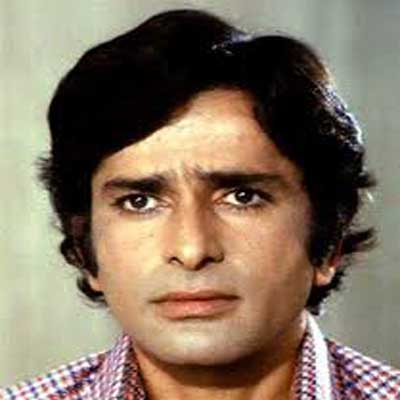
    NEW DELHI: A large number of personalities from Bollywood including many of the heroines who shared screen space stood in loud ovation as veteran actor-filmmaker Shashi Kapoor received the Dadasaheb Phalke Award for 2014 for contribution to development of cinema in his home town, Mumbai.

    As Kapoor was not well enough to travel to Delhi when the National Film awards were presented by Pranab Mukherjee on 3 May, the actor received the highest national award for contribution to cinema at the Prithvi Theatre from Information and Broadcasting Minister Arun Jaitley.

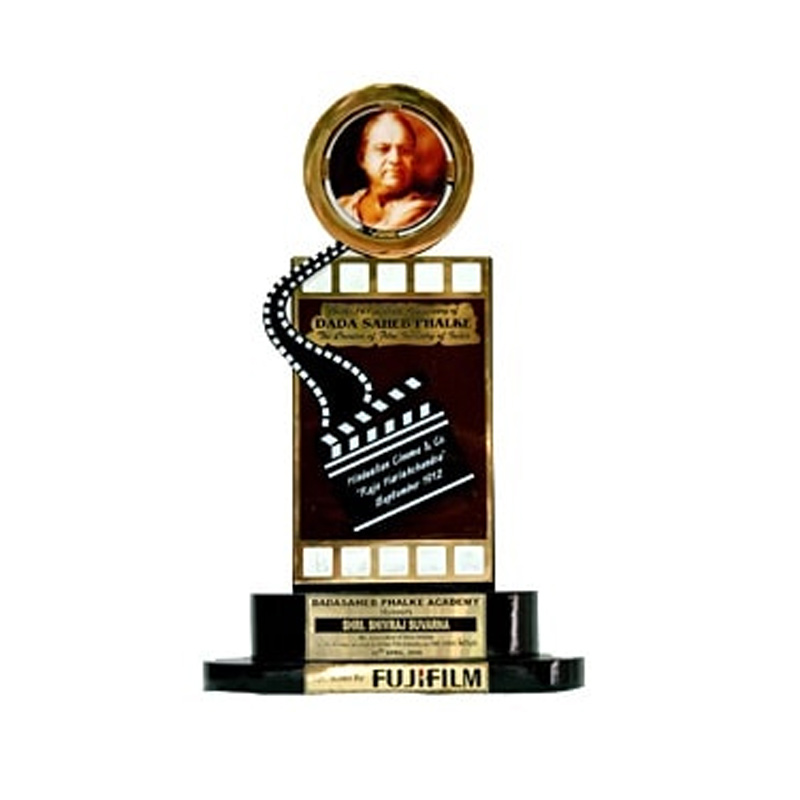
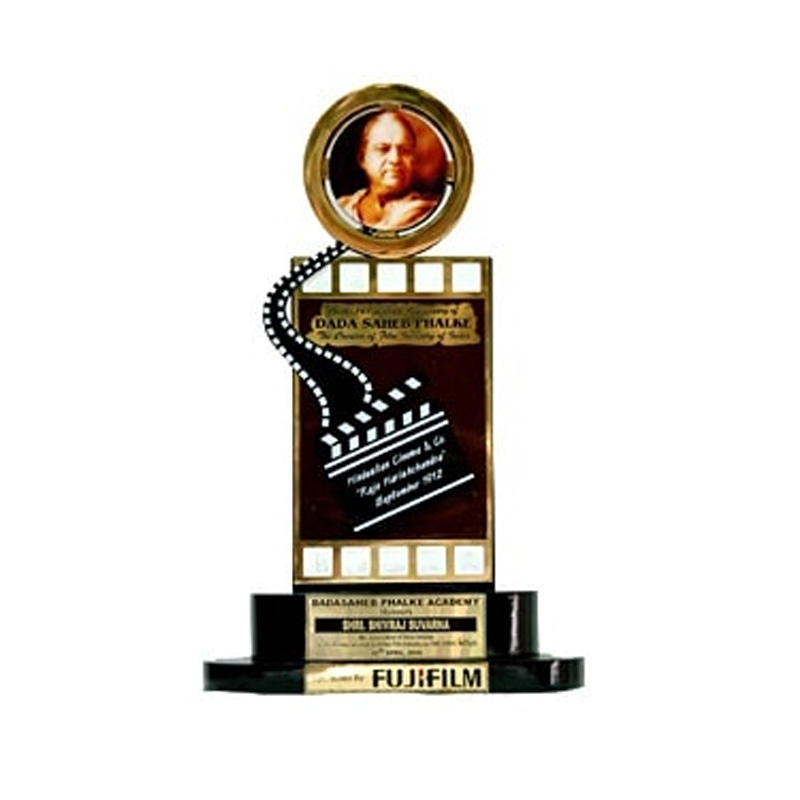
    The award consisting of a Swarn Kamal (Golden Lotus), a cash prize of Rs 10 lakhs, a citation and a shawl was given to the actor who came in on a wheel chair.

    Describing him as the most versatile personality Indian cinema has produced, who worked in commercial and alternate cinema, Jaitley in his brief speech said he was an actor par excellence who competed with the very best during his times.

    The Minister also credited him with bringing the Hindi cinema and Hollywood together.

    He is the third personality from the Kapoor family to get the Phalke award after veteran director Prithviraj Kapoor and Raj Kapoor. He is the 46th Dada Saheb Phalke Award winner. 

    The star studded event was attended by his long-time co-star Amitabh Bachchan, directors Shyam Benegal and Govind Nihalani, Asha Parekh, actress & MP Hema Malini, Rekha, veteran singer Asha Bhosale, lyricist Javed Akhtar who along with Salim had penned the dialogues of many of the films Kapoor acted in, Shabana Azmi, and Zeenat Aman. 

    Family members present included Raj Kapoor’s widow Krishna Kapoor, Kareena Kapoor’s husband Saif Ali Khan, nephew Rishi with wife Neetu and son Ranbir, Shashi Kapoor’s children Kunal Kapoor and Sanjana Kapoor were also present. Ranbir started the show with a poem and Rishi compered the programme.

    A poignant audio visual on Shashi Kapoor’s films and his work along with interviews of important film personalities was played at the occasion to a rousing applause from the elite film audience.

    In a vote of thanks, Bachchan said that Shashi has been a caring and generous human being and it is very fitting that the function was held at Prithvi Theatre, which Shashi Kapoor himself had established.

    Kapoor made his debut as a leading man in the 1961 film Dharamputra and in 1965 starred in a commercial hit Jab Jab Phul Khilen. He went on to appear in more than 150 Hindi films. He was a very popular actor in Bollywood during the 60s, 70s and until the mid-80s. 

    Shashi Kapoor was one of India’s first actors to go international and star in many British and American films, including those of Merchant Ivory Productions such as The Householder (1963),Shakespeare Wallah (1965), Bombay Talkie (1970) and Heat and Dust (1982). He also starred in other British and American films such as Siddhartha (1972) and Muhafiz (1994). 

    In 1978, Kapoor set up his production house Film Valas, which produced critically acclaimed films such as Junoon (1978), Kalyug (1981), 36 Chowringhee Lane (1981), Vijeta (1982) and Utsav (1984).

  • President urges film industry to look beyond markets & nurture human values

    President urges film industry to look beyond markets & nurture human values

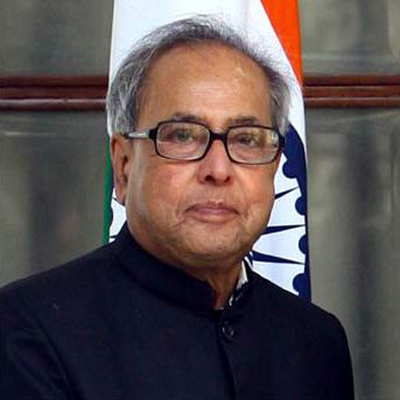
    NEW DELHI: President Pranab Mukherjee has urged the film industry to look beyond markets and work together to help “nurture universal human values, which draw on our rich civilizational heritage that celebrates diversity and nurtures inclusiveness.”


    In this context, he quoted the late filmmaker Ritwik Ghatak and said ‘Cinema is no art for me. It is only a means to the end of serving my people.’


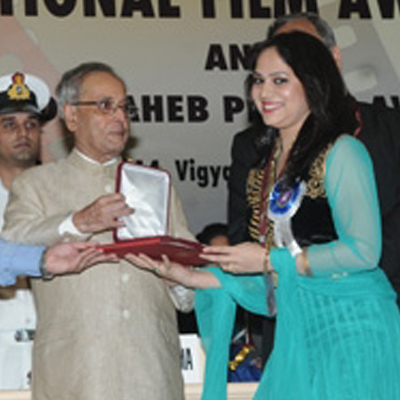
    The President was giving away the 62nd National Film Awards for 2014 at a function at Vigyan Bhavan yesterday.


    Mukherjee said the advent of digitisation and modern technologies “do not mean that we lose touch with the grass roots. Our content has to be our strength as it is entrenched sharply in our vibrant cultural milieu. Cinema in India crosses all boundaries of region, caste, creed and religion. It reflects the immense diversity of our nation, which is home to different cultures, religions and languages. It shows the confluence of modernity as well as tradition as well as our ancient past and billion aspirations for the future.”


    Mukherjee said cinema has been an integral part of Indian culture and entertainment from the days of Dadasaheb Phalke’s Raja Harish Chandra of 1913, the first film made in India. Indian cinema transcends national boundaries and is a powerful purveyor of ideas and values that impact the consciousness of millions of people. Indian movies not only showcase the multicultural diversity of the country but are also a tribute to its linguistic richness. They are a national treasure and our country’s “soft power” in the true sense of the term, forging international ties and navigating global horizons with ease.


    The Dadasaheb Phalke award to veteran Shashi Kapoor will be presented to him in a special function in Mumbai in view of his ill-health.


    Mukherji said, “We live in a rapidly changing world to which the film industry will have to adjust and adapt. Technology has brought down the costs of production and expanded the mechanisms of dissemination. Still cameras and cell phones that record video can be now edited on a home computer and uploaded on the net. Promotion and marketing of films have now taken on a new avatar with substantial marketing happening on social media – news of a good film now spreads quicker on twitter than by word of mouth. I also understand 2014 saw the launch of four film and entertainment focused investment funds.”


    He added that India is likely to soon embrace a completely digital ecosystem, which would help us connect with even larger numbers transcending geographical and cultural barriers. The President also urged the film industry to look beyond markets and work together to help nurture universal human values that draw on India’s rich civilizational heritage that celebrates diversity and nurtures inclusiveness. He congratulated all the Awardees for their contributions in various fields of cinema.


    The President said that the Government was taking a number of steps for strengthening and promoting Indian cinema and the film industry. The Government is planning to set up a National Centre of Excellence for Animation, Gaming, and Visual Effects. A National Film Heritage Mission is to be undertaken by the National Film Archives of India for conservation/preservation, restoration and digitization of films made in the country. The Government also proposes to set up a Film Facilitation Unit, which will act as a facilitation point for filmmakers and production houses from foreign countries to enable them come to India and shoot their films in India.”


    Information and Broadcasting Minister Arun Jaitley said Indian cinema had come a long way since its birth over a century ago. It has forayed into new avenues and innovated both in form as well as content. The production of cinema in various languages and dialects has taken this art form into new areas-geographically as well as socially.


    He added that the changing social mores and aspirations also found its voice in this medium. The medium witnessed the triumph of the spirit of liberation and empowerment of women-centric themes on the Silver Screen. Social values have influenced our cinema and similarly our cinemas have had a great impact on our social values.


    The Minister said, “Cinema is also a component of India’s soft power abroad. We lead the world average in terms of number of movies produced each year. Indian movies have found increasing acceptance in the international fora. Government is committed to take all possible measures towards the overall growth of the film industry – towards its even spread across the country and not restricted to certain pockets. Keeping this approach in mind, Government is keen to set up a Film & Television Institute in the North Eastern Region for the benefit of the young creative minds from that region.”


    Jaitley said the saga of Indian cinema has been that of a spirit of entrepreneurship. Experimentation and innovation with new themes in form, content and technology have always been employed by creative movie makers of India. The times to come would witness disruption of familiar paradigm due to rapid strides in technology and its increasing presence in the space of our daily lives.


    In his welcome address, secretary Bimal Julka said the Ministry had taken several initiatives in the film sector aimed at protecting, restoring and preserving our invaluable film heritage using the best available technology. Julka also said that in addition to the innate creativity of the film professionals, the continued growth is being experienced in large measure due to increasing systematisation of production processes, wider releases across an increasing number of screens, particularly multiplexes, aggressive promotion, as well as speedy adoption of emerging digital technologies, he added.


    The highlight of the function was the live musical performance of Sukhwinder Singh and Uttara Unnikrishnan.


    A total of 45 Awards were given in the Feature film category and 21 in the non-Feature Film category. Three awards were given to Best Writing on Cinema.


    The Award for the Best Feature Film was given to Court (Marathi, Hindi, Gujarati & English) produced by Zoo Entertainment Pvt. Ltd. and directed by Chaitanya Tamhane. Asha Jaoar Majhe (Bengali) directed by Aditya Vikram Sengupta and producer: F.O.R Films Pvt. Ltd. received the Indira Gandhi Award for Best Debut Film of a Director. The Award for the Best Popular Film providing Wholesome Entertainment was given to Mary Kom (Hindi) produced by Viacom 18 Motion Pictures and directed by Omung Kumar.


    The Award for the Best Director has been conferred on Srijit Mukherji for the Film Chotushkone (Bengali). The Award for the Best Actor was conferred on Vijay for the film Nanu Avanalla Avalu (Kannada) and the Award for the Best Actress was conferred on Kangana Ranaut for the film, Queen (Hindi). The award for the Best Children’s Film was shared by Kaakkaa Muttai (Tamil) and Elizabeth Ekadashi (Marathi). Master J. Vignesh & master Ramesh shared the Award for Best Child Artist for Kaakkaa Muttai (Tamil).


    The Award for the Best Music direction (songs) was conferred on Vishal Bhardwaj for Haider (Hindi) and the award for the best music direction (Background Score) was given to Gopi Sunder for Nineteen Eighty Three (Malayalam). The award for the best lyrics was conferred on NA. Muthukumar for the song Azhagu from the film Saivam (Tamil). A special jury award has been conferred on Bhaurao Karhade for the film Khwada (Marathi). The award for the best choreography has been conferred on Sudesh Adhana for the film Haider (Hindi).

  • Rajkummar Rao bags Dadasaheb Phalke Award for ‘Citylights’

    Rajkummar Rao bags Dadasaheb Phalke Award for ‘Citylights’

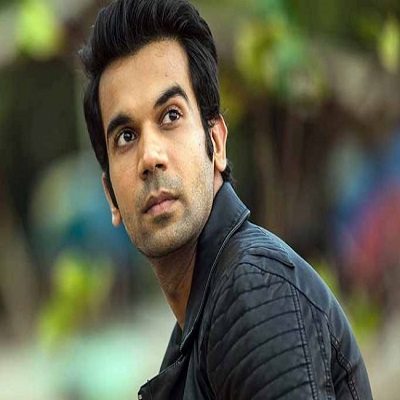
    MUMBAI: Actor Rajkummar Rao has added yet another feather to his cap for his role in Citylights.


    The actor, who received recognition for his role in the movie, has now bagged the Dadasaheb Phalke Award. With critically-acclaimed films like Kai Po Che!, Shahid and Queen, Rao is being touted as one of Bollywood’s promising actors.


    Rao got to know about the award just three days before the Dadasaheb Phalke Awards function. He said that it was very unexpected and out of the blue but a great feeling nonetheless.


    Citylights is a special film and it’s always a great feeling when your efforts are recognised. I am glad I won this honour for Citylights as a lot of hard work went into the making of the film. I didn’t even know I was being considered for the award so it was a pleasant surprise,” Rao said.


    Rao will next be seen in Mohit Suri’s intense love story, Hamari Adhuri Kahani, which is slated to release in June 2015 and in another film titled Shimla Mirchi, which is directed by veteran director Ramesh Sippy.


  • Cinematic content should have desirable impact on social behaviour: Pranab Mukherjee

    Cinematic content should have desirable impact on social behaviour: Pranab Mukherjee

    NEW DELHI: President Pranab Mukherjee has said filmmakers should make a concerted effort to distinguish between what clearly is an art form and what is not and the cinematic content of films should have a desirable impact on the social behaviour of people, especially the new generation.


    He said, “I take this opportunity to reflect upon an important aspect of cinema. Besides being a strong medium of expression, cinema is a vehicle of influence and persuasion for the youth. When our children witness scenes depicting violence and bloodshed, it does affect their psyche.”


    Speaking after presenting the Dadasaheb Phalke award to poet-lyricist-filmmaker Gulzar and the 61st National Film Awards for 2013 over the weekend, Mukherjee said: “Faced with erosion of values in today’s context, cinema should play a catalytic role in resetting our moral compass. Our filmmakers should deploy their creative efforts to present and propagate core values such as patriotism, respect for women, compassion and tolerance, honesty and discipline. I am hopeful that everyone associated with the film industry will use their talent and artistic pursuits to create meaningful and socially relevant cinema.” 


    Cinema has played a critical role in highlighting social and political issues of concern as well as exposing the deficiencies in our political system. It is an industry which has provided opportunities for many to rise from rag to riches. He called upon the film industry to nurture and strengthen its openness, pluralism and inclusiveness and disseminate the same throughout the country.

    He added: “India’s media and entertainment industry is today at the cusp of a transformation. It is poised to leapfrog into a completely digital landscape. Indian cinema connects with millions of people – within the country and abroad, directly through theatres, close to 2,000 multiplexes and through TV as well as the internet. In 2013, the Indian Media and Entertainment (M&E) industry registered a growth of 11.8 per cent over 2012 and did a gross business of around Rs 92,000 crore. The industry is expected to register a compound annual growth rate of 14.2 per cent to touch Rs 1.8 lakh crore by 2018.”


    Earlier, Gulzar who is turning 80 later this year was given a standing ovation as he went up to the dais of the tastefully decorated Vigyan Bhavan to receive his award for outstanding contribution to the growth and development of Indian cinema. The presentation was preceded by a short showreel into his work, and included tributes paid to him by several cine artistes. The award consists of a Swarn Kamal (Golden Lotus), a cash prize of Rs 10 lakh and a shawl.


     Speaking after receiving the award, Gulzar paid a tribute when he described the film field as the only industry after the Armed Forces which was totally secular and welcomed all.


    He said his honour belonged to scores of film personalities like the late Bimal Roy and Sachin Dev Barman who had given him the right chances at the right times and even younger talent like Shankar Ehsaan Loy and A R Rahman. “Many like R D Burman, Madan Mohan, and Laxmikant are no more. But one could not always live in nostalgia had to move on,” he said.


    Information and Broadcasting Minister Manish Tewari agreed with Gulzar and said cinema was the great unifier. He said the National Film Awards were reflective of the heterogeneity of the film industry which was a confluence of many Indian languages. These awards were truly a tribute to the diversity of thought, and recognition of excellence.


    The report of the feature jury was presented by Manju Borah on behalf of chairman Saeed Akhtar Mirza, while the non-feature book jury were presented by chairpersons Reena Mohan and Sharad Dutt respectively.


    A total of 41 awards were given by the President in the non-feature film category while 40 were given for feature films. Three awards were given to Best Writing on Cinema, including one for the best film critic. 


    The winners of the Best Male playback singer – Rupankar – and Best Female Playback singer Bela Shende renderd their award winning songs ‘E Tumi Kemon Tumi’ from the film Jaatishwar (Bengali) and ‘Khura Khura’ from the film ‘Tuhya Dharma Koncha (Marathi)’ respectively.

    The award for the best feature film was conferred on Ship of Theseus (English-Hindi) produced by Recyclewala Films and directed by Anand Gandhi. In the non-feature film category, the award for the Best Film was conferred to Rangbhoomi (Hindi) produced by Films Division and directed by Kamal Swaroop. In the category of Best Writing on Cinema section, the book Cinema Ga Cinema (Telugu)written by Nandagopal and published by Praga India, Hyderabad bagged the top honour, while Alaka Sahani (English) was conferred the award for the Best film Critic. 


    Hindi films once again dominated the National Film Awards by getting as many as 15 awards among feature films. Marathi came next with 10 awards followed by Bengali with six and Tamil and Kannada with five each and Malayalam with four. 

  • Pran to be honoured with Dadasaheb Phalke award

    Pran to be honoured with Dadasaheb Phalke award

    NEW DELHI: Bollywood thespian Pran – who entertained Hindi cinema audiences for more than six decades with versatile roles as villain, comedian and character roles – has been chosen to receive the prestigious Dada Saheb Phalke award, the highest official recognition for film personalities in India.

    The announcement comes in the year marking a centenary of Indian cinema.

    Pran Kishan Sikand, who turned 93 in February, has acted in over 400 films and quit acting in 1998.

    On getting the news, Pran telephonically told indiantelevision.com from Mumbai: "I am very happy and honoured to receive this award."

    Pran is the 44th recipient of this award, given for lifetime contribution to cinema. The award consists of a Swarn Kamal, a cash prize of Rs one million and a shawl. The award is given on the basis of recommendations of a committee of eminent persons.

    Pran had been the industry‘s unanimous choice for this award in 2012, but the government committee had chosen the name of veteran actor Soumitra Chatterjee.

    The award, named after the father of Indian cinema D G Phalke, will be conferred on Pran on 3 May, the day on which Phalke‘s film ‘Raja Harishchandra‘ was released in 1913, an Information and Broadcasting Ministry source told indiantelevision.com

    Beginning his career as a hero in 1940 with ‘Yamala Jat‘, Pran went on to achieve fame as a villain in a large number of films including classics like ‘Milan‘, ‘Madhumati‘, ‘Brahmachari‘, ‘Kashmir Ki Kali‘ and ‘Sadhu aur Shaitan‘.

    He brought a new sophisticated touch to the role of a villain by resorting to mannerisms like stammering, lisping or using certain sentences, unlike others who using various facial features like beards or twisted faces.

    At the time when he was at his peak, many people named their children as Pran, a tribute to this multi-faceted actor.

    He later favoured character roles, playing the friend, beloved father and grandfather in movies like ‘Sharabi‘ and as friend in ‘Zanjeer‘, apart from a heart-rending role in Manoj Kumar‘s ‘Upkaar‘ and as a headstrong personality in the Jeetendra-Sanjeev Kumar- Jaya Bachchan starrer ‘Parichay‘ based on the western film ‘The Sound of Music‘. Two of his most memorable comic roles include ‘Victoria 203‘ and ‘Karz‘.

    Born on 12 February 1920 at Delhi, Pran started his career by learning photography in Lahore. A chance meeting with a film producer got him his first break in ‘Yamla Jat‘ in 1940. He married Shukla Sikhand in 1945 and has two sons Arvind and Sunil, and one daughter Pinky.

    At partition in 1947, Pran came to Mumbai and restarted his film career after a brief struggle.

    His favourite hobbies now are watching sports (football, hockey, cricket), reading and looking after his pet dogs. He has five grand children and two great grand children.

  • Dadasaheb Phalke award for Soumitra Chatterjee

    Dadasaheb Phalke award for Soumitra Chatterjee

    MUMBAI: Bengali film actor Soumitra Chatterjee will be honoured with the Dadasaheb Phalke award on 3 May.

    Confirming the news to Indiantelevison.com, Chatterjee said he is happy since the Dada Saheb Phalke Award has not been tainted by petty politics or biases. He said he had been reminded of his senior Satyajit Ray and Tapan Sinha, who have also been honoured in the past.

    Ray had got the award for 1984 and Sinha for 2006.

    Born on 19 January 1935, Chatterjee is known for his frequent collaborations with Satyajit Ray and his constant comparison with screen idol Uttam Kumar.

    His centrality to Ray‘s work is akin to other key collaborations in the history of cinema – Mifune and Kurosawa, Mastroianni and Fellini, De Niro and Scorsese, DiCaprio and Scorsese, Max von Sydow and Ingmar Bergman and Jerzy Stuhr and Kielowski. He also worked with Sharmila Tagore in a number of Ray films.

    Chatterjee also featured as Feluda/Pradosh Chandra Mitter, the famous private investigator from Calcutta in Ray‘s Feluda series of books, in two films in the 1970s Sonar Kella and Joy Baba Felunath.

    Ghare Baire, an adaptation of Rabindranath Tagore‘s novel of the same name and one of Ray‘s major ventures of the 1980s, featured Chatterjee in a leading role in the character of a radical revolutionary in a love triangle with his friend‘s wife. These roles showcased Chatterjee‘s versatility in playing diverse characters, especially in an urban setting.

  • Pran is film industry’s choice for Dadasaheb Phalke award

    Pran is film industry’s choice for Dadasaheb Phalke award

    NEW DELHI: The Film Federation of India has urged the Government of India to present the next Dadasaheb Phalke Award, the highest national honour in Indian cinema, to veteran actor Pran.

    FFI President Vinod K Lamba said the industry body had also sent the names of renowned actor Soumitra Chatterjee and senior producer Edida Nageswara Rao forwarded to the Information and Broadcasting Ministry.

    Born on 12 February 1920 at Delhi, Pran Sikand started his career by learning photography in Lahore. A chance meeting with a film producer got him his first break in ‘Yamla Jat’ in 1940. Married in 1945 to Shukla, he has two sons Arvind and Sunil, and one daughter Pinky. At partition in 1947, Pran came to Mumbai and restarted his film career after a brief struggle. He has acted in over 400 films and in each one has a new mannerism and a different style, holding the audience spellbound by his versatile and dynamic acting.

    As a villain, in films like ‘Ram Aur shyam’ people shuddered with fear and hated him, and yet loved him as the good, unforgettable ‘Mangal chacha’ in ‘Upkar’. His film career spanned six decades.

    His favourite hobbies now are watching sports (football, hockey, cricket), reading and looking after his pet dogs. He has five grand children and two great grand children.

    Soumitra Chatterjee (born 19 January 1935) is an iconic Bengali actor known among other things for his frequent collaborations with Satyajit Ray. Soumitra‘s film debut came in 1959 in Satyajit Ray‘s Apur Sansar. As noted on the official website for Ray, “At that time, Soumitra Chatterjee was a radio announcer and had only played a small role in a Bengali stage production.” Soumitra would eventually collaborate with Ray on fourteen films.”

    Chatterjee was cast in diverse roles by Ray and some of the stories and screenplays that Ray wrote were said to be written with him in mind. Soumitra featured as Feluda/Pradosh Chandra Mitter, the famous private investigator from Calcutta in Ray‘s Feluda series of books, in two films in the 1970s Sonar Kella and Joy Baba Felunath. Ghare Baire, an adaptation of Rabindranath Tagore‘s novel of the same name and one of Ray‘s major ventures of the 1980s, featured Chatterjee in a leading role in the character of a radical revolutionary in a love triangle with his friend‘s wife. These roles showcased Chatterjee‘s versatility in playing diverse characters, especially in an urban setting. In Shakha Proshakha, Chatterjee turns out a moving performance in the role of a mentally handicapped son of an aging patriarch on his deathbed and the only source of his father‘s solace, as his siblings squabble.

    Telugu producer Edida Nageswara Rao owns the 30-year old film production house Poornodaya Movie Creations in Tollywood. He has produced films with a classical touch in the 1970s and 80s. He was born to Sattiraju Naidu, in a Telugu Naidu family. He was involved in some of the most memorable movies in Telugu film history like Shankarabharana, Swathi Muthyam, and Swayamkrushi.

    Most of the movies produced by him won the National Film Award for best feature film in Telugu category, Nandi Awards and were screened in several international film festivals. These films were also dubbed and released in the Russian language. He started his career as a theatre actor, film actor, dubbing artist and then ventured into film producing. After getting retired from the film production, he has also worked as Telugu Film producer‘s Council Secretary, Nandi Awards Committee Chairman and National Film Awards Committee member.