Tag: Dadasaheb Phalke

  • Ex-Times Group chairman Ashok Jain honored as ‘Heroes of Mumbai’ by Maha govt

    Ex-Times Group chairman Ashok Jain honored as ‘Heroes of Mumbai’ by Maha govt

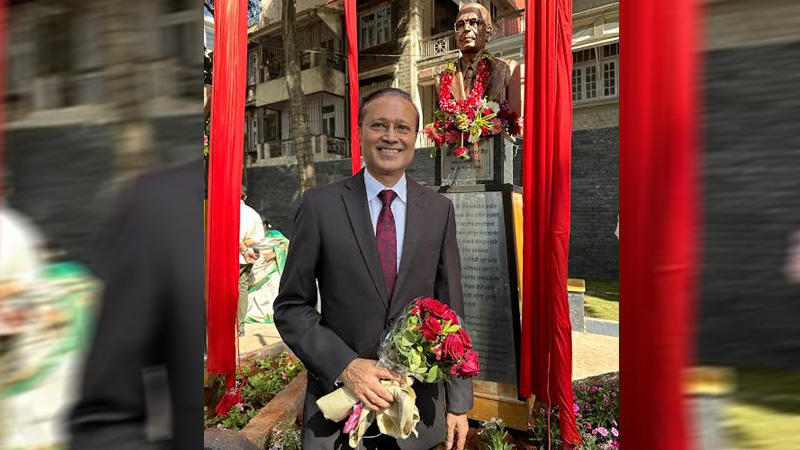
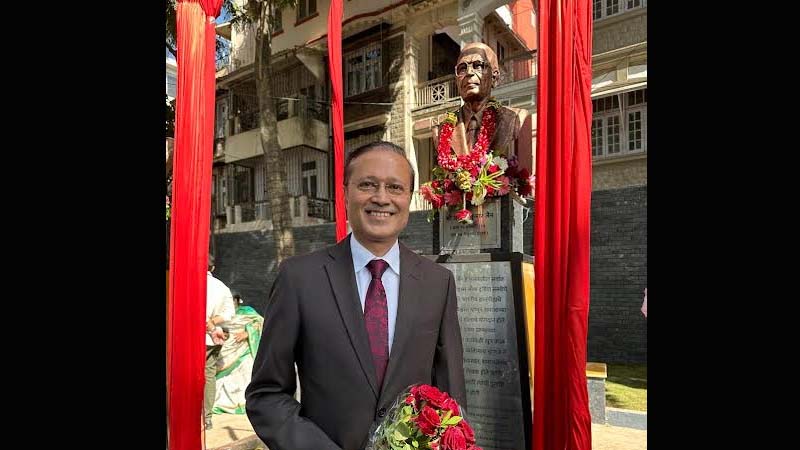
    Mumbai: Seventeen distinguished figures instrumental in Mumbai’s advancement were celebrated as their busts were revealed at Kilachand Garden in Girgaon, with BJP national president J P Nadda and Maharashtra deputy chief minister Devendra Fadnavis in attendance.

    Former Bennett, Coleman and Company Ltd (The Times Group)  chairman late Ashok Kumar Jain, was among the esteemed honorees. Times Group Managing Director Vineet Jain lauded the initiative aimed at celebrating icons who have shaped the financial and cultural capital of India. “It gives me immense pride to be standing here in the presence of such luminaries to acknowledge the recognition to my late father, Shri Ashok Jain. As Chairman of The Times of India Group, he had a great affinity and affection for Mumbai,” said Vineet Jain.

    The 17 ‘heroes of Mumbai’ include Dr Babasaheb Ambedkar, Lata Mangeshkar, Dadasaheb Phalke, Homi Bhabha, JRD Tata, Dhirubhai Ambani, Sachin Tendulkar, and VD Savarkar among others.

    Recalling the rise and rise of The Times Group with its roots in Mumbai, Vineet Jain said: “The Times Group was not only headquartered here, but also initiated all its expansions—launching new newspapers and magazines—from here itself during his lifetime. And thus, Mumbai was at the heart of so much of what he did and worked towards, while establishing one of Asia’s largest media companies.”

    The idea was conceived by state cabinet minister Mangal Prabhat Lodha. “This initiative aims to honour influential figures by unveiling their busts and acknowledging their contributions to Mumbai’s progress in various facets, such as economic prosperity, safety, and cultural enrichment. The programme seeks to serve as an enduring source of inspiration for Mumbaikars,” said Lodha explaining the inspiration behind ‘heroes of Mumbai’ project.

    “On behalf of our entire family and the larger Times Group, I would like to thank the efforts of Lodha and the entire Maharashtra government for this singular honour to our late father,” said The Times Group the MD.

  • Former Times Group chairman Ashok Jain among 17 honoured as ‘Heroes of Mumbai’ by Maharashtra govt

    Former Times Group chairman Ashok Jain among 17 honoured as ‘Heroes of Mumbai’ by Maharashtra govt

    Mumbai: Seventeen distinguished figures instrumental in Mumbai’s advancement were celebrated as their busts were revealed at Kilachand Garden in Girgaon, with BJP national president J P Nadda and Maharashtra deputy chief minister Devendra Fadnavis in attendance.

    The late Bennett, Coleman and Company Ltd former chairman Ashok Kumar Jain (The Times Group), was among the esteemed honorees. Times Group Managing Director Vineet Jain lauded the initiative aimed at celebrating icons who have shaped the financial and cultural capital of India. “It gives me immense pride to be standing here in the presence of such luminaries to acknowledge the recognition to my late father, Shri Ashok Jain. As Chairman of The Times of India Group, he had a great affinity and affection for Mumbai,” said Vineet Jain.

    The 17 ‘heroes of Mumbai’ include Dr Babasaheb Ambedkar, Lata Mangeshkar, Dadasaheb Phalke, Homi Bhabha, JRD Tata, Dhirubhai Ambani, Sachin Tendulkar, and VD Savarkar among others.

    Recalling the rise and rise of The Times Group with its roots in Mumbai, Vineet Jain said: “The Times Group was not only headquartered here, but also initiated all its expansions—launching new newspapers and magazines—from here itself during his lifetime. And thus, Mumbai was at the heart of so much of what he did and worked towards, while establishing one of Asia’s largest media companies.”

    The idea was conceived by state cabinet minister Mangal Prabhat Lodha. “This initiative aims to honour influential figures by unveiling their busts and acknowledging their contributions to Mumbai’s progress in various facets, such as economic prosperity, safety, and cultural enrichment. The programme seeks to serve as an enduring source of inspiration for Mumbaikars,” said Lodha explaining the inspiration behind ‘heroes of Mumbai’ project.

    “On behalf of our entire family and the larger Times Group, I would like to thank the efforts of Mr. Lodha and the entire Maharashtra government for this singular honour to our late father,” said MD of The Times Group.

  • Lesser-known facts about Indian cinema in new series on EPIC

    NEW DELHI: A total of 24 lesser-known milestones and creatives of Hindi as well as regional cinema will be the highlight of a new series on Indian cinema on the Epic TV channel.

    Silsila Cinema Ka, an eight-part mini-series, showcases the illustrious history of Indian cinema by laying emphasis on our diverse film industries and many milestones that do not find their space in the sun.

    It lists path breaking stories such as Baburao Patel’s Film India magazine, the heroes of silent cinema besides Dadasaheb Phalke, the early poster painters of Indian cinema, the transition of monochromatic movies to technicolour films and much more.

    In its inaugural week on 23 June, the first series will chronicle The Glorious Silent Era, India’s first feature film Raja Harishchandra and Early Talkie Gems that introduced music, dialogues and sound effects to films.

    This 30-minute series will be telecast every Friday at 9:30 pm with repeat telecast at 11:30 pm.

  • Asha Bhosle turns 81!

    Asha Bhosle turns 81!

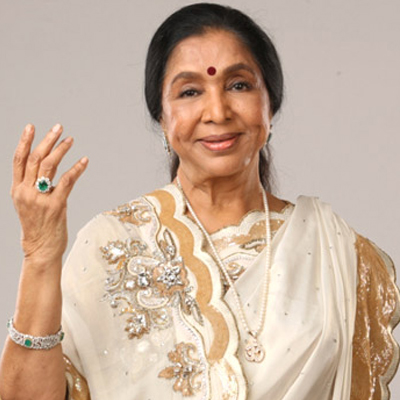
    MUMBAI: Born on 8 September 1933, the evergreen Asha Bhosle is all set to embrace the 81st year of her life.


    The younger sister of legendary singer Lata Mangeshkar, has sung for Bollywood actresses like Madhubala, Helen and Asha Parekh as well as the new-age heroines like Kareena Kapoor.


    Celebrating her birthday and thanking her fans for supporting her in her journey, she tweeted, “Thank you for kind greetings. Without your support I wouldn’t have achieved my goals. Walk a bit longer with me & we’ll find the perfect note.”


    The Padma Vibhushan awardee is said to have crooned more than 12,000 songs in multiple languages. Apart from Hindi, she has also sung in over 20 Indian and foreign languages.


    In a career spanning over half a century filled with music and milestones, one of India’s most loved singers has faced a number of ups and downs in her professional as well as personal life.


    Asha Bhosle started her career as a playback singer with ‘Chala chala nav bala’ in the Marathi film Majha Bal (1943) at the age of 10 to support her family. But she first tasted success with BR Chopra’s Naya Daur (1957), in which she sang ‘Saathi haath badhana ‘and ‘Uden jab jab zulfein teri’.


    Some of her memorable numbers are, ‘Aaiye meherban’, ‘Jaaiye aap kahan’, ‘Raat akeli hai’, ‘Piya tu ab toh aaja’, ‘Dum maaro dum’, ‘Dil cheez kya hai’, ‘Yayi re yayi re’ and ‘Arre re arre’ among others.


    In September 2009, The World Records Academy, an international organisation which certifies world records, recognised her as the ‘Most Recorded Artist’ in the world.


    In 2011 she was officially acknowledged by the Guinness Book of World Records as the most recorded artist in music history. The Government of India honoured her with the Dadasaheb Phalke Award in 2000 and the Padma Vibhushan in 2008.


    In 2013, she made her debut as an actress at the age of 79, in the film Mai, and received critical acclaim for her performance.

  • Centenary Film Festival to feature retro of Ray

    Centenary Film Festival to feature retro of Ray

    MUMBAI: A screening of the silent film ‘Throw of Dice‘ to the accompaniment of live music orchestra by maestro Nishat Khan will mark the opening of a special festival being held next week to mark the centenary of Indian cinema.


    A key highlight of the festival includes a special “Satyajit Ray Retrospective” and display the artwork of the cine craftsman of Indian cinema.


    Information and Broadcasting Minister Manish Tewari will inaugurate the Festival and also an exhibition on “Indian Cinema 100 (Celebrating a Century: An Audio Visual Voyage)”.
     
    The six-day festival will commence on 25 April and conclude on 30 April with a play on the life and times of Dadasaheb Phalke by Aamir Raza Hussain.


    The festival will travel to the Siri Fort auditorium, Jamia Milia Islamia University, Jawaharlal Nehru University, and India Habitat Center in an effort to bring it to the doorstep of film lovers in the capital.


    The extravaganza will also include screenings of some classics as well as contemporary Indian films by master directors such as Bimal Roy, Guru Dutt, Shyam Benegal, Adoor Gopalakrishnan and others.


    The festival will also pay tribute to some of the finest actors of popular Indian cinema, who are no longer alive, through the screening of their films. They include Balraj Sahni, Dev Anand, Shammi Kapoor, and Rajesh Khanna among others. The films being screened represent a sprinkling of various flavours of Indian cinema from major film producing regions of the country.


    Eminent filmmakers and actors have been invited to interact with the audiences over the course of the six day festival.


    Films Division will showcase documentaries which have captured on celluloid post-Independent India in all its myriad perspectives through gems out of its rich archives, such as news reels, documentaries, shorts, features and animation films on diverse subjects.


    Another key highlight of the festival is “Cut-Uncut,” a three-day workshop conceived and being executed by members of the Central Board of Film Certification. This event will showcase the growth and evolution of censorship in Indian cinema, through workshops and insightful panel discussions.


    The Centenary celebrations would culminate in the National Film Awards ceremony at Vigyan Bhavan on 3 May, including the presentation of the prestigious Dada Saheb Phalke Award to thespian Pran by President Pranab Mukherjee.

  • IFFI to stage 20-minute dialogue between Dadasaheb Phalke and wife

    IFFI to stage 20-minute dialogue between Dadasaheb Phalke and wife

    MUMBAI: 2012 marks the centenary year of Indian cinema and what better way to celebrate the same by paying a tribute to the Father of Indian cinema, Dadasaheb Phalke. The 43rd international film festival will stage a 20-minute play with a dialogue between Phalke and his wife Savitri.

    Made by Phalke‘s grand niece, the play throws light on what inspired Phalke to make India‘s first full-leagth feature film Raja Harishchandra in 1913. “We have a biography on Dadasaheb Phalke made by his grand niece which we will showcase on November 21. We wanted to celebrate the 100 years of cinema and what better way to do it than this. It is a 20-minute dialogue between Phalke and his wife Savitri which will be adapted into a play,” said IFFI director Shankar Mohan in a statement.

    Besides this, the 11-day festival will also screen 26 feature films and 36 documentary and non-feature films to commemorate the centenary year of Indian cinema. “It is a special time this year as we complete 100 years, and so we have a collection of movies which will be screened. IFFI has changed a lot over the past years in terms of content and delivery and we aim to make it better each year,” Mohan added.

    The IFFI, that starts from 20 November will open with the screening of Oscar-winning filmmaker Ang Lee‘s Life Of Pi while it will close with Mira Nair‘s The Reluctant Fundamentalist.

  • Rare classics of silent era to screen at Kolkata film festival

    Rare classics of silent era to screen at Kolkata film festival

    MUMBAI: To give a nostalgic feel to film buffs of how silent films were screened in tents a century ago, the Kolkata International Film Festival (KIFF) that is to get under way from Sunday, will screen some rare classics of the silent era at the state-run multiplex Nandan.

    It is here that a makeshift camp has been made to recreate the environment in which films used to be screened once upon a time. The camp will accommodate around 200 people.

    Named after one of India‘s first filmmakers, the Hiralal Sen Mancha will screen 15 black and white classics during the week-long carnival to celebrate the completion of 100 years of Indian cinema.

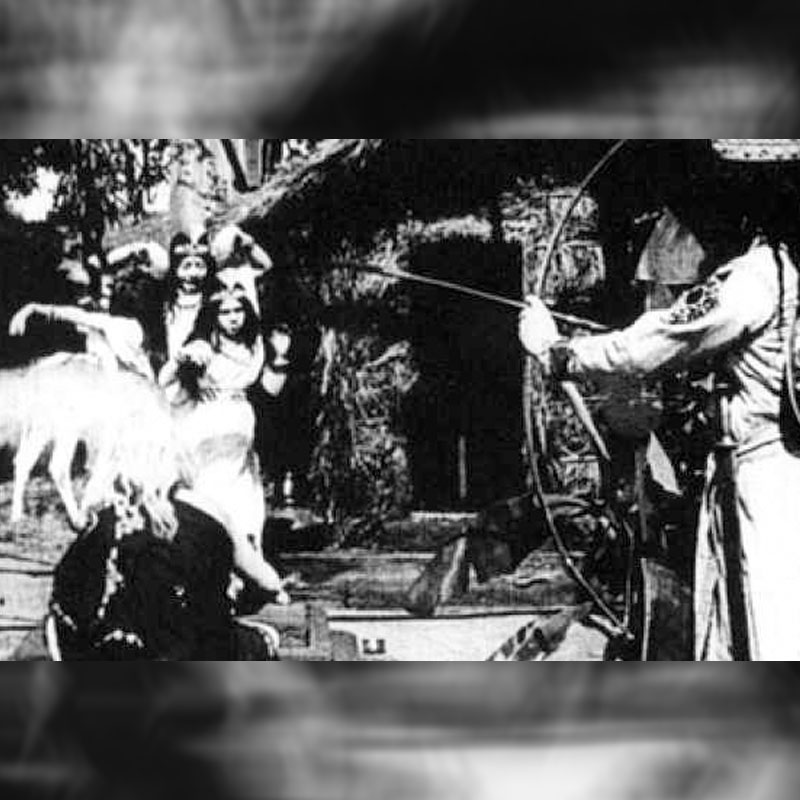
    This Sunday, India‘s first full-length feature film released in 1913, Dadasaheb Phalke‘s Raja Harishchandra, will be shown. Based on the mythological story of King Harishchandra, the film will be shown in the DVD format.

    Phalke‘s film Kalia Mardan, which presents the story of how a young Lord Krishna wins over a giant serpent will also be screened.

    Jyotiprasad Agarwala‘s Joymati (1933) will take viewers back to 17th century Assam to tell the painful story of a medieval princess who is tortured and killed by the evil prime minister for refusing to betray her husband.

    Kalipada Das‘ 1931 film Jamai Babu, a comedy remembered for having rare visuals of Howrah Bridge, Victoria Memorial and the sprawling Maidan in the heart of the city.

    Besides, classics from the legendary New Theatres studio founded by the Dada Saheb Phalke awardee BN Sircar, Chandidas, Dhoop Chhaon and Mukti will also be shown.

    Altogether 189 films from 60 countries will be screened at twelve venues during the eight-day KIFF.

  • Nasik Film Festival rolls out on 23 March

    Nasik Film Festival rolls out on 23 March

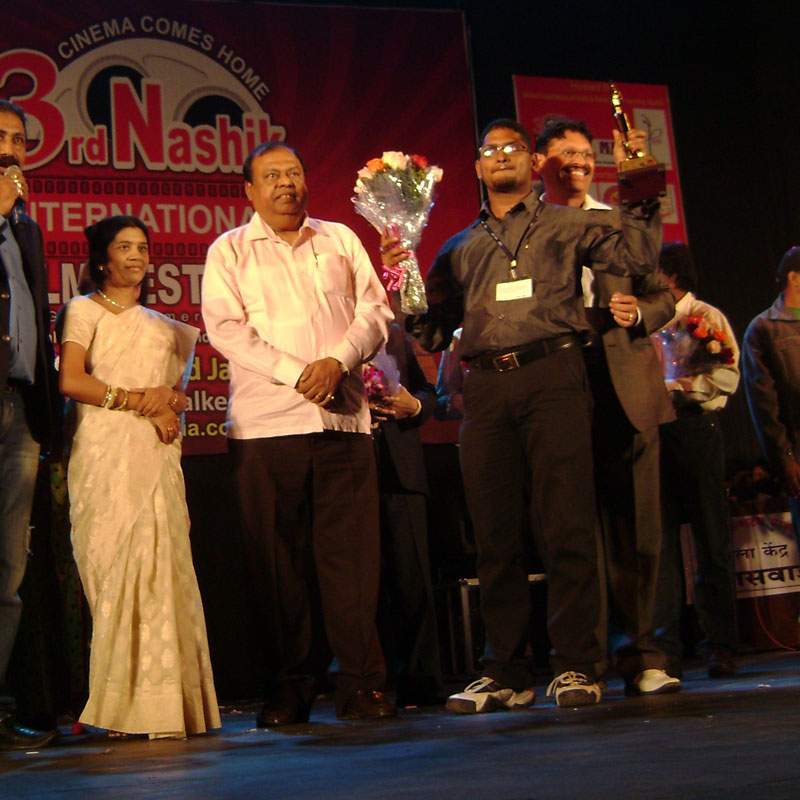
    MUMBAI: The three-day Nasik Film Festival is schedule to begin on 23 March. This year, the festival is dedicated to Dadasaheb Phalke, father of the Indian cinema.

    The event boasts of a line-up of events that include documentaries, award winning short films, workshops, competitions, intellectual discussions combined with wine appreciation workshops, visiting vineyards and attending wine and cheese festivals.

    The festival, now in its fourth year, is supported by Government of Maharashtra and Film Division of India.

    It will also include screenings from the European Film Academy‘s award winning package, French films by the Alliance de Francaise and poetic documentaries from the Baltic region of Europe.

    The festival will also see conversations with personalities like Shyam Benegal, Sudhir Mishra, Prahlad Kakkar, VG Samant and Javed Jafferi, on animation films, art of stills, adapting to changing audience and others.

    The festival will also conduct a first of a kind workshop by the Indian Documentary Foundation, wherein 16 participants, divided in teams, will produce a documentary on their perspective of Nasik city in four days.

    Renowned documentary filmmaker from Lithuania, Audrius Stonys, will guide them through the schedule from ideation to screening.

    The Nasik film festival will honour Manoj Kumar with the Lifetime Achievement Award. Three films of Dev Anand will be screened in the retrospective section.

    The festival will unveil the ‘First Look‘ of Pahlaj Nihalani‘s Avatar.

  • Delhi book fair marks centenary of Indian cinema

    Delhi book fair marks centenary of Indian cinema

    NEW DELHI: Discussions on subjects like “Converting Books to Films” and book releases by a large number of personalities from the film world marked the 20th Delhi Book Fair which had the centenary of Indian cinema as its theme.

    Three books were released in Braille on cinema for the visually challenged. The Fair also saw the launch of the popular comic ‘Champak‘ as an audio-CD by Vishv Books.

    The Fair, spread over four different halls, had one theme pavilion with over 300 publications on Indian cinema, and saw the presence of several film personalities for various events and book releases, including actor Farooq Sheikh, lyricist Javed Akhtar, Deepti Naval, and Nandita Das.

    The theme pavilion was also notable for screening some black and white films of masters like Satyajit Ray and others, apart from displaying the gramophone player and records, film reels and spools and how they gave way to newer technologies.

    The fair had a theme-based exhibition – Point of View: One Hundred Years of Indian Cinema – to celebrate the relationship between literature and cinema. Dual special volumes on art of behaving and a change of Urdu on Hindi cinema – “Johare Adakari” and “Urdu and Bollywood” – were released on 29 February.

    A book by wellknown critic-turned filmmaker Khalid Mohammed, ‘Two mothers and other stories’ published by Om Books was released by actor Anil Kapoor to coincide with the Fair.

    Held every two years in Pragati Maidan, the fair focused on the role and contribution of the cinematic medium towards popular culture on the centenary year celebrations of the Cinema.

    “The world book fair featured several film celebrities and authors. The aim was to highlight and portray the works on Indian Cinema,” said National Book Trust Director M A Sikandar.

    Earlier at the beginning of this year, the NBT came out with a calendar showcasing the cinema based on literature. The main idea behind such an initiative is to portray the mutual relationship between books and cinema.

    Though cinema came to India in July 1896, the first indigenous feature film – ‘Raja Harishchandra’ by D G Phalke after whom the Dadasaheb Phalke awards are named – was made in 1913. It was decided to mark the centenary this year as the next fair would be in 2014.

    A total of 27 countries and several international organisations took part and some ministerial delegations of foreign countries also visited the fair, including those of France and UAE.

    The event saw around 1,300 publishers with 2,500 book stalls. A rare exhibition of books authored by Rabindranath Tagore marked the 150th centenary of his birth, and the Delhi pavilion marked 100 years of the capital.

  • Life-size wax statue of Phalke to be installed at Wax Museum, Lonavala

    Life-size wax statue of Phalke to be installed at Wax Museum, Lonavala

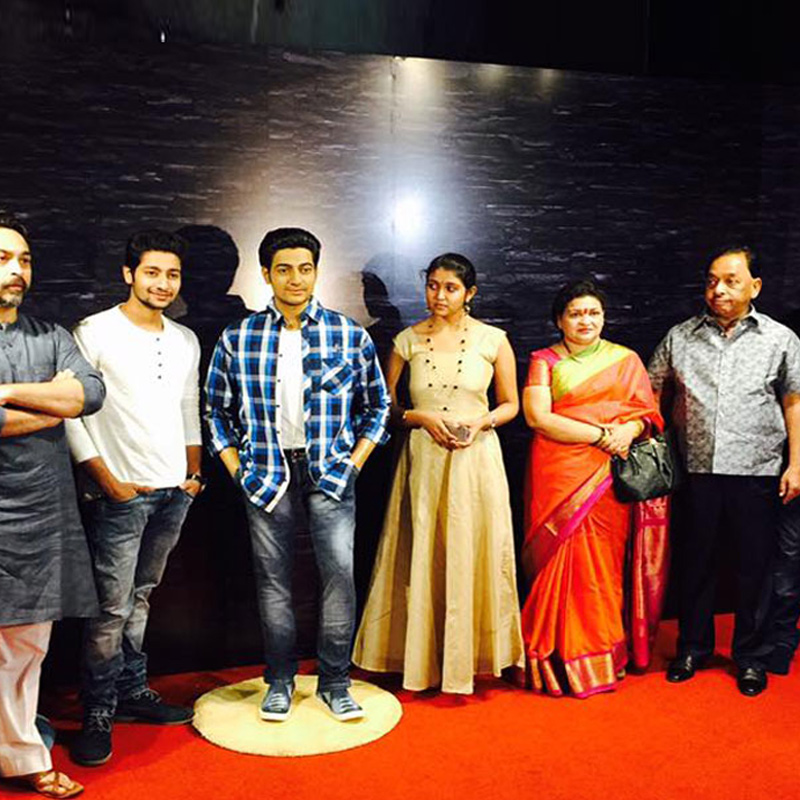
    MUMBAI: What better way to pay a tribute to founding father of Indian films Dadasaheb Phalke by erecting a full-size wax statue of the grand old man in the centenary year of the Indian film industry that falls on 3 May this year.


    The wax statue will be created and installed at the Celebrity Wax Museum (CWM) in Lonavala according to a memorandum of understanding between the Dadasaheb Phalke Academy and CWM managing director Sunil Kandalloor.


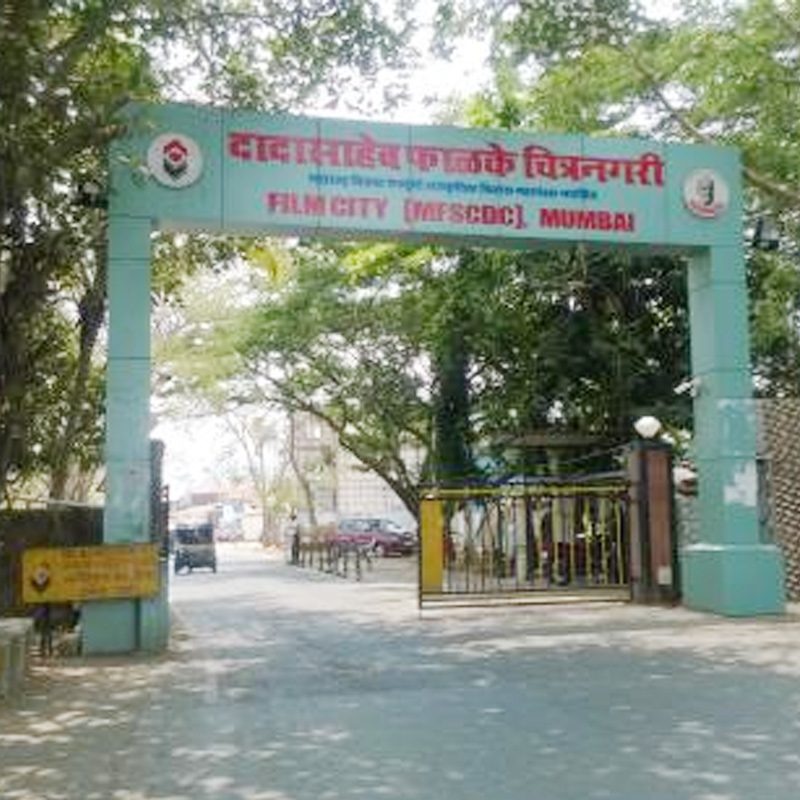
    The announcement was made when film folks gathered recently on the occasion of the 68th death anniversary of Phalke at the Dadasaheb Phalke Chitranagari (Film City) here.


    Present to pay homage were filmmakers Anil Sharma, Gautam Bhatiya, Gopal Ram, Romy Behl, veteran actor Chandrashekhar, singer Udit Narayan and trustees Ramgopal Gupta, Neena Jalan and Prabhat Pandey.