Tag: Dada Saheb Phalke Award

  • Best show ‘Sankat Mochan’ on Sony TV gets Phalke Award

    NEW DELHI: “Sankat Mochan Mahabali Hanuman” by Contiloe Pictures has won the “Dada Saheb Phalke Award” for the Best Mythological Show.

    The show, being telecast on Sony TV, got the award from the Dadasaheb Phalke Film Foudation.

    This is the second win within a month for Contiloe Pictures, who recently won the National Award in the Best Animation Film category for ‘Mahayodha Rama’ by Rohit Vaid.

    “Sankat Mochan Mahabali Hanuman” traces the journey of Lord Hanuman from his childhood and his virtues and stories before and after he met Lord Rama. The show is known to have won the hearts of the audiences from the very beginning through their majestic sets and the state of the art visual effects.

    It has also recently achieved a significant milestone by completing 500 episodes.

    Contiloe Pictures CEO Abhimanyu Singh said, “We at Contiloe Pictures are ecstatic by the win and it has certainly boosted our morale to keep up the good work. It gives immense pleasure to get such a prestigious recognition and would like to thank the jury for this honour. I would also like to thank the audience for their love and support and I am glad that all the hard-work put down by the team has paid.”

  • Reflect on constructive and meaningful engagement through cinema: Naidu

    NEW DELHI: President Pranab Mukherjee has said that the creation of the Film Promotion Fund would help promote and motivate talented independent filmmakers to promote their work across the globe in various International Film Festivals.

    Mukherjee described the film industry as a microcosm of India which celebrated the diversity of languages, customs, religions and culture.

    Indian Cinema and its diversity convey underlying spirit of brotherhood, tolerance, acceptance and co-existence, he said, adding that the inherent strength of the unity in spite of diversity was the cultural heritage inherited through the ages.

    The President was speaking after giving away the 64th National Film Awards for 2016. Information & Broadcasting Minister M Venkaiah Naidu and MoS Rajyavardhan Rathore were also present on the occasion.

    The National Film Awards were presented on 3 May as it is the day on which the first-ever indigenous feature ‘Raja Harishchandra’ by D G Phalke was released in 1913.

    The President also conferred this year’s Dada Saheb Phalke award to K Viswanath, renowned film director and actor, for his outstanding contribution to the growth and development of Indian cinema. A presenter of classical and traditional art, music and dance, K Viswanath has been a guiding force in the Indian film industry.

    Naidu said care and caution should be taken while depicting stories of tragedy and all stakeholders should reflect on the creative, constructive and meaningful engagement through the medium of cinema.

    Indian cinema had remarkably showcased the vast richness of the country’s cultural diversity, beautiful landscapes and languages and had been a great unifying force in promoting national integration, he said.

    While complementing the film industry, he said filmmakers had set their mind on delivering excellence and promoting societal values. The film industry should join hands to facilitate mission the making of developed India as it had strong influence on society and its values.

    He said movies that had won awards focus on a variety of issues and themes ranging from discrimination, love, historical relationships and relevant social challenges. He added that the National Film Awards showcase the capacity to set standards and to recognize the efforts of Indian filmmakers and artists who achieve heights.

    Speaking about the Films as a medium of communication, Naidu said it was the most beautiful form of expression that encompassed a multitude of visual arts such as music, dance and drama. It was also a medium through which contemporary socio- economic, political and cultural issues of individuals and society are showcased. The language of cinema is a universal one. It has been a powerful tool to reach out to people transcending the boundaries in society.

    The Feature Film Central panel was headed by eminent filmmaker Priyadarshan, popularly known for his Malayalam movie Kanchivaram among others. The Chairperson for the Non–Feature Film Jury was Raju Mishra while the Chairperson for Writing on Cinema Jury was Ms. Bhawana Somaaya. The Most Film Friendly State award jury was chaired by Telugu director Radha Krishna Jagarlamudi.

    In feature films, the highest number of awards went to Hindi (11) followed by Marathi (9); Malayalam (7); Tamil (5); Telugu, Bengali and Kannada (4 each); Assamese (3), and one each to Gujarati, Konkani and Manipuri. One award each also went to two languages not in Schedule VIII of the Constitution: Moran and Tulu.

    While the Marathi film ‘Kasaav’ by Sumitra Bhave & Sunil Sukthankar got the best feature film award, and actor Akshay Kumar for ‘the Hindi film ‘Rustom’ and Surabhi C M for the Malayalam film ‘Minnaminungu–the Firefly’ won the top awards for acting.

    Rajesh Mapuskar for the Marathi film ‘Ventilator’ has been named best director in the Awards for 2016. The state of Uttar Pradesh has been named as the Most Film Friendly state and Jharkhand gets a special mention in this category which was announced for the first time last year.

    ‘Fireflies in the Abyss’ by Chandrashekhar Roy got the best non-feature film award, while G. Dhananjayan was named best film critic and ‘Lata: Sur Gatha’ by Yatindra Mishra was given best book on cinema award.

    The full list of awards can be seen at http://www.dff.nic.in/writereaddata/NFA64PressNote2016.pdf

  • Will private channels make ‘Godaan’ or ‘Mirza Ghalib’, asks Gulzar

    Will private channels make ‘Godaan’ or ‘Mirza Ghalib’, asks Gulzar

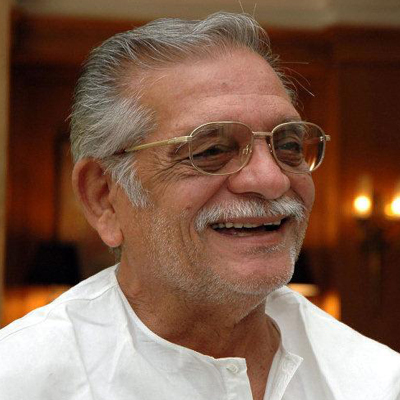
    NEW DELHI: Eminent lyricist and filmmaker Gulzar, who has been awarded the film industry’s highest Dada Saheb Phalke award for Life Time Achievement, has said that cinema is a mirror and only reflects what is happening in the society.


    He said that cinema cannot play the part of reformer but merely show through celluloid the ills in society and if these have a positive effect on society, it is incidental. Furthermore, cinema does show the mirror in a somewhat exaggerated manner to get the message home.


    Gulzar was speaking after releasing the DVDs of two telefilms – ‘Nirmala’ and ‘Godan’ based on Munshi Premchand’s novels – which he had directed for Doordarshan.


    Answering questions, Gulzar who will turn eighty later this year said that he had always learnt from his seniors and particularly paid a tribute to the late Bimal Roy who had given him his break in writing songs, and to music directors like Sachin Dev Burman and Madan Mohan.


    Referring to a question about the songs of yesteryears and those of today, he said what lyricists were today was not their fault since society itself was changing. He said a song like ‘Mora gora rang lailey, mohey Shaam rang daidey’ would have no place in a society which gladly accepted songs like ‘Bidi jalai-ley’.


    He said it was not true that he had only made films based on renowned novels or stories. He referred in this connection to two of his films which were his own – ‘Maachis’ which had won National Awards and ‘Hu Tu Tu’.


    Asked if there was something he regretted not having done, he cryptically said: ‘I miss what I have not been able to make.’


    He said in reply to a question about why DD was not changing the way private channels were changing by asking a counter-question: “Do you think any other channel would have made serials or telefilms like ‘Godaan’, ‘Nirmala’ and ‘Mirza Ghalib’?”


    Earlier in his speech, he said his attempt of making ‘Nirmala’ had been to show that society had not changed since Premchand had written the novel almost a century earlier. The effort was to bring Premchand live before the viewers. At a time when people do not read classics, making the novel for television was one way of making people aware of these classics.


    He said renowned authors should not only be read, but should be translated in different languages.


    He noted that finding a village where there were no television antennae or modern gadgetry was not very easy for the setting of ‘Nirmala’. Although he found such a village on the border of Gujarat and Maharashtra, he said he was saddened that sixty years after independence, these villages had remained as cut off from modern society as during the British rule.


    Earlier, DD director general Tripurari Sharan said DD had been fortunate to have got two eminent persons – the ‘Kahani ka jadugar’ (the magic weaver of stories) Premchand and the ‘Shabdon ka jadugar’ (magic weaver of words) together for these two telefilms.


    DD additional director general VK Jain described Gulzar as an institution who was an inspiration to all. But he was particularly surprised at the manner in which Gulzar always managed to re-invent himself.


    Gulzar besides being an acclaimed poet, writer and director, has contributed immensely to Hindi and Urdu literature. In addition to his songs and films, he has penned multiple collections of poems and short stories. Some of his previous works for Doordarshan include the title song for the ‘Jungle Book’ series, ‘Mirza Ghalib’, ‘Potli Baba Ki’ and ‘Guchche’ TV series.

  • Pooja Bhatt to make film on late singer Bhupen Hazarika

    Pooja Bhatt to make film on late singer Bhupen Hazarika

    MUMBAI: Filmmaker and actress Pooja Bhatt will direct a movie on the late poet, composer and singer Bhupen Hazarika.

    Bhatt‘s next film titled ‘Dhumuha‘ is based on the life of Hazarika and his relationship with the filmmaker Kalpana Lajmi who directed several films like Rudaali, Darmiyaan, Daman: A Victim of Marital Violence and Chingaari.

    The legendary singer who died on 5 November 2011 was awarded with the Dada Saheb Phalke Award, Sangeet Natak Akademi Fellowship, Sangeet Natak Akademi, India‘s The National Academy for music, Dance and Drama.

    In 2012, Hazarika was posthumously conferred India‘s second highest civilian award Padma Vibhushan by President.

    The film will commence its shooting from 31 January 2014 after Lajmi gets ready with the script.

  • Super K wins Dadasaheb Phalke Academy award

    Super K wins Dadasaheb Phalke Academy award

    MUMBAI: Shemaroo Entertainment‘s Super K recently won the prestigious Dada Saheb Phalke Film Festival Award – 2012 for best feature film (Animation).

    The other winners were I Am (Best Live action), Ra.One (Best VFX) and Rushi (Best debutante director). The award was instituted by Mumbai-based Dadasaheb Phalke Academy.

    Said Shemaroo Entertainment head of animation Smita Maroo, “It is an extremely proud moment for all of us to be honoured with this Award. We are glad that our contribution to the animation industry has been recognised and appreciated on a prestigious platform like this.”

    Incidentally, the film was also highly appreciated in film festivals like Animabassuri – Animassia – Spain, Cairo International Film Festival for children, Annecy Film Festival and Hiroshima Film Festival.

    Super K was the first Indian animation film that was released online all over India on 11 November last year.