Tag: Dabur India

  • Tata Nexarc onboards Kapil Ohri as head of performance marketing

    Tata Nexarc onboards Kapil Ohri as head of performance marketing

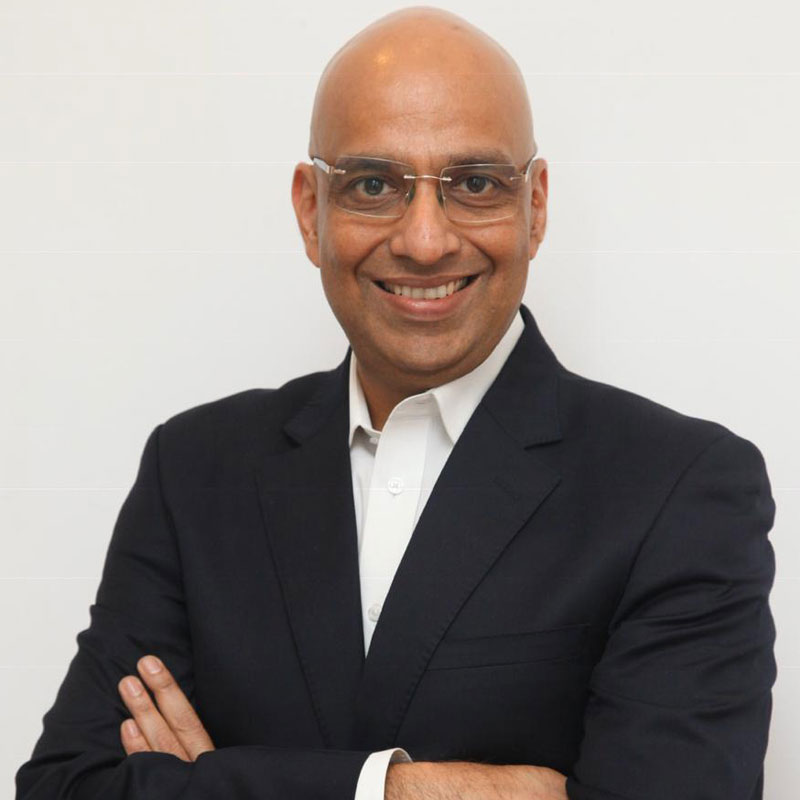
    Mumbai: Tata Nexarc on Tuesday announced the appointment of Kapil Ohri as head of performance marketing and customer success. He brings over 15 years of experience in digital media across digital transformation, D2C, media planning, programmatic advertising, and content marketing, working for companies like Mindshare, Ogilvy, Nnnow.com, Afaqs etc.

    Ohri shared about joining his new role at Tata Nexarc via a LinkedIn post. He posted, A “New Start,” After several years in the CPG sector, it’s time to reboot. It’s time for a “New Start” and become part of Tata Business Hub team as Head of Performance Marketing & Customer Success (Engagement Marketing). It’s time for a fresh mission – Enable emerging businesses to grow, solve challenges and optimize processes. And with this change, I have also moved out of Delhi NCR. Namaskara Bengaluru.”

    Link: https://www.linkedin.com/posts/kapilohri_tata-nexarc-newjob-activity-6957542039739617280-TmPF?utm_source=linkedin_share&utm_medium=member_desktop_web

    Prior to joining Tata Nexarc, Ohri was the deputy general manager at Dabur India. He joined the company as head of digital marketing.

    Ohri founded ‘afaqs! Campus,’ a digital marketing education venture that has coached over 2,000 marketing professionals from leading companies and institutes. He is the author of the series of books titled “The Curious Digital Marketer.”

    His LinkedIn profile read, “He has won around 35 awards (including team awards as well) at national and APAC level for digital marketing work for brands.”

    The Top 100 Digital Marketer Awards in India featured Ohri twice. In 2020, he received the Top 100 Smartest Digital Marketer award from ET NOW & World Marketing Congress. He has also won the title of Top 100 Digital Marketer from Paul Writer PluralSight in 2017.

  • dentsu X wins digital media mandate for Dabur India

    dentsu X wins digital media mandate for Dabur India

    Mumbai: dentsu X, the integrated media agency from the house of dentsu India has won the digital media mandate for Dabur India, following a multi-agency pitch.

    “Over the past few years, the world has increasingly evolved towards digital transformation. As a result, digital marketing has now emerged as the go-to solution for brands and companies,” said Dabur India head of media Rajiv Dubey. “Dabur has been ramping up spends on digital exponentially in the past few years, with brands creating special digital-only content. We are happy to join hands with dentsu X – an agency that has been responsive to Dabur’s needs and appreciative of our brand vision and way of working. Their appreciation and deployment of data make them champions at maximising the potential of digital platforms.”

    “We are ecstatic to partner with Dabur, a brand that invokes implicit trust in the minds of its consumers. Dabur is synonymous with impeccable quality and omnipresent across Indian households,” added dentsu CEO – South Asia media Divya Karani.

    “It is the people, tech and tools of dentsu X that address and answer ‘the why beyond the what’. We are extremely excited and look forward to a deep partnership with Dabur, to drive business outcomes in the short and long term,” commented dentsu X India CEO Roopam Garg.

  • The pros and cons of Barc’s ADRS for news genre

    The pros and cons of Barc’s ADRS for news genre

    Mumbai: After a gap of nearly 18 months, Broadcast Audience Research Council (Barc) India resumed the ratings for individual news channels with the release of data for Week 10 ‘2022 on 17 March. Following an industry-wide consultation process, the ratings agency developed the Augmented Data Reporting Standards (ADRS) for news and special interest genres, as per which audience estimates for these genres will be released based on a four-week rolling average, every week.

    The new system was devised to address the problem of smaller sample size, technically ‘incidence,’ which makes the news and niche genres prone to error and rigging. The four-week rolling average thus provides more robust and reliable viewership estimates with lower levels of error as compared to the earlier weekly reporting standard. 

    While the technicalities seem to be in place, stakeholders including broadcaster, advertisers and media planners though largely welcoming of the ADRS, have expressed certain reservations regarding it, ranging from downright disapproval to a ‘good for now’ and ‘wait and watch’ approach. 

    Insubstantial as it returns

    By and large, the ‘return of the ratings’ was welcomed by the industry; it was celebration for some, and vindication for others. And yet there were players who refused to accept it altogether.  Just days before the ratings resumed, a leading news broadcaster pulled out of Barc citing the changes offered as ‘alarmingly insubstantial.’ It was apparently displeased with the ratings agency’s unwillingness to work on its sample size which, it thought, was inadequate to ensure a measurement process free from manipulation.  

    A person from the authority tells IndianTelevision.com with a condition of anonymity that while the sample size of nearly 40,000-50,000 that Barc works with is fairly adequate, what really makes the data prone to both error and rigging is the “comparatively miniscule viewership of news and special interest genres.”

    “Statistically speaking because the ‘incidence’ – which is inversely proportional to the level of error – is far lower as compared to other genres, increasing the sample size will not impact the efficacy or sanctity of data/ratings in any way. The well-thought transition to the ADRS (four-week rolling average) is therefore the best approach to providing the most accurate estimates for news and niche genre viewership,” he says.

    Impact on media planning

    Sharing his thoughts at a panel discussion organised by IndianTelevision.com last month, Omnicom Media Group India managing partner and head of investment Yatin Balyan says that weekly data helps understanding how their investments on a particular programme have performed, and to develop a learning base for making a futuristic recommendation. “While we take a long-term view on a four-week, eight-week or 13-week average basis, weekly ratings are important because not every event that we buy has a longer format,” Balyan tells. 

    Patanjali Ayurved COO – media and communications Anita Nayyar too highlights that owing to high volatility in programming in the news space regular reporting of ratings is important. “Unlike GECs, there is no reason why a newcomer cannot top the charts in the news genre because it is completely dependent on the content and the pulse of the audience the channel touches upon,” she adds. 

    However, for exactly the same reasons as mentioned above, an average will give a better understanding of viewership for a news channel, the expert points out. “The ADRS ought to be welcomed by the media planners for it makes life much simpler for them by reducing the disparity in planned and actual GRPs delivered on a campaign. There’s also the fact that news programming can only be altered so much, whatever the TRPs.”

    Advertisers speak  

    Maruti Suzuki India executive director (marketing and sales) Shashank Shrivastava is quite content with the new ratings standards. “Since we usually run regular and slightly longer campaigns for both sustenance and brand launch on news channels our media planning will not be affected as much as someone’s who goes for shorter, one off investment,” he shares. 

    News is a crucial genre for Maruti, speaking of impact and affinity among its TG. The automaker employs GECs for reach. “We generally prefer only the top three channels in any vertical, be it business, English, Hindi or vernacular news, and analyse it by market. Our experience and the ratings that have now been released also shows that there has not been much fluctuation in these rankings,” remarks Shrivastava.

    Dabur India head Rajiv Dubey is happy that the ratings are back and the trend that has emerged, justifies his marketer’s instincts that assumed increased relevance during the blackout days. Dabur is prominent advertiser on news channels, particularly Hindi and regional. The genre comes second after GECs for the FMCG major. 

    Commenting on the likely impact of the new reporting standards on his media strategy, he says, “I do not see it as having a significant impact, as media plans are not made or changed on a weekly basis. We consider a four to thirteen-week average for it.” 

    That being said, Dubey expects to have more weekly and granular data from Barc going ahead. “It is important to have a common standard across genres for comparative planning and to understand the viewership trends for special events/programming on news channels where my campaign may appear,” he insists. Expressing concern over “Barc’s rather secretive approach to a particular genre,” Dubey says he will continue using other sources like Zapr, data from DTH platforms and the company’s own internal survey which became his mainstay during the blackout. 

    It may be of interest here to note that Barc has capped the ‘Customised Events Reports’ (CER) available for broadcasters “to meet their commercial needs” at 12 for a financial year. 

  • Disha Patani roped in as brand ambassador for Dabur Gulabari

    Disha Patani roped in as brand ambassador for Dabur Gulabari

    Mumbai: Dabur India Ltd on Monday announced the signing of Bollywood actress Disha Patani as the new face of its skincare brand Dabur Gulabari. The company has also unveiled its improved packaging for the product.  

    “Dabur Gulabari is built on strong equity of natural ingredients which matches with Disha Patani’s natural beauty. She is not only the perfect personification of the brand’s values but an inspiration to young teenage girls who dare to dream,” said Dabur India Ltd vice president-marketing Abhishek Jugran. “We are delighted to welcome her to the Dabur Gulabari family and are confident that this association will help us build a better connect with our current users and also make the brand more relevant to the young and teenage audience.”

    As a part of the association, the Bollywood star will appear in multiple campaigns which will run across platforms, said the company in a statement.

    “Dabur Gulabari has been the most preferred beauty brand for millions of young girls for decades now. As a market leading brand that has been constantly innovating in terms of product, packaging, and communication, Dabur Gulabari has always recognised and strived to meet the ever-evolving beauty care needs of our consumers,” stated Dabur India category head – skin care Ajay Gandhi.

    “Like with every other girl in the country, Dabur Gulabari was my first beauty care brand as a teenager,” said Patani on the brand association. “To me, it stands for both beauty and the unadulterated teenage spirit. I am excited to help define what natural, rose-like glow means to a whole new generation of girls.”

  • Dabur India forays into syrups & spreads segment with Dabur Honey Tasties

    Dabur India forays into syrups & spreads segment with Dabur Honey Tasties

    Mumbai: FMCG major Dabur India on Thursday announced its foray into the syrups and spreads category with the launch of ‘Dabur Honey Tasties’. The new product has been launched in two flavours – Chocolate and Strawberry.

    This honey-infused sweet, healthy, and ‘no added sugar’ take on the classic sugary chocolate and strawberry syrups is an extension of the company’s popular healthcare brand Dabur Honey, it said in a statement.

    Explaining the rationale behind the brand extension, Dabur India’s marketing head – health supplements, Prashant Agarwal said, “Dabur Honey has been trusted by generations as their preferred health and food supplement. We are now offering its nutrition for kids with our new range of flavoured Honey, which is the perfect combination of taste and health. Millennial moms are increasingly looking for products that offer great taste and are also healthy for their little ones. They are also finding ways of giving the goodness of honey to their kids. Dabur Honey Tasties, a one-of-its-kind innovation in the honey category, provides a tasty treat that kids will love.”

    Dabur Honey Tasties will be available in colourful squeezy packs at select retail stores and leading e-commerce platforms.

  • Dabur India appoints Rahul Awasthi as executive VP – manufacturing

    Mumbai: Dabur India has appointed Rahul Awasthi as executive vice president – manufacturing. Awasthi was head of planning, technology, and innovation at HUL.

    He has 27 years of experience in the FMCG industry in the manufacturing, technology, innovation, and supply planning domain. “With multiple strategic and execution roles across locations, brings in both local and global perspective on the table,” the company said while welcoming its new EVP.

    Dabur India is one of India’s leading FMCG Companies and among the world’s largest Ayurvedic and Natural Health Care companies.

  • Dabur India net profit surges 34% to Rs 378 cr in Q4

    Dabur India net profit surges 34% to Rs 378 cr in Q4

    NEW DELHI: FMCG major Dabur India reported Rs 378 crore in net profit for the quarter ending 31 March 2021, a 34 per cent leap compared to Rs 281 crore during the same period a year earlier.

    The company reported a total income of Rs 2,421.77 crore in Q4, compared to Rs 1,941.13 crore in the corresponding quarter last year. Consolidated revenue surged 25 per cent to close at Rs 2,337 crore for the quarter.

    The EBITDA for the quarter stood at Rs 442.5 crore, while the EBITDA margin was 18.9 per cent.

    For the full financial year, Dabur India recorded a 10 per cent growth in consolidated revenue at Rs 9,562 crore, while consolidated net profit grew 17.2 per cent to Rs 1,693 crore.

    The Real Juice maker also recorded a sequential revival in discretionary spending, mainly in the home and personal care portfolio, which grew by 32.6 per cent. Dabur’s oral care category was the outperformer in this category, reporting more than 42 per cent growth during Q4. The toothpaste segment also witnessed a surge of 45 per cent. The food and beverages business marked a turnaround to report a nearly 28 per cent growth during the quarter.


    The consumer goods manufacturer’s strong growth was on the back of efforts to drive demand for its Ayurvedic healthcare, foods, and nutrition products, along with a greater focus on the expansion of distribution, it said in the earnings report.

    Dabur CEO Mohit Malhotra said, “Our strategic business transformation exercise to develop and implement aggressive growth strategies in our core business areas has led to a more flexible company, helping us successfully navigate the emerging headwinds. Dabur’s financial situation remains strong with a 25.6 per cent growth in operating profit during Q4 2020-21.”

  • Dabur Red Pulling Oil is the brand’s first ayurvedic mouthwash

    Dabur Red Pulling Oil is the brand’s first ayurvedic mouthwash

    NEW DELHI: Dabur India Ltd has entered the mouthwash category with the launch of Dabur Red Pulling Oil, an Ayurvedic mouthwash, creating a whole new segment in the oral care market. The launch of this ayurvedic detox for teeth and gums marks another first for Dabur and for the ayurvedic products industry in India.

    Dabur India Ltd marketing head-oral care Harkawal Singh said, “Dabur Red Pulling Oil is an Ayurvedic mouthwash which contains natural oils and herbs with no alcohol. The product is based on a process defined in Ayurvedic scriptures and introduces to the world the Kavala-Gandusha Therapy, an oil-based oral detox regimen. Besides its oral care benefits, the therapy is also known to provide relief from health problems with improved health of sinuses, improved hormonal balance and detoxification. Dabur Red Pulling Oil helps strengthen teeth and gums, and kills 99.9 per cent germs, thus providing complete oral care.”

    The product contains coconut oil, which prevents gingivitis and plaque; sesame oil, which strengthens teeth and gums; tulsi to prevent bad breath; clove, which helps in reducing toothache; cinnamon oil that gives relief to a sore throat; and thyme mint for preventing tooth decay.

    “Backed by our 136-year heritage and knowledge of Ayurveda, Dabur has launched this breakthrough innovation for improvement of people’s overall oral health. Developed after extensive research, it is a known daily therapy for both oral and overall wellness of teeth and gums. Dabur Red Pulling Oil is made with pure and natural ingredients and is a complete solution for all dental problems,” Singh added.

    Priced at Rs 275 for a 195 ml pack, Dabur Red Pulling Oil is initially available across all leading e-commerce platforms and will soon be rolled out through regular retail channels too.

  • Dabur India Q2 Results: FMCG revenue surges 19.8%

    Dabur India Q2 Results: FMCG revenue surges 19.8%

    NEW DELHI: FMCG major Dabur India has reported a 19.5 per cent surge in net profit in the second quarter of 2020-21, backed by an increased demand for its ayurvedic healthcare, hygiene and nutrition products, and a new line of products to meet consumer needs in the wake of the Covid2019 pandemic.

    Dabur ended Q2 2020-21 with a 13.7 per cent growth in consolidated revenue at Rs 2,516 crore, up from 2,212 crore a year earlier. This is the highest revenue growth reported by the company in the last couple of years. Consolidated net profit for Q2 rose to Rs 481.7 crore as against Rs 403 crore a year earlier.

    Dabur's India FMCG business led the growth with a 19.8 per cent surge, with an underlying volume growth of 16.8 per cent during the second quarter of 2020-21. Dabur's standalone net profit grew 20.6 per cent to Rs 392.7 crore as against Rs 325.5 crore a year earlier.

    "While COVID-19 continues to impact people around the world, Dabur India Ltd's strategic business transformation exercise to develop and implement aggressive growth strategies in the core business areas and successfully address the emerging challenges helped us deliver a healthy topline growth accompanied by an expansion in Margin. Our domestic healthcare business reported a strong 49 per cent growth, with the recent consumer-relevant innovations contributing to around 5-6 per cent of our revenue. Our international business has also staged a smart recovery and reported a growth of 5.5 per cent despite the key GCC market continuing to face macro-economic headwinds," said Dabur India CEO Mohit Malhotra.

    Malhotra further said that Dabur continued to focus on strengthening its core healthcare portfolio with the introduction of new innovations, coupled with heavy investments behind its power brands and expanding its distribution might. This has enabled the company to grow ahead of categories and gain market share across the portfolio.

    Rural demand grew ahead of urban, the company said, in line with what most large packaged consumer goods companies have reported.

    Favourable monsoon and enhanced stimulus announced by the government as part of its overall thrust on boosting rural economy is expected to further drive rural demand in the coming months.

    Share of e-commerce to overall sales of the company grew to 6 per cent from 2.1 per cent in the previous year.

    "Healthcare, particularly the portfolio of our immunity-boosting products, continues to be the outperformer for Dabur. This is also in line with our strategy of focusing on the consumer health categories. The home and personal care business also reported a recovery, growing by high single digits, while the domestic foods business saw a strong revival with in-home consumption returning to near normal levels. However, this category was impacted by the continued closure of Hotels, Restaurants and Institutional businesses," said Malhotra.

    The health supplements business for Dabur reported a 70.8 per cent growth during Q2 of 2020-21. The ayurvedic OTC range grew by over 56 per cent while the ayurvedic ethicals business ended Q2 with an over 26 per cent growth. While the traditional skin care business continued to face headwinds, the strong demand for the newly launched personal hygiene products range helped the overall category end the quarter with an over 38 per cent growth. Dabur's oral care sales was up over 24 per cent with its flagship Dabur Red Paste reporting strong double-digit growth. The shampoo business, on the back of strong demand for Vatika Shampoo, grew by nearly 18 per cent in Q2.

    The company has declared an interim dividend of 175 per cent for 2020-21. "Continuing with our payout policy, the board has declared an interim dividend of Rs 1.75 per share, aggregating to a total payout of Rs 309.30 crore," Dabur India Ltd chairman Amit Burman said.

  • Dabur proactive in the Covid-2019 crisis: Rajiv Dubey

    Dabur proactive in the Covid-2019 crisis: Rajiv Dubey

    NEW DELHI: The ongoing economic and social implications of the Covid2019 pandemic and lockdown induced by it have prompted every advertiser in the country to rework its strategies. The media mixes are being realigned and the ad spends are being controlled in a big way. In a recent virtual roundtable called “Survival At Its Best”, hosted by Indiantelevision.com with several big advertisers and agencies, Dabur India head of media Rajiv Dubey shed light on how his firm, which is one of the biggest advertisers in the country, is managing the situation.

    Dubey highlighted that Dabur was quite proactive in its approach to handle the situation from a marketing perspective and was ready with a roadmap by the mid of March. However, it did not foresee the rise of Doordarshan the way it has been.

    “We were pretty prepared with our strategies when it came to what media channels will work or not work by mid of March. But Doordarshan came out of the syllabus," he said.

    As per BARC-Nielsen data for week 15, advertiser count for Ramayana grew from three to 42, since it started airing.

    However, Dabur is now actively seeking partnership opportunities with the channel. It has already started advertising heavily on Mahabharat (which airs on DD Bharti) and is in talks with the public broadcaster to sponsor at least one of its show. The brand is also exploring opportunities on DD Retro. 

    Currently, Dabur is investing most of its media monies on news channels and digital platforms. Dubey further revealed that while TV still dominates the pie, Dabur has doubled its digital spends.

    When prodded if he would increase the digital spends further, given its meteoric rise in these times, Dubey showed reluctancy.

    “Television is still delivering. It grew by 40 per cent. The percentage increase in digital hasn’t been that much. We are there on digital news and some OTT platforms.  We have to be wherever the audience is.”

    He also added that he was not expecting the print industry to take such a big hit. The company had always had a strong print presence, which now has been impacted because of the difficulty in deliveries. “Online numbers can’t be accredited by any source right now. We can’t know how many people are getting digital copies of the papers,” he said.

    Apart from communication, Dubey is also relying on special product launches to sail through.

    “While regular new launches of our product portfolio have been a challenge like it has been for almost every major company, we are thinking of launching some special products in the coming weeks. For example, we studied the demand for sanitizers going up in the market and started production in a big way in the month of February. We are expecting to come back quickly and in a big way with launches," he added.

    Asked if it is the right time to come with new launches, he replied, “Relevant launches which can help people like disinfectants will surely work.”