Tag: D2M

  • India tunes into the future: D2M phones set to beam broadcast content straight to mobiles

    India tunes into the future: D2M phones set to beam broadcast content straight to mobiles

    MUMBAI: Say hello to television without the internet. At Waves 2025, India’s flagship World Audio Visual & Entertainment Summit to be held at Jio World Centre in Mumbai, a game-changing coalition of technology players will unveil the roadmap to bring direct-to-mobile (D2M) broadcasting to the fingertips of Indian consumers.

    The ambitious push is led by FreeStream Technologies, an IIT Kanpur-incubated deeptech startup, alongside mobile giants Lava International and HMD Global, powered by chipsets and infrastructure from Tejas Networks (formerly Saankhya Labs), with global validation from US-based broadcasting behemoth Sinclair Inc.
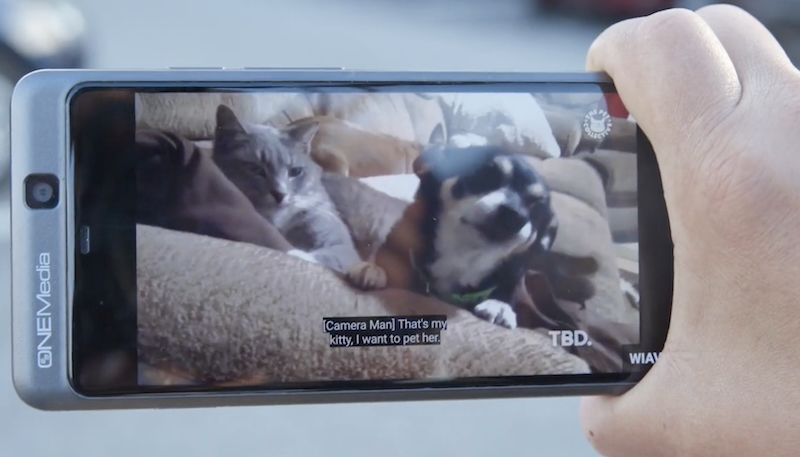
    The tech, hailed as a breakthrough in both communications and accessibility, allows live TV, emergency alerts, educational content, and multimedia programming to be delivered directly to mobile phones via terrestrial broadcast signals — bypassing internet or mobile data altogether.

    “This is India’s moment to lead the world in next-gen broadcasting. Lava and HMD are laying the foundation of a robust device ecosystem, and their commitment to scaling up proves D2M is more than a proof of concept — it’s a national opportunity,” said FreeStream Technologies director Sumeet Nindrajog.

    Lava, known for its made-in-India ethos, is ensuring that the price-point doesn’t become a hurdle. “Our D2M featurephone design cleverly integrates the modem and apps in a way that keeps costs low — something that has always defined Lava,” said Lava International executive director Sanjeev Agarwal.

    HMD — the home of Nokia phones — is matching that energy. “HMD has always been about delivering meaningful innovation. With D2M, we’re enabling consumers to access live content and alerts on their devices, without needing Wi-Fi or mobile data,” said HMD CEO & VP India & APAC. Ravi Kunwar. “This is a global first, and we’re proud to be building it in India.”

    Behind the scenes, it’s Tejas Networks’ award-winning SL-3000 D2M chipset — the tech’s beating heart — that makes it all possible. A product of Saankhya Labs (now part of Tejas and the Tata Group), the chip is designed for mobile broadcast reception, even in dense or low-connectivity environments.

    “This isn’t just about watching TV — this is about creating a national broadcast backbone that can deliver everything from emergency alerts to targeted education, from CDN offload to next-gen advertising,” said Tejas Networks  EVP and co-founder of Saankhya Labs Parag Naik. “It’s an empowerment platform, aligned with PM Modi’s vision of a digitally empowered India and Viksit Bharat.”

    Tejas has also built out the full core network platform to support nationwide rollout — integrating both broadcast and broadband layers, a capability rare even by global standards.

    From the other side of the Atlantic, Sinclair Inc, a pioneer of ATSC 3.0 — the broadcasting standard enabling D2M — praised India’s swift strides. “The adoption of ATSC 3.0 in affordable mobile devices underscores the foresight of our global investments, and vindicates our ‘mobile-first’ strategy,” said Sinclair Inc president & CEO Chris Ripley. ““India is now in the driver’s seat. Our next focus is B2X — Broadcast to Everything — which will be vital to achieving the goals of 6G and next-gen applications.”

    Sinclair’s One Media unit has been working with Indian partners to future-proof mobile broadcasting as a core digital infrastructure. Their role isn’t just investor — they’re co-developers and global evangelists.

    Backed by policy momentum and partnerships with Prasar Bharati, the D2M ecosystem has already undergone field trials across live networks. The next step? Nationwide field deployment, with Lava and HMD readying devices for market at scale.

    D2M is now not just a tech demonstration — it’s a political, social and commercial opportunity:
    * To decongest mobile data networks,
    * To deliver content equitably across rural and urban India,
    * And to anchor India’s leadership in media-tech manufacturing.

    With global standards, Indian R&D, and mass-market readiness coming together, Waves 2025 could well be remembered as the moment India turned its phones into broadcast hubs.
  • Why NetxGenTV is not the panacea for Indian TV broadcasting

    Why NetxGenTV is not the panacea for Indian TV broadcasting

    Mumbai: A new transmission technology, direct-to-mobile (D2M) broadcasting or NextGenTV, despite enjoying coverage in media platforms such as this one, is struggling to gain TV industry traction. D2M transmits audio-visual content on a terrestrial (earth-based) spectrum and any device with a receiver can access it, just like FM radio transmits audio content. Prasar Bharati and IIT-Kharagpur conducted limited trials of the technology last year, and reports suggest that the Telecommunications Engineering Centre may issue a technical report. It is worth exploring why D2M has almost no takers.

    The first time Indians saw audio-visual content on TV, it was a science experiment to test the capabilities of satellite-based communications. The Satellite Instructional Television Experiment (Site), jointly designed by the National Aeronautics & Space Administration (Nasa) and India’s Department of Atomic Energy demonstrated the potential to disseminate audio-visual content via satellites in 1975. 2,400 villages spread across 20 districts received educational and instructional content that the All India Radio (AIR) had prepared.

    Later in 1991, strong demand for coverage of the Gulf War pushed satellite and TV dish manufacturers and cable operators to work overtime to create infrastructure for TV distribution. Market-led shifts from analog to digital transmission and the evolution of newer transmission technologies like direct-to-home (DTH) and Headend in the Sky (Hits), led the way and created new value and supply chains. In the case of D2M, no supply chain participant – content services, device makers and infrastructure providers – wants a hard mandate for adoption. At least at the time of writing.

    Content Services

    First, it is unclear if D2M can offer better content to consumers. The shift to digital broadcasting enabled more content to flow through the same frequency channels and made more content available. D2M offers no such efficiency. Prasar Bharati, India’s public broadcaster transmits a few Doordarshan channels in 16 cities in India through digital terrestrial transmission technology. Presumably, content made available on D2M would be the public broadcaster’s content.

    D2M is not lucrative for private broadcasters because they are likely to face monetisation challenges. For instance, D2M fragments the existing ad market for free-to-air TV channels, diminishing the value of TV advertising real estate. A TV channel would need to invest in packaging content for D2M distribution without any assurance of new eyeballs. PayTV providers are apprehensive of content protection standards as they may lose out on subscription revenues because of last-mile signal piracy. Anyone with a D2M receiver can view pay TV content and the transmission technology does not account for strong access controls.

    There is also an apprehension that the ministry of information &  broadcasting (MIB) may use anti-siphoning frameworks to source content for D2M. Prasar Bharati receives the live feed of expensive IP rights acquisitions like the Cricket World Cup for free as a result of the Sports Broadcasting Signals (Mandatory Sharing with Prasar Bharati) Act, 2007. If the public broadcaster makes this content available for free on D2M, rights holders cannot monetise their IP and recoup their investment. Consequently, the value proposition of investment in sports broadcasting diminishes and it will have an adverse impact on the sports ecosystem.

    Device Makers

    Second, the device ecosystem is neither prepared nor incentivised for D2M adoption. Like the shift to digital-required set-top-boxes (STBs) and DTH-required satellite dishes, D2M adoption requires transmission and receiver equipment. Saankhya Labs, the government’s partner in D2M trials, produces transmitters but India does not indigenously produce receiver equipment.

    If the government mandates original equipment manufacturers (OEMs) to install D2M receiver equipment they will resist on account of cost concerns. OEMs highlighted a similar challenge when the ministry of electronics & information technology (MeitY) issued an advisory and asked mobile phone manufacturers to include FM radio receiver functions in April 2023.

    Conversely, if consumers buy receiver equipment at their own cost, it is likely that cheaper products from jurisdictions like China will flood the market. This leads to privacy and security concerns and exacerbates underreporting and signal piracy. A D2M receiver in border areas can receive content and possibly communicate data on the mobile handset across the border.

    Distribution

    The Prasar Bharati-led trials proved the technology can work, but it does not speak to its feasibility and impact on the distribution ecosystem. D2M receivers received transmissions in a controlled environment in metro cities Delhi and Bengaluru. But, does that prove that it can work anywhere in the country? And can it coexist with other use cases?

    Spectrum is a scarce resource and many communication technologies need the resource to operate. Allocation of a spectrum for new technology requires a comparison of deploying D2M in this frequency range with competing use cases or assessed potential interference with existing services. D2M broadcasting uses spectrum in UHF frequency bands 526 – 582 MHz. Eventually, the 470 – 698 MHz would be key for D2M adoption. Telecom operators require the same band for 5G deployment, and accommodating D2M will reduce bandwidth. Further, radio microphones, in-ear monitors, wireless cameras, talkback systems used during live events, content production, political rallies, news broadcasts, and press conferences also use the 526 – 582 MHz frequency range.

    D2M will compete with audio-visual transmitted via data services of telecom and internet service providers. Airtel reported a 27 per cent increase in its revenue from mobile services in the first quarter of FY23, attributing it to growing consumption of mobile data.  Reliance Jio also reported similar growth in June 2022, with total data traffic in the quarter growing by 27.2 per cent. D2M does not offer a value proposition for telcos to diversify their offerings and build infrastructure for D2M broadcasting.  

    Where and when to use D2M

    D2M will not herald a new era of content dissemination or transform broadcast distribution as many claim it will for the reasons stated above. However, it can serve a public interest objective like the Site experiment did in 1975, that is, to disseminate educational and informative content. D2M also has the unique ability to disseminate locally which can be utilised for localised content dissemination, like community radio stations that broadcast audio content within a local range. In terms of content, D2M can provide an additional avenue to disseminate public interest content and spread awareness through localised transmissions in disaster situations. The government would still need to address device ecosystem and spectrum concerns before it can rollout and scale the technology.

    D2M holds potential for a revamp of public broadcasting in India, but it is unlikely to find any takers in the private sector. D2M’s unique proposition is its ability to localise transmission which Prasar Bharati can utilise for dissemination of content on themes of national importance and emergency transmissions during disaster events.

    Varun Ramdas is manager Koan Advisory Group. The views expressed in this article are entirely his own and Indiantelevision.com neither endorses nor supports them in any way.