Tag: D.Y. Chandrachud

  • Rising Bharat Summit 2025 fuels bold vision for India’s global future

    Rising Bharat Summit 2025 fuels bold vision for India’s global future

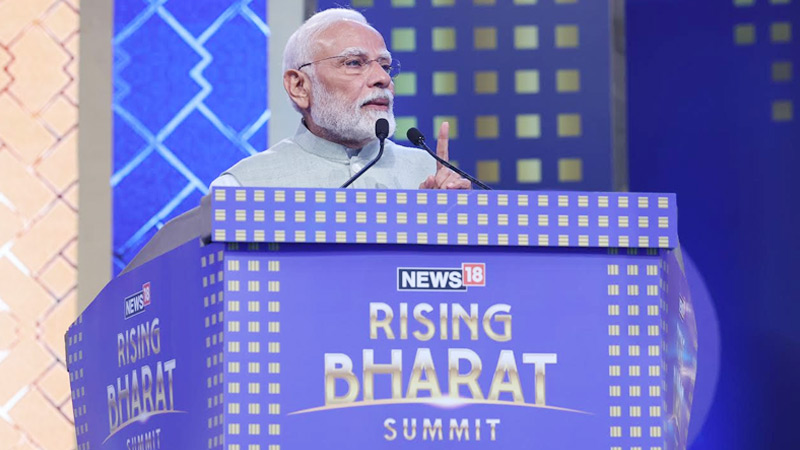
    MUMBAI: The News18 Rising Bharat Summit 2025 unfolded as a dynamic exchange of ideas, direction and determination in New Delhi, spotlighting India’s youthful energy and its ambitions to become a developed nation by 2047.

    Centred on the theme ‘Youthful Aspirations, Dream Big, Achieve More, Rise Together,’ the summit brought together an influential line-up of ministers, policy shapers, global experts and cultural icons to present India’s vision across governance, trade, diplomacy, technology and social equity.

    In a charged keynote, prime minister Narendra Modi spoke of urgent, performance-based governance. “The Waqf Amendment Bill ensures true social justice, ending appeasement and protecting Pasmanda Muslims from land mafias. In our first 100 days, we’ve delivered tax relief for youth, reforms in space, nuclear, and gig sectors, and launched WAVES to boost creativity. India cannot afford delays, our progress must be driven by performance,” he said.

    Home minister Amit Shah, addressing electoral concerns and national unity, added, “I want to reassure our southern states that the delimitation process will be fair and proportionate. The opposition is creating fear to divert attention from its own failures… The idea of ‘One Nation, One Election’ is rooted in efficiency and unity, values our youth must uproot politics of appeasement.”

    Commerce & industry minister Piyush Goyal responded to global trade shifts stating, “We remain committed to fair and balanced trade relationships… Our trade policies, guided by the ‘India First’ principle, reflect growing strategic maturity.”

    On India’s evolving geopolitical stance, minister of external affairs S. Jaishankar said, “We see opportunities even amid global uncertainties… The global community increasingly acknowledges Pakistan’s role in terrorism, and India stands firm in defending its national interests.”

    Technology and infrastructure also took centre stage. IT and I&B minister for railways Ashwini Vaishnaw remarked, “This year, we will see India’s first indigenous semiconductor chip. In AI, India has the talent and vision to lead… Our approach is not just timely, but responsible.”

    On infrastructure and road safety, minister Nitin Gadkari shared, “The rules apply to everyone, including myself… Real progress comes from a sense of shared responsibility.”

    International insights came from professor Jeffrey Sachs, who said, “India is in a unique position… With its scale, talent, and resolve, India is poised to become the world’s second-largest economy, not by imitation, but on its own terms.”

    The summit also welcomed an eclectic mix of national figures including justice D.Y. Chandrachud, Scott Kelly, Abhinav Bindra, Aravind Srinivas, Børge Brende, Sunny Deol, and Kajol, reflecting the convergence of innovation, governance, space science, sports and culture.

    The 2025 edition of the Rising Bharat Summit stood as a clarion call for collaboration and purpose. It celebrated a confident, inclusive India, placing youth at the centre of policy, progress and global ambition.

  • Surrogate ads by liquor companies not disallowed by SC

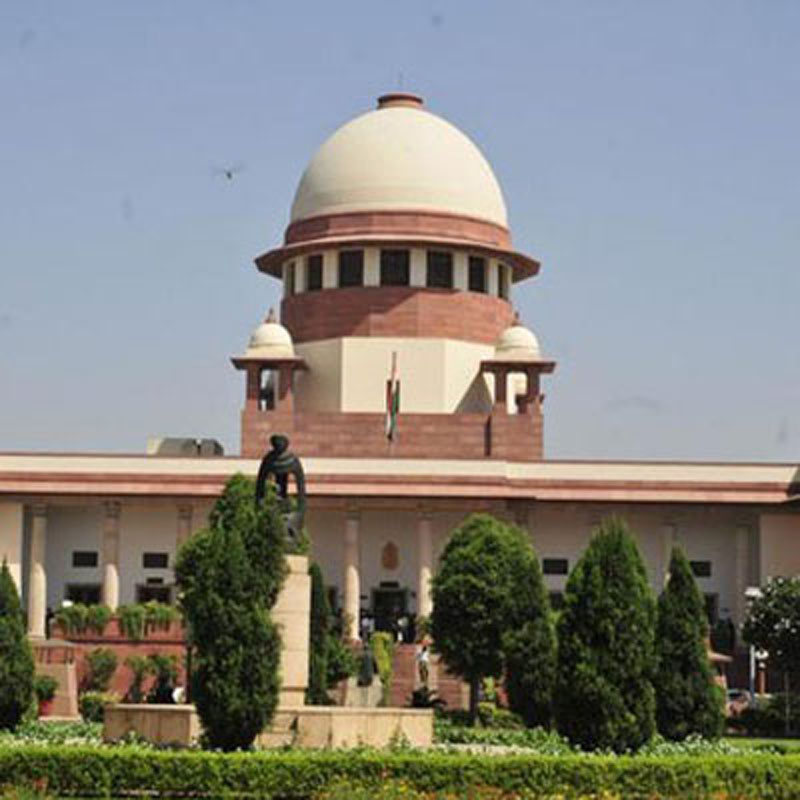
    MUMBAI: The apex court of India has denied entertaining a plea that sought a ban on surrogate advertisements such as soda TVCs and ads by liquor companies. Surrogate advertising is a form of advertising that is used to promote products such as cigarettes and alcohol for which advertisements are prohibited.

    A bench headed by Chief Justice J S Khehar dismissed the plea filed by a law student who had also sought a direction to the central government to frame guidelines to disallow such advertisements, PTI reported.

    The bench that also comprised Justices S K Kaul and D Y Chandrachud wondered if the petitioner thought the soda advertisements mad people drink alcohol more, and that they disagreed.

    The apex court was hearing a plea filed by Kartikey Bhatt, a Rajasthan resident, who claimed that the Cable Television Networks Rules stated that no advertisement shall be permitted which indirectly or directly promotes production, sale or consumption of any intoxicants such as liquor.

    However, the government has failed to carry out its duty of ensuring implementation of the law, and surrogate advertisements were being illegally telecast on cable services without seeking prior permission, the plea said.

    Also Read

    CBFC won’t ‘chill’; Pan Bahar ‘Bond’ ad banned

    ASCI upheld complaints against 67 out of 141 advertisements for violating code

  • Why can’t pvt FM channels have news, SC asks govt

    Why can’t pvt FM channels have news, SC asks govt

    NEW DELHI: The Supreme Court has asked the government to explain the continuing prohibition on FM radio stations and community radios from airing news and current affairs at par with private TV channels and the print media.

    The observation by the chief justice of India J.S. Khehar and Justice D.Y. Chandrachud came on a public interest litigation filed in 2013 by Common Cause, and the Court asked why the government wanted to control news on radio, which covers almost the entire population including the rural masses.

    The court directed the government to explain in four weeks the series of orders passed between 2008 and 2013 preventing private radio from airing their own news and current affairs broadcasts.

    The government’s prohibition, Common Cause argued, was in clear violation of the Supreme Court’s landmark verdict in 1995 in the Ministry of Information & Broadcasting vs Cricket Association of Bengal when the court had held that “airwaves are public property to be used to promote public good and expressing a plurality of views, opinions and ideas”. That judgment had led to the passing of the Cable TV Networks (Regulation) Act 1995.

    Common Cause counsel Prashant Bhushan and Kamini Jaiswal said that policy Guidelines and of the Grant of Permission Agreements framed by the government which prohibit private FM radio stations and community radio stations from broadcasting their own news and current affairs programmes clearly violate the fundamental right of the freedom of speech and expression as guaranteed under Article 19 (1) (a) of the Constitution.

    For more details: Why can private FM channels not have their own news bulletins, Supreme Court asks Govt.

    Also Read :

    ‘Risk’ in FM stations airing news, apprehends Prasar head

    TRAI: FM Radio ad revenues move up in Q2-17

    Big Ganga strengthens weekend programming; four shows planned in Jan

  • Why can’t pvt FM channels have news, SC asks govt

    Why can’t pvt FM channels have news, SC asks govt

    NEW DELHI: The Supreme Court has asked the government to explain the continuing prohibition on FM radio stations and community radios from airing news and current affairs at par with private TV channels and the print media.

    The observation by the chief justice of India J.S. Khehar and Justice D.Y. Chandrachud came on a public interest litigation filed in 2013 by Common Cause, and the Court asked why the government wanted to control news on radio, which covers almost the entire population including the rural masses.

    The court directed the government to explain in four weeks the series of orders passed between 2008 and 2013 preventing private radio from airing their own news and current affairs broadcasts.

    The government’s prohibition, Common Cause argued, was in clear violation of the Supreme Court’s landmark verdict in 1995 in the Ministry of Information & Broadcasting vs Cricket Association of Bengal when the court had held that “airwaves are public property to be used to promote public good and expressing a plurality of views, opinions and ideas”. That judgment had led to the passing of the Cable TV Networks (Regulation) Act 1995.

    Common Cause counsel Prashant Bhushan and Kamini Jaiswal said that policy Guidelines and of the Grant of Permission Agreements framed by the government which prohibit private FM radio stations and community radio stations from broadcasting their own news and current affairs programmes clearly violate the fundamental right of the freedom of speech and expression as guaranteed under Article 19 (1) (a) of the Constitution.

    For more details: Why can private FM channels not have their own news bulletins, Supreme Court asks Govt.

    Also Read :

    ‘Risk’ in FM stations airing news, apprehends Prasar head

    TRAI: FM Radio ad revenues move up in Q2-17

    Big Ganga strengthens weekend programming; four shows planned in Jan

  • US$ 4.5 bn expected from IPL rights; SC recommends accounts scrutiny

    US$ 4.5 bn expected from IPL rights; SC recommends accounts scrutiny

    MUMBAI: The Supreme Court on Friday froze all financial transactions between the BCCI and state cricket associations by directing the apex body not to disburse any funds till it resolves to abide by the Justice RM Lodha panel recommendations on reforms by 3 December . The top court ordered that none of the BCCI’s member-state associations will get a rupee till it complies in “letter and spirit” with the Lodha Committee reforms.  

    In a judgment, which was not announced beforehand or notified in the court’s cause list, a Bench, led by Chief Justice of India T.S. Thakur stood firm by its October 7 decision to choke the financial stream of the BCCI’s 25 state cricket associations till they fall in line. The judgment, pronounced by Justice D Y Chandrachud, asked the panel secretary to send a copy of the apex court order to the ICC chairman Shashank Manohar.

    The judgment asked the committee to appoint an independent auditor to scrutinise the BCCI accounts and set financial limits for contracts. According to reports, BCCI is expecting close to USD 4.5 billion from sale of three IPL rights – TV, internet and mobile.

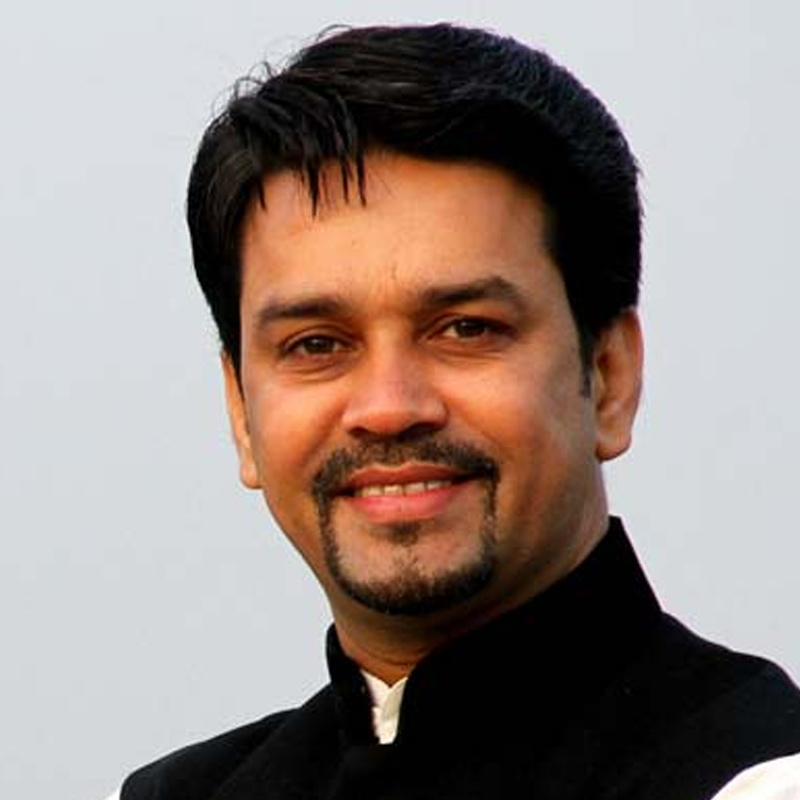
    BCCI president Anurag Thakur and secretary Ajay Shirke have been ordered to file compliance reports before the Committee and the Supreme Court in two weeks.

    Chief Justice Thakur, on October 7, made the court’s stand clear by ordering that the BCCI will not disburse Rs. 16.73 crore each to 12 state cricket associations. These associations were yet to get the balance payment of their share from nearly Rs. 2,500 crore the BCCI had received towards compensation on account of termination of Champion League T 20.

    The appointment of auditors is significant as the multi-million dollar Indian Premier League (IPL) media rights are to be awarded for the next 10 years, starting 2018. Sony Pictures Networks holds the current IPL media rights till 2017, which it won with a whopping USD 1.6 billion bid. 

    Star India, Twitter, Facebook, Sony Pictures and Reliance Jio are now the major names in fray for the media rights.

    Here are the top developments of the BCCI-Lodha panel case: On July 14, 2016, a two-judge Supreme Court bench, that included current Chief Justice of India TS Thakur, empowered the Justice RM Lodha-led panel to implement a series of reforms to bring in more transparency in BCCI’s style of governance. The committee suggested major reforms that included age caps, tenure restrictions, one-man-one-post, one state-one-vote, among others. The reforms were binding and would apply to the Board as well as its state units.

    Lodha panel set BCCI two deadlines – September 30 to make constitutional changes (adopt the Memorandum of Association and Rules) and December 15 for the Board to form a nine-member Apex committee that will replace the powerful working committee

    BCCI appointed former Supreme Court judge Justice Markandey Katju to review the Lodha panel recommendations. Katju called the Lodha panel “unconstitutional and illegal.” The BCCI promptly filed a review petition in the Supreme Court in July.

    In August, BCCI secretary met the Lodha committee saying the AGM will conduct “routine” business. On the contrary, the Board advertised inviting applications for the post of selectors. Its agenda also included formation of a new working committee and even an ombudsman – all in defiance of Lodha panel orders.

    Saying the BCCI conducted more than just “routine” matters, the Lodha panel filed a status report to the Supreme Court on September 28, complaining of non-compliance of its orders. The panel wanted BCCI’s top brass to be “superseded”. 

    BCCI, on October 1, cherry-picked a few Lodha panel recommendations but made no decision on the important proposals like one-state-one-unit and age and tenure caps for officials. BCCI also decided to disburse large sums of money (approximately Rs 400 crore) earned from TV rights to state units as infrastructure grants.

    Lodha panel told BCCI’s bankers – Bank of Maharashtra and Yes Bank – to stop disbursing grants to state units without its approval. BCCI president Anurag Thakur told media that freezing of accounts will force BCCI to cancel the India vs New Zealand Test series. Justice Lodha clarified on October 4 that BCCI was misinterpreting its order to the banks. The panel never stopped any money for staging matches.

    The Supreme Court, on 6 October, gave an ultimatum to the BCCI to ‘unconditionally’ accept the Lodha reforms or it will pass an order. BCCI refuses to give any such undertaking asking for time till 17 October. The top court gave the BCCI time till December 3 to implement reforms recommended by the Lodha panel. 

    The court had made it clear that continued defiance by state associations would witness their shares invested in fixed deposit accounts until they change their minds. The court had barred further disbursal of amounts, courtesy a resolution passed by in the Annual General Meeting held on November 9, 2015 or “any subsequent resolution” by the BCCI or its Working Committee, until the state associations submit their written undertakings to unconditionally comply with the Lodha reforms.

  • US$ 4.5 bn expected from IPL rights; SC recommends accounts scrutiny

    US$ 4.5 bn expected from IPL rights; SC recommends accounts scrutiny

    MUMBAI: The Supreme Court on Friday froze all financial transactions between the BCCI and state cricket associations by directing the apex body not to disburse any funds till it resolves to abide by the Justice RM Lodha panel recommendations on reforms by 3 December . The top court ordered that none of the BCCI’s member-state associations will get a rupee till it complies in “letter and spirit” with the Lodha Committee reforms.  

    In a judgment, which was not announced beforehand or notified in the court’s cause list, a Bench, led by Chief Justice of India T.S. Thakur stood firm by its October 7 decision to choke the financial stream of the BCCI’s 25 state cricket associations till they fall in line. The judgment, pronounced by Justice D Y Chandrachud, asked the panel secretary to send a copy of the apex court order to the ICC chairman Shashank Manohar.

    The judgment asked the committee to appoint an independent auditor to scrutinise the BCCI accounts and set financial limits for contracts. According to reports, BCCI is expecting close to USD 4.5 billion from sale of three IPL rights – TV, internet and mobile.

    BCCI president Anurag Thakur and secretary Ajay Shirke have been ordered to file compliance reports before the Committee and the Supreme Court in two weeks.

    Chief Justice Thakur, on October 7, made the court’s stand clear by ordering that the BCCI will not disburse Rs. 16.73 crore each to 12 state cricket associations. These associations were yet to get the balance payment of their share from nearly Rs. 2,500 crore the BCCI had received towards compensation on account of termination of Champion League T 20.

    The appointment of auditors is significant as the multi-million dollar Indian Premier League (IPL) media rights are to be awarded for the next 10 years, starting 2018. Sony Pictures Networks holds the current IPL media rights till 2017, which it won with a whopping USD 1.6 billion bid. 

    Star India, Twitter, Facebook, Sony Pictures and Reliance Jio are now the major names in fray for the media rights.

    Here are the top developments of the BCCI-Lodha panel case: On July 14, 2016, a two-judge Supreme Court bench, that included current Chief Justice of India TS Thakur, empowered the Justice RM Lodha-led panel to implement a series of reforms to bring in more transparency in BCCI’s style of governance. The committee suggested major reforms that included age caps, tenure restrictions, one-man-one-post, one state-one-vote, among others. The reforms were binding and would apply to the Board as well as its state units.

    Lodha panel set BCCI two deadlines – September 30 to make constitutional changes (adopt the Memorandum of Association and Rules) and December 15 for the Board to form a nine-member Apex committee that will replace the powerful working committee

    BCCI appointed former Supreme Court judge Justice Markandey Katju to review the Lodha panel recommendations. Katju called the Lodha panel “unconstitutional and illegal.” The BCCI promptly filed a review petition in the Supreme Court in July.

    In August, BCCI secretary met the Lodha committee saying the AGM will conduct “routine” business. On the contrary, the Board advertised inviting applications for the post of selectors. Its agenda also included formation of a new working committee and even an ombudsman – all in defiance of Lodha panel orders.

    Saying the BCCI conducted more than just “routine” matters, the Lodha panel filed a status report to the Supreme Court on September 28, complaining of non-compliance of its orders. The panel wanted BCCI’s top brass to be “superseded”. 

    BCCI, on October 1, cherry-picked a few Lodha panel recommendations but made no decision on the important proposals like one-state-one-unit and age and tenure caps for officials. BCCI also decided to disburse large sums of money (approximately Rs 400 crore) earned from TV rights to state units as infrastructure grants.

    Lodha panel told BCCI’s bankers – Bank of Maharashtra and Yes Bank – to stop disbursing grants to state units without its approval. BCCI president Anurag Thakur told media that freezing of accounts will force BCCI to cancel the India vs New Zealand Test series. Justice Lodha clarified on October 4 that BCCI was misinterpreting its order to the banks. The panel never stopped any money for staging matches.

    The Supreme Court, on 6 October, gave an ultimatum to the BCCI to ‘unconditionally’ accept the Lodha reforms or it will pass an order. BCCI refuses to give any such undertaking asking for time till 17 October. The top court gave the BCCI time till December 3 to implement reforms recommended by the Lodha panel. 

    The court had made it clear that continued defiance by state associations would witness their shares invested in fixed deposit accounts until they change their minds. The court had barred further disbursal of amounts, courtesy a resolution passed by in the Annual General Meeting held on November 9, 2015 or “any subsequent resolution” by the BCCI or its Working Committee, until the state associations submit their written undertakings to unconditionally comply with the Lodha reforms.