Tag: cyber security

  • Seqrite and DSCI launch the India Cyber threat Report 2023

    Seqrite and DSCI launch the India Cyber threat Report 2023

    Mumbai: Seqrite, the enterprise arm of global cybersecurity solutions provider, Quick Heal Technologies Limited, in collaboration with the Data Security Council of India (DSCI) has released a much-anticipated India Cyber Threat Report 2023 at the Nasscom-DSCI Annual Information Security Summit 2023. The report was launched by Vishal Salvi, CEO of Quick Heal, Pramod Bhasin Chairman Data Security Council of India and Vinayak Godse, CEO of DSCI in presence of Shri S. Krishnan, secretary, and ministry of electronics & information technology. The joint report is a first-of-its-kind initiative specifically tailored for the Indian cybersecurity ecosystem.

    The comprehensive threat report is the result of a collaborative effort between Seqrite and DSCI, leveraging the invaluable insights gleaned from Seqrite Labs, the country’s malware analysis lab. It aims to empower businesses with India-centric knowledge and actionable recommendations to fortify their cybersecurity posture. The report stands as a testament to the diligence and dedication of Seqrite’s researchers and experts. Their efforts had enabled the compilation of a thorough analysis of cyber threats in the Indian landscape, drawing on a wealth of data, statistics, and telemetry from approximately 8.5 million endpoints.

    The report includes a detailed exploration of the geographic and sectoral impact of cyber threats, unveiling the top states, cities, and industries targeted throughout the year. On the Android front, it sheds light on a significant increase in Adware and Potentially Unwanted Applications (PUAs). Shockingly, fake and malicious applications hosted on the Google Play Store have been downloaded by millions of users, including SpyLoan apps, fake apps, HidAdd apps, and more.

    Commenting on the release of the report Quick Heal Technologies Limited, chief executive officer Vishal Salvi said, “Today’s cyber landscape demands collaborative efforts and innovative solutions. Drawing upon extensive research from India’s largest malware analysis lab, Seqrite Labs, and our domain expertise spanning three decades, this first-ever in-depth India-centric threat report not only deep dives into the threat landscape but also provides actionable insights to stay a step ahead of cyberattacks. At Seqrite, we deeply understand the challenges faced by Chief Information Security Officers (CISOs) and Chief Information Officers (CIOs) for businesses across. Therefore, as India’s only full-stack enterprise cybersecurity solutions provider, we offer integrated, modular, scalable, sentient, and easy-to-deploy & operate solutions. As guardians of the critical infrastructure of our nation, safeguarding its digital backbone is not just a responsibility for us; it’s a commitment to ensuring its resilience in the face of evolving threats.

    I extend heartfelt thanks to DSCI and our experts at the Labs for their unwavering commitment to creating excellence in cybersecurity and all their efforts to transform the ecosystem. Together, we stand united to create a secure digital world for all”.

    Data Security Council of India chief executive officer Vinayak Godse commented, “Cybersecurity has ascended as a strategic concern at the board level owing to the multifaceted nature of cyber threats and the escalating monetary implications stemming from data breaches. Malware stands as a significant threat with cybercrime engineering becoming increasingly intricate with diverse attack methodologies. Additionally, ransomware authors continually evolve their methodologies and employ sophisticated techniques to evade traditional signature-based detection which is evident in the Malware vs. Ransomware incident ratio findings. The report provides broad understanding of the current threat landscape in the Indian context with predictions for the upcoming year. I hope it serves as a strategic guide for organizations and cybersecurity leaders to navigate the digital landscape with resilience. I would like to extend my thanks to the entire Seqrite team for collaborating with us to bring out the threat landscape in a comprehensive manner.”

    Report Link:  https://www.dsci.in/resource/content/india-cyber-threat-report-2023

  • Don’t break the chain: Why streaming piracy prevention requires industry-wide collaboration

    Don’t break the chain: Why streaming piracy prevention requires industry-wide collaboration

    Video piracy is not dissimilar to a game of cat and mouse where both protagonist and victim are caught up in a seemingly unending match of wits and agility.

    Viewers are enjoying a golden age of TV, spoilt for choice with box sets and movies. But for streaming providers it’s a battle to confound and curtail the pirates’ activities at a time when content costs are spiralling, revenue leakage from casual credentials sharing is rising, and most are struggling to turn a profit. You need look no further than the piracy challenges currently facing many sports platforms to see the full extent of the business risk.

    It doesn’t help that the public perceives video piracy as a victimless crime and that stretched law enforcement agencies are reluctant to pursue people watching content for free. While pirates in Europe might face jail, convictions in many countries are treated as a misdemeanour that incur little more than a fine.  Pirates must feel they have a licence to print money.

    The name of the game is demotivating every player in the pirate chain which is why the industry needs to collaborate to stem the tide and sink the pirates.

    Lessons can be learned from the music industry, when everyone in the industry was encouraged to take an active role in fighting illegal music distribution. Through collaboration and bringing down Napster, the industry turned a corner. It wasn’t the end of illegal streaming, but it gave record companies, artists and rights owners a chance to reinvent their business and survive.

    The weakest link

    Progress to combat piracy is being made by industry organisations such as Asia Video Industry Association (AVIA). But the responsibility has to be broader than the members of these alliances.

    Everyone including CDN and cloud service providers, ISPs, payment providers, chip manufacturers, anti-piracy vendors, integrators, rights owners and streaming providers has to acknowledge their responsibilities and cooperate.

    The goals are to make itdifficult for pirates to start streaming as making it easy to take down illegal networks as soon as they are detected. Legal payment providers such as Visa or PayPaland cloud providers have an important role here.

    Today end user devices are generally the weakest link in the distribution chain. By making streaming services accessible on as many devices as possible, providers have unwittingly ended up making themselves more vulnerable.  It’s not just phones and tablets, this also includes legitimate redistribution systems installed in less rigorously controlled environments such as hotels and bars.

    And when pirates findit is too difficult to steal content through those end devices, the cat and mouse game will continue and pirates will simply turn their attention to finding other vulnerabilities further up the chain.

    Building a better mousetrap

    Anti-piracy vendors need to continually evolve their tools and operational security services to outsmart the pirates. This includes using AI to help streaming providers quickly find pirates who are selling credentials.

    While AI is making it easier to detect piracy, any insight needs to be overlaid with sophisticated human intelligence in order to understand the criminal mind-set and ecosystem; how the pirates are organised; what motivates them; and their business model. With this knowledge it is possible to devise a plan to disrupt and demotivate them.

    This requires diverse skillsets including cyber security specialists, field and undercover investigators, as well as forensic and intelligence analysts, and psychology, criminology, and sociology experts. For example, undercover investigators can be active online including social media and the dark web as well as gettinginside manufacturing facilities with boots on the ground.

    While rights owners and service providers need to invest in these anti-piracy technologies and services, third parties including ISPs also need to ensure that their systems are secure and can move quickly to disrupt or remove any leaks that do occur.

    Plus, if one operator is being targeted by pirates, there are usually other similar victims. By sharing details and even pooling resources, we can frustrate the pirates’ efforts.

    Finally, while streaming piracy is important, don’t ignore other forms of video piracy, requiring ongoing investment in conditional access and DRM technologies. Plus, consumers are still unknowingly buying illegal set-top boxes from criminals who set up shop to look like a legitimate provider – even going so far to use content brands’ logos.

    Together, we can make the pirated content so painful to watch that consumer demand falls away,disrupt their revenues using electronic counter measures that kill pirate devices, and increase legal action. This will minimise and contain piracy and allow legal streaming services to triumph.

    • The author is vice president of intelligence & security operations, Synamedia. The views expressed in this comment piece are entirely Avigail's and Synamedia's and indiantelevision.com need not subscribe to them.

  • Urban-rural internet experience gap needs bridging: Gaurav Malik

    Urban-rural internet experience gap needs bridging: Gaurav Malik

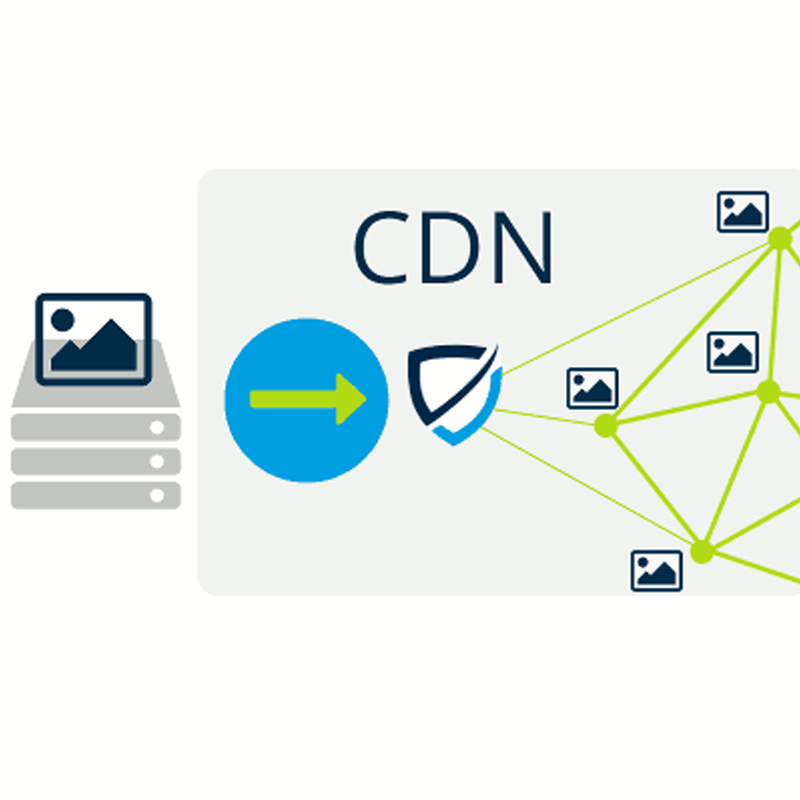
    MUMBAI: The digital savvy generation not only yearns for good content but also a seamless viewing experience. A few seconds of latency or buffering can push the user to switch to other platforms.  Thus media companies, especially OTT platforms, are integrating with content delivery networks (CDN), content management systems and cloud platforms increasingly to improve efficiency. Though CDN is not strictly limited to video transmission, Limelight Networks country director Gaurav Malik thinks the demand for CDN in India is primarily driven by video proliferation.

    Consumers have endless option for online video content. Starting with international players like Amazon, Netflix to local players like ZEE5, SonyLiv, Hotstar, Voot and YouTube also can’t be forgotten. Hence longer loading time can lead to higher churn rate, smaller base along with decreasing ROI and loss of consumer confidence.

    For Limelight Networks, the global player in digital content delivery with 19 offices across the Americas, EMEA and Asia Pacific, the Indian market definitely holds a special position. Malik thinks not only Limelight but also the entire CDN market is being benefitted by rising OTT Consumption. Moreover, CDN’s role becomes more prominent when it comes to OTT consumption in rural areas.

    Though the demand for online video content has rapidly grown in rural areas, infrastructure in the areas still now lacks proper development. While the rural audience predominantly uses feature phones, that also under dissimilar network conditions, sometimes OTT platforms cannot offer the video formats supported by those devices. Moreover, the geographical distance of a device from the data centre can also cause video lag.

    “CDN players store every media file across their data centre as well as globally-distributed proxy servers. They then transmit this media file in the most ideal format after detecting the user’s device configuration. This is also done through a proxy server that is closest to the user, thereby preventing delays in transmission,” Malik comments explaining the importance of CDN players for seamless content delivery across the country.

    While talking about rural internet consumption, he highlights another important point that the internet experience for urban and rural users differ vastly, resulting in an urban-rural digital divide. “This gap needs to be bridged,” he said.

    “As such, the simultaneous growth of OTT platforms and CDNs have enabled the Indian online content market to expand massively during a short period of time, surmounting these challenges and enabling an optimal consumer experience,” he said.

    Consumer dissatisfaction can lead to more crucial problems like piracy along with increasing churn rate. Addressing common issues like poor video quality and lag, the problem can be countered to some extent. This aspect makes the role of CDNs more significant in the issue of curbing piracy by offering simplified video sharing and streaming video delivery.

    As the CDN market is growing, more players are also seizing opportunities. Akamai is one of the main competitors of Limelight in the video content delivery vertical and website acceleration vertical while the former entered the market early. On the front of cloud origin storage, Amazon’s S3 is the prime competitor of the company.

    Over last few years, India’s technological scenario has got better and better but cybersecurity still now remains one of the major areas of concern. While the tactics, techniques, and procedures (TTPs) of cyber attackers are becoming more advanced as they are beginning to leverage sophisticated technologies, an average user in India is often not even familiar with the most basic cyber attacks.

    “We believe that information regarding cyber attacks, including the simplest of attacks, must be proactively shared to help each other in countering this prevailing cyber threat. There is also a ubiquitous need for a more concerted effort, including infrastructure building by the larger ecosystem to ensure greater digital security of users. From a technological perspective, the geographical distances between servers and users are also an area of opportunity,” he commented on the issue.

  • India signs cyber security & IT pacts with Bangladesh & Palestine

    NEW DELHI: With the recent catastrophe of ransomware, collaboration with neighbouring countries in cyber-security has become vital.
    The Indian Computer Emergency Response Team (CERT-In), under electronics and information technology ministry, and the Bangladesh Government Computer Incident Response Team (BGD e-Gov CIRT) of the Bangladesh Computer Council of Information and Communication Technology Division have signed a memorandum of understanding  for cyber-security cooperation.
    This information was given to the union cabinet chaired by the prime minister Narendra Modi. 
    The MoU intends to promote cooperation between CERT-In and BGD e-Gov CIRT and includes exchange of information on Cyber attacks and cyber security incidents; Cyber security technology cooperation; exchange cyber security policies and best practices and Human Resource Development in this field in accordance with the relevant laws and regulations of each country and on the basis of equality, reciprocity and mutual benefits.

    The MoU between CERT-In and BGD e-Gov CIRT would be implemented through a duly set up Joint Committee on Cyber Security.
    The agreement comes in the backdrop of Governments, business and consumers are increasingly faced with a variety of cyber threats. Besides, there is a need to further improve cyber security readiness and raise awareness around the importance of keeping systems secure and security practices and procedures current and recognizing the importance of cooperation by the two organisations in the area of cyber security.
    Meanwhile, the Cabinet was also informed about about the MoU between India and Palestine on cooperation in the field of Information Technology and Electronics (IT&E) intended to promote closer co-operation in the areas of e-Governance, m-Governance, e-Public Services Delivery, cyber security, software technology parks, start-ups ecosystem etc.
    The MoU will come into effect from date of signature of the parties and remain in force for a period of five years. The MoU will be implemented by establishing a Working Group on IT&E composed of representatives of the two Parties. Bilateral Cooperation in ICT domain both B2B and G2G will be enhanced. It envisages improving B2B collaboration leading to employment opportunities.

    Also Read:

    Industry & govt need to jointly tackle risk of info & cyber insecurity

    Govt gets active against cyber child porn

    ‘Info & cyber insecurity’ biggest risk in biz ops: Survey

  • Rs 12 billion budgeted for ‘Digital India’ ’17-18

    Rs 12 billion budgeted for ‘Digital India’ ’17-18

    NEW DELHI: With the Government’s emphasis on cashless and paper-less working, electronic governance gets the highest chunk of Rs 4.0055 billion out of the overall budget of Rs 12.1642 billion set aside for Digital India for 2017-18.

    Of the total allocation for electronics governance, Rs 3.8555 billion has been set aside as programme component.

    According to the budget for the electronics and information technology ministry, the objective of e-governance is to deliver all government services electronically to the citizens in his/her locality through integrated and inter-operable systems via multiple modes, while ensuring efficiency, transparency and reliability of such services at affordable costs. 

    The World Bank supported India: e-Delivery of Public Services project is an externally aided project under Electronic Governance Scheme under which financial support is extended for various e-governance initiatives of the Centre and States/UTs in the broad areas of policies, human resources, technology, project development, etc.

    Manpower development gets Rs 3.0676 billion while the National Knowledge Network has been allocated of Rs 1.5 billion.

    The objective of manpower development is to ensure availability of trained human resources for the manufacturing and service sectors of electronics and IT industry. Initiatives include identifying gaps emerging from the formal sector and planning programmes in non-formal and formal sectors for meeting these gaps.

    The National Knowledge Network has been initiated with multiple gigabit bandwidth to connect Knowledge Institutions across the country

    Promotion of electronics and IT HW Manufacturing (MSIPS, EDF and Manufacturing Clusters) will get Rs 7.45 billion. The ministry says electronics manufacturing is one of the important pillars of Digital India Programme and target to achieve net zero imports is a striking demonstration of intent. 

    Ministry sources said the demand for electronics hardware is expected to rise rapidly and India has the potential to become an electronics hardware manufacturing hub and contribute significantly to the GDP, employment opportunities and exports.

    For Promotion of IT/ITeS Industries, the total allocation is Rs 60 million while Cyber Security Projects (NCCC & Others) get Rs 210.8 million.

    Two schemes (NEBPS and IBPS) under IT for Jobs pillar have been launched under Digital India Programme to incentivise BPO/ITES operations across the country, particularly digitally deficit areas for creation of employment opportunities for the youths and the balanced regional growth of IT/ITES Industry.

    The objective of the Cyber Security scheme is to adopt a holistic approach towards securing the cyber space of the country by pursuing multiple initiatives like Security Policy, Compliance and Assurance, Security, Incident-Early warning & Response, Security Training, Security specific R&D, Enabling Legal Framework and 
    Collaboration.

    A sum of Rs 1.01 billion has been set aside for research and development in IT/Electronics/CCBT. Proliferation and absorption of emerging technology by supporting R&D is one of the important objectives, apart from creating essential R&D infrastructure and scientific & technical human capital. 

    The allocation for Foreign Trade and Export Promotion is a mere Rs 30 million to reimburse Central Sales Tax (CST) to Electronics Hardware Technology Parks (EHTP) and Software Technology Park (STP) units according to the Foreign Trade Policy.

    Also Read:

    Budget ’17: Encourage digital economy to make tax system globally competitive

    Dist. National Informatics Centres to be of international standards

    How Digital India will foster VoD growth: Spuul Global CEO

  • India, US renew commitment to work on cyber security

    India, US renew commitment to work on cyber security

    NEW DELHI: India and the United States have signed a Memorandum of Understanding (MoU) to promote closer co-operation and the exchange of information pertaining to the Cyber Security in accordance with the relevant laws, rules and regulations of each economy on the basis of equality, reciprocity and mutual benefit.

    The MoU was signed between the Indian Computer Emergency Response Team (CERT- In) under the Electronics and Information technology Ministry and the US Department of Homeland Security on cooperation in the field of cyber Security. The MoU was signed by MeITY Secretary Aruna Sundararajan and US Ambassador Richard Verma.

    Earlier, United States and India signed an MoU on 19 July 2011 to promote a closer cooperation and timely exchange of information between the organisations of their respective Governments responsible for Cyber Security. Since 19 July 2011 regular interactions between CERT-In and US CERT are taking place to share the information and discuss cyber security related issues.

    The present MoU is in continuation to the cooperation in cyber security areas.

    Also Read:

    ‘Force 2’ piracy: Viacom18 registers FIR; KSS blames it on a theatre

    Guest Column: As digital spreads wings, bolstering security is paramount


  • India, US renew commitment to work on cyber security

    India, US renew commitment to work on cyber security

    NEW DELHI: India and the United States have signed a Memorandum of Understanding (MoU) to promote closer co-operation and the exchange of information pertaining to the Cyber Security in accordance with the relevant laws, rules and regulations of each economy on the basis of equality, reciprocity and mutual benefit.

    The MoU was signed between the Indian Computer Emergency Response Team (CERT- In) under the Electronics and Information technology Ministry and the US Department of Homeland Security on cooperation in the field of cyber Security. The MoU was signed by MeITY Secretary Aruna Sundararajan and US Ambassador Richard Verma.

    Earlier, United States and India signed an MoU on 19 July 2011 to promote a closer cooperation and timely exchange of information between the organisations of their respective Governments responsible for Cyber Security. Since 19 July 2011 regular interactions between CERT-In and US CERT are taking place to share the information and discuss cyber security related issues.

    The present MoU is in continuation to the cooperation in cyber security areas.

    Also Read:

    ‘Force 2’ piracy: Viacom18 registers FIR; KSS blames it on a theatre

    Guest Column: As digital spreads wings, bolstering security is paramount


  • Cyber security can save up to Rs 540 cr each year; Paytm in 10 Indian languages

    Cyber security can save up to Rs 540 cr each year; Paytm in 10 Indian languages

    MUMBAI: As companies increasingly get on to harnessing the benefits of the networked world, overlook the associated threats, said a cyber-security expert and ethical hacker on the lack of awareness around the emerging threats at the BFSI Tech Maestros Awards & Conclave 2016. The expert — TAC Security founder & CEO Trishneet Arora was one of the panelists on the panel at the conclave.

    Paytm meantime is set to unveil its multilingual interface to enable millions of Indians to overcome language barriers and pay and shop in their preferred regional language.

    After the limited demonetization, online transactions have seen a spurt, and the trend is likely to continue. This gives rise to the challenge of ensuring the transactions are safe and secure, the identity of the individuals is not compromised and the organizations operate smoothly. Cyber security experts can play an important role in identifying loop holes and providing a solution.

    Arora said, “Credit card frauds cost banks and credit card companies over US $8 billion (Rs 540 crore) each year. Apart from the Apple Pay fraud, such large-scale mobile wallet frauds have not been witnessed so far, if we discount customer carelessness. However, there is an immense lack of awareness to understand this risk. Several business personalities are not taking cyber threats seriously.”

    “There is only one way to be alert and safe in today’s cyberspace and that rests on knowing your vulnerabilities and patching them before any fraudulent hacker can use it adversely,” he concluded. Recently, details of more than 3.2 million debit cards of some of the banks faced the threat of breach due to hacking.

    The user interface of India’s largest mobile payments and commerce platform on Android will be available in — English and in 10 different regional languages – Hindi, Tamil, Telugu, Gujarati, Marathi, Bengali, Kannada, Malayalam, Oriya and Punjabi. Paytm, which is India’s payments and commerce platform to offer multiple regional language interface, has expanded its reach to over 80% smartphone users in India, who prefer internet-based services in regional languages.

    Paytm senior vice president Deepak Abbot said, “With this new move, we are looking to push our share of customers from tier II and tier III cities from 50% to 70%.”