Tag: CVL Srinivas

  • GroupM’s global brand Essence to enter India with Maxus’ aid

    GroupM’s global brand Essence to enter India with Maxus’ aid

    MUMBAI: Essence, a global digital agency, today announced it has established operations in India via the opening of a new location in Delhi. This will be the agency’s fifth office in the Asia Pacific (APAC) region and the third to open its doors this year.

    In March, Essence announced its debut in Shanghai, China and Sydney, Australia.

    GroupM acquired Essence, the largest buyer of digital media, in November 2015. It is GroupM’s fifth global brand.

    As the formerly independent agency continues to scale globally, APAC remains a key growth region due to Essence’s commitment to deliver its proposition to its existing client roster across greater geographies, and to support the abundance of new business activity. India, in particular, holds strong strategic importance given its status as a dominant and dynamic growth market within the region, a company statement said.

    To help ease its transition into India, Essence turned to Maxus, a GroupM agency in India.  The unified Essence-Maxus team will be based out of the GroupM Delhi office.

    In addition to transferring several existing Essence and Maxus employees to fill relevant positions, the agency is actively recruiting to hire local, outside talent for roles across the account management, strategy and planning, advertising operations, biddable and performance disciplines.

    Kunal Guha, client partner and head of strategy, APAC, is serving as the Essence office lead, reporting into APAC CEO Kyoko Matshushita.

    “Just over three years ago, Essence opened its first APAC office in Singapore,”  Matsushita was quoted in the company statement.  “It’s incredible what we’ve been able to accomplish in such a short period of time.  Working with innovative clients has helped Essence unlock opportunities to bring digital innovation to the region.  We see even more opportunity in India and are excited to align with GroupM as we navigate this crucial market.”

    “We are delighted to bring Essence into India at a time when more and more clients are looking at cutting edge digital media solutions for their brands. With their very focussed approach they have built deep client engagements globally. Our digital offering in India is further strengthened by their opening of an office here, ” said GroupM South Asia CEO CVL Srinivas in a statement.


  • GroupM appoints Rohit Suri as Chief Talent Officer

    GroupM appoints Rohit Suri as Chief Talent Officer

    MUMBAI: GroupM has appointed Rohit Suri as the chief talent officer for their South Asia operations effective from 1 February. He will be based in Mumbai and report to Group M South Asia CEO CVL Srinivas and GroupM APAC chief talent officer Angela Ryan. Suri takes over from Gaurav Hirey, who is now based in Singapore with Millward Brown, another WPP company.

    Speaking on Suri’s appointment Srinivas said “We are at an exciting stage in our journey to build a data centric digitally charged Agency network of the Future. We are delighted to welcome Rohit to our team. Given his vast experience across different markets and the several interesting initiatives he has championed in his career we are sure he will add a lot of value to our business and take our strong talent management practice to the next level”

     “I am very excited to take this step in my career and join the world’s largest media investment group,” Suri says. “GroupM has embarked on an exciting journey which places talent management at the core. I look forward to leveraging my experiences in total rewards and innovative talent management practices in India, APAC and Europe for the growth of GroupM’s business.”

    Partnering with the leadership teams, he will be responsible for building out talent initiatives regionally, to ensure all GroupM talent have exceptional career experiences and development, while maximizing their full potential. He will also be a part of the GroupM South Asia, and the GroupM APAC Talent Executive Committees.

  • GroupM appoints Rohit Suri as Chief Talent Officer

    GroupM appoints Rohit Suri as Chief Talent Officer

    MUMBAI: GroupM has appointed Rohit Suri as the chief talent officer for their South Asia operations effective from 1 February. He will be based in Mumbai and report to Group M South Asia CEO CVL Srinivas and GroupM APAC chief talent officer Angela Ryan. Suri takes over from Gaurav Hirey, who is now based in Singapore with Millward Brown, another WPP company.

    Speaking on Suri’s appointment Srinivas said “We are at an exciting stage in our journey to build a data centric digitally charged Agency network of the Future. We are delighted to welcome Rohit to our team. Given his vast experience across different markets and the several interesting initiatives he has championed in his career we are sure he will add a lot of value to our business and take our strong talent management practice to the next level”

     “I am very excited to take this step in my career and join the world’s largest media investment group,” Suri says. “GroupM has embarked on an exciting journey which places talent management at the core. I look forward to leveraging my experiences in total rewards and innovative talent management practices in India, APAC and Europe for the growth of GroupM’s business.”

    Partnering with the leadership teams, he will be responsible for building out talent initiatives regionally, to ensure all GroupM talent have exceptional career experiences and development, while maximizing their full potential. He will also be a part of the GroupM South Asia, and the GroupM APAC Talent Executive Committees.

  • “Think mobile as ad dollars are heading there”: CVL Srinivas

    “Think mobile as ad dollars are heading there”: CVL Srinivas

    MUMBAI: Several market forecasts that we have seen in the past couple of months project digital advertising and marketing growing by leaps and bounds this year. The historical galloping growth rates have led marketers and planners to consider the possibility that the medium will overtake television spends in the near future.
     

    Brand custodians are no longer investing in digital as an added benefit but are thinking about investments on that front from the get-go. So is digital gnawing away at television’s share of ad spends or is its growth coming courtesy a new breed of brand builders?


    Group M South Asia CEO CVL Srinivas does not think that TV is losing its edge. “Television is riding the digital wave, and smartly so”, says the veteran waving off any worries of television ad revenues seeing a dip this year. Not denying the obvious growth one sees in the digital space, Srinivas gives indiantelevison.com a complete breakdown of  how the digital growth works in favor of broadcasters and content providers, while also touching upon the key trends in the market, the changing role of media agencies and his take on the currently mushrooming of several digital agencies in the market. Excerpts from an interview with indiantelevision.coms Papri Das. 


    Here it is:


    How was 2015 for GroupM as a whole? What were the agency’s benchmark developments?


    2015 was a great year for us in GroupM. All our agencies performed well, especially when it comes to client retention which I consider most important. On the client acquisition front as well, we grew our business with several new accounts.


    Last year has also been kind to us when it came to awards. The GroupM Office of Year award, which is given out by GroupM APAC, was given to us last year. That’s something I consider as another high for us.


    For me, 2015 would be the year when we truly broke out of the mould of pure play media agency and delivered a range of different services to our clients to help them keep ahead of the curve. Over the years we have made investments in data, analytics and experiential marketing, cinema advertising and rural marketing and so on. All of that delivered excellent value to our clients last year. That has helped us diversify our offerings and in turn win us new and interesting mandates as well. Apart from that we have actively involved ourselves in the Mobile Marketing Association to help set standards and get some measurements going.


    Out of the four agencies under GroupM in India, which one do you think performed the best?


    I think all of them did exceptionally well and I say this with confidence based on each of the agency’s client retention and the newer arenas that they ventured successfully into.


    How was the year for the industry at large? Did you notice any changes that majorly impacted the industry?


    Last year we projected 12.7 per cent growth in ad expenditure and I must say we erred on the conservative side at the start of the year and we ended up with 14.2 per cent, but no one’s complaining!


    Several factors led to this development. The FMCG sector despite all the pressure it is facing continues to invest big money behind brands. You also saw huge growth coming in through e-commerce and there were quite a few brands that continued to invest throughout the year.


    What key trends do you see emerging in the market in 2016?


    Very clearly, our clients and brands in general are adapting to mobile as a medium. Till few years ago we hardly had ten or twenty clients, today the count is around 150. Advertisers are actively investing in campaign after campaign, month after month, by experimenting with new formats and following the measurements.  That is something I see taking off in a major way this year as several enablers are supposed to come into place in 2016.


    E commerce is emerging as a platform for advertisers in 2016 which can give an interesting spin to ecosystem.


    Apart from this we see several interesting initiatives happening in the content space, especially in the video and branded content space. This can give a further push to mobile advertising. The real big headline for me is mobile driving digital growth and in turn driving ad growth in India, and getting all traditional medium owners – be it broadcasters or be it print publication – to think mobile fast and think mobile first, because that’s where most of the advertising dollars are gonna flow to.


    What do you think will dictate how marketers spend this year?


    Right now we observe that marketers are a bit circumspect on where and when to invest. We are not yet seeing any major budget cuts otherwise our numbers in the GroupM This Year Next Year report for 2016 wouldn’t have looked so good.  But there is definitely an amount of cautiousness creeping in amongst advertisers.


    I think this year they are going to look at a lot more Return On Investment (ROI) and accountability across different media platforms. I also think they will wait and watch the market before deploying any of their long term campaigns and investments across media channels. Unless a property is tried and tested it will go through intense scrutiny before marketers decide to invest. Tracking of ROI and tracking of what the marketing spends are doing to the overall business will be key drivers for brands this year.


    Brands are increasingly seen as the sum of all customer touch points and this in turn increases the scope of marketing. In this context, how is the role of agencies changing?


    We think we are becoming even more relevant in the current scenario and important at the end of the day given the way the marketing and the media landscapes are shaping. Today consumers have multiple choices when it comes to brands and media consumption channels. In the same way advertisers and marketers also have multiple options to invest in. It can become highly confusing for the clients. That’s where GroupM  went ahead of the curve and started investing in multiple media investment management  services so that our clients can have a holistic marketing strategy and solution.


    What percentage of your business is “traditional” or core media now?


    I can’t share the break up but if you look at the market split, and the fact that we are future focused we tend to concentrate on wherever the marketing is moving to step ahead of it.


    A lot has been said about digital advertising overtaking television as the primary medium. What’s the ground reality?


    If you look at the trends in the last few years, not just in India but across markets we see a lot of synergy between television and digital. Looking at it from a consumer’s lens, you and I watch television and also consumer media on our second screen be it mobile or laptop. There is some amount of interplay happening between the screens.


    Looking at it from a broadcaster or content providers angle, most major broadcasters today have their own digital arms. And hence, I say television is actually riding the digital wave. Broadcasters are doing it very smartly, unlike other media which are getting swamped by digital. We see that trend continuing. Inf act if you look at our forecast figures, TV and digital account for close to 60 per cent of the market share of the total ad expenditure, and we see that number move to 70 to 80 per cent in near future.


    Is India truly ready for mobile marketing? Do we have a road map for it?


    There are several developments that have happened in the recent past. I have been personally involved in setting up the Mobile Marketing Association (MMA). Despite India being one of the top markets globally for mobile, we did not did not earlier have a body that monitors the digital marketing space. Therefore we needed this body where all stakeholders can come and ideate and put in place systems and structures for the medium. A lot of useful discussions have happened in the recent past be it on measurement and advertising standards and MMA as a body has done phenomenal work across the market. That is one of such several initiatives that will show its effect in 2016.


    What impact did BARC rural inclusive data have on the TV industry and on advertisers?


    I think it’s still early days to comment on BARC’s rural ratings. It’s only few weeks that they have come out. It is a very positive development. Rural India’s viewership accounts for a sizable chunk of our market. It’s a very aspirational class and important segment for many products and categories. To have data for this segment is a very good development.


    Though we will have to wait on watch how the data impacts the market, it is sure that advertisers are going to look at rural markets a lot more seriously especially in terms of media investment deployment across TV and other media options. Similarly content creators are also going to look at that space a lot more seriously today and come up with relevant products and offerings.


    And over all it is good for the economy and the country because we are finally becoming a lot more inclusive.


    How will the advertising landscape change with the completion of cable television digitization in India?


    Funny thing about India is that nothing ever happens sequentially…..everything happens together….somehow amalgamating. This actually makes our job fun because on the one hand you have the whole cable TV digitization playing out and DAS phase III being rolled out, and a lot of DTH players have gotten very active. On the other hand you have the 4 G launch that will open up a lot more bandwidth and infrastructure in digital and you have mobile crossing 1 billion connections.


    For marketers and advertisers what this means is to be aware of the developments, keep a close eye on them and see what are the opportunities they can capitalize on in short term and where is it that they need to invest, test and learn so that they can start capitalizing on them in the long term.


    The big lesson for us and specially me has been that we need to be constantly in a state of beta. What do we keep testing and learning today which could become a big thing tomorrow. Staying dynamic is the way to go.


    2015 also saw several well-known creatives and executives setting up their own startups, resulting in a mushrooming of several branded content and digital agencies. What is your take on this development?


    I think it is a good thing that bright young individuals are setting up companies on their own.  In fact some of us wouldn’t have jobs if this wasn’t done earlier. It also shows that today there are so many different areas that are emerging, and with the way the industry is being revolutionized there are many different expertise and special skill sets that the marketers need. I believe all of us can co-exist as one happy family because of the way the whole pie is getting fragmented. A lot of them are my dear friends and I wish them all the best.
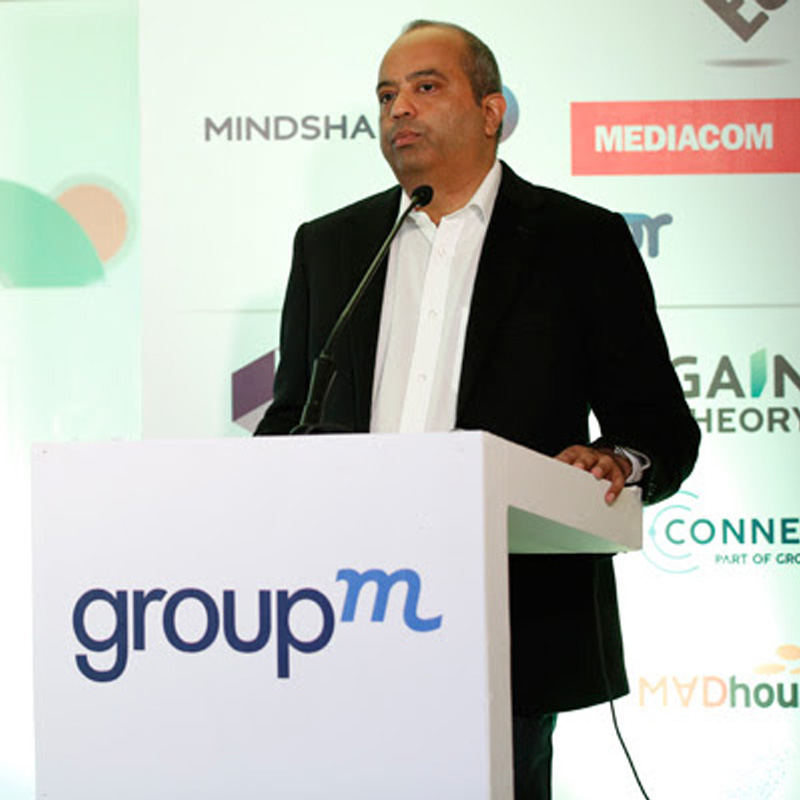
     

  • “Think mobile as ad dollars are heading there”: CVL Srinivas

    “Think mobile as ad dollars are heading there”: CVL Srinivas

    MUMBAI: Several market forecasts that we have seen in the past couple of months project digital advertising and marketing growing by leaps and bounds this year. The historical galloping growth rates have led marketers and planners to consider the possibility that the medium will overtake television spends in the near future.
     

    Brand custodians are no longer investing in digital as an added benefit but are thinking about investments on that front from the get-go. So is digital gnawing away at television’s share of ad spends or is its growth coming courtesy a new breed of brand builders?


    Group M South Asia CEO CVL Srinivas does not think that TV is losing its edge. “Television is riding the digital wave, and smartly so”, says the veteran waving off any worries of television ad revenues seeing a dip this year. Not denying the obvious growth one sees in the digital space, Srinivas gives indiantelevison.com a complete breakdown of  how the digital growth works in favor of broadcasters and content providers, while also touching upon the key trends in the market, the changing role of media agencies and his take on the currently mushrooming of several digital agencies in the market. Excerpts from an interview with indiantelevision.coms Papri Das. 


    Here it is:


    How was 2015 for GroupM as a whole? What were the agency’s benchmark developments?


    2015 was a great year for us in GroupM. All our agencies performed well, especially when it comes to client retention which I consider most important. On the client acquisition front as well, we grew our business with several new accounts.


    Last year has also been kind to us when it came to awards. The GroupM Office of Year award, which is given out by GroupM APAC, was given to us last year. That’s something I consider as another high for us.


    For me, 2015 would be the year when we truly broke out of the mould of pure play media agency and delivered a range of different services to our clients to help them keep ahead of the curve. Over the years we have made investments in data, analytics and experiential marketing, cinema advertising and rural marketing and so on. All of that delivered excellent value to our clients last year. That has helped us diversify our offerings and in turn win us new and interesting mandates as well. Apart from that we have actively involved ourselves in the Mobile Marketing Association to help set standards and get some measurements going.


    Out of the four agencies under GroupM in India, which one do you think performed the best?


    I think all of them did exceptionally well and I say this with confidence based on each of the agency’s client retention and the newer arenas that they ventured successfully into.


    How was the year for the industry at large? Did you notice any changes that majorly impacted the industry?


    Last year we projected 12.7 per cent growth in ad expenditure and I must say we erred on the conservative side at the start of the year and we ended up with 14.2 per cent, but no one’s complaining!


    Several factors led to this development. The FMCG sector despite all the pressure it is facing continues to invest big money behind brands. You also saw huge growth coming in through e-commerce and there were quite a few brands that continued to invest throughout the year.


    What key trends do you see emerging in the market in 2016?


    Very clearly, our clients and brands in general are adapting to mobile as a medium. Till few years ago we hardly had ten or twenty clients, today the count is around 150. Advertisers are actively investing in campaign after campaign, month after month, by experimenting with new formats and following the measurements.  That is something I see taking off in a major way this year as several enablers are supposed to come into place in 2016.


    E commerce is emerging as a platform for advertisers in 2016 which can give an interesting spin to ecosystem.


    Apart from this we see several interesting initiatives happening in the content space, especially in the video and branded content space. This can give a further push to mobile advertising. The real big headline for me is mobile driving digital growth and in turn driving ad growth in India, and getting all traditional medium owners – be it broadcasters or be it print publication – to think mobile fast and think mobile first, because that’s where most of the advertising dollars are gonna flow to.


    What do you think will dictate how marketers spend this year?


    Right now we observe that marketers are a bit circumspect on where and when to invest. We are not yet seeing any major budget cuts otherwise our numbers in the GroupM This Year Next Year report for 2016 wouldn’t have looked so good.  But there is definitely an amount of cautiousness creeping in amongst advertisers.


    I think this year they are going to look at a lot more Return On Investment (ROI) and accountability across different media platforms. I also think they will wait and watch the market before deploying any of their long term campaigns and investments across media channels. Unless a property is tried and tested it will go through intense scrutiny before marketers decide to invest. Tracking of ROI and tracking of what the marketing spends are doing to the overall business will be key drivers for brands this year.


    Brands are increasingly seen as the sum of all customer touch points and this in turn increases the scope of marketing. In this context, how is the role of agencies changing?


    We think we are becoming even more relevant in the current scenario and important at the end of the day given the way the marketing and the media landscapes are shaping. Today consumers have multiple choices when it comes to brands and media consumption channels. In the same way advertisers and marketers also have multiple options to invest in. It can become highly confusing for the clients. That’s where GroupM  went ahead of the curve and started investing in multiple media investment management  services so that our clients can have a holistic marketing strategy and solution.


    What percentage of your business is “traditional” or core media now?


    I can’t share the break up but if you look at the market split, and the fact that we are future focused we tend to concentrate on wherever the marketing is moving to step ahead of it.


    A lot has been said about digital advertising overtaking television as the primary medium. What’s the ground reality?


    If you look at the trends in the last few years, not just in India but across markets we see a lot of synergy between television and digital. Looking at it from a consumer’s lens, you and I watch television and also consumer media on our second screen be it mobile or laptop. There is some amount of interplay happening between the screens.


    Looking at it from a broadcaster or content providers angle, most major broadcasters today have their own digital arms. And hence, I say television is actually riding the digital wave. Broadcasters are doing it very smartly, unlike other media which are getting swamped by digital. We see that trend continuing. Inf act if you look at our forecast figures, TV and digital account for close to 60 per cent of the market share of the total ad expenditure, and we see that number move to 70 to 80 per cent in near future.


    Is India truly ready for mobile marketing? Do we have a road map for it?


    There are several developments that have happened in the recent past. I have been personally involved in setting up the Mobile Marketing Association (MMA). Despite India being one of the top markets globally for mobile, we did not did not earlier have a body that monitors the digital marketing space. Therefore we needed this body where all stakeholders can come and ideate and put in place systems and structures for the medium. A lot of useful discussions have happened in the recent past be it on measurement and advertising standards and MMA as a body has done phenomenal work across the market. That is one of such several initiatives that will show its effect in 2016.


    What impact did BARC rural inclusive data have on the TV industry and on advertisers?


    I think it’s still early days to comment on BARC’s rural ratings. It’s only few weeks that they have come out. It is a very positive development. Rural India’s viewership accounts for a sizable chunk of our market. It’s a very aspirational class and important segment for many products and categories. To have data for this segment is a very good development.


    Though we will have to wait on watch how the data impacts the market, it is sure that advertisers are going to look at rural markets a lot more seriously especially in terms of media investment deployment across TV and other media options. Similarly content creators are also going to look at that space a lot more seriously today and come up with relevant products and offerings.


    And over all it is good for the economy and the country because we are finally becoming a lot more inclusive.


    How will the advertising landscape change with the completion of cable television digitization in India?


    Funny thing about India is that nothing ever happens sequentially…..everything happens together….somehow amalgamating. This actually makes our job fun because on the one hand you have the whole cable TV digitization playing out and DAS phase III being rolled out, and a lot of DTH players have gotten very active. On the other hand you have the 4 G launch that will open up a lot more bandwidth and infrastructure in digital and you have mobile crossing 1 billion connections.


    For marketers and advertisers what this means is to be aware of the developments, keep a close eye on them and see what are the opportunities they can capitalize on in short term and where is it that they need to invest, test and learn so that they can start capitalizing on them in the long term.


    The big lesson for us and specially me has been that we need to be constantly in a state of beta. What do we keep testing and learning today which could become a big thing tomorrow. Staying dynamic is the way to go.


    2015 also saw several well-known creatives and executives setting up their own startups, resulting in a mushrooming of several branded content and digital agencies. What is your take on this development?


    I think it is a good thing that bright young individuals are setting up companies on their own.  In fact some of us wouldn’t have jobs if this wasn’t done earlier. It also shows that today there are so many different areas that are emerging, and with the way the industry is being revolutionized there are many different expertise and special skill sets that the marketers need. I believe all of us can co-exist as one happy family because of the way the whole pie is getting fragmented. A lot of them are my dear friends and I wish them all the best.
     

  • FMCG, e-commerce, telecom & auto to boost Indian AdEx by 15.5% in 2016: GroupM

    FMCG, e-commerce, telecom & auto to boost Indian AdEx by 15.5% in 2016: GroupM

    MUMBAI: India’s advertising investment is predicted to reach an estimated Rs 57,486 crore in 2016, which is a growth of 15.5 per cent for the calendar year 2016 over the corresponding period in 2015, according to GroupM’s bi-annual advertising expenditure futures report This Year Next Year (TYNY).

    The last calendar year closed on a promising note, with the advertising expenditure in India closing at Rs 49,758 crore, growth of over 14.2 per cent over 2014.

    The growth will come from the FMCG sector as it continues to remain the most dominant sector with a 28 per cent share of the AdEx. Despite facing volume pressure, the sector is expected to continue ad investment aided by the softening of commodity prices.

    In 2016, e-commerce ad spends are expected to be high on the back of increasing competition, market expansion and newer players entering the space. Many leading traditional retailers will be expanding their e-commerce presence in 2016 even as consolidation continues in the sector. Another exciting development is the opening up of e-commerce as a platform for advertising, which will see further traction in 2016.

    What’s more, with the advent of 4G services in India, telecom service providers are expected to roll out extensive marketing campaigns across media. This roll out will also see global and domestic handset manufacturers launching new models of 4G/ LTE handsets. Another big contributor to the Indian AdEx this year will be the Auto sector, on the back of multiple launches across both four-wheelers and two-wheelers.

    GroupM South Asia CEO CVL Srinivas said, “India is the fastest growing ad market among all the major markets of the world. 2015 was the best year for ad spend growth we’ve had in the last five years. While global headwinds are building up in the new year, there are a number of positive factors that will help the Indian ad sector grow at higher levels in 2016. The GroupM TYNY report released today highlights these factors. While FMCG, Auto and e-commerce, which have been the top sectors contributing to ad growth in 2015 will continue to invest, Telecom, BFSI and the Government sector will see a ramp up. Events like the T20 World Cup, IPL and many state assembly elections will give a further impetus to ad spends. While digital will remain the fastest growing platform, India is one of the few large markets where all traditional media platforms will show positive growth.”

    GroupM South Asia chief growth officer Lakshmi Narashimhan added, “With significant number of users accessing internet primarily from a mobile device, ad-spend on mobile will become as large as the digital AdEx from two years ago. With digital media achieving audience reach numbers that are next only to television, multi-screen planning is the order of the day. We have seen focused targeting of digital and native advertising with programmatic buying over the last two years, and this momentum will continue in 2016, as automation increases.”

    GroupM estimates the Digital AdEx to grow by 47.5 per cent in 2016 to Rs 7,300 crore from the earlier Rs 4,950 crore. A significant part of this growth is on the back of higher investments in cross-screen campaigns. The digital AdEx is estimated to take a 12.7 per cent share of the total AdEx in 2016. However TV still leads the pack with 47.1 percent contribution to the total AdEx, which is a growth from 46.3 per cent in 2015. On the otherhand print advertising will see a slight decline in AdEx from 32.4 per cent share of the total pie in 2015 to 29.7 percent in 2016.

    2016 will see Video on Demand (VOD) services gaining popularity in India. The Asia Pacific region is expected to overtake Western Europe as the second largest market for VOD services by 2020, fuelled by rapid growth of smart phones in China and India. With the recent Netflix service launch in India, several domestic and international players will actively market their VOD services and acquire customers in the next 12 to 24 months.

    2016 is estimated to be a better year for newspapers than 2015. The increase in ad spends expected from print heavy sectors like Auto, BFSI and the Government sector augurs well for newspapers. Regional advertising of Telco and FMCG brands will benefit language dailies. While print as a medium is facing a lot of pressure from digital there is still headroom for growth in certain pockets and amongst certain audience clusters.

    While Radio is expected to grow at a little over 10 per cent, there is scope for the medium to pick up towards end 2016 when most of the new stations (set up after Phase III licenses, round I were issued) are fully operational. Digital audio platforms are gaining in popularity, opening up a new format for radio.

    There has been an upswing in Cinema Advertising in the last few years, which will continue in 2016 with an estimated 25 per cent growth in ad spends. Recent acquisitions by larger multiplex chains will help create a far richer viewing experience for consumers, giving brands another avenue to capture their target audience. The medium can expect more brands to come on board with longer term deals if they invest in measurement and build more accountability. At present Cinema advertising is less than one per cent of the total ad spend.

  • PepsiCo’s D Shivakumar to chair Mobile Marketing Association India’s board

    PepsiCo’s D Shivakumar to chair Mobile Marketing Association India’s board

    MUMBAI: PepsiCo India Holdings chairman and CEO D Shivakumar has been elected as the head of the Mobile Marketing Association (MMA) India board of directors. 


    This is the association’s maiden board, which comprises 12 industry stalwarts across the marketing, technology and advertising spectrum.


    The board members include Novi Digital Entertainment president Ajit Mohan, OLX South Asia CEO Amarjit Singh Batra, United Spirits Limited chief marketing officer Amrit Thomas, GroupM CEO South Asia CVL Srinivas, Facebook India MD Kirthiga Reddy, Millward Brown MD South Asia Prasun Basu, Hindustan Unilever Limited executive director – Home Care Priya Nair, Mobile Marketing Association Asia Pacific MD Rohit Dadwal, J. Walter Thompson chief creative officer Senthil Kumar, Godrej Group head – strategic marketing Shireesh Joshi and One97 Communications & Paytm founder & CEO Vijay Shekhar Sharma.


    Speaking on the appointment of the new board, Shivakumar said, “The Indian market is brimming with great opportunities for mobile media and marketing. The MMA India Board of Directors brings together some of the best practitioners and minds in marketing, advertising and media, and our collective experience and expertise will hopefully propel the market to quickly adopt mobile marketing as a mainstream medium.”


    “Our board members have identified key areas where our immediate focus in needed. These initiatives will facilitate sharing insights, create industry benchmarks and guidelines that will help marketers leverage mobile as core to their business and marketing strategies,” he added. 


    “Mobile continues to push India marketers to re-think the way they approach marketing and use data and technology to engage with consumers. The conversation has shifted towards how we can build capabilities and further help the ecosystem to leverage mobile,” said Dadwal. “I’m confident that under the guidance of the new Board, our members will be able to leverage the MMA’s resources and network to accelerate mobile marketing in India. The Board of Directors will be instrumental in shaping the future of the industry and developing the MMA and its initiatives. I look forward to working with them to drive the growth of our industry.”


    Recent studies from the MMA, Mary Meeker and others suggest that there will be a dramatic shift in media spending in the near future and it is imperative for the marketing community to reboot their marketing mix with mobile as a key driver for future business strategies especially when mobile is poised to be the third largest mass medium in India after TV and print.

  • The Ad Club and AAAI reveal The Awards Governing Council for Goafest 2016

    The Ad Club and AAAI reveal The Awards Governing Council for Goafest 2016

    MUMBAI: The Advertising Club and Advertising Agencies Association of India has announced Canco Advertising founder Ramesh Narayan  as the  chairman of the Awards Governing Council for Goafest 2016.


    Announcing the appointment, The Advertising Club president Raj Nayak said, “We are pleased to announce that Ramesh Narayan will be the Chairman of the Awards Governing Council of the Goafest. He brings his unique experience as one of the very few people who has been President of the Advertising Club and the Advertising Agencies Association of India (AAAI) to this post. He has also been Chairman of the Abby Awards Committee twice, and was the first Indian to judge the Effie Awards finals in New York. Ramesh is the only person to have been conferred the Lifetime Achievement Award by the AAAI and been inducted into the International Advertising Association’s Hall of Fame.” 


    Goafest Organizing Committee chairman Nakul Chopra commented on the appointment saying, “I’ve known Ramesh as a visionary leader who embraces change and is open to new ideas. I’m sure his appointment means an interesting phase for the Council is on the anvil.”


    Narayan too added, “I’m humbled by this appointment. It fills me with immense happiness to be part of such an esteemed panel. There’s a lot to learn and grow, and I’m sure I’ll be able to add value to the Council. I look forward to reaching out to all stakeholders and getting their suggestions on how to make this the gold standard for awards.”


    The other members elected to the Council are:


    Chairman (CEO, Publicis South Asia & Vice President) of Goafest Organizing Committee — Nakul Chopra

    President Advertising Agencies Association of India (AAA’s of I) & Advisor, FCB Ulka Advertising-  Ambi M G Parameshwaran

    Chairman and CEO at Dentsu Aegis Network –  Ashish Bhasin

    President, Sony Pictures Networks -Rohit Gupta

    CEO at Group M, South Asia – CVL Srinivas

    CEO at Mediabrands –  Shashi Sinha

    CEO at Percept H Pvt. Ltd. – Ajay Chandwani

    National Head, Sales, English Cluster at Viacom18 – Namrata Tata

    Chief Executive Officer at Contract Advertising – Rana Barua

  • Mobile Marketing Association reveals speaker list for 4th MMA Forum India

    Mobile Marketing Association reveals speaker list for 4th MMA Forum India

    MUMBAI: The Mobile Marketing Association (MMA) has revealed the full speaker line-up and agenda for the upcoming MMA Forum India to be held on 16 September, 2015. Themed: Acquiring, Reaching and Engaging the Right Consumers with Mobile, this one-day conference will see prominent experts and thought leaders from across the mobile marketing ecosystem dissect the different components of mobile marketing from programmatic, mobile video, and location, to creativity and innovation. In-depth discussions will reveal new ways in which marketers can harness the power of mobile to keep up with the ever changing needs of today’s discerning consumer.


    Rahul Welde, Regional Vice President – Media of Unilever, will kick-start this year’s Forum, providing insight into Unilever’s innovative approach to marketing, discussing the opportunities presented by the consumer in his session ‘Leveraging Mobile To Drive Innovation and Enhance Brand Experiences.’


    CVL Srinivas, CEO GroupM will moderate a key panel discussion on key principles to becoming mobile capable with Vipul Prakash, Vice President – Beverages Category, Pepsico India, Ajit Mohan, Executive Vice President & Head, Digital for Star India and Novi Digital Entertainment Limited, Amrit Thomas, CMO, United Spirits Limited and Amarjit Singh Batra, CEO, OLX India. They will share examples from their client’s perspective and will give insight into how media owners can best work with agencies to build mobile insight and capability so companies can reach a level of maturity quickly and more effectively.


    The Forum will also see Fergus O’Hare, Head of APAC at Facebook Creative Shop, talk about the creative renaissance in mobile marketing. His session will explore creativity in today’s connected world, the explosion of mobile video and the implication and opportunities for marketers.


    In addition, Dippak Kurrana, Co-Founder & CEO Vserv will host a Fireside chat with Media Specialist and writer Vanita Kohli-Khandekar on the discovery to transaction in the mobile internet world. The smartphone explosion and ever-evolving technology has brought us closer than ever in achieving the marketer’s ultimate goal of shrinking the intent-purchase gap. This session will see the industry leaders discuss how marketers can get ahead of the curve, to maximize their opportunities and future-proof their strategy.


    Other key speakers include


    ·         Rohit Dadwal, Managing Director, Mobile Marketing Association Asia Pacific Limited

    ·         Nitin Bawankule, Industry Director, Ecommerce, Local Classifieds & Technology, Google India

    ·         Shireesh Joshi, Head Strategic Marketing, Godrej Group

    ·         Joshua Maa, Founder & CEO MADhouse Inc

    ·         Scott Zalaznik, Head of Global, Strategy, Xad

    ·         Joe Nguyen, Senior Vice President, Asia Pacific comScore, Inc

    ·         Nitin Mathur , Senior Director Marketing, Yahoo Asia Pacific

    ·         Vikas Gulati, Managing Director, Asia Opera Mediaworks

    ·         Avinash Jhangiani, Managing Director –Digital & Mobility OmnicomMediaGroup

    ·         Chris Steedman, Managing Director APAC, M&C Saatchi Mobile

    ·         Anita Nayyar, CEO India & South Asia, Havas Media Group

    ·         Milind Pathak, COO Madhouse – South Asia

    ·         Manav Sethi, Group CMO, ASKME India & Findit Malaysia

    ·         Jayesh Easwaramony, VP & GM, Asia Pacific, Middle East & Africa, InMobi

    ·         Rohit Sharma, CEO & Founder Pokkt

    ·         Joby Babu, COO, Nimbuzz Internet Media Pvt Limited


    “I am extremely excited about the diverse mix of speakers at this year’s Forum, who will be sharing their insights into how marketers can adapt and reinvent their approaches to mobile marketing to acquire, reach and engage the consumer in line with continuously changing technologies and consumer behaviours,” said Rohit Dadwal, Managing Director, MMA APAC.


    The MMA Forum India 2015 will conclude with the awards ceremony of the SMARTIES™ INDIA 2015, recognizing the best mobile marketing works in the region.


    The MMA Forum India 2015 is partnered by Vserv.com, MADhouse, InMobi, Nimbuzz, Opera Mediaworks, Pokkt, Hotstar, Yahoo!, Unites Spirits Limited and Pocket Math. 

  • WPP & ISDI partner to launch communication school in Mumbai

    WPP & ISDI partner to launch communication school in Mumbai

    MUMBAI: WPP and the Indian School of Design and Innovation (ISDI) have joined hands to establish the ISDI WPP School of Communication in Mumbai. 


    Located on ISDI’s state of the art campus in Mumbai, the ISDI WPP School of Communication marks WPP’s first foray into the Indian education sector. The partnership will help create India’s first professional three-year undergraduate diploma program in communication based on a unique work-study model that will bring together a strong academic and creative curriculum combined with practical application.


    The admissions process is currently underway through an online application form. The school recently hosted its first Accepted Students day where students and their parents had an opportunity to interact with the leadership team and faculty. The inaugural batch will commence in August 2015 with the first cohort of 60 students.


    The ISDI WPP School of Communication is WPP’s second education initiative globally. In 2011, WPP in partnership with the Shanghai Arts and Design Academy established the WPP School of Marketing and Communications in China. The program has just successfully completed its fourth year with 220 students enrolled. 


    WPP and WPP companies, which are globally recognized for their in-house training and development programs, have worked closely with ISDI to develop the school’s curriculum and hire full-time faculty. ISDI founder and director Radha Kapoor will lead the school’s board of directors. 


    Additionally, senior staff from WPP companies will serve as part-time faculty and act as mentors. Internship and training opportunities will also be provided to students. An Executive Council has also been set up to oversee the smooth functioning of the three-year program. ISDI is represented by HR College dean Dr. Indu Shahani, ISDI directors Radha Kapoor and Siddharth Shahani and WPP India by country manager Ranjan Kapur, country finance director Paul Mower and Ogilvy & Mather vice chairman and country head of discovery & planning Madhukar Sabnavis.


    While the list of visiting faculty will be marked by Ogilvy & Mather executive chairman and national creative director Piyush Pandey, Encompass Events managing director Roshan Abbas the program directors will include the likes of Sabnavis and GroupM for South Asia CEO CVL Srinivas among others. 


    WPP CEO Martin Sorrell said, “Amid strong growth in the wider economy and, more specifically, in our sector, India is facing a pronounced talent shortage, one that is expected to become even more acute in the future. As the leading communications group in India and the world, WPP is committed to helping India to further develop the already high level of creative and professional talent in this sector.” 


    Speaking on the supply-demand gap for fresh talent in the industry, WPP India country manager Ranjan Kapur added, “We employ approximately 15,000 people (including associates) and on an average, we need 3,000 new recruits every year, including replacements and first timers and this school is just a small beginning. We hope to expand this to be able to cover a significantly large part of our requirements and turnout 400-500 young men and women every year from our school. Our first batch of 60 students is just the beginning.” 


    Committed to introducing a new education model, ISDI had welcomed its founding batch in July 2013. Founded by Kapoor in association with Parsons The New School of Design, New York, ISDI’s partnership with WPP will help create the right mix of design, innovation and effective communication that will shape the careers of future industry leaders.


    Kapoor said, “The joint establishment of the ISDI WPP school to nurture world-class creative talents and the development of a new model in the collaboration between colleges and companies is a new exploration on the path of higher vocational education for the ISDI. WPP and its companies are known for their world-class internal training programs. WPP will share its experience in developing such programs and making them relevant to ISDI and its students. Upon graduation, students will have a solid academic background and creative skill sets, providing them with good employment opportunities in our industry.” 


    The School will offer students a three-year undergraduate program, wherein, the first year comprises basic marketing and communication subjects and the second and third year offers students four major specialisations to choose from- Advertising and Communications, Media, Activation and Digital Marketing and Public Relations. WPP Lectures will run from Monday to Saturday, in the afternoons. Throughout the three years, students will be taught and mentored by top professionals from WPP and the industry, will work on live projects, build a portfolio, develop practical work skills, and have the opportunity to intern with WPP companies and get international exposure through student exchange and study abroad programs.


    Graduates will receive a three year Undergraduate Program certification from ISDI and WPP, in addition to a Bachelor of Arts Degree in Sociology from the University of Mumbai, IDOL (Institute of Distance and Open Learning).


    Going forward, Kapur says that it will hope to replicate this model in more cities. “We would like to take it forward and open another branch in New Delhi in the future,” Kapur said.