Tag: customers

  • WinZO achieves 40 per cent growth in retention rate with Clever Tap

    WinZO achieves 40 per cent growth in retention rate with Clever Tap

    Mumbai: CleverTap, the all-in-one engagement platform announced that mobile gaming platform, WinZO, has achieved 40 per cent growth in retention rate following the CleverTap rollout.

    Founded in 2018, WinZO has over 175 million users, making it the mobile social gaming platform. WinZO hosts more than 100 games across multiple formats in more than a dozen regional languages.

    WinZO provides product value and fosters user retention. The challenge was to quickly analyse data to enhance user retention. CleverTap’s integrated partnership with WinZO’s technology stack, to nurture more robust customer relationships, bolster user engagement, and increase retention rates. Currently WinZO has 5 billion micro in-app transactions every month, and delivers highly personalised experiences to gamers.

    Commenting on development WinZO strategy and growth Angad Sehdev, “In the current highly competitive environment, where users have an abundance of options with numerous apps and brands competing for their attention, our goal is to craft experiences that are highly responsive and based on real-time interactions,”

    He further added, “CleverTap doesn’t just provide data; it equips us with the insights, segmentation, and tools needed to execute swiftly. In this kind of an ecosystem, if you’re not acting on the data in real time, you lose your user base. You need to understand what the user wants before the user has even expressed the need.”

    CleverTap offers comprehensive tracking and analytics, enabling WinZO to gain insights into customer interactions with its products. This real-time feedback on new app updates aids in refining rollout strategies.

    CleverTap chief revenue officer Sidharth Pisharoti said, “Customer retention has always been at the heart of everything we do at CleverTap, and we’re thrilled to have helped WinZO increase their retention rates by 40%. It’s been an immense pleasure working with WinZO over the last 5 years. Today, they are one of India’s largest mobile gaming platforms. This is a result of their deep understanding of customer behavior and the team’s ability to deliver on those expectations. As WinZO embarks on an ambitious journey to expand its user base to 700 million and introduce new gaming formats, CleverTap remains a steadfast partner in this tech-driven gaming revolution.”

  • ML & AI to play a key role for marketers in the third connected age: Rishad Tobaccowala

    ML & AI to play a key role for marketers in the third connected age: Rishad Tobaccowala

    MUMBAI: The world is now entering the third connected age and it is going to have a huge impact on various areas of advertising and marketing. Shifts are happening including data connecting to data, which is machine learning. Artificial Intelligence is fuelling everything including marketing, advertising services, and biotech.

    Advisor, speaker, and educator Rishad Tobaccowala who is also an author spoke at the MMA India seminar called ‘Impact India: The Future of Modern Marketing’ recently. While addressing at the event, he noted that the first shift going on in the third connected age is machine learning. The second shift going on in the third connected age besides machine learning is that there are much faster ways of connecting like Jio which has had a massive impact. “In the next few years, India will move faster and faster to 5G. It is very resilient and one can download a high definition movie in seven seconds or less. It will open up more things,” added Tobaccowala during his talks at the event.

    He also highlighted that mobility will not just be about the mobile device. It could be things like glasses, and headphones because the third shift will be about new ways of connecting. He gives the example of ‘Voice’ and this will continue as devices become smaller and more powerful. Also, augmented reality technology will become important. Virtual reality will also happen though it is in its early days. It will have a big impact on areas like gaming which is already bigger than movies and gambling. The fourth shift will be new trust currencies emerging and blockchain will be the key factor. This third connected age will build on the first and second connected ages and will change the way the world of marketing exists.

    He noted that 1993 was the first connected age with the world wide web where people connected to interact. That gave birth to businesses like search and e-commerce and to companies like Google and Amazon. In 2007 there was the second connected age which was about being connected all the time and it gave rise to mobile, and social media. Today, most traffic in the US comes from mobile and unlikely from the desktop. These three ages build on each other and they will not replace each other.

    He noted that Audience, Brands, Content, Data and Enterprise are now significantly shifting. Every marketer recognises that they do not just send messages to audiences. Increasingly, customers are becoming active rather than passive.

    He also spoke about the move towards re-aggregated rather than segmented marketing. In the latter, you take large audiences and make them smaller audiences like TV, newspapers including others. In the former, you are able to thrive in the digital age.  You start with an audience of one and re-aggregate him/her through things like decision engines.

    He mentioned three trends that will grow when one talks about brands. The first is that brands will increasingly become experiences. That is important as a great experience will result in people speaking about it and becoming loyal. Second, the brand’s purpose will become important. What does a company stand for? The third new trend is branding as employees. In the future, no company will survive without its employees and suppliers. “The most important advocate for brands even more than happy customers is happy employees,” he added.

    In terms of content, he noted that it is impossible to put content into a bucket. He gave the example of seeing an ad on Tiktok while travelling in a car resulting in him buying a product at a store. Is it ATL or BTL? Is it offline or online? Is it mobile e-commerce or social? Is it analogue or digital? It was all those. Content is morphing and so is marketing. Also, new content creators are changing pretty dramatically.

    He mentions the fact that more views and interactions are happening for Instagram, and Youtube creators than those who watch the Superbowl. New kinds of content will emerge. In terms of data, he said marketers must recognise that data alone is not the way brands are built. It is about how you extract meaning from data, and how you tell stories utilising data. The big mistake people make is thinking that data by itself is the differentiator. Connecting data to other things in a company is what will make the difference. Less than half a dozen companies have special data. So, it is how you use, and leverage data to tell stories. That is important because human beings choose with their hearts to make purchases. Then they use data to justify what they just did. That is what happens 7 out of 10 times.

    The future is about data-driven storytelling, not data-driven marketing. Marketers cannot be only driven by data numbers otherwise they will be out of a job, he warned.

    He stressed that marketing is about stories & insights and not just about data and algorithms. Pure numbers are not the answer.

    Enterprise, he said, is rethinking the way an organisation is set up for the future. The future, he cautions cannot fit into the containers of the past. The best marketing companies, he said, revolve around people speaking up freely and challenging each other. That is how ideas are born. Also, the best companies constantly reinvent themselves.

    So, how does one do this? First, constantly learn, he said and added that if marketers do not then they will fake it and will become irrelevant as individuals, marketers and businesspersons. Marketers must set aside an hour a day to learn new things.

    Also, marketers must build a case for the exact opposite of what they believe. That will strengthen an argument. Third, learn new technologies by doing things. “Learn, do, build the case for the opposite” he concluded.

  • Apple, Taj Hotels, KIA among top brands in customer satisfaction: Havas X Index 2022

    Apple, Taj Hotels, KIA among top brands in customer satisfaction: Havas X Index 2022

    Mumbai: Trust, inclusivity, and going above and beyond are now major factors in creating the most meaningful customer experience, showed the X Index 2022 report released by Havas CX, Havas Group’s global customer experience network.

    According to the agency’s X Index India report parameter, the number one brand was Apple followed by Taj Hotels, KIA, MG, Hyundai, OnePlus, Boat, Cult.fit, Michelin, and JBL.

    The report surveyed 50,000 consumers across nine markets including the US, the UK, France, China, Brazil, Turkey, India, Portugal, and Spain to evaluate the customer experience performance of 500 brands. The X Index is basically Havas CX’s proprietary barometer of customer experience efficiency.

    Customer satisfaction for Indian brands plummets

    The team studied as many as 50 leading brands from India across 13 categories including retail, fashion, financial services, automotive, entertainment, hospitality, beauty, and health.

    Interestingly, the report found that, unlike other markets, the Indian brands were not as agile in keeping up with the rising customer expectations post-2020. Among the six countries also surveyed a year earlier, India was found to be the only country to register a lower overall score in 2021 in comparison to 2020. The higher scores in the other five markets (China, France, Portugal, UK, and the US) point to rising satisfaction with the customer experience. What this means is that, unlike India, most geographies were able to leverage the new normal to cement their CX and deliver on consumers’ rising expectations. This makes it even more critical for Indian brands to now recognise that customer experience is synonymous with brand experience.

    “The pandemic has brought about a sea-change in consumer shopping behaviour. Brands now need to evolve their thinking from customer experience to citizen experience by making seamlessness and inclusivity their priority,” said Havas CX India and Havas Worldwide EVP and business head Prashant Tekwani. “But, there is a gap that needs addressing for brands in India to score high in the CX journey. This shows how the understanding of the evolving expectation of the consumers is critical to maintaining the health of CX, growth, and brand imagery. While meeting functional criteria around seamlessness, simplicity, and efficient customer service, brands must also go the extra mile to make a lasting impression in their customers’ minds.”

    Brand Image: A key component

    Out of all the parameters that were measured to arrive at a final score, the brand image has emerged as the strongest contributor to the X Index, representing 46 per cent of India’s score. “This hints at the fact that while ecosystems and the touchpoints were expanded during this new normal, brands also need to maintain continuous engagement to reinforce their image while also making it part of their CX. Conversely, it could also mean that Indian brands are under leveraging other parameters and relying too heavily on the brand image alone to determine the customer experience,” Havas Worldwide India national strategy head and managing partner Sumeer Mathur said.

    This year’s research also revealed that increased consumer expectations around trust, sustainability, and inclusivity are now impacting the evaluation of customer experience, with brands being assessed on the concrete actions they deliver to create a welcoming experience for all – shifting the traditional idea of customer experience to citizen experience. The X Index used in the report identified four key principles to create a best-in-class citizen experience:

    Trust comes first: Brand trust is the most powerful denominator around the globe in the customer journey. Brands build trust by keeping their commitments to customers and being there in times of crisis. For example, brands that optimised their shopping experience during the COVID-19 pandemic saw better results; these optimisations included moving many traditionally in-person services online (consultations, etc.), and taking advantage of new platforms to integrate community building and social components. Brands also build trust with transparent business practices and by making commitments to social causes.

    Build an all-inclusive experience: For customer experience to become a citizen experience, brands must be inclusive. According to the X Index, consumers evaluate brands at every step of the journey, including the way they treat their frontline employees, foster inclusivity and break taboos in representation and marketing. Inclusivity also means enabling customers to participate in a community, with some brands introducing forums, clubs, and apps for customers to connect and interact with each other.

    Always be of service: Customer service is now defined by the speed of reaction to customer demands. It is one of the key discriminating factors. In addition, when it comes to staff and salespeople, consumers not only expect them to be efficient but also knowledgeable.

    Provide for the age of extra: When it comes to satisfying customers, going the extra mile is of paramount importance for brands. A key part of going above and beyond in making sure the experience feels extra personal.

  • GUEST COLUMN: B2B brands need to think beyond lead generation

    New Delhi: In business-to-business (b2b), marketing often comes to a halt at the lead generation funnel. Given the economic environment created by the pandemic, the stress on lead generation is not surprising, but working on the lowest hanging fruit is not a long-term strategy.

    In the aggressively competitive environment, B2B brands need to think beyond just lead generation for their content marketing strategy. Simply put, what is your answer to this? What are you doing to help your customers succeed?

    Your content marketing needs to be a method of helping your customers succeed. Under the pressure of an immediate lead and conversion, we tend to lack business empathy, and thus our content intended to be educational ends up being more transactional. I encourage B2B brands to use content marketing as a tool to support and help meet customer goals. That is what the purpose of your brand is in the first place. Keep connected to the roots of why you thought customers would come to you and choose your product or service.

    There is a specific problem that your business solves for your customers, and that should be at the heart of your B2B content marketing strategy. It’s a whole new ball game possibly from what most B2B organizations are doing currently. Here are a few things to consider. I have outlined must-haves, good to have, and great haves for your content marketing strategy.

    B2B Content marketing ‘must-haves’ 

    Blog: While all organizations have a blog on their website but usually, they are sparsely populated and more focused on SEO than on content value. The resources section is Important and needs its due.

    Case Studies: I recommend case studies that are not just a synopsis of what the process was and what the ROI was but also a customer’s point of view. It may take a lot more work but in this case, it is an excellent differentiator, a brand will earn 10X in credibility vs the increase in effort.

    White papers, guides, and research: What is on ‘top of mind’ for any business is ‘who else is in my boat’ and what are they doing to navigate a circumstance. White papers are must-have tools in the arsenal. Remember that being unique is the key. Creating content is fairly easy. Creating good content that isn’t ‘hard selling’ and provides customers with genuine value — that’s a tricky, time-consuming business.

    B2B Content marketing ‘good to haves’

    Webinars and events: Online webinars and events are a good way to get your product or service to your customers, it is also an opportunity to build an improved relationship with your customers, it can be the platform to create thought leadership. Profiling and targeted invites are a great way to reach customers with whom you may not have engaged in the past.  

    Training & courses: Training is an important part of the B2B marketing content strategy. If you understand your customer then I recommend that based on your customer persona, develop training and certifications which not just train customers on your product but also add skills and learning beyond your product.

    Co-Creation & collaborations: Customers are in the same storm, and very slightly different boats; they are stressed for leads and under pressure to build engagement. Create a partnership with your customer, build value with combined resources, co-host events, webinars, build joint resources, create PR opportunities. You will be surprised that in addition to goodwill and visibility, the value it builds for your business in hard number crunched ROI.

    No matter which tools you choose, remember the Everest of marketing is getting your communication right and that peak is scalable only if you know and understand your customer.

    (Ambika Sharma is the founder & MD of Pulp Strategy. The views expressed in the column are personal and Indiantelevision.com may not subscribe to them.)

  • Fabricating Trust with Customers

    Fabricating Trust with Customers

    Being successful in business involves several inputs. You have to set your business above the competitors' and ensure that you market wisely to make it in the industry. However, without trust from customers and honesty in the online business world, you will fail terribly. You need to make customers and clients trust you and what you are offering for sale.

    Your ecommerce website will never convert if customers are skeptical about your services or products. Build trust with visitors to your site and the target audience by doing the right things, operating under laid out regulations, and of course, delivering quality products.
    Building trust and honesty for your ecommerce website are imperative for success. Always remember that trust is not just earned easily. You will have to keep doing and delivering quality without fail over a period of time. Bad reputations shredder down all the trust you have built for years so beware. Follow the techniques below to gain confidence from your customers and increase your revenue.

    • Contact Information

    There are many scam business schemes out there on the internet today. Most will only say that they are registered but fail to provide the necessary documentation. Make sure your business is registered here for the stores in Cyprus. You will need to prove to potential customers that your online business is legitimate.
    Add a "Contact" page to your ecommerce website. It is where customers will reach you when they have questions, concerns, or just any issues about your ecommerce website. The information posted here could be your mailing addresses, your telephone numbers, and email plus any other relevant contact information. Adding your LinkedIn profile URL and Twitter username goes a long way in building credibility for your website.

    • Executive Web Design

    You should know that even if you have the best products or services for sale, but your website design looks sluggish and so outdated, then there will be question marks about its authenticity. Fraudulent ecommerce websites are usually affiliated with tired and sluggish unprofessional websites. Create a professional, user-friendly online site that is encompassed with high-definition graphics, and you will be amazed at the influx of visitors to your online business. Many people trust executive websites, as they capture their attention. They will want to remain at your site and perform further exploration.

    • Work on Broken Links

    That is one mistake that will push away clients and customers. Broken links raise many red flags and will drive away traffic from your ecommerce website. They portray unprofessionalism and lack of attention to the small things that matter.
    Build trust with your customers by ensuring there are no broken links on your site. Make sure the site is routinely checked to identify broken links in good time. Some programs and plugins block broken links and send reports or fix the issue. Look for such and include them on your website.

    • Privacy Policy

    Nowadays, the leaking of sensitive information belonging to the customers is prevalent. Therefore, it is potent to assure customers that their data is safe when they transact with you. Create a privacy policy and include it in your online business.
    That is where you assure clients that you will never share or sell their information, such as financial records, name, address, or credit information to any other third party company. This gives them peace of mind, and they will trust you and what you offer them.

    • Include Testimonials

    There are times that potential customers will only believe what another client who has transacted previously with you says. They trust what that previous customer says about your ecommerce website will be honest and genuine.
    Therefore, why not include them testimonials on your site. That will satisfy any skeptical customers who want to leave at that last minute when they had already made up their minds to buy your product. Whether the customer says your payment systems are the best or you offer excellent quality products, make sure you include that on the site for more credibility.

    • Secure the Checkout

    Ensure that your merchant service provider is reliable and trusted by many. Using PayPal and Stripe services will make your online business more authentic as these are companies that are popularly known and used by many people, for they are secure.
    You could also add some text on the site that assures customers that you have checked and updated all security measures, so their financial information is secure with you to earn their trust.

    • Show Customers your Social Media Influence

    If your online business has a strong social media base, then make sure you include that information on the site. That will build trust with the clients as firms with massive social media following prove legitimate and trustworthy. In any case, your business Twitter account is displaying 5,000+ followers to the customers; then, they will automatically trust what you offer them.

    • Cash-repayment Guarantee

    It is always crucial to be fair in business. If a customer has purchased a product from your online store and they do not like it probably because of color or something, it is important to return their money.
    Such a case will be rampant with sizable purchases. If they do not get the size of a product they wanted, give their money back. That will make your business trustworthy even to the other customers.

    • Have a Certified Seal

    Ensure that you get a certified seal from the relevant companies or authorities to rubber-stamp your credibility. Customers will be satisfied that they are safe on a website that portrays a certified seal, and will they will purchase your products without any doubts.

    • Show Your Face

    Human beings are a social species and will always be eager to know who they are transacting with. So if your online business is legitimate, what have you got to hide? Place your face on the landing pages and build trust with your customers. That will even be more potent for businesses selling services since there will be numerous interactions with the customer. 

    • Take Away

    There are millions of websites on the internet today, and almost half are fraudulent and looking to lure unsuspecting customers, and so people have become very vigilant. They will scrutinize all the ways possible to determine whether your online business can be trusted. So make sure that you have applied the above techniques to gain credibility in the eyes of the customer.  

    For online company registration visit:https://ecompany.ltd/

  • Guest column: Remarketing and its significance for brands

    Guest column: Remarketing and its significance for brands

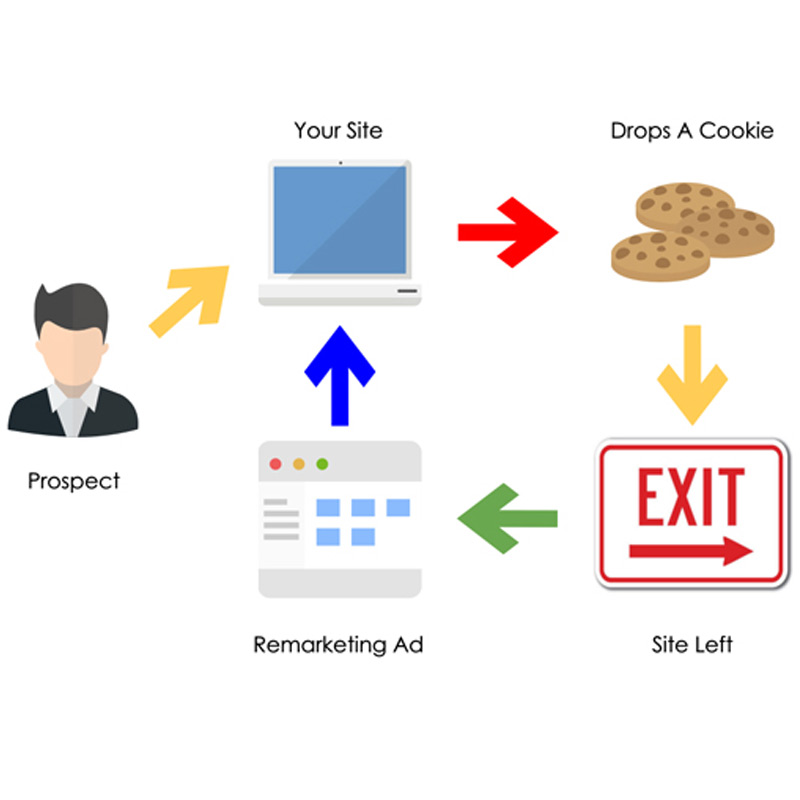
    MUMBAI: Remarketing is a smart marketing strategy that enables brands to identify and target those specific customers who have visited the brands’ website but may not have made an immediate inquiry or purchase. They do, however, present an opportunity for a possible conversion, as they have already shown interest in the products and services by visiting the website. Remarketing also includes reaching out to the existing customers and retaining them by promoting various offers. It is a widely used strategy and one of the most popular ones in e-commerce today.

    For this, brands would have to place a remarketing tag on their website. Though it is possible to place these tags on each and every page of their website, it makes more sense to have these tags placed on certain specific pages to target a specific type of customers. For instance, the customers who have abandoned their carts, the ones who have saved the products for later or have had any sort of interaction with the website qualify better for retargeting, as compared to others. When the customers visit these pages, which have the remarketing tag, a cookie will be placed in their browser. This cookie will trigger the ads and display them on other sites where they browse.

    Brands can go a step further by using techniques such as dynamic remarketing and dynamic creative optimisation (DCO). Dynamic remarketing lets them dynamically target the customers as they browse the internet. Dynamically retargeted ads show content based on a customer’s profile, such as the product that has been viewed or added to the cart.

    DCO lets one dynamically change the elements of the ad creatives such as image, price, product description and call to action. It can also switch the ad copy that is being displayed. This increases the chances of customers zeroing in on that particular brand during the time of purchase, increasing the conversion rates.

    In addition to dynamic retargeting and DCO, there are various other techniques for retargeting. One can use cross-device retargeting, which enables displaying the ads to a specific user across multiple digital devices such as mobiles, tablets, laptops and desktops. It enables brands to retarget an ad on one device, knowing that the customer has seen an ad or visited their site on another device. Multi-channel retargeting can also be used for displaying ads via different channels like banner, video or text.

    Advertisers, however, have to be cautious. Retargeting involves the use of consumers’ data and, hence, advertisers have to consider the legal policies and data privacy regulations applicable in various regions across the globe. Thanks to recent developments, data privacy regulations are getting even more stringent in the European Union (EU) and this will affect the way and extent of retargeting that can be done in this region. The EU General Data Protection Regulation (GDPR) is all set to change the previous regulations and will impose more restrictions on companies for using the personal data without the consent of consumers residing in the EU. This can make the situation a bit tricky for advertisers. Brands will have to work their way around this cautiously.

    Remarketing has multiple advantages which will help to boost up the marketing strategy. For instance, a majority of the website visitors leave without converting. But these are valuable customers for the business, and letting them go is a huge blunder. This is where remarketing comes in. It lets brands follow these potential customers on other sites and re-engage with them. Remarketing lets brands display highly relevant ads to an interested audience.

    Instead of delivering ads to everyone, retargeting lets brands show ads only to the people for whom it is sensible. This actually helps to retain money in models like CPM, which are most commonly used. Also, remarketing is one of the best ways for customer retention. Acquiring new customers is always nice. But, it is important to bear in mind that it is also 7 times costlier than retaining the ones who are already aware of the brand.

    Remarketing also helps to create a better brand awareness and brand recall. On an average, one only gets a fraction of a second of the customers’ attention span. It is difficult to make an impact on their minds in such a tiny sliver of time. Therefore, it is crucial that brands retarget them in order to create lasting impressions in their minds. This increases the chances of them coming back to them while actually making the purchase and directly reflects on the brands’ conversion rates. It increases the campaign effectiveness and can also improve the RoI.

    Remarketing helps to target the visitors to a brand’s competitor sites as well. The ads are displayed when the customers are still in their search phase of the purchase cycle. The remarketing ads will be shown to the customers when they search a particular keyword. This also includes people who may visit a brand’s competitors’ websites that have returned results relevant to that brand’s products and services.

    Retargeting is a largely beneficial marketing technique and it is highly recommended that brands employ this in order to obtain the array advantages it brings along. This is a simple technique but offers multi-fold returns.

    public://Ashish-Shah,-Founder-&-CEO.jpg

    The author of the article is founder and CEO of Vertoz. The views expressed here are strictly his own and Indiantelevision.com may not subscribe to them.


    Also Read:

    GUEST COLUMN: From Juggle To Juggernaut: Localising content for India

    Guest column: Taking Indian content to the global market

    Guest Column: The comeback of full-service agencies in India

  • Nearbuy associates with KFC to give out discount offers on food

    Nearbuy associates with KFC to give out discount offers on food

    MUMBAI: Nearbuy, an ecommerce venture has partnered with KFC. This strategic association will help customers find the nearest KFC outlet through Neaarbuy’s location based application and consumers can even  avail discounts on KFC’s combos  containing signature items such as Zinger Burger, Hot n Crispy Chicken, Cheese Crunch Burger, Rice Bowlz and more.

    With this new partnership  Nearbuy expects to drive half a million customers over a period of one year to its website; customers who will purchase these vouchers and avail them at the various KFC outlets.  This mutually benefiting partnership will not only offer an opportunity to the local commerce player to tap onto the growing base of young food lovers but also benefit KFC’s overall online market penetration and drive their sales growth.

    KFC India CMO Luis Ruiz Ribot  csaid, “We welcome this partnership with Nearbuy. This is part of our strategy to provide greater accessibility to our Finger Lickin’ good food for our ever-increasing online customer-base.”

    Commenting on the unique partnership, Nearbuy CEO and co-founder Ankur Warikoo said, “We are thrilled to extend our association with the leading QSR brand of India – KFC. Our collaboration is a testimony to the common values we share as a brand, and wish to offer the best to our customers. We are happy to share that 11000 consumers have already grabbed this exciting deal. We hope that this association benefits both players, and we continue to offer exciting benefits to our respective customers.”

  • Nearbuy associates with KFC to give out discount offers on food

    Nearbuy associates with KFC to give out discount offers on food

    MUMBAI: Nearbuy, an ecommerce venture has partnered with KFC. This strategic association will help customers find the nearest KFC outlet through Neaarbuy’s location based application and consumers can even  avail discounts on KFC’s combos  containing signature items such as Zinger Burger, Hot n Crispy Chicken, Cheese Crunch Burger, Rice Bowlz and more.

    With this new partnership  Nearbuy expects to drive half a million customers over a period of one year to its website; customers who will purchase these vouchers and avail them at the various KFC outlets.  This mutually benefiting partnership will not only offer an opportunity to the local commerce player to tap onto the growing base of young food lovers but also benefit KFC’s overall online market penetration and drive their sales growth.

    KFC India CMO Luis Ruiz Ribot  csaid, “We welcome this partnership with Nearbuy. This is part of our strategy to provide greater accessibility to our Finger Lickin’ good food for our ever-increasing online customer-base.”

    Commenting on the unique partnership, Nearbuy CEO and co-founder Ankur Warikoo said, “We are thrilled to extend our association with the leading QSR brand of India – KFC. Our collaboration is a testimony to the common values we share as a brand, and wish to offer the best to our customers. We are happy to share that 11000 consumers have already grabbed this exciting deal. We hope that this association benefits both players, and we continue to offer exciting benefits to our respective customers.”

  • E-commerce giants dish out swanky offers this Women’s Day and Mahashivratri

    E-commerce giants dish out swanky offers this Women’s Day and Mahashivratri

    MUMBAI: E-commerce giants normally lure customers through various discount offers throughout the year, and then there are festival and other special days when these companies offer customers exclusive discounts. This Mahashivratri and Women’s day companies have found yet another reason to attract more shoppers in order to boost sales and traffic onto their websites and apps by offering high discount rates. Some of these websites include E-commerce players like Flipkart.com, Paytm.com,Snapdeal.com, Cashkaro.com, Sendmygifts.com, Cubishop.com, Shoppingoutlet.in, Healthians. The online eyewear portal Lenskart.com is supporting women by donating 2.5 percent of total sale towards women empowerment.

    Mobile e-commerce and virtual wallet company Paytm.com has come up with exclusive deals by offering flat 30 percent cashback on premium watch brands for women and up to 50 percent cashback on the bestselling products. Taking off from its ‘Big Billion Day’ a couple of years ago and last year, Flipkart.com has come up with Big Shopping Day from the seventh to the ninth of March and customers can avail up to 20 percent off plus an extra 10 percent off on transactions through SBI cards.

    Cashback and coupons website like Cashkaro.com are offering high discounts between 50 and 80 per cent rates plus cashback and rewards on purchase of any item on Women’s day on any purchase through Amazon.in and  Askmegrocery.com. In addition to this, Cashkaro is also offering upto10.2 percent reward on purchase of item through Flipkart.com.

    For Mahashivratri, Askmegrocery.com and PepperTap.com have a flat 10 percent off on grocery items.

    Customers can avail a deal of their choice on Snapdeal.com, while women’s apparel, footwear and accessories have up to 25 percent off. Beauty and personal care products are available with discounts between 50 and 70 percent.

    In order to make women’s day special, Sendmygifts.com offers presents with discounts of up to 55 per cent for orders worth Rs 500 or more, plus 15 percent extra off on flowers, cakes and combos and 10 percent off on non-perishable products. 

    Cubishop.com, the marketplace for the consumer electronics industry is offering portable mini bluetooth stereo S10 music speakers for just Rs 350 and mono bluetooth headset worth Rs 275. Meanwhile Shoppingoutlet.in is offering beats pill multicolor bluetooth portable speaker OEM worth Rs 1,199 and JBL micro wireless speaker for Rs 1,399.

  • E-commerce giants dish out swanky offers this Women’s Day and Mahashivratri

    E-commerce giants dish out swanky offers this Women’s Day and Mahashivratri

    MUMBAI: E-commerce giants normally lure customers through various discount offers throughout the year, and then there are festival and other special days when these companies offer customers exclusive discounts. This Mahashivratri and Women’s day companies have found yet another reason to attract more shoppers in order to boost sales and traffic onto their websites and apps by offering high discount rates. Some of these websites include E-commerce players like Flipkart.com, Paytm.com,Snapdeal.com, Cashkaro.com, Sendmygifts.com, Cubishop.com, Shoppingoutlet.in, Healthians. The online eyewear portal Lenskart.com is supporting women by donating 2.5 percent of total sale towards women empowerment.

    Mobile e-commerce and virtual wallet company Paytm.com has come up with exclusive deals by offering flat 30 percent cashback on premium watch brands for women and up to 50 percent cashback on the bestselling products. Taking off from its ‘Big Billion Day’ a couple of years ago and last year, Flipkart.com has come up with Big Shopping Day from the seventh to the ninth of March and customers can avail up to 20 percent off plus an extra 10 percent off on transactions through SBI cards.

    Cashback and coupons website like Cashkaro.com are offering high discounts between 50 and 80 per cent rates plus cashback and rewards on purchase of any item on Women’s day on any purchase through Amazon.in and  Askmegrocery.com. In addition to this, Cashkaro is also offering upto10.2 percent reward on purchase of item through Flipkart.com.

    For Mahashivratri, Askmegrocery.com and PepperTap.com have a flat 10 percent off on grocery items.

    Customers can avail a deal of their choice on Snapdeal.com, while women’s apparel, footwear and accessories have up to 25 percent off. Beauty and personal care products are available with discounts between 50 and 70 percent.

    In order to make women’s day special, Sendmygifts.com offers presents with discounts of up to 55 per cent for orders worth Rs 500 or more, plus 15 percent extra off on flowers, cakes and combos and 10 percent off on non-perishable products. 

    Cubishop.com, the marketplace for the consumer electronics industry is offering portable mini bluetooth stereo S10 music speakers for just Rs 350 and mono bluetooth headset worth Rs 275. Meanwhile Shoppingoutlet.in is offering beats pill multicolor bluetooth portable speaker OEM worth Rs 1,199 and JBL micro wireless speaker for Rs 1,399.