Tag: currency

  • Cashaa exits from Unicas

    Cashaa exits from Unicas

    Mumbai:The crypto neo bank, Cashaa, has announced its exit from Unicas. This is Cashaa’s maiden attempt to enter the personal crypto-banking market after becoming a market leader in B2B crypto banking. Presently, Unicas has four branches fully operating in India, and the company aims to further its expansion. Unicas provides saving accounts and offers collateralized loans against crypto assets.

    In 2020, Unicas offered crypto-friendly savings accounts to its customers in partnership with the United Multistate Co-op.

    In recent events, Cashaa holding company Crypto Innovations UAB was granted a European virtual assets license from Lithuania. “The proposal was in the best interest of Cashaa, and it was decided that it would be even beneficial for both companies if Cashaa accepts a proposed buyout offer and exits from Unicas,” said Cashaa’s Board representative Anamaria Redianu.

    The compensation from the buyout will contribute to a $20 million investment fund to develop the fast-growing Web3 market. The complete details will be out soon.

    Cashaa CEO Kumar Gaurav said, “The Indian market offers tremendous potential, especially after the recent clarity regarding cryptocurrency taxation and legal infrastructure. We at Cashaa welcome this decision.”

    “We have decided to acquire our stake from Cashaa representatives in India to give a new direction to Unicas. After the recent reforms, the Indian market has a huge upside potential”, said Unicas CEO and co-founder Sonal Kukreja.

  • The Currency of Experience Has Global Value

    The Currency of Experience Has Global Value

    MUMBAI: Research from YouGov on behalf of Priority Pass, the world’s leading and original airport experiences program, has found that the trend for experiences over material goods is global. Surveying over 10,000 people from nine countries across all corners of the world, including 1000 in India, the data showed that we all overwhelmingly value shared experiences – which manifests most clearly in the form of holidays.

    India Currency of Experience Barometer

    Here are the top ten activities people in India value the most (from most valued to least valued):

    Holidaying at home

    2.    Cultural holiday overseas

    3.    Catching a film at the cinema

    4.    Going out for a meal 

    5.    Overseas city breaks and weekends away

    6.    Solo travel abroad

    7.    Going to festivals 

    8.    Sporting holidays overseas

    9.    Buying luxury items

    10.  Wellness and spa holidays abroad  

    The Next Big Thing consumer futurist, William Higham, said: “People increasingly look for more ‘meaning’ in what they do, therefore possessions are proving less valuable than experiences, and the memories and learnings that we gain from them. In future, what we do will matter more – to us and our peer network – than what we buy. We’ll also care more about status updates than status symbols. This will be encouraged by the growing importance of social media across all age groups, since experiences typically offer better opportunities to post photos and updates than products.

    “The preference for experiences will stand the test of time even during future recessions – the study has found the growing demand is not confined only to those in high income brackets but is popular across the board. Additionally, since spending money on experiences is also particularly strong amongst millennials, we are likely to see this skyrocket as this generation reaches peak purchasing power in the coming decade.”

    Priyanka Lakhani, Regional Commercial Director, Middle East, Africa and India at Collinson, the operator of Priority Pass said: “It’s no surprise that travel has topped the global leader board. Thanks to globalization, a drop in travel prices, and better online services, it’s never been easier for people to plan and book a trip. Where we’re now seeing the biggest shift amongst travelers both in India and further afield, is the demand for more personalized and customer-centric services as part of the travel experience, even before they’ve reached their destination. Whether that’s escaping the hustle and bustle in a luxury lounge, indulging in a sit-down meal in a great restaurant, enjoying a relaxing massage, or even just having their flight information in the palm of their hand via an app. We certainly find that people now expect extra touches on top of their travel experiences to make them even more enjoyable and special.”

    Holidays at home top the table in India

    42%  are likely to holiday at home while 30% enjoy domestic short breaks and 27% enjoy a cultural trip overseas
    16% say a holiday at home is the activity they enjoy the most – and would spend an average of 23,619 INR on this type of break.
    The type of break that came out on top in India in terms of spending was overseas travel for business with an average of 52,191 INR spent on this kind of trip and this came in higher than average amount spent on cultural holidays overseas abroad with the average being INR 39,271

    Research found that almost half of those surveyed (42%) like to holiday at home, while 30% enjoy a domestic short break and 27% enjoy exploring the cultural hot spots of other countries.

    Interestingly the type of trip which respondents would spend the highest average annual sum was an overseas business trip – with people spending an average of 52,191 INR on this kind of trip.

    Holidays and travel – domestic or overseas, or whether for business or leisure, all came in ahead of what people spend on luxury items which stood at an average of 17,011 INR.

    Wellness holidays abroad fared well globally, whereas they came in much lower in India, with only 11% of respondents likely to take this kind of trip in an average year and 3% listing it as their most favoured activity.  This is in contrast to almost a fifth (18%) of people surveyed globally saying they enjoy this kind of break – with Russians and Saudi Arabians particularly enjoying them at 33% and 38% respectively.

    Sharing experiences

    Eating out and going to the cinema are the two things people in India enjoy doing overall with 48% each. Eating out was also the most popular activity globally (59%)
    24% enjoy health and beauty services (massages, manicures etc.) which was similar to the global average of 22%

    However, holidays are not the only experiences we enjoy. Almost a quarter of respondents (24%) like to indulge in health and beauty services like massages and manicures while almost half of Indian adults said they like going to the cinema as well as going out for a meal (joint at 48%). 59% of people surveyed in nine countries across the world said they enjoy going out for a meal, with those who enjoy a trip to the cinema globally, very similar to the India response at 49%.

    The results suggest that a shared social experience is key to people’s enjoyment. The way we use social media also adds to the perception of value of an experience. For example, global averages show that travel for leisure and a trip to the cinema are the activities we’re most likely to regularly post about on social media (31% and 27% respectively),  whereas in India the top two were sharing trips to the cinema at 42% and showcasing food and drink one has prepared themselves at 39%. More solitary activities like a fitness session at the gym (18%) or buying a new luxury purchase (also 18%) don’t get shared as much on social media platforms.

    And when asked what they’d spend a cash gift (of INR18, 000) on, almost a quarter of people globally (23%) would put it towards a trip away, whereas in India, the top answer, with 15%, was to buy a gift for a loved one.  13% globally (14% in India) would pay for a special meal with friends and family and in India this was tied at 14% with putting the money towards a trip away. 

    Priyanka Lakhani added: “The statistics show that experience is definitely king. The India findings of this research validates further how highly people value different experiences, especially those that are memorable and can be shared. Priority Pass is proud to offer more than 1200 airport experiences that help people get even more enjoyment from their time in departure halls, whether traveling for business or leisure.”

    “Consumer behavior is fast changing. Those companies that are agile enough to offer products and services which respond to the growing investment in the Currency of Experience, will reap the rewards when it comes to customer loyalty.”

  • Jio DTH & Airtel ‘hybrid’ reports gain currency

    MUMBAI: Although there is no confirmation, Reliance Jio seems to be gearing up to enter the DTH space in India this month after disrupting the telecom landscape.

    Jio it seems may not be alone in the new business as Airtel too is reportedly looking to take on Jio’s IPTV based DTH with its hybrid DTH STB service. The impact however will depend on the STB features.

    After much speculation over a few weeks, this time some images of Jio set-top-box have surfaced — exposing the box design. Some reports stated that Jio STB, powered through Jio broadband with up to 1 Gbps speed, would have a rounded design and an upgraded version of the available DTH boxes.

    The leaked pictures the Jio STBs show a USB port at rear and front side. This presumably will help consumers to connect a pen drive and may be watch stored movies and videos directly — without an internet connection.

    This feature exists in smart TVs, but the earlier TV sets do not have it — the market for Jio DTH.

    The leaked images also show an RJ45 port that helps connect to Net and have movies, live streaming and listen to music online. The Jio box also seems to have an AV port, HDMI port, a 12-volt power port, and a cable port at the rear.

    The Jio STB is expected to be based on Android and Jio will help outdoor customer premise equipment (CPE) connected to a Jio tower and attached to the STB. Jio is also preparing to give wiring via optical fibre cable, instead of CPE, in some areas.

    Airtel’s high-tech hybrid too reportedly works on the same principle. Airtel will use the fibre to home (FTTH) service to connect the STBs, allowing viewers to stream content online.

  • TV production temporarily impacted by cursed Rs 500-1000 notes

    TV production temporarily impacted by cursed Rs 500-1000 notes

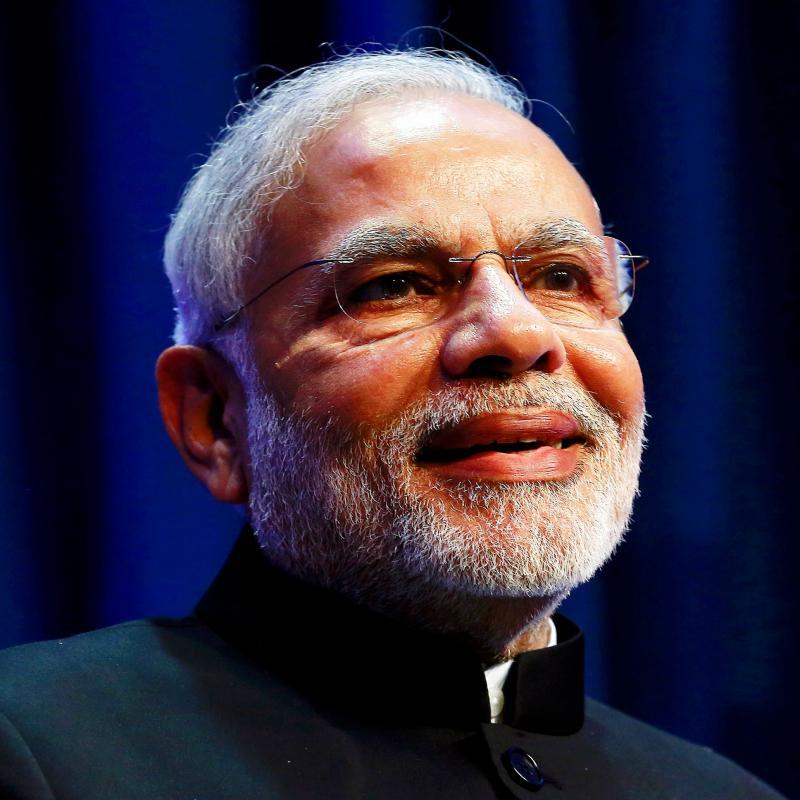
    MUMBAI: In what may be called a Herculean step, PM Narendra Modi banned Rs. 500 and Rs. 1000 notes as of midnight intervening 8 and 9 November. His live television broadcast came as a surprise to millions of unassuming Indians and the world at large, to say the least.

    Once understanding of the gravity of his announcement hit, throngs rushed to the ATMs, super markets, and chemist shops in a bid to rid themselves of the cursed notes which were to transform into waste paper overnight. In fact, retail shopping giant Big Bazaar, luxe watch chain Ethos, among many others seized this opportunity and allowed shoppers in till midnight, rightly expecting a rush. Petrol stations saw long queues even as late as the night of 9 November as desperate Indians tried to shed their 500 and 1000 notes. Foreign tourists despaired about the dud notes they had in their possession, as they neither hold bank account or post office accounts; the only currency they had was useless to them.

    By demonetizing Rs 500 and Rs 1000 notes, Modi has taken a bold stance to curb the raging black money menace and counterfeit currency that has been gnawing at the country’s economy for decades. The speed at which everything had transpired was astonishing, and many netizens lauded the move on social media.

    While this historic move is expected to contribute greatly towards nation-building, the transition phase will not be smooth. With banks shut for another day, ATMs dysfunctional temporarily until new legit denominations are restored in the banking system, life is proving tough for the public, to put it mildly. Different sectors have braced up for the varied impact this decision will bring, including the Indian television production industry.

    “For production houses like us, there are certain requirements for action props — flowers, food items, etc, which we usually buy in cash. Moreover, everyone’s travel and other conveyance compensation are also paid in cash. Not to mention the daily labour and daily-wage workers that a shoot employs… so yes, this ban has definitely created an a problem, especially with the banks shut,” explains Sol Production’s Fazila Allana.

    “Our ongoing shooting in Delhi for the show ‘Small Money Big Makeover’ which airs on FYI is currently stuck. It requires us to go out and buy stuff from the local market, and with today’s cash crunch situation, that is difficult,” she adds.

    Allana isn’t hindered by that, however, as she strongly believes that it is only temporary. “In the long term, I believe it is good for the industry. “A lot of these union workers often used to insist on cash payments, but now this sector can be regulated more effectively.”

    Asked if any of the long-running daily shows would be affected by this temporary turmoil, Allana reassured that it was highly unlikely. “Mega serials, as they are often called, will be the least affected as their shoots and contracts with artistes etc mostly operate on a monthly basis. They might be slightly inconvenienced by the sudden prop requirements, but that is all.”

    Allana, however, expressed concern over the lack of clarity on the upper limits of withdrawal for companies and the corporate, as it will be next to impossible to function if the cap for company usage is also Rs 2000 per day.

    BBC Worldwide India SVP & GM Myleeta Aga has welcomed the Prime Minister’s bold move calling it ” good to happen” to our industry.

    “There will be inconvenience, but we should all manage the inconvenience. It won’t stop our work. We mostly function with partners with whom we have long-term associations. They too understand the current situation, and are cooperating accordingly. We can use credit notes and the right available denominations for the next few days. As long as they are providing a legit service and are being paid in a legit way, there is nothing to worry about,” she adds.

    “The industry simply needs to be mindful while making cash payments in these two to three days,” says the optimistic CEO of The Contiloe Entertainment, Abhimanyu Singh.

    Asked if the TV industry will be majorly affected by this crackdown on black money hoarders, Singh says, “I don’t think the TV industry has something to worry about, most of our accounts are clean and every transaction is accounted for.”

    “In the short run, businesses will have to compromise with the change but I have faith the government has thought this out, and will effectively take action to normalise the situation. I don’t believe the prime minister would want businesses to shut down,” Singh added.

  • TV production temporarily impacted by cursed Rs 500-1000 notes

    TV production temporarily impacted by cursed Rs 500-1000 notes

    MUMBAI: In what may be called a Herculean step, PM Narendra Modi banned Rs. 500 and Rs. 1000 notes as of midnight intervening 8 and 9 November. His live television broadcast came as a surprise to millions of unassuming Indians and the world at large, to say the least.

    Once understanding of the gravity of his announcement hit, throngs rushed to the ATMs, super markets, and chemist shops in a bid to rid themselves of the cursed notes which were to transform into waste paper overnight. In fact, retail shopping giant Big Bazaar, luxe watch chain Ethos, among many others seized this opportunity and allowed shoppers in till midnight, rightly expecting a rush. Petrol stations saw long queues even as late as the night of 9 November as desperate Indians tried to shed their 500 and 1000 notes. Foreign tourists despaired about the dud notes they had in their possession, as they neither hold bank account or post office accounts; the only currency they had was useless to them.

    By demonetizing Rs 500 and Rs 1000 notes, Modi has taken a bold stance to curb the raging black money menace and counterfeit currency that has been gnawing at the country’s economy for decades. The speed at which everything had transpired was astonishing, and many netizens lauded the move on social media.

    While this historic move is expected to contribute greatly towards nation-building, the transition phase will not be smooth. With banks shut for another day, ATMs dysfunctional temporarily until new legit denominations are restored in the banking system, life is proving tough for the public, to put it mildly. Different sectors have braced up for the varied impact this decision will bring, including the Indian television production industry.

    “For production houses like us, there are certain requirements for action props — flowers, food items, etc, which we usually buy in cash. Moreover, everyone’s travel and other conveyance compensation are also paid in cash. Not to mention the daily labour and daily-wage workers that a shoot employs… so yes, this ban has definitely created an a problem, especially with the banks shut,” explains Sol Production’s Fazila Allana.

    “Our ongoing shooting in Delhi for the show ‘Small Money Big Makeover’ which airs on FYI is currently stuck. It requires us to go out and buy stuff from the local market, and with today’s cash crunch situation, that is difficult,” she adds.

    Allana isn’t hindered by that, however, as she strongly believes that it is only temporary. “In the long term, I believe it is good for the industry. “A lot of these union workers often used to insist on cash payments, but now this sector can be regulated more effectively.”

    Asked if any of the long-running daily shows would be affected by this temporary turmoil, Allana reassured that it was highly unlikely. “Mega serials, as they are often called, will be the least affected as their shoots and contracts with artistes etc mostly operate on a monthly basis. They might be slightly inconvenienced by the sudden prop requirements, but that is all.”

    Allana, however, expressed concern over the lack of clarity on the upper limits of withdrawal for companies and the corporate, as it will be next to impossible to function if the cap for company usage is also Rs 2000 per day.

    BBC Worldwide India SVP & GM Myleeta Aga has welcomed the Prime Minister’s bold move calling it ” good to happen” to our industry.

    “There will be inconvenience, but we should all manage the inconvenience. It won’t stop our work. We mostly function with partners with whom we have long-term associations. They too understand the current situation, and are cooperating accordingly. We can use credit notes and the right available denominations for the next few days. As long as they are providing a legit service and are being paid in a legit way, there is nothing to worry about,” she adds.

    “The industry simply needs to be mindful while making cash payments in these two to three days,” says the optimistic CEO of The Contiloe Entertainment, Abhimanyu Singh.

    Asked if the TV industry will be majorly affected by this crackdown on black money hoarders, Singh says, “I don’t think the TV industry has something to worry about, most of our accounts are clean and every transaction is accounted for.”

    “In the short run, businesses will have to compromise with the change but I have faith the government has thought this out, and will effectively take action to normalise the situation. I don’t believe the prime minister would want businesses to shut down,” Singh added.