Tag: culture

  • Mahuaa media chairman honored at dr. rajendra prasad jayanti samaroh

    Mahuaa media chairman honored at dr. rajendra prasad jayanti samaroh

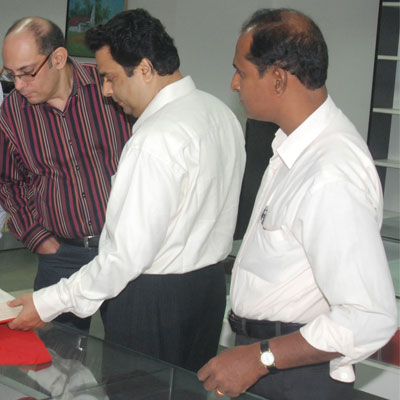
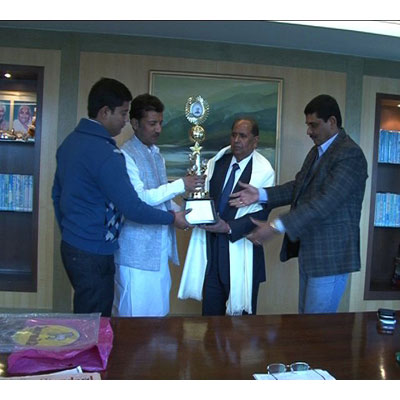
    MUMBAI: Chairman of Mahuaa Media Pvt. Ltd., Mr P.K. Tewari, was recently honoured with the ‘Bhojpuri Ratna Sammaan’ at the Dr Rajendra Prasad Jayanti Samaaroh held in Gurgaon, Haryana. The ceremony was organized by the Purvanchal Ekta Manch. Mr. Tewari was felicitated with this  honour for his special contribution in propagating Bhojpuri language, culture and tradition, pan India. As is widely known, Mahuaa Media has carved a niche for itself in the regional as well as national entertainment platforms.

    The  establishment of Mahuaa TV became the first step towards the fulfillment of the vision and ideals of Mr. P.K. Tewari. The channel has largely been successful in bringing to the fore the Bhojpuri sensibilities and culture which had been dormant till not very long back. Because of its magnificent run, Mahuaa TV has lent a brand value to Bhojpuri entertainment across the country.

    Several other reputed persons in varied fields were felicitated at the Dr Rajendra Prasad Jayanti Samaaroh. Popular Bhojpuri celebrities impressed the audience with the performances a huge crowd had gathered to witness the ceremony.

    It is important to note that Mahuaa has become a part of the lives of its viewers, a medium they more than identify with. More than being a successful television channel, Mahuaa has become the simulacrum of everything that the Bhojpuri civilization stands for, in India and beyond. As the platform for entertainment and viewer-satisfaction continues to steadily magnify, the channel is determined to explore newer vistas and live up to its tagline- ‘Dhadkan Manoranjan Ke’.

  • Blood Brother opened the 20th Anniversary Ohio Independent Film Festival

    Blood Brother opened the 20th Anniversary Ohio Independent Film Festival

    NEW DELHI:  Award-winning documentary Blood Brother by Steve Hoover which is partly based in Tamil Nadu was the opening film on 7 November at the 20th Ohio Independent Film Festival.


    The film has earlier won both the Grand Jury Prize and Audience Award at the 2013 Sundance Festival in Park City as well as Audience Award at Hot Docs and Best Feature at Big Sky in Montana among other accolades.


    The film is about Rocky Braat a man from Pittsburgh who never really liked kids or hot weather but yet found himself immersed in the culture and heat of Tamil Nadu, caring for HIV/AIDS-afflicted orphans – and never wanting to return to the American life he once had.


    Hailed as “a truly beautiful film about the power of love” and as “Exuberant, heartbreaking and transcendent”, Blood Brother depicts Rocky’s devotion to the children and endurance in the face of difficulties most would never even imagine and will shake viewers.


    “’Blood Brother is a must-see,” said Therese Grida, Independent Pictures’ Board member and Selections Committee Chair. “The film was submitted to us in October, 2012 and has been working its way around the festival circuit since,” said Grida.

    Director Steve Hoover’s debut feature is independently-produced, which means that it was not financed by any big studio.  “This is the stuff we relish,” Grida said. Blood Brother is what independent filmmaking is all about.”


    The Ohio Filmfest started out as the Off-Hollywood Flick Fest in 1992 and held its first screenings in 1993 in a small store in front of Tremont. While the name eventually changed to the Ohio Independent Film Festival, twenty years later the submission process remains the same.


    Independent Pictures is also the proud parent of the Ohio Independent Screenplay Awards, the Film Production Training Program, the Director of Photography Workshop, Fiscal Agent Sponsorship Program and more. The mission of Independent Pictures supports emerging and independent filmmakers by giving a voice to those that might not otherwise be heard.  

    Independent Pictures and the Ohio Independent Film Festival are funded in part by grants from Cuyahoga Arts and Culture and Ohio Arts Council, and by Community Shares, a workplace giving organization that supports social justice issues.

  • Mauritius launches 30 per cent film rebate scheme to attract film industry

    Mauritius launches 30 per cent film rebate scheme to attract film industry

    NEW DELHI: Mauritius has launched a new Film Rebate Scheme allowing for a 30 per cent refund on all the Qualifying Production Expenditures (QPE) incurred by film producers in respect of their projects in Mauritius.


    The scheme was officially launched at a gala event by the Vice Prime Minister and Minister of Finance & Economic Development Xavier-Luc Duval in the presence of Minister of Arts and Culture Mookhesswur Choonee and Bollywood actor Jackie Shroff.


    Some 250 professionals including directors, producers, filmmakers, artists and representatives of production houses, modelling agencies and training schools attended the launch.


    In his address, Duval, the architect of the Rebate Scheme, highlighted the size and importance of the film industry and its business potential for Mauritius. He said the industry is expected to generate some MUR 500 million in 2014 while it is estimated that it will bring about MUR 1 billion annually in foreign exchange.


    In its endeavour to develop new sectors of activity within the creative arts industry, the Mauritian Government through the Board of Investment elaborated a framework to attract film shooting and post-production activities in Mauritius. This was implemented in the wake of an announcement in the 2012 National Budget.


    The Industry is seen as a serious and viable addition to the economy. This scheme puts Mauritius at-par with other destinations like Malaysia and Abu-Dhabi which offer a 30 per cent rebate.


    Duval stated that the Government will intensify the marketing of the scheme through the Board of Investment. The industry is expected to generate employment for SMEs, designers, artists, hoteliers, with significant beneficial spillover effects on other sectors like tourism, trade, travel, transport and retail.


    Furthermore, the industry will provide great exposure and visibility to the Mauritian tourism industry in various source markets such as India, China and Europe. The Board of Investment has recorded an increasing number of potential interests from local producers as well as production houses from China, South Africa and India. So far, expressions of interest have been received mostly by Indian producers.


    Choonee emphasized the strong relationship and special sense of belonging and brotherhood between India and Mauritius. The country has nurtured this special bond over decades. Minister Choonee stressed the government’s vision to develop the film industry as another pillar of the economy.


    Special guest Jackie Shroff firmly believes that Mauritius should start producing movies. The actor underlined the importance of having a specialised school offering courses on script-writing and editing as well as crash courses on film-making.


    He praised Mauritius and said he was overwhelmed by the hospitality of Mauritians. He commended VPM Duval’s initiative for the development and promotion of the new film industry.

  • 76% of Global Retail Banks Becoming More Innovative Finds New Study by Infosys & Efma

    76% of Global Retail Banks Becoming More Innovative Finds New Study by Infosys & Efma

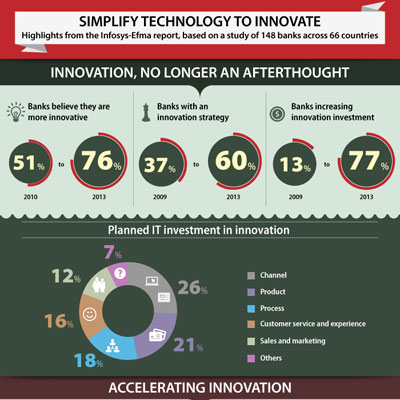
    BAMGLORE:  Infosys, a global leader in consulting, technology and outsourcing, today announced the launch of its Innovation in Retail Banking 2013 report. The fifth annual study, commissioned by Infosys and conducted by Efma, investigates how banks can overcome barriers to innovation and improve their innovation capabilities. This year’s study, which surveyed 148 banks in 66 countries, revealed that as the global economy recovers, retail banks across the world are increasingly investing in innovation as a means of generating revenue and controlling costs. In fact, 60% of banks surveyed have an innovation strategy compared to just 37% five years ago, when the report was first issued.

    The study also found that to overcome the main barriers to innovation – legacy systems and organizational siloes – banks are looking towards technologies that can simplify their operations and deliver a richer customer experience. In particular, mobile innovation is beginning to gather pace, with 77% of banks deploying or planning to deploy a mobile wallet solution.

    Key findings of the study include:

    76% of banks believe they are becoming more innovative, with the biggest increase being seen in customer channels

    7% of banks surveyed are increasing investment in innovation. This is an encouraging trend as the 2009 study revealed only 13% of banks had increased investment

    More than half (58%) of banks surveyed believe the ability to deploy new systems in components would have a positive impact on their ability to innovate.
    Mobile location-based offerings were cited as another area of innovation for banks, with 69% deploying or planning on making deployments

    · To enhance their product and service offerings, 45% of banks are already using or planning to invest in gamification, and 61% of banks currently allow or plan to allow customers to do some form of product personalization

    · Large and medium sized banks rated the top three barriers to innovation as legacy IT systems, culture and organizational siloes

    Quotes:

    Haragopal M, Global Head of Finacle at Infosys: “It is good to see innovation agenda taking the center stage at banks, with many focusing on increasing business process speed, agility and efficiency. The report also reiterates that retail banks across the world have recognized that simplification and innovation can go hand-in-hand to help grow business and deliver excellent customer service.”

    Patrick Desmares, Secretary General at Efma: “This year’s study indicates a global convergence of innovation practices around overcoming the barriers presented by legacy technology and ensuring that customer experience channels are optimized. Many retail banks are now creating innovation strategies and underpinning them with investment which tells us that global economies are beginning to recover. As banks once again target growth process, channel and operational innovation, this will only increase in importance.”

    Additional Resources

    o The full Innovation in Retail Banking 2013 report can be downloaded from the Infosys website or slideshare

    o Infosys Finacle and Efma will present the key findings of the study —‘at a webinar at 11.00 CET (10.00 BST) on 22 October. More details click here

    o Let’s Simplify Banking white paper click here

    o Last year’s report: Innovation in Retail Banking 2012

  • Qatar Airlines Brings Light Shared Values Of Excellence, Passion, Pride And Culture

    Qatar Airlines Brings Light Shared Values Of Excellence, Passion, Pride And Culture

    Barcelona, SPAIN – Qatar Airways officially launched the start of its three year partnership with FC Barcelona at an event held today at Camp Nou.

    The airline’s partnership with FCB took effect from July 1st this year.

    In attendance were leading representatives of both organisations, the CEO of Qatar Airways, Akbar Al-Baker, the President of FC Barcelona, Sandro Rosell and Vice President of FC Barcelona Economic and Strategy Area, Javier Faus.

    Akbar Al Baker made the following remarks at the start of his address to the media during a press conference: “The joining of FCB and Qatar Airways is truly history in the making. It is the first time we enter into such a landmark, significant sports partnership.

    “We understand the importance of FCB to Catalonia, to Spain, and in fact – to every country around the world. It is a great honour to be standing side by side as you create and spread the excitement that this great game of football brings to fans.”

    Al Baker also spoke about the airline’s expansive communications campaign about the partnership that will cover various elements: “our aim with this new campaign is to show to the world how strongly we stand behind this new partnership, which we will share with passengers across our entire network.”

    He further described the partnership as “a fitting match for both organisations that share the same values: the pursuit of excellence, passion, pride and culture.

    The airline CEO added: “This partnership will also raise Qatar Airways and FC Barcelona to a new platform internationally, bringing the fans of FCB closer together.

    The State of Qatar’s national carrier, Qatar Airways began operating to Spain in December 2005 and currently flies 10-times-weekly to Barcelona and daily to Madrid.
    FC Barcelona football club President Sandro Rosell said: 

    “We have a long journey ahead lasting three years in which we will share experiences, with a common starting point and goals. Barça and Qatar Airways are united by many ideals, such as a passion to be better each day, the conviction that the human factor makes a difference and the integration of different cultures, but I would emphasize the desire we have to connect with people. And this desire leads us to want to be every day closer to our fans.”

    The new sports kit was first showcased during the Asia Tour earlier this month when the team travelled to Kuala Lumpur and Bangkok to play friendly matches in preparation for the upcoming season.

    The fans reunited with the team with great glory and the stands were filled with absolute excitement to have the likes of big players from FC Barcelona squad.

    Since its beginnings, FC Barcelona has been characterised by being not just a football organisation, but also a powerful force for globalisation, solidarity, integration and social cohesion. Qatar Airways fully identifies with these values, which is why this partnership between both organisations is much more than just a simple economic alliance. Furthermore, Qatar Airways’ partnership with FC Barcelona will help to position the airline in the world.

    Qatar Airways will work with FC Barcelona to create joint initiatives and will especially focus on connecting with the club’s fans and also with underprivileged children to spread the love of the game to all corners of the globe.

    Flying to 129 leisure and business destinations Qatar Airways is one of the fastest growing airlines in the world.

    Qatar Airways has so far launched six destinations this year – Gassim (Saudi Arabia), Najaf (Iraq), Phnom Penh (Cambodia), Chicago (USA), Salalah (Oman) and Sulaymaniyah (Iraq).

    Over the next few weeks and months, the network will expand with the addition of further destinations Chengdu, China (September 3), Addis Ababa, Ethiopia (September 18), Clark International Airport, Philippines (October 27) and Philadelphia, USA (2 April 2014).

  • Nate Silver and ESPN to reboot FiveThirtyEight.com as a data-driven news site

    Nate Silver and ESPN to reboot FiveThirtyEight.com as a data-driven news site

    MUMBAI: Statistician Nate Silver rose to prominence by accurately forecasting the results of the 2008 presidential election as an independent blogger and the 2012 presidency as a writer at The New York Times. But on Friday, Silver moved over to ESPN.


    In the next couple months, Silver will be relaunching his website, FiveThirtyEight.com, as an ESPN backed publication. The new FiveThirtyEight will be a standalone website that uses a data to tell stories and make predictions on sports, politics, economics, culture, science, and technology, ESPN said in a statement. Silver will run the new site as editor-in-chief, overseeing a team of writers and editors.


    ESPN took a similar approach back in 2010 when it launched Grantland, a website run by sports writer Bill Simmons that brings a long-form journalism approach to sports and culture. Silver will also serve as an occasional political analyst for ABC News which, like ESPN, is owned by The Walt Disney Company.

  • Prasad Lolayekar takes over as CEO of Entertainment Society of Goa

    Prasad Lolayekar takes over as CEO of Entertainment Society of Goa

    NEW DELHI: Prasad V. Lolayekar, Director for Art and Culture in the Goa Government and Officer on Special Duty to the Chief Minister, has been given additional charge as Chief Executive Officer of the Entertainment Society of Goa.

    This follows the resignation of Manoj Srivastava, who was Deputy Director in the Directorate of Film Festivals of the Information and Broadcasting Ministry. Earlier, Srivastava had been a producer with Doordarshan.

    During his tenure from June 2008 to 31 December 2012, Srivastava managed the International Film Festival of India on behalf of the Goa Government, since the ESG had been established for collaborating with the DFF after Panaji became a permanent venue for the IFFI in 2004.

    During his tenure, Srivastava introduced short films to IFFI by launching the Short Film Center in 2008, giving a fillip to short film movement.

    Ever since, the short film movement began in India. During his tenure, Goa bagged the Best Film Destination Award last year.

    From a state having five films shot each year, Goa last year boasted of shooting 79 films. Sources said the non-existent film business in Goa has shot up to an industry of Rs four billion.

    The attendance at the IFFI has risen from a paltry 3,700 in 2008 to over 13,000 in 2012.

    During Srivastava’s tenure, the first Digital Film Archive in Asia was set up in ESG, apart from Goa Cinephile, a famous Film Club for Goans and development of film culture in Goa.

  • Ofcom launches PSP consultation

    Ofcom launches PSP consultation

    MUMBAI: UK media watchdog Ofcom has launched its planned consultation to consider the option of an online public service publisher (PSP).

    If given the go ahead, the service would compete with the online operations of Channel 4 and the BBC. The idea was muted by the regulator back in 2004.

    Ofcom notes that although public service content will be provided by the market, it may well not be enough either in terms of quantity or diversity – a market shortfall is likely to arise. This may have adverse implications for the level of UK-originated production, and for plurality in the public service system – the BBC is likely to play a material role in the digital media world of the future, but for a public service culture to flourish, effective competition for quality is needed.

    Ofcom states, ” We are open-minded about the best solution for the future of public service content – we will not report again on the how to maintain and strengthen the quality of Public Sservice Broadcasting (PSB) until the next PSB Review, which must be completed no later than 2009/10.

    “The primary purpose of this paper is to take the debate forward within the UK’s creative industries and policy environment. We continue to believe that there is a real opportunity for a new PSP to make a significant contribution to the public service system, and to create a lasting legacy for the future.

    ” We welcome the Culture, Media and Sport Select Committee’s interest in the PSP concept in its inquiry into public service media content.”

    Ofcom has given 23 March 2007 as the last date for obtaining feedback. It is actively seeking responses on:

    – The appropriate nature of intervention in the digital media age, and the balance between TV and non-TV forms of public service content distribution

    – The potential role of the PSP and its creative remit

    – The operating model – in particular, the approach to rights management

    – The scale of funding required. Ofcom notes that the future of PSB in UK television is central to its remit. Its first statutory review of PSB was completed in 2005 and set out recommendations for maintaining and strengthening the quality of PSB against a backdrop of rapid change in broadcasting. The television market has continued to evolve at speed since the review, as a result of which it published Digital PSB in July 2006.

    Digital PSB highlighted a number of market developments affecting the future of public service broadcasting. One of these is that the rapid take-up of digital television is reducing the viewing share of the traditional public service broadcasters, and hence the value of the analogue spectrum

    Viewers – especially younger audiences – are increasingly watching content on internet and mobile platforms, and are starting to move away from traditional TV. Changes in spectrum policy will affect the way in which public service aims need to be financed in the future.

    In Ofcom’s view, these changes mean that the delivery of PSB in a fully digital television world needs to be rethought. While the core public purposes endure, the means of delivery and institutional framework may have to change. As a result, the challenge is to define the appropriate model for PSB for the future, not for the world as it is today – or as it has been in the past. The challenge is as much an opportunity for public service broadcasting as it is a threat to it.