Tag: CTV

  • India Today Group ranks No.1 across CTV: Comscore report

    India Today Group ranks No.1 across CTV: Comscore report

    Mumbai: In the recent Comscore rankings across all CTV environments in the general news and news/information category for the month of August’22, India Today Group claimed the top spot by a huge margin.

    The CTV total video figure for the media conglomerate stood at 45.1 million video streams. The fact that the group’s leadership score trails TV9 Network, Zee Digital, ABP Network, & Network 18 and demonstrates that India Today is the nation’s most followed news broadcaster even when it comes to connected devices, as per the Comscore VMX Device Level CTV report.

    Comscore Video Metrix is a multi-platform rating institution that provides video audience measurement across digital content and advertisements, revealing audience size, reach, engagement, and demographic composition.

  • India’s smart TV market grew 74 per cent YoY in Q2’ 22: Report

    India’s smart TV market grew 74 per cent YoY in Q2’ 22: Report

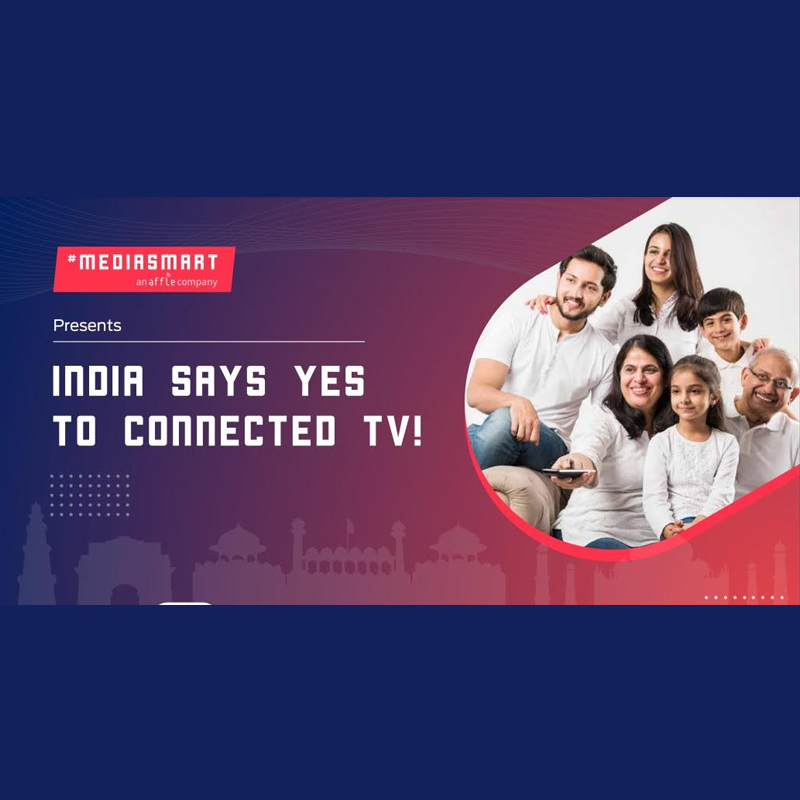
    Mumbai: mediasmart, an Affle company, has published the second edition of its India CTV Report 2022, titled “India Says Yes to Connected TV!” The report stated that India’s smart TV market grew 74 per cent YoY in Q2’22.

    The report focuses on consumer adoption trends in metro and non-metro areas, as well as a significant shift in CTV ad potential for brands and marketers. According to its report, CTV viewing is a part of the daily routine and a preferred source of entertainment. CTV consumption is driven by adults, including grandparents. 78 per cent had a smart TV, of which 93 per cent used the internet to consume content.

    TV subscriptions stood at merely five million subscribers in 2020, but quickly doubled to 10 million in 2021. By 2025, this figure is expected to become 4x.

    mediasmart vice president (India & SEA) Nikhil Kumar said, “Our report this year goes deeper into the reach and impact of CTV. It is interesting to see how far CTV has grown into the metros and non-metros. It’s a stark revelation to see CTV’s growth into a family viewing phenomenon that is bringing people back to their living rooms. The audience for CTV is fairly well spread across the diversity of content offered by multiple OTTs and is now beginning to explore newer genres like games and live news as other top choices. This consumption shift has also led to significant growth in co-viewing, which is not restricted to a certain demographic or geographic segment either. This holds huge potential for advertisers who can leverage emerging technologies like mediasmart’s CTV Household Sync to connect the worlds of TV & mobile and drive impact.”

    The report highlighted that viewers spend an average of four hours daily watching CTV content, as opposed to three and a half hours in 2021. 69 per cent spend  one to four hours/day watching CTV.

    72 per cent of respondents above 35 years of age consume CTV content after 6 p.m., indicating that CTV is a preferred source of entertainment for people to wind down after work.

    50 per cent of respondents said they prefer Smart TVs for watching content at home, while only 36 per cent prefer mobile devices. 84 per cent of households have more than one person watching CTV, and 64 per cent of respondents claimed to prefer watching CTV together with their families, unlike the solo viewing experience.

    The covid-19 pandemic accelerated the adoption of wired broadband connections in homes. As the country enters the holiday season, more users are discovering CTV as a new way to consume content at home with their families. Adults, including users from older demographics, drive the co-viewing phenomenon on CTV in many Indian households.

    On-demand content on OTT continues to remain the preferred choice for most viewers (41 per cent) with music (17 per cent), games (11 per cent), news (10 per cent) and user-generated content (21 per cent) being other options. 66 per cent have a subscription to more than one OTT app.

    The reports stated that people use multiple OTT apps across global, national, and regional apps and switch between multiple apps based on the content genre of their preference. 82 per cent of CTV devices generate active bid requests from more than four OTT platforms.

    Marketers are using CTV for high-impact storytelling, increased brand engagement, and driving action and conversions on mobile globally and in India. With CTV’s ability to provide measurable advertising on television and to connect users’ journeys both online and offline, CTV presents remarkable opportunities for brand impact during the current holiday season.

    Nine out of ten CTV viewers recall being exposed to advertisements, and 81 per cent of those exposed to advertisements claim that the advertisements influenced them. Nudging the users on their mobile devices within 24 hours helps improve the purchase intent for users who have seen ads on connected TV.

    VTION chief business officer Shailesh Varudkar said, “Our partnership with mediasmart in 2021 was the first-of-its-kind research on CTV viewers in India and their habits, sliced-and-diced by various demographics, and came at a time when there was little industry knowledge about this category. This year, as we go deeper and wider into the country, the newer learnings from our CTV2.0 report will further give an impetus to the growing appetite and enthusiasm for CTV among consumers and advertisers.”

    Elaborating on India’s potential as a robust market for CTV adoption, Interactive Avenues co-founder & CEO Amardeep Singh said, “CTV has the potential to truly democratise TV advertising by allowing even low-budget advertisers to connect with audiences on TV. This edition of mediasmart’s report will help advertisers understand the nuances of the medium better along with changing consumer behaviour and also instil confidence regarding CTV’s role as an impactful advertising medium through measurable technologies like mediasmart’s CTV Household Sync.”

    mindshare head of digital (South Asia) Gopa Menon added, “India is a young market with tremendous potential for CTV adoption and offers great opportunities to advertisers where they can get strong consumer insights on viewing habits and also target specific cohorts to drive the brand message effectively and efficiently.”

    Madison Digital CEO Vishal Chinchakar added, “We have come a long way from last year, when the ecosystem in India was just beginning to explore the CTV opportunity, to now when top clients are insisting on the inclusion or better understanding of CTV in their media plans.”

    Commenting on CTV’s impact for brand lift, Havas Media Group India CEO Mohit Joshi said, “CTV ecosystem creates meaningful exposures to reach the target audience. The platforms and the formats have opened up a vast opportunity for us in terms of innovation, strategy, and creating best practices for CTV advertisers.”

    PivotRoots founder & managing director Shibu Shivanandan said, “The good thing about CTV advertising is that, unlike traditional TV, advertisers get to choose their potential audience. Hence, a complete shift from spot buys to audience buys on a large screen is now possible with digital targeting capabilities and can be bought and served programmatically.”

  • GUEST COLUMN: Five ways digital attribution can improve CTV & OTT advertising return on ad-spend

    GUEST COLUMN: Five ways digital attribution can improve CTV & OTT advertising return on ad-spend

    Mumbai: CTV/OTT viewership has exploded in India since the start of the pandemic, opening a new market of opportunities for advertisers. Combining the best of digital and traditional linear TV advertising, CTV/OTT advertising has become marketers’ favourites because of its ability to reach the right audience at the right time. These platforms provide advertisers with easy access to a vast pool of active buyers with high purchasing power.

    It is estimated that more than 500 million Indians are already consuming OTT content. The number of CTV (connected TV) users is expected to reach 80 million households or nearly 320 million users by 2025. As linear TVs continue to lose viewers’ attention, advertisers are scrambling to make the most of the rising CTV/OTT viewership. This has also led to an increase in the amount of money spent on advertising on CTV/OTT, especially by B2B marketers.

    In the OTT and CTV spaces, marketers have the advantage of clear targets, ideal buyer profiles, and clear-cut targeting strategies. While some other factors may affect the overall impact of CTV and OTT campaigns, these platforms also help in improving the return on ad spend (ROAS) through the right digital attribution.

    Here are five ways in which digital attribution can help improve the ROAS:

    Identifies customer touchpoints better

    Marketers have to engage with customers at multiple touchpoints for successful conversions. In video campaigns, it is not easy to identify the exact touchpoint at which the viewer decides to convert.

    Advertisers must have a comprehensive understanding of the customers’ journey for better ROAS. This issue can be mitigated by adopting multi-touch digital attribution for CTV/OTT, as it will enable the advertiser to locate the touchpoint that triggered the conversion. Such knowledge will empower them to reduce ad spend wastage.

    Filters out non-performing tactics

    Through conventional attribution, specific campaigns walk away with sales and conversion credit without giving an insight into what parameters actually worked. This technique fails to take into account that some of the sales may be due to repeat customers or old customers who may have restarted their services. For CTV/OTT, conventional attribution will fail to give the real picture as advertisers use multiple tactics to drive conversions. Digital attribution can help identify the exact ways that resulted in sales on CTV/OTT. It will enable advertisers to focus more on winning tactics and avoid unnecessary ad spending on non-performing strategies.

    Real-time optimisation

    CTV/OTT metrics provide real-time data on customer responses to ad campaigns, allowing marketers to make in-the-moment adjustments. If something is not working, advertisers can withdraw the campaign and launch its alternative or improved version in real time. Digital attribution plays an important role here by enabling advertisers to identify the highest-performing tactics and make adjustments in real time. For example, during live streaming of a new movie on CTV/OTT, if a 30-second video ad is outperforming a 60-second creative, the advertiser can use this data to allocate more budget towards the better-performing 30-second campaign rather than giving in to the length of a video campaign.

    Targets the right audience

    The CTV and OTT streaming markets have exploded since the pandemic. As a large part of the population was confined indoors due to lockdowns, the demand for new entertainment platforms and content also increased. The availability of cheaper data across the country further amplified viewership on OTT and CTV. The surge in OTT/CTV content demand gave advertisers access to a massive new audience.

    However, it has also become important to segment audience attributes for better targeting. With the right attribution, advertisers can easily segment customer databases to identify at which stage of the purchase the customer is actually converted.

    Identifies “buy signals” more accurately

    One of the most common differentiators between a successful and unsuccessful marketer is their ability to identify the “buy signal” from a prospective customer. The “buy signal” on CTV/OTT is an action or behaviour indicating a viewer is ready to become a customer. The actual sale often takes place much after the campaign is over. The right attribution can help in identifying the buy signal correctly. It will further enable marketers to match their strategy with sales insights to optimise the campaign for better results.

    To sum up

    Converting sales from a digital campaign requires slick digital attribution. This beats conventional ad-based tracking. It not only provides precise data points where the customer is most likely to convert, but it also provides insights into consumer purchasing behaviours. A modern world needs more contemporary digital attribution techniques, and we are already ready with one.

    The author is VDO.AI founder and CEO Amitt Sharma.

  • Canada’s Bell Media & National Football League expand their media rights agreement

    Canada’s Bell Media & National Football League expand their media rights agreement

    MUMBAI: Canada’s Bell Media and the National Football League (NFL) have announced a long-term expansion of their media rights agreement. This ensures that Bell Media remains the exclusive television broadcast partner of the NFL in Canada.

    From the pre-season through the Super Bowl, fans in Canada can access live coverage of NFL games on Bell Media platforms including TSN, CTV, CTV2, RDS, and live streaming through the networks’ official websites and apps, as well as through TSN Direct and RDS Direct subscriptions.

    The multi-year, extended agreement includes:

    The Super Bowl, the most-watched television event in Canada

    Thursday Night Football regular season games

    Sunday 1 pm ET regular season games

    Sunday 4 pm ET regular season games

    Sunday Night Football regular season games

    Monday Night Football regular season games, including the new slate of games produced by ABC

    ‘NFL RedZone’, available every Sunday beginning at 1 pm ET, taking football fans inside the 20-yard line with real-time look-ins and highlights, all in one broadcast

    All International Series Games, including the recently announced game live from Germany

    All Playoff Games

    “The popularity of the NFL in Canada has never been greater, with fan interest in the league growing across the country each season. We’re thrilled to continue to bring the NFL to Canadian fans through our multi-platform coverage. We’re proud to extend and expand our longstanding partnership with this major investment, and to showcase NFL action across Bell Media platforms like never before” said Bell Media Sales and Sports senior VP Stewart Johnston. 

    “We’re delighted to be extending our longstanding partnership with Bell Media. This new deal will allow NFL fans in Canada to enjoy a comprehensive line-up of games throughout the season from Kickoff to the Super Bowl across the full breadth of Bell Media’s TV and digital services” said NFL MD International Media Sameer Pabari.

    As part of Bell Media’s commitment to the NFL, and as the home of football in Canada, TSN continues to be Canada’s source for NFL news and information, led by ‘Sportscentre’. TSN also features NFL fantasy content and betting odds through the TSN Edge, and the network provides a slate of NFL programming from ESPN, including ‘NFL Countdown’, ‘NFL Live’, ‘NFL Primetime’, ‘Monday Night Countdown’ and the NFL Draft. 

    Additionally, TSN and CTV deliver the Sunday night pre-game show Football Night In America.

    Fans can visit TSN.ca/NFL for up-to-the-minute breaking news, features, and analysis, as well as game previews, recaps, and video highlights. TSN’s official social media accounts, including Instagram, Facebook, Twitter and TikTok, provide breaking news, scores, photos, videos, and trending content from around the league.

    Bell Media is the exclusive television broadcast partner of the NFL in Canada. TSN has been televising NFL games since 1987, and CTV’s partnership with the NFL began in 2007.

  • Content discovery is overwhelming nearly half of American audiences: Nielsen report

    Content discovery is overwhelming nearly half of American audiences: Nielsen report

    Mumbai: A nearly 20 per cent increase in unique programme titles over the past three years has almost half of the American audiences (46 per cent) feeling overwhelmed by the growing number of services and platforms that makes it more difficult to find the content they’re looking for, revealed audience measurement firm Nielsen’s inaugural ‘State of Play’ report.

    According to the report, consumers now have over 817,000 unique programme titles as of February 2022 vs more than 646,000 as recently as December 2019. The increase in content also comes with an increase in consumption, as 18 per cent of Americans are now paying for four streaming services vs the seven per cent who did so in 2019.

    In February of this year, content from streaming platforms accounted for just under 29 per cent of consumers’ total time with TV, ahead of broadcast programming (26.4 per cent) for the fourth straight month, according to Nielsen’s The Gauge, its monthly total TV and streaming snapshot. In total, Americans watched nearly 15 million years’ worth of streaming video content last year.

    When asked about whether bundled streaming services might make it easier for consumers to find the content they are seeking, 64 per cent of respondents indicated they wish there was a bundled video streaming service that would allow them o choose as few or as many video streaming services that they wanted.

    “The inaugural State of Play really underscores the fact that we’ve entered the next phase of streaming, based on the trends we have been detailing about streaming over the past few years,” said Nielsen SVP product strategy Brian Fuhrer. “We’ve moved from infancy into adolescence and all the complexities that one would expect at that point. It’s not just that streaming is increasing year over year. Now consumers want access simplified and the explosion of services has renewed discussions around bundling and aggregation. Ultimately, these challenges signal an opportunity as the industry harnesses streaming for long-term business growth.”

    ‘State of Play’ highlights the increasing boom of video content in both linear and streaming in recent years. Overall, Americans increased their average weekly time streaming video by 18 per cent, with a year-over-year increase from 143.2 billion streamed minutes to 169.4 billion between February 2021 and February 2022.

    The report reveals two other key takeaways: streaming service consumption is expected to grow, with 93 per cent of Americans reporting they will increase their paid streaming services or make no changes to their existing plans over the next year, and over the last three years there was an 18 per cent increase in all available video content.

    However, due to a nearly 20 per cent increase in unique program titles over the past three years, nearly half of audiences (46 per cent) feel overwhelmed by the growing number of services and platforms that makes it more difficult to find the content they’re looking for.

    Amid the seemingly overwhelming choices provided by new streaming platforms, subscription video on demand (SVOD) now accounts for 53 per cent of minutes streamed. Of the four hours, 49 minutes per day that the average American spends watching content, 1:22 of that is through connected TV (CTV).

    In addition to providing streaming consumption trends and consumer sentiment, ‘State of Play’ details how the streaming landscape has broadened beyond traditional SVOD services. Ad-supported VOD, multichannel video programming distributors (MVPDs) and virtual MVPDs (vMVPDs) have grown to account for 35 per cent. The percentage of homes with YouTube TV—the vMVPD with the highest household penetration—has grown by over 160 per cent since 2020.

    The ‘State of Play’ report leverages Nielsen TV measurement and streaming data, insights from Gracenote a Nielsen company, and findings from an online custom survey of the US video streamers.

  • Subscription fatigue drives 103% growth in FAST viewing hours in 2021: Amagi report

    Subscription fatigue drives 103% growth in FAST viewing hours in 2021: Amagi report

    Mumbai: In 2021, the total Free Ad-Supported Streaming TV (FAST) viewership hours grew by 103 per cent, while the average session duration increased by eight per cent. Ad impressions grew by a robust 134 per cent, reminiscent of the $50 billion in ad opportunities up for grabs for content owners each year across FAST platforms, as per the latest edition of the FAST industry report by Amagi. With this, FAST is quickly becoming the content model of choice for viewers and brands alike.

    The Amagi Global FAST Quarterly Report reveals 99 per cent growth in number of channels, 134 per cent growth in ad impressions, and 103 per cent growth in viewership hours on the Amagi platform. A global player in cloud-based SaaS technology for broadcast and connected TV, FAST performance is accelerating across the globe, driven by subscription fatigue and consumers’ growing demand for linear viewing experiences. 

    In a trend that’s picking up, audiences are increasingly watching FAST TV via their mobile devices, in addition to Connected TV (CTV).

    Across the board, these strong indicators of engagement mean now is the time for media players to leverage FAST’s rapid momentum and establish or extend their presence in the space. Amagi’s analysis of viewership and content monetisation trends for top ad-supported platforms across the US & Canada, EMEA, APAC, and Latin America for 2021 further suggests that FAST content is exploding, with channels ranging from niche to mainstream.

    Global content brands are entering the FAST space at a rapid pace, adding a wide variety of mainstream and niche genres to the mix. While news continues to be the most sought-after content on ad-supported platforms, FAST channels are also offering audiences everything from movies, documentaries, music, horror, crime, food, travel, anime, sports, and more. In 2021, the genres with the greatest increase in channels were movies, sports and entertainment, closely followed by music, documentaries and news, reflecting their popularity among consumers in this increasingly crowded space.

    Ad-supported streaming platforms are starting to see steady growth in their ad revenues. As top FAST services like Pluto TV and Tubi continue to up the game by investing in quality content, bringing audiences with them, advertisers are clearly following. In 2021 alone, ad impressions grew by a robust 134 per cent, reminding of the $50 billion in ad opportunities up for grabs for content owners each year across FAST platforms.

     “With the remarkable rise of FAST TV, we’re seeing the promise and potential of ad-supported models begin to come to fruition,” says Amagi co-founder Srinivasan KA. “Consumers are exhausted by the cost and overwhelming choices of subscription services. Increasingly, they are clamoring for linear, ‘lean back’ viewing experiences across a wide range of genres—and our latest FAST report reflects that clearly.”

    “As brands enter and expand into the FAST space at a rapid rate, competition is only growing fiercer. Our latest industry report confirms that continued investment in FAST remains essential. We expect 2022 to be a big year for innovation in the FAST universe—across programming, advertising and distribution—and will continue to report the data-backed insights content owners, streaming platforms and advertisers need to stay ahead in the streaming game,” he adds.

    This third edition of Amagi’s FAST industry report aggregates data from its proprietary platform, Amagi Analytics, on viewership and content monetisation trends to uncover insights on top ad-supported platforms across the US & Canada, EMEA, APAC, and Latin America for 2021. The report analysed year-over-year growth of total hours of viewing (HOV) and ad impressions between December 2020 – December 2021, across 2000+ channels on 50+ FAST platforms on Amagi’s dynamic server-side ad insertion platform.

  • Nielsen Media Impact to include streaming data from connected TV

    Nielsen Media Impact to include streaming data from connected TV

    Mumbai: Nielsen will expand coverage offered by Nielsen Media Impact (NMI), a national media planning and optimisation solution, to include streaming data from connected television sets (CTV). This NMI enhancement, fuelled by Nielsen’s Streaming Platform Ratings data, will allow advertisers, agencies, and media owners to better understand the full cross-platform audience reach of TV, digital, radio, print, out-of-home, and now even more robust streaming channels in their media planning scenarios.

    The ability to identify the incremental reach of streaming apps in the media planning process unlocks true, cross-platform media planning so advertisers can capitalise and reach consumers regardless of device. With media consumption habits changing and a growing portion of viewing happening on streaming apps, it’s critical for marketers to plan across the platforms that consumers utilise the most in order to reach the right audiences and improve ROI.

    According to Nielsen’s latest The Gauge report, consumers are spending an average of 180 billion minutes per week streaming content. The addition of streaming data to NMI gives advertisers, agencies and media owners the most complete view of their plans’ footprints. This enhancement enables advertisers, agencies, and media owners to find cost efficiencies and determine optimal media mixes to reach advanced audiences and better achieve business goals.

    Now, advertisers and agencies can execute against more granular plans and optimisation models that showcase the full scope of investment scenarios across every media platform, enabling them to better reach their target audiences on the right platforms, at the right time, with the right message.

    “Nielsen is committed to helping the industry make data-informed decisions about their media plans that maximise efficiency and drive results,” Nielsen SVP planning products Jay Nielsen. “With streaming data from the TV glass now available directly in our media planning tool, clients can more easily reach advanced audiences and navigate the fast changing landscape with the confidence that they’re spending every dollar as effectively as possible.”

    Nielsen is capable of providing app-level streaming data in NMI, which is fuelled by Nielsen’s Streaming Platform Ratings data. Nielsen Streaming Platform Ratings provides a macro view of how consumers engage with various streaming platforms. Using people-powered panels and proprietary metering technology, it measures what content is streamed, the device used to stream and the streaming source application.

  • Ad fraud a huge challenge for Indian marketers in 2022, reveals Integral Ad Science study

    Ad fraud a huge challenge for Indian marketers in 2022, reveals Integral Ad Science study

    Mumbai: Majority of Indian marketers surveyed consider ad fraud to be a great concern across mobile environments in 2022, according to the latest Industry Pulse Report released by Integral Ad Science.

    According to the report, as many as 78 per cent of respondents said that ad fraud will remain a great concern across mobile environments this year and at least 26 per cent said mobile web video environments will be among the most vulnerable in terms of brand risk. The respondents believed that contextual targeting solutions (74 per cent) and third-party verification (72 per cent) will be important to ensure brand safety in mobile environments.

    “As the ongoing pandemic has driven consumers to embrace hybrid lifestyles and digital experiences, digital advertisers pivoted their strategies globally to emphasise mobile, social media, CTV, and digital audio. This scenario is similar in India. However, in India, brands are becoming more conscious of the importance of quality impressions and safe brand environments. As a result, the role of verification partners is gaining prominence in creating a safe and transparent setting for brands,” said IAS commercial lead Saurabh Khattar.

    The Indian edition of the report released recently found that improving mobile experiences, measuring quality for social media campaigns, and the emergence of digital video and audio are top considerations in the year ahead. The report also provides insights into the emerging trends and priorities that will drive change in digital advertising across India in 2022. The results are based on the responses of 151 Indian digital advertising professionals representing brands, agencies, publishers, and ad tech vendors in November 2021.

    According to the report, these key priorities will guide the year ahead:

    Marketers bet on mobile and social media

    India continues to be a mobile-first market, with 77 per cent of respondents making it a top priority in 2022. Mobile internet users in the country are expected to surpass 600 million this year. Mobile ad spend in India is set to grow 27 per cent to surpass $2 billion in 2022, representing nearly two-third of overall digital ad-spend in the country.

    71 per cent of media experts in India said they will prioritise social platforms. With over 450 million social media users in India, the medium is rife with opportunities for marketers. YouTube ranks as the top choice for 82 per cent of respondents, closely followed by Facebook (80 per cent), and Instagram (77 per cent).

    Increased focus on mobile video and ad fraud

    As consumers gain faster 5G mobile connections, nearly eight-in-ten (78 per cent) media experts bet on mobile video streaming being one of the biggest opportunities. However, with this growth, the threat of ad fraud looms large; 78 per cent of respondents agree that ad fraud will be a greater concern across mobile environments this year. 26% of respondents also agreed that mobile web video environments will be among the most vulnerable in terms of brand risk. As a result, respondents believe contextual targeting solutions (74 per cent) and third-party verification (72 per cent) will be important to ensure brand safety in mobile environments.

    Quality matters for social media campaigns

    Over 86 per cent of marketers are concerned about the vulnerability of social channels to ad fraud. Experts also pointed to insufficient transparency and eroding consumer trust, with 65 per cent and 62 per cent of respondents, respectively, citing these key factors as cause for adjusting their spending in 2022.

    Digital video and audio ready to take off

    The Indian audience continues to transition from linear TV and terrestrial radio to digital streaming channels such as CTV, OTT, and podcasts. As new consumer habits developed during the pandemic, 80 per cent of respondents anticipate an accelerating transition from linear TV consumption to digital video streaming this year, while over seven in 10 agreed that audio listeners will shift towards digital alternatives. However, 68 per cent of media experts anticipate higher brand risk with audio streaming content as more inventory becomes available. Ultimately, 68 per cent of respondents agreed that third-party verification will be important to ensure the quality of audio streaming inventory.

    Media quality takes a team effort: With ad budgets at stake, brands and verification tech providers play a pivotal role in mitigating ad fraud and brand risk. 45 per cent of respondents noted that verification tech providers are responsible for ad fraud mitigation, while 38 per cent say brands should lead these efforts.

  • Advertisers are closing the gap between TV and mobile advertising: mediasmart’s Nikhil Kumar

    Advertisers are closing the gap between TV and mobile advertising: mediasmart’s Nikhil Kumar

    Mumbai: The growth of Connected TV adoption in India fuelled by affordable internet and smart TVs and availability of a range of streaming devices has opened the floodgates for newer technologies of content monetisation, digital/programmatic advertising and viewership measurement.

    In our continued effort to unravel the complexities of this space, this interview with Nikhil Kumar, who is currently heading the business of India and Southeast Asia for mediasmart – an Affle company, throws light on the Household Sync technology pioneered by the organisation and emerging digital advertising trends in the country.

    Kumar is a consumer marketing professional with over a decade of experience working in FMCG, retail, F&B and ad-tech set-ups with global brands like Puma, L’Oreal, Cafe Coffee Day and more recently Bytedance and InMobi. He was recognised as one of India’s Most innovative Mar-Tech leaders in 2019 by World Marketing Congress. With a career spanning over 14 years, he has worked across multiple functions with his domain expertise primarily being brand marketing (digital & offline), business strategy/ sales and go-to market plan/ execution across consumer goods, retail and start-up ecosystem.

    In his recent roles, Kumar has spearheaded business functions across India, SEA, and EU.

    Edited Excerpts

    On the adoption of CTV viewing in India viz-a-viz global CTV landscape

    Connected TV and CTV advertising are both fairly well-known and penetrated categories in the western markets, especially the United States. India has started well on consumer adoption of CTV and cheaper Smart TVs, Dongles and data plans together with compelling content propositions of leading OTT players are only going to accelerate this change going forward. As consumers have started to spend more time on this device or content format, ad dollars should also eventually move in this direction.

    The India market is expected to see growth for both subscriber-funded SVOD content and advertiser-funded AVOD content on CTV. We thus remain bullish on this opportunity and see India as a key market for the CTV business.

    On CTV opportunities for brands in India and the segments that will benefit the most

    The world is moving towards immersive watching experiences and CTV is an exciting space to be in. Industry observers are keenly following how India’s multi-screen viewing habits are shaping up. CTV has already made a significant impact on the digital advertising industry in the western part of the world and India is following suit. It is interesting to watch leading advertisers across verticals within the country adopt CTV advertising as a critical new addition to their media mix. It is here to stay. While CTV advertising is relevant for all categories active on TV and/or Digital, we expect the maximum impact of our interactive Household Sync augmented CTV advertising to be for categories looking for instant engagement like mobile apps led categories, consumer electronics, fashion etc. 

    On Household Sync Technology and how it can help brands with their digital ad campaigns

    Though programmatic CTV ads have been available in the industry, advertisers can drive interactivity with follow-up household synced mobile ads. This is where mediasmart’s advanced industry-first Household Sync technology helps in taking the advantage of CTV even further. It makes ads more engaging by syncing CTV ad campaigns with ads on other connected devices in the same household. CTV ads can thus be made significantly more relevant by personalising them for specific audiences within the household. This brings together the twin strengths of engaging storytelling associated with TV and CTV advertising and brands can launch CTV campaigns to a specific audience in the same household, measure results, and drive them to the nearest store. It uses fresh data for each campaign and is based on IP addresses, which undergo several layers of validation.

    On the reach and user base of CTV in India

    CTV, which was until recently seen as an alternative to linear TV, has emerged from the shadows and into the spotlight on how audiences consume content. The pandemic has further accelerated the shift in viewing habits as more and more people stayed indoors accepting the “new normal” and taking to CTV as a common entertainment source for families to enjoy together. Of course, the increasing internet speeds and better access to internet-enabled devices have also contributed in many ways to the recent growth of CTV.

    As per the India CTV Report 2021, CTV viewing in India is on a significant uptick and increased by 31 per cent. Globally, while CTV viewing increased by 81 per cent, India is still a young market with tremendous potential for CTV adoption by consumers. In April 2020, 21 per cent of CTV viewing households were cord-cutters (households who cut the cord within the past five years), whereas 22 per cent were cord-nevers (households with no cable/satellite subscription in the past five years).

    On emerging digital advertising trends in India

    Connected TV & OTT – CTV & OTT apps across devices, which were until recently seen as an alternative to linear TV, have emerged from the shadows and into the spotlight on how audiences consume content. The pandemic has further accelerated the shift in viewing habits and contributed to its recent growth due to an increase in internet speeds and better access to internet-enabled devices.

    Multi-screen audience targeting and attribution – Advertisers are closing the gap between TV and mobile advertising by targeting ads and taking advantage of multi-screen environments.

    Privacy and personalisation – There is an increasing demand for data privacy and for a more personalised ad experience, so brands have to play a balancing act to offer relevant experiences through data-driven advertising while also respecting privacy choices at the same time.

    Digital Out of Home (DOOH) – DOOH with its programmatic capabilities, which can automate OOH advertising, is expected to grow because COVID-induced confinements have accelerated the adoption of digital and programmatic methods in the OOH space.

    Mobile measurement – It has been defined this year by the changes in privacy settings announced by Apple with the launch of iOS 14. Incremental app marketing has been a buzzword in the industry for some time, but as advertisers lose access to attribution level data in a considerable percentage of their target audience, measuring the incremental impact of advertising actions should become a reality to more and more advertisers.

  • Audiences have replaced slots as the new language of transaction: Kantar’s Puneet Avasthi

    Audiences have replaced slots as the new language of transaction: Kantar’s Puneet Avasthi

    Mumbai: Following the ratings controversy in the US that led to the revocation of Nielsen’s MRC accreditation, the TV measurement Company late last month announced an “Impressions First Initiative” to support an industry-wide move to impression-based buying and selling in local markets across the US. This shift to an impression-based currency will lay the groundwork for implementing Nielsen ONE – Nielsen’s single cross-media product – across local, national, and digital measurement.

    The alacrity with which the Company has acted indicates the growing importance of CTV measurement for advertisers and how it has been at the core of the entire unrest. Closer home, similar voices are being heard, though at a much lower intensity. One may recall that at the height of the Barc TRP controversy last year, a section of the industry had expressed dissatisfaction with the ratings agency’s efforts and even intentions to bring forth a unified, cross-platform measurement system.

    According to Ormax Media’s recent research, the Indian OTT audience universe is now 353.2 million people, translating into a penetration of 25.3 per cent. This means that one in four Indians watched online videos at least once in the last one month. CTV viewing in India increased by 31 per cent as per mediasmart’s India CTV Report 2021. Amazon streaming services that were once considered niche in India are today being accessed by 99 per cent of the pin codes in the country. Now that Amazon has turned into a super app with the launch of Prime Video Channels, further massification is expected. Add to all this, the availability of linear TV on OTT platforms, and the medium becomes a staple in media plans for brands across categories.  

    Needless to say, advertisers are clamouring for a third party measurement system for OTT and a unified metric across linear and connected TV that serves all their data needs. While there is no industry body that has been recognised as the standard, individual players both global and independent, are working to meet marketers’ demands, with each contributing its own unique technology, methodology as well insights to evolve a robust and competitive OTT measurement ecosystem in the country.

    Taking the discussion forward, Indiantelevision.com’s Ashee Sharma connected with Kantar director (specialist businesses) –South Asia Insights Division, Puneet Avasthi to understand the work being done by the data and insights Company in the field of OTT measurement in India, and the shift in TV measurement over the years.

    Edited Excerpts:

    On the big shift in TV measurement

    The advertising market has seen a significant shift in recent years with the old order of having TV commercials placed on (time) slots changing. Instead of slots, audiences are being sold today, and that has become the new language of transaction. In the old linear TV viewing world where there used to be a fixed time for a content piece, we were measuring the viewership for a particular time spot. But now as viewership and programming become non-linear we have to offer audiences in terms of size and profile, at a particular point in time, and on the content of choice. This effectively means that what used to be a time-centric measurement system is today viewer-centric.

    On the challenges of measuring OTT

    OTT Measurement is challenging because, one has to not just measure the time when the audiences are available online but, also what content are they watching on the OTT platforms. In the earlier world, the task was principally to estimate how many people are going to be watching TV and which channel, and that could be used to ascertain the particular programme being watched and therefore you had the rating. Now you are estimating not just the viewership at a particular time slot, but also looking at the content that has been specifically beamed into a device. So, media measurement is going to be about both time as well as the content.

    On the problem of duplication

    In a world of multi-screeners, it is possible that a million impressions that have been counted might actually be fewer because the same individual who is toggling screens may have been served the ad multiple times. Therefore, when it comes to OTT viewership we should ideally be capturing the frequency i.e. how many times someone has watched a particular ad, and not how many times it was served. The latter is what the OTT platforms are able to tell anyway. 

    On how Kantar is addressing these issues

    Kantar, along with its partner VTION, measures OTT viewership through a consent-based app that can be installed on android devices of people who have been recruited into a 16000-strong panel online. We focus on all on-mobile viewership in towns that have a population of over one lakh. Since it is a recruited panel we have a fairly good understanding of the audience profile. The system allows us to tell the time of viewing and the content that is being watched. It is also possible to extend this service to measure ‘what ads have been served on various devices’, and therefore, theoretically speaking, it is possible to assess the reach of advertising, online.

    Another level at which we measure OTT is through the annual baseline or internet usage study called ICUBE. It is conducted on a sample size of 75000 to determine the reach of the internet across urban and rural India. Within that we track the usage of different internet services which includes video entertainment as well; OTT specifically. This gives us an idea of the reach and how it has evolved over a period of time for different OTT platforms.

    On Convergence

    Eventually, there has to be a convergence where one is able to integrate the viewership of programmes across different modes of content delivery, whether linear on OTT. That is something everybody is working towards. There are technologies that are available.