Tag: CTV Advertising

  • Amagi and Olyzon plan to shake up CTV ads with AI-powered partnership

    Amagi and Olyzon plan to shake up CTV ads with AI-powered partnership

    MUMBAI: The world of connected TV (CTV) advertising just got a serious upgrade. Cloud-based SaaS pioneer Amagi and AI-driven adtech disruptor Olyzon have teamed up to redefine how brands engage viewers and monetise content. This technical partnership enables clients to roll out cutting-edge CTV ad formats—without the hassle of additional integrations or vendors.

    By tapping into Amagi’s Thunderstorm server-side ad insertion (SSAI) platform, the collaboration allows for seamless fetching and insertion of AI-optimised ad formats from Olyzon. The move introduces innovative ‘in-content’ ad placements—think overlays and L-band units—designed to hold viewers’ attention beyond traditional ad breaks.

    “We are excited to partner with Olyzon to enhance the experience for viewers and advertisers while improving monetisation opportunities for streaming content. With six overlays per hour, this collaboration allows advertisers to use diversified ad formats for increased reach,” said Amagi co-founder and chief revenue officer Srinivasan KA.

    Olyzon’s co-founder and CEO Jules Minvielle called the deal a “game-changer” in the complex world of CTV advertising. “Our unique formats deliver tangible results—boosting engagement, brand impact and publisher revenue. With this integration, our clients can stand out in the battle for attention with just a few clicks—no technical complexity required.”

    Amagi, trusted by media giants like NBCUniversal, Lionsgate, and DAZN, continues to lead the charge in cloud broadcast and advertising solutions. Meanwhile, Olyzon’s AI-powered platform, used by the world’s top 100 advertisers, is on a mission to transform CTV advertising with unparalleled targeting and automation.
    With this partnership, the future of CTV ads is sharper, smarter, and more profitable—giving advertisers, publishers, and viewers a winning deal.

    (Picture courtesy Adobe)

  • “AI-powered influencers are reshaping brand engagement” – Vinit Karnik

    “AI-powered influencers are reshaping brand engagement” – Vinit Karnik

    MUMBAI: The advertising landscape in India is on the brink of its most transformative year yet. With AI taking over marketing workflows, quick commerce redefining e-commerce, and connected TV (CTV) gaining an unprecedented foothold, brands are scrambling to stay ahead. The latest forecast from GroupM’s TYNY report outlines the trends that will shape 2025, and let’s just say, if you’re not innovating, you’re falling behind.

    AI agents take the wheel

    The machines are here, and they’re not just running ads—they’re planning, activating, and measuring entire campaigns. The rise of sophisticated AI agents will automate scheduling, reporting, and even basic content creation, freeing up human marketers to focus on strategy. By late 2025, expect AI-powered agents to handle customer service, hyper-personalised advertising, real-time campaign optimisation, and even vernacular content creation at scale.

    GroupM south Asia CSO Parthasarathy Mandayam (Maps) stated, “As consumer behaviour grows more complex, marketing measurement is rapidly evolving. With data privacy driving change, traditional analytical models are integrating AI and real-time analytics for better accuracy. Brands are adopting unified measurement frameworks to make smarter decisions. In 2025 we also see a rapid adoption of AI agents, going beyond automation and productivity enhancement to transform areas like customer service, vernacular engagement and real-time campaign optimisation.”

    GroupM south Asia CSO Parthasarathy Mandayam

    Quick commerce rewrites the e-commerce playbook

    E-commerce in India is growing at breakneck speed, and quick commerce (Q-commerce) is its turbocharged engine. The online digital commerce market is projected to touch Rs 167,000 crore by 2028, making up 9-11 per cent of total retail GMV. India’s advertising industry is keeping up, with ad revenue expected to reach Rs 1,64,137 crore in 2025, growing by 7 per cent. Digital media alone will account for 60 per cent of all advertising, an 11.5 per cent jump from last year.

    GroupM India president – data, performance, and digital products, Atique Kazi explained, “The convergence of brand and retail media is rapidly shaping a unified ‘One Commerce’ ecosystem. Marketers are quickly pivoting to connected commerce outlook bridging multi-channel commerce approach and how media investments in one channel influence or cannibalise the other. As quick commerce promises instant delivery and purchase gratification, it has also pushed the marketers and agencies to be quicker, agile, nimble, and war-footed.”

    GroupM India president – data, performance, and digital products, Atique Kazi

    Q-commerce brands are also experimenting with time-based advertising. Morning ads for dairy, late-night campaigns for desserts, and weekend promotions for snacks are becoming the new norm. As for marketing costs? “CPMs on Q-commerce can rival IPL rates,” the report notes, urging brands to negotiate smarter and automate their ad buys.

    CTV’s big leap

    India’s CTV (Connected TV) market is exploding. By 2025, over 65 million households—or 30 per cent of India’s TV viewers—will be watching content via CTV, making it a goldmine for hyper-personalised and programmatic advertising.

    “CTV has got the eyeballs; however, advertising spends haven’t matched the viewership in comparison to the audience reach it holds. Live sports have been an exception. The unlock for 2025 is not to get caught in measurement; blending strategies that are device-agnostic is key,” said Kazi.

    Advertisers are also getting smarter with CTV ads. From leveraging advanced ACR (automatic content recognition) data to hyper-target users based on past viewing habits, to innovating with interactive ad formats, CTV is redefining TV advertising. However, measurement remains a pain point. “A dual measurement approach is necessary until we get a unified industry standard,” experts suggest.

    Data privacy

    With India’s Digital Personal Data Protection Act coming into play, data clean rooms are becoming indispensable. These secure environments allow brands to collaborate on audience insights without directly sharing data. By integrating tools like Google’s audience data hub and Amazon marketing cloud, brands can now measure campaign effectiveness while keeping consumer privacy intact. Digital is expected to drive 60 per cent of India’s ad growth in 2025, accounting for Rs 10,225 crore of incremental advertising.

    GroupM Nexus president Priti Murthy highlighted, “With the rise of data clean rooms, marketers are now unlocking deeper audience insights while maintaining consumer trust—transforming data collaboration in a way we’ve never seen before. From enriched audience data and targeting to advanced analytics opportunities, we see DCR transforming marketing.”

    GroupM Nexus president Priti Murthy

    AI disrupts search

    Google searches as we know them are changing, thanks to generative AI. Instead of clicking through multiple links, users are getting AI-generated answers directly in search results. This is a game-changer for SEO, forcing brands to focus on structured content, semantic SEO, and featured snippets to stay visible.

    “Performance marketing will no longer be about driving clicks but about owning conversations, influencing AI-driven content discovery, and ensuring brands remain top of mind in a world where traditional SEO is being rewritten,” added Murthy.

    Influencers, but make them AI

    The influencer marketing game is getting a digital facelift. AI-powered influencers are gaining traction, offering consistent brand messaging, 24/7 availability, and endless scalability. Unlike human influencers, they don’t age, don’t demand higher pay, and don’t get involved in scandals (at least not yet).

    GroupM south Asia head of sports, esports, and live entertainment, Vinit Karnik noted, “The rise of AI-powered influencers is revolutionising how brands engage with audiences, blending technology and creativity to drive authentic, scalable interactions. As India’s 750 million smartphone users consume more immersive content, AR-driven campaigns are already delivering up to three times higher conversions for brands.”

    GroupM south Asia head of sports, esports, and live entertainment, Vinit Karnik

    With these seismic shifts in advertising, brands must embrace AI, double down on data privacy, and rethink their media strategies. The future belongs to those who can balance automation with creativity, scale personalisation without breaching privacy, and engage consumers across multiple channels.  

  • CTV advertising set to dominate in 2025 with precision and power

    CTV advertising set to dominate in 2025 with precision and power

    MUMBAI: Is your ad budget ready for the CTV revolution?

    Connected TV (CTV) is not just the future—it’s the now of advertising. With global CTV ad spending reaching a jaw-dropping $1.6 billion, brands are tuning in to the platform’s unparalleled ability to engage audiences. In southeast Asia, where digital adoption often outruns the global pace, CTV is rewriting the advertising rulebook, making ads smarter, sharper, and more effective.

    But here’s the question: Are brands leveraging its full potential, or are they still stuck in the ad-tech past?

    Let’s be honest—nobody likes juggling multiple dashboards. Unified CTV platforms are solving this age-old problem by offering one dashboard to rule them all. Brands can now manage campaigns across apps, FAST channels, streaming devices, and OEMs in one place. Imagine reaching diverse audiences seamlessly without breaking a sweat.

    Isn’t it time advertisers swapped chaos for convenience?

    Programmatic CTV integration is the superhero we didn’t know we needed. By targeting audiences based on device type, resolution, geography, and even interests, advertisers can tailor their campaigns to perfection. Real-time adjustments mean your ad isn’t just out there; it’s out there for the right person at the right time. And the cherry on top? You’re focusing your budget on high-performing inventory, maximising reach while keeping costs in check.

    Pro tip: Ads don’t need to scream; they need to resonate. Are yours doing that?

    In southeast Asia, the demand for premium ad spaces is skyrocketing. Why? High-quality, unskippable ads on trusted platforms elevate a brand’s persona. They’re not just grabbing attention; they’re holding it. Think of it as the difference between shouting into a void and having a meaningful conversation.

    Fun fact: Ads in premium spaces make consumers linger longer and trust deeper. Isn’t that what every brand wants?

    Short-form videos are no longer a trend; they’re the backbone of modern advertising. With an annual growth rate of 10.04 per cent and a projected market volume of $145.8 billion by 2028, these snackable formats are the ultimate attention grabbers. Perfectly suited for CTV, they allow brands to make a quick, emotional connection.

    When was the last time you watched a long-form ad and didn’t hit skip?

    Here’s where it gets exciting. Advertisers are moving beyond old-school metrics like viewability and focusing on customer lifetime value (CLTV), purchase intent, and brand loyalty. It’s not just about being seen—it’s about being remembered. By leveraging data insights, brands can craft ads that genuinely resonate, boosting long-term ROI and creating loyal customers.

    In a world drowning in ads, would your brand’s message float or sink?

    CTV isn’t just another channel; it’s the channel. From programmatic precision to premium ad spaces and evolving metrics, the platform is transforming how brands connect with consumers. And in regions like Southeast Asia, where digital trends accelerate at breakneck speed, CTV advertising is poised to deliver unparalleled ROI and build lasting brand equity.

    Inputs by Edo Fernando, Country Head, Indonesia, Xapads Media.

  • LG Channels partners with Moloco to enhance streaming ads in India

    LG Channels partners with Moloco to enhance streaming ads in India

    Mumbai: LG Electronics has partnered with Moloco, a leader in machine learning-based performance advertising, to power in-stream video ads and demand generation on LG Channels in India. This collaboration aims to help advertisers deliver impactful and measurable campaigns while enhancing the ad experience for millions of Indian households.

    LG Channels, a free ad-supported streaming service available on approximately 220 million LG smart TVs globally, offers over 3,800 channels across 29 countries without the hassle of subscriptions or complex logins. Since its launch in India last September, LG Channels has provided around 70 popular news, movie, music, and entertainment channels, with plans to expand its offerings with more Indian-focused programming.

    Through its partnership with Moloco, LG Channels in India will feature advanced in-stream ad targeting, allowing brands to optimise campaigns by channel, language, and region. This enables advertisers to run highly effective connected TV (CTV) campaigns, leveraging Moloco’s global expertise in streaming media and advertising in markets like the United States. The partnership aims to deliver tailored ad experiences to more than 10 million Indian households while maximising advertisers’ campaign performance.

    Moloco, head of streaming monetisation, Jay Trinidad shared, “By combining LG Channels’ rich content offering and strong presence in India with Moloco’s expertise as a leader in ML-based advertising solutions, we’re confident advertisers will benefit from a blend of brand-building and performance advertising across both mobile and TV. Moloco is committed to providing robust support to ensure LG Channels users in India enjoy an immersive viewing experience, while helping advertisers achieve measurable success with their campaigns.”

    With precise targeting capabilities and Moloco’s advanced machine learning technology, advertisers can now connect with Indian audiences in innovative ways, enhancing both reach and engagement on the CTV platform.

  • “GenAI is going to play a key role in programmatic advertising”: mediasmart’s Noelia & Nikhil

    “GenAI is going to play a key role in programmatic advertising”: mediasmart’s Noelia & Nikhil

    Mumbai: mediasmart, an Affle Company, is a unified programmatic platform that provides advertisers, trading desks, and agencies ways to integrate consumer journeys across screens.

    Recently, Affle has made significant advancements in programmatic advertising by leveraging Gen AI. Through mediasmart, this technology has been implemented in CTV advertising, enhancing the user journey and creating a seamless experience.

    Noelia Amoedo has extensive experience in the mobile, internet and social  media, with a proven track record of success in developing profitable  business from scratch in international markets. Before becoming CEO at mediasmart, she held multiple  executive positions such as VP of Marketing and Business Development  for EMEA at Palm (acquired by HP), VP of Mobile for the social  network Hi5 and managing director for Buongiorno USA (acquired by  NTT DOCOMO).

     Similarly, Nikhil Kumar currently is the chief growth officer for mediasmart, an Affle company. He is a Consumer Marketing professional with over a decade of experience working in FMCG, Retail, F&B  & Ad-Tech set-ups with global brands like Puma, L’Oreal, Cafe Coffee Day and recently Bytedance  & InMobi. He was voted & awarded as one of India’s Most innovative Mar-Tech leaders in 2019  by World Marketing Congress. With a career spanning over 14+ years – Nikhil has worked across  multiple functions with his domain expertise primarily being Brand Marketing (digital & offline),  Business strategy/ Sales & Go-To Market plan/ execution across consumer goods, retail & startup ecosystem.

    Indiantelevision.com had the opportunity to connect with both Amoedo and Kumar, where they discussed the latest trends in CTV advertising, the innovative strides made in programmatic advertising through the utilisation of Gen AI, and a plethora of other insightful topics…

    Edited excerpts

    On specific advancements has Affle made in programmatic advertising through the integration of Gen AI technology within mediasmart’s platform

    [Noelia] – At Affle and mediasmart, we have a strong focus on R&D to drive innovation for the future of advertising. To strengthen these efforts and vision, we recently filed 15 new patents in India that cover futuristic applications in interaction, training, and integration of GenAI agents. The patents span advanced AI areas such as personalization, recommendation systems, predictive analysis, privacy, and enhanced fraud detection. Our GenAI-powered innovations differentiate us from the rest of the industry, to go beyond cost efficiencies to enable long-term revenue growth and competitive advantages.

    We are also working to enhance the learning and application of GenAI across connected devices. One of the steps in this direction is on our AI CTV Safe feature that assesses ad suitability of CTV traffic to automatically filter out risk categories. This ensures that advertisers benefit from a secure and brand-appropriate environment. Imagine tools based on Gen AI that automatically discard showing ads on entertainment content intended for kids or shows that a brand considers too violent. With GenAI being a fairly new technology, we’re continuing to innovate more use cases around vernacular creatives, interpretation of campaign data, and how to improve the context and relevance of ads

    On elaborating Gen AI technology enhancing the user journey and creating a seamless experience in Connected TV (CTV) advertising, particularly through the mediasmart platform

    [Noelia] – Programmatic technology on CTV, utilizing AI, has powered measurement, targeting, and optimization on a format like television advertising for years. While AI-driven programmatic advertising has made the medium efficient by using sophisticated algorithms that can predict and make their own decisions using a set of rules/predefined goals, GenAI is based on LLMs and,  in addition to the capabilities of AI, it can also create new content. This makes it more trans-formative to allow advertisers to create contextual ads depending on the audiences. For instance, a sports apparel brand can easily create multiple ads featuring visually captivating video of runners in different settings: rural, urban, with friends, in different seasons, etc, depending on where the ad is shown and what kind of household it is targeting. Making sense of unstructured language based information is another area where GenAI can make an impact to offer a seamless experience. For instance, GenAI can identify contexts and create new ones by analyzing the transcript of any given show, which in turn can reduce the dependency on pre-defined content categorization for campaign targeting. While some of this will take time, the personalization possibilities represent a leap in CTV advertising experience.

    On GenAI contributing to optimising ad campaigns

    [ Noelia ] – I think Gen AI could be quite disruptive in the area of campaign optimization mainly in two ways. On one hand, by becoming a tool that can empower media traders to set up their campaigns for optimum performance: imagine an assistant that is guiding you along the way while you configure your advertising campaign based on how other similar campaigns with good results have been set up. On the other hand, Gen AI could dramatically change how campaign intelligence is presented and analyzed: imagine being able to ask questions like “how is my campaign performing across cities?” “or “which is the audience that most engages with my video ads during weekends?”. The more time you invest analyzing versus configuring or manipulating data, the more you will learn and the more you can do for the success of your campaign. All this, combined with content generated by AI to make your ads most relevant to the audience, can have a dramatic impact on campaign performance.

    On the recent GroupM’s TYNY 2024 report on CTV’s growth to reach 45 million homes with a YoY growth of 21 per cent in India

    [Nikhil] – It’s undeniable that CTV has cemented its status as a primary source for content consumption for the Indian television viewers across cities and towns. We’re already looking at an accelerated growth rate of CTV’s adoption among Indian households having surpassed previous indications. Interestingly, while CTV viewing is a cord-cutting phenomenon among the millennial’s, for many younger audiences who were cord-nevers, CTV is their primary preferred screen for content consumption. The explosive growth of OTT platforms – 46 and growing – and the appeal of a wide variety of content have also contributed to CTV’s wider adoption. So, CTV is not the future, it is the present!

    This has also reflected in the speed at which advertisers have adopted CTV advertising. With its broad reach, diverse user base, and dynamic content consumption patterns, CTV is an essential component for any planning exercise for an advertiser. Advertisers across industry verticals like FMCG, retail, automotive, electronics, as well as high-end luxury brands are using CTV advertising to deliver targeted, contextual messages. More brand verticals are likely to confidently invest in CTV as ROAS-driven advertising becomes a key focus area and draw efficiency from CTV advertising’s innovative features like Household Sync that offer more synchronized and immersive experiences to integrate consumer journeys.

    On the current global and local implementations of Gen AI in Connected TV and shaping the future outlook for CTV and multi-screen journeys

    [Nikhil] – Globally, major streaming platforms and advertisers are likely to harness the power of GenAI to deliver personalized content recommendations and dynamically insert ads based on user preferences. This not only enhances the user experience but also allows for real-time optimization of ad campaigns, improving efficiency and engagement. On a local level, broadcasters and advertisers are customizing their approaches, leveraging GenAI to adapt to regional preferences and cultural nuances. This localization ensures that campaigns resonate with diverse audiences, establishing a deeper connection between brands and viewers. Looking forward, the future outlook for CTV and multi-screen journeys appears to be shaped by the continued advancement of Gen AI. This includes the promise of even more personalized and targeted experiences, seamless multi-screen interactions, and the integration of interactive elements that make ads not just viewable, but truly engaging and memorable. As Gen AI continues to evolve, it is poised to play a pivotal role in creating a dynamic and data-driven advertising landscape that responds to the ever-changing expectations of viewers.

    On envisioning the role of Gen AI evolving in the future of programmatic advertising, and further opportunities you foresee for further innovation and growth in this space

    Noelia: GenAI is going to play a key role in programmatic advertising. GenAI can be expected to have a significant impact around increasing productivity across many functions, including creatives, media buying, and extracting campaign insights. It can also reduce production costs for creatives and maximize ad relevance, not only through custom creatives but also by segmenting contexts in a much more granular way. I expect a lot of innovation around these areas in the future.

    Nikhil: The possibilities of GenAI’s impact in programmatic advertising is of course exciting and the industry is looking forward to the innovations in this space. We’ve come a long way from the manual RFPs for placing ads on specific publishers. Programmatic has made the media buying process automated, real-time and measurable. With GenAI, we are looking at further efficiency and impact on media buying through dynamic bidding and AI agents will be trained to interact and integrate to improve how media is bought, ads are placed, and data is stored. Specifically within the CTV ecosystem, GenAI has the potential to not only transform the advertising experience, but also elevate the way viewers experience CTV. With the intersection of technology, creativity, and innovation, we are looking at a brighter future for digital advertising.

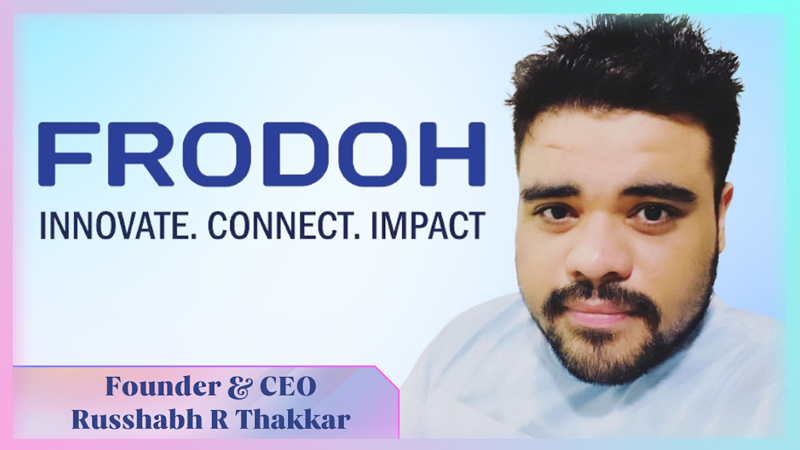
  • CTV advertising in India to surge at 47 per cent CAGR over next five years: Frodoh World’s Russhabh R Thakkar

    CTV advertising in India to surge at 47 per cent CAGR over next five years: Frodoh World’s Russhabh R Thakkar

    Mumbai: The burgeoning connected TV (CTV) space has not just reshaped our content consumption but has also presented unprecedented opportunities for advertisers. With the rise of streaming platforms and Smart TVs, CTV advertising offers a targeted and immersive way to engage viewers. As consumers increasingly shift towards on-demand, personalised content experiences, advertisers can harness the power of CTV to deliver tailored messages and optimise brand visibility in this dynamic digital landscape.

    Indian Television in an interview with Frodoh World founder and CEO Russhabh R Thakkar explored the company’s evolution since its inception, trends in 2024 impacting the CTV space and much more…

    Recognising the immense potential in the intersection of technology and user experience, Russhabh founded Frodoh World, a CTV advertising specialist company, in 2020, to bring groundbreaking ideas to life. As the founder and CEO of Frodoh World, he leads a dynamic team dedicated to revolutionising the way consumers experience and interact with technology. Under his entrepreneurship, Frodoh World is making waves in the connected TV advertising space, seamlessly integrating interactive and engaging digital ads.

    Edited Excerpts:

    On the launch of Frodoh World in 2020, and its evolution since then

    Frodoh World was launched to revolutionise digital advertising by filling a gap in the market, prioritising impactful storytelling and attention-grabbing ads with the ethos of ‘Don’t just get viewed, get noticed,’. We have since evolved by consistently innovating in the latest technology, strategies, adapting to industry trends, and delivering measurable success for clients.

    On the growth and penetration of CTV in India and the trends that will impact the CTV space in 2024

    We have witnessed the remarkable growth and increasing penetration of connected TV in India over the past few years. The evolving landscape has been marked by a surge in consumer adoption, presenting significant opportunities for our platform. Looking ahead to 2024, I anticipate a continued upward trajectory for CTV, driven by innovations in personalised content delivery, immersive advertising experiences, and the seamless integration of data-driven insights, shaping the future trends of the CTV space in India.

    Over the next five years, connected TV advertising is set to grow rapidly in India at a compounded annual growth rate of 47 per cent, and this increase will contribute to the overall TV landscape including the linear segment, making India the third largest market by 2024.

    On Frodoh World setting itself apart in the CTV advertising landscape with its proposition, “Don’t just get viewed, Get noticed”

    Frodoh World stands out in the CTV advertising landscape by consistently adapting to the dynamic tech environment, integrating measurable and trend-forward ad solutions. Our commitment to assessing the impact post-campaigns ensures result validation, addressing client’s business challenges and fostering trust for repeat collaborations. Recognising the fleeting attention span, our approach prioritises engaging ad experiences through context-driven planning, ensuring a distinct and impactful presence in the market.

    On Frodoh World’s demonstration of its commitment to CTV and the results it has achieved for advertisers

    Our dedication to CTV is distinctive in our strategic campaigns, which emphasise impactful messaging through innovative practices like TV to mobile cross-screen device targeting, ensuring precise household reach and action-oriented frequency. Advertisers have experienced substantial outcomes, including heightened engagement, elevated brand awareness and recall scores, and a quantifiable positive influence on their target audience. This underscores our unwavering commitment to providing tangible value to clients.

    On the significant influence or transformative impact of AI in the evolving landscape of CTV and advertising and Frodoh World harnessing AI to enhance its CTV strategies and deliver more effective advertising solutions

    Certainly! AI wields significant influence, and Frodoh strategically harnesses its power to elevate CTV strategies and deliver more effective advertising solutions. By leveraging AI – we optimise content delivery, enhance audience targeting precision, and tailor ad experiences based on real-time insights.

    This not only ensures a more personalised and engaging viewer experience but also maximises the impact and effectiveness of our CTV campaigns, aligning with the evolving demands of the industry and staying at the forefront of innovation.

    On Frodoh World measuring the effectiveness of its CTV advertising strategies, particularly in terms of targeting precision and audience engagement; and a few examples of your notable clients or success stories

    Frodoh World employs a sophisticated methodology to evaluate the effectiveness of our CTV advertising strategies, leveraging over 15,000 unique segments from trusted third-party data sources, we provide a spectrum of targeting options, including online and offline behavioural, interest-based, demographic, geography-based, and custom segments.

    A forthcoming innovation is the industry-first Web-to-TV targeting. A distinctive feature is our integration of scientific campaigns, allowing clients to set up campaigns and deploy the Frodoh pixel on their websites for data collection. This facilitates the development of a retargeting audience pool, enabling us to engage valuable visitors with impactful, non-skippable CTV ads. This proven approach consistently yields tangible results, revitalising brand interest and fostering substantial engagement, showcasing our commitment to delivering effective and measurable outcomes in the dynamic CTV advertising landscape.

    On Frodoh World tailoring its audience solutions to address the unique needs and preferences of diverse sectors within the CTV advertising landscape

    Our commitment to tailoring audience solutions involves ensuring that each client benefits from a personalised and precise approach. We provide a plethora of options for segmenting audiences, ranging from readily available choices to creating custom cohorts, enabling precision targeting with content. This strategy diverges from generic marketing approaches, emphasising a bespoke, one-on-one strategy that resonates with the specific requirements of each sector. Our goal is to move away from a “one-size-fits-all” model, offering clients a tailored and effective solution.

    On Frodoh World’s future plans and specific targets or milestones that the company aims to achieve in the coming years

    Frodoh’s future plans include aspiring to become a formidable contender in the competitive landscape, aiming to rank among the leading CTV platforms. We are focused on substantial growth across priority markets in India, accompanied by a strategic emphasis on building exceptional talent across all facets of the organisation. Our commitment to ongoing innovation is a core element of Frodoh’s strategy, recognising the growing significance of connected TV and anticipating the increasing interest from advertisers eager to explore this platform.

  • The CTV India market maybe small, but it surely packs a big punch: mediasmart’s Nikhil Kumar

    The CTV India market maybe small, but it surely packs a big punch: mediasmart’s Nikhil Kumar

    With the changing digital landscape, consumers are warming up to connected TVs (CTVs) like never before. As Indian audiences increasingly embrace OTT content while gradually making the shift from traditional linear TV viewing, the change also presents an untapped advertising goldmine for brands and advertisers alike.

    On the sidelines of the Indian Digital Brand Fest organised by Indiantelevision.com, we caught up with mediasmart vice-president of India & SEA Nikhil Kumar, an Affle company, to understand how advertisers can buckle up to face this new beast in advertising. Last year, mediasmart commissioned research that helped understand the CTV behaviour patterns in India to provide greater market understanding. With mediasmart recently releasing its latest industry report on the CTV ecosystem in India that would help fast-track the growth of this industry, we take a deep dive into some of the underlying challenges and come away with some key takeaways.

    Kumar, a consumer marketing professional with over a decade of experience working in FMCG , retail, F&B, and ad-tech set-ups with global brands like TikTok, Puma, L’Oreal, Cafe Coffee Day, and InMobi, is extremely bullish about the current and future role of CTV as a medium for delivering impact for brands. He believes that CTV consumption today goes beyond the inhibitions of individual consumption on mobile screens and probably also brings back the family-viewing phenomenon of linear television, but with very measurable metrics of targeting and delivery.

    In an in-depth interaction with Indiantelevision.com, Kumar also talks about his journey from primarily marketing brands spread across the consumer goods sector, food retail, and sports & wellness, to now navigating the ad-tech space. While managing marketing for multiple brands, there were great learnings towards understanding consumer behaviour and sentiments, advertising objectives, media channel goals and analysis, and so forth. What I have really enjoyed after switching sides and working within ad-tech/mar-tech set-ups is the understanding of how each dollar spent is effectively reaching or not reaching the intended consumer. More importantly, the journey from ad exposure to intended purchase & the continued lifetime journey are built on strong data tech stacks with due diligence on consumer privacy. So for me, the whole journey from the brand side to now the adtech side has been an immense learning curve.”

    My learning, which I often share with my team, is—”Never sell the product, sell the insight—sell the solution to the problem that the marketer is intending to solve—that’ll bring better adoption for your offering,” shares Kumar.

    Edited excerpts:

    On why advertisers are cautious adapting to the CTV medium, despite the rapid adoption of it by consumers

    We live in an era that can be defined as pre-covid and post-covid. Covid played a huge catalyst in the growth of connected TVs as people realised that they could view the same content they see on their mobiles on a bigger screen via connected TV , thereby providing a better experience.

    For advertisers, the caution is actually natural, primarily because of the newness of the medium—connected TV & the scale/reach it brings from a planning lens. I think the hesitancy could also be derived from not understanding whether CTV reach spend should be bucketed under offline or digital spend, because it’s still TV and that’s well covered by most large spenders.

    Most large traditional advertisers feel they are already advertising on TV to a much more mass audience on broadcast, so why do they need to spend extra to advertise on CTV?

    When CTV started getting sold in India as an inventory for monetisation, it was being talked about as a digital medium. But then they are doing enough advertising for OTT already on mobile. And suddenly there’s this new accessibility for users via CTV. So you have to educate them that OTT is not CTV. The subset of CTV can be OTT, but that’s not the totality of it. There’s so much more that you can do on CTV, like play games, watch live news, etc., which led to its phenomenal growth. I think brands and advertisers, rather than being hesitant, are becoming more inquisitive.

    A year back, there was hesitancy, which has turned to inquisitiveness, and today, if you look at it, it’s a Fomo (Fear of missing out) created for every media planner or agency owing to the scale of CTV growth globally. If they don’t have CTV as a top priority, clearly it’s a miss. Even the agencies catering to smaller brands from tier II and tier III categories feel the need to hop onto the CTV bandwagon. More so because of the sheer pressure that the clients are creating on how to get their brand’s ads on the medium. Because that is where their audience is, watching their content.

    On whether the decline of DTH and linear TV viewing is leading to the spurt in CTV or vice versa

    It’s important to understand that sometimes users weren’t even contributing to DTH for them to decline from the database. These are the cord-nevers beyond the cord cutters.

    Suddenly, people are realising that the decline of DTH doesn’t mean the growth of CTV. Yes, it does imply that. But connected TV by itself as a base is growing. There’s a section of consumers who have never had a cable/DTH connection (cord-nevers), who bought a smart TV and immediately connected it to the internet and started watching it.

    Advertisers are also understanding that some of the audiences they want to reach out to are not there on TV. Thus, more than being hesitant, I think they are convincing themselves that this is a medium that’s creating more impact and providing a way to reach audiences they can’t reach otherwise on TV.

    Around 2.5 million DTH and cable subscribers have declined in the past two years or so, while comparatively, nine million wired broadband subscribers have increased. According to these two data points, the home wifi/broadband ecosystem is growing. There’s an accessibility to TV, while at the same time, there’s a decline in DTH, and last but not least, there’s suddenly a growth pattern in the availability of content. The number of OTTs that are available in the market is not just restricted to Hotstar, Netflix, Amazon, Sony, Zee, and Mx Player. There are 40 plus OTT players today—vernacular, regional, multi-lingual, event dialect-specific OTTs—there’s so much happening in the space.

    We have recently released a report titled “India CTV Report 2022,” which is one of the most comprehensive reports on this subject. Last year, when we first released it, it became a bespoke reference point for most avid marketers and media houses. This year, we did a very interesting comparison of the prices that you are paying. A comparison of the cost of these OTTs versus the average price of a DTH plan has not been put into perspective . If you compare the prices, it is actually not that expensive. So you can have all the content from around the world that you want to see at a price that is affordable. These are some of the factors that are really contributing to the growth of the connected television market in the country.

    And it’s not restricted to Gen-Z or millennial users, as we realised from our survey report. In our first-party survey covering a diverse audience segment across metros and non-metros, we realised more than 84 per cent claimed to be watching CTV with someone in the household rather than alone, similar to the TV broadcast era, in which family viewing was the dominant form of consumption. The TV broadcast era was followed by the era of mobile phones, which meant we went from a family viewing/co-viewing to a personalised content consumption experience on our mobile devices. This received a huge boost with the Jio revolution from 2016 onwards. And now, in a post-pandemic era, the connect TV experience has brought everybody back together for co-viewing, implying we have come full circle, but now with a way to answer the question: what happened after the TV ad was served?

    On how can agencies & advertisers overcome the lack of standard industry metrics- one of the key reasons limiting faster advertiser adoption of CTV

    There are always challenges related to a new medium in how measurability is going to happen. In fact, globally, one of the reports released recently claimed that there’s massive ad fraud happening already within the CTV space globally. If you see, most of the OTTs are owned by large broadcast networks. The OTT, or the platform, is evaluating the user reach and where your ads were served, along with who saw them. How does one evaluate ad fraud, which is obviously a difficult area?

    This is where programmatic advertising is becoming more and more important for advertisers, because for them it’s not important where the ad is shown, it’s more important to whom the ad is shown. The idea is to target audiences as opposed to targeting platforms where your ad is running, and hence, targeting the same user across multiple platforms becomes possible.

    Additionally, programmatic advertising provides transparency. You can access the dashboard. You can see the ads getting served, what time they were served, how they were served, which audience segments they were served to, and which audiences are engaging with them. Today we have technology where you can map a TV to a device id on a mobile phone. Hence the intuitive understanding that “this is the guy who has a TV at home; this is the device ID so I can continue the lifetime journey of engaging with that consumer either on his TV or on his mobile.”

    Technologies like ours are building that trust so that while currently there’s no measurement for what can happen on TV, you can link that journey to a user on their mobile where all possible mobile measurement options exist.

    And you can control it because it’s digital. So we know who saw the ad. Because you can track it down to a TV, to a location, to the size of a TV, to a certain household. So many data points can come up. You can target users by the size of the screen, by location, etc.—so many targeting options are available because of the digital nature of the medium. Hence, the trackability of success is also there. And hence, it’s clearly an impactful medium.

    On some of the underlying challenges & emerging trends in advertising on CTV in the domestic market

    So challenges can also be opportunities, and some of them we saw were in education, as India is still a market with high spending on traditional platforms like TV and print. We need to focus on educating advertisers and agencies on how CTV, as a digital medium, is a growing channel and an incremental reach medium at that. For instance, the festive season this time is all going to be about going back to retail, OOH, a massive print spend, and a big burst on television across brands. But, was your brand able to reach the users on CTV where they are most engaged and spend close to 4 hours a day? If not, you have clearly missed an opportunity. So that’s the first challenge in the ecosystem’s education.

    If we talk about trends, the growing trend is that gaming has grown by leaps and bounds on CTV and is going to become a destination. Another major trend is programmatic advertising via CTV to avoid spillovers. We are a country that does almost 60 per cent of media buying directly as opposed to 40 per cent programmatically. But how do you integrate the user’s journey across multiple ecosystems and screens that he operates on into one experience? That’s where programmatic advertising comes into the picture, which can help you build a unified view of the consumer.

    On how can marketers maximise viewer engagement on ads and improve the ad viewing experience for users on CTV?

    That’s an interesting premise because on CTV there are multiple ecosystems that clearly users spend time on—there is the OTT or on-demand content ecosystem, and the other is user-generated content (UGC) platforms. Beyond this, we also have news, gaming, and music, which are growing very fast.

    What does a user tend to do when they see an ad on a UGC platform? They are more likely to skip it since the 20-or 30-second ad in a three-minute video is more of a distraction.

    The user’s behaviour on on-demand OTT is observed to be very different, where on average they spend anywhere between 30 mins and an hour watching their favourite on-demand show or movie. The user is committed to spending a longer time there and hence doesn’t mind watching a 20-second ad here. Another thing to note here is that, as per the Ormax OTT Audience Report: 2022, only 31 per cent of India’s digital video audience is paid users, while the remaining 69 per cent is an advertising-based video-on-demand (AVoD) audience. Clearly, a huge chunk of the audience is reachable via ads on OTT and CTV.

    Also, CTV, with its immersive brand storytelling on the large screen, along with the ability to connect the journey from TV to mobile, can create an ecosystem that enables a user to retain the ad better for all kinds of segments like beauty, cosmetics, auto, FMCG, e-commerce, app-first etc. Ad retention and a CTA (call to action) created via omnichannel audience targeting, CTV household sync, and drive-to-store technologies enable users to act upon the ad that they have seen. Because at the end of the day, what is advertising for if not to act upon it?

    On how does the India market differ from the US and European markets in this aspect

    From a CTV advertising standpoint, I think the US and Europe are more evolved markets. They saw the trend almost three to four years ago. In the US, almost 90 per cent of households have at least one CTV device—clearly, it is a highly evolved CTV market. Besides, non-pay TV households are set to exceed pay TV households by 2023, indicating cord cutting and cord nevers are on the rise in the US.

    The European Union is very similar, though it obviously has GDPR (General Data Protection Regulation) laws and other regulations that affect how users are tracked. But in both global markets, the share of CTV impressions is growing really fast. In fact, in the US, the share of CTV impressions has exceeded the share of mobile, which has skewed the global average as well, in favour of CTV. If you look at the US, CTV ad spending will touch almost 10 per cent of the total ad spending by 2024. And within that high share, most ads are being transacted programmatically, not even direct buys. They have moved from a system dealing with multiple publishers. So, that’s the evolution and mindset that we are moving towards.

    If you compare it to India, it’s a very small market in terms of adoption. It’s been just two years since we started CTV advertising. So it’s early days, but last year we grew almost 30-40 per cent. We have seen the CTV reach go from six million to nine million and now to 14 million, and the pace is only increasing Q-o-Q. So, while the size of the market is small today, the adoption rate is very high in the domestic market. CTV penetration is growing really fast, and we predict that it will be 40–50 million by 2025. So, even though the Indian market is small, it is surely packing a big punch. CTVs are here to stay and grow.

  • Nielsen launches Streaming Signals for more efficient CTV advertising

    Nielsen launches Streaming Signals for more efficient CTV advertising

    Mumbai: Nielsen has announced the launch of Streaming Signals, a new solution for connected TV (CTV) operators and advertisers to better understand who is watching a show within the household. As a solution that unbundles household viewing, it will be the next step towards better presenting advertising at the personal level, said the company.

    Streaming Signals is well suited for Nielsen Digital Ad Ratings (DAR) clients since these two solutions together enable them to both optimise and measure CTV reach for more efficient advertising. Using custom machine learning models based on historical viewership data to determine who is in the household, it delivers a signal to CTV operators within 50 seconds to indicate who is currently streaming program content, said the statement. “Streaming Signals enables both media buyers and media sellers to optimise and measure CTV reach for more efficient advertising, maximising ad revenue, and for delivery to streaming audiences,” it added.  

    The elimination of delivering irrelevant advertising to viewers results in advertisers and agencies making better and faster choices to reach their target audiences. In turn, with ad inventory that is more accurately packaged, media owners can attract more media dollars by delivering real-time advertising to the right audience.

    “Nielsen Streaming Signals brings a layer of unmatched real-time, person-level demographic precision to audience optimisation,” said Nielsen GM digital and advanced TV Ameneh Atai. “We know that the media industry is going through accelerated change and switching to a streaming-first approach with an audience watching programming whenever, wherever, and on a number of devices. Nielsen is the only one that is unbundling the household because we are the only ones that sit at the intersection of the streaming behaviour and audience data.”

    This solution is made possible by using machine learning algorithms, viewing from Nielsen’s gold-standard panel data, and the CTV provided viewership data to assign person-level demographics instantly. Once integrated, the CTV provider will notify the Nielsen system and will receive a signal containing information regarding who is most likely watching within the household. The CTV provider can then play a more ideal advertisement instead of playing the previous ad that was reserved, said the company.

    Traditionally, clients have looked at on-target percentage when evaluating advertising on CTV. Streaming Signals empowers them to positively impact that percentage by knowing who is behind the CTV screen before the ad is served. 

    Nielsen’s Digital Ad Ratings (DAR) enables clients to understand who was reached by age and gender during the CTV advertising campaign. In turn, advertisers would rely on using either behavioural targeting (tracking digital behaviours aggregated at the household level) or contextual targeting (displaying an ad based on genre of content) to try and deliver the right ad to the right person. Streaming Signals brings the best of these solutions together to deliver a higher threshold of ad accuracy and relevance.

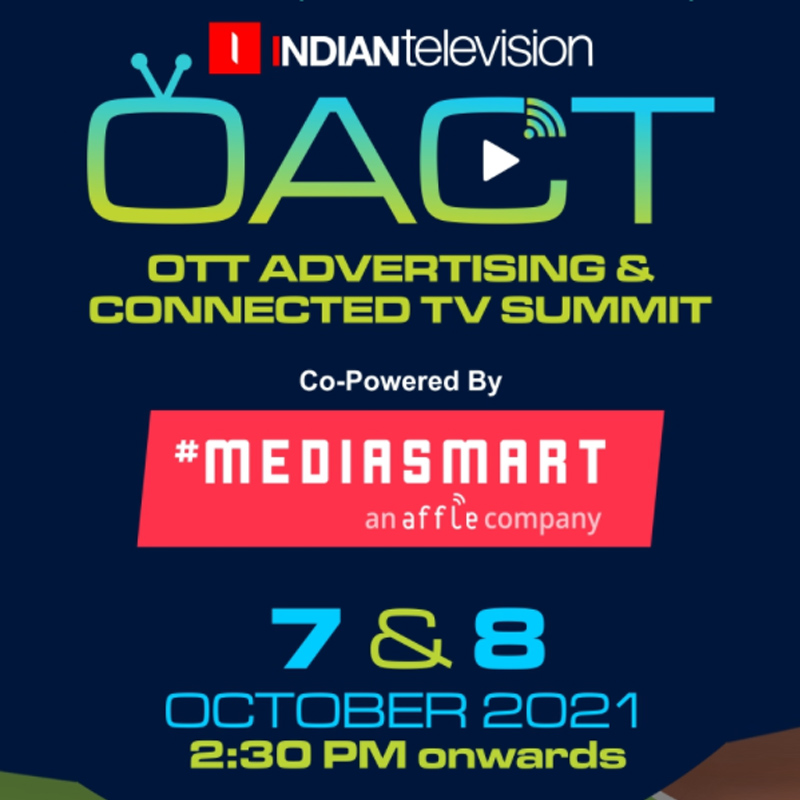
  • OACT2021: What are the opportunities for OTT & CTV advertising

    OACT2021: What are the opportunities for OTT & CTV advertising

    Mumbai: Is it the right time for monetisation of OTT from a business perspective for advertisers?

    This set the ball rolling for the panel discussion on – ‘The opportunities for OTT and CTV Advertising’ on the first day of the OTT Advertising and Connected TV Summit being organised by Indiantelevision.com. The two-day event is co-powered by mediasmart, an Affle company and summit partner – The Q. 

    The panel was led by Patanjali Ayurved COO-media and communications Anita Nayyar, Airtel VP-media Archana Aggarwal, Pyxis One CEO- APAC Neel Pandya, Samsung Ads India & South East Asia – senior director Prabhvir Sahmey and moderated by EY partner and national leader – advisory markets Monesh Dange. 

    Responding to the question, Nayyar highlighted that the time is perfect for monetisation for OTT platforms, as the content has never been more important than now in the pre-, post-, and during the Covid-19 time. “For advertisers, ROI is very important. The clichéd conversion will always stay as it is. But as of now, the industry is at an evolving stage that is clearly a top of funnel scenario with reach, awareness, engagement -all that’s happening. But whether we can attribute that directly to a bottom-funnel is not very clear at this point of time,” she added.

    On whether the digital boom in content was bound to happen or it happened due to the time available on hand due to the Covid-19 era, Airtel’s Archana Aggarwal noted that the start of the revolution was with the crash in data prices and affordability of smartphones and people using a lot of mobile internet. “Obviously, Covid accelerated it due to the dearth of new content on linear Television and no new movies being released in theatres, etc. But it was a matter of time that people would start consuming a lot of content on OTT,” she said.

    Talking about how majority of the premium content available on OTTs is behind the paywall, Aggarwal said, “What is it that the OTTs want to monetise- Do they want to monetise through advertisements or through subscription? That is something which OTT players need to think through – how to find the right balance between the two.”

    Neel Pandya of Pyxis One added another insight on the OTT boom by commenting that it takes just twenty-one days for a person to build a habit and they were talking about 1.5 years of watching digital content. “So it’s a very strong habit which consumers have built and it’s not going to go easily,” said Pandya. “Obviously it’s not an artificial boom completely, but it has gone 5X from what the acceleration would have been in normal circumstances.” 

    From Samsung Ads’ perspective, Prabhvir Sahmey said, “We are relatively a new business and also a unique proposition where we are bringing the advertising opportunity directly on the device itself, it’s not running on the back of a content.”

    He added, “It’s still at a very nascent stage, in fact we are in a testing category. We will try to plug the gap in measurability, and develop a multi-device solution for advertisers.”

    Taking the discussion further, Pandya said it is high time that OTT as a platform starts attracting ad spends, attracting avenues. “It is growing globally really fast. The only new thing we need to attract new users is measurement. OTT needs to bring more customised solutions for brands and take some bold decisions,” he added.

    Nayyar shared insights on the current dynamics of OTT and how it is similar to what happened a couple of decades back on television from one Doordarshan to multiple TV channels when the satellite boom materialised. “So it is important for OTT players to put some skin in the game collectively as an industry with accountability and measurement if they want to scale up monetisation,” she added.

    Talking about Patanjali and its investment in OTT, Nayyar said that Patanjali is working to upgrade the brand and make it more premium by targeting the youth. “OTT is a very important medium to influence youth. The first deal we went with was Dance Plus on Disney Hotstar,” she added. 

    While Airtel has been advertising on OTT as well as connected TV for a long time now, and have been experimenting with it. “We are looking at on-target reach & duplication of audience. It’s important for us to look at what kind of audience the platforms are giving us. We have evolved from being broad-based to being more targeted, focused on a set of audiences,” shared Aggarwal.

    Transparency, when it comes to the results of the campaign, is a very critical factor, was agreed by everyone.

    Prabhvir Sahmey of Samsung Ads said the elephant in the room for every publisher is revenue ad risk and that has to be addressed. “Everybody knows there is significant overlap at the end-user behavior,” he added.

    With acceleration to OTTs, the question of whether television is going to disappear was met with a unanimous ‘No.’ The panelists agreed that TV as a screen or as a medium is not going anywhere. At the most, it may evolve to connected TVs, rather than remain as a device of one-way linear transmission.

    For more information: https://indiantelevision.com/events/oact-summit-2021/