Tag: cryptocurrency

  • “The media and entertainment industries are particularly primed for a blockchain revolution”: Tezos India founder & president Om Malviya

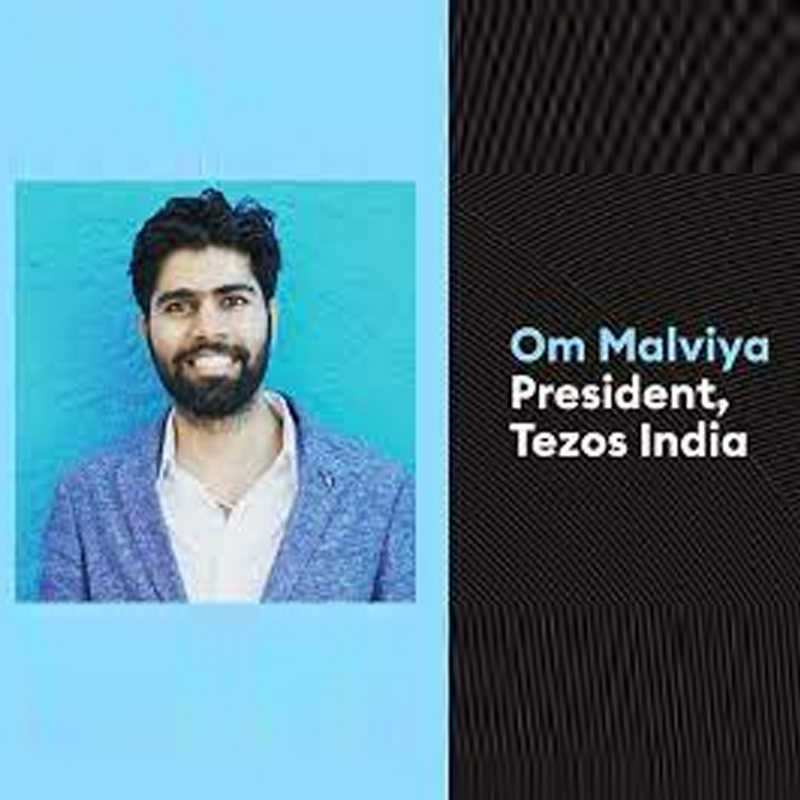
    “The media and entertainment industries are particularly primed for a blockchain revolution”: Tezos India founder & president Om Malviya

    Mumbai: Tezos India is a blockchain adoption entity in India. As innovation in the blockchain space advances in India, Tezos constantly strives to address key barriers facing blockchain adoption to date in India: developer, education and training, and ecosystem development. Tezos is a self-upgradable blockchain that enables forkless upgrades with its on-chain governance system, improving accessibility and longevity for solutions built and utilised by the Tezos community.

    As part of Tezos’ ambitious plan to spread awareness regarding the positive use of blockchain technology across India, a new initiative titled “Tezos India Game Launchpad (TIGL)” has been rolled out, which will be a platform that will assist developers with grants, technical support, game publishing, fundraising and shall support them to launch their games on the Tezos blockchain.

    TIGL is intended to tap the potential of Indian developers by imparting knowledge about learning, creating, and marketing their games on the web. Through the active participation of developers and publishers, Tezos’ novel initiative sets the ball rolling for harnessing the power of blockchain technology. TIGL will start its operations in India, but at the same time, it will look to expand in other emerging markets for play-to-earn gaming. Tezos India is also a grantee of the Tezos Foundation.

    Indiantelevision.com caught up with Tezos India founder and president Om Malviya. He is extremely bullish about the future of bitcoin, decentralised finance, fintech, Tezos and decentralisation (powered by blockchain).

    Back in his college years in 2015, Malviya’s elder brother—who is an entrepreneur and engineer by profession—told him to check out bitcoin and blockchain technology. Ever since there’s no looking back! Over the next few years, Om researched, delved deep, and gained invaluable hands-on experience in this space. He then started the portal “ItsBlockchain” to educate people about bitcoin and blockchain technology, as at that time no other medium/platform existed where people could learn about the technology and latest developments in the crypto and blockchain space.

    A few years later, Malviya wanted to switch from the media space to a more tech-centric, product-based domain. With that in mind, he attended Draper University in 2018, where he eventually met his co-founder, Bernd Oostrum. Both Malviya and Oostrum were die-hard Tezos fans, and hence they started building actively on Tezos with multiple experiments and innovations. Over the years, they have built plentydefi.com, naanwallet.com, and several other Tezos tools. One of the duo’s products, Tezsure, is dedicated to developing DeFi instruments and tools for onboarding the masses onto the Tezos blockchain.

    Despite facing initial challenges like lack of adoption of web3, crypto and Tezos itself, Malviya firmly believes that Tezos is bound to grow significantly in the years to come. Eventually, he was proven right! The space grew as did the users, and hence Om and his co-founder were able to find their perfect product-market fit.

    In 2019, Malviya added another feather to his cap by founding Tezos India to create a well-rounded Tezos ecosystem in the country. As Tezos India founder and president, Malviya’s work encompasses defining the budget, hiring for key roles, defining strategy, streamlining internal organisational processes and using his network to get business development leads to onboard startups, companies, and other organisations.

    Edited Excerpts:

    On the market gap

    Om: Tezos India was launched in late 2019 before Covid hit the country. Things became extremely intricate for the initial month, but awareness and acceptance have increased since then, and it’s still growing. To educate and support these prospective creative communities, Tezos created its arts and culture vertical as a result of the significant growth of NFT artists and communities.

    There has been significant overall growth in the market as the number of NFT users and crypto holders have increased. Developers are recognised for their potential, and are joining this market with innovative ideas and projects, and are working on cases in a way that has never been done before. Now there are many jobs and financing options for them.

    On Tezos India’s projects

    Om: Tezos India envisions making blockchain technology freely accessible to the Indian populace because it can help a variety of business profiles operate more efficiently. The Tezos blockchain is thus being promoted in India through a variety of events: meetups, hackathons, panel talks, and gaming tournaments. We recently held the TezAsia Hackathon, one of the biggest hackathons, by Tezos India in partnership with TZ APAC, with enormous cash prizes, internship opportunities, and PPO offers to not only promote blockchain but also to support the developer community by giving them career opportunities and enlightening them with the offerings of this revolutionary technology.

    Similarly, the “She-Crypt” campaign was designed to encourage women in crypto and blockchain to increase overall women’s participation in the domain. Many of these projects have been implemented throughout time to inform and inspire individuals to make the most of the blockchain environment.

    On Covid-19 challenges

    Om: Since we function as a non-profit organisation rather than a business, it didn’t affect us. But in general, one could argue that a lot of people who entered this field discovered prospects for blockchain businesses.

    On the rising demand for blockchain

    Om: With the introduction of blockchain, the underlying technology that provides transparency and immutability, the “fad” is catching up with the currencies that are emerging from it. According to publicly available information, Indians have invested more than $10 billion (Rs 1,000 crore) in blockchain alone. Apart from that, we also see that the use of the underlying blockchain technology has found the most takers in the banking and financial sector.

    Furthermore, the fact that the Indian government is actively utilising this for land title registry, vehicle lifecycle management, farm insurance, and electronic health record management speaks volumes about the awareness, willingness, and pace at which blockchain is intended to be ingrained into the social and economic fabric of the nation.

    On scepticism that crypto is a “fad”

    Om: For logical reasons, cryptocurrencies have been grabbing the investors’ and media’s interest. According to some reports, cryptocurrencies are merely a craze. Cryptocurrency values had plummeted by early 2022 compared to their peak in late 2021. According to analysts, the present value of a risk asset would decline due to the increase in interest rates. Additionally, cryptocurrency dealers and investors in India are currently becoming cautious, and a noticeable decline in cryptocurrency purchases has been noted.

    On blockchain impacting M&E industry

    Om: Major industries, including finance, telecom, healthcare, automotive, supply chain, and retail, are studying the potential benefits of blockchain technology as it quickly spreads throughout society. When it comes to the use of distributed shared technology, the media and entertainment industries are often the most underappreciated. The intriguing thing is that the media and entertainment industries are particularly primed for a blockchain revolution and stand to benefit greatly from the myriad benefits that the technology provides.

    The decentralised approach has already had a significant influence on startups in the entertainment industry, content producers, and music businesses. Although blockchain-based smart contracts have not yet significantly changed the entertainment industry, they may affect contracts and open the door to a safe, secure alternative to conventional discussions. Additionally, the use of blockchain networks can prepare the entertainment industry for better and more reliable payment methods for creators and promote smooth crew participation methods on international projects, removing the barriers that limit entertainment players’ prospects.

    Salman Khan, Sonu Nigam, Kamal Haasan, and Amitabh Bachchan were some of the first actors in Bollywood to adopt NFTs (non-fungible tokens). Making NFTs and digital collectibles based on a large fanbase and following not only provides business for these celebrities, but also provides a significant boost to India’s NFT and blockchain industries. These are digital assets that are shown as tokens on a blockchain, each of which is distinct and has its worth. Duplication is uncommon even when the assets are intangible since buyers are aware that it would “lower the value of the property.”

    On blockchain boosting operational efficiencies

    Om: Business operations involving several organisations (businesses or partners) frequently struggle with inefficiency and poor data quality. Imagine a small portion of an entire business process that is distributed across several parties, fully secured, auditable, and free from the requirement for data duplication or centralised “governor” oversight. This is one way to conceptualise blockchain.

    Blockchain technology enables the flow of transactions between numerous parties while maintaining data security at all times and making transaction auditing simple.

    This technology involves distributing a shared ledger of data to numerous parties. Without the need for a central governor, this information is distributed among all stakeholders via a distributed network.

    Due to the way blockchains are developed, anyone messing with the blockchain will be discovered by users. A central controller doesn’t need to perform any reconciliation because the blockchain makes sure that transactions are validated according to the business rules themselves. Each participant completes this validation in parallel to one another.

    Since every transaction is documented and immutable (cannot be modified), it is very simple to audit to determine who performed which activities. Therefore, we can say that blockchain technology is full of miracles if used constructively.

    On Tezos India Game Launchpad (TIGL)

    Om: Web3 gaming is flourishing, with over $2.5 billion (Rs 250 crore) invested in just the second quarter of 2022. With a base of more than 400 million gamers that is only going to grow in the coming years, the groundwork has been laid for a web3 gaming revolution in India.

    Thousands of well-known web2 games are already making headway in this market. But it can be difficult for game makers to grasp the complexities of blockchain and know where to begin.

    Tezos India has introduced the TIGL, a platform that will facilitate game developers in raising money, releasing their games on the Tezos blockchain, and receiving funding and technical support.

    Web3 gaming is going to explode since it’s giving players and game creators new business and creative opportunities. Accessing the $100 billion gaming market is possible. With this endeavour, Tezos India is laying the groundwork for a decentralised gaming future in which widespread adoption is anticipated shortly. The game makers will be able to work together internationally through strategic relationships with TIGL’s international partners, including Tezotopia, IndiGG, and others. The finest game launchpads will also be made available to selected developers, and they will have the opportunity to collaborate with TIGL’s partner VCs for investment support.

    This is because industry executives have concluded that the blockchain is where gaming will go in the future. Games are migrating from web2.0 to web3.0. To give the coaching and direction required to create top-notch blockchain games, TIGL has partnered with leading blockchain games, gaming guilds, and venture capital companies.

    On web3 and the gaming industry

    Om: Blockchain gaming has the potential to monetize a bigger player base than the free-to-play model, where, on average, less than two per cent of players buy in-game goods. Due to the advantages for players outlined in the section above, there is a greater propensity to spend money, which makes it possible to monetise users. In traditional gaming, all transactions take place within a closed ecosystem, making it possible to capture value across ecosystems. With blockchain technology making interoperability possible, interaction with other ecosystems and games would open up a new revenue source in the form of on-chain royalties.

    On the shift to Play-2-Earn (P2E)

    Om: The Play-2-Earn (P2E) idea, in which players get compensated for their time, effort, and skills, is made possible by blockchain technology.

    The concept of P2E has seen a sharp increase in attention since the beginning of last year. Web3 gaming players climbed 24 times between January 2021 and January 2022, from 3,43,000 to 8.51 million, according to DappRadar.

    The blockchain gaming industry is still in its infancy, though. Though some significant gaming companies, such as Ubisoft, EA Sports, and Zynga, have begun experimenting with blockchain-based games, the majority of the development has been driven by crypto-native businesses.

    On NFTs as a monetisation tool

    Om: Content creators now have easier access to the web3 world thanks to blockchain technology, particularly NFTs. Future creator economies are being driven by these tokens. NFTs are granting content producers more control over monetisation and content rights, allowing them to increase their income. Over the past year, NFTs have expanded at an explosive rate. The cumulative NFT 30-day trading volume for the top five markets exceeded $2.8 billion (Rs 280 crore) in 2021, according to DappRadar’s NFT marketplace tracker.

    Despite the fact that these tokens have been popular for a while, the fashion has been changing frequently. Sports highlights, trade cards, and GIF-animated artwork initially dominated NFTs. After that, the craze for digital treasures began, and this year, NFT-related crazes have begun with movies, music, fashion, virtual property, gaming assets, avatars, and virtual pets.

    Even though the ecosystem has produced some extraordinary discoveries, one application of NFT utilities—the creator economy—is just starting to gain traction. The new audience using NFTs to generate and advertise their abilities is made up of content creators. These niche content producers use NFTs in their content strategies for everything from music to video.

    On smart contracts in blockchain

    Om: A smart contract on the blockchain aims to make business and trading between identified and unidentified parties easier, sometimes without the need for a middleman. A smart contract reduces the formality and expenses linked to conventional approaches without sacrificing reliability and trustworthiness. By accelerating transactions, minimising bureaucracy, and fostering cost-efficiency, smart contracts can bring about a fundamental shift in how international trade and business are conducted.

    Smart contracts might have a big impact on a variety of industries, including the arts, music, real estate, banking, manufacturing, retail, supply chain, and telecommunications. If the platforms that host them accepted payments in all currencies rather than just cryptocurrencies and brought them under the jurisdiction of the present judicial system, the adoption of smart contracts would be sped up.

    On regulatory framework

    Om: Indians are free to trade cryptocurrencies at the top exchanges because there isn’t a strong regulatory framework in place. Investing in cryptocurrencies, as well as any other “virtual digital asset,” such as non-fungible tokens, is now subject to a 30 per cent government tax (NFTs). Additionally, cryptocurrency intraday traders would be subject to a one per cent tax deduction at source (TDS) on trades that exceed a predetermined level.

    Although some people may view this as a punitive step, it’s good news for Indian cryptocurrency fans. Those in India who are optimistic about the potential of cryptocurrencies and blockchain technology see these levies as an official government endorsement of crypto assets as an alternate form of investment.

    On opportunities in the blockchain & crypto space

    Om: The money aspect of crypto is going to be a massive hit in the near future. Being able to send $10,000 (Rs 7,96,985) within one minute from one country to another has huge implications. Stablecoins are already big and are going to be even bigger in the years to come.

    Increased institutional adoption will accelerate the adoption of bitcoin and cryptocurrency in general.

    DeFi is one of the least frictionless ways to get access to financial products. A lot of users do not have easy access to structured products, perpetual and derivatives trading, lending and borrowing, etc. DeFi removes that and makes it easier for everyone.

  • Transak launches full suite of services in India

    Transak launches full suite of services in India

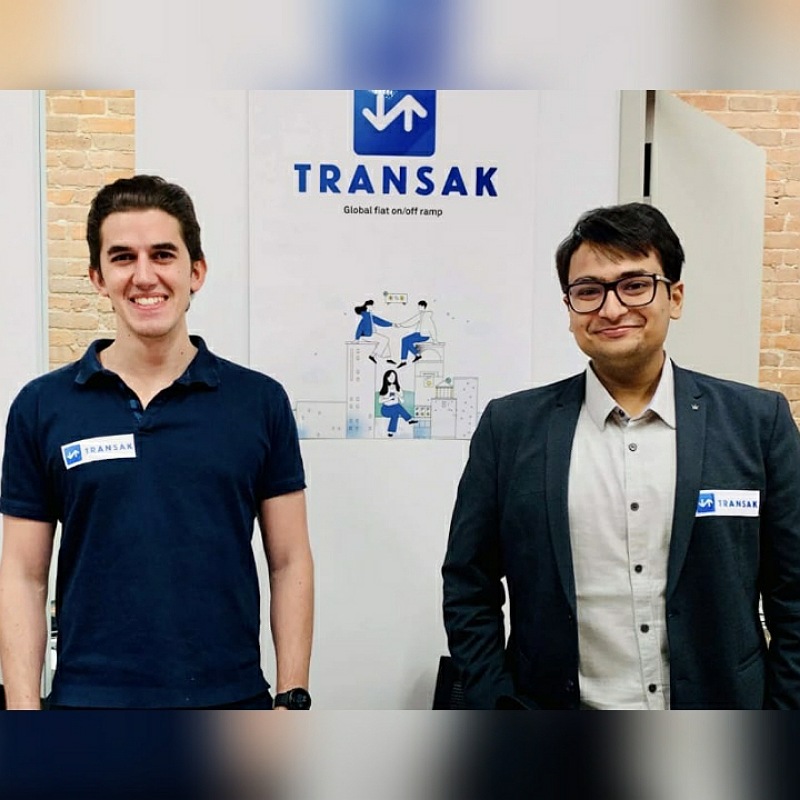
    Mumbai: Transak has announced that it is launching its full suite of services to India with the roll-out of UPI payment integration on platforms including Metamask, Ledger, Decentraland, WazirX NFT, Terra Station, Anchor, BitYard and Hiro.

    Transak provides a single integration for applications to accept fiat-to-crypto deposits and withdrawals from a global user base. It has enabled API-driven fiat payment methods across 100+ countries and with crypto assets on 30+ blockchains through partnerships with Web3 players including Polygon, MetaMask, Trust Wallet, WazirX NFT, Edge Wallet, Decentraland and 100+ applications.

    Founded by Sami Start and Yeshu Agarwal in 2019, Transak’s mission is to make web3 applications accessible. In January, Transak celebrated an all-time high $71 million in volume and hit a record $3.3 million in organic transaction volume in a day.

    “India has shown an incredible appetite for web3 applications and innovation alike. We are thrilled to extend our support towards taking this momentum to the next level by empowering Indian Web3 developers to create a smoother and seamless onboarding experience for their users. With Transak, Indian dApps can become apps making adoption easier than ever,” said Transak co-founder Sami Start.

    “India has always been a priority market for us and we have had the fortune to work with some of the biggest Web3 innovators in India including Polygon, MetaMask, WazirX and more,” said Transak co-founder Yeshu Agarwal. “We are looking to solidify our India presence tremendously by expanding both our partnerships and India team with 150+ open positions across different functions.”  

    “We at Polygon are committed to driving Web3 adoption across the world. Our approach to scaling Ethereum improves the network’s transaction processing speed and tremendously reduces gas fees, removing significant barriers for Web3 developers, leading to 7000+ dApps on Polygon today,” said Polygon VP of growth Arjun Kalsy. “However, Web3 developers still struggle with adoption as currently the onboarding requires existing crypto currency in users’ wallets and complicated fiat to crypto transactions. Transak’s on-ramp infrastructure effectively solves this. We are excited for their India launch and UPI integration.”

  • Budget 2022: A clear push towards a digital economy, start-ups

    Budget 2022: A clear push towards a digital economy, start-ups

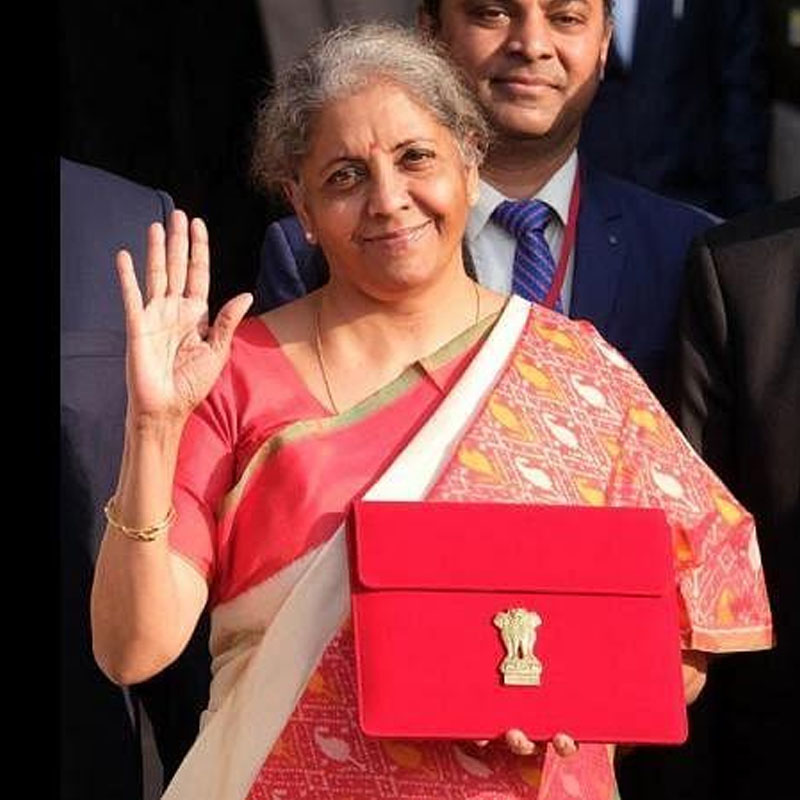
    Mumbai: Finance minister Nirmala Sitharaman on Tuesday presented the Union Budget 2022 in Parliament. The minister said that the country is set to clock an economic growth rate of 9.2 per cent in the current financial year, in what was her shortest Budget speech yet. While the budget made no tax concessions for the salaried class, some of the key areas it focussed on was a push towards a digital economy, and start-up ecosystem.

    The FM proposed a 30 per cent tax on income from transactions of cryptocurrencies and other virtual assets. Also, to bring such assets under the tax net, Sitharaman proposed a one per cent TDS (tax deducted at source) on transactions in such asset classes above a certain threshold, while also including gifts in crypto and digital assets in the to-be taxed list.

    Sitharam also said that the Reserve Bank of India (RBI) will launch a ‘Digital Rupee’ based on blockchain technology in 2022-23. The Central Bank Digital Currency (CBDC), according to the finance minister, will provide a significant boost to the digital economy and lead to a more efficient and cost-effective currency management system.

    The FM also announced the extension of the Emergency Credit Line Guarantee Scheme (ECLGS) that provided additional credit to over 1.3 crore MSMEs till March 2023. Additionally, its guarantee cover has been expanded by Rs 50,000 crore to Rs 5 lakh crore. Apart from this, in a year riddled with mental health well-being concerns amid the pandemic, FM Sitharaman announced the launch of a ‘National Tele Mental Health Programme’ for better access to quality mental health counselling and care services, in a move that signifies the normalising of mental health as a legitimate area of focus for us as a nation.

    Industry reactions on the Union Budget have been pouring in, and most of the industry stakeholders saw the twin announcements of the digital rupee and the taxation on “virtual digital assets” as a focused drive from the government to regulate the crypto space. Some felt that regulating a decentralised space is a paradox in itself, and took the cautious approach by saying how this plays out needs to be seen.

    Here is what the industry experts had to say:

    CoinSwitch founder and CEO Ashish Singhal who is also the co-chair of Blockchain and Crypto Assets Council (BACC) welcomed the government’s decision to introduce central bank digital currency (CBDC) to accelerate digitisation. Calling it the ‘the gateway to the future decentralised world, aka Web3.0’, he said, “The budget provides clarity on taxation and shows the government’s intent to take a business-friendly approach while protecting the interest of consumers and the exchequer. The regulatory guidance on tax from the government furthers the mainstreaming excitement of this emerging asset class with over $6bn worth of investments in India. Hopefully, this will induct more digital-savvy Indians into the financial ecosystem willing to explore newer forms of investing and wealth creation.”

    OKX.com CEO Jay Hao believes that India is slightly lagging in the digital currency race mainly due to the regulatory hurdles and reluctance in accepting the growing popularity of digital assets/digital currency around the world. “If we look at the global scenario, central banks around the globe have already launched or are about to launch their digital currency,” said Hao, adding that he hoped the announcement made regarding CBDC is implemented without any further delay as it will give a much-needed push to the blockchain industry in India. He also asserted that higher taxes may discourage investors from choosing crypto as an investment avenue and delay the mass adoption of crypto assets in India.

    CoinDCX co-founder and CEO Sumit Gupta hailed taxation of Virtual Digital Assets or Crypto as a step in the right direction. According to him, this will give a much-needed clarity and confidence to the industry. The introduction of CBDC sends a clear signal of India being a digital-first, efficiency-driven, and transparency-led system, he added.

    Mudrex CEO and co-founder Edul Patel also termed it as a progressive step towards boosting crypto adoption in the coming years. The sentiment was shared by other industry executives who felt the government legitimatised crypto assets in India in an indirect way by coming out to tax the same.

    Dentsu India chief client officer Narayan Devanathan said the budget is “future-focused, aiming at the distant vision of India@100”, instead of being focussed on the present. Expressing dismay over the omission of much-needed concessions in critical sectors like health, Devanathan said, “A punishing 2021 for the aam aadmi with more-than-usual expenditure on health and sustenance meant the general populace was looking for immediate relief that would place more cash in their household budgets. That did not happen. Nor was there any extraordinary investment in relieving the healthcare expenditure burden. Even the MSME sectors were only handed a slightly longer lease of life with the extension of the ECLGS, but there was no real move to stimulate consumption by placing more cash at consumers’ disposal, for example, extending LTA claims to restaurants (and not just accommodation).”

    According to Blink Digital co-founder and COO Rikki Agarwal the government sent mixed signals with its proposed announcement of a new digital rupee powered by blockchain technology and taxing digital assets. While the move has cleared the impending ambiguity around the cryptocurrencies in India, signifying its acceptance as an asset and legalising it to boost the economy, imposing heavy taxes on digital assets is an indication that the government intends to discourage the same, he says, adding, “We will wait for more clarity on the regulations.”

    Wunderman Thompson South Asia CEO Shams Jasani said the budget highlighted that government is finally recognising that digital is getting to be bigger and bigger. “With so much talk on digitisation I think the digital revolution has already come in India. And the sheer push on digital infrastructure in the country will help a lot more content consumption and a lot more content creation as well. Also, the reach of the medium is going to grow into the rural areas and smaller towns & cities,” he said, adding that, “Governments across the world are going to ultimately get into the digitalisation of currencies, backed by Crypto technology or blockchain technology, and that is the future of currencies. So that is going to take off and that will also legitimise the whole idea of cryptocurrencies in India.”

    DDB Mudra Group chief operating officer and chief financial officer Anurag Bansal opined that the Union Budget looks neutral, with no major changes in taxation, adding that the launch of digital Rupee based on blockchain technology is a big move to bring in official cryptocurrency in India. Managing the Fiscal deficit while pushing for growth and investments is a great balancing act taken on by the government, he feels; one that will give a boost to capital investments and infrastructure development.

    White Rivers Media CEO and co-founder Shrenik Gandhi termed the budget as ‘fairly balanced’ in that there is sufficient emphasis being laid on up-skilling, and making right investments in tech which is the need of the hour. Speaking of the expected benefits, he added, “Let’s not forget that this is India’s #Budget and not a Big Bazaar scheme announcement. So, the immediate benefit may not be seen right now but considering the long-term narrative, it is a fairly established budget.”

    According to Publicic Groupe South Asia CEO Anupriya Acharaya, the Budget was positive, growth-oriented and with reforms in the right direction. “The advent of 5G is sure to transform communications – for our industry it will help the creation of better AV, voice and AR/VR experiences. It will also fuel digital payments, streaming entertainment, gaming, e-commerce, tele-medicine etc which in turn will aid more Unicorns! From e-passports, to battery swapping for electric vehicles, setting up of optic fiber in villages, setting up of a digital university and skilling through an e-portal, the big push is for technology, digital infrastructure and empowerment,” she added.

    Parle Products senior category head Mayank Shah said putting money in the hands of consumers really helps, so they go out and buy products. “So that was more on the front of ensuring that the demand remained robust given that we have gone through two years of pandemic. That was something that industry expected, either by tax cut, or by increasing the slabs tax brackets or by probably increasing the standard deduction limit. Those were the things that we expected but not much has been done there.”

    Thomas Cook (India) MD Madhavan Menon said the budget was disappointing from a Travel & Tourism perspective. “The Budget made no reference to the industry’s recommendations to aid revival, including rationalisation of taxes (a complete GST holiday, exemption of TCS on outbound tours, reduction in indirect taxes), removal of SIES benefit capping of Rs 5 cr,” he said.

    Mad Over Donuts ED Tarak Bhattacharya also rued that the budget gave no attention to the hospitality industry in particular. “Our industry continues to bear the brunt of the pandemic, probably more than a lot of other sectors. We were hoping for some relief or some measures that would help the industry in the months and years to come,” he said.

    Food and Beverage startup Wat-a-Burger co-founder & CEO Farman Beig said the government has been supportive towards the F & B sector and did announce some steps to help the sector bounce back by shifting the GST compliance onto online food delivery partners on behalf of the restaurants. “However, some relief in terms of ITC (Input tax credit) would have further catalysed the recovery of the sector which otherwise is on the bleeding end. Currently, when the industry is struggling to manage the fixed cost with GST, it requires immediate boost, and cutting down ITC would have worked wonders,” he added.

    TCL India head of marketing Vijay Kumar Mikkilineni welcomed the FM’s increased focus on the consumer electronics industry and formation technology. “The 2022 Union Budget allocated 1.97 lakh crore ($26 billion) for PLI projects, notably electronic components, which are among the 13 vital sectors that would undoubtedly help our economy expand. Furthermore, reduced customs taxes will encourage electronics manufacture, which will benefit the electronics industry,” he said.

    CEO of SPPL – exclusive licensee of Thomson in India Avneet Singh Marwah said, “This budget has been more like announcements and slogans. I’m surprised how FM missed on health and education, which are two main pillars of the economy, despite the pandemic. On one hand the government talks about how electronics will contribute one trillion to the economy and on the other for consumer electronics no major announcements, no roadmaps have been given to the industry.”

  • HT forays into web 3.0 with NFTs documenting 100 years of Indian history

    HT forays into web 3.0 with NFTs documenting 100 years of Indian history

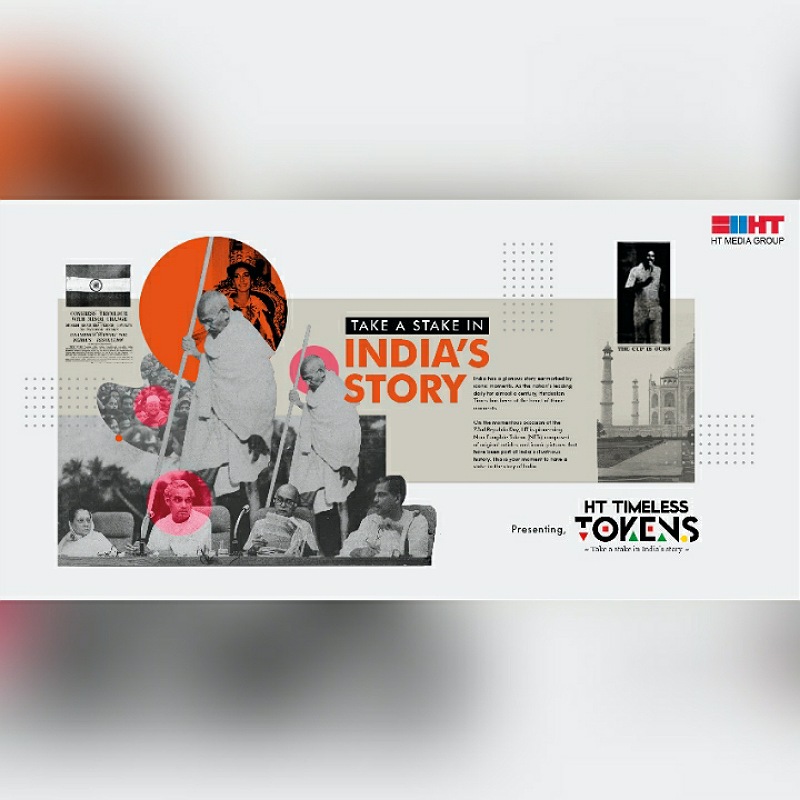
    Mumbai: Hindustan Times has announced its foray into web 3.0 with the launch of Non-Fungible Tokens (NFTs) under the banner of ‘HT Timeless Tokens,’ which will document India’s 100-year-old history as digital art.

    HT Timeless Tokens will include digitised versions of original historic creatives which were published in Hindustan Times through the decades.

    Some of the NFTs launched by HT include the iconic cover page of first republic day HT edition, and others inspired by events such as the success of the first missile launch, and India’s first historic win at the World Cup in 1983 against the West Indies.

    NFTs are a digital certificate of ownership of a piece of digital asset that can be bought and sold. The exclusive digital artworks launched by HT can be purchased with cryptocurrency and Fiat currency. They present an opportunity for collectors and enthusiasts to claim a piece of India’s glorious history filtered through the lens of Hindustan Times.

    To begin with, HT has launched NFTs celebrating India’s Republic Day on 26 January. They are available on Beyond Life, an NFT marketplace and platform that facilitates the creation, sale, and purchase of ownership rights to digital works of art via NFTs. Powered by GuardianLink.io – BeyondLife. Club is also responsible for launching two of the greatest NFT drops so far – Amitabh Bachchan’s rare exclusive NFT and Marvel creator Stan Lee’s exclusive NFT collection ‘Chakraverse.’

    “With industries like tech, finance, lifestyle, music and media advertising companies moving into the crypto/NFT ecosystem, new opportunities are set to be unlocked in the space of Web3,” said GuardianLink.io COO and founder Kamesh Elangovan. “The secondary marketplace for NFTs at GuardianLink.io will see more and more collectors investing with knowledge on the future monetisation of their NFTs. The partnership with Hindustan Times opens yet another avenue to explore the world of NFTs in the media and marketing industry.”

  • Expectations Budget ’22: Fuel prices, medical expenses remain major concerns shows Kantar survey

    Expectations Budget ’22: Fuel prices, medical expenses remain major concerns shows Kantar survey

    Mumbai: With the third wave of pandemic raging on, the majority of consumers expect the government to increase focus on strengthening the healthcare infrastructure, showed the latest pre-budget survey conducted by data insights company Kantar.

    According to the survey conducted across 12 cities, healthcare tops consumers’ concerns, followed by mounting medical expenses, and fuel prices. In a telling indicator of the increased health care expenses over the last two years, 53 per cent of consumers, especially those from non-metro cities, said they expect an increase in deductions for their medical/health insurance.

    The rising fuel prices too have also taken a toll. At least 72 per cent of the people surveyed expect the government to bring petrol and diesel under the ambit of GST to bring down the fuel costs. With increased focus on climate change and sustainable living, 60 per cent of consumers expect the government to prioritise subsidies on electric vehicles in the coming year.

    Tax Deductions

    With respect to consumer expectations in terms of tax deductions, investments under 80C covering multiple investment options emerged at the first rank with 60 per cent claiming they want an increase in deductions from the same. The younger, affluent salaried class consumers seemed to have a higher desire (65 per cent) for this, as compared to mass consumers (57 per cent), according to the survey.

    Home Loan EMI emerged third with 39 per cent of consumers seeking an increase in tax deduction on their Home Loan EMI’s. A higher skew for this increase was seen in metros at 41 per cent.

    “As we step into the third year of the pandemic, the public wants the government to further invest in public health infrastructure and other favourable policies like tax deductions for insurance, which help alleviate the burden of medical expenses. Concerns about fuel prices come through, as does a desire that the government should help us wean ourselves off dependency on dirty and ever more expensive fossil fuels, through e-vehicle subsidies,” said Kantar executive managing director- South Asia, Insights Division Deepender Rana.

    Cryptocurrency

    Cryptocurrency as an investment avenue is expected to continue making noise this year as well. Intention to invest in cryptocurrency also showed a jump to 32 per cent, as against 19 per cent in July 2021, possibly driven by awareness and exposure that advertising and celebrity endorsements have generated over the last few months. Millennials seem to be keener on trying this new investment avenue as their intention to invest is higher at 32 per cent as compared to those in the age group of 36-55 years which is at 26 per cent.

    “As cryptocurrencies take off and the government mulls a tax on crypto transactions, investors want the government to play a role in encouraging yet regulating these innovative finance instruments through India’s own cryptocurrency,” added Rana.

    Majority expect India to launch its own official cryptocurrency in 2022. There is an overwhelming preference towards investing in India’s cryptocurrency with 79 per cent claiming to invest in that over existing cryptocurrencies like Bitcoin, Ethereum, Dogecoin etc. This is driven by the perceptions of it being more secure due to clear regulations laid down by RBI.

    Interestingly, the survey also indicates that consumers are leaning towards adopting the new tax regime since it came into existence on 1 April 2020. At least 55 per cent said that they intend to choose the new tax regime in 2022.

    The survey mapped consumer sentiments and expectations from the union budget, scheduled to be unveiled on 1 February. As many as 1419 consumers aged between 21-55 years including a mix of salaried and business owners as well as mass and affluent class from the metro & non-metro cities were interviewed from Mumbai, Delhi, Chennai, Kolkata, Pune, Hyderabad, Bangalore, Ahmedabad, Indore, Patna, Jaipur, and Lucknow.

  • #Retrace2021: The emergence of new advertiser categories in sports genre

    #Retrace2021: The emergence of new advertiser categories in sports genre

    Mumbai: As LIVE sports returned to Television in full swing in 2021, several new categories of advertisers also dived in to make the most of the opportunity to establish a connect with consumers. From e-pharma, gaming, cryptocurrency to several new-age brands flocked the TV space with a marketing blitz.

    “There is a deep connection between sports and youth, and the latter is undoubtedly among the first adopters of technology. So, no wonder why a plethora of consumer tech brands are dominating the mass sports broadcasting airspace,” says Wunderman Thompson Delhi senior VP and managing partner Joy Chauhan. “For them, the biggest metric of success is how fast they can scale up their brand and operations. Big sporting brands and Bollywood celebrities are just what the media planning doctor ordered for them.”

    Sample this: According to the latest Barc India report, out of the total 4,624 brands that advertised on TV in October, as many as 1,065 were new ones. While legacy brands such as the durables and automobile brands stayed strong, several new ones made splashes with significant increases in investment in the sports sponsorship space.

    According to Pitch Madison Advertising report published in February early this year, ed-tech firm Byju’s spent Rs 400-500 crore in advertising in 2020 while gaming firm Dream11 spent Rs 350-400 crore and My11Circle spent Rs 150-250 crore. The trend continued this year as millions of people tuned into cricket, football, and other sports events throughout the year.

    Despite the pandemic-led disruptions, the sports scene in 2021 saw some big impact properties reigniting the LIVE sports action on Television. From the 14th season of the Indian Premier League (IPL) to ICC T20 World Cup, India-New Zealand series, Indian Super League (ISL), and the Pro Kabaddi League (PKL) – all boosted the presence of new advertisers powering the revenue growth.

    Online gaming, ed-tech, and crypto brands drive Ad-ex

    The contribution of these companies to the overall adex has also been steadily growing each year with new categories such as online gaming and ed-tech driving the adex in 2021.

    According to DDB Mudra Group country head and managing partner – Integrated Media Rammohan Sundaram, new-age consumer tech companies contribute nearly 50-55 per cent of the adex on sports. “Look at the number of brands and their frequency on TV – PayTM, Cred, Upstox, CoinDCX, Byjus, Unacademy, Upgrad, MPL and others have ensured the growth of TV advertising, sponsorship in sports and celebrity endorsements,” he explains. “This is visible not just on TV but also on digital due to the nature of the business of streaming sporting events on devices. My guess is that around Rs 4500-5000 crore come from new-age companies into sports marketing alone.”

    Industry experts also highlight the advantages that an Indian consumer offers especially in terms of consumer loyalty and long-term affinity. With the youngest population in the world, where 65 per cent of the total 1.3 billion are below the age of 35, India is considered the largest market economy in the world.

    Building Mass Reach

    When such a denominator is at play, how does a consumer-tech company build its momentum? It does that by being omnipresent through reach and high frequency, through a medium that still continues to build new audiences outside of the urban population- and that medium is TV. Experts cite this as one of the prime reasons why big brands in e-commerce and other new categories continue to plough millions of dollars on television.

    Going by the consumption patterns of this young audience, and a definite outcome that makes for a wholesome experience, the Sports genre delivers the highest GRPs (gross rating point measuring impact). Thus, making it worthwhile for these new-age companies to bet on so that the required adoption of their products happens in their desired target sets.

    “At least 60 per cent of Unacademy’s advertising spends is allocated to TV to capture the growing internet populace and make them adopt their offerings early so that they can stay locked in for a longer period of time. Most of the loan-to-value (LTV) for such (EdTech) brands is strong because of the number of years these platforms can lock their consumers with high-quality educational content and experience through their product offerings,” says Sundaram. “So even if they have a very high customer acquisition cost, it really doesn’t matter much because eventually they not only recover but make a lot of profit from one customer, leading to an eventually profitable business simply because of the duration a customer stays attached with the brand.”

    That may not hold true for eCommerce, or Crypto, however, which is a different ball game altogether. So, while there may be different consumer behaviours associated with these new-age brand categories, all of it makes media investments in Sports advertising, parking a sizable chunk of their annual ad budget, worthwhile given the sheer size of the addressable audience that is available for these new-age brands in such a large market economy.

    According to dentsu India chief client officer Narayan Devanathan, brands in these categories are the ones which are flush with funds, and they are looking to generate awareness very quickly, backed by a lot of ad spends—and the properties with the most impact for this task are the sports-related ones. “The emergence of these advertisers is so visible is primarily because they have received a disproportionate share of attention and capital from VC firms in this time period. And they are now spending that capital to garner a disproportionate share of attention from their potential customers,” he opines.

    Turning to Social Media for the boost

    Even as Sports continues to attract eyeballs, the ‘new normal’ and digital advancements coupled with the social media expansion have brought new possibilities for brands to increase their visibility and improve their sponsorship message. And this time, with back-to-back IPL and T20 World Cup leagues aligned with the festive season, the brands went all out investing in the sport on TV and OTT platforms to be where their audiences are.

    E-commerce brands were the biggest spenders during the first leg of IPL 2021 in April-May and an increase in the number of fantasy gaming apps were observed during the league, as per HI-CRICKET, a proprietary IP report by Havas Media Group India.

    Digital stock brokerage Upstox recently beat online investment platform Groww to become the official partner of the Indian Premier League (IPL), joining startups such as fantasy sports platform Dream11, e-payments firm Cred and ed-tech startup Unacademy. The latter is also sponsoring the T20 tournament, apart from IPL, and currently working on Olympics and other branded content-led partnerships across different forms of sports, the company disclosed earlier.

    Pro Kabbadi League, which returned after two years on 22 December has online pharmacy platform Netmeds.com and Dream11 as sponsors. Recently e-gaming platform WinZO which aims to build a community of gamers and gaming influencers in Tier 2 to tier 4 cities in India, also secured the principal sponsorships for two major Vivo Pro Kabaddi League (PKL) teams, Bengal Warriors and Gujarat Giants, as well as associate sponsorship for Patna Pirates. Meanwhile, the Indian Super League (ISL) has sponsors including Dream11 and Policybazaar.

    With the year drawing to a close, let’s see how these new-age brands up their game in 2022!

  • 16 per cent urban Indians currently own cryptocurrency: Kantar study

    16 per cent urban Indians currently own cryptocurrency: Kantar study

    Mumbai: The sentiment around cryptocurrency in India and the world over is volatile, with tweets or news around cryptocurrency seen to have an immediate effect on it. As per a recently concluded study by Kantar, it is learned that while 83 per cent of urban Indians are aware of cryptocurrency, the ownership is at a healthy 16 per cent for a product that has gained traction only recently.

    Out of the 16 per cent urban Indians who claim to currently own cryptocurrency, ownership is highest in the top four metros at 20 per cent, among private banking customers at 19 per cent and in the age group of 21-35 years at 18 per cent, found the study. The owners have a higher risk appetite, with their investment basket comprising shares at 31 per cent and mutual funds at 21 per cent over traditional choices like fixed deposits at 19 per cent and life insurance at 16 per cent.

    The survey by the evidence-based insights and consulting company was primarily conducted amongst males and females aged between 21-55 years across twelve key Indian cities such as Mumbai, Delhi, Chennai, Kolkata, Pune, Hyderabad, Bangalore, Ahmedabad, Indore, Patna, Jaipur, and Lucknow. Respondents were a mix of salaried and business owners- all with savings accounts across various banks, Kantar stated adding that the time frame of undertaking the social analytics was from January 2020 to June 2021.

    The study also found that cryptocurrency owners and intenders have a diversified financial portfolio. The average number of financial products owned is higher (6.6) among those who have currently invested in cryptocurrency as well as those who intend to (5.2). In comparison, the average number of financial products owned by non-crypto-owners stands at 4.6 and 3.6 for non-intenders.

    Interestingly, one in two consumers intending to invest in cryptocurrency are repeat investors. Out of the total sample surveyed, 19 per cent Indians intend to invest in cryptocurrency in the next six months. However, this is lower when compared with the intention to invest in mutual funds (49 per cent) and shares (33 per cent) in the next six months.

    Most Indians are currently trying to better understand how cryptocurrency works and if it’s worth the investment and risk, according to Kantar- Insights Division executive director Anand Parameswaran. “This is the first of its kind research study on cryptocurrency in India. We met close to 2,000 consumers and saw that awareness levels are clearly quite high,” he said about the study, adding that, “Consumers are willing to invest in the product and are looking at diversification of their portfolio among high-risk products. Engagement with various crypto exchanges also indicates that ownership numbers seem likely to increase in future.”

    In terms of ownership, the top five preferred currencies are Bitcoin which leads by far at 75 per cent, followed by Dogecoin at 47 per cent, Ethereum at 40 per cent, Binance Coin at 23 per cent and XRP at 18 per cent. Though Bitcoin leads on ownership; net sentiment is highest for Ethereum (41). Net sentiment for other cryptocurrencies like Dogecoin, XRP, and Binance coin is also higher compared to Bitcoin.

    Consumer intelligence from social data shows that the profile of those interested in cryptocurrency is most likely to be men in the age group of 25-44. The higher skew of the cryptocurrency interested audience is also seen towards the top metros with Delhi topping the charts at 21 per cent followed by Mumbai at 17 per cent, Bangalore at 12 per cent, Hyderabad at seven per cent and Pune at six per cent.

    Crypto exchanges like WazirX, Zebpay, Coinswitch, and Kuber are most used to purchase the currency for the most popular ones- Bitcoin (70 per cent), Dogecoin (78 per cent) and Ethereum (70 per cent).

    “While most perceive cryptocurrency currently as a digital currency, it is also perceived by the majority as an alternate form of investment. Cryptocurrency thus can be a potential competition to alternate investment instruments like gold,” said Frrole AI co-founder Amanpreet Kalkat.

    Earlier, Elon Musk’s tweet (about not accepting Bitcoin for the purchase of Tesla vehicles) gave cryptocurrencies a negative sentiment around May 2021. However, post a reassurance, these sentiments shifted back to positive post-June 2021.

  • CoinDCX launches crypto learning module in sign language

    CoinDCX launches crypto learning module in sign language

    Mumbai: CoinDCX has introduced a free for all learning module in sign language on the occasion of International Sign Language Day, which is celebrated every year on 23 September. The content focuses on blockchain and cryptocurrency for the differently-abled community on its crypto education learning portal – DCX Learn. 

    The primary goal is to raise public awareness regarding crypto as a financial asset class, said the crypto exchange platform on Thursday.

    To create this course, DCX Learn has collaborated with Yunikee.com, a startup that helps organisations and NGOs build products & services for the hearing-impaired community in Indian sign language. This course will be provided at no cost with absolutely no charges involved and a certificate will be provided post completion of the course, shared CoinDCX.

    DCX Learn provides users with a simple and engaging explanation on a variety of topics related to crypto and aims at helping people understand this new and booming asset class so that they can make informed decisions while investing. The platform provides learning material in the form of guides and articles, online courses, interactive lectures, and free quizzes, specifically tailored to all levels of crypto users, from beginners to advanced market participants.

    CoinDCX head of brand and communications Ramalingam Subramanian has been a strong advocate towards crypto education and knowledge sharing for all. “Our mission is to introduce blockchain and cryptocurrencies to a growing number of Indians. We want to ensure that everyone has access to crypto and make informed decisions while they dwell into crypto,” he said.

    CoinDCX said it aims to introduce similar courses in many other languages including Indian regional languages to ensure the knowledge around crypto is accessible to everyone.

  • Crypto platforms ramp up ad spends this festive season

    Crypto platforms ramp up ad spends this festive season

    Mumbai: As the market pins its hope on the festive season for a hike in sales, the crypto exchange platforms too aren’t lagging behind in wooing users to invest in the digital asset class. In an evident change from last year when the platforms were cautious and muted in their approach, they are all set to make the most of the opportunity this year, with an increase in ad-spend across all media.

    Apart from the digital, crypto brands are also opting for mass mediums such as TV and print as they plan an advertising salvo. The fledgling industry is trying to mark a dent in the market with promotions and marketing activities involving audio-visual podcasts and even full front-page displays in leading dailies.

    One such platform, which has been investing heavily in print is CoinSwitch Kuber, which claims to have onboarded as many as 10 million users already. The brand has come out with full front-page ads in leading newspapers in the last few days. “Print is always a viable medium. While digital media enables us to target a certain set of audiences, print has the accessibility to the most basic audience group which finds credibility in the print news,” said CoinSwitch Kuber chief business officer Sharan Nair.

    The brand is also constantly connecting and engaging with local newspapers, media, and prominent ‘finfluencers’ (finance-influencers) on social media platforms to reach its target set.

    “Traditional media can make audiences search and engage with them on the website, while digital media through apps can be used to continue re-targeting the interested segment,” said Havas Media India managing partner – South Saurabh Jain, highlighting that crypto platforms need to focus on “building the top of the funnel first” to attract new retail investors since the penetration of this category is currently low. Jain recommends a 65 per cent spend on traditional media and 35 per cent on digital display plus programmatic spends in this phase, as the threshold costs associated with traditional media remains high.

    A recent study by Havas Media Group India also highlighted how print remains one of the most trusted mediums to influence brand perceptions on critical factors like quality, price, and trust, despite the short-term interrupted circulations and de-growth of newspapers during the initial wave of the Covid-19 pandemic.

    “Especially for new-age categories like crypto exchanges who are in their next phase of growth in India, it becomes even more crucial to target beyond the early adopters of this digital world by associating with traditional mediums like television and print,” added Jain. “Building trust will be key as a lot of uncertainty and risk has been associated with cryptos in the past. So, print will definitely be a viable medium to build credibility and trust.”

    CoinSwitch Kuber is also planning to reach the audiences via emerging OTT platforms. It has already been working with Amazon Prime Video, and SonyLIV, and has partnered with Disney+ Hotstar for the current edition of the Indian Premier League (IPL) which resumed on Sunday. “Considering the huge traction we witnessed after the last IPL campaign, we are looking to promote crypto assets through upcoming sports events as it perfectly captures our target group, which is – upwardly, young and tech savvy-mobile Indians,” added the CoinSwitch Kuber chief business officer.

    On the other hand, crypto trading platform Mudrex is completely targeting digital. The focus of the brand’s marketing campaigns for the coming months is primarily through influencers and creators on different platforms across the social spectrum.

    “We believe the demographics of the investors and traders in the crypto market are such that the digital medium is best able to reach the target audience,” said CEO and co-founder Edul Patel. “At Mudrex, we usually associate with influencers who have a deep interest in cryptocurrencies and believe in the idea of smart investing and trading in the crypto market.”

    Cryptocurrencies have gained traction over the past few months, and the subsequent interest from the investor sentiment, leading to rising trading volumes despite the regulatory uncertainty. As the brands try to cash in on this crypto gold rush ahead of festivals, there is also a need, however, to create more awareness and to share knowledge on the finer aspects of the virtual currency. And that is what CoinDCX is aiming at, through ‘DCX learn’ during the festive season.

    “We have always tried to find fresh ways to entice and educate new investors through our marketing efforts. One of our main objectives is to raise awareness about the cryptocurrency business and urge Indians to consider it as a viable investment option,” said CoinDCX head of brand and communication Ramalingam Subramanian.

    The brand has recently come out with a campaign #BitcoinLiyaKya, which was in line with its direction of raising investor awareness and CoinDCX plans to build on that. “We are offering coupon codes of Rs 100 worth of bitcoins to everyone who signs on the exchange for the first time to raise curiosity among prospective new users. This encourages them to learn more about crypto, and interests them to enter the space,” explained Subramaniam adding that the brand is also looking to form new brand alliances to enable the users.

    According to the crypto platforms, the interest in dealing in the new asset class is definitely increasing among Indians.

    To put it in perspective, India today ranks second in terms of crypto adoption worldwide, ahead of countries such as the US, UK, and China, according to the 2021 Global Crypto Adoption Index by blockchain data platform Chainalysis. This is chiefly led by crypto adoption in the smaller towns of India. Currently, active crypto users in the country are around 15 million with the number of blockchain startups going up to over 300 in the current year.

  • ‘Buying Bitcoin is simple’ WazirX says in new campaign

    ‘Buying Bitcoin is simple’ WazirX says in new campaign

    Mumbai: Cryptocurrency trading remains mystifying to an average person in India. And with the crypto space in the country mired in debates surrounding its regulations and the support provided by local banks, its prospects are seemingly at odds with consumers. To dispel any such doubts associated with the apparent complexity of trading in the digital currency from people’s minds, crypto exchange WazirX has launched a campaign positioning itself as the go-to platform for buying and selling cryptocurrencies in India – ‘India ka Bitcoin exchange’.

    A series of three short films starring actor Ayush Sharma revolve around the game of football where two players are seen practicing with their team. One of the players is sceptical about cryptocurrencies and what he believes to be complications in trading or investing in digital currency. Drawing parallels with the game, his companion shows him how easy it is to trade in Bitcoins by using the app. The second film tries to depict the popularity of crypto trading with the young gen, by showing that 10 of the 11 players in the team use the platform to invest in cryptocurrency. Finally, the third film shows the disbeliever to be converted into a WazirX user and instead of giving out futile information to his friend on Bitcoin trading.

    With this campaign centred around the game, WazirX, who is also the co-presenting sponsor for the live streaming of the UEFA EURO 2020 on SonyLIV, aims to drive brand awareness amongst the young football fans and further its brand mission to make crypto accessible to everyone in India. It also offers the company extensive visibility amongst the Indian football fans, many of whom are young, tech-savvy individuals known to be the primary users of crypto trading platforms.

    WazirX co-founder and CEO, Nishcal Shetty recently tweeted that innovative technologies don’t gain adoption overnight. “In Crypto, an entire ecosystem has to be built & it takes time. Let’s continue to build the future of global finance. It started slow, it has picked up the pace and soon, it’ll be everywhere,” he wrote.