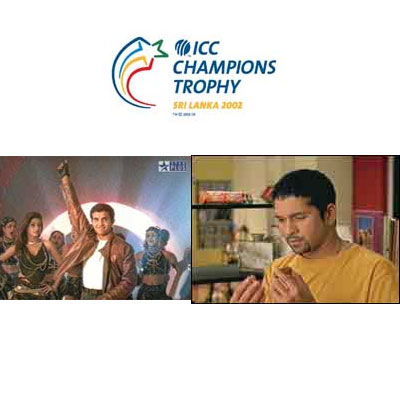
A battle royale is expected to ensue in the cricketing arena. And it’s not to do with what’s happening on the cricketing pitch. It’s more to do with the commercial transactions that have gone to make the game the money-spinner that it has become.
On one side are the game’s governing body the International Cricket Council (ICC) and the Board of Control for Cricket in India (BCCI) BCCI. On the other side are India’s top-notch players, Indian audiences, advertisers and sponsors who have made the players ambassadors and endorsers of their brands.
At stake are deals worth millions of dollars that have been struck by all the players involved. In 2000, based on agreements in place for the 1999 World Cup, all Boards, through the ICC, agreed to a number of sponsorship and personal endorsement restrictions in return for $US550 million for the commercial rights to ICC events through until 2007. The ICC is to distribute a record $US102 million of this income to the Boards and the players from the ICC Champions Trophy and the ICC Cricket World Cup 2003. The commercial partners who did the deals then include: South African Airways, Hero Honda, Pepsi, and LG.
The ICC late last night advised all the national cricket boards that it would not change the ambush marketing protection given to the ICC’s commercial sponsors. In a letter, the ICC CEO Malcolm Speed stated that the ICC is protecting its commercial partners by ensuring that their competitors are unable to associate with the event.
“Every major sporting event provides protection to their partners and anyone involved in elite sport would recognise that this is an essential component of being able to stage these events,” says Speed.
What the ICC’s decision means is that if Sachin Tendulkar chooses to play for India in the ICC tournament he may have to endorse Hero Honda products, when he already has an advertising contract with two wheeler maker TVS. This is not something, which may be acceptable to either TVS or Sachin. So that leaves him with the other option: drop out of the squad. Which puts him in a further bit of bother as the ICC has said that the best cricketers have to be sent for the tournaments.
Other cricketers who may be in a spot of bother include: Saurav Ganguly, Rahul Dravid, Virendra Sehwag, and Anil Kumble – all of who are on the endorsement circuit and have been paid crores of rupees for this.
Recognising the problems, the Federation of International Cricketers’ Associations (FICA), which claimed to represent cricketers from almost 70 per cent of the cricket playing nations – excluding India, Bangladesh, and Pakistan – had been petitioning the ICC on the same ground since earlier this year, saying that because of ICC’s commitment to sponsors, players may be forced to associate with products in competition with those they already endorse. Some of the players contracts pre-date the ICC’s with its sponsors, FICA’s CEO Tim May had then said, which was patently unfair.
The ICC had shot down FICA’s plea saying it was not a representative union of cricketers world over. May had then said that he hoped he would be able to resolve the crisis by having the ICC change the ambush-marketing clause.
Last night’s letter from Speed apparently has put paid to all those hopes. “The ICC is well aware of ambush marketing programs being developed in conflict with tournament sponsors. To change the agreement in the manner sought would dramatically undermine the essential protection ICC’s commercial partners are entitled to enjoy,” the letter says.
In the letter, Speed has pointed out that seven out of 10 Full Members have signed their Participating Nations Agreement (PNA) for the Champions Trophy and that all Full Member Boards have signed the PNA for the 2003 World Cup.
“Under this agreement, each Board is committed to sending its best team to these events and the ICC is expecting each Board to meet these commitments by securing their players agreement to participate,” says the letter.
Speed highlights that the negotiation of payments and other terms and conditions for players is the responsibility of the individual Boards.
“The ICC has no direct commercial relationship with any player. Each Board must reach its own agreements with their players as to the terms and conditions that are acceptable to them to agree to represent their country,” says Speed.
The fact that the boards are likely to side with the ICC has put the players on a bad track. Already, the BCCI has reportedly said that it will side with the ICC and it expects its players to follow suit.
Will the players fall in line? TV audiences and the national cricket boards are hoping keeping national interests in mind they well may.
Brawl or Ball, only time will tell.