Tag: Cricket

  • PUMA cashes in on Cricket fever

    PUMA cashes in on Cricket fever

    MUMBAI: PUMA is all set to take cricket digital with the launch of its Facebook application – PUMA Finger Bash. The innovative and addictive game allows players to virtually compete against Team PUMA in a game of cricket – where the players can bowl, bat & score with their fingers.

    PUMA Finger Cricket will give the Indian cricket fans a chance to be involved with cricket in a way convenient to them. Similar to the famous and age-old game played with the hand ‘Rock, Paper, Scissors‘ – PFB is easily played on-ground between friends and makes for a very entertaining past-time.

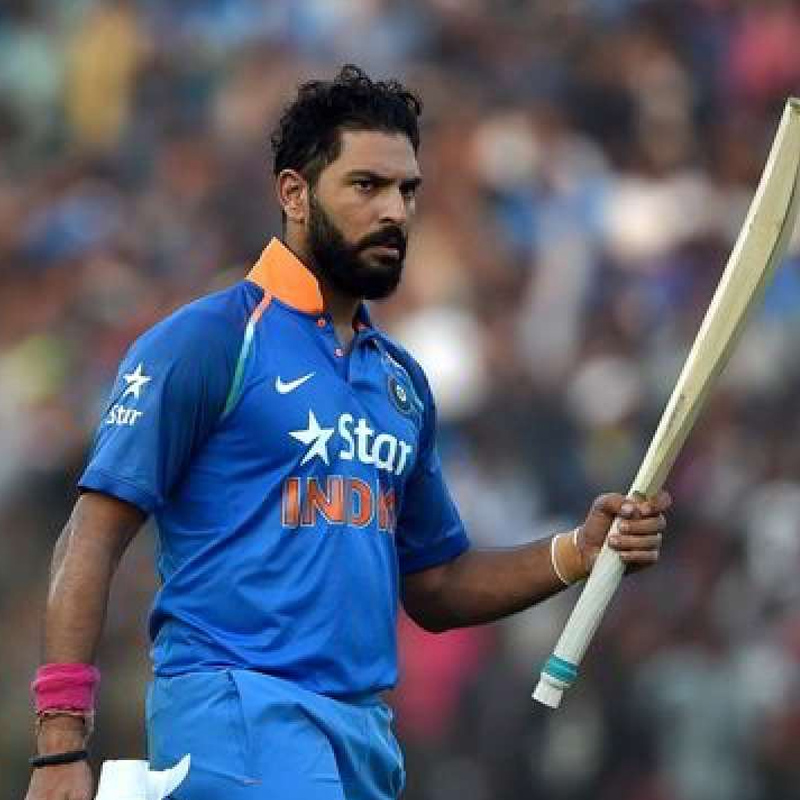
    Users can play PUMA Finger Bash (PFB) against the virtual forms of their favourite T20 cricketers like Andre Russell, Marlon Samuels, Brendon McCullum, Adam Gilchrist, Yuvraj Singh and Luke Wright.
     
    In the last season of IPL, PUMA had created a series of superhero comic strips after each match of the Rajasthan Royals and Deccan Chargers.

  • Indian M&E sector needs to look beyond cricket and Bollywood: Dominic Proctor

    Indian M&E sector needs to look beyond cricket and Bollywood: Dominic Proctor

    MUMBAI: GroupM Global president Dominic Proctor believes that the Indian media & entertainment industry should move away from the fragile ecosystem where Bollywood, cricket and a handful of national icons and stars are used for all messaging if it has to develop a globally recognised base.

    “This must change if India is really serious about building a world class sports and entertainment industry,” Proctor said at Ficci Frames 2013.

    In what would be a food for thought for media agencies and advertisers alike, Proctor said the country needs to look beyond cricket and start investing in non-cricketing sports and the signs for their success are very encouraging.

    Recent initiatives in F1, Hockey, Combat sports and Badminton are encouraging but not enough, he added.

    "In India the content is excessively and obsessively dependent on Bollywood, cricket and stars. This is a wake up call where in order to grow in the global space, the industry here needs to look beyond Bollywood and cricket," he noted.

    He observed that the popularity of cricket in all its formats – Test, ODI and T-20 – is declining at a global stage. The dwindling performance of the biggest sport in the country is posing a threat to the business surrounding it, to the companies and brands which have invested on it.

    Sports marketing in India will require to have much broader base than just cricket. People need to look at other sports too, like the other parts of the world. Sole focus on cricket as a means to advertise and reach the target audience gives it a monopolistic edge, which has lead to over crowding in the space and over pricing of the properties.

    While Bollywood and the Indian film industry is an all pervading influence, brands in India do not leverage this platform optimally. Revenue streams exist in content advertising on multimedia screens & producers and studios should look beyond theatrical returns & innovate new platforms and formats.

    Simultaneously, creators should extract total economic value for the content with consumer centric audience planning. With a nod to Web driven content, Proctor said that digital formats will drive advertising revenue growth in under branded India and also help the Indian media and entertainment industry reach out globally.

    Talking about Bollywood, Proctor feels that brands need to find new ways to exploit movies for the benefit of the market. Web is a big opportunity too. Now the audience is exposed to the multiple media screens and one can target, monetise and measure the medium. In fact, this is a better medium of targeting consumers. "Advertising in print costs around six times more than that on web to reach out to the same consumer. And web is a better engaging medium."

    The big shift, according to Proctor, is from distribution to content, from inventory planning to audience planning. "The need is to optimise inventory by serving different ads to different consumers. So, optimising spend and minimising wastages (is required)."

    Proctor pointed out the key challenges that Indian M&E industry is facing today. They are optimising the potential of the Web which poses a huge opportunity for the industry; foundation of a world-class content industry; need to look beyond Bollywood and cricket and tap into the emerging platforms to help extract right advertising value. "As global economy slows, the opportunity is for India and Asia more broadly to lead, and then the others will follow. India can be a support to world‘s media ecosystem like the U.S was," he added.

    The media agencies in India need to invest more in digital. "Digital business here is just 5 per cent of the total pie and as compared to the other markets where the spend on digital is around 30 per cent, it is relatively small. So, the agencies here need to invest in the medium, the people who know about the medium, and rope in that kind of talent. The medium will grow and the focus on these will drive digital medium‘s growth in India."

    Also, the media agency business here needs to diversify. "Clients want much more advice on sports marketing, mobile marketing, return of investments (RoIs). The media agencies should diversify in order to cater to them effectively," Proctor concluded.

  • DLF ends Rs 2 bn IPL sponsorship

    DLF ends Rs 2 bn IPL sponsorship

    MUMBAI: Debt-ridden real estate company DLF has ended its costly association with cricket by ending its Rs 2 billion title sponsorship deal with Indian Premier League.

    DLF had taken the title sponsorship of IPL in 2008 with the objective of establishing its brand presence across India.

    “We have just stepped off the IPL. Sponsoring IPL over the last five years was a strategic decision wherein we wanted to establish our brand presence across India as the leading real estate player,” DLF Group Executive Director Rajeev Talwar told PTI.

    The real estate major had time till 28 July to renew sponsorship since it had the first right of refusal. The BCCI will now have to scout for a new title sponsor in wake of DLF walking out.

    However, the company is planning to nurture other sports as part of its Corporate Social Responsibility programme.

  • Fila signs Rs 80 mn endorsement deal with Sehwag

    MUMBAI: Italian sports lifestyle brand Fila has appointed ace cricketer Virender Sehwag as its brand ambassador as it plans to increase its footprint across the Indian subcontinent.

    Sources say that the three-year deal is valued at Rs 80 million working out to roughly Rs 25 million per year. The payment includes endorsement fee as well as bonuses.

    The deal belies fears that the value of cricketers have dwindled following humiliating losses in two back to back overseas series in England and Australia.

    Virender Sehwag will be Fila’s brand ambassador across all categories of Footwear, Apparel & Accessories. Fila aims to strengthen their brand recall and further enhance their presence in India with this strategic appointment.

    The dashing cricketer will be a part of Fila’s marketing communication strategy across print campaigns, radio ads, television commercials, in store branding and online.

    Fila internationally has been associated in the past with various Sports stars like Michael Schumacher, Boris Becker and Björn Borg.

    Commenting on the association Fila India CEO Rajiv Bajaj said, “Cricket is one of the most widely followed sports in India, so when we decided to appoint a Brand Ambassador, a Cricketer was the obvious choice. We chose Virender since he personifies our brands core values and we recognized the great synergy between him and our brand. Virender also holds a World record and has a huge fan following amongst the youth, which is our primary target group.

    “We have ambitious growth plans and are sure that our association will take us to greater heights that we aim to achieve. We are confident that Fila will tremendously benefit from this relationship.”

    Fila currently has a presence in over 1,800 outlets along with 35 exclusive Stores in India across High Streets & Malls. The company plans to cross 100 exclusive stores within the next 2 years.

    Sehwag‘s endorsements are managed by Professional Management Group, which is co-owned by former Indian captain Sunil Gavaskar, Sam Balsara of Madison Group, and Noomi Mehta of Selvel Publicity.

    PMG had last year signed a five-year deal with Sehwag which included a minimum guarantee of Rs 1 billion valuing the deal at Rs 200 million per year.

    The cricketer currently endorses nine brands which includes the likes of adidas, Zandu Balm, Boost, JK Cement, Hero MotoCorp, Royal Challenge, Rasna, Karbonn Mobiles and Nirala.

  • Indian cricket fans have tribal passion akin to mature soccer markets: Study

    Indian cricket fans have tribal passion akin to mature soccer markets: Study

    MUMBAI: The cricket fan base in India is very homogeneous, making it easier for advertisers to address a mass nationwide reach.

    There is another deeper benefit for marketers taking to cricket, a research by Octagon Worldwide pointed out. Unlike the UK where Test and T20 cricket had inherent brand images that are diametrically opposed, in India the perceived image profile of T20 is very much aligned with Test cricket. This makes it easier for Indian sponsors to create an effective and efficient consumer-relevant pan-cricket activation plan.

    Test cricket fans have a similar tribal passion that is found in mature European and South American football markets. The overall Test cricket fan profile proved to be very tribal, with a clearly defined hierarchy of factors.

    Said Octagon Worldwide chief strategy officer Simon Wardle, “Team devotion is the primary factor behind the passions of India‘s Test cricket fans. In fact, in many ways it is similar to the tribal Passion Drivers profiles that we have found for football in mature European and South American football markets. However, it was very different to the Passion Driver factors revealed by similar studies in England, South Africa and Australia where there was no dominant factor.”

    Cricket offers tremendous activation opportunities that Indian marketers can leverage upon. “We identified four different types of cricket fans and three of those four fan typologies had Team Devotion as the number one factor. This high indexing of the Team Devotion factor is good news for Indian marketers using test cricket as a marketing platform since it suggests activation strategies leveraging team assets and equities will resonate best with test cricket fans,” said Simon Wardle.

    Research among India‘s avid cricket fans conducted recently by sports marketing firm Octagon Worldwide aims at increasing the understanding of the cricket fan base and offers positive, actionable insights for marketers using the sport as a platform to reach their consumers.

    The latest findings result from Octagon‘s Passion Drivers research initiative that enables sponsors to develop compelling and relevant sponsorship leveraging programmes based on a quantified understanding of why fans are so passionate about their favorite sports.

    Wardle, the creator of Passion Drivers, said that the research examined both Test cricket and the Indian Premier League (IPL).
    Cricket‘s ability to attract corporate sponsors is not surprising. Said  , “By understanding what drives cricket fans‘ passions and how that, in turn, shapes their attachment and desire for products, corporate cricket sponsors can focus not just on generic fans, applying â€?one-size-fits-all activations, but can focus on the factors that will truly motivate fan behaviour.”

    Octagon began its proprietary research into sports fans‘ passion seven years ago and has since studied some 75,000 avid fans of over 30 sports in 13 countries. The Team Devotion factor is one of 12 primary factors that drive fan passion for sports, and is defined as, fans‘ love for their team bordering on obsession and unquestioned loyalty.

    Other factors include:

    Active Appreciation: Fans‘ ability to call upon personal experience playing the game now or at some point in their lives.

    All Consuming: Power of the sport to draw the fan in to the point where nothing else matters while the game is being played.

    Gloating: Appeal of reveling in the agony of rival fans when their team loses.

    Personal Indulgence: Sport is seen as a selfish reward—an excuse for “me time.”

    Player Affinity: Fans‘ interest in relating to sports stars as people. Player Excitement: Pure hero worship and admiration for their
    athleticism and skills.

    Love of the Game: Pure enjoyment of the sport and competition regardless of who is playing or who wins or loses.

    Nostalgia: Combines the history of the sport and personal recollections of watching the sport growing up.

    Sense of Belonging: Being part of a group of like-minded fans (of the same team).

    TV Preference: How fans prefer to follow the sport. TV often provides a more satisfying experience than attending in person or participating.

    Talk and Socialising: Sport as a topic of conversation and a means to build friendships.

    The importance of these factors in terms of the degree to which they contribute to fan passion varies significantly from sport to sport and based on this study, Octagon has discovered that a sport‘s fan base in a particular country can include fans that follow the sport for very different reasons.

    “With this new insight, corporate sponsors of cricket in India can build unique, relevant compelling leveraging programs that connect to the passions of their customers,” Wardle concluded.

  • Cricket to face-off with football in Pepsi’s new ad campaign

    Cricket to face-off with football in Pepsi’s new ad campaign

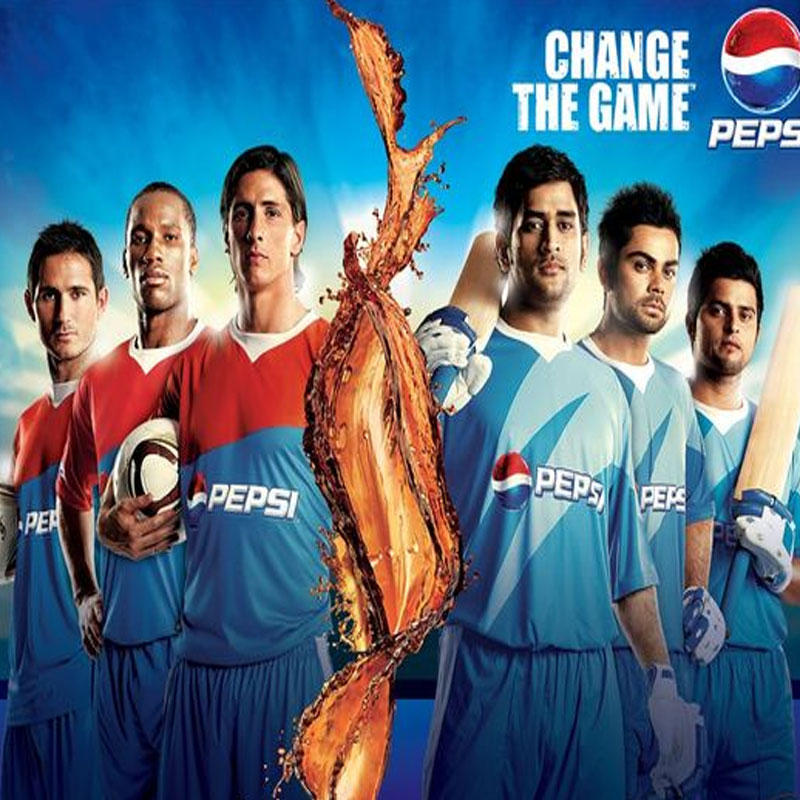
    MUMBAI: Indian cricketers will face-off with international football stars in Pepsi’s new campaign film as it takes the Twenty20 Football theme forward as part of its ‘Change the Game’ campaign.

    Pepsi ‘s campaign will feature Indian cricketing heroes Mahendra Singh Dhoni, Virat Kohli, Suresh Raina and Harbhajan Singh; along with the biggest global football stars, Didier Drogba, Frank Lampard and Fernando Torres.

    In the campaign film, cricketers throw a challenge at footballers to a game of cricket to win Pepsi, while the footballers show them how to play cricket – football style. The film captures the essence of ‘Change the Game’ with a foot tapping soundtrack, ‘Mauke Pe Chauka’.

    PepsiCo India Category Director – Colas, Hydration & Mango Based Beverages Homi Battiwalla said, “We celebrated the unorthodox face of cricket last year and gave the T20 twist to football this year; now we are bringing together both these sports on one common platform. Featuring the biggest names from the world of cricket and football, the campaign reflects our commitment to both the sports in our signature, ‘Change the Game’ way.”

    The campaign is supported by a 360-degree approach including on-air, outdoor & on-ground initiatives; special edition packaging featuring and digital engagement programmes. The cola major is one of the broadcast sponsors of Max for the on-going IPL season.

    “With this latest Pepsi campaign, we are bringing the cricketers and footballers together for the very first time in the history of Indian advertising. It is a truly clutter breaking campaign, mounted on a mega scale. The idea is simple with the ‘Change the Game’ thought at its core,” added JWT India ECD Surjo Dutt.

    Pepsi recently launched its first football campaign in the country featuring actor Ranbir Kapoor, which was followed by a grassroots initiative, Pepsi T20 Football that takes football outside the conventional domain.

    Organised in a unique metallic cage, the initiative is being organised in major Indian cities including Chennai, Bengaluru, Kolkata, Mumbai, Lucknow, Ludhiana and Delhi, with phenomenal response. A total of 8-teams, including one winning team from each city and one wild card entry will compete to emerge as ‘Game Changers’.

    They will then get the opportunity to be coached by an international football star before they face the Indian cricket stars for a game of Pepsi T20 Football at the Grand Finale.

  • 2011: Building leagues and searching for life beyond cricket

    2011: Building leagues and searching for life beyond cricket

    2011 was a year where sports took a leaf out of the success of the Indian Premier League (IPL) and announced leagues following a similar franchise format. Leagues ranging from football to hockey are being built to offer content to sports broadcasters.

    Sports marketers believe that there is an audience for sport other than cricket as long as it is packaged, marketed and organised well in a professional manner.

    As far as cricket is concerned, the big news was the termination of Nimbus‘ rights for India cricket by the BCCI. On a more positive note, the sport did well for advertisers in terms of ROI.

    As far as the push towards non cricket is concerned, two leagues were announced this year in motorsports and American football. Nimbus and the Indian Hockey Federation (IHF) concretised their plans for World Series Hockey (WSH).

    The property for Nimbus will serve as a feeder for Neo Sports. Wizcraft International director Sabbas Joseph expects this franchise to break-even within five years. But given that politics has been responsible for the national sport going down the drain, it is not surprising that the initiative has run into some rough
    weather.

    In order to take the sport of horse racing to another level, R1 was launched marking Bennett Coleman‘s first big push into sport. The push also extended to sports entertainment with WWE opening an office in India.

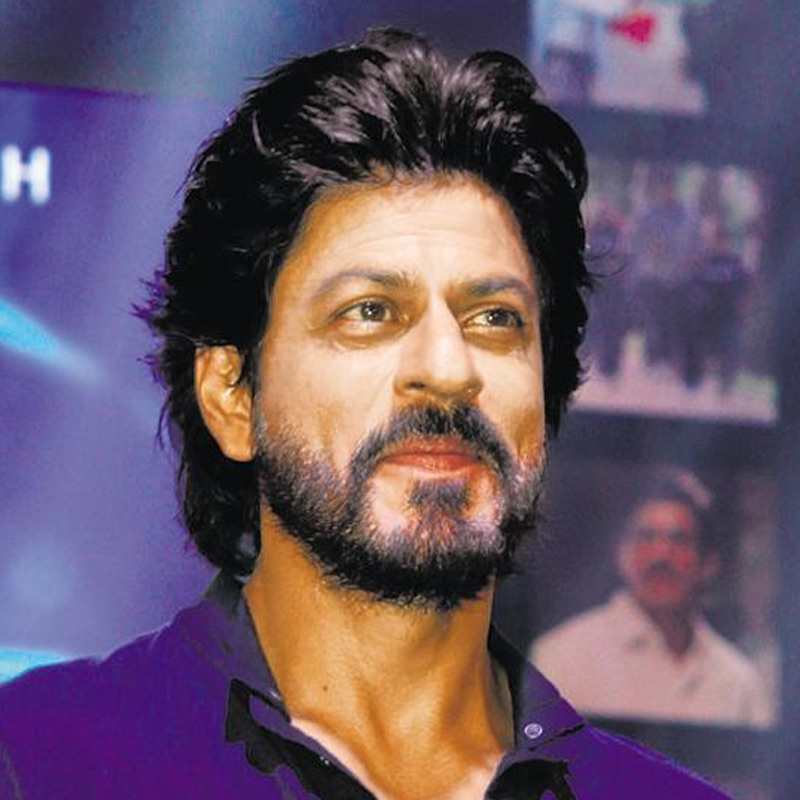
    Life In The Fast Lane: It is not just mass sports that are going the league way to gain a wider audience and boost their commercial value. In motorsports, Machdar Motorsports announced the launch of a racing league at a cost of $12-15 million a year. It will no doubt be encouraged by the response that the first F1 race got in Delhi. The league, called i1 Super Series, will see the likes of Bollywood Badshah Shah Rukh Khan owning a team.

    The league, though, has been postponed to January next year, partly due to the fact that franchise owners want time for marketing activities. Also, it has been finding it tough to get corporates to own teams for I series, which is why it had reduced the ownership price from $5 million to $3.5 million.

    1 Super Series managing Darshan M expects the franchises, who have ownership for 15 years, to recoup their investments in the fourth year. Each team will race with two cars forming an 18-car grid.

    Aiming to grow the amount of sports it covers, Ten Sports has taken the broadcast rights for the event. Ten Sports CEO Atul Pande believes there is place for a domestic racing league. “Our programming mix is the best among the sports broadcasters and this property is a significant addition. With the kind of capital and marketing dollars chasing it, the event will gain traction,” he says.

    And for Khan, this offers an opportunity to get involved with other sports ventures apart from his Kolkata Knight Riders IPL franchise.

    GroupM ESP managing partner Hiren Pandit notes that the involvement of celebrities like SRK will lend visibility. “But ultimately it is the quality of sport being dished out that will determine its fate. At this point I am not sure if it will turn out to be a good TV sport. This will be a toy for the big boys.”

    Taking a Punt: In order to boost the profile of horse racing, RWITC formed a joint venture with Bennett Coleman and Procam to launch R1.

    R1 has 13 races lined up across the country in its debut year. Aired on Ten Sports, R1 kicked off with the Indian 1000 Guineas on 11 December 2011. The aim of the stakeholders is to position the sport as being cool and trendy so that younger viewers start tuning in.

    Zee is pushing the property on its other channels like Zee Café and Zee Studio. Bennett Coleman will also heavily promote the event across its different properties like Times Now.

    For the first time in the history of this sport, behind-the-scenes action will be captured, which include the jockeys‘ room and the stewards room. The live world feed will include new cameras including a Super Slo-Mo Camera.

    According to Pandit, horse racing operates in a tight segment. “It is seen in India as a gamblers sport. Some brands will associate with it. Whether they broaden the audience base or not remains to be seen,” he says.

    EFLI makes an entry: The Elite Football League of India (EFLI) announced a league aiming to grow American football in India. Based on the franchise model, it starts with eight teams, building up to a total of 52 by 2022 representing all Indian cities with a population in excess of one million.

    With Ten Sports as its partner, the league will kick off in November 2012 in Pune. Says EFLI CEO Richard Whelan, “American football is fast, furious and fun to watch. Indian viewers are now watching sports other than cricket. There is no doubt in our minds that the EFLI has picked the right time for its Indian touchdown. Even women are keen on watching sports.”

    Nimbus‘ Woes: Speaking of the bat and ball game, Nimbus is on a sticky wicket. It moved the Bombay high Court over its deal with the BCCI (the Board of Control for Cricket in India) that got terminated for non payment of dues.

    The BCCI has time to find a new broadcaster as there are several months to go before India plays a series at home.

    Ad revenue scene: Sports broadcasters earned an advertising revenue of around Rs 21 billion in 2011, a healthy growth over last year.

    Agrees Lodestar UN CEO Shashi Sinha, “2011 was special for sports as there was the cricket World Cup and the IPL. You had the highs of big properties as well as events that helped build the image of sports. FMCG brands also got more involved with cricket. The economic slowdown has not impacted sports ad revenue.”

    There is a challenge, though, in 2012 as ad revenue from cricket could degrow in terms of monies due to a lesser number of high profile events.

    Sinha finds the entry of new leagues an encouraging sign. “The surface of sports in India has not been scratched beyond cricket. There is scope for leagues to work as long as investments are made. It will be a question of how a property is leveraged and marketed.”

    The Cricket Rights Scene: On the cricket rights front, 2012 will see a lot of action as a host of properties come up for grabs.

    In 2011, Zee took the crucial step of renewing its rights for Cricket South Africa. Zee also renewed rights for Zimbabwe cricket, while ESPN Star Sports (ESS) retained Australia.

    The rights for India, England, West Indies, Pakistan, Sri Lanka, Bangladesh and New Zealand are all due for grabs.

  • Puma ropes in Yuvraj Singh as brand ambassador

    Puma ropes in Yuvraj Singh as brand ambassador

    MUMBAI: Puma, the global- sport- lifestyle brand, has roped in Indian cricket team all rounder Yuvraj Singh as their brand ambassador.

    Singh will now be the face of Puma‘s new #Love 12 campaign launched especially for Puma and Singh‘s fans.

    Puma India MD Rajiv Mehta said, “Yuvraj Singh is the quintessential athlete for Puma. He epitomises the youth of today with his forthright personality, which exuberates confidence. He is an all rounder and his versatility allows the youth to connect to him instantly. With his talent and charisma, Yuvraj is an aspirational personality and an ideal choice to represent Puma.”

    Talking about the association, Singh added, “A strong brand like Puma needs no introduction; it gives me immense pleasure and satisfaction to be associated with a leading sports lifestyle brand like Puma which embodies style, fun and passion. For me, joy and passion are the most important elements of cricket and this drives me to continually improve myself as a cricketer and as a person. Puma shares these same values and I am looking forward to this alliance.”

  • No dramatic change in Champions League T20 ratings

    No dramatic change in Champions League T20 ratings

    MUMBAI: Despite four Indian Premier League (IPL) teams taking part and Shah Rukh Khan being used as brand ambassador for the event, the recently concluded Nokia Champions League Twenty20 did not see any dramatic change in ratings.

    Even the triumph of Mumbai Indians did not help host broadcaster ESPN Star Sports (ESS) much, indicating that the format will take time to find widespread popularity.

    TAM data (c&s, 4+, All India) shows that the event averaged a TVR of 1.64 (not including the qualifying event), marginally up from 1.44 TVR that it recorded last year. Including the qualifying event, the whole tourney this time averaged 1.45 TVR. 

    Reach, however, expanded to 87 million compared to 78 million last year.

    The final match got a TVR of 3.51 compared to 3.30 TVR last year. If there was any improvement, it was in the delivery of the semifinals. They averaged 2.74 TVR this season, compared to 1.34 TVR last year. 

    MPG senior director R Venkatasubramanian feels that the event needs a bigger marketing push as foreign teams are taking part. “Cricket fans know about the IPL and the players. Marketing needs to be done for the foreign teams. That would create a sense of anticipation among fans. There should also be on-ground activation.”

    An ESPN Star Sports spokesperson, however, said the event‘s performance has been in line with their expectations.

  • ‘Our biggest challenge is raising the low yields in the Hindi movie channel genre’ : Star Gold GM Sameer Rao

    ‘Our biggest challenge is raising the low yields in the Hindi movie channel genre’ : Star Gold GM Sameer Rao

    Star Gold general manager Sameer Rao is known to be a numbers man. A chartered account and an MBA in finance, Rao has a 19-year career graph that spans stints in UBS and Arthur Andersen.


    His baptism in media took place at Star in cable TV distribution, followed by the internet, the commercial department and then finally to his current posting. He was given additional charge of Star Utsav in end 2009.


    Indiantelevision.com’s Ashish Mitra spoke to Rao about the changes he has brought at Star Gold and the prospects for the channels he heads.


    Excerpts:


    How large is the Hindi movie channel space? What is the lay of the land?

    Our estimates are that all the movie channels put together make it a Rs 5,200 million ad revenue market. No doubt, Zee Cinema is the leader followed by MAX, and we are at the No 3 slot. For about six to eight weeks every year, because of the IPL and cricket, MAX steals ahead and then it goes back to the previous ranking.


    Raising the low yields in this channel genre is the biggest challenge. The inventory is keeping on growing with new channels launching: UTV Movies, for instance, entered the fray with two channels. GRPs of movie channels used to be much higher a year ago than is the casenow. There are times the ratings race becomes a big issue with us when competing with the likes of GECs such as Sony, Sab and Imagine as they are in the same GRP range as us. But the realisations by these channels for commercial time are higher.

    Can you gives us your analysis of the Hindi movie channel genre?

    The movies genre, if you aggregate consumption across movies channels, movies on Hindi GECs and movies on cable channels, is as big as the Hindi GEC slice. However, perception wise, it is regarded as much smaller, possibly because it is acquired content as opposed to original programming.


    On the supply side, satellite buyers have emerged as key players in the Hindi film industry and are critical to the viability of any Hindi film project. With some changes both on the buying and selling side, it is possible that movie channels will be able to offer much more value to all stakeholders – film producers, advertisers, viewers – while remaining a healthy and profitable business for the broadcast networks.

    You were looking after commercial for Star Plus when you were called to take charge of Star Gold and Star Utsav. What was your analysis of the two channels and your health report for them?

    I was responsible for programming commercial for the Hindi language channels at Star between March 2007 and November 2009. I took over as Star Gold general manager in March 2008 and Star Utsav general manager in late 2009. Star Gold is a healthy and growing business and Star Utsav is stable but a lot more could potentially be achieved.

    What changes did you initiate at Star Gold to fast pace its growth amongst its competing players ?

    My fundamental approach towards programming on Star Gold was to build slots that delivered on a defined content promise to a movie consumer. The slots were developed based on research inputs on content themes that audiences wanted to see on a movie channel.


    Thus, we built permanent action, comedy and kids slots apart from the Hollywood dubbed slot, which we had launched several years ago.


    Apart from this, we also incorporated slots for thematic movie festivals through the year, which would run from one to six weeks. For example, one of these, Sabsey Favourite Kaun, culminates in a big scale televised award show, India’s only audience polling driven movie awards.


    Hence, once we had the slots ready, we acquired movies designed to develop and grow the slots. All these initiatives helped us narrow the gap between us and the genre leaders.

    Star Gold was not being marketed aggressively. How have you changed this in terms of above the line and below the line activity?

    Marketing for the channel is in line with the programming strategy of building up slots and festivals. A lot of it happens outside Mumbai as our biggest consuming markets are Uttar Pradesh, Gujarat, Delhi and Maharashtra.

    We are just four GRPs behind Zee Cinema and 16 behind MAX. If we do the right things we can overtake the leader.

    Your list of acquisitions and syndications.

    Last year, we acquired films aggressively. We got the Salman Khan-starrer Wanted, the Amitabh Bachchan-starrers Aladin and Paa, the Akshay Kumar-starrers De Dana Dan and Housefull and the Ajay Devgn-starrer Atithi Tum Kab Jaoge. Besides Wanted, all other acquisitions were on an exclusive basis. Some runs of Wanted have been reserved for Sahara because they co-produced the film. We also have the non-exclusive rights of the latest RGV film Rann along with Life Partner and Luck.


    As far as syndication goes, we continue to syndicate with Zoom and UTV Movies. But this exercise entirely depends on the type of films the other channel wants to have.

    What are your plans for Star Gold?

    We’d like to lead the genre by the end of this calendar year. The network is building the catalogue through a mix of judicious new and library acquisitions and we continue to refine our slot-based programming and marketing strategy. I believe we need to acquire close to 20-25 more movies over a period of time. We are just four GRPs behind Zee Cinema and 16 behind MAX. If we do the right things we can overtake the leader. Our challenge is to have the right mix of old films, new films and blockbusters. We can’t buy the most expensive ones only; otherwise the low yields could erode our margins.

    Which are the major category advertisers for the channel?

    FMCG continues to be the biggest category. We are an important platform for male brands because of our deliveries in that demographic. We get the bulk of our advertising resources from the package of festivals. Going forward, several new acquisitions that we have gone into will boost the advertising pattern of our channel.

    Please highlight the milestones of Star Gold over the decade.

    Starting off in 2000 as a classic movie channel, we showed black and white films. We then switched on to telecasting coloured films from the post 70s. Rapidly, we turned into a channel with a modern look in terms of popular and critically-acclaimed cinema.

    Then in 2002, we launched the popular Sabsey Favourite Kaun (SFK) that first started as an award show. Then in December 2006, SFK went international. The show’s popularity can be measured well as last year, we received a whopping 17 million votes through SMS and internet in addition to the physical votes we received from people to select their favourite stars. This exercise lasted for over a period of two months.


    As for showing Hollywood dubbed content, we have excelled in showing the latest Hollywood films and rank above all other channels.


    Going forward, we hope to see Star Gold as a channel that boasts of new Hindi films.

    What has been the change in the channel perception over the years?

    The first major change in our channel was when we changed from a classic movie channel to a channel that specifies in several genres as far as films are concerned. Based on this, currently, we have a higher proportion of viewers. Our channel is driven around comedy films and of course Hollywood films. We want to build on the perception.

    You took charge of Star Utsav in 2009. What was your assement of the channel then and what changes have you brought in?

    Basically, Star Utsav is a channel that caters to repeat content. After I took over, I found that there were more repeats of shows of two distinct genres – mytholology and kids programmes. This was of course in addition to shows from the Star network.


    After I joined the channel, rationalising the schedule was my biggest priority.


    And now, we are looking at various opportunities keeping the taste and preference of the semi urban and rural markets in mind and devising a new strategy for Star Utsav. This will be implemented in the coming months.

    What were the ratings of Star Utsav when you took over and what are they now?

    The ratings are the same now comapred to when I hadn’t taken charge. It remains stable.

    What about advertisers? Have they been attracted to the channel?

    There is a potential beyond what the channel is currently generating in terms of advertiser participation and we are looking actively to tap such an opportunity.