Tag: Credibility

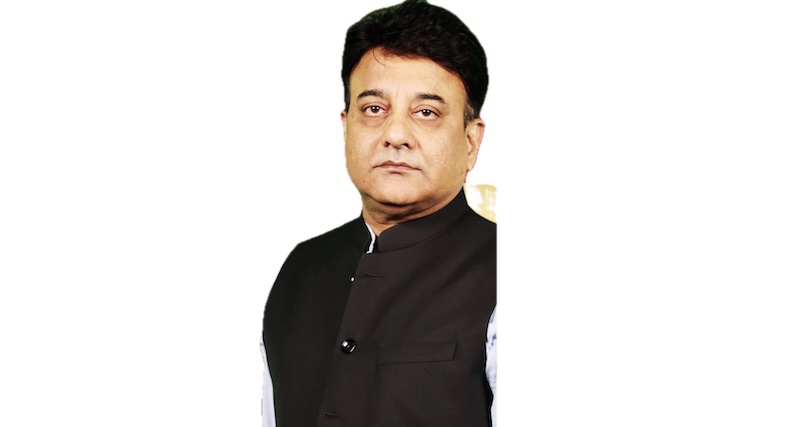
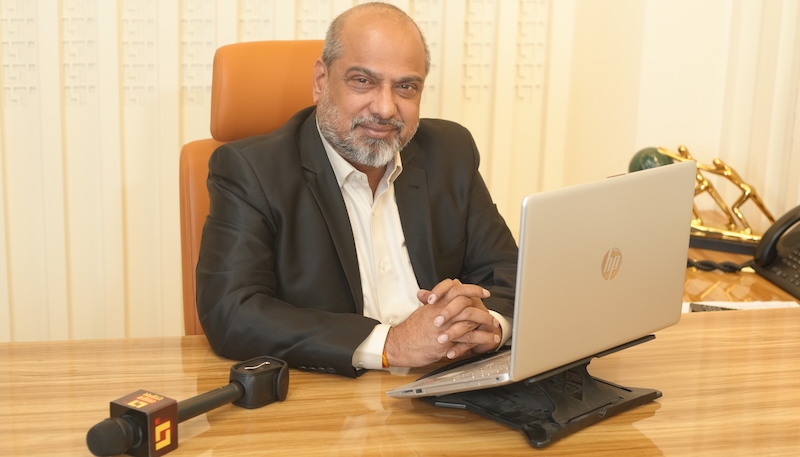
  • “News Must Serve People, Not Power: Credibility Is the True Currency of Journalism” — LiveTimes CEO  Dilip Singh

    “News Must Serve People, Not Power: Credibility Is the True Currency of Journalism” — LiveTimes CEO Dilip Singh

    MUMBAI: Dilip Singh is not your ordinary journo. With over 35 years in journalism and media leadership, Singh has consistently been ahead of the curve, embracing technology long before it became mainstream. From India’s first video magazines to the first private 24×7 satellite news channel, from building the country’s first private teleport to pioneering the head end in the sky  (HITS) for JainHits, Singh’s career has moved at a zippy pace. 
    Today, he is once again redefining news delivery with Live Times’ state-of-the-art multicast news hub in Noida—developed in collaboration with global tech giants to power LiveTimes, a digital First 24×7 satellite news channel across OTT, Fast, D2C, and new-age platforms.

    But Singh is not just a technocrat; he is a newsroom warrior. He has reported on terrorism, insurgencies, elections, parliamentary proceedings, and government affairs, all while building successful news organisations from the ground up. His stints at Mega Telelive and Jain TV cemented his reputation as a content architect and editorial leader before he struck out to create Live Times.

    At the heart of his legacy is an unwavering belief in journalistic integrity. Singh is vocal about “truth over TRP” and “public interest over vested interests,” pushing for meaningful debate, investigative journalism, and authentic storytelling in a media landscape often dominated by noise.

    Today, as Live Times expands its footprint from local to global, Dilip Singh says he remains a pioneer, a defender of truth, and a relentless innovator shaping the future of Indian news.

    Indiantelevision.com did an interaction with him to understand what’s keeping him and LiveTimes going on its first anniversary. Excerpts from the interaction.

    On how true democratization of news ensures diversity of voices, representation of real issues, and independence from political or corporate agendas,
    True democratisation of news means creating a space where every voice matters, not just those with power, money, or influence. It ensures that stories of ordinary citizens, marginalised communities, and real issues affecting the public take center stage. Independence from political or corporate agendas is the cornerstone of credibility—when newsrooms operate without fear or favor, they serve democracy in its purest form. Live Times is committed to this principle by giving equal representation and unbiased coverage, ensuring that news serves people, not power.

    On how Live Times is restoring trust through fact-based, unbiased journalism.
    In an age of sensationalism, Live Times has taken a strong stand for fact-based journalism. Our newsroom prioritizes verification over speed and accuracy over sensationalism. Every report goes through rigorous fact-checking before reaching the public. By consistently delivering unbiased news content, Live Times is rebuilding the trust that many feel traditional media has lost.

    On fighting misinformation and clickbait in the age of virality.
    Misinformation thrives in a world obsessed with speed and virality. Clickbait headlines may grab instant attention, but they erode trust over time. At Live Times, we have adopted a zero-tolerance policy toward fake news and misleading content. Every story is validated through multiple credible sources before publishing. We believe that while speed is important, responsibility is non-negotiable. Our editorial strategy focuses on depth, accuracy, and context rather than chasing meaningless trends.

    On how journalism is a responsibility to the public.
    Journalism is not just about breaking news; it’s a public service that comes with immense responsibility. Citizens rely on media for facts that shape their understanding of the world and influence critical decisions. Misreporting or bias can have severe consequences for society. Live Times views journalism as a duty to empower, not manipulate, the public. Our mission is to deliver news that informs, educates, and upholds democratic values, reaffirming journalism’s role as the fourth pillar of democracy.

    On sensationalism giving instant fame, while authenticity ensures lasting respect.
    Sensationalism is like a sugar rush—short-lived and damaging in the long run. While it may fetch quick ratings, it corrodes credibility. Authentic journalism, on the other hand, builds a foundation of trust and respect that endures. At Live Times, we choose authenticity over theatrics because we understand that citizens seek truth, not drama. Respect in journalism is earned through consistency, honesty, and transparency, and that’s the benchmark we aim to set.

    On balancing TRP and digital metrics with meaningful content.
    The pressure to chase TRP and engagement metrics often tempts newsrooms to prioritize sensational content over meaningful stories. Live Times refuses to compromise its core values for numbers. We believe that meaningful journalism can also drive engagement when delivered compellingly. By blending strong storytelling with factual accuracy, we ensure that our content resonates with viewers while maintaining editorial integrity. The goal is sustainable growth through credibility, not short-term spikes.

    On sensationalism vs credibility – How news channels can build credibility.
    Credibility cannot be manufactured overnight; it is earned over time through consistent honesty and transparency. News channels must make editorial integrity their north star, resisting the lure of sensational headlines for quick attention. Credibility is strengthened when journalists verify facts, acknowledge errors, and prioritize public interest over TRP games. Live Times leads by example, demonstrating that credibility and audience loyalty go hand in hand when trust is never compromised.

    On how clickbait journalism may bring short-lived attention, but credibility builds loyalty and brand.
    Clickbait may capture fleeting attention, but it undermines the very foundation of journalism—truth and integrity. Real journalism thrives on credibility because audiences rely on news not just for information, but for understanding and trust. Sensational headlines might drive quick clicks, but they erode confidence and damage the profession’s core purpose. Credibility, on the other hand, builds a loyal audience that values accuracy and depth over drama. In the long run, it’s not the loudest voice that prevails, but the most trusted one—and that is where responsible journalism creates lasting impact.

    On how Live Times is setting a benchmark in responsible journalism.
    Live Times prioritises truth over trends. We have built systems to fact-check rigorously, avoid unnecessary sensationalism, and provide context to every story. From investigative reports to citizen-centric coverage, our goal is to inform rather than inflame. By refusing to bow to political or commercial pressure, we are setting an example for the industry: credibility is the true currency of media, and we intend to preserve it.

  • Veteran journo Rana Yashwant joins Live Times’ for weekend offerings

    Veteran journo Rana Yashwant joins Live Times’ for weekend offerings

    MUMBAI: Veteran television journo Rana Yashwant, famed for his bullish tell-it-like-it-is style, has inked a juicy deal with Hindi news channel Live Times. The partnership will see the straight-talking anchor front two weekend programmes across both television and digital platforms, whilst also getting his fingers into the channel’s special projects pie.

    Live Times bigwigs insist this is far more than just another editorial appointment—it’s a statement of intent in their crusade for credible reporting. Yashwant, the brain behind popular show Ardh Satya, brings a whopping two-and-a-half decades of media experience to the table.

    Dilip Singh, founder, CEO and editor-in-chief of the channel, pulled no punches about the significance of the hire: “In an era when fake news is spreading like wildfire, Live Times stands firmly for fact-based journalism. Rana Yashwant’s joining is not just a matter of joining an experienced editor, but an extension of a reliable editorial thinking.”

    Singh added  that the channel, built on the holy trinity of “credibility, transparency and editorial independence,” continues to bolster its ranks with heavyweight journalists and subject experts, making it an increasingly formidable force in the media landscape.

    Yashwant himself seemed please with his new gig, declaring: “‘In today’s era, there is an abundance of information, but there is a huge lack of trust. In such a situation, Live Times’ gives priority to facts, transparency and public interest. This platform believes in creating effective content instead of making noise. This is not just a new role for me, but a responsibility – to do such journalism that not only informs, but also empowers people and ensures accountability.”

  • Concerns about fake news on the rise in India: Ormax report

    Concerns about fake news on the rise in India: Ormax report

    Mumbai: Two out of three news consumers consider fake news a major challenge facing the country’s news organisations, showed the latest report released by media consulting firm Ormax Media.

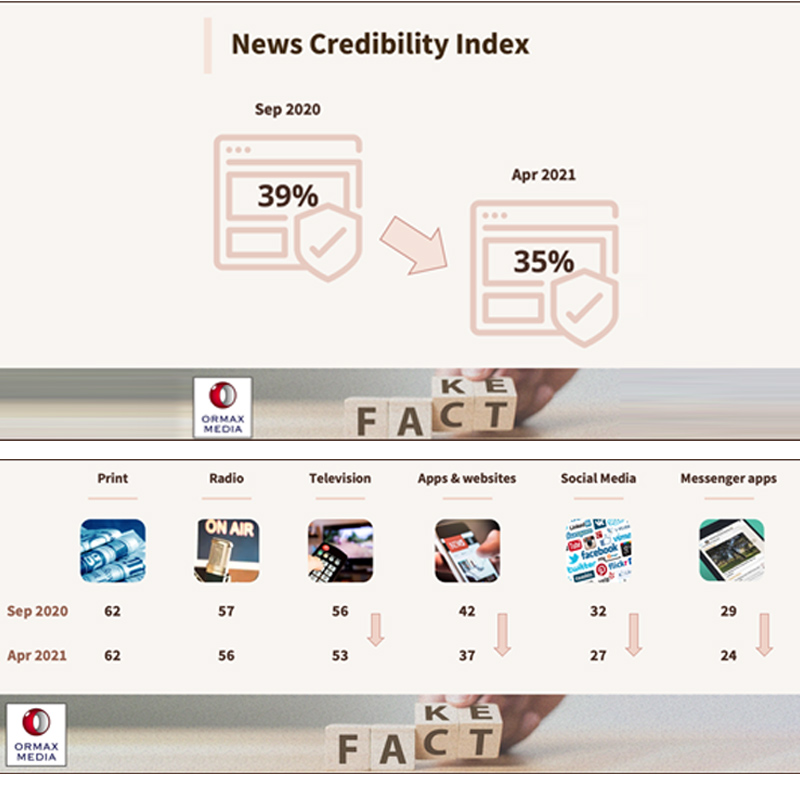
    According to the report Fact or Fake?, at least 65 per cent of the news consumers surveyed highlighted fake news as a major concern. The share of such individuals rose by four percentage points from last year, when the agency released the first edition of the report. Only 35 per cent news consumers feel that the news category in India doesn’t have any major fake news concerns, down from 39 per cent in September 2020.

    The findings are based on a survey of news consumers, which was conducted to measure the credibility of various news media, as well as their overall perception towards ‘fake news’. The survey covered around 1,000 urban news consumers (15+ years) from as many as 17 states and Union Territories in India. The questions were asked through computer-assisted telephonic interview.

    This is the second edition of the report, based on data collected in April 2021. The first edition was released on September 2020.

    According to the report, print media continued to lead in terms of credibility, as 62 per cent of news consumers generally considered the medium to be credible. Radio held on to the second position with 56 per cent consumers considering it as credible compared to 57 per cent in 2020. However, all other media platforms showed significant decline in credibility – television’s credibility index dropped from 56 per cent to 53 per cent and digital news apps and websites from 42 per cent to 37 per cent.

    The number of consumers (from the sample) who consider social media platforms to be credible also dropped from 32 per cent to 27 per cent and messenger apps from 29 per cent to 24 per cent. 

    Within social media, despite a drop since the last track, Twitter continues to rank on top with a news credibility Index of 47 per cent. No other social media or messenger app platform manages to touch even the 30 per cent mark, showed the survey.
     
    Ormax Media, founder and CEO Shailesh Kapoor said, “Concerns around fake news have been escalating worldwide over the last few years. But a drop from an already-low score of 39 per cent to 35 per cent within just seven months, does not augur well for the Indian news industry. In the midst of a pandemic, credibility of news becomes even more important. We hope to see television news and digital platforms address this concern more proactively, before it becomes a brand safety issue for advertisers using these media, and a cause for rejection for subscribers of paid news services”. 

    The report defines Media Credibility Index as a percentage of news consumers who find the news in a particular medium generally credible, respectively.

  • BARC assures that its TV rating system will be credible

    BARC assures that its TV rating system will be credible

    MUMBAI: Television ratings agencies seem to be the flavour of the season. On the one hand, Kantar Research, one of TAM Media’s major shareholders, has moved the Delhi HC against the Union Government’s new guidelines on cross holding restrictions. While on the other, up-and-coming ratings agency Broadcaster Audience Research Council (BARC), slated for a 1 October launch, has announced a tieup with France-based Mediametrie for technology services and licensing of a TV metering system.


    BARC CEO Partho Dasgupta and BARC Technology Committee member Paritosh Joshi spoke to CNBC TV18 about what to expect in the new set up.


    “The ratings agency is the one which will own the data and put it out – which is BARC in our case. So there will be ways of getting the information such as technology, panel etc. but it will all be owned and put out by BARC,” said Dasgupta, implying that the final agency will have to be free of cross ownership although its suppliers could have any type of ownership.


    Joshi revealed that  two big chunks of work had already been completed – that is assessing panel homes and technology within them. “The panel will emerge out of the Indian Readership Survey (IRS), which is out now. The people meter devices will be built on retail hardware that can be bought from Mumbai’s Lamington road and not proprietary equipment. Now, we only need a panel management agency,” said he, pointing out they had already received offers for the same.


    Asked about the credibility of BARC, Dasgupta said they have an adequate system in place. “We have broken the piece up into panel management people, who know homes but don’t have the visibility of data that comes through GSM lines straight to our servers. We have technology people, who have visibility to data but they don’t know the homes, just the ID. What we are trying to achieve is that the right hand does not know what the left hand is doing. From the integrity point of view, we are not taking any chance,” he clarified.


    However, BARC has not yet got a system to address the issues of niche channels. “The World over niche channels have not been measured like we do it here. But we may do it differently,” said Dasgupta ambiguously in the interview to CNBC TV18.


    As things stand, the industry has been yelping and running for cover fearing  a ratings’ blackout. But Information and Broadcasting Minister Manish Tewari says that a ratings-dark period should not be a cause for alarm. 


    “This isn’t the first time that ratings have been suspended. Even before, it has happened because the industry wanted it,” said the minister candidly when probed on this during an interview to CNBC TV 18.


    He pointed out that one of the main reasons for digitisation was to reduce dependency on advertising revenue and increase subscription revenue. “With the technology now, the STBs have the capability. A little engineering is needed and then you can reach 15 crore homes by putting a small chip that will let you know who is watching what in real time; be it satellite, IPTV, DTH or terrestrial,” he informed.


    Tewari was also critical  of the way TAM has been operating. “The way the arrangement was working – where you are the advertiser as well as the broadcaster and you are also taking out ratings. This conflict needed to be addressed,” he stressed.