Tag: Creators

  • Creators boost Mipcom 2025 as television’s old guard opens the door

    Creators boost Mipcom 2025 as television’s old guard opens the door

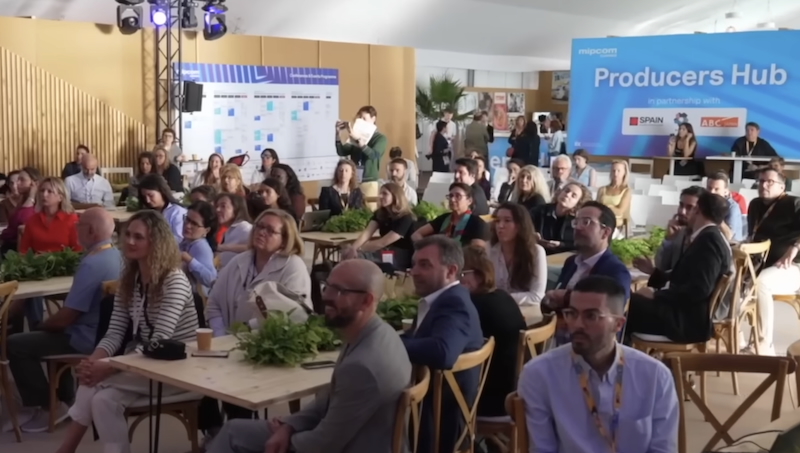
    CANNES: The suits and the streamers are finally doing business. Mipcom 2024 pulled in 10,600 delegates—a modest uptick from last year’s 10,500—but the real story wasn’t in the numbers. It was in who showed up and what they were selling.

    Buyers rose to 3,340, up 100 from 2023, with Britain leading the pack, followed by the US , France, Germany, Turkey, Canada, Spain, Italy, Japan and South Korea. Yet the buzz on the Cannes market floor centred on a new breed of attendee: the creator economy, which Lucy Smith, RX France’s Mipcom and Mip London boss, called “the biggest shift in a generation for Mipcom.”

    YouTube planted its flag with a prominent presence, including a packed keynote featuring Pedro Pina, the platform’s EMEA chief, media cartographer Evan Shapiro and BBC Studios’ Jasmine Dawson. The session offered what Smith described as the “definitive playbook on partnerships,” demonstrating how traditional media can tap new audiences and build fandoms through collaboration.

    The convergence went beyond talk. Deals between legacy players and digital creators flowed throughout the week. “It feels like a tipping point for the industry,” Smith told reporters at a wrap press conference. “The relationship between the creator and mainstream economies isn’t binary. The opportunities come from collaboration, not from working in isolation.”

    Mipcom’s pitch to creators was simple: meet everyone worth meeting in one place, at one time, and figure out who can help build new business models. The market staged its first brand-funded content summit, BrandStorytelling, bringing agencies and brands face-to-face with the global production and distribution world. Early feedback suggests it’s here to stay.

    Traditional sales and distribution—”the engine of MIPCOM,” as Smith put it—roared back to life. Every major American studio turned up. Three big international advance screenings drew talent from around the world. Rights deals showed fresh flexibility, with windowing making a comeback, albeit in more complex forms than before.

    The market floor hosted 350 exhibitors, including 88 newcomers such as YouTube. Yet not everything pointed upward: MIPJunior attendance slipped to 940 from 1,000, reflecting ongoing headwinds in children’s programming.

    Smith struck a bullish note. “From change comes opportunity. The industry is resilient, it regenerates. The fact that this definitive global market has been held here every year for the past four decades is testament to that.”

    Next year’s edition runs from 12 to 15  October. The creators will be back. So will everyone else.

  • Real Bazar pitches AI matchmaking for the creator economy

    Real Bazar pitches AI matchmaking for the creator economy

    MUMBAI:The influencer marketing game is worth $24bn, yet brands still struggle to find creators who actually suit them—and creators still struggle to get paid properly. Real Bazar, a Mumbai startup launched on October 1st, reckons it has the answer: artificial intelligence that plays cupid between companies and content-makers.

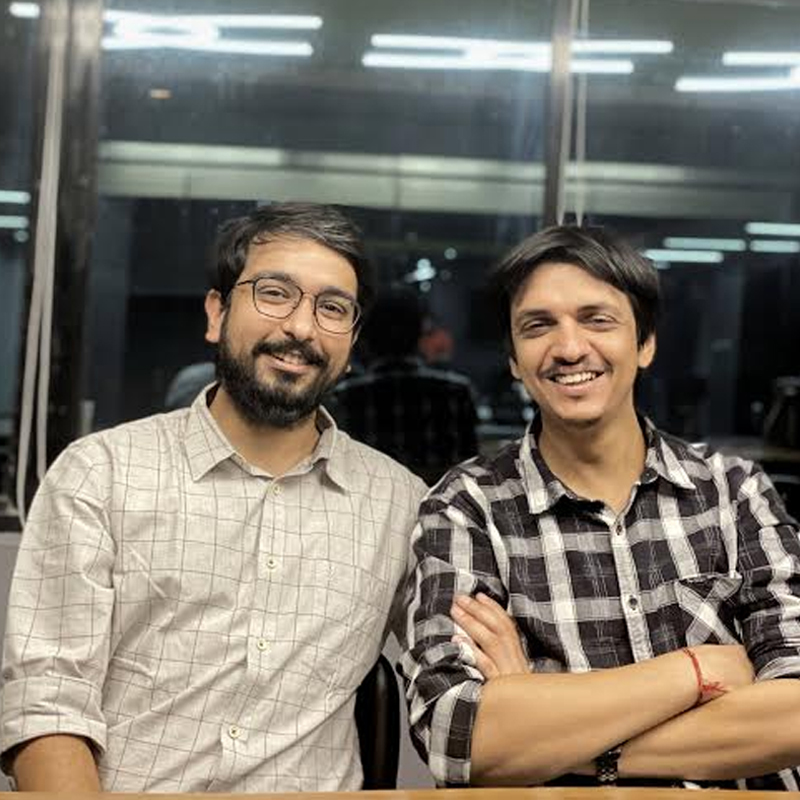
    Co-founded by Abhishek Mittal and Viraj Dave, the platform uses AI to match brands with creators whose audiences and styles align with their needs, then handles everything from brainstorming reels to tracking performance and processing payments. The pitch is simple: stop wasting time on mismatched collaborations and botched content.

    “The creator economy is at a critical inflection point,” says co-founder Mittal. Brands face mounting pressure to produce short-form video content that resonates, he argues, whilst creators struggle to monetise their work effectively. Real Bazar’s gambit is to transform what he calls “transactional collaborations” into sustained partnerships.

    The platform offers three core functions. Its AI-integrated reel studio helps companies draft and optimise video content at speed. Its matchmaking engine analyses brand objectives against creator profiles, pairing them by niche, engagement and audience fit. And its collaboration hub manages negotiations, payments and performance tracking in one place.

    Whether Real Bazar can solve influencer marketing’s thorniest problems—authenticity, transparency and return on investment—remains an open question. But in a market where brands are desperate for content that converts and creators are hungry for fair pay, the startup is betting that algorithmic efficiency beats human intuition.

    The platform launched with little fanfare beyond its press release. Time will tell whether its AI can truly decode the alchemy of viral content—or whether it simply adds another layer of technology to an already crowded market.

  • MIPCOM Cannes 2025 puts creators centre stage

    MIPCOM Cannes 2025 puts creators centre stage

    PARIS: Mipcom Cannes is recasting itself as the global meeting ground for the creator economy, unveiling a 13–16 October programme that director Lucy Smith calls “the biggest generational shift the market has ever seen”. She declared the creator economy “no longer emerging—it’s arrived”, signalling a fresh era for storytelling, distribution and monetisation.

    The scale remains vast: organisers expect more than 10,500 delegates from over 100 countries to pack the Palais des Festivals and surrounding beachfront. Joining the traditional powerhouses—Disney, Warner Bros Discovery, Sony Pictures Entertainment, Paramount Global, Banijay, BBC Studios, ZDF Studios and ITV Studios—are creator-led platforms and digital natives such as YouTube, TikTok, Snapchat, Dhar Mann Studios, Tubi, Samsung TV Plus and Luma AI. Big advertisers and agencies including Mattel, Toys“R”Us, Ancestry, Dentsu and McCann are coming to broker brand-funded projects.

    YouTube mounts its most ambitious presence yet: a dedicated space on the Croisette, daily workshops and a headline keynote with EMEA vice-president Pedro Pina and BBC Studios digital chief Jasmine Dawson in conversation with industry analyst Evan Shapiro. The rebadged MIP Creative Hub—formerly the Producers Hub—will host four days of matchmaking between creators, studios and brands.

    Fresh summits aim to blur the lines between TV, tech and social platforms. The BrandStorytelling Summit, imported from Sundance, will showcase how advertisers and digital talent collaborate on narrative campaigns. The Innovation Lab expands with an AI summit and new demo areas for cloud production, virtual sets and immersive formats. Panels will dissect monetisation models from Fast and AVoD to direct-to-fan subscriptions.

    MIPJunior, the kids’ pre-market on 11–12 October, moves into the Palais for the first time, offering dedicated matchmaking and a premiere of Ki & Hi in the Panda Kingdom, based on Kevin Tran’s best-selling manga.
    High-wattage speakers include Mattel Studios president Robbie Brenner, Banijay chief Marco Bassetti, Mediawan Pictures CEO Elisabeth d’Arvieu and Toys“R”Us CMO Kim Miller Olko, alongside creators Callum “Callux” McGinley and Dhar Mann. World premieres on the main stage feature Paramount’s Boston Blue, ZDF’s Ku’damm 77 and a Sony preview of The Miniature Wife, with cast members Donnie Wahlberg, Sonequa Martin-Green and Matthew Macfadyen expected.

    By weaving creators into every strand—from keynotes to co-production hubs—MIPCOM is betting that the next wave of global television will be forged as much by YouTubers and TikTokers as by Hollywood studios. The 2025 edition aims to prove that the Croisette can be the crossroads where legacy broadcasters and digital disruptors strike their biggest deals yet.

  • Kofluence report decodes India’s booming influence economy

    Kofluence report decodes India’s booming influence economy

    MUMBAI: India’s influencer economy is hitting its stride—and going hyperlocal. Ad-tech platform Kofluence has dropped the 2025 edition of its flagship report Decoding Influence, unravelling how data, AI, and regional creators are reshaping digital advertising in the world’s fastest-growing content market.

    Based on insights from over 1,000 creators, marketers and industry leaders, the report paints a picture of a maturing ecosystem where brands are treating influencer partnerships not as vanity plays but as performance levers.

    “India’s influence economy has not only seen growth but also a decentralisation of influence. There is a dynamic shift with creators in Tier 2 and Tier 3 cities, often creating content in regional and vernacular languages, who are building strongly engaged communities through hyperlocal narratives,” observes Kofluence CEO & co-founder  Sreeram Reddy Vanga. “Amidst a trillion-dollar influencer advertising opportunity in India, we’re seeing brands approach influencer partnerships with far more intention and as a strategic marketing lever, driven by data, sustained by technology, and measured against business outcomes.”

    Key takeaways from Decoding Influence 2025:

    * Instagram leads the pack: With an estimated 1.8–2.3 million Indian creators, Instagram remains the top monetisation playground. Reels dominate revenue—charging anywhere from Rs 500–5,000 for creators under 10,000 followers, and crossing Rs 2 lakh for celebrity posts.

    * Big money flows: India’s influencer market is pegged at Rs 3,000–3,500 crore and climbing. E-commerce leads with 23 per cent of total influencer spends, followed by FMCG at 19 per cent. Over 25 per cent of brands ramp up influencer budgets during launches.

    * Small is powerful: Micro-influencers (10k–100k followers) are gaining traction. Some 52 per cent of marketers say they’re best suited for regional outreach. Diwali remains the hottest season, with brands kicking off campaign plans 2–4 weeks ahead.

    * AI and automation take hold: A full 61 per cent of brands are deploying tech platforms to manage influencer ops, with 18 per cent fully integrated. Generative AI is already used by 29 per cent of marketers—mostly to generate content ideas and assets.

    “With India crossing 900 million internet users, the creator economy is poised for continued expansion, fueled by government initiatives as well as significant technological advancements. Looking ahead, I believe we are moving towards the phase of integrated influence in which advertising mediums will increasingly converge together,” saYS co-founder Kofluence Ritesh Ujjwal.  “Decoding Influence 2025 is built on strong platform intelligence and first-party data, and will give marketers strategic insights on a rapidly evolving industry that is being transformed by AI, cookie deprecation and shifting creator-brand relationships. We hope you will find this report useful as you plan your next steps.”

    The Decoding Influence 2025 report leans heavily on first-party data and platform intelligence, offering an in-depth look at an industry evolving rapidly under the pressure of AI disruption, cookie phase-outs, and changing brand-creator dynamics.

  • Creators vs. Influencers: Who Should Brands Work With?

    Creators vs. Influencers: Who Should Brands Work With?

    MUMBAI: Let’s get one thing straight, not everyone with a camera and an audience is a creator.

    Over the past few years, brands have gone all-in on influencer marketing, pumping money into campaigns focusing on numbers, views, likes, and reach. But they’ve forgotten the essence of content creation somewhere along the way. The obsession with influencers has overshadowed the people who genuinely create, the ones who make content that audiences connect with.

    At Creators Network, we didn’t just pick the word Creator for the sake of it. We genuinely believe in the art of content, not just the commerce behind it. If you’re good at your craft, money follows as a by-product. But if you start with just the commercial intent, chances are you’ll struggle to build real trust.

    The Difference Between a Creator and an Influencer

    It’s simple.

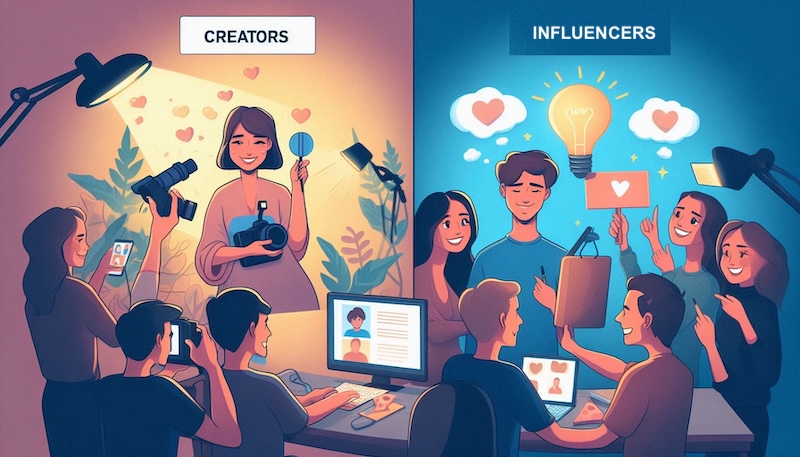
    Influencers exist because of their audience. Their primary goal is to maintain engagement, grow numbers, and (let’s be real) sell products. And honestly? There’s nothing wrong with that, it’s a legit marketing model. But let’s call it what it is: a sales funnel in human form.

    Himanshu AroraCreators, on the other hand, exist even without an audience. Their focus isn’t on “how do I sell this?” it’s “how do I make something I love?” And when you love what you do, an audience naturally follows. That’s why creators build communities, while influencers build followers.

    Selling vs. Using – Why Gen Z Can See Through the BS

    Here’s the thing: Gen Z is the most ad-resistant generation ever.
    They don’t want to be told what to buy. They want to see how something fits into their life. Instead of “Here’s why this shampoo is the best,” they prefer “This shampoo saved me from a bad hair day before my date.” 

    See the difference?

    And that’s exactly why creators work better for long-term brand relationships. When a creator genuinely uses a product, it doesn’t feel like an ad. It feels like a recommendation from a friend.

    A great example:  Kusha Kapila. You’ve seen her brand collabs, they never feel like she’s selling something to you. They feel like an extension of her content, a natural part of the world she’s built. And because of that, people watch them instead of skipping through.

    Or take Bhuvan Bam. If he endorses a product, it doesn’t feel forced, because it’s seamlessly woven into his storytelling. He doesn’t push a brand, he makes it a part of his world. And that’s why it works.

    Brands Need to Think Long-Term, Not Just Viral

    Right now, most brands are still chasing short-term virality instead of long-term trust. They’ll work with an influencer for one campaign, squeeze out some impressions, and move on to the next. But the best brands, the ones that get it, invest in creators.

    Instead of thinking, “Who can get us one million views this week?” they think, “Who can represent our brand for the next three years?”

    Few brands have already started doing this, though. They choose long-term creator partnerships over one-off influencer deals because, ultimately, influence fades, but trust compounds over time.

    So, Who Should Brands Work With?

    It’s not about influencers vs. creators. It’s about short-term vs. long-term thinking. If you need quick clicks, sure, go with an influencer. But if you want brand advocacy that lasts, invest in a creator. Always  ask yourself:
    “Do we want an influencer for today or a creator for the future?”

    Your answer will define your brand’s story.

    Himanshu Arora is the  founder & CEO, Creators Network & BookYourCreator. The views expressed in this column are entirely the author’s and indiantelevision.com need not subscribe to them. 

  • Mad Influence launches Xley – a marketplace for creators and brands

    Mad Influence launches Xley – a marketplace for creators and brands

    MUMBAI: Another influencer marketplace which claims to simplify life for creators and advertisers has been announced. Called Xley (pronounced zilley) it’s coming from the Mad group, which is the parent company of influencer marketing agency Mad Infuence.  

    An invite only market place, it claims to use AI and ML to simplify, optimise and elevate brand creator collaborations. It has access to about 200 million creators across YouTube, Instagram and Tiktok, in more than 54 languages, 10,000 cities ad 150 countries.

    The platform is claimed to have three core pillars: advance audience insights, extensive creator discover tools, and comprehensive campaign management and performance tracking.

    Xley’s key features are claimed to include creator discovery, utilising over 25 advanced filters for demographics, language, niche, and audience interests; ML-powered insights for campaign analysis and performance tracking; an effortless management dashboard to plan, execute, and monitor campaigns; scalability to suit various campaign needs; and data-driven decisions through advanced analytics to maximise ROI and refine marketing strategies

    “Xley is more than just a marketplace; it’s a movement to empower creators,” Mad Influencer and Xley founder Gautam Madhavan, “It’s  a platform that reimagines the creator economy.”

    “Our vision was to create a platform that not only offers real-time analytics of social profiles but also simplifies and automates end-to-end campaign management in one cohesive space. As development progressed, it became evident that Xley’s capabilities extended far beyond initial expectations – enabling a broader user base, optimising efficiency, and empowering content creators with enhanced visibility and streamlined brand partnerships. By significantly reducing manual workloads, accelerating timelines, and improving ROI, Xley stands as a transformative solution, redefining how brands and creators collaborate globally,” added Xley head of strategy Aman Narula.

    For brands, Xley  automates manual processes like creator vetting and campaign tracking, improves ROI through data-driven insights, and extends global reach by connecting with creators across diverse languages and regions. Creators benefit from global visibility, access to aligned campaign opportunities, the ability to build long-term partnerships, a centralised hub for managing campaign-related activities, business analytics, revenue tracking, and effective campaign management with faster approvals and reduced downtime.

  • Digital content creators and their reliance on fictional facts

    Digital content creators and their reliance on fictional facts

    MUMBAI: We have known it for a long time. And many have cautioned us about it as well. 

    Now here’s some data to support the fact that digital content influencers and creators are pretty inventive about the so-called information that they tout as facts.

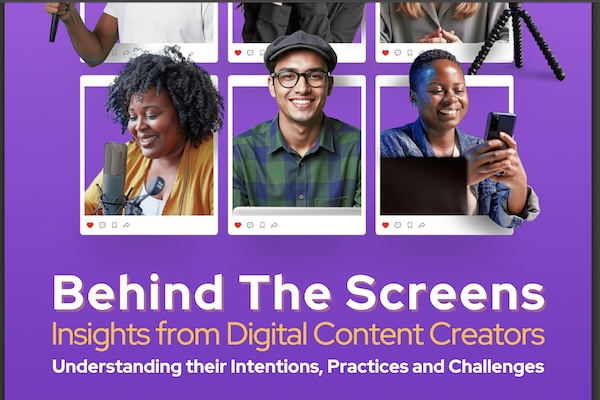
    A Unesco backed  Behind the Scenes survey  has revealed that 62 per cent of influencers do not carry out rigorous and systematic fact-checking of information prior to sharing it.  However,  73 per cent expressed the desire to be trained to do so. 

    The survey is the first global analysis of digital content creators’ motivations and practices, and of the challenges they face. It involved 500 influencers in 45 countries, with the expertise of a dedicated research team at US-based Bowling Green State University.

    The survey found that content creators have difficulty determining the best criteria for assessing the credibility of information they find online. 42 per cent of respondents said they used “the number of ‘likes’ and ‘shares’ a post had received” on social media as the main indicator. 21 per cent were happy to share content with their audiences if it had been shared with them “by friends they trusted,” and 19 per cent said they relied “on the reputation” of the original author or publisher of content. 

    Here’s more: mainstream news media is only the third most common source (36.9 per cent) for content creators, after their own experience and their own research and interviews.

    Clearly, a lot needs to be done to train digital content creators as well as followers who swallow any drivel  that’s dished out to them as a fact. Unesco has launched an online course to address this and educate them. More than 9,000 participants from 160 countries already registered to participate. 

    They will learn how to:
    * source information using a diverse range of sources
    * assess and verify the quality of information
    * be transparent about the sources which inspire their content
    * identify, debunk and report misinformation, disinformation and hate speech
    * collaborate with journalists and traditional media to amplify fact-based information.

    Can some more educational initiatives in India be instituted by educational institutes to educate the digital and social media crowd?

  • Dish TV India offers creators and filmmakers Watcho Stories Conclave

    Dish TV India offers creators and filmmakers Watcho Stories Conclave

    MUMBAI:  Film makers and creators watch out, Watcho is coming your way. Dish TV India’s OTT aggregation platform has launched the Watcho Storytellers Conclave,  an innovative platform dedicated to empowering filmmakers and content creators across India. The  initiative addresses the need for a level playing field for film makers and content creators, also, creating and opening up new avenues for both emerging and established talent to connect with audiences and share their unique narratives., says a press release issued by Dish TV India.

    Watcho is being positioned as a game-changer for emerging filmmakers and creators, offering numerous benefits with even more breakthrough features and opportunities to come. On offer is the 10 million plus household  audience available through Watcho and Dish TV, along with promotional opportunities across multiple channels for maximum visibility and impact. For viewers, the platform promises a carefully curated selection of diverse content that enriches their experience with fresh, hand-picked programming, making quality entertainment accessible to all.

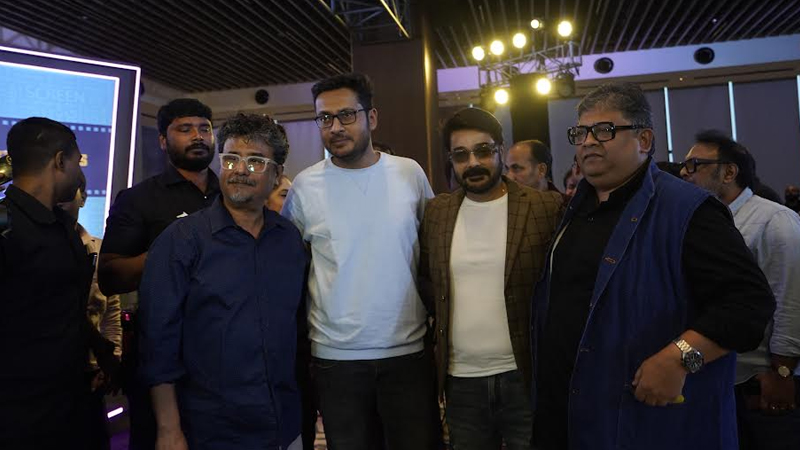
    To commemorate the launch, Watcho organized a  Watcho Storyteller Conclave in Kolkata featuring filmmakers and creators, including Prosenjit Chatterjee, Aniruddha Roy Chowdhury, Prasun Chatterjee, and Indranil Roy Chowdhury. The event included three sessions, offering valuable insights into the challenges and opportunities within the content creation landscape, while also expressing enthusiasm for the possibilities that the platform will bring to the industry.

    Said Prosenjit Chatterjee: “DishTV  Watcho is a game-changer for emerging filmmakers and creators. It levels the playing field, making it easier than ever to share your vision with the world. It’s going to be a one-stop hub where creativity meets opportunity, and I’m excited to see the future of film and content unfold here. I’m eagerly thrilled for the Watcho Storytellers Conclave.”

    The next editions  of Watcho Storytellers Conclave are planned for Hyderabad and Mumbai.

    Dish TV CEO & executive director Manoj Dobhal said: “In a vibrant and diverse nation like India, the creative voices of our filmmakers and artists often remain unheard due to limited avenues and opportunities. With this event, we are pioneering a movement that empowers creators to transcend traditional constraints and connect directly with audiences. Our vision is to cultivate an inclusive platform where every creator can share their unique stories, enhancing visibility and enriching the cultural fabric of our entertainment industry. As we embrace the digital-first era, we foresee a future where every narrative, no matter how unconventional, can resonate with its audience. With Watcho Storytellers Conclave, we are committed to nurturing an ecosystem that celebrates creativity and transforms the entertainment experience for all.”

    Added Dish TV corporate marketing head Sukhpreet Singh: “The Watcho Storytellers Conclave in Kolkata marks a pivotal moment in our commitment to nurturing the next generation of storytellers. With this event, we are not just providing a platform; we are cultivating a vibrant community where creativity thrives. Today’s viewers demand content that resonates with their diverse experiences, and Watcho enables creators to step into the spotlight and share their unique voices.”
     

  • Guest article: OTT in India and the endless possibilities

    Guest article: OTT in India and the endless possibilities

    Mumbai; Since 2008, when OTT (Over-the-top) was introduced in India, it has flourished and grown. Starting from BIGFlix, nexGtv to Hotstar, Ditto TV by Zee, and Sony LIV, there are enormous numbers of OTT platforms in the market currently. The number is increasing, and it is not going to stop any sooner.  

    The OTT market scenario in India is nothing but impressive, with a revenue of $3,666 million in 2023 and a projection of $5,586 million by 2028. India is going to witness an immense growth rate of 8.79 per cent annually over the years. There are currently 481 million OTT subscribers in India, and the number is projected to increase at a rate of 37.3 per cent by the year 2028.    

    Indian OTT industry is booming with high potential and possibilities for both consumers and creators. Let’s delve deep into the revolution through continuous transformation.  

    Change of viewing habit through OTT

    Do you remember the long wait, regret of missing out on a show, skipping meals, fighting for the remote, and many such nuisances over your favorite television program? Many of us have gone through such days that bring back nostalgia.    

    Thankfully, those days are gone. We live in a world of 5G, with a wide availability of smart gadgets and affordable internet connectivity. Entertainment is in the palm of our hands, and we can access content at our own time and convenience.  

    OTT has transformed how we consume content and introduced us to on-demand over-the-top content. Along with the quality and variety of content, OTT brings flexibility and affordability to content consumption, which was hardly possible in traditional media.  

    All it takes is just one subscription, and all the content is available at your convenience. Watch one episode per day or binge-watch your favorite show; the choice is yours. Apart from flexibility and availability, quality content, interactivity, engagements, and many such technological additions make OTT booming in India and rising every day.  

    A platform for creators and artists  

    The rise of OTT also comes with the availability of the platform for independent creators. Those days are gone when artists used to struggle for years to get a break. Streaming platforms such as Amazon Prime, Netflix, Sony LIV, and others ensured every talented individual got a chance to showcase their talent.  

    The opportunity not only brings light to the unsung heroes but also provides valuable content to the consumers. To the Bone, Sir, The Lift Boy, and Beasts of No Nation are a few examples of what talented individuals can do and offer to viewers around the world.  

    OTT provides exposure to these talented creators and allows them to build a fan base. Creators get recognition; they get to experiment across formats and genres and tell stories that resonate with the audience.  

    So, all the creative minds out there can get wings for their creativity with the accessibility of OTT platforms.  

    Transforming ad viewing through hyper-personalisation

    In 2023, OTT made $1.41 billion from its advertising revenue model, a.k.a. AVOD. It is projected to be $2.73 billion by 2028, with an annual rate of 14.13 per cent. Advertisement segments in India proliferate with OTT technology, making them hyper-personalised and target based.

    Unlike traditional media, the ads are limited to the target audience, adding to their relevancy. Advanced analytics helps advertisers know the target segment through demographics, age, gender, viewing habits, etc. All the technology and latest formats not only make OTT ads relevant to the viewers but also make them cost-effective for the advertisers.

    Hasn’t the OTT made everything about entertainment so perfect? OTT solves minor inconveniences, from viewing experience to useful content and relevant ads. Over-the-top streaming is undoubtedly the best thing that has happened to the entertainment industry. The affordability, accessibility, and availability are just unmatched.

    But that’s not all. Have you thought about the troubles leading to the excessive availability of OTT? Let’s talk!  

    OTT accessibility leading to content fatigue  

    Ever got agitated searching for what content to watch and ended up watching nothing? Many of us have experienced the same, which resulted in fatigue and exhaustion.  

    Yes, content fatigue is real, and believe it or not, this is one of the reasons OTT subscribers around the world opt out of their subscription plans. Netflix and Disney+ Hotstar lost around 1.2 million and 3.8 million subscribers in 2023, respectively. Among many other reasons, like their subscription model, sharing option, and so on, content fatigue is another significant reason for losing subscribers.  

    Well, FAST (Free Ad-supported Streaming Television) has been introduced to fight this fatigue. FAST is the online version of linear television content where viewers watch the scheduled content without choosing anything of themselves. The model has already been popular among viewers, while experts think FAST will be India’s most consumable model in the near future.  

    Popular Indian media entities such as Zee News, NDTV, ABP, and QYOU’s success in the FAST arena depict the future of OTT consumption through the model.  

    Environmental impacts of OTT  

    This top-notch infrastructure provided by technology also has some negative impacts, which we can’t ignore. Millions of servers, devices, and other equipment are being used for uninterrupted services, resulting in carbon emissions. An average of 54 grams of carbon emission happens for one hour of video streaming. Netflix has reported the maximum carbon emission in a report, which is 1.6 kg of CO2 every 30 minutes of streaming.

    Considering the emission rate, the OTT platforms use renewable energies, optimise videos, minimise power, and reduce internet consumption. New technologies and strategies are being developed to lessen our environment’s carbon footprint. These careful measures can save us from future environmental hazards interrupting OTT consumption.

    What the future holds  

    The future of OTT is immense and uncertain but positive. The growth is to be continued with technological innovation, creativity, and affordability.  

    Technology such as generative AI, AI/ML, video analytics, and AR/VR is immensely used and evolving towards unapologetic innovation beyond our imagination. Imagine sitting beside Shah Rukh Khan and Talking to him in real-time through those VR headsets, or having same Shah Rukh Khan voice being heard in all different Indian languages Crazy, right? But, possible. Logituit is working on some of the cutting-edge use cases for the media industry.  

    The roller coaster of adventure has just started. We are heading to a super sophisticated streaming technology with hyper-personalised content, interactivity, and high engagement.  

    The future is here, where virtual interaction will be a norm, and what we all watch in a sci-fi movie might soon become a reality. So, brace yourself for all the streaming uncertainty soon to become a reality!

    The article has been authored by Logituit co-founder and CEO Sandeep Chandak.

  • Metaverse ecosystem opening up new influencer opportunities for brands, creators, & consumers: FleishmanHillard report

    Metaverse ecosystem opening up new influencer opportunities for brands, creators, & consumers: FleishmanHillard report

    Mumbai: FleishmanHillard and its research practice, True Global Intelligence, in partnership with Eleve Media, have released the ‘Web 3.0 Influencer and Intelligence Report 2022.’ It showcases the ways that conversation and influence are quickly changing in India around the rising evolution of the metasphere.

    Both the creator economy and the topics driving discussion of web 3.0 on social media have sharply increased over the past 12 months. The report research included a survey of over 500 influencers, content creators and select web 3.0 players from March through April 2022, in addition to the analysis of more than 12 months of social conversations. The research confirms the massive excitement around web 3.0, as well as specific areas of interest, including education, regulation and the need for re-imagined communities. 

    “Our report confirms the rapidly growing appetite for news and views about the metaverse and web 3.0-related trends. These advancements are already setting a precedent for brands and content creators who can design highly engaging and differentiated campaigns that leverage this advantage. We hope this report will increase our understanding of the subject and contribute toward the adoption of Web 3.0 in a meaningful way for brands and creators,” said FleishmanHillard India MD and partner Munavar Attari.

    The report also provides a detailed conversation analysis and an overview of the web 3.0 landscape in India.

    “Our research inspected the developments in the web 3.0 space over the past year and highlights just how dynamic the topic is, and how much open territory still exists for brand communications that satisfy this hunger. As brands adopt new technologies in web 3.0, understanding the velocity and direction of the current conversation can be valuable to start from a place of intelligence and understanding in India,” said FleishmanHillard TRUE Global Intelligence, managing director of APAC and global head of analytics Michael Rinaman.

    Major themes and findings are discussed in detail in the report, including how:

    •     The popularity of web 3.0 content reveals a dire need for a better understanding of the new generation of web technologies.
    •     The evolving landscape requires close attention to shifting conversations to understand emergent trends, nuances, and new risks.
    •     Most influencers want to create a community (web 3.0) over algorithms (web 2.0) in the metaverse.
    •     Influencers are on the lookout for next-gen tools to strengthen the creator economy.
    •     Creators and non-fungible tokens (NFTs) have paved the way for the metaverse to become an accelerated reality.
    •     Creators vote for Discord, virtual influencers, and social interactions as key web 3.0 tools.

    “Web 3.0 promises a more direct relationship between brands and consumers. And we would want brands to be equipped to experiment and explore web 3.0 platforms and opportunities. The ‘Web 3.0 Influencer & Intelligence Report 2022’ is a joint effort with FleishmanHillard in India to help brands strategically leverage this societal shift,” said Eleve Media CEO and founder Prince Khanna.

    From the web 3.0 Influencer and Intelligence Report 2022, the research from FleishmanHillard in India and Eleve demonstrates a sense of urgency that brands need to start to develop web 3.0 strategies now while there is still room for differentiation and partnership. As audiences become more familiar with web 3.0 topics such as NFTs, cryptocurrencies, blockchains, and tokens, there will be fewer opportunities to differentiate.

    Web 3.0 is set to change the influencer ecosystem and continue to drive conversation. In the report, brands can learn more about immediate opportunities to act – from embracing the key trio with creators (creation, consumption, and compensation) to crafting the right strategies and messaging to be considered relevant.