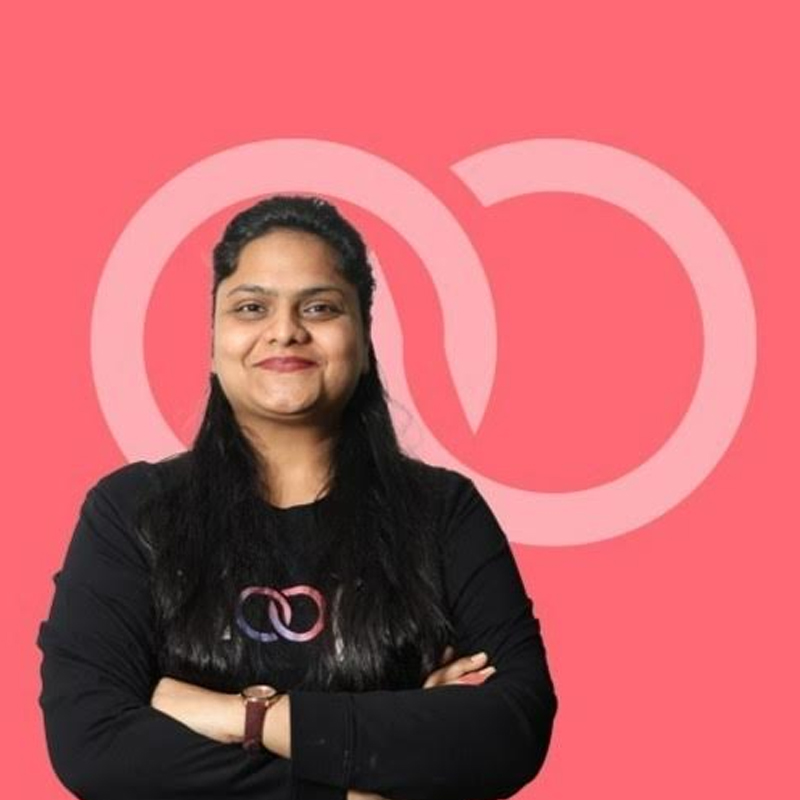
Mumbai: Meghna Mittal is GSharp Media’s co-founder and chief marketing officer; the company has two brands under its umbrella: Songfest India and Hoopr. Songfest focuses on giving musicians the creative freedom to explore new sonic avenues; Hoopr is India’s first music licensing marketplace that intends to offer cutting-edge solutions to both musicians and content creators alike.
Ever since its inception, GSharp Media has been focused on building creator-centric products. Mittal has led these initiatives and focuses extensively on crafting innovative marketing strategies while also playing a key role in scaling up products. Her strengths lie in staying close to the consumer, understanding the market requirements, and creating the right product that solves the customer’s pain point. She was pivotal in steering several viral marketing campaigns for Songfest, which accumulated more than 100 million views for its YouTube channel.
Her latest venture is Hoopr.ai, a music licensing marketplace that offers cutting-edge viral solutions to brands and video creators in collaboration with some of the most popular artists. The idea behind it is to offer a multitude of songs, background scores, and sound effects to creators regardless of the kind of content they create and showcase some innovative music from India’s best musicians and composers. Mittal and her team aim to help the creator economy reach new heights in India and around the globe with the platform.
Prior to joining GSharp Media, Mittal led the marketing initiatives for Hubilo and YesssWorks for more than seven years. A music lover herself and a people person, her interests include designing and building consumer-centric products, creating exciting content, and crafting unique music solutions for brands. She also has a huge, self-cultivated network of influencers across the country and believes that every creator deserves to have the best tools at their disposal for creating invigorating content.
On the personal front, she is extremely passionate about cooking and loves feeding her guests different delicacies. Indiantelevision.com caught up with Mittal to find out the growth strategy of the company.
Excerpts:
On Hoopr.ai
Most founders create products that solve a certain pain point they themselves have experienced and for which there is a large market but no clear solution. A few months into the pandemic, Gaurav Dagaonkar (GSharp Media founder) and I were running the content production studio Songfest and realised that costs and means of video production had come down heavily due to the lockdown. Most clients of Songfest and Songfest itself heavily use stock video & music to complete productions and save costs. It was at this stage that we realised how limited the availability of Indian stock music was.
It was this particular project for which we needed a Hindi hip-hop, street rap kind of track, and we couldn’t find even one across all platforms in the world. The international music licensing platforms didn’t carry Indian music, and we didn’t have any of our own. I mean, we’re talking about a country with a combined value of $15 billion if you put together the film, television, advertising, and music industries, and strangely, not one music licensing marketplace existed before Hoopr. We ultimately had to get the track created, which cost us a lot more time and money than the budget permitted.
So we started thinking about the millions of Indian vloggers, podcasters, live streamers, and digital content creators, including startups, who create daily video content for their Indian audiences and would be requiring relevant Indian music. On the one hand, using music without a licence results in a copyright or content ID claim, which takes away a creator’s monetisation rights for that video, while on the other, there is hardly any Indian music available to licence. That got us to start thinking seriously about building Hoopr.
But the final catalyst in this decision turned out to be a unique one. Anushka Sen is an Indian influencer with over 35 million followers on Instagram and two million on YouTube. She received a copyright claim for using a song belonging to Songfest and asked for a micro licence that could be purchased. I remember this one day when we came across a report that projected India having more than 100 million content creators by 2025, and Sen also wanted to buy a micro licence from us. We started building Hoopr from that day on.
On Hoopr.ai’ revenue model
We offer subscriptions to individual creators and businesses. Apart from that, we also offer custom plans for enterprises.
On the growth
We’re proud of the fact that we have received traction from customers all over India. It’s a testament to the power of the creator economy that we’ve seen traction from not only individual creators but also interest from brands and businesses across India.
On the challenges for monetisation of content including music
Let’s look at the content—music and video—separately. YouTube is currently the most important source of content monetization, at least for Indian creators.However, in order for this monetization to begin on YouTube, one must have more than 1,000 subscribers and 4,000 hours of watch time. Post that too, it requires millions of views to make a reasonable amount of income. Typically, if YouTube pays 2-3 paisa per view in India, a typical YouTuber ends up earning somewhere close to 15 to 30 thousand for a million views.
But the million views are hard to get, so the challenge for the Indian content creator is to be regular, attract a large audience, and create content in a sustained manner. Also, a small fraction of video creators end up making substantial money from platforms such as YouTube. A lot of the other short-form platforms do not allow monetization similar to YouTube, although it is likely that this may change in the future. Aside from this, content creators face a number of other challenges that limit their ability to monetize. Sometimes there could be licensing issues, creators may end up using music tracks that might get muted, or there could be a copyright claim or a takedown.
For musicians, it can be relatively easier as one can create music tracks and distribute them to multiple streaming platforms, and typically there is a pay-out associated with each stream. However, the challenge in this case is to get discovered, heard, and seen when the competition is cutthroat and there are thousands of tracks uploaded every single day.
On how covid impacted this area
The covid pandemic fuelled the digital revolution and accelerated the growth of content creators, social media community engagers, and even curators. During this time, both Dagaonkar and I realised that our agency and brand clients were actively looking to licence Indian music but were not able to find relevant content. We experienced this difficulty while creating promos and marketing videos for Songfest. But the turning point came when one of India’s leading content creators, Anushka Sen, got a content ID claim on YouTube and called me to buy a licence. A subsequent deep dive into the numbers of the creator economy revealed that millions of creators in India require music for their content and are willing to buy licences to avoid copyright claims.
Having launched the platform now, the industry envisages Hoopr as a potential go-to platform to find the right music for video content.
On the products like Songfest that GSharp Media operates
GSharp Media is a music tech and content company, and the idea has been to create and operate brands and products in the music domain that are interconnected and have synergies with one another. With Songfest and Hoopr, we have these synergies. Songfest is a brand that creates customised brand solutions. We create branded content, such as music videos, television commercials, and so on. Songfest also operates a YouTube channel with over half a million subscribers. The biggest asset of the company is the network of 3000+ music creators that we have.
On the latest campaign
We have launched a new campaign called “#HarGharCreator” with an ad to celebrate and empower creators across India. Hoopr.ai is solving a billion-dollar problem faced by content creators and businesses every day: that of discovering and licensing the right music for their videos. India’s 80 million+ creator community comprises vloggers, podcasters, gamers, filmmakers, live-streamers, and influencers who create audio-visual content on a variety of topics. With over 25,000 tracks and sound effects, Hoopr.ai is not only enabling these creators to get specific music for their needs but also helping them avoid copyright strikes and legal issues.
Furthermore, what’s also changing is the mindset with regard to content creation, with more people embracing it as a career choice. And that is exactly what the ad captures. In the ad, a young college student can be seen telling his strict father that he doesn’t want to be an engineer but rather a content creator. The reaction of the father makes the ad a must-watch for all content creators and their families.
A creator is now emerging in nearly every home across India, and we want to help them find phenomenal Indian music for their videos. Apart from individual creators, the music on Hoopr is also being used by brands, enterprises, and OTT platforms, as it is cleared for use and free from any copyright strikes or takedowns.
On trends being seen when it comes to music tech
There are a lot of developments happening in music technology. Right from production to distribution and consumption, to areas like licensing, building communities, and fan funding of collectibles, music tech has seen a lot of developments and interesting start-ups over the last couple of years. When it comes to music production, we are seeing tools that allow people to collaborate. There are multiple music distribution services that have evolved over the last four to five years that allow artists to distribute music across different streaming platforms. We are also in an era where the majority of music is consumed through streaming platforms. As a result, apps such as Spotify are continuously evolving their algorithms and recommendation engines to contribute to a better user experience. We have also seen the emergence of licensing platforms that have opened up new doors of income for musicians.
Two areas that are still in their nascent stage but will only continue to grow are AI-generated music and the ability of artists to create and distribute NFTs. These could unlock new doors as far as the music industry is concerned and could bring with them new opportunities for artists, new sources of funding, etc., all on the back of technological development.
On the future of the podcast format in India
Any kind of individualised content creation is here to stay, whether the creator makes a living out of it or does it out of passion and knowledge sharing. Any kind of content creation is going to grow from here, mainly because there are so many new tools that are coming up that help creators create content. In the case of podcasts, it’s a bit easier, as one can create podcasts in the comfort of their homes. They are able to record using microphones, which have become cheaper using workstations. Distributing podcasts has become easier too. The biggest driver is the fact that people want to share their knowledge, experience, and learnings, in addition to the huge appetite of the digital audience to consume this content.
India still has the potential to grow multifold in the domain of podcasts and some related fields too. Companies like Pocket FM do well in India, along with regional companies like Kuku FM, which are also producing a large number of audio books. Very soon, it will translate into individuals creating systematic podcasts. The future of podcasts in India is promising, and one of the biggest drivers will be regional content or regional podcasts, as 70 per cent of India’s population consumes regional content