Tag: CPS

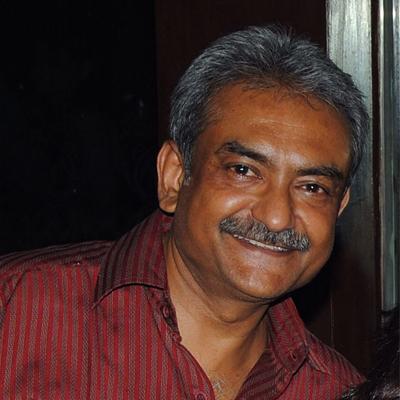
  • “Our carriage bill is down 30-35%; subscription up 14-15%”: Nikhil Gandhi

    “Our carriage bill is down 30-35%; subscription up 14-15%”: Nikhil Gandhi

    2015 will be remembered as a memorable year for Disney India’s TV biz. The mouse house took its TV channel distribution in its own hands when it terminated its joint venture with the Viacom outfit Indiacast.  For several years it had experimented with other distribution partners like Sun Distribution Services to Star Den, both of which are non-existent now.

    A new venture Disney Media Networks was set up and media vet Nikhil Gandhi – who was responsibile for revenue and profitability across Disney India media channels comprising of youth channels – Bindass and kids channels – Disney Channel, Disney Junior, Disney XD and Hungama TV, movies channels – UTV Movies and UTV Action –  was given its charge.

    His challenge: to jiggle out distribution and subscription  revenues from India’s fragmented cable TV ecosystem, while keeping affiliate fees under control even as he ensured carriage of Disney India’s eight channel bouquet.

    Six months down the line, Gandhi seems to have done well, if one goes by this exclusive interview to indiantelevision.com’s Anirban Roy Choudhury.  He speaks about the challenges he has and continues to face, and why he is still optimistic.

    Excerpts:

    How has the journey been so far? What made Disney decide to distribute its TV channels on its own?

    It has been a fabulous six months. The market has been receptive to whatever we are doing, which has been a major boost for us. We have been in the business for over 10 years now and we have been distributing through different partners. We started with Star, then we went to Sun and then to IndiaCast, following which we were on an agency relationship with them. Therefore we needed to take a call on what we really wanted to do.

    I think our network is one to reckon with. We have six per cent viewership share which is probably five or six times compared to the one following us. So we are the fifth largest broadcast network. That’s why we thought we could go out and take the business in our hands and see what we could do at the distribution level.

    One, it was also important to get our carriage fee bill down, which each  broadcaster is trying his level best to do. Two and the most important one was to get the subscription business in order. 

    What are the challenges that you faced and how did you counter them?

    We had to inform the ecosystem – the MSOs’ and the DTH players about Disney Media Networks, that we have eigh channels, we have very high premium brands. We had to tell them what we are and what value we could add to them. I think that at certain point after our initial efforts, they did realise that they had never seen Disney as an entity in its own right. They began to understand the value that we brought to the table in terms of packaging. They realised we were the leaders in kids and youth channels and we had a sizeable movie business. We were not just another bouquet, we were leaders of sorts. The challenge was to communicate that and the team did a fantastic job.

    I think that the deals that we have struck are our biggest achievement. We have reached very big milestones in the first year itself. To begin with we have got our carriage bill down by 30 to 35 per cent and at the same time we have taken our subscription revenue up 14 to 15 per cent and it happened after rounds of negotiations and discussions with our carriage partners.

    When you talk about distribution success, do you mean a pan India success or is it a particular market?

    It is a pan India success for us. We are distributed nationally. Our channels reach east, west, north and south. And that is because of the fantastic work done by our teams on ground. We got a fantastic bunch of talented people from across different fields. They have successfully communicated what really Disney Media Networks stands for, and most of the negotiations are done by them. So whenever we talk about success or numbers, it is pan India that we are talking about, and not a particular market.

    What is your opinion about the CPS model? If rolled out properly, will it enhance your subscription revenue?

    CPS is there…and yet it’s not there as a whole. In phases I and II, we know what is going on. Phases III and IV will take shape with time. It’s good that we’ve digitized, now what really matters is how it is being addressed, how the CAF is filled up and how it is packaged. 

    It is a great move forward, and as a broadcaster and content provider, we can only add value to the process by giving superior content and a brand which will enhance ARPUs.

    CPS will happen as the progression of packaging happens and the progression of addressability happens.

    The MSO-LCO equation needs to change and become more mature. Yes, the moves are very positive, but we are still not there, there are areas where we need some amount of investor players to come and change the game at least from a mind-set point of view. CPS will go up with ARPU going up.  And when there is a transparent system in place that enables addressability, subscription revenue will move up in the right direction.

    What is your opinion on the regulators stand so far?

    The regulators have been very pro industry, which is a great thing. We have seen how there was a hard stance when it came to the phase III deadline. So I think it’s a very bold move, because for them also, it’s about getting the industry which is so big in size organised and deriving the maximum out of it in terms of entertainment tax and other revenue generating propositions. And an organised platform is always more transparent, and transparency is the need of the hour for the industry. So I think the regulator’s stand so far has been immensely pro industry.

    Do you think content, if paid for in India, will grow?

    ARPUs’ have been flat for last 10 years. So obviously India is not paying for content, but the moot point is that India is capable of paying more. We, at Disney, are manufacturers; we are content providers. There are platforms and there are wholesalers and retailers involved.  It is the retailers and the wholesalers who need to drive the ARPU and there are many elements on which it all depends.

    At a pricing level we are restricted by the RIO model, and then on the ground level there is the LCO who by no means is interested as it might hurt him. I think to drive payment for content, the LCO – MSO equation needs to change, DTH needs to play its role and it all needs to happen in a collaborated manner.

    I think there is a need for standard pricing similar to any other industry. You buy toothpaste the price is the same everywhere.  In India there is a legacy involved in the way it has been run. The legacy needs to change. It is changing, we expected it to change fast, but it’s actually changing at a snail’s pace.

    Can the broadcasters not play a role in ensuring higher ARPU?

    Look at what the broadcasters are offering these days. Look at the quality of the content. It’s premium content created with superior sophistication. There are HD channels offering HD content. A few of them have rolled out 4K channels.

     So while ARPU has remained same over the last 10 years, the investment on content did not stop. It kept on going. New formats, acquisitions, new and bold ways of storytelling have been explored, and then there are the additions in the number of channels every year.

    Rs 300 for 50 channels 10 years ago, has now become 250 channels of superior quality for the same old price. We have witnessed a few ARPU movements at least in the metros with DTH and a few MSOs, but these are minuscule movements. The movements need to happen much faster because that’s where the motivation is. From a broadcaster’s point of view, there is nothing that we can do but play the game as per the nature of the business.

    You spoke about collaboration, recently we witnessed switching off of signals, what is your opinion on such acts?  

    Firstly, the switching off of services and disturbing the consumer at a fundamental level is very unfair, it should not happen. There could be differences on the negotiation table, but that by no means should disturb the end consumer. 

    The fact that the consumer is deprived of a service in itself is very sad.  I don’t subscribe to such negotiations. We have also gone through highs and lows in our negotiation process but, at the end of the day, you cannot starve your consumer of superior content, or any content for that matter, because the consumer has subscribed for it. The ecosystem is such that the business is dependent on ad sales, and that is why the switch offs’ happen.

    What should lead the business, subscription or ad revenue?

    Ad sales should be an icing on the cake, subscription revenue should steer the business. Look at the mature markets – subscription revenue is leading the business, the negotiations that happen there are at a different level.

    Fundamentally the broadcast business has to be a subscription led business. You can have an advertising-based play that we are seeing with the FTA’s and that’s majorly because of the huge population of our country and the market size and the reach that TV offers. But a premium pay channel creating original superior content needs to be pay first.

    What is your take on the growing OTT business?

    At the heart of the OTT ecosystem is bandwidth and the bandwidth needs to improve.  What will be interesting to see is if it becomes subscription based (SVOD) or advertising based video on demand (AVOD). 

    Now if you are providing superior content for an AVOD model you are not creating a great environment as such. It’s all about how you form the habit. Consumers who consume OTT content are paying about Rs 1,000 for data, and we tend to think that the same consumer will not pay for  content. This mentality is not a long term one, we need to think 10 years ahead and then take steps.

    Smart TVs are in place; people are talking about 8K.  There are great leaps in terms of technology, but if we don’t take the correct steps, we won’t be able to get value out of the OTT business.

    Will you make yourself available on OTT platforms? Star has Hotstar, SPN has Sony Liv, ZEE has a couple of them and Viacom is launching VOOT. Is Disney also looking towards launching an OTT platform?

    Anywhere where consumption is there, we will make ourselves present. That’s the way forward for us. We do have plans, but we are at a very nascent stage as far as OTT is concerned. As a linear service we will be available on all OTT platforms, but when it comes to launching our own venture we will evaluate when the time is right.

    Where are you generating more subscription revenue from, DTH or cable?

    DTH has a slight edge over cable when it comes to our subscription revenue. We are gradually moving towards level contributions from both the platforms. Now with DAS phase III, I think the headroom for growth is massive in the case of cable. At this stage I think that DTH, given its organised and transparent nature, has the edge.

    Is it the bouquet mode of distribution that you are looking at, at this stage?

    Most of our deals are all bouquet offerings, if there is any platform that requires a youth offering or kids offering or a movie offering, such deals happen at a very high CPS price and we create those packages. We are there on a la carte as an offering, but there is a very small set of consumers who subscribe to the service. So it’s largely all bouquet.

    What is it that Disney Media Networks is looking for in the foreseeable future?

    I have mandated the team in Disney that the subscription business needs to overtake the ad sales business over the next three years’  and that will change the entire ecosystem. An MSO cannot then threaten me with a switch off and that’s what we are targeting. We were at about 65:35 ratio, now we have become 60:40 so we are moving towards that direction. Over time the target is to make it 40:60 or 30:70 for that matter.


  • “Our carriage bill is down 30-35%; subscription up 14-15%”: Nikhil Gandhi

    “Our carriage bill is down 30-35%; subscription up 14-15%”: Nikhil Gandhi

    2015 will be remembered as a memorable year for Disney India’s TV biz. The mouse house took its TV channel distribution in its own hands when it terminated its joint venture with the Viacom outfit Indiacast.  For several years it had experimented with other distribution partners like Sun Distribution Services to Star Den, both of which are non-existent now.

    A new venture Disney Media Networks was set up and media vet Nikhil Gandhi – who was responsibile for revenue and profitability across Disney India media channels comprising of youth channels – Bindass and kids channels – Disney Channel, Disney Junior, Disney XD and Hungama TV, movies channels – UTV Movies and UTV Action –  was given its charge.

    His challenge: to jiggle out distribution and subscription  revenues from India’s fragmented cable TV ecosystem, while keeping affiliate fees under control even as he ensured carriage of Disney India’s eight channel bouquet.

    Six months down the line, Gandhi seems to have done well, if one goes by this exclusive interview to indiantelevision.com’s Anirban Roy Choudhury.  He speaks about the challenges he has and continues to face, and why he is still optimistic.

    Excerpts:

    How has the journey been so far? What made Disney decide to distribute its TV channels on its own?

    It has been a fabulous six months. The market has been receptive to whatever we are doing, which has been a major boost for us. We have been in the business for over 10 years now and we have been distributing through different partners. We started with Star, then we went to Sun and then to IndiaCast, following which we were on an agency relationship with them. Therefore we needed to take a call on what we really wanted to do.

    I think our network is one to reckon with. We have six per cent viewership share which is probably five or six times compared to the one following us. So we are the fifth largest broadcast network. That’s why we thought we could go out and take the business in our hands and see what we could do at the distribution level.

    One, it was also important to get our carriage fee bill down, which each  broadcaster is trying his level best to do. Two and the most important one was to get the subscription business in order. 

    What are the challenges that you faced and how did you counter them?

    We had to inform the ecosystem – the MSOs’ and the DTH players about Disney Media Networks, that we have eigh channels, we have very high premium brands. We had to tell them what we are and what value we could add to them. I think that at certain point after our initial efforts, they did realise that they had never seen Disney as an entity in its own right. They began to understand the value that we brought to the table in terms of packaging. They realised we were the leaders in kids and youth channels and we had a sizeable movie business. We were not just another bouquet, we were leaders of sorts. The challenge was to communicate that and the team did a fantastic job.

    I think that the deals that we have struck are our biggest achievement. We have reached very big milestones in the first year itself. To begin with we have got our carriage bill down by 30 to 35 per cent and at the same time we have taken our subscription revenue up 14 to 15 per cent and it happened after rounds of negotiations and discussions with our carriage partners.

    When you talk about distribution success, do you mean a pan India success or is it a particular market?

    It is a pan India success for us. We are distributed nationally. Our channels reach east, west, north and south. And that is because of the fantastic work done by our teams on ground. We got a fantastic bunch of talented people from across different fields. They have successfully communicated what really Disney Media Networks stands for, and most of the negotiations are done by them. So whenever we talk about success or numbers, it is pan India that we are talking about, and not a particular market.

    What is your opinion about the CPS model? If rolled out properly, will it enhance your subscription revenue?

    CPS is there…and yet it’s not there as a whole. In phases I and II, we know what is going on. Phases III and IV will take shape with time. It’s good that we’ve digitized, now what really matters is how it is being addressed, how the CAF is filled up and how it is packaged. 

    It is a great move forward, and as a broadcaster and content provider, we can only add value to the process by giving superior content and a brand which will enhance ARPUs.

    CPS will happen as the progression of packaging happens and the progression of addressability happens.

    The MSO-LCO equation needs to change and become more mature. Yes, the moves are very positive, but we are still not there, there are areas where we need some amount of investor players to come and change the game at least from a mind-set point of view. CPS will go up with ARPU going up.  And when there is a transparent system in place that enables addressability, subscription revenue will move up in the right direction.

    What is your opinion on the regulators stand so far?

    The regulators have been very pro industry, which is a great thing. We have seen how there was a hard stance when it came to the phase III deadline. So I think it’s a very bold move, because for them also, it’s about getting the industry which is so big in size organised and deriving the maximum out of it in terms of entertainment tax and other revenue generating propositions. And an organised platform is always more transparent, and transparency is the need of the hour for the industry. So I think the regulator’s stand so far has been immensely pro industry.

    Do you think content, if paid for in India, will grow?

    ARPUs’ have been flat for last 10 years. So obviously India is not paying for content, but the moot point is that India is capable of paying more. We, at Disney, are manufacturers; we are content providers. There are platforms and there are wholesalers and retailers involved.  It is the retailers and the wholesalers who need to drive the ARPU and there are many elements on which it all depends.

    At a pricing level we are restricted by the RIO model, and then on the ground level there is the LCO who by no means is interested as it might hurt him. I think to drive payment for content, the LCO – MSO equation needs to change, DTH needs to play its role and it all needs to happen in a collaborated manner.

    I think there is a need for standard pricing similar to any other industry. You buy toothpaste the price is the same everywhere.  In India there is a legacy involved in the way it has been run. The legacy needs to change. It is changing, we expected it to change fast, but it’s actually changing at a snail’s pace.

    Can the broadcasters not play a role in ensuring higher ARPU?

    Look at what the broadcasters are offering these days. Look at the quality of the content. It’s premium content created with superior sophistication. There are HD channels offering HD content. A few of them have rolled out 4K channels.

     So while ARPU has remained same over the last 10 years, the investment on content did not stop. It kept on going. New formats, acquisitions, new and bold ways of storytelling have been explored, and then there are the additions in the number of channels every year.

    Rs 300 for 50 channels 10 years ago, has now become 250 channels of superior quality for the same old price. We have witnessed a few ARPU movements at least in the metros with DTH and a few MSOs, but these are minuscule movements. The movements need to happen much faster because that’s where the motivation is. From a broadcaster’s point of view, there is nothing that we can do but play the game as per the nature of the business.

    You spoke about collaboration, recently we witnessed switching off of signals, what is your opinion on such acts?  

    Firstly, the switching off of services and disturbing the consumer at a fundamental level is very unfair, it should not happen. There could be differences on the negotiation table, but that by no means should disturb the end consumer. 

    The fact that the consumer is deprived of a service in itself is very sad.  I don’t subscribe to such negotiations. We have also gone through highs and lows in our negotiation process but, at the end of the day, you cannot starve your consumer of superior content, or any content for that matter, because the consumer has subscribed for it. The ecosystem is such that the business is dependent on ad sales, and that is why the switch offs’ happen.

    What should lead the business, subscription or ad revenue?

    Ad sales should be an icing on the cake, subscription revenue should steer the business. Look at the mature markets – subscription revenue is leading the business, the negotiations that happen there are at a different level.

    Fundamentally the broadcast business has to be a subscription led business. You can have an advertising-based play that we are seeing with the FTA’s and that’s majorly because of the huge population of our country and the market size and the reach that TV offers. But a premium pay channel creating original superior content needs to be pay first.

    What is your take on the growing OTT business?

    At the heart of the OTT ecosystem is bandwidth and the bandwidth needs to improve.  What will be interesting to see is if it becomes subscription based (SVOD) or advertising based video on demand (AVOD). 

    Now if you are providing superior content for an AVOD model you are not creating a great environment as such. It’s all about how you form the habit. Consumers who consume OTT content are paying about Rs 1,000 for data, and we tend to think that the same consumer will not pay for  content. This mentality is not a long term one, we need to think 10 years ahead and then take steps.

    Smart TVs are in place; people are talking about 8K.  There are great leaps in terms of technology, but if we don’t take the correct steps, we won’t be able to get value out of the OTT business.

    Will you make yourself available on OTT platforms? Star has Hotstar, SPN has Sony Liv, ZEE has a couple of them and Viacom is launching VOOT. Is Disney also looking towards launching an OTT platform?

    Anywhere where consumption is there, we will make ourselves present. That’s the way forward for us. We do have plans, but we are at a very nascent stage as far as OTT is concerned. As a linear service we will be available on all OTT platforms, but when it comes to launching our own venture we will evaluate when the time is right.

    Where are you generating more subscription revenue from, DTH or cable?

    DTH has a slight edge over cable when it comes to our subscription revenue. We are gradually moving towards level contributions from both the platforms. Now with DAS phase III, I think the headroom for growth is massive in the case of cable. At this stage I think that DTH, given its organised and transparent nature, has the edge.

    Is it the bouquet mode of distribution that you are looking at, at this stage?

    Most of our deals are all bouquet offerings, if there is any platform that requires a youth offering or kids offering or a movie offering, such deals happen at a very high CPS price and we create those packages. We are there on a la carte as an offering, but there is a very small set of consumers who subscribe to the service. So it’s largely all bouquet.

    What is it that Disney Media Networks is looking for in the foreseeable future?

    I have mandated the team in Disney that the subscription business needs to overtake the ad sales business over the next three years’  and that will change the entire ecosystem. An MSO cannot then threaten me with a switch off and that’s what we are targeting. We were at about 65:35 ratio, now we have become 60:40 so we are moving towards that direction. Over time the target is to make it 40:60 or 30:70 for that matter.


  • NXT Digital inks deal with Disney Media for two years

    NXT Digital inks deal with Disney Media for two years

    MUMBAI: Headend In The Sky (HITS) platform NXT Digital, which rolled out its services in September 2015, has added one more broadcaster to its kitty. Disney Media Distribution, which recently separated from the IndiaCast distribution platform, has signed a two year deal with the Hinduja-owned HITS company.

    The deal allows both active and passive distribution of the eight Disney channels.

    “This is a partnership deal for two years, we see HITS progressing thick and fast and hence when they reached out to us, we decided to move ahead and sign the deal,” a senior Disney official tells Indiantelevision.com.

    The deal has been signed on a cost per subscriber (CPS) model, and the channels are already available for NXT Digital’s subscribers.

  • NXT Digital inks deal with Disney Media for two years

    NXT Digital inks deal with Disney Media for two years

    MUMBAI: Headend In The Sky (HITS) platform NXT Digital, which rolled out its services in September 2015, has added one more broadcaster to its kitty. Disney Media Distribution, which recently separated from the IndiaCast distribution platform, has signed a two year deal with the Hinduja-owned HITS company.

    The deal allows both active and passive distribution of the eight Disney channels.

    “This is a partnership deal for two years, we see HITS progressing thick and fast and hence when they reached out to us, we decided to move ahead and sign the deal,” a senior Disney official tells Indiantelevision.com.

    The deal has been signed on a cost per subscriber (CPS) model, and the channels are already available for NXT Digital’s subscribers.

  • “India is not yet mature for RIO deals”: Sanjev Hiremath

    “India is not yet mature for RIO deals”: Sanjev Hiremath

    The current scenario in India is not very viable to allow for reference interconnect offer (RIO) to take off. No broadcaster would want to be on a RIO agreement because the moment you are on RIO, your distribution is affected. Broadcasters want their channels to be carried by all operators and also in good packs for maximum reach.


    Subscription too would be lower at least initially. The RIO rate X subscribers on CPS basis will mostly likely be lower than the existing negotiated price for that channel.


    India is not yet an addressable pay TV subscription market and RIO deals will not work anytime soon; neither for the broadcaster nor for the DPO. The addressable billing system, consumer communication and B to C marketing needs to kick-in. 


    Currently, broadcasters want reach and DPO wants carriage or at the least it does not want to pay for the channel and keep its content cost down. There is competition among DPOs too and cost of content is critical to all. RIO is a regulatory mandate in the absence of a deal and a good basis for negotiations. Money saved on carriage on RIO (as there is no carriage) can be used for discounts to structure deals. 


    In the immediate future, some channels will get impacted due to poor uptake or because of it being a niche or premium channel. Some of these channels will likely go on RIO especially stand alone ones. As and when billing for content gets established we move to a more mature market where broadcasters will get decent subscription revenues, niche channels will be able to survive and premium channels will make more money being a-la-carte on a CPS deal.


    We are in a transition phase of moving to the real objective of DAS, pay as per channels viewed/subscribed – in short, ADDRESSABILITY!


    (These are purely personal views of consultant Sanjev Hiremath and indiantelevision.com does not necessarily subscribe to these views.)

  • Hathway can bundle Star channels: TDSAT

    Hathway can bundle Star channels: TDSAT

    MUMBAI: The Star India and Hathway Cable & Datacom case regarding the former’s various channels has got an interim relief from the Telecom Disputes Settlement Appellate Tribunal (TDSAT). 


    As per the order passed on 28 July, TDSAT has asked both Hathway and Star India to enter into cost per subscriber (CPS) deals, starting August. According to this deal, the multi system operator (MSO) will pay Rs 27 per subscriber to the broadcaster for its entire bouquet, which includes entertainment and sports.


    It can be noted that earlier Hathway had two separate deals with the broadcaster- one for its sports channels handled separately and the other for the entertainment channels, which was handled by the now dissolved joint venture MediaPro.


    The Rs 27 CPS deal is a mid way arrangement proposed by TDSAT as against Hathway’s demand for Rs 22 per subscriber deal and Star’s Rs 31 per subscriber deal.  This means that the MSO has to pay an additional amount for the sports channels now, on a set top box deal, as compared to the RIO deal earlier.


    In its interim order, TDSAT has also clarified that Hathway has all the right to bundle the channels the way it feels right. However, the MSO will have to include at least one channel in one/any bouquets that it offers to its subscribers. 


    The issue had gained magnitude when Hathway decided to remove Star Sports channels from its base pack to create a separate sports pack and also provide them a-la-carte. The broadcaster objected to this move and took the MSO to the court.


    Meanwhile, the court has asked Hathway to clear its dues from April to July this year. This can be calculated at Rs 23 per subscriber for its entertainment channels and RIO for its sports channels together. While Star claims that this amounts to a total of Rs 27 crore, according to Hathway officials, the price is still being worked out. The total amount has to be paid by 30 August. A Hathway official says, “We are disappointed with this particular point as we believe that Rs 23 is much higher than the amount we would have actually paid to Star India as per the agreement between Star and Zee for price sharing after the split of MediaPro.”


    A source from Star India says, “Hathway was not paying us because of lack of clarity in the payment deals of sports and entertainment together. With this order, the integrated CPS has been recognised.”


    However, both parties agree that this case cannot be taken as a basis for future deals with others. According to officials from both Hathway and Star, the Rs 27 CPS deal cannot be applied to other distribution platform operators.


    The case will next be heard on 11 August.