Tag: CPE

  • TRAI studying concerns of service providers about inter-operability of set top boxes for cable television

    TRAI studying concerns of service providers about inter-operability of set top boxes for cable television

    NEW DELHI: Some service providers have raised concerns about feasibility of technical interoperability of set top boxes to the Telecom Regulatory Authority of India.

    TRAI, which is considering interoperability to enable consumers to switch to other service providers if they are not satisfied, says the objections relate to technical and commercial reasons. TRAI sources said the regulator is currently in a consultative process to understand their concerns before arriving at a solution.The objective of STB inter-operability is to make available STBs in open market, which will provide an exit option to the consumers who want to change their service providers due to some reasons or the other.This is expected to facilitate competition and improve quality of services offered to the consumers TRAI feels.

    The regulatory framework of TRAI mandates the commercial interoperability by prescribing that the STBs/Customer Premises Equipments (CPE) to be provided on outright purchase basis, hire purchase basis and rental basis.

    TRAI has also notified Tariff orders for Digital Addressable Cable TV Systems which prescribes a standard tariff package for offering of STBs to the subscribers. This tariff order provides an easy exit option to the subscribers and ensures availability of STBs at reasonable price while protecting the interest of the service providers.

    Similarly for DTH services, TRAI has prescribed a tariff order which prescribes certain restrictions on the DTH operators offering schemes of Customer Premises Equipment. The tariff order for DTH services – the Telecommunication (Broadcasting and Cable) Services (Seventh) (the Direct to Home Services) Tariff Order 2015 of 1 April last year – has been challenged and is sub judice.

  • TRAI studying concerns of service providers about inter-operability of set top boxes for cable television

    TRAI studying concerns of service providers about inter-operability of set top boxes for cable television

    NEW DELHI: Some service providers have raised concerns about feasibility of technical interoperability of set top boxes to the Telecom Regulatory Authority of India.

    TRAI, which is considering interoperability to enable consumers to switch to other service providers if they are not satisfied, says the objections relate to technical and commercial reasons. TRAI sources said the regulator is currently in a consultative process to understand their concerns before arriving at a solution.The objective of STB inter-operability is to make available STBs in open market, which will provide an exit option to the consumers who want to change their service providers due to some reasons or the other.This is expected to facilitate competition and improve quality of services offered to the consumers TRAI feels.

    The regulatory framework of TRAI mandates the commercial interoperability by prescribing that the STBs/Customer Premises Equipments (CPE) to be provided on outright purchase basis, hire purchase basis and rental basis.

    TRAI has also notified Tariff orders for Digital Addressable Cable TV Systems which prescribes a standard tariff package for offering of STBs to the subscribers. This tariff order provides an easy exit option to the subscribers and ensures availability of STBs at reasonable price while protecting the interest of the service providers.

    Similarly for DTH services, TRAI has prescribed a tariff order which prescribes certain restrictions on the DTH operators offering schemes of Customer Premises Equipment. The tariff order for DTH services – the Telecommunication (Broadcasting and Cable) Services (Seventh) (the Direct to Home Services) Tariff Order 2015 of 1 April last year – has been challenged and is sub judice.

  • TRAI issues new tariff order for DTH Customer Premises Equipment

    TRAI issues new tariff order for DTH Customer Premises Equipment

    NEW DELHI: While declaring that there will be transparent and upfront declaration of installation and activation charges by direct to home (DTH) operators, which will not exceed Rs 450, the Telecom Regulatory Authority of India (TRAI) said that the operators will have to mandatorily offer an outright purchase scheme called Standard Scheme for all types of Customer Premises Equipments (CPEs) on a standalone basis.


    In the new Telecommunication (Broadcasting and Cable) Services (Seventh) (the Direct to Home Services) Tariff Order 2015 issued today, TRAI said the aim was to prescribe a framework for commercial interoperability of CPE offered by the operators to their subscribers.


    The order says subscribers shall have the option of returning the CPE by paying a nominal collection charge of Rs 300 to the DTH operator or to return the CPE at the designated collection centre.


    DTH operators can levy no other charges by any other name other than those specified in the order on the subscribers.


    The operators have been given a time of 60 days to align their business processes for compliance with the provisions of the new Tariff Order.


    The order provides for transparent price declaration of all types of CPEs by the DTH operators to enable a subscriber to make an informed choice.


    Other than the Standard Scheme, the operators may offer additional schemes including bundled schemes and rental schemes.


    In the rental schemes, DTH operators can charge a specified one-time interest free refundable security deposit, installation and activation charges from the subscriber during enrolment followed  by specified monthly rental charges. No repair /maintenance charges are permissible from such subscribers.


    DTH operators will cater for free maintenance and repairs of CPEs for three years after installation/ activation. In case of outright purchase and hire purchase schemes, DTH operators may levy visitation charges not exceeding Rs 250 per visit after the warranty period has elapsed.


    Subscribers shall have an option of buy-back/refund for CPEs in all the offered schemes including bundled schemes with the exception of rental schemes where the subscriber will get back the security deposit.


    DTH operators may prescribe a lock-in period not exceeding six months for a subscriber to remain committed. Subscribers can surrender the CPE any time subject to levy of certain charges that have been prescribed.


    DTH operators will setup collection centers at every district headquarters to enable easy return of CPEs. Subscribers shall be provided with a toll-free telephone number for registration of request for surrender of connection.


    The operators will declare all current schemes on their websites while also publishing all charges for each scheme. Subscribers should be given details of the scheme opted by him.


    DTH services in India have been growing at a rapid pace since they were introduced in 2003. Today, there are six private operators offering DTH services to around 73 million subscribers. As these operators have launched the services at different points of time, deploying different transmission and compression standards and encryption solutions, the CPE deployed by one operator may not be compatible with the network of another operator. Therefore, if a subscriber wishes to migrate to another DTH operator or cable TV platform, he is required to invest in the CPE/STB of the other operator. It has also been observed that there is a lack of transparency in various schemes offered by the operators in the market.


    The Authority is of the view that the DTH operators in this regard can largely protect interests of consumers through the provision of commercial interoperability of CPEs and mandating transparent and upfront declaration of all charges and conditions at the time of providing service. Commercial interoperability provides for an exit option to a subscriber in case he wishes to change the operator and avail the services from another DTH operator for any reason.

  • TRAI suggests interoperability methods for DTH consumers; issues draft tariff order

    TRAI suggests interoperability methods for DTH consumers; issues draft tariff order

    NEW DELHI: The Telecom Regulatory Authority of India (TRAI) has issued a draft Tariff Order (TO) for consultation with stakeholders prescribing a framework for commercial interoperability of Customer Premises Equipment (CPE) offered by the Direct-to-Home (DTH) operators to their subscribers.


    In the DTH sector, as on date, CPEs deployed by one operator may not be compatible with the network of another operator and a subscriber cannot migrate to another operator or platform without re-investing in another CPE.


    TRAI has placed the Draft on its website along with a Consultation Paper and wants views of stakeholders by 13 March, 2015.


    DTH services in India have been growing at a rapid pace since they were introduced in 2003. As on December 2014, the number of registered pay DTH subscribers has reached a figure of 73 million. The number of private DTH operators has also grown from one operator in 2003 to six operators today. These operators have launched their services at different points of time, deploying different transmission and compression standards and encryption solutions.


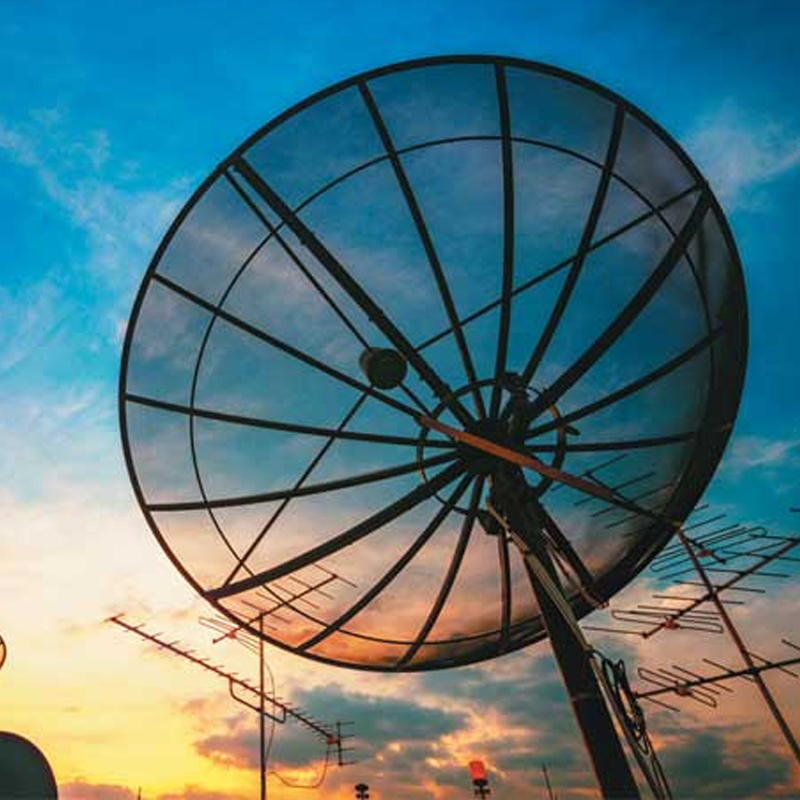
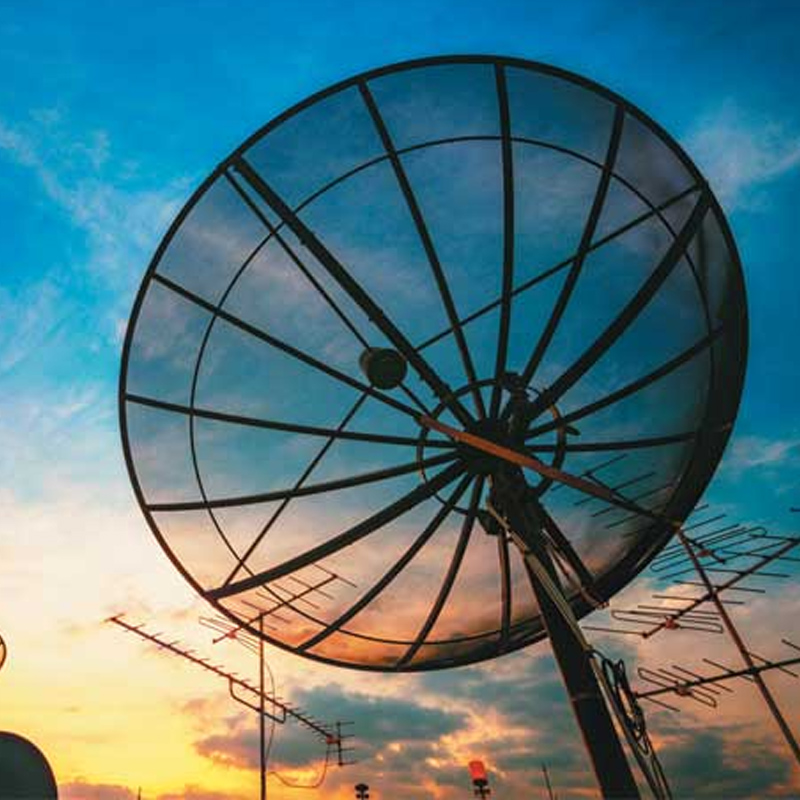
    In DTH services, a subscriber needs Customer Premises Equipment (CPE) to be connected with the television set for reception of programmes as the signal received at his premises is in digital form and encrypted. CPE consists of an outdoor unit comprising a dish antenna, Low Noise Block Converter with Feed-horn (LNBF), cable and connectors. The indoor unit primarily comprises a Set-Top-Box (STB) along with a remote control. Since variegated technologies co-exist, the CPEs deployed by one operator may not be compatible with the network of another operator, hampering migration of the subscriber from one operator to another; in case the subscriber wishes to migrate, he cannot do so without re-investing in another CPE.


    The Authority says the interests of subscribers in this regard can be largely protected through the provision for commercial interoperability of CPEs. Commercial interoperability provides for a viable exit option to the subscribers in case they want to switch operator /platform.


    The draft is aimed at striking a balance between the interests of the consumers and that of the service providers, as well as to curb piling up of e-waste on account of CPEs.


    The draft provides for declaration of the price of all types of CPEs, installation and activation charges and applicable taxes on CPEs by the DTH operators; mandatory offering of standard scheme for all type of CPEs on a standalone basis by DTH operators, specifying separately the price of CPE, taxes, other charges etc; flexibility to DTH operators to offer other schemes; and flexibility to DTH operators to offer brand new as well as refurbished CPEs.


    This paper also refers to provision of buy-back/refund option in all the offered schemes, including bundled schemes for CPEs; mechanism for buy-back/refund in the standard and other schemes for CPEs; provision of lock-in period for the purpose of refund in the offered schemes for CPEs if the subscriber wants to switch from one operator to the other; applicability of buy-back/refund option for all types of offered CPEs; option for the DTH operators to redeploy the surrendered CPEs; mechanism for registration of request for surrender of connection; and time-limit to settle refund/buy-back claims of the subscribers.


    Click here to read the full consultation paper

  • Trai’s tariff order gets a mixed response from leading MSOs and DTH service providers

    Trai’s tariff order gets a mixed response from leading MSOs and DTH service providers

    MUMBAI: Cable TV and DTH industry executives have given a mixed response to the standard tariff package order which they can charge subscribers for set top boxes (STBs) and consumer premise equipment (CPE) that the Telecom Regulatory Authority of India (Trai) announced late last evening. Called The Telecommunication (Broadcasting & Cable) Services Fifth – The Digital Addressable Cable TV Systems Tariff Order 2013 and The Telecommunication (Broadcasting & Cable) Sixth -The Direct to Home Services Tariff Order 2013, respectively, they seek to offer another option for buying STBs to TV viewers in India.

    Leading Indian MSO DEN Networks COO M.G. Azhar was reasonably happy about the orders being release. Says he: “It is good news. Under the new order, the government has standardised a payback period of three years for the STB/CPEs.”

    He, however, confessed that he does not know how much of an impact it would have on consumer offtake. “Our experience shows that we have not had too many subscribers opting for the basic STBs which we have been offering to them in the past with similar packages,” he reveals. “We used to take Rs 600 or so when a consumer signed on for DEN‘s DAS services and then adjust the cost of the STB through the subscription fees we levied every month. Normally, we have been seeing more offtake coming for the better STBs.”

    Some like Tata Sky MD and CEO Harit Nagpal said it was too early to respond to the media about the Trai tariff orders. “We are responding to the Trai on this directly,” he explained. “We are seeing how quickly we can implement it.”

    Videocon d2H CEO Anil Khera admitted that he was not so sure if the orders would be acceptable to all. But he added that his company was trying to understand what its impact would be on the DTH sector. “We are currently studying the order and seeking legal advice as well, we are still trying to understand the logistical issues,” stated Khera.

    Indusind Media & Communications Ltd MD Ravi Manshukhani, was pretty non-committal about the Trai‘s new orders. “Whatever they have put out is absolutely fair, we just hope that we are able to implement whatever is required from our end with support from the government,” he stated.

    But he also highlighted that the operator should have the right to quote his price for the STBs he is giving his customers. He cautioned: “See the government is playing its part in creating guidelines for the sector, but they do not know what is actually happening on the ground. We have not yet matured as a market to provide what Trai wants. Right now we all are in the process of digitising the country as per the demands of Trai and ministry of information and broadcasting, so we are providing the boxes at whatever prices we can. If there are more rules and regulations like this then it is only going to make things painful.”

    So the verdict of the industry on the new Trai tariff orders seems rather unclear. Let‘s wait and watch, and see how they react to it over the next few days.

    Also read:

    Trai issues Tariff Orders for STBs/CPEs for DTH and cable TV operators

    TRAI acts tough about DAS; moves court against cable TV ops

    Trai issues draft tariff package for STBs/CPEs for DTH and cable TV ops

  • Trai issues Tariff Orders for STBs/CPEs for DTH and cable TV operators

    Trai issues Tariff Orders for STBs/CPEs for DTH and cable TV operators

    MUMBAI: The Telecom Regulatory Authority of India (TRAI) late last evening issued two tariff orders prescribing standard tariff package for set top boxes (STBs) for digital addressable cable TV systems (DAS) and Consumer Premises Equipments (CPEs) for Direct to Home (DTH) services. The prime objective of these tariff orders, TRAI says, is to ensure effective commercial interoperability.

    The said tariff orders have been devised to make available STBs / CPEs at a reasonable price and, lucid and easy to understand, terms and conditions as well as to take care of the interests of the service providers. This would also promote healthy competition amongst the operators which would ultimately benefit all the stakeholders of the sector, including the consumers.The standard tariff packages for STB/CPE on rental basis are to be offered mandatorily by DTH and cable TV operators.

    As per the two tariff orders issued and notified on 27 May, cable TV operators and DTH service providers will be in a position to provide four options to consumers with differing rental and security deposit plans. DAS service providers can provide the STBs at a monthly rent of Rs 55.66 or Rs 50.66 (excluding taxes) if the security deposit is Rs 400 and Rs 800 respecitvely. For DTH service providers, the monthly rent for the CPE has been mandated at Rs 71.75 and Rs 65.50 if the security deposit is Rs 500 and Rs 1000 respectively.

    The entire security deposit will be refunded to subscribers at the end of three years and the STB or CPE will belong to the customer. Should the customer choose to clip the service earlier under these options, he will still get the entire STB security depost refunded.

    The tariff orders have also given options where the security depost is adjustable against the monthly rent. Thus DAS service providers can offer the STBs at a monthly adjustable rent of Rs 46.80 or Rs 32.93 if the security deposit is Rs 400 and Rs 800 respectively. And DTH service providers can provide STBs at a monthly adjustable rent of Rs 60.66 and Rs 43.32 if the security deposit is Rs 500 and Rs 1000. Under these options, should the customer choose to exit the DTH or CAS service, he will be entitled to a refund depending on the month he is discontinuing the service.

    For instance, if he moves out in month twelfth of year one of the Rs 500 adjustable security deposit plan for DTH, he will be entitled to get a refund of Rs 370.18. If the exit takes place in month 24 the refund amount has been drawn up to be Rs 192.05.The TRAI has similarly drawn up tables which clearly spell out how much the refund would be. The two orders which clearly explain this are called The Telecommunication (Broadcasting & Cable) Services Sixth – (The Direct to Home Services) Tariff order 2013 and The Telecommunication (Broadcasting & Cable)Fifth – (Digital Addressable Cable TV Systems) Tariff Order 2013 TARIFF ORDER, 2013 and have been made available on the TRAI web site trai.gov.in.

    To see the standard tariff plan for DTH Click Here

    To see the standard tariff plan for DAS Click Here

    The charges which have been mandated by TRAI include the installation fee, activation fee, smart card viewing charges, and repair and maintenance for three years.

    The regulator has said that, while these packages are mandatory, service providers can also make other offers to subscribers.It has also stated that these specific packages are prescribed for “plain vanilla STBs/CPEs” and not for the exotic ones with recorders and HD and 3D STBs.

    The Standard Tariff Package for Cable TV operators has been worked out on the basis of the following facts and figures as provided by the Industry stakeholders/ Associations:-

    a) The total cost of STB has been taken as Rs 1750.

    b) Life span of STB has been taken as three years.

    c) The residual value has been taken as nil.

    d) Rental per month is based on cost of STB on Equated Monthly Installment (EMI) Basis @15 per cent per annum (@1.25 per cent per month) for a period of 36 months.

    The Standard Tariff Package for DTH operators has been worked out on the basis of the following facts and figures as provided by Industry stakeholders/ Associations;

    a) The total cost of CPE has been taken as Rs 2250.

    b) Life span of CPE has been taken as three years.

    c) The residual value has been taken as nil.

    d) Rental per month is based on cost of CPE on Equated Monthly Installment (EMI) Basis @15 per cent per annum (@1.25 per cent per month) for a period of 36 months.

    In case of un-installation/discontinuance of service before the last day of the month, balance security deposit shown as refundable at the end of that month will be refunded on return of Customer Premises Equipment.

    No installation charges or re-installation charges (except in case of shifting of connection) or activation charges or smartcard/ viewing card charges is to be levied by the DTH operator/or DAS service provider on the subscriber.

  • TRAI gives more time to stakeholders to comment on its order relating to pricing of STBs

    TRAI gives more time to stakeholders to comment on its order relating to pricing of STBs

    NEW DELHI: The Telecom Regulatory Authority of India (TRAI) has extended till 3 May, views of stakeholders on its draft tariff orders prescribing standard tariff package for set top boxes in digital addressable cable TV systems (DAS) and consumer premises equipments (CPE) for direct-to-home (DTH) services.

    The previous date was 26 April and the extension is on the request of the stakeholders.

    Under the order, the standard tariff packages for STB/CPE on rental basis are to be offered mandatorily by DTH and cable TV operators.

    The Tariff Order also assumes significance as it attempts for the first time to give inter-operability to consumers of DTH players. The authority is of the view that the interests of the consumers can be largely protected through the provision for commercial interoperability of STB. The commercial interoperability provides an exit option for a subscriber in case he/she wishes to change the operator for any reason.

    Accordingly, in the relevant Regulations/Tariff orders of TRAI, it has been mandated that the operators of Digital Addressable Cable TV Systems and DTH operators shall give an option to every subscriber to procure the STB either on outright purchase basis or hire purchase basis or rental basis, or in accordance with the scheme, if any, prescribed by the authority.

    While interoperability is available to customers of LCOs, TRAI observed that in case of DTH services, ‘the predominant DAS platforms at the moment, the schemes for CPEs offered to the subscribers by the DTH operators, have wide variations and at times are such that no viable exit option is available to the subscribers. Instead the consumer has to re-invest in new hardware in case of migration from a particular operator or platform. The same may also hold well in case of the upcoming Digital Addressable Cable TV Systems.‘

    Standard Tariff Package for STBs for DAS has been worked out. In addition to offering the STB as per the Standard Tariff Package prescribed by the Authority, the operators are free to offer their own schemes for supply of STB to its subscribers in accordance with the existing Regulations/Tariff Orders and the subscribers shall have option to choose from the Standard Tariff Package prescribed by the Authority and the alternative schemes offered by the operators.

    The Standard Tariff Package for Cable TV operators has been worked out on the basis of the following facts and figures as provided by the Industry stakeholders/ Associations:-

    a) The total cost of STB has been taken as Rs 1750.
    b) Life span of STB has been taken as five years.
    c) The residual value has been taken as nil.
    d) Rental per month is based on cost of STB on Equated Monthly Installment (EMI) Basis @15 per cent per annum (@1.25per cent per month) for a period of sixty months.

    The Standard Tariff Package for DTH operators has been worked out on the basis of the following facts and figures as provided by Industry stakeholders/ Associations;

    a) The total cost of CPE has been taken as Rs 2250.
    b) Life span of CPE has been taken as five years.
    c) The residual value has been taken as nil.
    d) Rental per month is based on cost of CPE on Equated Monthly Installment (EMI) Basis @15 per cent per annum (@1.25 per cent per month) for a period of sixty months.

    The authority has also noted that no monthly rentals will be payable after the period of five years and the Customer Premises Equipment (CPE) will become the property of the subscriber (except smart card/viewing card) after the expiry of five years. An amount equal to the sum of security deposit to be refunded per month and interest per month on balance security deposit has been adjusted in Rent per month per CPE. The Full amount of security deposit stands adjusted in a period of five years.

    Up to five years, on returning of the CPE, the Security Deposit shall be refunded, provided that the CPE is not tampered with.

    In case of un-installation/discontinuance of service before the last day of the month, balance security deposit shown as refundable at the end of that month will be refunded on return of CPE.

    No repair or maintenance charges would be levied by DTH operator on the subscriber, towards repair or maintenance of CPE up to the period of five years from activation of the same. The subscriber, however, shall be liable to pay repair and maintenance charges from sixth year onwards.

    No installation charges or re-installation charges (except in case of shifting of connection) or activation charges or smartcard/viewing card charges is to be levied by the DTH operator on the subscriber.

  • Trai issues draft tariff package for STBs/CPEs for DTH and cable TV ops

    Trai issues draft tariff package for STBs/CPEs for DTH and cable TV ops

    NEW DELHI: In order to ensure a smooth migration of customers from one service provider to another without having to re-invest in a new STB, the Telecom Regulatory Authority of India (Trai) today issued draft tariff orders prescribing standard tariff package for set top boxes in digital addressable cable TV systems (DAS) and consumer premises equipments (CPE) for direct-to-home services.

    The standard tariff packages for STB/CPE on rental basis are to be offered mandatorily by DTH and cable TV operators. The draft tariff orders have been put on the TRAI site to seek comments of stakeholders by 26 April.

    The Tariff Order also assumes significance as it attempts for the first time to give inter-operability to consumers of DTH players.

    The authority is of the view that the interests of the consumers can be largely protected through the provision for commercial interoperability of STB. The commercial interoperability provides an exit option for a subscriber in case the subscriber wishes to change the operator for any reason.

    Accordingly, in the relevant Regulations/ Tariff orders of Trai, it has been mandated that the operators of Digital Addressable Cable TV Systems and DTH operators shall give an option to every subscriber to procure the STB either on outright purchase basis or hire purchase basis or rental basis, or in accordance with the scheme, if any, prescribed by the Authority. The relevant provisions of various Trai Regulations/ Tariff Order in this regard are attached as Appendix-I.

    While interoperability is available to customers of LCOs, Trai observed that in case of DTH services, ‘the predominant DAS platforms at the moment, the schemes for CPEs offered to the subscribers by the DTH operators, have wide variations and at times are such that no viable exit option is available to the subscribers. Instead the consumer has to re-invest in new hardware in case of migration from a particular operator or platform. The same may also hold good in case of the upcoming Digital Addressable Cable TV Systems.‘

    The authority is of the view that in order to, provide an easy exit option to the subscribers, ensure availability of STBs at reasonable cost and terms and at the same time to protect the interest of the service providers a Standard Tariff Package, for STBs, as provided for in the existing Regulations/Tariff Orders be prescribed by the Authority.

    Accordingly Standard Tariff Package for STBs for DAS has been worked out. In addition to offering the STB as per the Standard Tariff Package prescribed by the Authority, the operators are free to offer their own schemes for supply of STB to its subscribers in accordance with the existing Regulations/ Tariff Orders and the subscribers shall have option to choose from the Standard Tariff Package prescribed by the Authority and the alternative schemes offered by the operators.

    Authority has observed that The operators are offering to its subscribers various types of STBs having different features/ capabilities such as “recording facility”, “Internet/broadband compatibility”, “High definition/ 3D reception capability” etc., in addition to the basic functionalities. Since for such STBs there would be wide variations in terms of features and cost and hence the Standard Tariff Package is provided only for the basic/ vanilla STBs meant for reception of Standard Definition TV signals (SDTV) conforming to the relevant Indian Standard set by the Bureau of Indian Standards.

    The Standard Tariff Package for Cable TV operators has been worked out on the basis of the following facts and figures as provided by the Industry stakeholders/ Associations:-

    a) The total cost of STB has been taken as Rs. 1750/-.
    b) Life span of STB has been taken as 5 years.
    c) The residual value has been taken as nil.
    d) Rental per month is based on cost of STB on Equated Monthly Installment (EMI) Basis @15% per annum (@1.25% per month) for a period of 60 months.

    The Standard Tariff Package for DTH operators has been worked out on the basis of the following facts and figures as provided by Industry stakeholders/ Associations;

    a) The total cost of CPE has been taken as Rs. 2250/-.
    b) Life span of CPE has been taken as 5 years.
    c) The residual value has been taken as nil.
    d) Rental per month is based on cost of CPE on Equated Monthly Installment (EMI) Basis @15% per annum (@1.25% per month) for a period of 60 months.

    The authority has also noted that no monthly rentals will be payable after the period of five years and the Customer Premises Equipment will become the property of the subscriber (except smart card/viewing card) after the expiry of five years. An amount equal to the sum of security deposit to be refunded per month and interest per month on balance security deposit has been adjusted in Rent per month per Customer Premises Equipment. The Full amount of security deposit stands adjusted in a period of five years.

    Up to five years, on returning of the Customer Premises Equipment, the Security Deposit shall be refunded as per attached table-B, provided that the Customer Premises Equipment is not tampered with.

    In case of un-installation/discontinuance of service before the last day of the month, balance security deposit shown as refundable at the end of that month will be refunded on return of Customer Premises Equipment.

    No repair or maintenance charges would be levied by DTH operator on the subscriber, towards repair or maintenance of Customer Premises Equipment up to the period of five years from activation of the Customer Premises Equipment. The subscriber, however, shall be liable to pay repair and maintenance charges from sixth year onwards.

    No installation charges or re-installation charges (except in case of shifting of connection) or activation charges or smartcard/ viewing card charges is to be levied by the DTH operator on the subscriber.

  • MTNL launches value add service ‘Broadband with Wi-Fi’

    MTNL launches value add service ‘Broadband with Wi-Fi’

    MUMBAI: MTNL has introduced a value add to its broadband services with ‘Broadband with Wi-Fi’. These Wi-Fi services are enabled with CPE’s (Customer Premises Equipment) which have a speed of up to 2 mbps.Using these CPE’s, subscribers will now be able to create their ‘private hot spots’ covering a range of 40 meters in their homes and offices. They can also create “Private public hot spots” through MTNL’s
    pre paid broadband service.

    Speaking on the occasion MTNL executive director A.K. Arora said, “Broadband with Wi-Fi is an initiative to create ease and comfort for our consumers while at home or work. Broadband MTNL’s contribution aims to help increase internet penetration and its usage will be significantly driven by these kind of services”.

    Broadband with Wi-Fi will bring convenience to consumers to the level that multiple computers, laptops and PDAs can operate simultaneously. This will help household consumers who have more than one device at their residence.
    This facet will also help educational institutions such as Engineering, Management, Medical and Research Institutes to save cost and provide better work as well as learning environment.

    Convention centers like auditoriums, conference halls, seminar rooms can also be helped through this connection by providing better service and in turn they will be able to enhance their turnover. With broadband Wi-Fi one can access the Internet anywhere and so café’s restaurants and shopping malls can be converted into infotainment zones.

    The Wi-Fi modem works on the latest version 802.11g of Wi-Fi standard and working in unlicensed 2.4 GHz band. It generally provides bandwidth of 54Mbps. The concurrent users can be upto 30. The Wi-Fi modem shall have a range of 40 meter indoor & 60 meter outdoor range. The range varies with
    obstacles between Wi-Fi modem and laptop/PC/PDA. With above facilities of modem, one can create Hot spot in each house or corporate. The two types of modem used will be USB and Ethernet port or with 4 Ethernet ports.

    Currently MTNL provides Wi-Fi services at domestic airport, India Habitat Center, Pragati Maidan, Vigyan Bhavan, UPSC, Election Commission, IIPA, and Delhi Government etc.

    The customers can get this service by dialing 1500 or 22221500.

  • NDS completes acquisition of Jungo

    NDS completes acquisition of Jungo

    MUMBAI: Pay TV technology firm NDS has completed the acquisition of 100 per cent of the share capital of Jungo.

    Jungo provides residential and business gateway software platforms and applications. Jungo’s flagship products, OpenRG – the residential gateway software platform and OpenSMB – the small and medium gateway software platform enable Original Equipment Manufacturers (OEMs) to bring broadband customer premises equipment (CPE) such as Residential Gateways, triple play gateways, office-in-a-box gateway, firewall/VPN routers to market quickly.

    Jungo also develops USBware, a complete embedded USB software stack for mobile handsets, set top boxes and other consumer devices, and WinDriver, – a driver development toolkit that enables developers to create custom device drivers for multitude of operating systems.

    NDS last month had announced plans to acquire Jungo. The acquisition NDS says bolsters its position in the growing broadband television market Jungo’s products and expertise further accelerate introduction of new end-to-end solutions for the converging broadcast/broadband market.