Tag: covid2019

  • Festive cheer in news organisations as pay cuts are reversed

    Festive cheer in news organisations as pay cuts are reversed

    NEW DELHI: Months after the Coronavirus reared its ugly head and made a shambles of the economy, the news industry is slowly coming out of the woods. This is apparent from the fact that several news organisations have reversed pay cuts that were introduced with the onset of the Covid2019 pandemic. Some players have even announced appraisals for their staff, making the festive period brighter. 

    Here's a look at the news media groups who signalled 'all is well' with the business through their recent actions:

    1. NDTV

    NDTV said on Tuesday that it ended the pay cuts of its employees with effect from October 1. The network had slashed salaries by 10-40 per cent on a graded scale based on different slabs with effect from 1 April 1 2020. Employees earning Rs 50,000 or less per month were exempt from any pay cut.

    2. India Today Group

    India Today Group promoted several key people within the organisation and also announced appraisals for the staff. Vice chairperson Kallie Purie said, “I am looking forward to our annual exercise that acknowledges merit and hard work. So, a big shout out to the efforts of our salesforce heroes that are making this financially viable and allowing me the privilege to declare appraisals. I have sanctioned the encashment of up to 15 days of accumulated leave for all employees. Those not eligible or those who don’t want leave encashment could choose a Diwali voucher.”

    3. The Indian Express Digital

    The digital arm of the Indian Express group also reversed the temporary pay cut that was announced in April for its employees. As per reports, the staff took up to 30 per cent pay cut in their monthly salaries in the wake of the pandemic. 

    4. Network18

    Reliance Industries Ltd, which owns and manages the Network18 Media, announced the rollback of salary cuts in October. The conglomerate also said it would be handing over performance bonuses that were deferred when businesses took a hit at the outset of the Coronavirus-fuelled lockdown. Reportedly, the group had enforced pay cuts between 10 and 50 per cent for its employees across businesses.

  • Covid2019 pushes PVR into the red in Q2

    Covid2019 pushes PVR into the red in Q2

    NEW DELHI: Multiplex chain PVR closed the quarter ended 30 September 2020 in the red with a net loss of Rs 184 crore, as compared to profit of Rs 48 crores during the corresponding period of last year. This comes as no surprise, considering that cinemas were shut all over the country for the better part of the year under government directives to check the spread of Covid2019.

    The consolidated revenues for the quarter were Rs 111 crore as compared to Rs 979 crore during the corresponding period of last year. Consolidated EBITDA loss for the quarter was Rs 14 crore as against a positive EBITDA of Rs 324 crore in the same period last year.

    The company clarified that results for Q2 are not comparable with last year’s results due to temporary closures of cinemas and suspension of operations impacting the business.

    The multiplex group has initiated a series of short-term and long-term measures to aggressively control costs as well as augment liquidity. It further strengthened its cost control measures resulting in 71 per cent savings YoY in total fixed costs excluding rent and CAM.

    Monthly fixed cost excluding rent and CAM dropped to Rs 24 crore in the quarter as against Rs 86 crore in Q2 FY20. PVR is in active engagement with its developer partners for discussions on rent and CAM and so far settlements have been reached for more than 60 per cent of cinemas offering PVR complete rent waiver for lockdown period and significant discounts on rent post reopening.

    Discussions with balance developers are in progress and are expected to close once cinemas are allowed to reopen in those states.

    MHA has, in its Unlock 5.0 guidelines, allowed cinemas to reopen from 15 October onwards with 50 per cent capacity. So far, 16 states and UTs, where PVR has presence, have permitted cinemas to restart operations. Out of total 831 screens of the company 575+ have received permission to reopen. PVR is welcoming back its patrons with several celebratory promotions and offers, opportunity for private screenings, film festivals and a fresh new menu to make the movie watching experience truly delightful.

    PVR MD & chairman Ajay Bijli said, “I am extremely pleased to report that most of our cinemas, which had shut down due to the pandemic in March have been allowed to reopen. We are eagerly waiting for re-opening of other states, specifically Maharashtra and Telangana, so that business can gradually get back to normal. We are taking all possible precautions so that both our customers and employees feel safe while visiting their favourite cinema. Many of our patrons have responded positively and we’re fully prepared to give them the same immersive movie viewing experience the way we had done before. We are hopeful that once the new content is released the business will gradually recover.”

  • RIL posts strong Q2 earnings, media biz betters performance

    RIL posts strong Q2 earnings, media biz betters performance

    KOLKATA: Reliance Industries Ltd (RIL) reported strong Q2 earnings on Friday. The telecom and retail business has driven the growth and the media business also bettered its performance.

    “We delivered strong overall operational and financial performance compared to the previous quarter with recovery in petrochemicals and retail segment, and sustained growth in digital services business,” RIL CMD Mukesh Ambani said.

    “Domestic demand has sharply recovered across our O2C business and is now near pre-Covid2019 level for most products. Retail business activity has normalised with strong growth in key consumption baskets as lockdowns ease across the country. With large capital raise in last six months across Jio and retail business, we have welcomed several strategic and financial investors into Reliance family. We continue to pursue growth initiatives in each of our businesses with a focus on the India opportunity,” he added.

    The company’s operating profit fell 6.6 per cent year-on-year to Rs 10,602 crore in the July-September period. Its revenue fell 24 per cent over last year to Rs 1.16 lakh crore while operating margin widened to 16 per cent from 14.4 per cent earlier.

    Reliance Jio’s revenue including access revenues for the quarter was Rs 21,708 crore, EBITDA stood at Rs 7,971 crore. It netted Rs 3,020 crore quarterly profit, a jump of 185 per cent year on year. The telco operator’s ARPU rose to Rs 145 per subscriber per month.

    How did the media segment perform?

    The media business' revenue rose by 31.5 per cent quarter-on-quarter to Rs 1,061 crore as Covid2019-linked impact on ad-revenues receded over the quarter. EBITDA for the quarter was at Rs 166 crore. Operating margins continued to improve, as broadcasting margins rose sharply, and digital news business swung into profitability.

    The company said in a statement that ad-revenues rebounded sharply, as economic activity restarted on tapering of lockdowns. News business’ advertising has fully recovered, and entertainment recovery is near-complete by the end of the quarter. Subscription revenues have been resilient and domestic subscription revenue continues to rise led by expanding TV and Digital distribution tie-ups.

    “TV viewership has now settled at 1.1x pre-Covid levels. Pay-TV has clawed back its share from free-to-air channels, as entertainment programming is back in full-swing. An increased propensity to pay for content has been witnessed. Flagship properties Moneycontrol and Voot have witnessed rapid growth in subscribers,” it added.

  • Auto industry steps on the gas to lift festive season sales

    Auto industry steps on the gas to lift festive season sales

    NEW DELHI: India's automobile industry has had a bumpy ride these last few years. Add a global pandemic on top of that and the sector was completely stalled. However, with the onset of the festive season, the industry finally seems to be on the road to recovery.

    Factors like consumers shifting to personal mobility (due to Covid risk), new product launches, increase in bookings and enquiries have raised the pent-up demand among buyers. The month of August and September has seen an improvement in retail volumes with sales picking up marginally. The rebound in auto sales is an important barometer that economic recovery is on a progressive track. The festive period has helped boost the sentiment across demographics.

    Traditionally, the industry has always been optimistic around the Diwali-Dussehra period, and this year too, car and two-wheeler makers are busy unveiling new products, giving discounts on service and older models. The recent surge in demand has led companies to focus more on their marketing strategies and get the best possible return out of it.

    Maruti Suzuki India executive director, marketing and sales Shashank Srivastava held the view that car buying is a discretionary purchase and therefore is influenced hugely by sentiment. "Festival season always brings in positive sentiment and therefore sales improve during this time. We saw that positive jump during the Onam festival in Kerala. We are optimistic about the festive season sales. A caveat here is that this time there could be headwinds because of Covid2019. So, our optimism is a bit muted because of this. But our dealers are well-prepared to take care of consumer demand and have replenished their stocks which were made possible by the improved production levels in September,” he elaborated.

    There’s little doubt that this year’s festive season will be crunch time for the auto industry, with customers looking to make big-ticket purchases post the lockdown, shares Vivek Srivatsa, head of marketing, passenger vehicles business unit at Tata Motors head.

    “Despite the slowdown caused by the pandemic, our market share has already doubled after the first quarter of this financial year to 9.5 per cent, as compared to the number at the end of the last fiscal year. Tata Motors was the only carmaker to see a visible growth of 10 per cent in passenger vehicle sales between April and September 2020, at 69,366 units,” said Srivatsa.

    Post the festive season, auto players will have to see how the demand sustains and the impact of underlying macro-economic factors. “We continue to witness a robust recovery and our supplies are being steadily ramped up to cater to the growing demand, despite industry-wide challenge in the supply chain.”

    In order to capitalise on the crucial festive period sales, a Volkswagen spokesperson said the car manufacturer has rolled out 360-degree campaigns extending customised offers to customers.

    “It is definitely a crucial spell for the industry and us. There has been an increase in the uptake for accessible individual mobility as consumers prioritise health, sanitization, and hygiene, steering them away from shared mobility,” the spokesperson added.

    Yamaha Motors deputy general manager Vijay Kaul also explains that the auto category has seen bigger growth every in this golden quarter. “We are hopeful that retails will be better in this period, primarily because of two reasons. Natural festive demand and fear of public transport due to covid19. This is seen by the upward trends in search volume for the auto category and sales numbers compared to pre-covid.”

    This year, the festive season happens to coincide with the IPL, and auto brands are keen to make the most of this golden opportunity. Since the unlock phase, they have trotted out aggressive marketing campaigns to fire up flagging consumer demand.

    For example, Hyundai’s launched a ‘thank you’ campaign with the anthem Haq Hai Hamara, “to honour the spirit of mankind.” Similarly, TVS Motor roped in Amitabh Bachchan and MS Dhoni for a new corporate brand creative. Brands like Honda (cars), and Hero MotoCorp released print ads to announce offers. Recently, Volkswagen rolled out ‘Volksfest 2020’ festive promotion to introduce the red and white edition of the Polo and Vento models.

    Srivatsa shared that before the pandemic the focus was equally spread across mediums. But given the current scenario, digital is leading the way as that is where most consumption of content is taking place.

    This year, Tata Motors is betting big on the IPL, building its marketing strategy across TV and digital medium around the cricketing extravaganza.

    “The former (TV) should help us with a wide reach amongst the audience and the latter (digital) will help us in engaging with the customers by giving them an innovative and immersive experience. We are looking at multiple engagement opportunities with the audience and players across mediums,” explained Srivatsa.

    Kaul also defines that digital has taken a leap. “We are currently betting on the two strong medium TV & Digital. Within digital, we are highly skewed towards performance. That’s the need of the hour to get the call for action.”

    Volkswagen echoed the sentiment, saying that digital and online media communication are definitely key in its media planning. “Traditionally, we have focussed 60 per cent of our ad spends on traditional mediums of TV, Print and OOH while 40 per cent on digital. Now, we are balancing our traditional and digital media spend equally and believe that the media spend on digital will increase in the upcoming years.”

    Dentsu Impact president Amit Wadhwa also agreed that the festive season should certainly be a big step towards pushing up retail sales for the industry. “In fact, we can see it happening across both four-wheelers and two-wheelers brands. The hope is that it brings the same cheer back to some other categories too,” he said.

    While on the subject, which medium are advertisers spending the most on, and is the ad revenue cycle geared up for the festive season?

     Wadhwa explained that business performance is directly proportional to the ad spends/ revenue, so this certainly will reflect on that front too. “Digital has seen a significant upswing in time spent by consumers – and hence, bucks spent by advertisers, despite the high affinity for TV. What is heartening to see is the traction that even print and outdoor is getting with life getting somewhat back on track.”

    In the past few months, digital buying has emerged as a new trend among auto buyers due to its bankability. For instance, Tata Motors launched an online portal called ‘Click to Drive’ to connect with all its dealerships across the country.  The end-to-end digital sales platform allows the customer to make the purchase from the safety and the comfort of their homes.

    However, with the gradual lifting of the lockdown, customers are once again heading back to showrooms.

    The Volkswagen spokesperson shared that the brand is experiencing an increase in footfalls at its offline locations, while online platforms are also registering strong growth and demand. When shopping for a car, it’s natural for prospective buyers to visit a showroom to touch and feel a vehicle before finalizing the purchase. However, now the brand has observed a significant shift in the buying habits of consumers, as people are learning about the product online and then setting-up virtual discussions to understand the vehicle with the salesforce team.

    Clearly, the auto industry is showing signs of recovery and banking on the festive season to deliver good cheer in the form of exceptional retail sales. While significant challenges lie on the road ahead, for now, the only mantra automakers need to follow is 'drive on.'


  • Reliance rolls back salary cuts for Viacom18

    Reliance rolls back salary cuts for Viacom18

    The Covid2019 pandemic forced several organisations to go for salary cuts across the board. The management at Reliance Industries (RIL) also opted for pay deduction at all levels across Viacom18 in April 2020. However, in a positive development, RIL has rolled back the salary cuts at Viacom18 and the employees will be offered their deducted salaries as arrears in the coming months.

    Starting this month, employees will receive their full salaries along with the arrears.  

    Sources close to the development confirmed the news.

    Reports also suggest that Reliance has done the same for its other divisions such as hydrocarbons, oil and technology. It is even offering a bonus to its employees for being with the brand in the last few months.

    At the broadcaster level, the channels are now working towards restoring full salary of their staff owing to an improvement in advertising spends. They are slowly suspending the voluntary pay cuts and releasing the pending performance bonuses. Media reports say that Star had already ended the voluntary pay cuts and Zee will be releasing the pending variable pay in October.

  • Zoom makes Interbrand’s 2020 Best Global Brands list

    Zoom makes Interbrand’s 2020 Best Global Brands list

    MUMBAI: With people confined to their homes during the Covid2019 pandemic, social media and communication brands have fared well, according to Interbrand’s 2020 Best Global Brands report.

    Instagram came in at #19, while YouTube (#30) and Zoom (#100) entered the rankings for the first time. On the flip side, Facebook’s value fell by 12 per cent to $35.2bn – although it moved up a place to #13 in the ranking.

    Amazon, Microsoft and Spotify have added the most to their brand value in the past year. The e-commerce giant ranked at #2 and increased its brand value by 60 per cent, with a valuation of nearly $201 billion.

    Music streaming service Spotify (#70) saw brand value increase by 52 per cent to $8 billion, jumping 22 places in the ranking, while Netflix rose to #41 with a 41 per cent increase to $12 billion. Business models have played a role in this success, with 62 per cent of double-digit risers relying on significant subscription model businesses.

    Tesla re-entered the rankings at #40 with a brand value of $12.7 billion, having last appeared in the Best Global Brands table in 2017.

    Read more news on Interbrand’s Best Global Brands

    Apple retained its top spot, growing its value 38 per cent to $323 billion and becoming the first brand to surpass the $300 billion-mark. Microsoft overtook Google (#4) to reach the number three spot. This is the first time the search engine has dropped from the top three.

    Meanwhile, Samsung (#5) broke into the top five for the first time ever. The remainder of the Top 10 comprises: Coca-Cola #6 ($56 billion), Toyota #7 ($51 billion), Mercedes-Benz #8 ($49 billion), McDonald’s #9 ($42 billion) and Disney #10 ($40 billion).The top ten brands accounts for 50 per cent of the total table value this year.

     The 2020 Best Global Brands ranking also saw the ‘Covid effect’, with global shop closures causing the brand values of Zara (#35) and H&M (#37) to fall 13 per cent and 14 per cent respectively, with both dropping at least six places in this years’ ranking. After two years as the top growing sector, luxury brands took a hit in 2020, with all but one brand value (Hermes #28) falling between 1-9 per cent.

    Other brands and industries have benefited from the ‘Covid effect’, notably logistics which saw an average of 5 per cent growth – UPS (#24), FedEx (#75) and DHL (#81) all saw positive brand valuation growth, as the logistics sector became more central to our lives in lockdown. PayPal (#60), Visa (#45) and Mastercard (#57) have also risen in the rankings – 12, 10 and 5 places respectively. The pandemic led to a sudden shift to electronic as the primary payment method and the swift roll out of programs to support local business during lockdown benefitted these brands, who provide access to capital in times of economic uncertainty.

     “Reports like Interbrand’s Best Global Brands are important for companies to better understand how we’re being perceived in consumers’ hearts and minds,” said Mastercard Chief Marketing and Communications Officer Raja Rajamannar. “Especially during these unprecedented times, when consumer behaviours have shifted and trust is more important than ever, these rankings are a way for us to better understand how we can best serve our communities.”

  • MCOF’s Prabhu sounds the alarm for cable TV fraternity

    MCOF’s Prabhu sounds the alarm for cable TV fraternity

    KOLKATA: Although linear television remains the primary mode of viewing for most Indian households, cableTV  operators still face numerous challenges – what the rapid uptake of OTT services and the inflexible pricing regulations set by the regulator. And the situation is not getting any better for the tribe, says Maharashtra Cable Operators Foundation (MCOF) president Arvind Prabhu.

    He claims that matters took a grim turn with Covid2019 causing a 25-30 per cent drop in subscribers for the cable TV trade operators in the first four months of the crisis,

    mainly due to lack of fresh TV content, labour migration and the closure of commercial establishments. He further projects that only 5-10 per cent of these subscribers might come back.

    While a lot the of users had moved to OTT during the beginning of the pandemic, Prabhu says there are fewer chances of them returning  to TV as the platforms are already offering linear TV content, streaming live sports events.

    Read more news on MCOF

    How far is normalcy?

    There had been a challenge at the operational level too with the onset of this pandemic. However, the situation is normalising inch by inch, thanks to the stage by stage unlocks, and it is comparatively easier at this moment, says Prabhu. However, 60-65 per cent of workers are not coming to offices regularly.

    Given that cable TV is an essential service, the government should have looked at insurance for its staff, insists Prabhu. Moreover, vendor supplies have also slowed down. The scene is a little different in rural areas, where manpower is available but getting equipment is an issue. Hence, it would take another month or so to reach normalcy, he expresses.

    Due to restrictions in movement, the MSOs have been demanding online payments. While others claim that 70-80 per cent of subscribers have shipped out,  Prabhu dismisses these figures. He says it is the subscribers of the MSOs that is the cable TV operators themselves who have moved to digital payments; not the end subscribers. So far, cable TV operators have been collecting payments traditionally from 50-60 per cent of their subscriber bases.

    What are the long-term challenges?

    Putting aside the challenges imposed by Covid2019, cable TV operators have been in distress for a while now. With the Telecom Regulatory Authority of India (TRAI) introducing a cap on NCF under NTO 2.0, their worries have only increased. Prabhu claims that TRAI did not take into consideration the suggestions that were given following the NTO consultation paper. He goes on to add that MSOs manipulated NTO 1.0 and it failed to bring end-to-end transparency.

    However, the MCOF president acknowledges that former TRAI chairman RS Sharma did his best to help small cable TV operators. “If the new chairman (PD Vaghela) does not quickly help us to revive the overall economic situation, we will be in dire straits. What we ask of the new chairman is to look at all the correspondence sent by cable TV operator associations. He will immediately realise that there has been a serious breach of regulations,” says Prabhu, and he urgesVaghela to call a meeting of all stakeholders at the earliest so they can figure out a solution together.

    Way to a sustainable future:

    Prabhubelieves that there is a way for cable TV operators to stem the loss of subscribers to OTTs: provide broadband services as that would help them to survive in a changing ecosystem, and integrate the billing for those with cable TV. He also mentions that many operators have already started offering android boxes. On the cable TV side, operators are trying to reduce subscriber loss with long-term packages. Hence, they have requested MSOs to offer some discounts on those.

    Going forward, cable TV operators who focus on futuristic services like broadband and hybrid boxes will be able to sustain themselves, says Prabhu. He is optimistic that the new boxes will go beyond urban areas and see good traction in tier II, tier III cities. While these boxes are expensive at the moment, the cost is predicted to come down once demand picks up, leading to increased adoption in rural areas too. Prabhu also highlights that the industry needs government intervention, such as providing loans to the last mile players for investing in new technology.

    But broadband and hybrid boxes are not a sure-shot road to success. With the entry of deep-pocketed players in the segment, operators are worried about not having a level playing field. “It is important to find out how to control the big brother coming and taking away everybody’s job. Even if it takes over everything, there should be some alternative modes for us,” says Prabhu.

    Need of the hour:

    Alongside the long-term strategies, the operators are facing short-term issues as well. “First and foremost, there should be a signing of model interconnect agreements. Nobody has signed a model interconnect agreement, whatever was signed was two-three years ago. The ownership of a set-top box needs to be defined. If a consumer is buying then it is his property; if a cable operator is buying to give it to consumers it belongs to him.; if it is being rented or leased, then it is owned by MSOs. Clarity on that is needed,” he states.

  • ASCI announces Covid-2019 advertising advisory

    ASCI announces Covid-2019 advertising advisory

    MUMBAI: The Advertising Standards Council of India (ASCI) has directed brands to ensure that their adverts do not proliferate unsubstantiated claims related to Covid2019 that mislead and misinform the people.

    The self-regulatory industry body has issued a new set of guidelines on Covid2019-related ads that advertisers must adhere to, in a move to shield consumers from false and/or misleading information and products in the midst of the pandemic.

    As per the advisory: "Advertisers should be able to substantiate (direct or indirect) claims of immunity against or treatment for Covid2019 supported by either technical support recognised or approved by health authorities such as WHO, ICMR, Health Ministry, Ayush Ministry, DCGI, CDC (USA), or health organisations of similar stature or by well-recognised medical/technical literature or by regulatory-approved clinical research conducted by a recognised medical institute/laboratory."

    It further warned advertisers not to distort facts or mislead consumers by means of implications and omissions, abuse their trust or otherwise exploit their lack of experience and knowledge.

    ASCI also issued a firm reminder to manufacturers of Ayurvedic, Unani and Homeopathic products to abide by the guidelines set in place by the Ministry of Ayush regarding Covid2019 advertisements.

    The advisory is in line with Chapter 1 of ASCI’s code related to truthfulness and honesty of representation and, thus, the creation of consumer confidence in advertising.

    ASCI general secretary Manisha Kapoor said the pandemic is a difficult time for people and brands alike, but it cannot be a pretext to mislead consumers.

    “We want advertisers to be more mindful in creating advertisements and making claims related to Covid-19. Given the pandemic and the extended lockdowns, people are obviously concerned. Manufacturers and brands have also responded to consumer needs arising out of the pandemic. However, we want these products and advertisements to stick to claims and promises that are well backed by adequate substantiation. The advisory to advertisers is meant to safeguard consumers as well as to ensure the highest standards for advertising,” she said.

  • TV viewership up in European market, existing formats adapt to new normal

    TV viewership up in European market, existing formats adapt to new normal

    KOLKATA: With shelter-at-place directives in effect, TV consumption has gone up globally. Along with an uptick in the number of viewers, viewing time has also increased during the Covid2019 crisis.

    During a presentation at Mipcom 2020, Glance VP Frédéric Vaulpré explained how the pandemic had an impact on TV audiences, and also influenced content production and release in 2020.

    "All over the world, viewers have increased in number and have become more devoted to the programs that they watch," said Vaulpré.

    He went on to illustrate how being made to stay indoors led to an increase in television viewing times. Five European Union countries – France, Italy, Germany, Spain, Finland – and the UK recorded a significant rise in viewing time. An increase of 7 minutes, 10 minutes, 12 minutes, 19 minutes, 23 minutes, 35 minutes was clocked in Finland, Germany, UK, Spain, France, Italy respectively in January-July 2020 compared to the corresponding period last year. People gradually being released from lockdowns did have a slight effect on TV viewing times.

    Read our coverage on Mipcom

    Glance head of content insight Avril Blondelot noted that 10 per cent of the productions launched in 2020 are linked, in one way or another, to the health crisis. International co-production, particularly in Europe, also witnessed an upward surge this year, nearly double compared to last year. However, there is less certainty regarding international co-production on new shows having held during the months of lockdown.

    Many existing content formats had to be adapted to the new normal. With restaurants shut, chefs retreated into their homes and filmed cooking shows in their own kitchens. In France, Cyril Lignac’s Tous en Cuisine saw good uptake. Many fitness shows were also launched with in-home exercises. Non-scripted programming like reality shows also adapted to the current situation.

    Among popular genres, thriller shows maintained their sheen during the pre- and post-Covid period. For instance, Netflix’s reality-bending thriller Dark (a wholly German production) was not just popular in Europe but made big waves in India too.

    Despite production complications, a number of travel shows went on air and audiences, perhaps to make up for their own stymied holiday plans, eagerly tuned into these programmes. Due to international travel bans in place in many countries, travel shows turned to explore domestic locales. The Misadventures of Romesh Ranganathan, a popular travel show in the UK, was formatted to Misadventures from My Sofa. Game shows too retained their popularity.

    What is a more interesting trend is that video games have emerged as a new source of inspiration for content creation. Streaming services, as well as linear TV channels, have launched shows inspired by popular gaming IPS. Netflix is ready to begin production on season 2 of its wildly popular live-action adaptation of The Witcher. Meanwhile, Amazon Prime Video and Showtime are adapting two of the most lucrative game franchises of all time – Fallout and Halo respectively.

  • ZEE Entertainment donates 10 ambulances, PPE Kits to Andhra Pradesh

    ZEE Entertainment donates 10 ambulances, PPE Kits to Andhra Pradesh

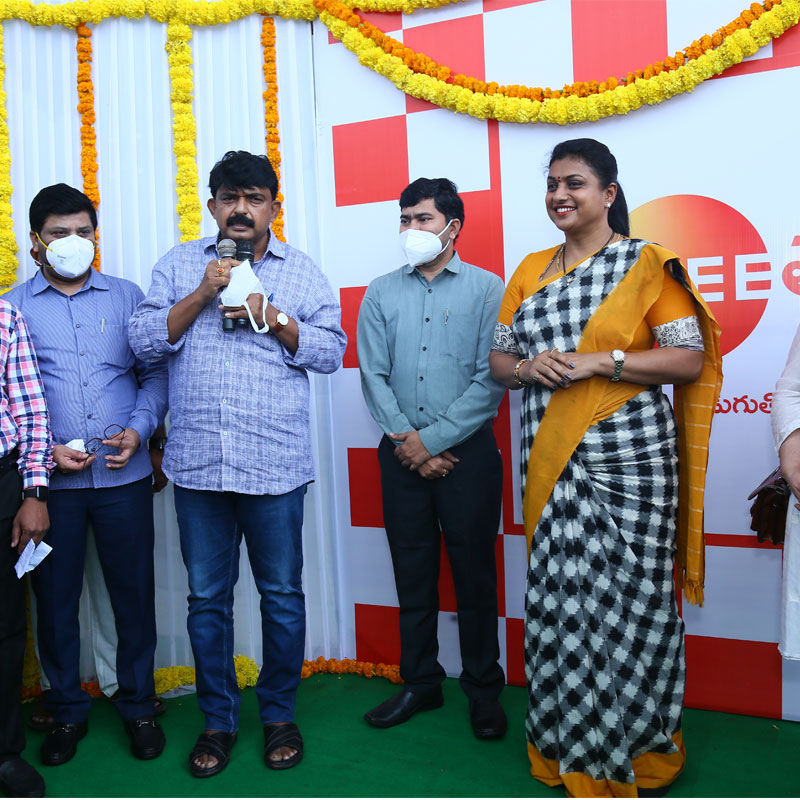
    MUMBAI: In line with its national level CSR drive against Covid2019, ZEE Entertainment Enterprises Ltd (ZEEL) has donated a fleet of ambulances and 4,000 PPE kits to the state of Andhra Pradesh.

    The state’s minister of transport and I&PR Perni Venkataramayya, APIIC chairman R.K. Roja, YSR Arogya Sri Health trust CEO Mallikarjuna, YSR Arogya Sri Health Trust additional CEO B. Rajasekhar Reddy were present when the fleet of ambulances and protective equipment were handed over.

    ZEE managing director and chief executive officer Punit Goenka said the company was committed to provide strong support to the Andhra Pradesh government in its fight against Covid2019, with a key focus on strengthening the overall healthcare infrastructure. “We sincerely hope that the donated healthcare requirements will further enable the state to address the challenges faced due to the ongoing pandemic and strengthen its overall healthcare ecosystem," he added.

    Venkataramayya appreciated Zee’s move to help the state by providing much-needed ambulances and PPE. “Also, I’m happy to know Punit Goenka and ZEE have helped other states in India as well with such contributions in strengthening their fight against COVID2019.”

    In its national level CSR drive towards enhancing the country’s healthcare infrastructure against Covid2019, ZEE had committed to donate 240+ ambulances, 46,000+ PPE kits, 90+ oxygen humidifiers and 6,00,000 daily meals. The donation to the state of Andhra Pradesh is in line with this CSR initiative.

    At a national level, ZEE has also financially supported over 5000 daily wage earners working directly or indirectly with the company. Further, 3400+ employees have contributed towards PM Cares Fund. The amount generated was matched by ZEE, and the collective proceeds were donated to PM Cares Fund.