Tag: covid2019

  • Eros CEO Pradeep Dwivedi on the Eros-STX merger

    Eros CEO Pradeep Dwivedi on the Eros-STX merger

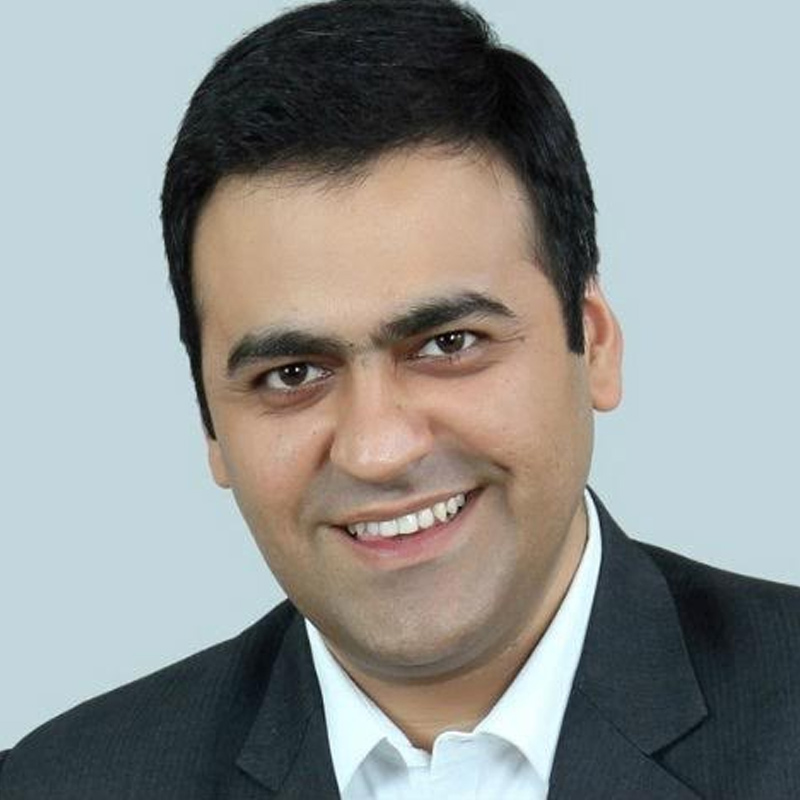
    “Nowhere in the history of Bollywood has any studio really merged with a Hollywood producer in a manner like this.” This statement by Eros International Media Ltd (EIML) CEO Pradeep Dwivedi succinctly sums up the significance of the recent Eros-STX merger. The new global entertainment company will leverage the 40-year-old legacy of Eros and the strength of STX as one of the prominent Hollywood producers. In an interview with Indiantelevision.com, Dwivedi dwells at length on the significance of this merger, its strategic intent, the financial nitty-gritty of the deal, how the new entity will find common ground and tap the combined market of India, China, and the US, the OTT business and the effects of Covid2019 lockdown on the entertainment industry, among other things.

    Edited excerpts:

    The merger deal comes at a time when the entire movie production sector is shut due to the Covid2019 pandemic. So how challenging is the situation for you?

    We have been working on this merger transaction for nearly six months. The timing with respect to the production stoppage is a bit odd; it happened during the last one month. We eventually believe that in the next couple of months as and when the lockdown is lifted in phases and people get back to production work, the work on the ground in terms of production slate and shoots will resume. We had, even before the lockdown, a significant inventory of content that we had built up. So, in a phased manner we are pushing it out to the digital platform. Obviously no studio releases are possible as theatres are completely shut down, not just here but in the US as well.

    In this merger, what we were always planning as a strategic fit was the fact that you have STX, which is a Hollywood studio, which has been doing decent movies with top-of-the-line stars. The bottomline is that they have successfully created a content machine which is delivering good content with top-built star cast into the US market. We have had a similar ecosystem in Eros for nearly 40 years now; look at some of our hits like Vicky Donor. We had our own range of success.  

    Nowhere in the history of Bollywood has any studio really merged with a Hollywood producer in a manner like this.

    Can you elaborate on the structuring of the merger?

    There is a structuring of the transaction. It takes about eight weeks for all regulatory approvals to come in and then the two companies become one. At the merger, only one company will survive, which is Eros STX Global Corporation. In the interim, all of STX will be moving into a subsidiary which is incorporated in the US. That subsidiary merges into a 100 per cent owned subsidiary of Eros PLC, and that subsidiary eventually merges back into Eros. Today, Eros is listed at the New York stock exchange. In fact, if you see the stock value right after the merger announcement, it jumped almost 60 per cent in terms of value. We are getting strong analysts’ support. Just now I was talking to an investor in New York. There is huge excitement in the US and the overseas investor community on this deal.   

    The transaction works like this: STX, an unlisted company, has merged into Eros, a listed company, and Eros STX is the surviving company. So essentially what is happening is that the shareholders of STX will initially get what is known as contingent value rights (CVR). So effectively, we will own about 43 per cent of the surviving company. STX partners will hold another 43 per cent. Put together, it comes to around 85 per cent.

    Now, let me speak about the strategic intent. We want to take the best of Hollywood and Bollywood and create a big impact in China. There, we will be looking at the creation of content, by leveraging the Chinese talent in areas like acting, directing, photography, VFX, production, post-production, music, sound, etc.

    In China, who will be the partner of STX?

    In China, STX has Tencent Films and Alibaba Films as the partners on the production side. On the investment side, Tencent Holdings has invested money. They were already investors in STX to begin with. Eros has two partnerships in China for distribution. Because as you know, we made serious returns on movies like Bajrangi Bhaijaan. Other Indian movies also did really well in China, for example Dangal or Andha Dhun, which we distributed in China and did a fantastic business. We have a huge distribution model, not a production/co-production model in China. We work with Shangai Film Corporation and China Film Distribution Corporation. These two are our distribution partners.

    So you are looking at the Chinese market in a bigger way. What will be the roles of STX and Eros there?

    It will be a combined entity; there is not going to be any difference. In fact, this merger has got nothing to do with the India business per se. Eros International Media Ltd (EIML), a Bombay Stock Exchange- and National Stock Exchange-listed company, is a subsidiary of Eros International PLC.

    Eros International PLC is the holding company, which is Isle of Man-incorporated and listed in New York Stock Exchange and has multiple subsidiaries all over the world. For example, whatever OTT business we do in India is housed within Eros now, which in turn is part of EIML. The worldwide business that we do is housed in Eros Worldwide Digital which is based out of the UAE. We have distribution subsidiaries in Australia called Eros International Australia, we have one in Fiji, one in the UK, and in the US called Eros Incorporated USA, which is a distribution arm. They do the distribution business in all of those markets.  

    Please give an idea about the post-merger entity and the changes at the top level.

    Kishore Lulla, who is currently the CEO and chairman of Eros International PLC, becomes executive co-chairman of the combined company. Robert Simonds who has done about 70-odd movies as producer will be the CEO of the combined company. He will be my boss in that perspective. He has done almost 13-14 Adam Sandler’s top-selling movies.

    I will run all of the India business and there is the worldwide studio business including the collaboration that we will do with STX. So at the base level, STX Studios continues to make movies for the US market and Eros continues to make movies for the Indian market, which covers almost 60-70 per cent of our production output.

    Kishore Lulla is the executive co-chairman of the new company. Rishika Lulla, part of the management, is the co-president at the global management team of Eros-STX Global. Rishika will continue to lead the entire digital business worldwide, including what is coming from STX. Bob Simonds is the co-chairman and chief executive officer of the company. Andy Warren is the CFO of the combined company. I am running India business plus global studio collaboration. Adam Fogelson is running a global studios business. Noah Fogelson is going to manage the entire business from a US perspective. Ridhima is currently head of content – strategy for Eros. She is going to work very closely with the content leadership of STX.

    About 20-25 production output will be Indo-US collaboration that Adam Fogelson, as the president of the studio business in the US, and I will collaborate and jointly work out. Then there is about a 10 per cent layer on top of that. That will be all the Chinese movies that we want to make, with a focus on mainland China; movies that reflect their ethos, culture, science fictions, action, contemporary issues, etc.

    At the end of this exercise, there is no difference between STX and Eros. That’s the whole concept of the merger. We are one team.

    What about Eros’ OTT business?

    Ali Hussein, the CEO for the OTT business, will run the OTT business worldwide. STX worldwide does not have an OTT play, but it has a large content play. So it will obviously be selling some content to Amazon Prime, Netflix, etc. Today, Eros Now OTT has the access to Amazon, Netflix and exclusive access to Apple TV. Any India-Bollywood content you see on Apple TV will be coming from the house of Eros. The advantage it allows is that whatever the STX content is getting produced afresh we have the ability to take a call on whether we should park it in Eros Now, monetise and increase our subscriber base or to part it for Amazon, Apple, or Netflix and monetise better there. It will really depend on the financial equation there. But it gives us a tremendous amount of flexibility to be able to do both. That is one of the advantages we have on the OTT side coming from this merger.

    Will there be more dubbed versions of Bollywood and regional language films for the Chinese audience?

    There is a two-pronged strategy in this regard. As far as the digital front is concerned, we already have partnership with Wuzhou, one of the largest distributors in China. We are looking at other teleco partnerships, too. All the existing content, with dubbed and subtitled versions, will be available to the Chinese audience.

    Then there are the originals and the new movies that we do, which will be done in collaboration with the Chinese studios. It depends on who we want to work with: Huayi Brothers, Tencent, Alibaba, etc. All of these are existing partnerships. We will take a call depending on a particular project idea, which studio or investor on their side is more comfortable with or most excited by the idea.

    To answer your question specifically, yes, we will make sure that our stories are presented as an opportunity to be remade for China. We will look at China's original stories and make movies around that. And we will also look at building strong distribution strategies. So, movie production is one, distribution is another and we want to make sure that we are doing well on both the fronts in the Chinese markets. If you look at the sheer size of the market we are addressing with this joint venture, India already has 1.4 billion people, America has another population of 38 crore, and then you add China on top of that: 1.2 billion people.  So close to 3 billion people in the world is the potential market. And I am not counting other markets like Europe. Essentially, half the population of the world typically will be covered by the footprint of what we are doing right now. And we intend to make sure that we create world-class content. We have a huge reserve of stories that are original and genuine to India. For example Ramayan and Mahabharat. These stories, while they are set in Indian cultural and social context, are universal in many ways, about challenges in family, difference between right and wrong, etc. These are universal values. We intend to do this Indo-US-Chinese collaboration with the best of technology on science fiction, visual effects, etc. to create world-class content. We also wanted to showcase the slate of some of the content that we are going to make, but due to the Covid2019 situation we don’t want to do that. However, by around the end of June, when the merger deal will be closed, we will present a slate of the movies that we are going to produce.

    We believe that we will get all the regulatory approvals in the next eight weeks.

    Theatres are not going to be opened until September or October. When do you expect the production to resume?

    We believe that by middle or end of May some level of production activities will resume. Whatever can be done inside studios, not outdoor shoots, can typically start in a controlled environment in sets with the right level of hygiene, control, safety and distancing, etc., for our studio-related works to start off. I’d expect it to stabilise only by the end of June or early July.

    We still can’t say definitely when theatres will reopen. My hope is that by the end of August or early September some theatre releases will start.  

    The merged entity will have half a billion in cash, right?

    We already have about $195 million cash with us. We have secured $125 million fresh equity capital investment. We have got a limited sanction from JP Morgan in the US, which is leading a syndicate of six banks, to get another 350 million on the debt capital side. In addition, we have close to $300 million of predicted revenue from the 2019 slate of STX.

    Now, let me explain the efficiencies in the deal. Manpower costs as a percentage of our overall costs are not outside the industry norm. What that means is that these efficiencies will come largely on account of financing integrations and on account of financing/ process integration. For example, there are a lot of VFX/post-production works that STX movies need to do. We have negotiated – because we have this typical Indian approach of doing things in a more efficient and cost-sensitive manner – we will be transferring a lot of post-production works from the US studios to the Indian studios. So, that has efficiencies in savings. There is a significant saving opportunity on the financial efficiency and post-production work side. And we believe that as we integrate some of our offices we will have some savings on that side as well. We don’t expect this merger to have any large impact on any kind of reductions simply because these are very diverse universes. In our case there is a strong fit in what we do and what they do, so it is complementary. To that extent, the two teams come together, the efficiencies can be better utilised on the operation side than on the manpower side.

    How will the OTT releases work? You can’t raise the kind of money from OTT like you do through theatre releases. How will you monetise in times of shutdown?

    The film and entertainment industry is going through a cataclysmic shift due to the Covid2019 situation. Theatres are likely to remain shut for the next six months, perhaps even longer in some markets.

    If you look at the value chain of any monetisation for any studio, theatrical release is the largest chunk, followed by television syndication, digital and then DVD, cable and local TV distribution, in-flight distribution, etc. For six to nine months, theatrical will remain zero; it is a hit all companies will take in the top line. The market valuations of companies like Disney, Comcast, Warner Brothers, etc. have come down only because the theatrical revenues are not going to be there and that is true for everybody.

    It is like an airline industry business. If you are not flying for two months, your revenues will be reduced next year and you can’t fly more in the coming time to make up for the flight that you have not done. So it is the same for the theatres; that loss is real; it is going to hit our current year financials. Fortunately, it happened in the last week of March, so we didn’t lose much from last year’s financial standpoint. So we didn’t see the impact in FY 19 books. But in 2021, all studios across the world at an industry level will be hit.

    So if you are investing $100 billion in a film, you can’t get $100 billion back unless you do theatrical?

    No, that is not true. That’s what I was trying to come to. The model itself is now going to shift significantly towards digital. So, as a first step, digital or OTT will overtake television as the second port of call. As and when the theatres come back next year, you will have the releases that are there. The standstill is there on both the fronts in terms of releases and production. If there are no new movies being produced you are creating a lag in the equation completely. Once the theatres start opening up, the existing, ready-to-release movies will first get released. And we are evaluating the release of the movies that we have. We have big, multi-language movies waiting to be released. We are already sitting on some content, which we will release as soon as the theatres open up. In the meantime, we will try and monetise them on OTT. Will there be any audience in theatres for the movies which have been shown on OTT? Perhaps there will be a decline. But that’s the risk you have to take. But none of our movies are mega budget movies where we need to worry about huge dependence on the theatrical.

    So will you release on OTT first and then on theatres?

    It’s a product-by-product call. Our current strategy is to ensure that whatever content is ready with us, we will release them in OTT, because what we want to do is to give fresh content to the OTT audience. Today, the OTT audience has increased exponentially because of the lockdown. You are stuck at home and you don’t have a choice. Old movies are now popular because there is a limitation on new content that is being produced. Here, we will release and promote our old movies in OTT.

    And monetisation will definitely go up. Between last month and this month our paid subscriber base has been growing at 20 per cent per week.

    Will you be selling to other OTT platforms?

    We currently have partnerships with Amazon, Netflix, etc. We market movies to them. In the US, we have an exclusive partnership with Apple TV for Bollywood content. Same goes for STX. Eros-STX combined entity will evaluate every movie, a financial call which will have one of the two factors. We will see whether we are getting good price by selling/marketing it to one of the OTT platforms like Amazon or Apple TV or instead of putting it on a competitor platform, it is better to put it on Eros Now and monetise.  So, that is the kind of financial call that we have to make on every single movie that we make.

    While OTT is definitely the flavour of the time and everyone is talking about it, television syndication is a big deal, which is the second largest revenue stream. Theatrical accounts for 30-35 per cent, television another 30 per cent, digital used to be 20 per cent and rest 10-15 per cent is DVD and local cable TV distribution. So, only the top 30 per cent is impacted. Rest of the 70 per cent is not impacted. And the third category, OTT, is actually expanding.

    Look at an adverse scenario. If theatres don’t open for the next two years, what will you do? You need to figure out a way for the industry to monetise the content. Two things are likely to happen: studios that are agile, nimble, and mid-sized that make budgeted movies will actually do well. Look at the impact. The situation is such that the larger your studio is, the bigger the risk is, because you are putting in tonnes of money and you can’t get the money back from OTT alone. But if you are making here in India, the chances of getting the money back are much higher.

    As far as OTT expansion is concerned, we have seen extraordinary growth in the last couple of weeks.

    Were any of your projects halted because of the ongoing lockdown? And how do you communicate in these times?

    We suspended productions by the end of June.
    As far as communication is concerned we use platforms like Zoom, etc. The positive side is that a rhythm is being set. Now it starts to feel natural with all the Zoom and Skype calls. We can plan, strategise, ideate, work on script ideas, script validations, find out which projects to work on, etc. Those kinds of work can go on. But the works that have physical execution on the ground is obviously held up.


  • Working from home has never been tougher than this

    Working from home has never been tougher than this

    Over the past few weeks, we have all witnessed adverse effects of the Covid2019 pandemic. In order to flatten the curve, a nationwide lockdown was declared by the government last month. In this current situation, for office-goers like us, work from home has become the norm to ensure business continuity. 

    Working from home has never been as tougher before. In our communications industry, it is all the more challenging to solely depend on digital mediums including WhatsApp Texts, conference calls, Zoom calls, to name a few, to manage work, especially when you are in charge of multiple clients, business development, and dealing with many people in a day. 

    In our business, communication is paramount, whether impromptu meetings with my team or brainstorming for ideas for our clients or keeping a track of our competition or catching up with clients. However, remote work needs extra communication. When you work remotely, continuous communication becomes key to ensure smoother and effective functioning, which can be stressful.  However, my organisation, Wizspk Communication & PR, has undertaken various measures so that the work processes become smoother for all employees such as Monday morning calls to plan for the week and Friday calls for the weekly wrap up. Furthermore, our HR team has stepped up their game and has been constantly coming up with new ways to create a seamless working experience for us. They have been regularly organizing virtual training sessions, webinars, etc. They are hosting some fun activities too to keep us motivated and help us escape the routine drudgery of life at home.

    When you look from a brand’s perspective, many brands have altered their communication strategies to reflect the current times. As their communication partners, we must help them adapt their messages to the interests of their audience and on-the-ground realities. Taking the right actions and finding the right message can be challenging, especially in a fast-changing situation. Therefore, it’s critical for us to keep abreast of the latest developments to be able to help our clients navigate this period of uncertainty. We have to have our ears to the ground in order to recommend content and communication plans to tailor them to the changing needs of their consumers right now. It also becomes utmost important for us to provide accurate information and keeping people connected.

    Working in isolation can be lonely.  As a remote worker, I often miss benefits like creativity and innovative thinking which occur when people are working together in the same room.  Also, team cohesion suffers in remote work arrangements. What I Miss Most Working in this current pandemic is the interaction with my team, co-workers, clients and friends at workplace.  I miss brainstorming in-person with co-workers, the trips to the pantry to fix myself cups of coffee, lunch and coffee breaks, fun conversations during these breaks, and the rush to finish work and reach home on time. And even, commuting to office and back home despite the heavy traffic! 

    However, I believe it is imperative for us to be indoors and safe, and do so especially in support to our frontline fighters who are risking their lives to fight the pandemic and ensure our safety.

    I’ll stay home as long as the government and the health authorities advise. But honestly, I can’t wait to go back to work.

    (The author is head – business development and strategy, WIZSPK Communication)

  • Event virtualisation: The Need of the hour

    Event virtualisation: The Need of the hour

    Even as it promotes physical interface, the exhibitions industry has always had an intrinsic rapport with digital platforms. There is consensus that digital is the way to go for the obvious advantages they have and to cater to the ever-expanding business needs of our customers. Therefore, some turnkey organisations were turning into early adopters with significant investments in digital expertise including products ranging from full online marketplace project, lead generation campaigns and webinars — always, though, as supplements to the much-revered face-to-face trade expos.  

    The Covid-2019 crisis has put global professional sourcing in disarray. Worldwide, the industry has seen a string of event cancellations and postponements amid the existing pandemic. Considering these disruptions, businesses across the globe turn to digital solutions to sustain productivity and organizing virtual exhibitions where one can virtually participate in an event at their own time wherever they may be. It is also anticipated that even after the situation stabilizes, a certain caution may still be maintained among exhibitors about travelling for participating in international trade fairs and exhibitions which are key while hosting large scale exhibitions. 

    Companies are working towards using all the technologies at their disposal to ensure business stability and build the expertise to mitigate these challenges. Virtual conference platforms can analyze a lot about conference-goers, including data on which sessions were attended the most and for how long, which booths had maximum interaction, and more. This kind of insight is invaluable for developing targeted content and for making your next virtual conference even more successful. The virtual world can offer the perfect solution by combining the best of brand experience with the digital engagement people crave. 

    Then again, it aids in attracting and tracking diverse exhibitors and attendees, creating massive online audiences for companies to share their innovations along with access to various forms of media to enhance the sales experience.  Its ability to track leads, quantitatively measure event performance and gauge event ROI down to the most basic statistics is also extremely useful. 

    With most exhibitions organisers having joined in the inevitable transformation towards the virtual platform, the impactfulness of these platforms will really depend on the stage of preparedness and experience the organisations have had, from before Covid2019. Most significantly, the success also will be about how well we understand our customers’ requirements, pain points, their work from home dynamics and provide relevant solutions for their issues, based on how well engaged and connected we have been with them. Our being able to pin-point on their future short term and long-term requirements and their brand loyalty and trust for us have also been honed by deep professional relationships and human-to-human interactions, that got promoted by the face-to-face trade expos and engagements.

    With almost half the world’s population under lockdown, virtual platforms are helping us in a big way to stay connected and run businesses. The virtual trade shows are also likely to be leveraged even better to offer efficient, impressive, and state-of-the-art digital solutions for a prosperous future of the market. Yet, one’s bet is on a hybrid engagement, with physical expos supplemented by digital engagements. This is a feedback we have also got from our customers, especially newly launched start-ups or SMEs, who might feel unnoticed in a virtual platform but use other means of brand advocacy in a ‘brick and mortar’ trade expo. 

    Besides, at the end of the day, all of us prefer face to face meeting, want to shake hands (better still, a namaste), exchange thoughts, and of course party together. It provides an environment of friendliness which, in turn, boosts the success of our relationships, whether they are personal or professional.

    The author is managing director, Informa Markets in India

  • Ripe opportunity to utilize lockdown for adapting to changing realities

    Ripe opportunity to utilize lockdown for adapting to changing realities

    Collectively, we are facing possibly the biggest crisis and turning point in history. This is going to significantly impact the landscape of business, and most importantly the business of communication. Right now, being extra sensitive and showing empathy seems to be key in winning the game of communication. It’s not about individual perceptions anymore; the world is leaning towards a dominant emotion, and everyone is taking it upon themselves to be the harbinger of awareness and sensitivity.

    Moreover, uncertainty has become the norm of the times. The Covid2019 pandemic has turned many businesses upside down, and people are struggling to stay afloat. This is as true for marketing and PR agencies, as for any other company facing lost revenue in terms of clients, mounting debts owing to stuck payments, halt of potential business opportunities and much more.

    However, despite all of this, I believe that we will emerge out of this stronger and wiser. It’s true that many sectors are facing quite volatile times, but there are also many businesses that have managed to sail through these testing times by virtue of their product offerings.

    Moreover, at a time when most PR and marketing professionals have been forced to work from home, there is a huge ripe opportunity waiting for us to utilize this time to adapt to changing realities and prepare for a world post-Corona. How about we double down on our efforts and approach it with an innovative bent of mind. How many times have you wanted to test the effects of digital PR on your business, but couldn’t find enough time to try it out? How much effort have you previously put in training your staff to be more digitally-adaptable? The time is now.

    Even big brands are leveraging this time to become the epitome of corporate social responsibility. For instance, legacy adhesive brand Fevicol effectively created a conversation around social distancing as a precautionary measure during the outbreak in order to strengthen bonds in the times to come. From Amul to Bigbasket, all brands, big or small, are leaving no stone unturned to cash in on this great marketing opportunity, while also spreading awareness.

    The government has not been far behind either. Leaders are coming together to show they care about the welfare of their citizens. All governments are on a war footing, constantly updating their social media handles, informing people of the pandemic, and assisting them in every possible way.

    At a personal level, as the owner of a PR and communications firm, our processes have been streamlined to get the maximum in terms of productivity. Since all of us have been working from home for weeks now, it has given us the opportunity to assess and reassess our priorities and how we work. Right from quick Google calls in the mornings to jot down tasks, to allocating every resource across business functions, including business development, we are ready to fight this out. Instead of putting a halt on our digital efforts, we are continuing to go full throttle. Instead of de-boarding our current clients, we are working with them at reduced budgets, but are also simultaneously chalking out innovative strategies to get better ROI during these times. We believe that during a downturn like this, there is always less competition, which means it is easier and faster to get results if you remain in the game. We are trying our best to maintain the maximum mindshare so that we are in better shape to fight anything once we are past this crisis.

    The economy will slowly get back on its feet. We have hope too. We just need to keep working hard towards our goals.

    The author is CEO and founder of The Pivotals

  • MCOF seeks government relief for last-mile cable operators

    MCOF seeks government relief for last-mile cable operators

    MUMBAI: In the wake of the Covid2019 crisis, Maharashtra Cable Operators Foundation (MCOF) has written a letter to the union minister of information and broadcasting Prakash Javadekar submitting its propositions for long-term relief and transformation of the last-mile cable operators. 

    “Like all other businesses, we too are impacted adversely due to lockdown and economic slowdown. In fact, the impact on us is more severe, since our services including broadband have been classified, and as essential services have to be kept operational. Though we are sure that everyone knows the costs and risks of this, the financial squeeze out of failure to collect our legitimate dues may not be known to many,” MCOF president Arvind Prabhoo stated. 

    He also mentioned that they anticipate a cutting down of spend on both services for a couple of forthcoming quarters and a need to restructure the business that involves two sets of much stronger players: broadcasters and MSOs. 

    Here are the excerpts from the charter: 

    ·  The basic service tier of 200 channels priced at Rs 130 has been requested to be exempted from GST

    ·  LCOs  to be registered with the MIB and accorded recognition as a class distinct from MSO with role-specific duties and rights

    ·  LCOs be treated at par with telcos and allocated part of USOF grants for their Internet-related projects

    ·  The fibre networks belonging to LCOS be evaluated and accorded HCPA (Horizontal Connectivity Provider Agency) status for e-governance and telecom expansion purposes.

    ·  Future-oriented training modules be designed and imparted to cable network executives under the National Skilling Mission.  

    MCOF’s letter to IBF

    Indian Broadcasting Foundation (IBF) also recently wrote a letter to the Union Minister of Information and Broadcasting Prakash Javadekar seeking an economic relief and rehabilitation package. While IBF has made 18 requests, Maharashtra Cable Operators Foundation (MCOF) also sought specific benefits for the last-mile operators.

    “It is very unfortunate that the media business has grown without interactions, leaving aside integration across the value chain. Current business and resource emergencies provide all of us a once-in-a-lifetime opportunity to rectify all past mistakes and redraw roadmaps for mutual benefits. It is with these views and a sincere desire to ensure not only survival but also growth for all that we are writing this letter to you,” Prabhoo stated. 

    He added that they believe with in view of the power of the media, there is a considerable possibility of most of the 18 point charter of propositions being accepted.

    “We write as the players from the most critical last-mile deliveries which are no less important than the content itself. We do hope that IBF has not taken “I, me, and myself” approach but has considered needs of the entire value chain,”

    He added that they are sure that they too are suffering no less than broadcasters and also rendering services at high costs and risks. Hence, the association has asked to know specific benefits that they may expect to trickle down to them and enable them to keep the services flowing. 

    “We need not impress upon you the fact that without roots no tree can survive and all benefits you may extract would become infructuous if the 60 per cent+ market serviced by LCOS disappears. We have held back submitting our requests cum demands to minimise conflicts and cut short response time for the authorities,” the letter added.

    However, the association is yet to hear from the MIB or IBF. 

  • Comcast posts growth in broadcast TV revenue in Q1

    Comcast posts growth in broadcast TV revenue in Q1

    MUMBAI: Broadcasting and cable television company Comcast Corporation has reported results for the quarter ended March 31, 2020. While broadcast television revenue increased 8.8 per cent to $2.7 billion in the first quarter of 2020, distribution revenue and ad revenue decreased 1.5 per cent and 2.2 per cent, respectively.

    Broadcast television

    Growth in broadcast television revenue reflects increases in content licensing revenue and distribution and other revenue. Content licensing revenue increased 31.3 per cent due to the timing of content provided under licensing agreements. Distribution and other revenue increased 6.9 per cent, due to higher retransmission consent fees. Advertising revenue was consistent with the prior year period, reflecting higher pricing and local political advertising, offset by audience ratings declines and reduced advertiser spending due to Covid2019.

    Adjusted EBITDA increased 29.6 per cent to $501 million in the first quarter of 2020, reflecting higher revenue, partially offset by an increase in operating costs and expenses. The increase in operating costs and expenses was primarily due to an increase in programming and production costs, which was partially offset by the favorable impact of adopting updated accounting guidance.

    Cable networks

    While it lost 388,000 residential video subscribers in the first quarter, cable networks revenue of $2.9 billion was consistent with the prior year period, reflecting decreases in distribution revenue and advertising revenue, offset by an increase in content licensing and other revenue.

    Distribution revenue decreased 1.5 per cent, reflecting a decline in subscribers, partially offset by contractual rate increases and the timing of contract renewals. Advertising revenue decreased 2.2 per cent, reflecting audience ratings declines and reduced advertiser spending resulting from the postponement of sports events due to Covid2019, partially offset by higher pricing.

    The Covid209 pandemic, it seems, has not eroded its other revenue streams. Content licensing and other revenue increased 13 per cent due to the timing of content provided under licensing agreements. Adjusted EBITDA decreased 1.2 per cent to $1.2 billion in the first quarter of 2020, reflecting flat revenue, and flat operating expenses, as higher other operating and administrative costs were offset by lower programming and production costs. The decline in programming and production costs was primarily due to decreases in the recognition of sports programming costs as a result of the postponement of sports events due to Covid2019.

    Filmed entertainment

    Filmed Entertainment revenue decreased 22.5 per cent to $1.4 billion in the first quarter of 2020, reflecting decreases in theatrical revenue, content licensing revenue, home entertainment revenue and other revenue. Theatrical revenue decreased 28.8 per cent, reflecting a difficult comparison to the success of films in the first quarter of 2019.  

    “Society is being challenged like never before in our lifetime, and I couldn’t be prouder of our company, our employees, and our leadership team across Comcast Cable, NBCUniversal, and Sky. Now more than ever the world needs to stay connected, and we’re extremely pleased that our investments in our network continue to pay off as we are handling significant increases in traffic and meeting our customers’ needs," said Brian L Roberts, chairman and chief executive officer of Comcast Corporation.

    “While parts of our business have been more impacted by COVID-19 than others, we have continued to innovate. We are distributing our content in new ways, as evidenced by the recent launch of Peacock on X1 and Flex. We've also taken decisive action, having moved over 95 per cent of our US call-centre employees to work from home and putting in place new procedures that have allowed more than 15,000 construction workers to safely come back to work to build our theme park in Beijing. All the divisions of our company are in constant communication, and the level of collaboration has been extraordinary. We have a strong balance sheet, terrific portfolio of assets, and a world-class management team. This is a moment in time; and when it passes, I am very confident that the decisions we are making now will enable us to emerge from this crisis as a healthy, strong company that is well positioned to continue to grow and succeed,” he said.

    Theme parks

    Theme Parks revenue decreased 31.9 per cent to $869 million in the first quarter of 2020, primarily due to the closures of Universal Studios Japan in late February and Universal Orlando Resort and Universal Studios Hollywood in mid-March as a result of COVID-19. Adjusted EBITDA decreased 84.7 per cent to $76 million in the first quarter of 2020, reflecting lower revenue and higher operating costs. The increase in operating costs was primarily due to increases in employee-related costs and pre-opening costs associated with the Universal Beijing Resort and Super Nintendo WorldTM in Universal Studios Japan, partially offset by lower park operation costs due to the park closures.

    Consolidated results

    Revenue for the first quarter of 2020 decreased 0.9 per cent to $26.6 billion. Net Income Attributable to Comcast decreased 39.6 per cent to $2.1 billion. Adjusted Net Income decreased 6.1 per cent to $3.3 billion. Adjusted EBITDA decreased 4.9 per cent to $8.1 billion.

    Earnings per Share (EPS) for the first quarter was $0.46, a decrease of 40.3 per cent compared to the first quarter of 2019. Adjusted EPS decreased 6.6 per cent to $0.71.

    Capital Expenditures decreased 10.1 per cent to $1.9 billion in the first quarter of 2020. Cable Communications’ capital expenditures decreased 6.9 per cent  to $1.3 billion in the first quarter of 2020. NBCUniversal’s capital expenditures decreased 16.7 per cent  to $377 million. Sky's capital expenditures decreased 24.1 per cent to $197 million. Net Cash Provided by Operating Activities was $5.8 billion in the first quarter of 2020. Free Cash Flow was $3.3 billion.

    Dividends paid during the first quarter of 2020 totalled $977 million.

  • Social distancing makes clients, agencies bond well

    Social distancing makes clients, agencies bond well

    MUMBAI/NEW DELHI: With the whole country at a standstill because of the Covid2019 crisis, there is hardly anything that seems positive to businesses across the spectrum. It has been well reported that media spends are being cut as clients deal with massive liquidity issues raised by problems in supply and distribution chains. But what this crisis has managed to do beautifully is create human relationships, which are going to be the spirit of agency-client bonding in the years to come.

    According to industry insiders, this time has given them an opportunity to bond well with their clients, which are more trustworthy and dependable.

    There have been significant examples of brands and agencies working remotely yet coming together with great pieces of work. Some time back, Indiantelevision.com had covered how Ogilvy came on board with brands like Asian Paints and Tata Sky to shoot videos from home.

    Elaborating more on how the client-agency relationships have improved in recent times, Publicis Worldwide MD Srija Chatterjee said during one of our virtual roundtables: “We have started understanding each other more. There is much more transparency now. As an agency, we know what the issues are that they face with the cash flows and we are trying our best to help them out.”

    She elaborated that they are tackling each client’s problem with a different approach, catering to their specific needs. “Clients are going through a tough time and we are working with them on a 60-90 day plan. We workshop together and discuss ideas. For example, for a client like Cars24, we are expecting that once the lockdown is removed, the demand for second-hand cars may rise as people who did not have a vehicle in their house faced mobility issues and the brand must benefit. So, we are creating hypotheses like that and working on it.”

    Madison Media and OOH group CEO Vikram Sakhuja shared that while clients are facing issues with cash flows right now, customers like to get some reassurance in times of a crisis. “We are trying to tell brands that these things (advertisements) will help in the longer run. Strong brands will come out stronger and we are encouraging them to advertise.”

    DDB Mudra Group’s CEO and MD Aditya Kanthy said: “There is a lot of work but its nature and form are different from business as usual. It is more consultative in the spirit of client partnership; working together to find answers to the hard questions that are emerging each day for their businesses and ours. It is important to acknowledge that change regardless of increased media consumption.”

    Digitalkites senior vice president Amit Lall says that brands are understanding the needs of consumers right now and creating ads according to that. "The consumer is not in the right frame of mind; the sentiments are relatively low. The thing which is important to him now is something he can survive on. Hence, for categories which are supporting consumers, whether it is to boost his immune factor; like Dabur Chyavanprash or sanitizers, the sales which have gone up. From the advertising point of view, purchasing is out of the radar. At this challenging time, it is important for brands to come forward and speak in a motivational way."

    Ogilvy India CCO Sukesh Nayak also feels that brands have a role to play during the time of crisis. "It has happened with both the brands; Tata Sky as well as Asian Paints. At the end of the day, consumers are your guide. Ads are created for them.  Today we all are at very challenging times in our lives. Everybody is struggling with their own fear, anxiety, and pressure," he said.

    Follow Tellychakkar for the consumer facing news & entertainment

  • Tennis Channel launches OTT service

    Tennis Channel launches OTT service

    MUMBAI: Pay-TV platform Tennis Channel has launched a subscription-based streaming video service in Germany, Switzerland, and Austria, where tennis has mass followers.

    The OTT service, launched on 28 April, offers on-demand and live content. It will be rolled in other markets later. The 24-hour OTT platform has been made available at www.tennischannel.com. It is also available in Android and iOs mobile devices, FireTV, tablets, and some smart TVs for a monthly fee of $2.70.

    The OTT platform has been launched prior to the Tennis Point Exhibition Series, a four-day men’s tennis competition between 1 and 4 May. The matches will be shown live and on-demand on Tennis Channel International.

    The series, the first live tennis event after the Covid2019 lockdown, will see 32 closed-doors matches in four days.

    Apart from archived content, the bouquet of programming includes tennis Channel series, features, documentaries, highlights and select matches on-demand.  

    “We’re especially excited to launch this groundbreaking service in Germany, Austria and Switzerland, where tennis has a storied past, strong levels of participation and fan interest, and is positioned for growth,” said Andy Reif, SVP, international, Tennis Channel.  

    Follow Tellychakkar for the consumer facing news & entertainment

  • Facebook sees dip in ad demand in last 3 weeks of Q1

    Facebook sees dip in ad demand in last 3 weeks of Q1

    MUMBAI: Despite increased engagement due to shelter-in-place directives in many countries, Facebook experienced a significant reduction in the demand for advertising. After the initial steep decrease in advertising revenue in March, Facebook has seen signs of stability reflected in the first three weeks of April.

    However, the social media giant has reported $17.74 billion, slightly beating analysts’ expectations for the quarter up by 18 per cent, and net income of $4.9 billion (or earnings per share of $1.71). Advertising revenue stood at $17.44 bn.

    Daily active users (DAUs) on the social media platform were 1.73 billion on average for March 2020, an increase of 11 per cent year-over-year. And monthly active users (MAUs) reached 2.60 billion as of March 31, 2020, an increase of 10 per cent year-over-year.

    “Our community metrics, including Facebook DAUs and MAUs and Family MAP and DAP, reflect increased engagement as people around the world sheltered in place and used our products to connect with the people and organizations they care about. We expect that we will lose at least some of this increased engagement when various shelter-in-place restrictions are relaxed in the future,” the company stated in a statement.

    Facebook also witnessed a related decline in the pricing of its ads, over the last three weeks of the first quarter of 2020. However, due to the increasing uncertainty in its business outlook, Facebook has not provided any specific revenue guidance for the second quarter or full-year 2020.

    “After the initial steep decrease in advertising revenue in March, we have seen signs of stability reflected in the first three weeks of April, where advertising revenue has been approximately flat compared to the same period a year ago, down from the 17 per cent year-over-year growth in the first quarter of 2020. The April trends reflect weakness across all of our user geographies as most of our major countries have had some sort of shelter-in-place guidelines in effect,” it added.

    It expects to realize operational expense savings in certain areas such as travel, events, and marketing as well as from slower headcount growth in the business functions. But it also mentioned that the company plans to continue to invest in product development and to recruit technical talent.

    “We plan to continue to grow our capex investments to enhance and expand our global infrastructure footprint over the long term. In 2020, we expect capital expenditures to be approximately $14-16 billion, down from the prior range of $17-19 billion. This reduction reflects a significant decrease in our construction efforts globally related to shelter-in-place orders,” it added.

  • The news must go on! How news channels work during lockdown

    The news must go on! How news channels work during lockdown

    MUMBAI: A deft usage of virtual technology means is helping news broadcasters to stay afloat and produce the round-the-clock fresh content amid the spectre Covid2019 pandemic. Be it getting a live link from reporters or getting a guest for a live debate show, news channels have taken recourse to various video calling applications or broadcast-friendly video transmission software tools such as TVU and LiveU.

    With TV production coming to a halt, news is the only genre that has been generating fresh content for viewers. It has also been placed under the essential services category by the government during the lockdown so as to inform and create awareness.

    Tools like TUV indeed have come to the rescue of broadcasters in these unprecedented times. 

    The TVU Anywhere mobile app has seen a large increase in global use recently as TV reporters and anchors have migrated from traditional studios to reporting from living rooms, balconies and shared living spaces within their homes and apartments. The app's ease of use and fast set up – requiring just a download to the user’s mobile phone – allows anyone needing to do safe remote reporting to go live instantly. 

    TVU Anywhere can also be used remotely for non-live interview reporting. It’s PiP feature supports the use of prerecorded video. A reporter can comment live while the recorded video is playing. TVU has been working with news stations and government offices in different countries. 

    “TVU is committed to work with all broadcasters across India to support their efforts to deliver crucial updates and information to their viewers during this unprecedented time. We are providing our cloud and IP based solutions free at this time to help broadcasters transition as seamlessly and as quickly as possible to remote production to minimize disruption,” said Sushant Rai, VP, sales – South Asia, Middle East and Africa, TVU Networks. “In addition, TVU will continue to provide its renowned 24/7 global service and all support personnel are fully mobilized to support customers as well as the larger broadcast community.”

    The news channels have started taking the help of technology to keep the business running. And video calling applications have become a saviour for broadcasters along with video transmission software tools that they had already been using, such as TVU and LiveU. Most channels rely on Skype, Zoom and WhatsApp applications to bring panellists on TV screens virtually.

    Times NOW’s editor-in-chief Rahul Shivshankar says: “In the current scenario where social distancing needs to be practised as a norm, connecting with guests and experts via video (calling) applications is the most suitable option. Apart from Whatsapp and Skype, we rely on Microsoft teams.”

    “Our producers talk the guests through the procedures well in advance and even offer technical solutions to ensure that they adjust to them,” says Shivshankar. He says that the channel will also continue to largely engage with guests and viewers virtually as a means of practising social distancing.”

    Apart from video calling apps, the channel has also been using video transmission software called LiveU. All the reporters of the channel have been given access to the mobile app of the software for either a live reporting or sending a recorded link to maintain the broadcast quality.

    Malayalam news channel Mathrubhumi News has also been using the LiveU mobile application to get information from reporters. The channel uses it as per guests’ convenience for connecting them virtually to a live show or debate.

    Mathrubhumi News chief executive officer Mohan Nair says: “Each guest has their preference and understanding for a video calling application; hence we have been using the video-calling application as per their choice such as Zoom, Hangout, Google Duo, WhatsApp, etc.”

    A source close to a leading Hindi news channel also agrees that the channel is majorly dependent on Skype and LiveU. However, the channel, lately, has also been trying a video calling app called Zoom. “Not just reporters but we have given the access of LiveU application to guests, who join our debate shows. And, if need be we also send a camera crew to the guests’ place while ensuring precautions.”

    The reporters are also using the LiveU mobile application to report a story from the field. The application allows the producers to connect the reporter and other panellists without disturbing the broadcast quality.

    Echoing a similar view, Nair says: “In pre-pandemic period, the virtual connections used to take place on a smaller scale but lately this crisis has forced everyone to be connected virtually. People watch new channels for information and they do so irrespective of whether a guest comes to the studio or connected from his/her home.”

    Asianet News assistant executive editor Sindhu Sooryakumar explains that the current lockdown situation has also forced the reporters to multitask; they not only report the story but also have to fit into the shoes of the cameraman by ensuring proper video frame setting, background, and sound.  

    “The reporters and anchors of the channel use TVU mobile application to report and present news stories; a person sitting at the production control room in a newsroom patches everyone to give a flow to the show,” says Sooryakumar, who anchors a show called Cover Story on the news channel.

    What about the broadcast quality?

    Indeed, the two major issues facing the news channels while connecting guests through video calling applications are: Internet connectivity and video quality. The latter is somehow either adjusted by the producer, but the former has been the major concern of the news broadcasters.

    The broadcast quality is somewhat maintained due to the TVU mobile application as compared to other video calling software tools, Sooryakumar adds. News channels are taking extra effort to bring information to the audience and ensure that they give disclaimer about the fact that they are working from home.

    “Bandwidth issues and call drops definitely act as deterrents as it does affect the audio and visual experience. However, these challenges are beyond anyone’s control and in the current scenario, video calling is the best way to work with. We are also glad that both our guests and viewers are cognizant and accommodative of intermittent lags,” says Times NOW editor-in-chief.

    Echoing the same view, Mathrubhumi News CEO says: “The internet connectivity issue is major hindrance during a live show; however, to be flawless in our programming we do a multiple trail with guests, who are connected through a video call before going live. We ensure video quality is good, bandwidth is uninterrupted as well as the sound and background of the video frame is appropriate.”

    Another source close to a leading English news channel says: “All our reporters and guests use LiveU application for video transmission as it helps maintain the broadcast visual quality and the app also helps the producer to patch the call quite quickly and smoothly, be it a single or multi-windows.”

    He adds: “Internet being the primary issue for every news channel, we are not much concerned about the video quality as the panellists already occupy meagre space on screen as we, generally, never had less than eight experts for a live debate show on both of our news channels.”

    It is likely that the Covid2019 crisis is likely to give birth to advanced virtual connections for guests and reporters joining a show on news channels. Such technological means may become the new normal for broadcasters in the days to come just like the work-from-home phenomenon.