Tag: covid2019

  • Vijay TV donates Rs 75 lakh to producers

    Vijay TV donates Rs 75 lakh to producers

    MUMBAI: Tamil-language GEC Vijay TV has provided a relief amount of Rs 75 lakh to the production workers who produce content for the channel. Two content producers have thanked Vijay TV for the gesture. In separate social media posts, they have expressed gratitude to the channel for providing financial help to distressed producers who have been out of work since the lockdown.

    “In the time of Covid2019 lockdown, where no shoot or no media activities have been taking place for the past one month, the livelihood of numerous workers and technicians became a question mark. Considering these stressful circumstances, Star Vijay has provided Rs 75 Lakhs (approx) through its production houses to distribute this amount to all the workers and technicians working in their respective projects. Star Vijay has also ensured that the money reaches each one of them. On behalf of Global Villagers and team, we express our heartfelt gratitude to general manager of Star Vijay Krishnan Kutty, senior vice president Balachandran, programming head Pradeep Milory Peter for their kind gesture and support at this time of Crisis . Thank you,” said Global Village in its Facebook message.

    “tv series and shows have been affected by Covid issue. Channels have been paralyzed without broadcasting new series shows. Channels have faced the loss without advertising revenue. 750 people from Pepsi Union, who believed in Vijay tv's series and shows, were unable to work throughout April. They are all daily income workers. For those 750 people, Vijay Tv has provided Rs 75 lakh. I produce two tv series for Vijay tv. Everyone who helped is thanking us on the phone thinking that we have given that money. Really that thanks should go to Vijay tv. They didn't even advertise what they did. This post is because thank you should always go to the right place. My heartfelt thanks to Vijay tv for doing this great help with humanity. In an adverse situation, Vijay tv is standing by everyone”, wrote another producer Ramana Giri Vasan, head of Fiction Team.

    Post-production works for television programmes and films resumed in Tamil Nadu from 11 May.

  • Aangan Trust, 82.5 Communications highlight lockdown domestic abuse

    Aangan Trust, 82.5 Communications highlight lockdown domestic abuse

    MUMBAI: For most people, home is a safe haven and a comfort zone but it is not the same for everyone. In fact, during the lockdown, there has been a surge in domestic cases. Sections like women, children and the elderly faced violence of unspeakable proportions.

    Recently a report released by India’s National Commission for Women (NCW) stated that it registered 587 domestic violence complaints between 23 March and 16 April, a significant surge from 396 complaints received in the previous 25 days between 27 February and 22 March.

    A heart-crushing print campaign from the Aangan Trust and 82.5 Communications takes a stark look at what is happening inside the four walls of homes. 82.5 Communications chairman and chief creative officer Sumanto Chattopadhyay says: “You are actually imprisoned in your own house with the abuser. One cannot even escape the situation due to the lockdown and if the person finds out, you will be in more trouble. There are a lot of reports not just in India but around the world saying domestic violence cases have gone up due to the pandemic. So, Aangan Trust has decided that during lockdown they will also focus around this area.”

    82.5 Communications has worked very closely with the NGO in the past as well. There are no plans to make a video campaign on this issue.

    Sumanto says that the entire shoot took place at home with the help of art directors. Models in the post sought help from family members to capture the expression and make it more realistic. 82.5 Communications Bangalore creative head Ravi and Mukund ideated the campaign.

    Aangan Trust head of communications and advocacy Ratna Gill says, “The main thought behind doing the campaign was to create awareness about how domestic violence cases have increased during lockdown. Another important point that we wanted to address was how neighbours can help. As an organisation, we have been trying to mobilise neighbours. We are trying to get them to think about what innovative forms of intervention can look like during a lockdown." 

    https://www.instagram.com/aangan_trust/

    Gill has listed some points on how people can support someone in quarantine with an abuser. The following community-based interventions are modelled after tactics that Aangan Trust is employing in hotspots for violence and abuse across India.

    Gill suggests talking about the incident is important. Signal to them that you’ve noticed signs that someone in their home may be processing anger or frustration in dangerous ways right now.

    Once they know they have an ally, you can get to work planning. Come up with a code word and establish what it means. Establish with them that you will be taking action after an agreed-upon amount of time passes.

    Be available when the help is required. It may be difficult for them to reach out to helplines in case of an emergency so you can offer to be a resource to reach out to your local helpline on their behalf, sharing their location and other details.

    You can help your friend figure out the closest public point of safety they could go to in case of an emergency.

    On your end, keep a list of helplines saved on your phone, and encourage your friend to add your number to their speed dial.

    If you hear neighbours engaged in an unsafe situation, one option is to ring the doorbell to disrupt the moment and defuse a situation temporarily. If you feel that a situation between neighbours is becoming violent, alert the authorities.

    Gill works very closely with the leads in all the locations that they are present. The NGO operates in Uttar Pradesh, Bihar, Jharkhand, West Bengal, Maharashtra, Rajasthan and they closely work with government shelter homes in Assam and Orissa to make sure they have good standard of care that keep children live there in safe space. It seeks help from local stakeholders who become their spokesperson from that area. It could be a police commissioner or a member of a panchayat. They are responsible for creating an awareness that despite lockdown people can reach out to them for help.

    Follow Tellychakkar for the consumer facing news & entertainment

  • Brands should focus on creating content that fits their space

    Brands should focus on creating content that fits their space

    MUMBAI: Every individual during the lockdown is trying to master one or the other skill.  But they are not realising that it is okay to ignore the pressure of productivity. Apparently, productivity is not a synonym for safety, health or sanity. This point was raised by Oaktree founder Gaurav Kapur during a webinar discussing the business of content in a post-Covid world, hosted by The Advertising Club Bangalore.

    Kapoor said: “I just want to tell people that it is not a productivity contest which people initially taught it is. It is the race for survival. During the first thirty days people though it is a party, but slowly people are realising that the situation is quite dire. And now there is a shift in the mood and behaviour of people. I have a team of 25 people at Oaktree. It is not just about generating revenue but also have some things that keep the team motivated; we are trying to keep busy by generating content”

    The other panellists in the virtual discussion included Pocket Aces founder Ashwin Suresh, Duroflex VP marketing Smita Murarka, Nodwin Gaming MD Akshat Rathee, Wavemaker VP and Kishan Kumar MS. The panel was moderated by Wavemaker chief content officer Karthik Nagarajan.

    Explaining the measures taken at Pocket Aces, Suresh added, “In the initial week of lockdown we realised the repercussions. So, accordingly we made the arrangements by moving the system to people’s houses. Post that, we started working on forward content; we were planning a lot of shoots that could be done during lockdown. We started researching about what is happening in the countries where lockdowns happened before India. Our HR team started preparing scenarios if it is going to be 20 day or 30 day but now it is almost 70 days. So we in a way had a capability to move into the productive mode.”

    According to experts, it is time for motivating people as well as focusing ways on generating revenue systems.

    There are two kinds of advertisers: those who spend a lot of money on advertising and those playing it safe. And others who are seeing this period as a great opportunity and are being more aggressive when it comes to content.

    “Before Covid2019 we were educating clients about the importance of sleep but according to Indian mentality burning the midnight oil is great. For Duroflex as a brand the situation has come very positively and organically where we say that sleep builds immunity. We were able to take this conversation out in the world through digital and TV medium in a much stronger way than we could have done earlier,” says Smita Murarka.

    According to Murarka, posting the right content that fits today's environment has helped them a lot. There was an increase in the traffic on the site by 4x times. She also highlights that it is important for other brands to see if the occasion relates to you and how much connection you can draw from it organically. It is not a performance contest or a competition. Brands should see if the content is in their space and strengthen that further to help people.

    Gaming industry is one of the few sectors that has seen growth or is faring better than other industries.

    Elaborating on the same, Nodwin Gaming MD Akshat Rathee said that working from home for a sector like gaming and e-sports is easy. “We already knew that PUBG mobile was doing well before it became popular. My servers are melting down because people are playing too much and watching too much. On the other side platforms like Netflix are very passive because when you watch too much it creates an urge of doing something live. E-sports comes at the top tier of gaming.”

    This year was very challenging in terms of ad spends. Currently, live entertainment has come to a standstill. Major sports events like IPL and Olympics are not happening.  Considering this scenario Nagarajan pointed a question towards Kishan Kumar on how it will impact a market like India.

    “As agencies we are consultants. So, basically consultancy is based on past knowledge and here we don’t have any rule book on issues like this. As an industry we work on passion points, whether it is cricket or live game or entertainment. So, when you are in a situation where a large aspect of the industry is taken away is very difficult. As long as brands and advertisers stick on to a passion point to engage with consumers that passion point translates into different ways of expression. This pandemic has also taught us to go back and rediscover our fundamentals,” added Kishan Kumar.

  • Total TV viewership grows by 24% in week 18: BARC India & Nielsen

    Total TV viewership grows by 24% in week 18: BARC India & Nielsen

    MUMBAI: Total TV viewership has grown by 24 per cent in week 18 over pre- Covid2019 period and recorded 1.1 trillion viewing minutes. The highest viewership was recorded in week 13, post which there has seen a gradual drop, though it’s still significantly higher than Pre COVID levels. TV viewership is still higher than pre-Covid levels, according to the edition 8 of BARC India & Nielsen.  
    Individuals watching TV all seven days a week was 239 million in pre-Covid2019 period. It peaked 363 million in week 15 and is at 332 million in week 18.

    Prime-time viewing has come down in week 18, most prominent dip being in south.
     
    For the Hindi GEC segment, the viewership share of top three channels has dropped vs peak levels attained in week 13, courtesy the lack of original programmes. However, viewership share is stable for Hindi news and Hindi movies.

    Genre-wise, news and movies share started to stabilize but continues to operate at higher levels. The drop in viewership is more in markets with lower presence of red zones.

    While non-primetime continues to grow, primetime viewership is 7 per cent lower than pre-Covid levels (an effect of no original programming). Decline in PT viewership is more pronounced in the South.

    For Hindi GEC, the viewership share of top three channels has dropped vs. peak levels attained in week 13 (an effect of no original programming.)
    In week 18 overall FCT dropped by 9 per cent and there has been a seven per cent decrease in advertiser count.

    Smartphone consumption continues to be at 4 hours per day, 14 per cent higher versus pre-Covid.  

    Optimism high 

    Indian optimism has remained steady since April. People are showing confidence in India’s economic recovery. 
    Individuals watching TV all seven days in a week was 239 mn in pre-Covid. During week 18, total TV consumption increased by 24 per cent, all India. 

    Advertising trends

    The dip in overall FCTs continued in week 18 as well, reveals the fresh batch of BARC-Nielsen data on media behavior during the COVID19 lockdown. As compared to week 17, a dip of 9 per cent was witnessed in overall FCTs, taking the number from 205 lakhs to 187 lakh. 

    Ad volumes while remained consistent across GEC  for the last couple of weeks, News and Movies recorded a dip of seven-eight per cent as compared to the last week.

    The drop in news has come mostly from Hindi language channels while regional languages and English channels remain stable. Kannada and Gujarati channels, in fact, witnessed a slight improvement in FCT. 

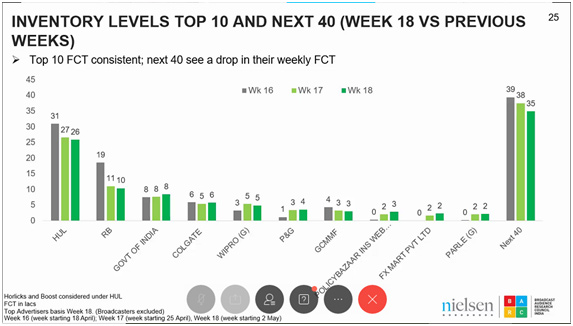
    The previous week had seen a dip in the inventories by top 10 advertisers and an increase of 9 per cent by the next 40. This week witnessed a dip in FCT of next 40 as well, while the top 10 mostly remained consistent. 

    After a spike in the number of new brands on TV in the past week, this week saw a massive slump. The numbers dropped from 395 to 274. A 7 per cent dip in advertiser count was also witnessed. 


  • CNBC-TV18, CNN-News18 to launch ‘Global Dialogues: The COVID-19 Impact & Beyond’

    CNBC-TV18, CNN-News18 to launch ‘Global Dialogues: The COVID-19 Impact & Beyond’

    MUMBAI: CNBC-TV18 and CNN-News18 has joined forces to launch a marquee series, ‘Global Dialogues: The Covid-19 Impact & Beyond’. The series will feature eminent industry leaders across sectors in conversation with Shereen Bhan on CNBC-TV18 and Zakka Jacob on CNN-News18. 

    The aim is to bring to fore fresh thinking, insightful research and enriching conversations, they will shed light on the disruptions, solutions and India’s role & relevance in the post Covid2019 World.

    The series will be broadcasted weekly on both the channels and will delve into different themes capturing insightful conversations on the various avenues and possibilities of the post Covid2019 world. Each episode will revolve around the following themes:

    1. Healthcare – Taking primacy at every level, the healthcare sector will demand a seismic shift for budget allocation and policymaking for each government. The episode will lay a strong focus on collaborations to produce drugs & vaccine along with a growing emphasis on building a robust public health system with adequate infrastructure and R&D

    2. Pharma & Life Sciences post COVID-19 – As health institutions across the world come together to combat the pandemic, the episode will track the vaccine development taking place worldwide

    3. Exponential acceleration of Technology – As social distancing becomes the norm of the day; technology will be the biggest aid in ensuring a seamless functioning of society. The episode will focus on how technology and digital transformation will continue to drive change across different sectors that include education, healthcare, media and entertainment industry et al.

    4. Geopolitics and Reshaping of the Global order – Recouping from the dire consequences will China continue to be a favoured destination for businesses, or will India be in the reckoning for investments

    5. How India needs to reimagine itself post-Covid2019 — The series will kickstart with a conversation between Zakka Jacob and Dr Devi Shetty, Dr Naresh Trehan & Dr Sangita Reddy on CNN-News18. The series will offer the audience a chance to perceive and understand the evolving scenario and the dynamic of the industries through an expert-led lens.

  • How Covid2019 is affecting outdoor media

    How Covid2019 is affecting outdoor media

    Outdoor advertising had a fantastic 2019. Defying predictions, India’s OOH (Out Of Home) industry, grew at over 15 per cent. Driven by IPL, elections and a huge increase in the OTT industry’s outdoor advertising, the industry saw a big increase, enabled adequately by digitization. The industry itself has been seeing radical positive transformation over the years. From the rather primitive static format, it has now become a dynamic audiovisual one, with all kinds of creativity made possible by technology. Global giants like Google Maps and LinkedIn have used OOH to create an impact, in addition to Netflix, Amazon Prime and Hotstar. Events are a big money spinner for OOH, and last year KumbhMela was proof of this. Witnessing audiences in crores, the promotion of brands on-site contributed significantly. In the financial year 2019, the revenue generated from out-of-home advertising across India amounted to over Rs 34 billion. This was estimated to reach up to Rs 52 billion by the financial year 2024, and Rs 38 billion in 2020.

    But all this has now been severely affected by the pandemic Covid2019. Many organizations have slashed their ad campaign budgets and have left the advertisers reeling for their incomes. OOH has been acutely affected in this scenario.

    Looking at history does not help, as during the previous instances of recession or pandemic, digital media or ambient advertising (a variation of outdoor) were not as developed as it is today. 1918 was the year when the Spanish Flu hit the world, and at that point mass television broadcast was at least 25 years away. Much later, in 2008, when the financial crisis hit the world, digital marketing was just fledgling.  But today, it is hard to find a single household that is not reached through digital and/or outdoor advertising.

    Lockdown has changed the way we live and the way in which we consume media. Urging people to stay indoors has resulted in streets and roads being empty. Halting public transport has created a vacuum in bus shelters and train stations and the busy shopping areas are deserted. The familiar red colour of Coca-Cola or the bright branding of Samsung is no longer visible while walking down the busy areas of metros in India. Many hoarding sites are empty as there are no consumers to view these.

    In-home media has been the gainer during this period. Whether it is TV, which has increased reach in terms of viewers and duration of viewership, or web streaming, which has seen a significant climb in the household watching time, or even video games (where playtime has gone up), people staying at home has resulted in a sharp increase in in-home entertainment and viewing.

    Out-of-home also includes ambient advertising i.e., advertising in unexpected areas. Aimed at evoking an emotional response, ambient advertising includes placing products, models etc. in attractive locations like malls and restaurants in order to catch the consumer’s attention. It is also called ‘creative guerilla advertising,’ and that has also hit a new low now. Reduction in public traffic has done away with the need for this kind of advertising, at least temporarily. Cancelling events has also had a bearing on this industry. With no immediate need to promote new products on a mass scale, clients are cancelling these events, leaving the advertisers high and dry.

    So, how can the outdoor media industry buck the trend?

    Outdoor medium is an integral part of our cityscapes and our lives. It has always had a place in building trust with local communities. Located in proximity to where people live and commute, it ensures a special bond with the citizens of that geography. And in times such as the current crisis, the medium is all the more relevant in garnering faith and educating the public. The medium, therefore, needs to play to its strengths. There have been cases where governments have recognized this and placed their confidence in this medium. According to the Ad Council of the US, ‘Out Of Home’ media plays a critical part in informing local communities and residents on how to stay safe during times of uncertainty. As part of their ongoing efforts to address the growing Covid2019 pandemic, the US department of health and human services (HHS) and centers for disease control and prevention (CDC), have convened (OOH) industry leaders, to bring critical Covid2019 safety messaging to the American public. From mall kiosks to airport TVs to Uber car tops and billboards, the industry is leveraging their extensive networks to help slow the spread of the virus. The scenario in India is no different. The advertising giants – Lintas, Ogilvy, JWT, etc. – are all focusing efforts on their outdoor advertising arm to bring more awareness to the public on Covid2019.

    Already known for its novel campaigns in the ambient format, the OOH industry needs further innovations. Take the case of Ro, an American digital health company, that has both men and women health products. Situated in New York, they decided to use outdoor medium and came up with a public utility message on safety on billboards, while also announcing their website-based tele-health assessments. This dual-purpose innovation helped them gain consumer mind share while also doing public good.

    Flexibility is the other aspect that will enable OOH to flourish. Media agency outfits that have a digital or TV component should allow clients to trade their outdoor budgets for digital or TV campaigns during this lockdown period, thereby retaining clientele. This will give them the much-needed revenues and allow them to get back on track once the current crisis is over.

    Making advertising trustworthy has always been a challenge. The metric for measuring trust in advertisements – the AD TRUST Scale – highlights the reliability of source as the topmost. Outdoor medium scores significantly on that front. Seeing China rebound from Covid2019 gives hope to outdoor marketers that all will be well soon. Coincidentally, the Beijing Olympics of 2008 was one of the pioneer outdoor events which showcased what OOH was capable of, through spectacular creativity (and technology). Given that outdoor advertising touches people in a personal, topical way, it is important that the industry adopts a combination of the above-mentioned strategies of playing to its strengths, practicing innovation and retaining flexibility.

    (The author is senior associate professor (marketing), Great Lakes Institute of Management, Chennai.)


  • Agencies should allow more flexibility to work remotely

    Agencies should allow more flexibility to work remotely

    NEW DELHI: It will be wiser for advertising agencies not to waste the crisis and plan to adopt the hybrid work cultures where a part of the workforce can work from home once the normal kicks in. The point was raised by BBH India CEO and managing partner Subhash Kamath and Wunderman Thompson South Asia group CEO and chairman Tarun Rai during a webinar discussing the future of advertising workplaces hosted by The Advertising Club Bangalore on Tuesday.

    “I have been passionate about the fact that people should be allowed flexibility at workplaces. We need to be more output-focussed and not input. We can work remotely and deliver the same results,” said Rai as he shared how he has always been open to the idea of certain members of his team working from home in case of emergencies.

    Kamath added: “My wife has been working from home for the past six to seven years now, a decision she took on her own to take care of the kids. I think this flexibility to work remotely should be given to women and also to people with ailing parents any day, irrespective of Covid2019 because family always comes first.”

    Both agreed that making working remotely a norm in advertising agencies will, therefore, also solve the problem of gender bias at offices.

    Rai elaborated, “We have achieved a 50:50 ratio of male-to- female workforce, but there are certain subconscious biases that still exist. People do not want to promote a woman who has recently got married or is planning a family. Working from home ends that issue as a woman who is getting married will be treated the same as a man.”

    They also highlighted that promoting a remote or work-from-home culture will also liberate good talent from geographical boundaries as it will be easier for a good suitable talent positioned in a different city than the client to contribute to a good project.

    Kamath said: “There is a difference between team-building and coalitions. You will find that in agencies people work on pitches in coalitions but then get back to the traditional, hierarchical team mode of linear reporting after that. Going forward, we will have to work together with more coalitions. Geography is history now. (As a good leader), you should be a part of a team that can get people together from across the world to find better solutions for clients.”

    Another benefit highlighted by the duo was the cutting of expenditure on things like travel, entertainment, real estate, etc. They insisted that it will be wiser to put all that extra money into a more valuable resource, i.e., the people.

    “We have moved from a culture of closed offices to open offices. Earlier, people used to sit in these opaque cabins, but with time we have made way to more open spaces where people can work in collaboration. Now we are moving to agile spaces. For example, at our Mumbai office, 20 per cent of the workforce doesn’t come to the office on any given day, that means there are no set cubicles or seats. You come to the office and sit at any place you find vacant,” Rai elaborated.

    He added that soon it could be moved to a no-office module. “No office doesn’t mean that you don’t have a place to go to. It means that instead of going to a cubicle or workstation, you will go to meeting rooms.”

    However, while all of it seems like a utopian dream achieving, this might not be very easy.

    Rai argued that to make all of this function in the real world, people will have to give up the control they are used to exercising on their teams and will have to turn more trusting towards people.

    “In addition to that, we also need to work on our HR policies and appraisal schemes. To this date, we have to punch in our office timings as the system remains input-based. Even with consultants, we are used to asking how many days they will be coming to the office. All this needs to change,” he noted.

    Kamath added that even the compensation structure of clients is heavily reliant on an input-based system, which also needs to change. “Instead of asking how many people you are going to give us for this project, they should be telling us this is what they want to achieve in this amount. Obviously, all of that can be negotiated, but the focus should be on the end result.”

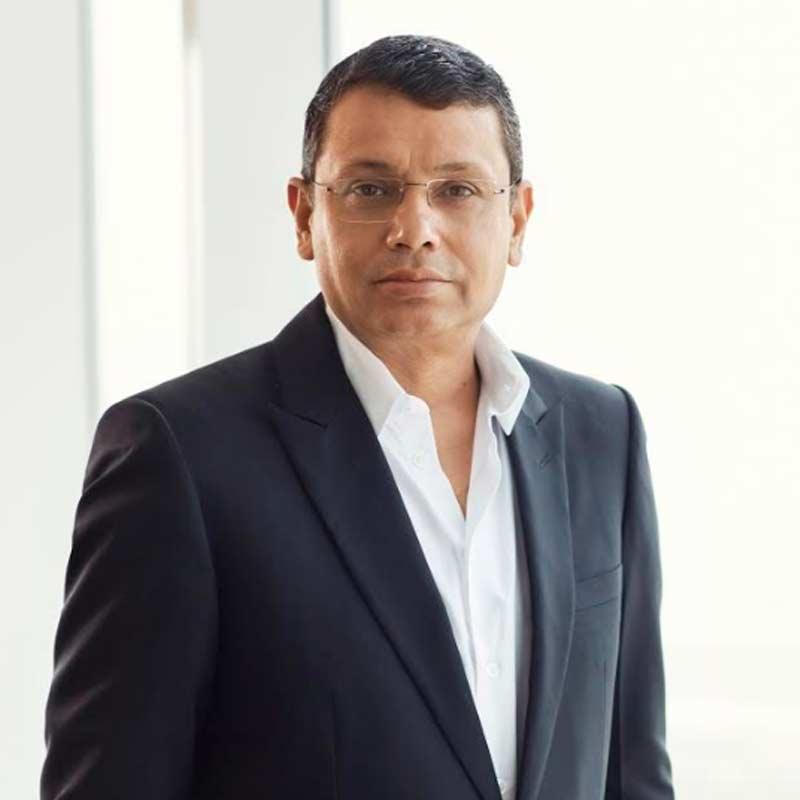
  • Uday Shankar speaks on IPL and sports post-Covid2019

    Uday Shankar speaks on IPL and sports post-Covid2019

    MUMBAI: It seems like nothing can put this journalist-turned-CEO down. Even as most would have been wringing their hands in despair following the disruption in the way business operates following the Covid2019 effect, Uday Shankar, the head honcho of Disney Star India, is taking things in his stride.

    “We need to break our muscle memory. No matter which business you are in, those who are able to think differently and work backwards from the new reality, they will be able to create much more value,” said Uday Shankar, while interacting with Indian Express about how his company will deal with the fact that its biggest cash cow the IPL has not happened in the 2020 season, and may not happen if the virus continues to wreak havoc in India and the world.

    The Board for Control of Cricket in India (BCCI) has been mulling over options like finding a date in the calendar when the IPL can be pushed in and how the matches will be played in stadia when distancing and safety regulations may prevent large public gatherings in them.

    Shankar explained that even empty stands during the IPL when it does happen post clearances from various country boards would not be a problem. He pointed out that players could come in, and instead of coming in five days earlier, they could come in two weeks prior and serve the quarantine period before getting on the field. 

    “I don’t buy it when people say, ‘oh, the experience will be incomplete’. Sports has become bigger because people are able to watch it on multiple media. Yes, the presence of the audience at the ground does help to create an atmosphere, so we will figure out ways of creating and enhancing the atmosphere through graphics, audio, sound effects and all that,” he elaborated. “It will be a challenge and we are required to deal with it for the first time. But it will get easier. Look, on Day 1 of lockdown, even using sanitiser and mask was a big disruption. I heard so many people say that they were not able to breathe properly. Now everybody is wearing masks. We will get used to it.”

    He further went on to state that technology will step in and his company was working on ways to get the home-viewing audience’s experiences onto the TV screen.

    “It’s a creative challenge; it’s not a sporting challenge. You watch sports at home on TV or Hotstar. Whenever you’re watching a tense moment, do you not have a very intense expression on your face? So, all we need to do is capture it. And today technology is ready for that. So, you can be at home but you can also be on television,” he said. “Our ability to recreate the same atmosphere for the fans who are watching it from home is limited only by our imagination; otherwise the fan gives you enough opportunity to capture those moments of intensity and excitement. It will be a somewhat different experience but it surely will be as rich, if not richer. If this had happened 20 years ago, without broadband and hundreds of millions of smartphones with cameras, it would be a challenge. Today it’s happening at a time when we’re ready.”

    Shankar believes that the sports bodies are going to be supportive of any initiatives that Disney Star India takes to bring sport back into Indian homes. Said he: “It has hurt us greatly; but it has hurt everybody. So, I won’t read too much into this. Look, first and foremost, we have a contract. We are an honourable company and we will honour it. But you should also understand that sports bodies are also aware of the challenges in the market place… The economy and incomes have taken a hit. And as far as Star and cricket are concerned, it is the goose that lays the golden egg. We have invested more in cricket than any other media company, any time in the world. I think in my experience, all sports bodies and authorities value the fact that our commitment to cricket is so high. If there is a real problem, we will go to them and I’m sure we will get a fair audience.”

  • Burger King India partners with Project Mumbai to salute frontline health care workers during Covid2019

    Burger King India partners with Project Mumbai to salute frontline health care workers during Covid2019

    MUMBAI: Standing in solidarity with the country’s coronavirus warriors, Burger King India extends support to frontline health care workers. Earlier this month, Burger King India partnered with Project Mumbai, a non-profit organisation, to distribute over 8,000 burgers to frontline doctors, nurses and other staff of hospitals in Mumbai. As part of this initiative, Burger King is delivering freshly prepared burgers to the medical staff of JJ Hospital, St. George Hospital, Cama Hospital and to the control room staff of Mantralaya.

    Since the Covid2019 outbreak, Burger King has further strengthened its robust restaurant procedures around food safety, cleanliness, and hygiene and has increased its sanitization frequency across all restaurants in the country. The brand’s ‘Trust in Taste’ protocols ensure safe preparation and delivery of food from the kitchen to the frontline health care workers.

    Burger King CMO Srinivas Adapa said, “We are absolutely honoured to support the medical fraternity who are fighting this battle on the frontlines. We salute their dedication and are grateful to provide safe and hygienic food to support them. We would like to thank our partners, Project Mumbai for partnering with us on this endeavour."

    Project Mumbai CEO and co-founder Shishir Joshi said, “#ProjectMumbai has been committed to helping our frontline warriors, the doctors in these trying times. In this process we are delighted to have Burger King volunteering to associate with us and provide some energy to our medical fraternity. #togetherwecan."

    Follow Tellychakkar for the consumer facing news & entertainment

  • Brands must identify, promote advocates for a better future

    Brands must identify, promote advocates for a better future

    NEW DELHI: The ongoing Covid2019 crisis and lockdown is a difficult time for brands across the globe. Retail and D2C players are too faced with wide uncertainties as people are not willing to spend much. However, as per the Department of International Trade, UK, this time comes with a silver lining; as the consumers can’t go outside they have a lot of time in hand to explore, and brands, therefore, must pivot their focus from direct sales to focusing on digital customer engagement. 

    The department hosted a webinar on Thursday in association with brand advocacy firm Duel, highlighting how brands can utilise this opportunity to keep their user community engaged during the crisis with zero budgets. Speaking on the panel were Duel founder Paul Archer, and lead brand and community consultant Jaclyn Crocker.

    As explained by Crocker, consumers of today no longer base their loyalty on price or product but instead on experiences they receive. Therefore, brands should be looking at consumer experience from a holistic perspective and build strong emotional connect with them. For this, brands will have to be very specific about their values, in not only what they stand for but also what they ‘rage against’. 

    She elaborated that what distinguishes a great brand from an average brand is its capability to turn consumers into advocates and creating an organic growth channel with minimal ad spends.

    “At Duel, we believe that the greatest companies of the next decade will be those who focus on driving advocacy and word-of-mouth from those who love them. Therefore, the brands must be thinking long-term, maintaining a honest and generous outlook towards consumers, investing in remarkable consumer experience by constantly seeking feedback, and building strong networks and communities.” Crocker said. 

    She added that consumers today are looking for more transparency from businesses and more human connection. 

    She also shared a trick to segment the existing customer base into CRM, customers, loyalists, advocates, and super fans and acting proactively in a different manner for each subset.

    She insisted that a brand must be investing in appraising and rewarding its advocates and also shared a formula to calculate the value of an advocate for a brand.

    She added that brands can promote advocacy by rewarding the superfans and advocates via discounts, and special experiences. However, if as a brand one has not been giving discounts ever since, it might not be the right time to start doing that. 

    In conclusion, she insisted that brands should really be focussing on creating a strong user base that turns into advocates for them for a brighter future.