Tag: covid2019

  • Over 50% of corporate India prefers working from home: study

    Over 50% of corporate India prefers working from home: study

    MUMBAI: For many, remote-working is the new norm today as on-ground operations came to a grinding halt due to the Covid2019 pandemic. Buzzinga Digital, a research-first, integrated communications agency, conducted an online research survey in an attempt to understand the behavioral and professional changes the Work From Home (WFH) culture is revealing for India’s workforce.

    The pan-India study surveyed close to 500 industry professionals, across the spectrum – IT, SME, automobile, agriculture, telecom, etc. A bulk of the respondents (80 per cent) belong to the 25-44 age bracket with a majority residing in metropolitan cities like Mumbai, Pune, Bangalore, Delhi NCR, Hyderabad, Chennai, and Kolkata. This insight into the ‘Millennial-Mindset’, during India's largest work from home experiment, reveal –

    · 50 per cent are optimistic about working from home and 30 per cent don’t feel any change

    · 55 per cent find social-isolation a big hurdle

    · 63 per cent said their e-relationship with co-workers is either excellent or very good

    · 75 per cent say the biggest motivation to continue to WFH is not commuting

    · More than 60 per cent feel they work more hours when working from home

    It’s evident that better logistical support from companies, processes, and favorable WFH policies has the power to turn the scales in favor of WFH. This could, however, severely impact the commercial real estate market but save crores in office rental costs for enterprises.

    As corporate India stays at home, it has become evident that they were starved of family time with as many as 54 per cent choosing extra family time as another motivator to continue working from home. Having said that, 75 per cent respondents also said they missed face-to-face interactions with colleagues.

    The study also tried to get an insight into the post lockdown/post-COVID-19 scenario and when working professionals return to their offices. About 60 per cent said they wouldn’t want to come into the office more than two to three times a week, while 10 per cent categorically stated that they don’t like the idea of going back to an office at all.

    When asked if a curfew, as a permanent fixture in the calendar, would be acceptable, almost 70 per cent replied positively with 50 per cent showing a willingness to follow it once a week. A large group of those surveyed cite environmental reasons as a primary reason to accept a curfew – 77.02 per cent believe it’s good for the ecosystem and 61.49 per cent opine that it will reduce our collective carbon footprint.

    “The coming months may also see a rise in the number of digital businesses that exclusively operate online. Employers may consider digital literacy and proficiency in tech-based operations important prerequisites for hiring,” said Buzzinga Digital CEO Yashraj Vakil.

    Overall, the survey indicates that WFH can potentially be the next big shift in India’s work culture. Companies that have conducted their business in traditional office spaces have been the hardest hit due to lockdown restrictions. However, to avoid a similar fate in the future, these firms are likely to embrace digitisation.

    For employees, this may herald a massive change in how they work. As of now, the success of the WFH experiment is a matter of speculation, but time will tell. However, it is our best bet until the Covid2019 pandemic ends and before the lockdown is lifted.

    All findings are available to see for free on Buzzinga Digital’s website: https://bit.ly/3dyCqEK   

  • IBC2020 cancelled due to Covid2019

    IBC2020 cancelled due to Covid2019

    MUMBAI: IBC2020 show, the world's most influential media, entertainment and technology show, has been cancelled in view of the Covid2019 pandemic.

    It was scheduled to be held this September at the RAI Amsterdam.

    “Right now, despite the best work of the IBC team and our Dutch colleagues, there are still many unknowns. Therefore, we cannot guarantee that we will be able to deliver a safe and valuable event to the quality expected of IBC,” said IBC CEO Michael Crimp in a statement.

    It is also evident that important aspects of a large-scale event such as IBC will be greatly altered by social distancing, travel restrictions, masks etc. so much so that the spirit of IBC will be compromised, he added.

    “Whilst this is hugely disappointing for us all, IBC will continue to play a vital role in supporting the industry to get back on track wherever we are able. For more than 50 years, IBC has provided the central annual meeting place for the Media, Entertainment & Technology community. For example, over the coming months IBC will continue to engage with the industry through its digital platform IBC365. Details of our plans will follow soon,” said the CEO in the statement.

    Last year, IBC attracted more than 56,000 attendees from 150 countries around the world, exhibiting more than 1,700 of the world's key technology suppliers and showcasing a debate-leading conference.

    The CEO concluded the statement with the hope of welcoming all next year at IBC2021, in Amsterdam.

    IBC is run by six leading international bodies are the organisations behind IBC, representing both exhibitors and visitors. Their insights ensure that the annual convention is always relevant, comprehensive and timely. IBC’s board is formed by the leaders of these international bodies and hold extensive experience across the industry.

  • The Visual House launches ‘Create @ home’

    The Visual House launches ‘Create @ home’

    MUMBAI: What we have been feeling over the last few weeks is an experience that's once in a lifetime. By staying in their homes and practicing social distance, everyone has shown sense and patience. But the lockout surely seems relentless for the youth, yet they have overcome it in their own special and imaginative ways. Motivating everyone to stay put, The Visual House a New Delhi-based production house and integrated communication agency launched ‘Create @ Home’, a cultural fest that allows submission of artistic expression in different mediums like photography, creatives/posters, film making, writing and videos, as the current lockdown has given us all the opportunity and time to explore our creative penchant.

    Creativity provides an outlet for us to express how we feel and helps us deal with the realities of testing times. Create@Home, the TVH cultural fest is a celebration of creativity that has sprouted during these testing times of global pandemic.

    Over a thousand people from all over the country sent in their entries for the fest, expressing their innermost thoughts and feelings during the lockdown. Most of these submissions are from the youth and focused a lot on Covid2019 and extended their support to healthcare workers and frontline workers in today’s times.

    The Visual House founder and CEO Deepmala says, “With everyone locked in their home and social distancing becoming the new norm, it is important to stay calm, meditate, bring out your creative side and stay optimistic. We want to help bring positivity in these difficult times. Launching Create @ Home is one such fest and we are extremely delighted about it. Through this cultural fest we wish to inspire people to look inward and discover their creative sides through Click Photo @ Home, Shoot video @ Home, Design @ Home or Pen Down @ Home.”

    Follow Tellychakkar for the consumer facing news & entertainment

  • After Ramayan, Dangal back as most watched channel across genres

    After Ramayan, Dangal back as most watched channel across genres

    BENGALURU: Enterr10 Television’s flagship free to air (FTA)-cum pay TV Hindi GEC Dangal had to normally battle it out with either the Sun Tv Network’s flagship Tamil GEC Sun TV, or with the Hindi sports channel that aired India’s cricketing bonanza – the Indian Premier League or IPL live since the implementation of Telecom Regulatory Authority of India (TRAI) New Tariff Order (NTO) in early 2019. The lockdown during Covid2019 changed all that. The edition of the IPL for 2020 has been postponed with no firm date of its playout being announced until the writing of this paper. However, Lockdown 4.0 may provide some relief to the public and the broadcaster – sports grounds will be opened with restrictions and without spectators. 

    Further, pubcaster network Doordarshan started airing is library Mythologies and classical programmes on its Hindi GECs’ DD National and DD Bharti with the advent of lockdown 1.0. Even during their initial weekend runs on Sunday’s in the previous century, roads across the countries emptied as people across languages, religions and faiths had eyes glued to their television sets. Now, suddenly a new generation of the country along with their parents were exposed to these magnum opuses – and note – not once a week, but every day. Viewership of DD National and DD Bharati and along with them, viewership of Hindi GECs’ shot up to all time highs’.

    Broadcast Audience Research Council of India (BARC) weekly data for week 18 of 2020 (Week 18: Saturday, 2 May 2020 to Friday, 8 May 2020) reveals that the Top 10 Channels on All Platforms Across Genres comprised of six Hindi GECs’, and one channel each from the Hindi Movies, Kids, Tamil and Telugu genres. From the networks’ perspective, there were two channels each from DD, Sony Pictures Network India (SPN) and Sony Star India, and one channel each from Enterr 10 Television, the Sun Tv Network, Viacom 18 and Zee Entertainment Enterprises Limited (Zeel).  While DD National, DD Bharti and Dangal are available on both the pay TV and FTA platforms, Zeel’s acquired Hindi GEC Big Magic is FTA. The other six channels were Pay TV.

    Nine of the channels in BARC’s weekly top 10 channels on all platforms across genres list in week 18 of 2020 were same as the previous week with some shuffling of ranks. One channel – the Sun Tv Network’s Telugu GEC Gemini TV exited the list in week 18 0f 2020 to make way for the Star Network’s flagship Telugu GEC Star Maa. Please refer to the chart below:

    Top 10 Pay TV channels Across Genres

    Nine of the channels in BARC’s weekly list of Top 10 Pay Channels Across Genres in Week 18 of 2020 were same as in week 17 with some shuffling of ranks. As above, Gemini TV exited the list in Week 18 of 2020 only to make way for Zeel’s Hindi Movies channel Zee Movies.

    There were four Hindi GECs’, three Hindi Movies channels and one channel each from the Kids, Tamil and Telugu gernes in BARC’s weekly list of Top 10 Pay TV Channels Across Genres in week 18 of 2020.  There were three channels  from Star India, two channels each from DD and SPN and one channel each from the Sun Tv Network, Viacom18 and Zeel in the list.

    Please refer to the chart below:

    Top 10 Free Channels Across Genres

    All the channels in BARC’s weekly list of Top 10 Free Channels Across Genres for Week 18 of 2020 were the same as in the previous week with some shuffling of ranks. Four of the channels were Hindi GEC, there were three Hindi Movies channels, two were Bhojpuri channels and there was one Youth channel in BARC’s weekly list of Top 10 Free Channels Across Genres for Week 18 of 2020, There were three channels each from Enterr 10 Television and Zeel and two channels each from DD and B4U Network. Please refer to the chart below:


  • The HR role in a post-pandemic world

    The HR role in a post-pandemic world

    MUMBAI: As we look forward to a post-Covid2019 world, minus any lockdown restrictions and worries about the virus, how will companies deal with the scenario? Indeed, the world will never be the same again. How will then companies cope in such a changed world? The human resources (HR) personnel will have the cardinal duty of ensuring seamless business operations and employee welfare. Assessing the new requirements of the office as well as employees will be the immediate task.

    Indiantelevision.com spoke to media and advertising industry heads to understand how their HR heads are preparing for the post-Covid2019 world.

    Townhalls and virtual meet-ups are the common ways to ensure people feel connected to each other. DDB Mudra Group EVP and head-HR Rita Verma and Dentsu Aegis Network head HR business partner – south Asia Sunil Seth say that open and honest communication has been the way to tackle stress.

    “Everyone is juggling their own unique personal living situation, so offering people some flexibility in work schedules and encouraging them to take time off, if they feel overwhelmed, has been critical. We’ve offered physical fitness sessions, virtual meditation, tips to manage stress at work and home. The idea is to help people tackle whatever roadblock they may be facing in a given week,” says Verma.

    On the other hand, #ARM Worldwide co-founder and COO Abhishek Punia says that Covid2019 has taught the importance of mental health. “Psychologically, people will have fears in their mind and by providing them with a safe and clean environment, with all sanitisation and hygiene measures in place, we can instil confidence in their minds,” he says.

    To tackle stress, Logicserve Digital created an online chat room, virtual tea-time session where employees can share stories, dance sessions, pet meetup, meditation sessions and money management sessions.

    TheSmallBigIdea co-founder and CEO Harikrishnan Pillai says that there is a tendency to get deeply engrossed with work and forget that we are humans who are used to interacting with many individuals but now confined to the walls of our homes. “We have encouraged managers to keep speaking with the team members, especially ones staying away from the family or the ones who are new to the organisation,” he says.

    As green zones have slowly started resuming operations, companies will now have to deal with an increased focus on health and wellness and in some cases, paranoia. Companies agree that checks such as using sanitizers or washing hands frequently, thermal scanners, compulsory wearing of masks, reminders to maintain social distancing will have to be taken. Additionally, pre-sanitisation, as well as frequent cleaning, will need to be incorporated as new measures. Another requirement will be to maintain physical distance between employees when they work as well as in spaces like lounges or cafeterias.

    After health measures come flexibility, which most companies will now undertake if they haven’t yet already. The next step is to create batches of employees and divide them into shifts if they are called on the premises.

    Seth says that there will be no change in shifts. Verma adds that common work hours have been found to be fruitful. “Not everything is solved through a company policy alone, but largely through office culture and ours is seen in the continued good work our teams are doing,” she says.

    Godrej & Boyce Mfg has planned for business scenarios and rosters of employees who are required to come to work and which work could be carried out from home. It is also encouraging the use of personal vehicles.

    Logicserve Digital head – HR Anshuman Misra says that they are in no rush to bring the workforce back to the office since flexible policies are already in place. He is considering flexi-working and flexi-timing with a greater focus on results than efforts.

    While most companies are encouraging people to travel using their personal vehicles, if possible, The Visual House founder and CEO Deepmala says that carpools will be encouraged only after considering the health and safety of everyone involved. Similarly, TheSmallBigIdea is considering non-peak-hour travel to ensure minimal contact.

    AGENCY09 culture manager Archita Arekar says that they are mentally prepared for another six months and the HR team is working on a new policy post-Covid2019 that favours work flexibility and employee safety.

    Elderly people have to be extra cautious about the Covid2019 virus. Companies that employ older people need to take extra care. While DAN has a majority of millennials, elderly employees will be advised to continue to work from home until enough measures in the external environment allow them to travel to office with full safety. Same is the case with Logicserve; the company will also be cautious with those who have kids or senior citizens at home or those with health conditions.

    The HR department will play a prime role in ensuring the wellbeing of employees in the new era. This will include creating new policies, structures and measures. There will be a nuanced approach to employee health, safety and wellbeing.

    Verma says that HR will take a health-first approach with lesser crowds and more virtual engagement. Productivity matrix will also be a key focus. Different functions will be analysed and their ways of working will be looked into. Reskilling, restarting and realignment will be the newer approach, according to her. “But the lens through which we will continue to look at our policies will remain, i.e., empathy; to come out of this as healthy and strong as possible,” she adds.

    According to Seth, organisations, where HR practices were strong, will see no difference. However, the HR horizon will require to be widened from the perspective of the psychological and emotional needs of employees. “It will further need a strong configuration in terms of leadership and management. It may also require certain investments to offer in terms of coverage on health, emotional and financial benefits to the employees,” he says.

    As a consequence of the pandemic, companies have started focusing on intensive hygiene practices as a daily routine. Misra says, “Once the lockdown is lifted, HR’s role will be even more crucial and important as the personnel have to continually ensure the health safety and wellbeing of all employees while being aligned with the organisational goals.”

    On the other hand, Pillai says, “In times like these, our HR department has played a crucial role in keeping the teams connected, formulating policies and helping in smooth operations along with the admin team. HR teams will need to be on top of the game as we might be looking at a workforce that won’t meet every day but still need to be kept motivated.”

    HR heads have a lot on their plate right now and going forward, they will have to ensure strong measures that will enable their employees to be at their productive best.

  • Italy to reopen movie theatres from 15 June

    Italy to reopen movie theatres from 15 June

    MUMBAI: Cinemas will reopen in Italy from 15 June, the government announced on Saturday. The European country, the epicentre of Covid2019 outbreak, recorded its lowest deaths this weekend after the pandemic started. Italy is all set to join other countries in the region which have decided to reopen cinemas. There will definitely be strict measures of social distancing such as online booking and controlled seating arrangements.

    The country went through tumultuous times, having witnessed the third largest number of Covid2019 deaths in the world, with close to 32,000 fatalities reported thus far. As the pandemic spread across the country and beyond, the government imposed strict measures to fight the pandemic.

    The Venice Film Festival, scheduled in September, has not been cancelled yet, though at present there is a ban on large gatherings of people.

    The authorities will relax restrictions on Monday, which means that public life will return to normalcy with shops, restaurants and tourist areas reopening. 

    Italy prime minister Giuseppe Conte said the country is facing a “calculated risk,” and pointed out the shattered economic conditions in the country. He stated that the country is “taking risk and we have to accept it.” 

  • ITC Savlon launches hand sanitiser at half a rupee

    ITC Savlon launches hand sanitiser at half a rupee

    MUMBAI: ITC Savlon has launched its hand sanitiser at a price of just Rs 0.50 (half a rupee).  The Savlon Hand Sanitiser in a sachet format at this price makes it probably the world’s most economical hand sanitiser available today.  The Covid2019 outbreak is an unprecedented pandemic and in a responsible step forward, Savlon introduced the hand sanitiser sachet to address the issues of accessibility, affordability and availability. Designed for a one-time use, the Savlon Sanitiser Sachet is extremely cost-effective and an accessible out-of-home sanitising solution. Developed with the help of global leaders like Givaudan, the Savlon Sanitiser in a sachet format reiterates its stringent quality norms with this world class product. The economical pricing makes Savlon sanitiser sachet almost as cost effective as a hand wash.

    Sameer Satpathy, chief executive, personal care products business division, ITC Limited, said: “We are amidst an unprecedented global health crisis and it is imperative to accelerate our efforts in introducing innovative solutions to help fight the pandemic. Precautionary measures of personal hygiene have today become a household need besides social distancing, to contain the spread of this contagion. The launch of probably the World’s most economically priced hand sanitizer in a sachet format is an endeavour to ensure a wide access to hand hygiene.”

    Ajit Pal, regional director, South Asia, fragrances division, Givaudan, says: “The name Savlon stands for reliability. The consistency with which ITC has upheld the various attributes that make it one of the best brands of its kind in the world is truly commendable. We at Givaudan feel privileged to have been a partner in the sensorial journey of the brand. The launch of Savlon sanitiser in a single use sachet at the incredibly low price marks a major milestone in the brand's history. It delivers the same standards of quality and reliability that Savlon stands for but for the first time at a price point that makes it available to millions of new consumers. It meets an important health and safety need today and this launch ITC has indeed made its contribution towards a national cause."  

    Savlon India has been at the forefront of this unprecedented outbreak. To enhance supply and availability, ITC on a war footing repurposed its world class perfume facility to produce an additional 1.25 lakh litres of hand sanitisers. Savlon has been relentless in its pursuit to serve a national priority and a key step has been to accelerate innovations that can offer significant anti-viral & anti-bacterial protection. The innovative, Savlon Hexa, its advanced hand sanitiser designed for quick and persistent action, was one of the quickest launches during the lockdown, brought to fruition in a record time, to help the frontline medical staff and consumers alike. To help fight against COVID-19, Savlon launched the Zero Contact Surface Disinfectant Spray. An incredibly versatile Surface disinfectant spray that effectively kills a wide range of viruses, bacterial molds and fungi on frequently touched areas with just a spray. The brand has partnered with various state Governments to ensure availability of Savlon Handwashes and Hand sanitisers and teams have been working round the clock to help innovate, manufacture and distribute to meet the exponential surge in demand for hygiene.

  • Survey reveals 61% Indians suffer mental health-related issues under lockdown

    Survey reveals 61% Indians suffer mental health-related issues under lockdown

    MUMBAI: Covid2019 has been the biggest impending crisis in the current era and has given rise to the new normal way of surviving, both personally and professionally. With uncertainty clouding over nations across the globe, economies have come to a standstill and India has been no different. Companies have been forced to adopt the “survival of the quickest and the smartest” mantra, while the economy struggles to come back to normalcy. With individuals restricted with the four walls of their homes, mental health has taken a severe hit. According to the Rebooting 2020: A Story of Covid2019, and shifting perceptions survey by reputation management advisory, The Mavericks India, 61 per cent Indians are experiencing mental health related issues due to the lockdown, uncertainty, and looming financial crisis.

    Mental health takes a beating this lockdown

    Gen-Z and millennials have been impacted the most with 27 per cent of Gen-Z and 19 per cent of millennials expressing that this crisis has taken a significant toll on their mental health. Baby boomers are least impacted or perhaps better experienced and prepared to handle the crisis.

    Furthermore, women are struggling more than men as their workload has increased significantly with them carrying multiple responsibilities without any assistance from domestic helpers.

    Work-from-home the new normal?

    46 per cent of CXOs surveyed believe that working remotely will be the most significant change in the post-COVID world. While Work From Home is quite prevalent in the western world, the concept was confined to a handful of sectors and very often, limited to a few functions in India. This lockdown has forced all industries to explore innovative ways to get their workforce to operate remotely. Given the success of the forced experiment, many CXOs are exploring options to get a major portion of their workforce to work from home for a longer period of time post-COVID, or permanently in some cases. With salary cuts implemented with immediate effect across all industries, the WFH proposition offers saving time and money while bringing down the real estate costs for the employers significantly. WFH is being touted as a win-win scenario.

    On the contrary, the workforce is itching to get back to working from office with 75 per cent Indians finding WFH very challenging and further blurring the boundaries between work and personal lives.

    Indian economy’s road to recovery – a bleak future

    90 per cent CXOs expect the recovery to be slow and painful and this is likely to be reflected heavily in their decision-making as they try and navigate the turbulent times.  A whopping 72 per cent of Indians do not expect the economy to recover in less than a year with 26 per cent being further pessimistic, not expecting the recovery before two years. A slow recovery stacked with depleted earnings and an expectation to save more spells impending doom for discretionary spending.

    The rebooted consumer mindset is good news for shared economy brands while brands in luxury, travel and assimilation of material assets are likely to struggle and bleed on their way to recovery. However, the premium mobile phones market is expected to make a V-shaped recovery and dishwashers, vacuum cleaners and automatic washing machines market is expected to grow substantially.

    “Early lockdown was the best solution to controlling the spread of COVID.”

    Overall, 70 per cent of Indians and 79 per cent of CXOs are supportive of the Central Government’s response in handling the crisis with the only exception being, lack of planning and implementation in accommodating the plight of migrant workers. It is likely to prove to be a major impediment while putting the economy back on the path of recovery and eventually, growth.

    Reduced dependencies on China the next big move for India?

    51 per cent of the CXOs and 40 per cent of other respondents believe that China will suffer a global backlash as the world perceives that China could have responded more responsibly in handling the crisis that has gotten the world down on its knees. It’s a great opportunity for India if we respond quickly to bring in policy reforms, making it an attractive investment and consumption market, while focusing aggressively on the Make in India initiative and encouraging Indians to going #VocalForLocal.

    Media consumption shifts to the online medium

    Indians are tuned in to Zoom and Google Hangouts/ Meets for most part of the day, besides being pushed to bring in the digital transformation to some of their most loyal habits like consumption of traditional media. 70 per cent of the respondents are reliant on online news sources and apps and only three per cent of the millennials hold on to their old habits.

    Sustainability is the name of the game

    58 per cent of respondents are likely to have increased appreciation towards sustainable environmental practices while 63 per cent are committed to leading a healthier lifestyle with a special focus on physical fitness and building better immunity.

    Say no to travel till there’s a vaccine

    As expected, the travel and hospitality business is likely to take the longest time to recover as social distancing will continue to be the new normal for a while and definitely until they are vaccine-protected. At least 67 per cent of the Indians are not likely to travel for the next six months unless it is absolutely necessary.

    The Mavericks founder-CEO Chetan Mahajan said: “Reputation, transparency, and trust will be the new currencies of the post-COVID era. Brands that are living their purpose and are conscious about building sustainable business models will enjoy preference and will recover faster.  Furthermore, digital transformation will change the storytelling game and authentic change the storytelling game and authentic influencers will become the key carriers of the brand story.”

    For more insights, you can download the full report https://www.themavericksindia.com/covid-19

  • South Indian channels brace for production resumption

    South Indian channels brace for production resumption

    MUMBAI: After an extraordinary lull of two months, during which the entire TV production activity came to an abrupt standstill ravaging advertising revenues in its wake, general entertainment channels (GECs) in some south states soon can air fresh content. While the Karnataka government has given approval for resuming indoor shooting of serials to begin from 25 May, the Kerala government has responded favourably to the TV producers’ request.

    The lockdown caused by the Covid2019 pandemic has affected the television industry adversely. While news channels, having been put under the essential service category, continued to function, most of the GECs found the going tough. It has been even tougher for those entertainment channels which aren’t lucky enough to have a vast movie library to boot.

    In fact, those with a huge movie depository sustained, and even flourished. In Kerala, for instance, Surya TV got lucky with its huge movie bank as it made up for the lack of fresh programmes by banking on its movie library. The GEC, part of the Sun Network, edged out Asianet from its top position in week 15 of BARC just by airing movies back-to-back from its bank. However, between week 16 and 18, it has slipped to the second spot.

    But, not all are lucky. And the unlucky ones are now seeing a glimmer of light at the end of this lockdown tunnel with the prospect of resuming shooting.

    “You will need to give a plot recap before you start airing the fresh sequences to soaps,” a programming head with a Kannada TV channel quipped wryly. That pretty much sums up the desperation on the ground. After all, how long would you bank on the library to keep a home-bound, entertainment-hungry audience hooked?

    Cost constraints

    Regional channels, faced with the twin challenges of cash crunch and limited resources in the changed scenario, will have to adjust to the new normal.  “GECs, especially regional ones, have to deal with the problem of costs and cannot cough up more. They cannot afford to have the kind of strict parameters and protocols that have now been put in place in production activities by studios in Hollywood,” said a senior hand working with an entertainment channel in Bangalore, who prefers not to be named because he is not authorised to speak to the media.  

    Viacom18 regional TV head Ravish Kumar said: “We are currently awaiting approvals from the relevant authorities and will adhere to all norms, formalities and SOPs. We will resume shoots only once we have a formal go-ahead from the concerned authorities and will continue to follow best practices and guidelines laid down by them to ensure safety and well-being of all involved.”

    Viacom18’s Colors has two entertainment channels in Tamil and Kannada.

    Programme producers say that things will not be the same as they were before. “No liberal shooting will be allowed. There will be a lot of restrictions like the number of people allowed in a shooting set, etc. So many things cannot be visualized unlike in the past. We need to plan because of these reasons,” said a programme executive in Karnataka.

    With outdoor shooting still a distant dream, serial plots will go for a lot of changes. Scenes where outdoor shooting are required will have to be rewritten or tweaked.  

    As of now, entertainment channels have an oversupply of scripts for serials and other programmes. “We are ready with scripts for 40 to 50 serials. Writers, with plenty of free times, have been churning out serial plots prolifically since the start of the lockdown. But we are not yet sure as to how we can work it out with all the restrictions,’’ he said.

    SOP for shooting

    The Karnataka government has given tentative approval for TV serials to resume indoor shooting from 25 May, with a lot of restrictions. Shootings in the state came to an end on 22 March following the lockdown.

    Karnataka Television Association (KTVA) has put in place operational procedures for shooting from 25 May. As per the SOP, only indoor shoots are permitted. The social distance should be maintained at the location. Only required actors for the shot and main technicians should be at the spot and others have to wait outside. The number of crew members should not exceed more than 18 people. The director and production manager should decide on crew and casting on a daily basis so as to maintain the minimum crew at any point of time. The artist support staff/ personal assistant should not stay at the shooting spot. They have to drop off and leave.

    The body temperature of each member needs to be checked before entering the shooting spot and if it is high, they should not be allowed. The producer has to provide a thermal scanner at the location. The name and address of all the cast and crew members should be recorded on a daily basis and the same to be provided to visiting government/medical officers at any time. The production manager needs to record this every morning without fail and ask the cast and crew to write it in the ledger.

    Producers have to provide transport for all the actors, technicians and crew members and follow the government instructions on transport facilities. People travelling in generator vehicles too should follow general Covid2019 instructions. No vehicle should be overloaded than the prescribed number of passengers. If not followed, authorities will have all the rights to cancel the shooting.

    The producer has to provide hand sanitizer, liquid soap and other materials to maintain cleanliness at the shooting spot. Everyone at the location should follow instructions provided by the government on covid-19 situation.

    Refillable sanitizers have to be provided along with hand wash dispensers at the wash basins. Covid2019 precautionary instructions have to be printed in bold letters and pasted at shooting spots (both in English and Kannada)

    Except for actors acting before the camera, everyone at the shooting spot should be wearing masks and hand gloves all the time. All the actors and crew should carry their own mask and wear in all the time

    Makeup crew should get sanitized before putting makeup on each artist. No back-to-back makeup without sanitizing. Usage of wet cloth is banned and the same has to be replaced by wet tissues and needs to be disposed of carefully.

    Makeup crew need to report early and artists have to go for makeup according to the shooting plan. Wet tissues have to be provided to actors and they have use it themselves and put the used ones in dedicated waste bin

    The microphones, both lapel and boom rods used in the set, need to be cleaned with sanitizer before putting it on the actors and bringing it into the set.

    Disinfectant spray should be sprayed before and in between the shots at the location. Phenyl mixed with Dettol should be applied on shooting floors, doors, windows, sofas, tables, chairs and other properties before use.

    One set assistant should be kept only for this and he/she should be wearing washable hand gloves and masks all the time.

    Follow the standard travel plan for cast and crew members and make sure no vehicles should carry more than the prescribed number of passengers. All the vehicles needs to be disinfected before using for shooting purpose

    Pressing of costumes should be avoided at the location and all the actors should get ready to wear costumes from their home. The direction and production team need to inform the artist well in advance about the respective costumes with continuity details.

    Only packed food, sealed in aluminium foil, to be provided at the shooting location. Actors and main technicians ideally should carry their own food if possible and avoid sitting next to each other and eating.

    Those travelling from outside for shooting have to follow the self-quarantine rules as per the government order. Actors, associates and assistants need to be informed 15 days in advance to reach Bangalore and be in home quarantine before coming to the shooting spot.

    In other states

    Elsewhere, in Tamil Nadu, the channels are keeping their fingers crossed as they have yet to receive a go-ahead signal from the government. The television fraternity in the state has made representations with the government, hoping for a resumption of production activities. The government allowed post-production works from 11 May.  

    "As of now, we have not got any approvals from the government. We will follow the same SOP proposed by the IBF to the government,” said the business head of an entertainment channel.  

    In Kerala, broadcasters are hoping for a favourable decision from the government to resume the shooting activities. Malayalam television fraternity, an association of television directors and producers, the other day met the chief minister in this regard. The CM has assured the fraternity members that he will consider their request favourably.

    The GECs are hoping that a favourable government decision will come very soon. ZEE Keralam’s business head Santosh J Nair said that the industry is going through very tough times. “There is no new content and advertising revenue is also at the lowest. We are eagerly waiting to start shooting soon keeping in mind protocols. Based on government approvals we will start our work. All this while, we relied on our content bank. But after our original banked episodes were exhausted and shooting stopped, we did not have fresh content. We have survived with a mix of reruns of fictions and films.”

    “The fraternity members got an assurance from the CM. A quick decision will come soon. But it is uncertain about the kind of controls that will be put in place for shooting. But it will be done in a controlled environment. It is unlikely that outdoor shoots will happen,” said Kairali TV programme head Unni Cherian.

  • Are producers and cinemas heading for showdown on OTT release?

    Are producers and cinemas heading for showdown on OTT release?

    MUMBAI: Nothing compares a theatrical experience: the sprawling screen, overall ambience, high-quality surrounding sound system, the cheering (and sometimes jeering!) crowd, and the overall immersive experience it provides. The pure joy of being there just cannot be supplanted with any other medium. But, the Covid2019 pandemic has necessitated the need for other means of movie release: OTT.

    Cinemas are unhappy with the release of movies directly on an OTT platform by skipping theatrical windows. With the Covid2019 pandemic refusing to fade away anytime soon, theatre release is not possible, at least in the foreseeable future. Will this lead to a showdown between cinemas and producers? Or will there be co-existence to find common ground?

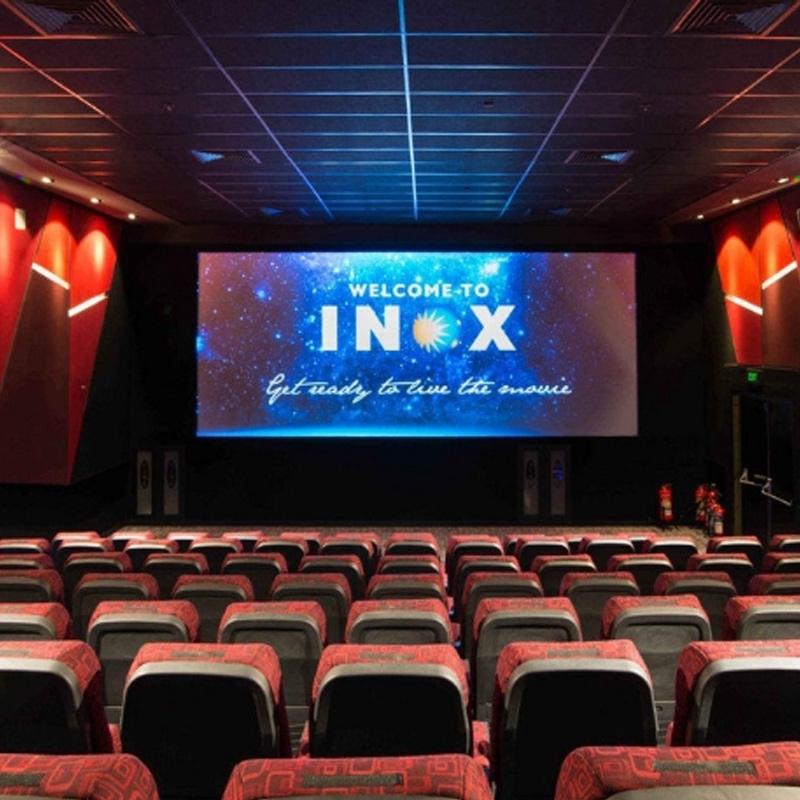
    A recent statement by INOX has pitted the exhibitors against the producers. The cinema chain expressed “extreme displeasure and disappointment” on an announcement made by a production house to release their movie directly on an OTT platform by skipping the theatrical window run. The decision of the production house to deviate from the globally prevalent content windowing practice is alarming and disconcerting, said INOX in a statement.

    According to INOX, cinemas and content creators have always been into mutually beneficial partnerships. “INOX has been investing profoundly towards adding world-class quality screens, across the country, only to provide more eyeballs to the great content being produced. This partnership has endured for decades and has provided succour to each other. INOX will be “constrained to examine its options… and reserves all rights, including taking retributive measures, in dealing with such fair-weather friends.”

    In response to this, producers’ guild of India issued a statement, expressing disappointment at the “abrasive and unconstructive messaging from some of our colleagues in the exhibition sector.”

    “Statements that call for “retributive measures” against producers who decide to take their movies directly to OTT platforms, especially at a time when cinemas are unfortunately closed for the foreseeable future, do not lend themselves to a constructive or collaborative dialogue on the way forward for the industry.”

    The guild said that we are in unprecedented times, facing one of the greatest public health and economic emergencies of our lifetimes. This is a time for the entire film industry to come together with empathy and support for the difficult predicament.

    The production sector (just like the exhibition sector) is suffering hundreds of crores of losses on a daily basis. Elaborate and expensive sets erected for under-production films have had to be taken down due to no date in sight for shoots to resume, with the sunk cost of the set and studio rentals to be borne completely by producers, as insurers refuse to cover the cost. Shoot schedules have had to be abruptly cancelled due to the lockdown, with huge cancellation charges being borne completely by the producer, again with no support from insurers. Interest costs are mounting on amounts raised to fund films, with producers having to bear this additional burden with no date in sight for cinemas to re-open. In this context, the guild said, it is important that each stakeholder understands and empathises with the predicament of the other, rather than adopting an adversarial stance which is counter-productive for the entire value chain.

    Indiantelevision.com reached out to producers and directors to seek their reaction in this regard. The overwhelming feeling among the fraternity is that it is a temporary phase and that OTT release is the need of the hour – the product of a peculiar situation like this. Once the situation normalises, theatrical releases will happen and people will throng to watch movies on the big screen.

    Film producer Ramesh Taurani feels that taking the OTT route is the right decision at this point of time.

    “The current scenario has led to producers taking this decision. In an ideal world, these films would release theatrically, but we are still trying to figure a way for theatres to reopen safely. Since the majority of the content is being consumed online right now it is the better call given the pandemic. Producers also have their financial restraints and can’t hold on to their films beyond a point so it definitely is the correct decision right now,” he said.

    Hats Off Production founder Jamnadas Majethia says: “As I always say that these are extraordinary circumstances and unique situations. So such decisions and behaviour will surface till we really don’t have a clarity on the impact of Covid2019.”

    According to him, films have premiered on OTT earlier also. “And we will see ‘houseful’ boards at cinema halls again. These habits of the big screen experience have been built over the number of years and we can’t change it over with a few months of restrictions. The vaccine will do the magic for the world. And till then it will be creations, innovations and survival of the fittest and emergence of good human behaviour that will help us create new opportunities of business,” he adds.

    Malayalam producer-director Anil Thomas said producers have no other option but to release movies in OTT. “Even in the Malayalam film industry we are releasing movies on OTT platforms as we are left with no choice. Theatres are the last thing that will open after lockdown is lifted. So, producers over here have mutually decided to release shows on OTT platforms.”

    According to him, not all the movies will be released but the ones which have low shelf-life or. “Nobody wants to release on OTT platforms; theatre has its own experience but till the time everything will get back to normalcy it will be too late. They are mainly worried because if content gets released on OTT platforms then there will be a shortfall for theatrical films.”

    Anil Thomas feels that theatre bodies and film producers will have to find common grounds. “In the long-run for all of us to survive, there should not be a showdown and all. We have to find a solution. I am also releasing my film Soothy Sujathayum on Amazon Prime,” he said.

    Film director Kunal Kohli said: “Let INOX release what per cent of their revenue is ticket sales vs F&B. No one goes to a theatre to eat, right? Start sharing that revenue with producers as well, before accusing them of trying to survive in a world pandemic never witnessed before by mankind.”

    A user said: “Well sir it is all about business. Don’t forget how many people rely on these cinemas. If everything changes suddenly, who will be responsible for those people who will lose their jobs? Though everything is becoming online, but don’t forget the whole chain.”

    Replying to this, Kunal said: “There is an even longer chain of workers making the films. They also need to survive. Pls read my tweets properly. Theatres like I said WILL survive. Films WILL release in theatres. Some have chosen to go digital. Nothing wrong with that. Need to support them as well.”