Tag: covid2019

  • Expect completely new approach to employee policies: DDB Mudra’s Rita Verma

    Expect completely new approach to employee policies: DDB Mudra’s Rita Verma

    MUMBAI: The Covid2019 outbreak has pushed HR departments to the top of the priority chain. The challenge before them is to rebuild and reinvent workplaces to safeguard the lives of their employees. In an interaction with indiantelevision.com, DDB Mudra Group EVP and head HR Rita Verma highlights different measures taken to ensure a safe work environment as the country phases out of lockdown and looks forward to reopening offices.

    Excerpts:

    What measures have you been taking so far to relieve your employees from mental and emotional stress?

    People are our most important asset and we’ve always kept their physical and mental wellbeing in mind. During this lockdown, the biggest challenge for people has been uncertainty of the situation. The key to easing emotional and physical shifts as we all go through this together is to talk openly. So we’ve been extra mindful of keeping all communication regular, honest and authentic. Every leader has been completely accessible and is actively reaching out to their teams. We invested in a mental health partner last year because we would like our people to reach their highest potential, cope with life’s curveballs and be an active member in their relationships, workplace and community at large.

    Everyone is juggling their own unique personal living situation, so offering people some flexibility in work schedules and encouraging them to take time off if they feel overwhelmed has been critical. In a time like this, sometimes you don’t know what will make you feel better, so we’ve offered physical fitness sessions, virtual meditation, tips to manage stress at work and home. The idea is to help people tackle whatever roadblock they may be facing in a given week. Some of these sessions are led by external instructors, while in many cases our own people have stepped up to the plate. Take Krupa from our 22feet Tribal Worldwide team who is a certified trainer and has volunteered to run a fitness class. Things like these make a difference.

    Once office resumes, how will you deal with the increased focus, and in some cases paranoia, regarding health and wellness?

    For starters, we will let people decide when they’re ready to return after the government authorities declare it safe to do so. No organisation, which depends on the creativity and freedom of thought of their people, can be productive if their people show up at work anxious. We’re preparing all our offices keeping in mind sanitation and social-distancing guidelines. But all of this is when our people feel ready to return.

    How are you planning to take care of employees’ psychological state when they get back to work?

    By having an open dialogue with leaders, HR leads with the support of counsellors, and in general having lots of constructive conversations to ensure timely addressing of queries regarding safety and wellbeing of our people.

    According to you, what will the world of HR look like after the lockdown is lifted?

    HR gives importance to the health of employees and their families. Productivity matrix will be a key focus. Different functions will be analysed and their ways of working will be looked into. Re-skilling, restarting and realignment will be the newer approach.

    How are you preparing to bring back your workforce once the lockdown is lifted? 

    We will be phasing out the employees transition once the lockdown is lifted.  Flexibility will be given to join the office. Work-from-home will be encouraged until things start getting better.

    Are there new procedures and practices that are being taken up for the betterment of employees by the HR departments?

    There will be a completely new approach to employee policies. A lot of focus on their health, remote work productivity, lesser crowds in office and virtual engagements will continue. But the lens through which we will continue to look at our policies will remain and that is empathy; to come out of this as healthy and strong as possible.

    What social distancing and sanitization measures are in place in your company?

    Offices have been regularly sanitised even during lockdown; those practices will continue, thermal checks on all employees and visitors will be mandatory, use of sanitizers, gloves and masks will also be mandatory for everyone.

    Generally, the work in the advertising industry begins late. How will you address that issue now?

    Our current work-from-home situation has already instilled a lot of discipline and adoption of tools in order to make things work remotely. People are realising the benefits of this. The focus will be completely on bringing the best out of our people and therefore an increased focus on productivity of employees. Not everything is solved through a company policy alone, but largely through office culture and ours is seen in the continued good work our teams are doing. So far, we have found that common work hours are a useful way to make the most of everyone’s time.

  • Investment vs returns: What ad agencies should know during Covid2019

    Investment vs returns: What ad agencies should know during Covid2019

    Advertising and marketing agencies have witnessed a different horizon during the Covid2019 pandemic, especially the ones serving digitally. Several brands have diverted their marketing spends towards digital mediums, while several others still believe in traditional advertising as the sole solution. Regardless of what experts and marketers think, the growth of advertising has been consistent, and with the markets becoming increasingly competitive, the ad world is surely going to grow unstoppably. 

    An ad agency largely invests in the following formats, and let’s see how they can anticipate returns in all of these domains:

    ●       Advertising spends for clients

    Several ad agencies invest in the advertising spends of their clients and get paid for it in return, on a frequent interval. Some agencies, in this process, also charge an ad management fee which is usually a percentage of the total advertising budget finalised upon mutual agreement. Due to the skyrocketing digital traffic during Covid2019 times, the average cost of advertising for sales/impressions decreased significantly which eventually led to a better return of investment for both the agency and the brand.

    ●       Good content creation

    We have heard numerous times that ‘content is the king,’ and true to its meaning, creating the right kind of content is really important for agencies and brands alike. Once you invest rightly into creating relevant and impactful content, it is sure to give you returns which go way beyond just sales conversion.

    There are several success stories of how an impactful content has created the right kind of brand recall and visibility for several advertisers across the globe.

    ●       Efficient teams

    Covid2019 brought in difficult times for businesses across the globe. With the buying cycle at a halt, cash flow decreased and it became increasingly difficult to pay the salaries and remuneration. In such a scenario, agencies that have continued to invest in their efficient teams will flourish in the longer run.

    Such an effort not only adds up more credibility but also develops a sense of trust for the agency among the team members. Investing in the right team is a must and returns are sure to come.

    ●       Client relationships

    Due to the economic slowdown, some brands had to stop agency services and keep the work on hold for a certain period of time which varied from a month to may be a few months. While one of the perspectives says that you should avoid working when not being paid for it, on the other hand, in such a scenario, several agencies choose to stand by their clients and support them in times of crisis. This strengthens their bond with their clients and helps in developing a connection for a lifetime. Such investments in building client relationships always pay off in the longer run.

    (The writer is co-founder and CEO of Gemius. The views expressed are her own and Indiantelevision.com may not subscribe to them)

  • Decoding Covid2019 impact on GTPL Hathway’s cable, broadband business

    Decoding Covid2019 impact on GTPL Hathway’s cable, broadband business

    MUMBAI: As the country is struggling with the Covid2019 pandemic, cable TV and internet have acted as the nervous system to keep people informed and entertained. Due to the need of staying connected, the cable and broadband service providers like GTPL Hathway have seen a surge in demand on both sides of the business.

    GTPL Hathway will re-evaluate strategies after observing the Covid2019 impact; however, the company’s business is not much impacted at this stage as people are watching more TV, and consuming more data. This means that consumers are upgrading existing packs.

    “If you see the subscriber base (on the cable side), we have grown by 10 per cent this year. We are going to grow more, if all things go well. So the target is to grow more than 10 per cent on subscriber base. And on the revenue side also we want to maintain our CAGR of what we did in the last four years,” GTPL Hathway CATV business head and chief strategy officer Piyush Pankaj said in an earnings call.

    While on-ground collections have been a major issue for a large number of MSOs, the company has given online payment facilities to the local cable operators (LCO) also. “LCO has also started collecting online. We have given that facility to the LCOs that they can collect online from their subscribers, which is going directly to their bank account and then digitally they are paying us. And we have given some relaxation on that way. So the situation is totally under control. And we are getting the collections as projected,” Pankaj said.

    Since free-to-air broadcasters have been adversely affected by dwindling advertising revenue, there might be re-negotiation on carriage fee and placement fee if the current turmoil persists. However, with 70-75 per cent revenue coming from placement, carriage and marketing side from pay broadcasters, the company is not foreseeing any impact on that.

    While upping the broadband game significantly, it has also added around 80k subscribers in FY20. As the company reached 30k net subscribers’ addition in the last quarter, it aims to maintain and increase that trend. Hence, it is looking at 120k to 150k subscribers in FY 21.

    “The residential customers have gone up in the last 30 days, both on the broadband side and cable side. But commercial customers like shops, offices, restaurants, hotels have come down. So you can say it's more of a net-net for both the businesses, for the broadband and the cable. We are not getting renewals for commercial restaurants, offices, and hotels. But there is a surge in the residential connections,” Pankaj said.

  • Not the right time for brands to go dark; they must continue communication

    Not the right time for brands to go dark; they must continue communication

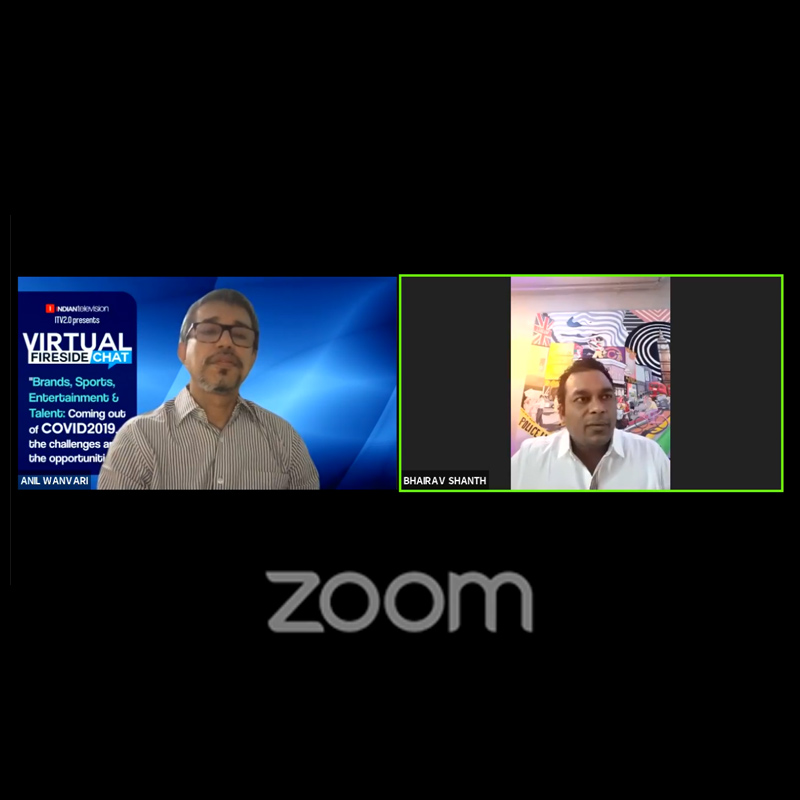
    MUMBAI: Brands cannot go dark in these troubled times, says ITW Consulting managing director Bhairav Shanth during a virtual fireside chat with Indiantelevision.com founder, CEO and editor-in-chief Anil Wanvari. According to him, the brands should instead strive to remain relevant and active in these tough times.

    He spoke about the future of the sports and live games and also how digital influencers have taken a centre stage, lately, to engage with masses on behalf of brands.

    “We have introduced in excess of thousand plus brands into global cricket for the first time. We make an attempt to be involved and develop commerce for various cricket boards,” says Shanth.

    The 12-year-old ITW Consulting seeks to fix the gap in the industry and do something different to give a single approach to every brand. With three verticals, Sports, Blitz and Playworx, the firm provides services such as sponsorship consulting, sports marketing, talent management among others.

    Says Shanth, “In the last two months, digital influencers have been buzzing for creating engagement. Today, every brand ambassador has become an influencer by default.” The consulting firm has been actively working with the brands to identify the right digital influencer in the current scenario, at a time when everybody is sensitive.

    During this testing time, not all brands want to sell their products through advertisement, but rather aim to create engagement and communication with consumers, believes Shanth. The firm has helped brands like Uber and Unacademy partner with the right digital influencers.

    ITW Consulting is currently operational in all cricket-playing countries as well as across cities and districts in India, and the global presence has helped them grow a lot, points out Shanth. “Along with cricket, we are also doing a lot of work around Rugby, as it is a favourite sport in many countries. We are also trying to build interest in newer sports,” Shanth said.

    Sports and events are the last priority of marketers while deciding media spends, which should not be the case. “Brands believe a traditional medium would deliver better, but we believe the hybrid model of sports with traditional medium would give more positive results,” says Shanth.

    “We have brands that are showing enormous faith and belief in the sports ecosystem. If the brands are assertive that they want to invest in sports, agencies will fall in line," says Shanth. “It’s important for brands to do 360-degree activation and not just sponsorships.”

    “Brands are cautious, but it is not all that bad. If the US can bounce back from the pandemic, so can other third-world countries,” points out Shanth. “Some brands are doing sports marketing right: BYJUS, Hero MotorCorp, etc. My favourite is Royal Stag; their sporting equipment contributed greatly to the sports ecosphere. Some new brands like Unacademy and Swiggy have shown great adaptability.”

    Taking a cue from Bundesliga league that received record-breaking viewership in Germany, Shanth hopes that the live games, including cricket, are going to bounce back across the globe. He believes the absence of an in-stadia audience won’t impact the soul of the game.

    “If people are thinking that sports in an empty stadium is not going to be exciting they are wrong. As television broadcast can create magical moments, it can adapt to the current requirement, and fill in with content, deep data and analytics that will keep the viewers engaged,” Shanth adds.

    Over a period of time, technology has evolved, so is the reach and penetration of the internet in our lives. Going forward, this would increase the digital audience and may overpower television audiences, feels Shanth. According to him, with the changing scenario the e-sports category is picking up steam but can't replace live sports, as both need to co-exist, one cannot survive at the cost of the other.

    Sports has acted as a band-aid every time the world has been under crisis and Covid2019 is no different than past situations, says Shanth. He cites an example of how sports helped the United States come out of the 9/11 shock. “Sport is a healer; people look at sports to create a sense of belonging and positivity. It is going to be back, and no one can take away the excitement of sports.”

    Having been associated with many sports talents and personalities, Shanth says, “Athletes are anxious, want this crisis to end soon and be back on the field practising, playing games”. Sporting community altogether has come out with never-dying optimism during this stressful situation.

    ITW Consulting is named after a favourite film Into The Wild. He says, “The company has seen enough changes for the past decade. And, we are getting better and by year and a half we will be stronger. We have never taken any situation for granted and will come up with a model.”

    Like any other business, Covid2019 has impacted ITW Consulting too. Shanth says: “We have not taken any single downsizing move, have not fired anybody. For us, our employees are an investment and wish to stick with every talent we have, for the time to come.”

    However, he admits that there have been substantial pay cuts in the company at the senior and mid-level management, but they all are aware that the reason for this is not profitability; rather it is a move to survive for the future if the situation worsens further.

    The consulting firm is optimistic about the whole situation and hopes down the line, everything will normalise and “we together will find alternative solutions to the ongoing problem.”

    “With Bundesliga about to start, we may see soccer leagues such as LaLiga, EPL to bounce back. The same would be the case with cricketing events,” Shanth said.

  • How ABP News Network helps employees cope with Covid2019 paranoia

    How ABP News Network helps employees cope with Covid2019 paranoia

    MUMBAI: Working in an office during a pandemic is not only stressful for employees but also for leaders. They are continuously committed towards emergency preparedness and at the same time looking at business continuity. Especially in a news organisation, when people are on their toes throughout the day, it is challenging to keep the workforce as healthy as possible. To create a better environment and more consistent systems in which employees can flourish are the topmost priorities of HR officials. In this interaction with indiantelevision.com, ABP News Network (ANN) spokesperson highlighted different initiatives taken by the management to safeguard the lives of its employees.

    Excerpts:

    What measures have you been taking so far to relieve your employees from mental stress?

    At ANN, we are trying to meet the challenges of this situation with compassion, heart, and kindness. We extend ceaseless support to all our employees via routine one-on-one communication to address their grievances and uplift their spirits during these challenging times. In terms of ensuring physical health and well-being, doctor-on-call service has been made available to all and in case of an employee testing positive for Covid2019, company mediclaim will cover the expenses.

    With an effort to help navigate their experiences in the new normal, all employees have been provided with a ‘Path Forward’ handbook. Additionally, the HR department will soon be launching a few special ‘Remote Employee Engagement Initiatives’ to cultivate a positive culture and help everyone unwind from the monotony.

    How are you planning to take care of employees’ psychological state as psychological safety will be more important than ever as they get back to work?

    Active measures to build psychological safety at the workplace will be taken up by establishing an ‘EAP Programme’.

    In order to build healthy coping skills, we will also be promoting practices of mindfulness and yoga among all our employees through dedicated efforts. Other programmes to reduce stigma around mental wellness will be initiated as often the fear of stigma prevents some people from getting the help they need.

    What will the world of HR look like after the lockdown is lifted?

    Much like other operating procedures that have witnessed disruptions, various HR practices will also remain fundamentally altered post-lockdown. The new normal will be defined by remote engagement mechanisms, revamping of existing skill sets, employing digital capabilities across all roles and identifying efficient automation practices. All of this would play a decisive role in long-term survival. Innovation and agility, coupled with compassion and empathy, will be instilled as essential organisational values.

    In fact, this new era will not only redefine our practices with regard to remote work but various additional roles such as ‘Crisis Management’ will have to be addressed.

    How are you preparing to bring back your workforce once the lockdown is lifted?

    The current situation is still volatile with no signs of when it plans to dissipate. So, better clarity will be established only as we proceed and as the government announces further regulations. Nonetheless, in any case, we will ensure a phased increase of manpower in our organisation.

    Any new practices being taken up for the betterment of employees by the HR?

    During a time of upheaval and isolation, it is pertinent to cultivate a positive culture. In this light, we have initiated a unique ‘RnR drive’ (Rewards and Recognitions Drive) to acknowledge special efforts of our employees in order to keep them motivated and engaged.

    What sanitization measures are in place in your company?

    We are taking an abundance of caution to ensure workplace safety including contactless hand washing mechanisms at the premise gate, thermal screening, and mandatory hand sanitization at office entry.

    Video conferencing in lieu of in-person gatherings are being carried out to ensure work goes on seamlessly. Reimbursements are also in place with regard to official travel.

    Are there changes to the timings/work structure to ease people’s psychological fear? Will there be any changes in the workspace considering the social distancing factor?

    ‘Flexi Working Hours’ have been already constituted in the organisation, which we will continue to follow as we proceed.

    Mechanisms of shift-working are also in place. However, space management will be a new area for us to explore. Moving forward, it is going to be essential to adhere to social distancing norms even as things get better, so our focus shall remain on reviewing existing office layout for reconfiguration.

    What segment of your workforce consists of elderly people? Will there be any extra measures to ensure their health and safety is well taken care of?

    Elderly staff (55-60 years) constitutes less than five per cent of our organisation. However, we extend our heartfelt support to all our employees with elderly parents, at all times.

    When in the future do you expect this fear receding and the entire workforce will be back?

    As we find ourselves muddled in the uncertainty of this health threat, change is going to be more of a process, which occurs gradually and takes its own course. Unanticipated twists and turns continue to emerge and we shall only have a complete outlook in retrospect. Having said that, this is undeniably an unprecedented setback and we do not foresee a complete reinstitution before the next financial year.

  • Advertising volume grows by 16 per cent in last two weeks

    Advertising volume grows by 16 per cent in last two weeks

    MUMBAI: Advertising volume grew during the last two weeks by 16 per cent, according to a ninth edition of a joint report by Broadcast Audience Research Council (BARC) India and Nielsen on crisis consumption.

    The report also states that the ad volume has, however, fallen by 23 per cent in the current week as compared to the pre-Covid2019 period.

    Most of the categories have increased volume of advertising levels in the last two weeks, of which soft drinks and coolers have increased the most, thanks to the heat wave in the country, the report points out.

    There has been a rise of 3 per cent in advertiser count in week 20, whereas the brands and variants count has gone up by 5 per cent in the same week.

    Follow Tellychakkar for the consumer facing news & entertainment

  • CNN’s Inventing Tomorrow explores the impact of Covid2019 on education and self-learning

    CNN’s Inventing Tomorrow explores the impact of Covid2019 on education and self-learning

    MUMBAI: When schools closed their doors around the globe to contain the spread of Covid2019, what followed was the biggest home learning experiment the world has ever seen.

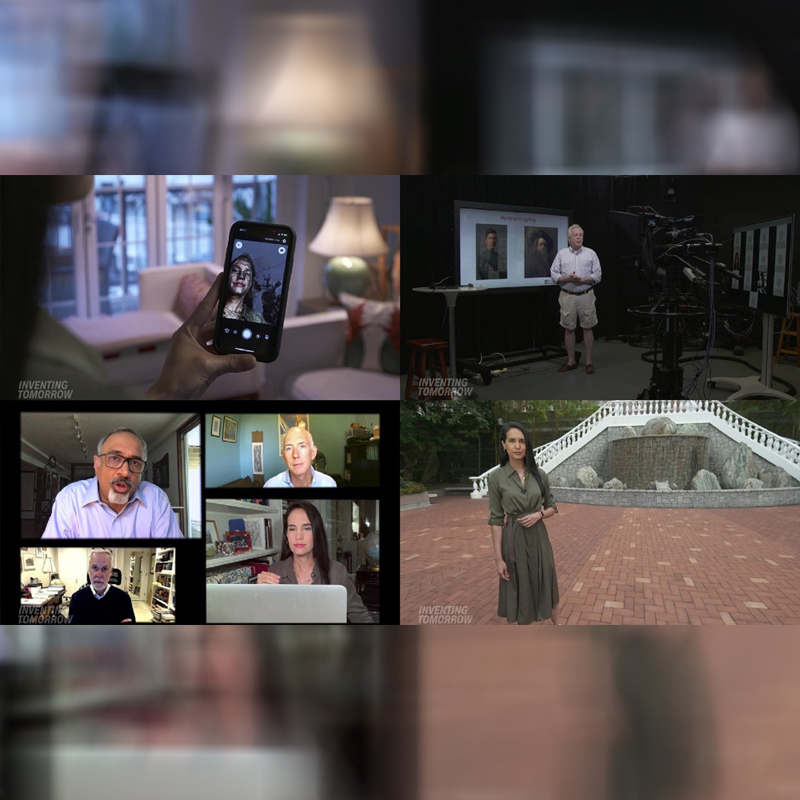
    In the latest edition of Inventing Tomorrow: Tech in a Time of Pandemic, CNN’s Kristie Lu Stout examines the technologies that have reshaped education for students, teachers and parents.

    As schools across Asia begin to reopen, Lu Stout reports from Hong Kong University (HKU), where Keith Richburg, the director of their journalism faculty, outlines how higher education has adapted to the digital transition and whether HKU will maintain online classes in the future.

    Lu Stout speaks to experts from ed-tech and remote learning to hear how these industries have rapidly developed periphery of the conventional education system.

    CNN hears from Simon Nelson, CEO of FutureLearn, Sanjay Sarma, VP of open learning, Massachusetts Institute of Technology and Paul LeBlanc, pr,esident, Southern New Hampshire University, on how prepared educational institutions were for the shift to online learning and whether online teaching will ever be as attractive as traditional tuition.

    With millions of people furloughed or laid off during the lockdown, adult education courses and self-improvement apps are also experiencing a huge boom. Lu Stout speaks to Luis von Ahn, the co-founder and CEO of Duolingo, about how the language-learning app uses AI to tailor the experience to each student and how long it takes to develop proficiency in a new language.

    CNN Inventing Tomorrow Education Trailer from CNN Creative Mktg on Vimeo.

  • IMPPA sets shooting guidelines in Maharashtra

    IMPPA sets shooting guidelines in Maharashtra

    MUMBAI: The Indian Motion Picture Producers’ Association (IMPPA) has written a letter to Maharashtra chief minister Uddhav Thackeray about resuming shoots of films, TV serials and web originals with proper SOP in place.

    This document suggests steps to be adopted to avoid contagion during shoots. It notes down detailed precautionary measures that will be followed by the cast and crew after the permission is granted.

    The report talks about carrying out a daily drill session with the  staff members so that it should be implemented in a proper manner. Crew, artists, technicians and participants will have to report 45 minutes before the shoot. Complete studio will be sanitised daily before the shoot.

    Floor markings need  to be in place so that people maintain social distance. Going forward priority will be given to portable chairs over standard benches.

    The report suggests no physical greetings, handshakes, hugs and kisses and amongst other measures.Wearing triple layer masks and gloves is mandatory. Infact, an alternative to face masks is also provided. “A protective half mask with inhalation and exhalation filter will ensure lower costs, as the number of filming days will gradually increase. It would be specifically worn  by actors and crew members having a negative Covid2019 test.”

    Lightman or anyone handling other equipment has to be provided industrial hand gloves with proper training about their usage. Construction department and other designated individuals must wear protective gloves. Crew members leaving the filming location (e.g. production, drivers or runners, etc.) must be equipped with protective gloves to prevent contamination of the filming area.

    A main element  of the report is the hair and make-up protocol. Artists will remain in their rooms until required on set. Hair and make-up personnel will be wearing masks and gloves, which will be mandatory to wear during the entire shoot.

    The guideline recommends single-use or disposable items; cleaning of hair wigs/ extensions before and after use; use of own make-up; and, most importantly, using a face shield, rather than a mask, once make-up has been applied.

    The guild has also advised production units to avoid crew above the age of 60 years at least for three months from the date of shooting as and when it starts and cast above the age of 60 years should be judicially used.

    As far as costumes used on the sets are concerned, the guild suggested that “every talent will use clothes allocated to him/her and they can never exchange clothes without having them properly disinfected beforehand.” In case of stuntmen, specialists and precision drivers they are to use their own clothes.

    More importantly, every daily wage worker has to be paid their wages daily.

  • Brands and consumer sentiments during Covid2019

    Brands and consumer sentiments during Covid2019

    The Covid2019 pandemic is something that has affected the entire globe. Since the initial spread of the pandemic in India, the announcement of lockdown, and the scenario in the present day, consumer behaviour has undergone a drastic shift and driven purely by the changing emotions that this pandemic is causing with each passing day.

    The sentiments of concern, safety and care for their near and dear ones are the most dominant ones. The fear of getting infected with the virus, having enough essential supplies, losing loved ones, the wavering economic conditions, or just job security is dominating everyone’s mind.

    There are two major emotions that have come out of the Covid2019: anxiety and hope.

    “You cannot control what happens to you, but you can control what you do about it.” A very old saying, but most apt for the given situation that the world is finding out. As communicators, we believe that this is true for brands as well.

    In times of crisis, misinformation and speculation get multiplied given the growth of the WhatsApp generation. This in itself is one of the biggest causes of anxiety that the consumers base as a whole is subject to. According to a recent study done by Kantar, 75 per cent of the respondents felt that brands should not exploit the health crisis to promote their products and brands. An equal number of people also speak about expectations from brands to be helpful and support in these times.

    It is our firm belief that in times of crisis such as this, a brand should simply go back to the drawing board and ensure that they do the basics right. This is also a time where all your stakeholders, external as well as internal, are looking to the brand for that ray of hope where they get the confidence that everything will eventually fall in place.

    Some thoughts that we are following and recommending our brands to follow as well.

    Redraw communication plans: The communication strategy and approach of brands is undergoing a radical change during these times. We believe that it is time for marketers to leave behind their focus towards selling and bring in basic values in their messaging. As a communication partner, we have been working with the brands under our custodianship to focus more on their purpose rather than their products.

    Reflection of values: The brand communication needs to have a reflection of values such as empathy towards others, sensitivity to the situation, relevance to the topic, show of care and compassion, and thorough transparency. This is also the time in communication when consumers are forming an opinion on the brands based on their ability to appreciate the hardships that the world faces.

    Be helpful: At this point of time, there are going to be a lot of frustrated souls out there. Those who are walking the 1000 miles or those who are locked up in their houses, no matter what their state, they are confused and troubled. Brands that are going to be helpful will be remembered for a long time even after this pandemic. These are times to earn loyal followers.

    Communicate only if required: It is essential for brands to understand that being relevant is the key. Push strategy will definitely not work in this hour. It is crucial to have minimal yet a powerful communication with your audiences.

    Communicate Internally: Crisis communication internally is as important as external. Don’t avoid communicating internally about risks and challenges faced by the business in these trying times. Ensure that the entire hierarchy understands the position and communicates the same across board.

    Educating consumers: Not every brand is going to be directly impacted with Covid2019, but at the same time no brand is going to stay untouched, either. Some industries will see a surge in demand while some face real hardships. The brands must act as an influencer and participate in relevant and necessary communication which educates the customer as well as helps them see through these times.

    We are going through uncertain times and the constant rising death numbers aren’t doing any good to our morale. However, this is also the time when the boys will turn into men, and brands will mature to super brands and communication will play a very big role in this journey.

    Be safe. Be responsible.   

    (The writer is managing director at IdeateLabs. The views expressed are his own and Indiantelevision.com may not subscribe to them.)

  • How Dabur realigned itself to manage Covid2019

    How Dabur realigned itself to manage Covid2019

    NEW DELHI: Covid2019 came as a big disruptor for the marketing and advertising industry. All the brands, big or small, had to rework their strategies for the year, realign their spends, and work with a different approach to reach to the consumers. In a live webinar with Indiantelevision.com, Dabur India head of media Rajiv Dubey had revealed that the brand was quite proactive in its approach to handle the situation and now in its financial review, the company has detailed the many measures it took to manage Covid2019.

    As per the report, the company worked on a multi-pronged strategy to handle the situation, keeping a tight focus on employee well-being, consumer marketing reorientation, GTM approach, streamlining manufacturing, cost and cash flow management, and community welfare.

    Elaborating more on the facet of consumer marketing reorientation, the company shared in the report that all its communications were repurposed in the Covid2019 context and a higher focus was put on healthcare and hygiene. The company also entered into newer categories and launched relevant NPDs.

    The media mix was retooled with an increased digital presence and clocking higher engagement on social media. It also decreased its presence on GECs, stopped advertising on print and outdoor, and invested highly in news channels, kids’ channels and movie channels on TV.

    To reach the consumers, a go-to-market (GTM) strategy was adopted under which incentive schemes for the salesmen and delivery personnel were announced in the early-Covid period. Automation was made a key factor in taking orders by enabling SSMs to telecall and take order on SFA, directly from home at start of Covid, piloted order taking through WhatsApp & centralized tele-agents was also introduced. It also launched a retailer app, which is now reaching to close to 40,000 retailers for self-service.

    To motivate and support the retailers, the company rolled out one lakh ‘Suraksha Stores’ with the ministry of consumer affairs, provided health insurance of one lakh to 1500+ SSM of Dabur stockists and gave digital certificates for exceptional service by sales team members.

    It also ventured out to reach the consumers directly via partnering with platforms like Swiggy and Dunzo, starting the ‘Immunity to Doorstep’ initiative, and placing Dabur's Immunity booster products in dairy and kirana stores.

    Dabur also initiated several community welfare programmes, earmarking Rs 21 crores towards support and relief activities. It also contributed Rs 11 crore to PM care fund by Dabur and other group entities.

    However, the company did not stay immune to the ripple effects of the pandemic. The month of April and part of May 2020 saw complete lockdown which led to a significant impact on the company’s revenue but with the easing of restrictions, we are seeing sequential improvement in the revenue trajectory of the company.

    While the impact on revenue from operations has been partially mitigated by higher focus on health and hygiene categories, the launch of new products, driving sales through new channels such as delivery platforms and e-commerce and aggressive monitoring of sales in GT channel, yet the impact of Covid-19 on Q1 FY21 revenue from operations (based on best judgment and normal growth scenario) is likely to be in the range of Rs 400-450 crore. Impact on PAT of Q1 FY21 is likely to be in the range of Rs 60-80 crore.  

    It revealed in its performance summary for FY’20 that it was on track to deliver six per cent revenue growth if the pandemic had not happened. With an impact of Rs 360 crore on sales, its revenue grew by only two per cent in FY’20. Even the growth in PAT before exceptional items dipped to 5.8 per cent from 14 per cent.

    The Q4 was massively hit by the ripple effects of the lockdown. Dabur’s revenue dipped by 12.3 per cent in the final quarter and the PAT before exceptional items witnessed a dip of 18.9 per cent.